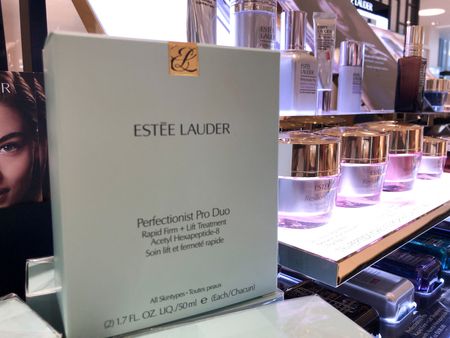

A massive $40 billion beauty industry merger crumbled Thursday evening when negotiations between American cosmetics giant Estée Lauder and Spanish fragrance company Puig suddenly collapsed after months of detailed planning.
The combination would have united major beauty brands including Tom Ford, Clinique and MAC with Carolina Herrera and Charlotte Tilbury, creating a luxury beauty powerhouse appealing to social media influencers and wealthy younger consumers.
However, information leaks, disputes between the influential founding families, and specific requirements from beauty entrepreneur Charlotte Tilbury caused the discussions to break down, according to five individuals with direct involvement in the negotiations who spoke to Reuters.
During Thursday evening Barcelona time and morning hours in New York, Puig executive Marc Puig contacted Estée Lauder chairman William Lauder by telephone to evaluate the worsening circumstances, one source revealed.
Following that conversation, representatives from both companies began sending messages back and forth, a second knowledgeable source reported. Among those communications was a skull emoji indicating the merger was finished.
Representatives from both Puig and Estée Lauder refused to provide statements.
The final obstacle involved requirements connected to Charlotte Tilbury, who established the beauty company bearing her name that Puig controls through majority ownership, concerning her minority ownership terms, all five sources confirmed.
Charlotte Tilbury’s company also declined to comment.
The five sources, who had access to both negotiating parties, requested anonymity due to the private nature of the discussions.
Three individuals said both organizations had repeatedly approached the point of announcing their combination.
Estée Lauder had organized an advisory team that spent the previous weekend working on Puig’s valuation, which Spain’s securities regulator required for the planned deal, one source stated.
Conversations between the companies started in late 2023, according to one source.
After becoming publicly known in March, investors considered the potential agreement more beneficial for Puig than Estée Lauder. Puig’s stock price jumped while the American company’s shares declined.
The opposite occurred when negotiations failed, with Estée Lauder climbing approximately 10% Friday while Puig dropped 13%.
Estée Lauder shareholders’ opposition to the merger presented another challenge during talks, three sources indicated.
The company’s return to improved earnings performance in its latest quarterly report boosted its determination to stay independent, the same three sources noted.
The extended negotiations featured sessions in Paris, New York and Barcelona, reaching apparent preliminary agreements on matters including the new organization’s leadership structure.
Additional topics covered a potential stock exchange listing in both New York and Madrid, maintaining Barcelona as headquarters for the unified fragrance operations, and specifics for achieving the combined company’s cost savings, two people explained.
Both founding families, the Lauders and Puigs, sought to maintain influence in the merged organization, two knowledgeable sources said.
The companies also faced difficulties determining how to handle assets like Charlotte Tilbury and sun care brand Isdin – two of Puig’s primary revenue sources where the group lacks complete ownership, two sources revealed.