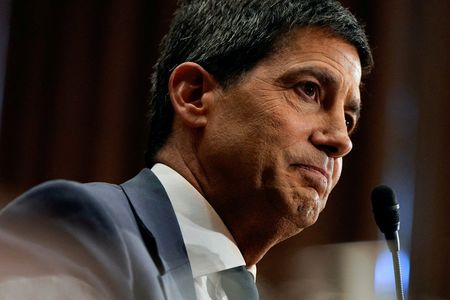

Kevin Warsh has spent the past 15 years as a vocal critic of Federal Reserve policies after departing his position as a Fed governor in 2011. Now, his own statements provide insight into what Americans can expect as he takes over leadership of the nation’s central bank.
VIEWING INFLATION AS A POLICY DECISION
During his confirmation hearing testimony last month, Warsh emphasized the Fed’s responsibility for price stability. “Congress tasked the Fed with the mission to ensure price stability, without excuse or equivocation, argument or anguish,” he stated in written remarks. “Inflation is a choice, and the Fed must take responsibility for it.”
When speaking directly to legislators, he was even more blunt about the central bank’s accountability: “Inflation is the Fed’s choice.”
These statements echo economist Milton Friedman’s well-known position that “inflation is always and everywhere a monetary phenomenon” and reflect Warsh’s belief that the inflation spike following the pandemic resulted from Federal Reserve mistakes that could have been prevented.
As inflation climbs again due to rising oil costs and ongoing tariff-related price increases, this philosophy may face real-world testing. If Warsh raises interest rates to combat inflation, it could create tension with President Donald Trump, who selected Warsh expecting him to lower rates.
CENTRAL BANK BALANCE SHEET AND FISCAL POLICY
While numerous economists attribute post-pandemic inflation to disrupted supply chains meeting surging consumer demand, Warsh rejects this explanation.
“I think inflation comes about when the government prints too much – by which I mean the central bank and broadly speaking the government spends too much,” he explained to lawmakers last month.
Warsh contends the Fed has facilitated excessive government spending by growing its balance sheet during financial crises and maintaining that expansion long afterward. This reasoning drives his desire to reduce the Fed’s approximately $7 trillion balance sheet, which is currently set for gradual growth, as part of his “regime-change” objectives for the institution.
Whether he will also advocate for reduced federal spending remains unclear. Fed chairs traditionally avoid specific fiscal policy recommendations, though they routinely express concerns about unsustainable government debt levels.
POLICY COMMUNICATION APPROACH
Warsh strongly opposes the central bank’s strategy of signaling future policy moves to financial markets as a tool for amplifying policy effectiveness. “Unlike many of my colleagues past and present I don’t believe in forward guidance,” he told legislators last month. “I don’t believe that I should be previewing for you what a future decision might be.”
Most central bankers characterize forward guidance not as “previewing” decisions but as outlining likely responses to specific economic scenarios.
Warsh takes over during disagreement about current forward guidance language in Fed statements suggesting the next policy move will likely be a rate cut. Many policymakers wanted April’s statement revised to indicate equal likelihood of rate increases or decreases.
He may also eliminate other Fed communication tools, including quarterly economic projections that contain policymaker forecasts and preferred policy directions.
ECONOMIC DATA INTERPRETATION
Warsh believes the Fed focuses too heavily on detailed economic data that often arrives late and with false precision.
“In economics what we need to do is focus to the left of the decimal point, not to the right of the decimal point,” he told lawmakers last month. Applied literally, this approach could mean treating April’s 3.8% consumer inflation rate as equivalent to March’s 3.3% reading, or considering 2.9% inflation as satisfactory as reaching the Fed’s 2% target.
INDEPENDENCE AND QUICK CORRECTIONS
Warsh told legislators last month that he made no commitments to Trump regarding interest rates. “The president never asked me to predetermine, commit, fix, decide on any interest-rate decision in any of our discussions, nor would I ever agree to do so.” However, he added, “if mistakes are made, central bankers – economic policy makers – need to correct them fast.”
These statements will face scrutiny as the Fed considers both forward guidance changes and interest rate adjustments.
NOTABLE OMISSIONS
Warsh’s silence on several key topics raises significant questions.
He never indicated whether current Fed policy rates are appropriate or need adjustment, nor was he directly questioned on this point.
He avoided reaffirming the Fed’s 2% inflation target, leaving unclear whether he prefers a different goal or no specific numerical target. He also didn’t emphasize inflation expectations as a driver of actual inflation – a cornerstone of modern central banking that his predecessor frequently discussed.
Regarding the Fed’s employment mandate, he offered virtually no perspective.
He also declined to comment on Trump’s effort to remove Fed Governor Lisa Cook, a case now before the Supreme Court that his predecessor called the most significant legal challenge in Fed history.