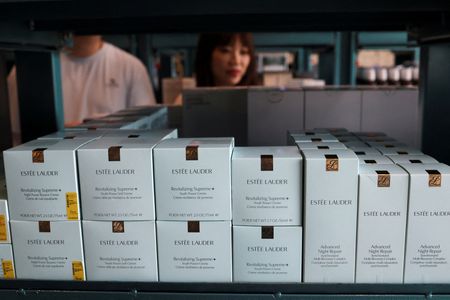

The American beauty conglomerate Estée Lauder has terminated acquisition discussions with Spanish fragrance company Puig, a decision that industry experts are praising as wise given the company’s current restructuring efforts.
The proposed merger would have formed a luxury beauty powerhouse capable of better challenging market leader L’Oréal. However, shareholders expressed concerns that such a massive deal would divert leadership attention from the company’s ongoing recovery strategy and put additional strain on finances, particularly with net debt already at approximately five times EBITDA.
Stock prices jumped 10% on Friday following news of the talks’ end. While investor opposition played a role in derailing negotiations, Reuters reported that the primary reasons for failure were conflicts between influential family owners and various demands, including those from makeup entrepreneur Charlotte Tilbury. Charlotte Tilbury represents a brand that has gained popularity among TikTok content creators and wealthy millennials, with Puig holding an ownership interest.
The cosmetics company, which operates the Clinique and M.A.C brands, has previously stated that acquisitions serve as tools for portfolio transformation, helping address gaps in regional presence, product lines, and pricing segments.
Chief Executive Stéphane de La Faverie has emphasized that his main focus under the “Beauty Reimagined” reorganization involves repairing organic growth initially, with any potential deals needing to align closely with the restructured operations.
“Although it has walked away from Puig, we think Estée could look to acquire smaller, niche operators to enhance its category or geographic standing,” Morningstar analyst Erin Lash said in a note. “While the deal stood to strengthen Estée’s position in fragrance, we were skeptical, given the potential deal’s size and the distraction it could pose for management amid its ongoing turnaround.”
The restructuring initiative includes expanding product offerings across distribution channels and markets, improving supply chain efficiency, increasing marketing investments, and accelerating launches of high-end products to capitalize on steady demand from wealthy customers. The company announced earlier this month plans to eliminate up to 3,000 additional positions worldwide, raising total anticipated layoffs to as many as 10,000 while targeting up to $1.2 billion in annual cost reductions.
The beauty manufacturer, which also owns the Jo Malone luxury fragrance line, completed its full acquisition of Indian premium brand Forest Essentials this week, demonstrating continued commitment to purchases focused on local, developing markets. The company first invested in Forest Essentials in 2008 and expanded its stake to 49% in 2020.
This Forest Essentials purchase follows recent minority investments in London-based luxury skincare company 111SKIN and Mexico-based fragrance brand Xinu in November.
The Forest Essentials addition has nearly doubled the company’s market presence in India and is “helping us to tap into another consumer that we potentially couldn’t recruit,” Nadine Graf, president of EMEA, UK, Ireland & Emerging Markets at Estée Lauder, said at a Morgan Stanley conference in Paris on Tuesday.
Graf noted the company was customizing the brand for local markets and increasing spending during major shopping seasons, while acknowledging that Europe and the UK presented more challenging environments where premium beauty products were widely accessible, restricting growth opportunities.
“Decision to call off discussions removed a complex transaction that, in our view, would have offered only modest strategic benefit and limited portfolio diversification,” Jefferies analyst Sydney Wagner said in a note.
“With the transaction no longer under consideration, we see the most compelling use of capital in assets positioned down the price ladder” with mass and so-called masstige brands, particularly in color and skin, she said.