
The worldwide smartphone industry is experiencing its most devastating year on record, with new research projecting sales will crash by 13.9% in 2024 to just 1.08 billion devices, according to data released Monday by Counterpoint Research. The dramatic downturn stems from an intensifying shortage of memory chips that’s reshaping the entire market.
This grim outlook represents a worsening from earlier predictions of a 12.4% drop made in February, with the global semiconductor supply crisis being aggravated by the Iran war.
Budget smartphones are bearing the brunt of the crisis as chip manufacturers redirect their production capabilities toward AI-focused processors, making affordable handsets increasingly unprofitable to manufacture.
During the first quarter of this year, wholesale smartphone costs jumped 14% while actual device shipments dropped 3.1% compared to the same period last year. Industry experts anticipate this pattern will persist as existing inventory stockpiles run low, potentially forcing some smartphone models priced under $150 to completely exit the marketplace.
“Smartphone makers in the low and mid-tier are caught between cost increases they cannot absorb and consumers with limited spending power,” explained Wang Yang, a principal analyst at Counterpoint, an independent research company that publishes quarterly smartphone shipment data.
“The question is no longer how to grow shipments or market share, but whether to remain in the market at all,” Wang added.
According to Wang, this memory chip crisis represents the most devastating supply chain disruption the smartphone sector has ever encountered, with manufacturers finding themselves powerless to counteract the effects through price adjustments or product modifications.
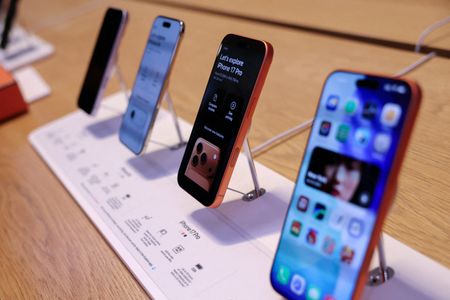
However, high-end smartphone segments are demonstrating greater durability during this turbulent period. Apple achieved unprecedented revenue during the year’s first quarter, boosted by customers switching to its iPhone 17 series. Counterpoint’s analysis suggests Apple’s 2026 shipments will hold steady before climbing 5% the following year.
Thanks to more dependable chip access and higher profit margins compared to competitors, Apple appears positioned to capture additional market territory and may face reduced pressure to implement price hikes.
Samsung Electronics maintained consistent sales volumes during the first quarter and Counterpoint anticipates the company will experience only a 4% shipment decrease for the entire year, performing better than the broader industry due to reliable supply chains and a steady product portfolio.
Transsion, which depends heavily on smartphones priced below $150, faces projections of a devastating 32% shipment collapse this year. Meanwhile, competitors Xiaomi and Honor are expected to experience annual decreases of 28% and 20% respectively, according to Counterpoint’s analysis.