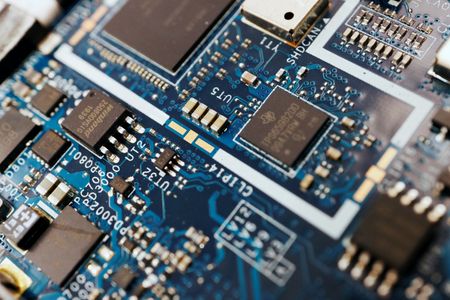

The European Commission is developing a strategy to encourage government agencies to purchase semiconductors manufactured by European startups, as part of efforts to decrease the continent’s dependence on American and East Asian suppliers, according to a document obtained by Reuters.
The initiative, called Chips Act 2.0, builds upon the initial semiconductor legislation enacted three years ago, which has not met its objectives of bringing advanced manufacturing to Europe and increasing the region’s global semiconductor market presence to 20% by 2030.
On June 3, EU tech chief Henna Virkkunen will present specifics of this new effort to advance and manage essential technologies and services, a strategy largely motivated by conflicts with the United States and China and their control over these sectors. Currently, Europe produces approximately 10% of the world’s semiconductors.
The original legislation concentrated on supply-side initiatives, while the new version will emphasize demand-side approaches, according to the EU document.
“Through Demand Accelerators, the Chips Act 2.0 will also aim to boost the use of EU-designed and EU-made chips by linking suppliers with users via offtake agreements and a demand forum,” the document said.
“To stimulate demand and support EU-based start-ups and scale-ups, the Chips Act 2.0 will deploy public innovation procurement, as a strategic tool,” the paper said.
The Commission has also suggested expediting environmental clearances for semiconductor manufacturing facilities.