
HONG KONG (AP) — Markets in Japan and South Korea achieved new all-time highs on Monday, fueled by excitement surrounding artificial intelligence developments and as traders monitor potential decisions regarding Iran conflict ceasefire negotiations.
Energy prices jumped over 2% while discussions between the U.S. and Iran persist, particularly concerning the potential reopening of the Strait of Hormuz, a critical passage for worldwide oil and natural gas shipments.
U.S. market futures showed modest gains.
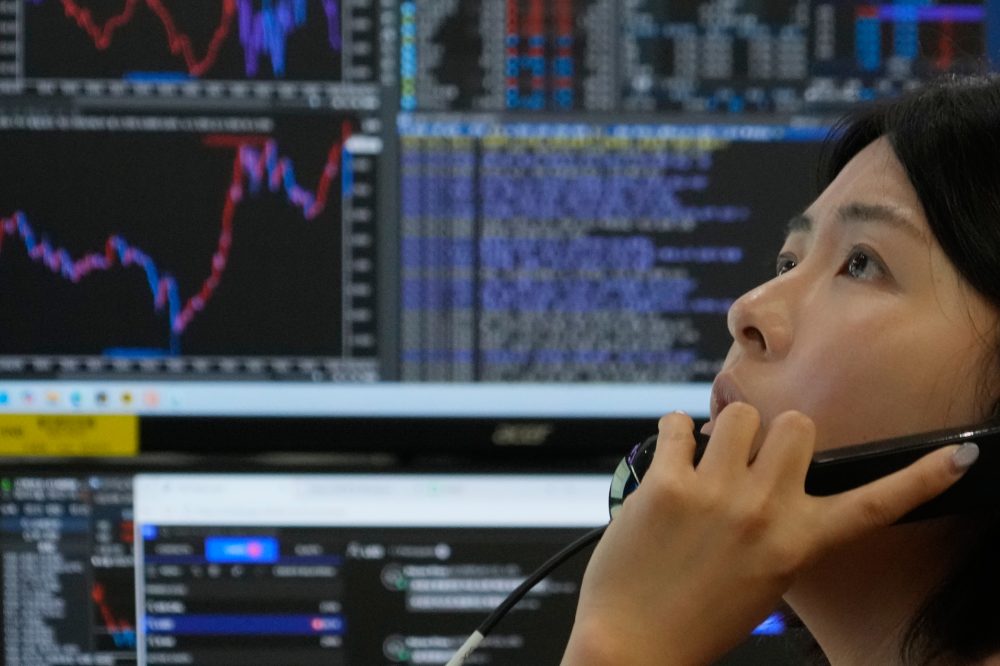
Markets across Asia generally moved upward, with Japanese and South Korean indices reaching record levels during Monday’s trading session, propelled by technology sector stocks as investors remain optimistic about artificial intelligence and cutting-edge technology expansion.
Tokyo’s Nikkei 225 climbed over 1.3% and surpassed 67,000 points for the first time, closing at 67,231.28. SoftBank Group shares, the investment firm with significant AI focus, increased more than 9% after setting records the previous week.
South Korea’s Kospi index surged nearly 5% to an unprecedented high of 8,874.16. Samsung Electronics, the nation’s largest corporation, rose over 9%. Government statistics released Monday revealed South Korea’s exports jumped 53% compared to the same period last year in May, supported by worldwide semiconductor demand.
The Nikkei 225 has climbed more than 12% in the past month, while the Kospi has skyrocketed over 27% during the identical timeframe.
Hong Kong’s Hang Seng traded 0.9% higher at 25,408.96. The Shanghai Composite index declined 0.1% to 4,063.72, following China’s weekend report that manufacturing activity weakened in May with indicators of declining export demand.
Australia’s S&P/ASX 200 dropped 0.1% to 8,720.30.
Taiwan’s Taiex rose 1.4%, while India’s Sensex gained 0.6%.
Three months since the Iran conflict started, uncertainties about a lasting resolution continue influencing market behavior and causing oil price volatility, despite optimism about strong AI demand and solid corporate profits driving stock rallies, including on Wall Street.
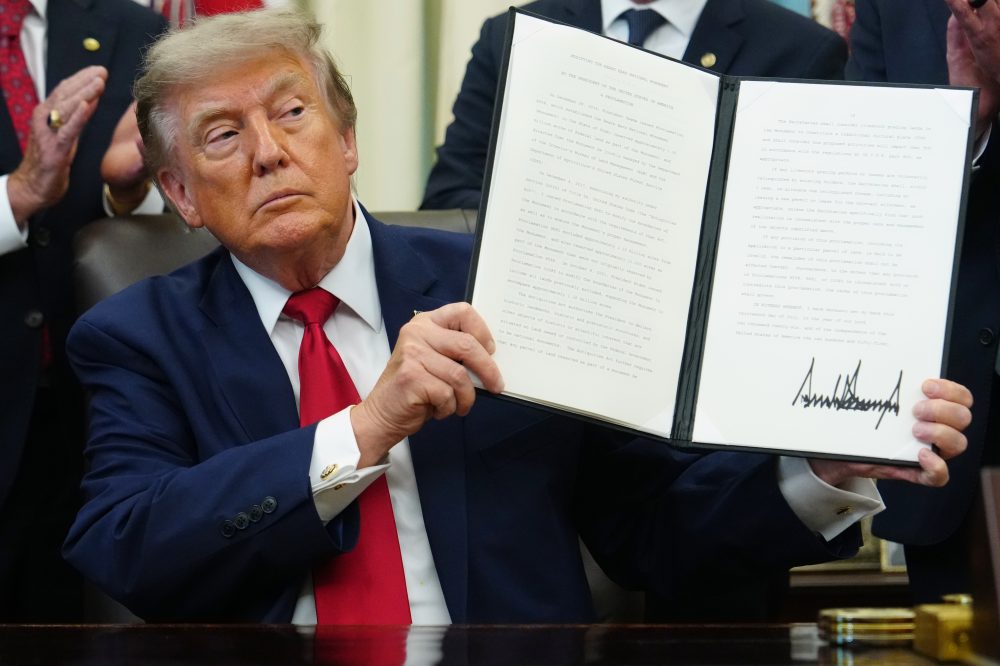
On Friday, U.S. President Donald Trump conducted meetings with advisers in high-level discussions but hadn’t reached a decision on a preliminary proposal to extend the Iran conflict ceasefire for 60 days, while Iran indicated no agreement had been completed. The Strait of Hormuz reopening remained uncertain. The waterway has been mostly blocked and the U.S. has established a naval blockade at Iranian ports.
Brent crude oil, the global benchmark, increased 2.4% early Monday to $93.33 per barrel. It traded around $70 per barrel in late February, prior to the conflict’s beginning.
U.S. benchmark crude gained 2.8% to $89.76 per barrel.
Friday saw Wall Street indices achieve additional records driven by major technology companies, with the benchmark S&P 500 rising 0.2% in its seventh consecutive advance to 7,580.06.
The Dow Jones Industrial Average advanced 0.7% to 51,032.46, while the tech-focused Nasdaq composite increased 0.2% to 26,972.62.
Dell Technologies jumped 32.8% after reporting better-than-anticipated earnings and raising its forecast based on robust AI-related demand. Microsoft climbed over 5.4%, while Broadcom gained 4.7%.
In currency trading, the U.S. dollar strengthened to 159.48 Japanese yen from 159.25 yen. The euro traded at $1.1645, declining from $1.1667.