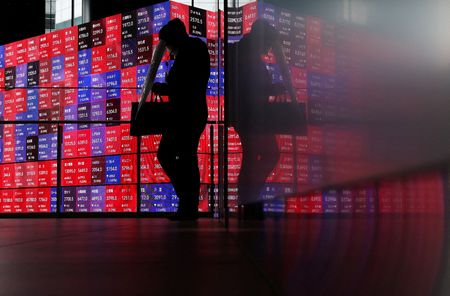

Asian stock exchanges posted gains Monday as the artificial intelligence sector’s continued expansion provided investor confidence, helping to counterbalance concerns over stalled Middle East peace negotiations that have pushed oil prices higher.
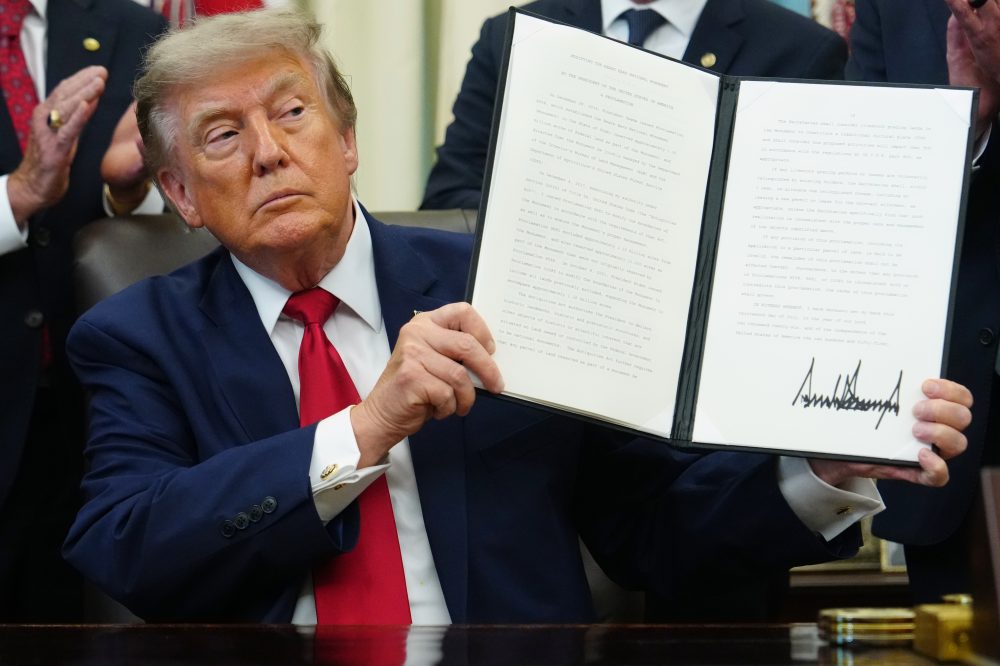
Diplomatic representatives from Washington and Tehran continue working toward an agreement, though President Donald Trump has remained quiet about any developments. Defense Secretary Pete Hegseth stated Saturday that the United States stands prepared to resume military action against Iran should negotiations fail.
Regional tensions have intensified with Israel’s expanded military operations in Lebanon targeting the Iranian-supported Hezbollah organization.
“While uncertainties remain, the acute risk phase for the global economy should be over if tankers can begin moving again,” said Michael Feroli, head of U.S. economics at JPMorgan.
“Still, not everything would return to its pre-conflict place — oil prices are likely to remain elevated for some time, as inventories get rebuilt and the supply infrastructure in the Middle East is repaired,” he added.
The ongoing uncertainty pushed Brent crude prices up 1.9% to $92.89 per barrel, while U.S. crude increased 2.4% to $89.46.
Technology and semiconductor companies continue driving Asian market performance, with Japan’s Nikkei climbing an additional 0.5% after gaining nearly 5% the previous week to reach record levels.
South Korea’s markets rose 1.3% following an 8% surge last week, while Taiwan gained almost 6% during the same period. The MSCI Asia-Pacific index excluding Japan added 0.2%.
Nvidia boss Jensen Huang begins the Computex technology conference in Taiwan Monday with an artificial intelligence presentation where he’s anticipated to discuss his company’s newest developments and Taiwan’s key position in the sector.
European markets showed weakness with EUROSTOXX 50 futures declining 0.3%, DAX futures dropping 0.2%, and FTSE futures falling 0.5%.
U.S. market futures pointed higher with S&P 500 futures up 0.2% and Nasdaq futures gaining 0.4% after reaching new highs last week.
However, the market rally has been concentrated among a small group of companies, with the top 10 AI-related firms representing 40% of the S&P 500’s value and only 21 stocks out of 500 hitting record highs. Technology shares jumped nearly 16% in May while consumer discretionary and healthcare sectors managed gains of just over 2%, and consumer staples declined more than 3%.
Rising oil prices continue pressuring bond markets as U.S. 10-year Treasury yields increased 3 basis points to 4.470%. Financial markets suggest equal odds that the Federal Reserve may need to raise interest rates before year-end to prevent inflation expectations from becoming entrenched.
Multiple Federal Reserve officials are scheduled to speak this week, with key economic data including the ISM manufacturing survey and Friday’s May employment report.
Economists predict employment will increase by 85,000 jobs, keeping unemployment steady at 4.3%. Stronger job growth would likely increase expectations for interest rate increases.
The dollar’s strength has been supported by hawkish market sentiment, while the Japanese yen and euro face pressure due to their regions’ dependence on energy imports.
The dollar edged slightly higher against the yen to 159.42, though traders remain cautious about potential Japanese intervention if the currency breaks through 160.00.
The euro traded at $1.1645, remaining within its recent range between $1.1585 and $1.1661.
Gold prices held steady at $4,535 per ounce, showing limited appeal as either a safe-haven asset or inflation protection.