
NEW YORK — Throughout America’s 250-year history, one cultural influence has remained constant through times of both friendship and friction: France.
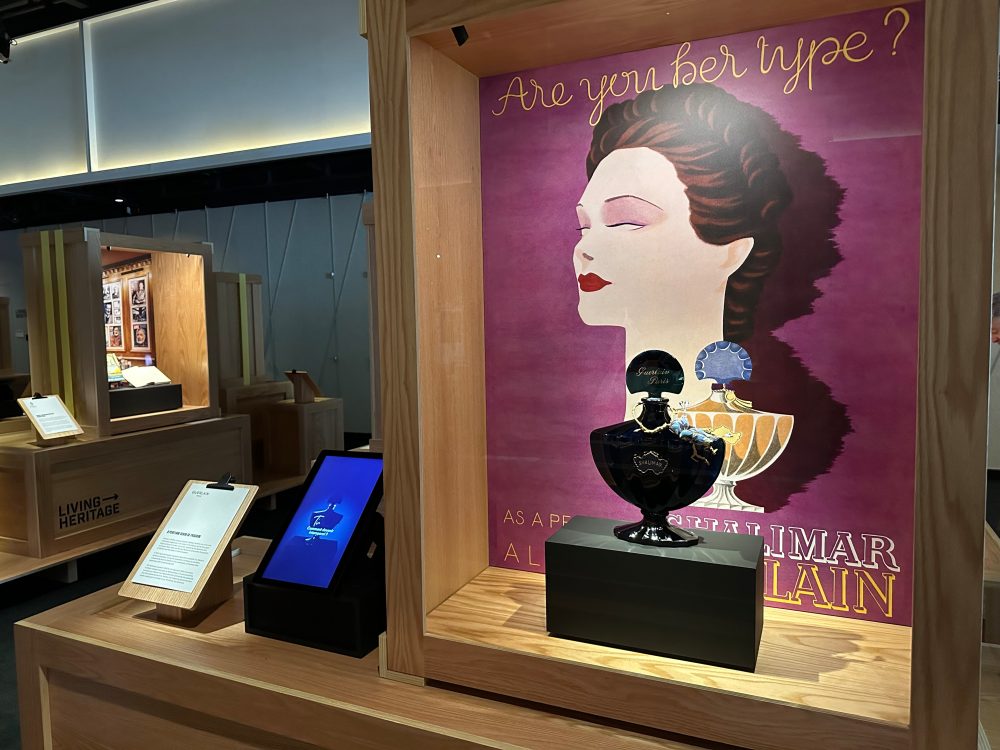
America’s fascination with French luxury items and their prestige and artistry has persisted throughout the nation’s existence, and a fresh exhibition tells the story of how these prized objects created a cultural dialogue spanning two and a half centuries of French-American ties.
Notable pieces in the display’s collection include the Givenchy jacket worn by former first lady Jacqueline Kennedy, a Cartier replica of the Apollo 11 lunar module, and a commemorative piece created by Benjamin Franklin at the “Hidden Treasures” exhibition at The Shed in Manhattan.
The exhibition’s organizers, Comité Colbert, represent France’s premier luxury “maisons,” or houses — covering fashion, fragrance, jewelry, hospitality and spirits. They requested 65 luxury houses and cultural organizations to search their archives and discover items that represented the French-American connection.
The display, running until May’s conclusion, arrives as American buyers represent a significant portion of demand for French luxury products. These luxury brands are paying attention — and growing their presence in America.
“American people love French elegance — the ‘je ne sais quoi’ of French luxury,” said Bénédicte Épinay, president and CEO of Comité Colbert. “It’s a deep link starting at the 18th century and still alive.”
While Comité Colbert celebrates France’s relationship with the U.S., America marks its own 250-year milestone — its semiquincentennial.
“The U.S. is a relatively young country,” said James Burroughs, professor of commerce at the University of Virginia’s McIntire School of Commerce. “For much of our existence, we were a relatively modest economy. We were overshadowed by dominant cultures like France.”
The connection between both nations appears in perhaps America’s most famous symbol, the Statue of Liberty, France’s gift dedicated in 1886. But even earlier — and before French historian Alexis de Tocqueville penned his famous work about American democracy in the 1830s — Americans looked to France as taste leaders.
To honor France’s assistance during the Revolutionary War, Founding Father Benjamin Franklin worked with French artists and the Paris mint to create the Libertas Americana medal in 1782. Exhibition visitors can examine the medal’s details closely. Every displayed item was presented in shipping containers representing the ocean journey between the nations.
To promote French luxury products to American customers, one French Champagne maker’s distinctive strategy appears in the exhibition. A 1964 advertisement from Champagne producer Veuve Clicquot demonstrates how the brand matched its Champagne with hamburgers to attract American buyers and move beyond the tradition of reserving Champagne for special events.
“Luxury,” Burroughs said, “is always about status and signaling.”
Similar to its influence in the French luxury industry, fashion provided the exhibition’s star attractions.
Givenchy contributed Kennedy Onassis’s pink, brushed-cashmere wool jacket from her 1961 French visit for the display. Madonna’s provocative pinstriped Jean Paul Gaultier gown from his 1992 runway show benefiting AIDS research is also featured.
French luxury brands are serving their American customers by bringing their creations to America as well. French fashion houses including Dior, Louis Vuitton and Chanel have all presented their runway presentations in the U.S. recently.
“European luxury goods companies are in the process of getting deeper into the USA,” Luca Solca, luxury goods senior analyst at Bernstein, said in an email. “In the past, only the two coasts and Las Vegas had luxury stores. American consumers are step by step warming up to European luxury. In a similar vein to what Chinese consumers did many years ago.”
These companies are not only hosting elaborate runway presentations in the U.S. but are expanding their operations nationwide. Hermès opened a new Nashville location last year.
“What the French have done really well … in the last 15 years, is that they have opened up their range of products to create offers that are very relevant to the mass American consumer,” said Thomaï Serdari, New York University marketing professor and director of the luxury and retail MBA.
French jewelry maker Boucheron displayed an elaborate diamond Belle Époque style necklace at the exhibition recreated after the piece the company sold to Irish-American pair Marie-Louise Mackay and her husband, John William Mackay in 1899. The couple, who built their wealth through silver mining, ordered 50 pieces from the house.
Seeking to attract a new generation of buyers, the brand now operates three American stores since opening on Madison Avenue in 2024. Hélène Poulit-Duquesne, Boucheron’s CEO and incoming president of the Comité Colbert, told The Associated Press that the company plans to open a fourth American location by year’s end.
Following increased growth from pandemic spending, the luxury industry now faces tariffs from the Trump administration and economic uncertainty. The European Commission reached an agreement with President Donald Trump on a 15% tariff on products last year before the Supreme Court rejected Trump’s appeal in February.
For the luxury houses, Épinay said, tariffs are behind them.
“Politics and economics, it’s up and down,” she said. “We’re here to celebrate this strong cultural link between us.”