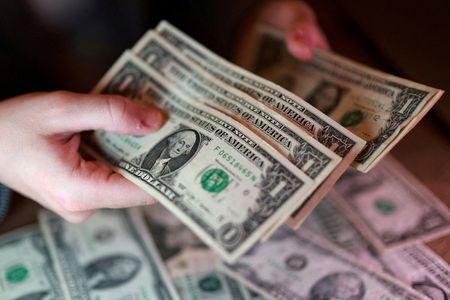

The American dollar remained stable on Monday after experiencing losses the previous week, as financial markets focused on ongoing Middle East diplomatic efforts and anticipated guidance from central banking authorities regarding interest rate policies.
Currency markets showed optimism last week over potential agreements between the United States and Iran that could reopen the critical Strait of Hormuz oil shipping corridor, causing the dollar index to decline.
Energy prices surged during early trading sessions following Israel’s directive for military forces to advance deeper into Lebanon amid ongoing conflicts with Iranian-backed Hezbollah forces.
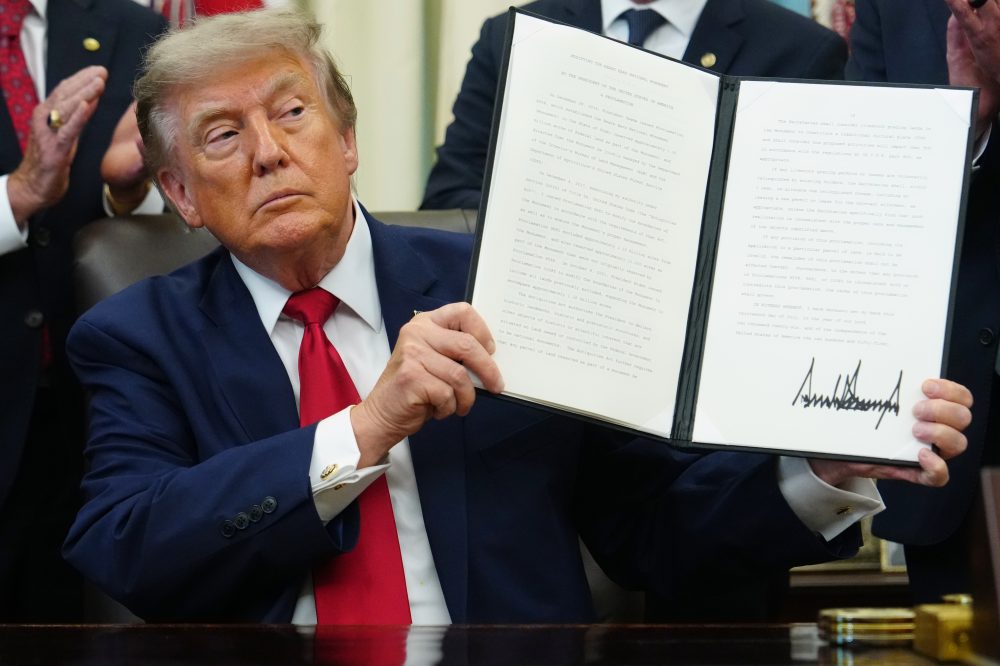
U.S. President Donald Trump announced on Friday his intention to make a decision soon regarding a proposed agreement to extend the current Iran ceasefire arrangement.
Upcoming U.S. employment statistics will draw significant attention this week as Federal Reserve policymakers indicate the central bank might implement rate increases if the ongoing conflict worsens existing inflationary pressures.
“USD will be heavily influenced by developments in the US-Iran war and the U.S. non-farm payrolls report for May,” said Joseph Capurso, head of FX at Commonwealth Bank of Australia.
“Once the Strait is reopened, over time the oil price will fade and interest rates will return as a greater influence on the USD,” he added in a note.
The dollar index measuring the currency’s performance against major international currencies including the yen and euro remained unchanged at 99.00, following the previous week’s 0.4% decline. The euro decreased 0.08% to $1.165.
The Japanese yen lost 0.08% reaching 159.41 per dollar. The British pound dropped 0.07% to $1.3449.
The potential agreement would extend the current U.S.-Iran ceasefire for an additional 60 days while permitting shipping traffic to resume through the strategic waterway, which typically handles one-fifth of worldwide crude oil and LNG shipments during peacetime, as negotiators address remaining disputed matters.
A senior Iranian source told Reuters an agreement was close but had not yet been approved.
Employment data for U.S. nonfarm payrolls scheduled for June 5 are projected to reveal an unemployment rate of 4.3% along with 85,000 new jobs added, based on a Reuters survey conducted through Friday.
Financial markets anticipate the Federal Reserve’s next action will involve raising its benchmark rate from the current 3.50% to 3.75% range, likely before year’s end. Central bank officials had previously considered rate reductions before the Iran conflict began.
The European Central Bank should raise rates this month even if a U.S.-Iran peace deal is reached, Isabel Schnabel, an ECB board member, told Reuters last week. She is set to speak in South Korea on Monday.
Bank of Japan Governor Kazuo Ueda’s Wednesday address is eagerly awaited for indications about whether the central bank will move forward with a rate increase the following week.
Although consensus has not emerged within the BOJ regarding this decision, postponing the central bank’s reduction of government bond purchases appears increasingly favored, according to two sources familiar with internal discussions.
Japan’s finance ministry announced on Friday that the government invested 11.7 trillion yen ($73.40 billion) in currency market interventions during the past month to strengthen the yen, confirming traders’ widespread expectations.
The Australian dollar remained unchanged at $0.7181 against the U.S. currency. New Zealand’s dollar fell 0.17% to $0.5978.