A piece of Delaware’s LGBTQ heritage is about to be officially recognized with a new state historical marker. The Delaware Public Archives has announced plans to unveil a State of Delaware Historical Marker dedicated to Poodle Beach on Saturday, June 27, 2026.
The ceremony is scheduled to begin at 9:00 a.m. at the corner of Prospect Street and the South Boardwalk in Rehoboth Beach. The marker will honor Poodle Beach as a landmark in Delaware’s LGBTQ history.
Rehoboth Beach has long been regarded as a welcoming destination for LGBTQ visitors and residents, with Poodle Beach playing a notable role in that tradition for generations.
LONDON (AP) — British TV personality Jeremy Clarkson has opened up about a prostate cancer diagnosis, sharing the news with viewers through the closing episodes of his popular farming reality show.
The 66-year-old described the cancer as “aggressive,” but said doctors caught it at an early stage.
Before the episodes aired, Clarkson took to social media on Tuesday to prepare fans for difficult news tied to the fifth season finale of “Clarkson’s Farm,” a show that follows the trials of operating Diddly Squat Farm in Oxfordshire. The episodes became available to stream on Wednesday.
“Ordinarily we try to keep the show bucolic and charming, and cheerful, but two episodes which drop in the middle of the night tonight are, they’re none of those things,” he posted on Instagram. “They’re a difficult watch, they’re really, really difficult.”
Within one of the episodes, Clarkson broke the news to farm manager Kaleb Cooper and consultant Charlie Ireland while the group was in the middle of harvest planning discussions. “I’ve got cancer,” he told them plainly.
Clarkson built his fame as the outspoken host of the BBC automotive program “Top Gear.” He underwent a heart procedure two years ago, and at that time wrote in his column for The Sun tabloid that his doctor had advised him to swap work for golf.
In 2023, Clarkson faced backlash from media regulators after writing in his column about fantasizing that Prince Harry’s wife, Meghan, be paraded naked through the streets and pelted with feces. He later apologized after a press watchdog ruled the piece was sexist.
Since entering the world of farming in 2019, Clarkson has become a vocal supporter of the agricultural community, publicly opposing the government’s move to impose an inheritance tax on farmland, a policy introduced in November 2024.
During the season five finale, Clarkson appeared speaking from a hospital bed, explaining that a surgeon had removed part of his prostate and that he expected to learn his prognosis in November.
“If this is all successful, I’ll see you for season six, and if it isn’t, I won’t,” he said. “Take care, everyone.”
Gaza’s Health Ministry announced Wednesday that Israeli military operations have claimed the lives of 1,005 Palestinians in the eight months that have passed since a ceasefire was established between Israel and the militant group Hamas.
Despite the ceasefire agreement, the Gaza Strip has experienced near-constant violence, including airstrikes, artillery shelling, and gunfire along the boundary separating Israeli-controlled and Palestinian-controlled portions of the territory. Among the most recent fatalities were victims of a series of Israeli drone strikes carried out over several days, killing multiple people in central Gaza and Gaza City.
Earlier this week, the Health Ministry reported that the total number of deaths from the broader Israel-Hamas war has now exceeded 73,000 in Gaza. The ministry, which is staffed by medical professionals and keeps detailed records, does not distinguish between civilian and combatant casualties. International observers generally consider its data to be reliable.
KAMPALA, Uganda — A Ugandan magistrate’s court on Wednesday formally charged a well-known opposition attorney with concealing treason, deepening a confrontation between the lawyer and the nation’s military commander, whom he had been attempting to hold legally responsible for alleged human rights abuses.
Erias Lukwago appeared before a magistrate’s court in Kampala, Uganda’s capital, just days after soldiers forcibly removed him from his home on the orders of army chief Gen. Muhoozi Kainerugaba.
The charge against Lukwago — known legally as “misprision of treason” — was described by the presiding magistrate as stemming from his alleged failure to report acts of treason committed by others. Lukwago has denied all charges against him.
Lukwago serves as president of the People’s Front for Freedom opposition group and is also the legal representative for Kizza Besigye, a four-time presidential candidate currently imprisoned on treason charges — a case that Besigye’s supporters widely consider to be politically driven. Lukwago, who previously served as mayor of Kampala, has long been a vocal critic of President Yoweri Museveni and Museveni’s son, Kainerugaba.
The way soldiers carried out Lukwago’s arrest — climbing over the perimeter wall of his home — alarmed many observers and intensified concerns about Kainerugaba’s expanding reach. The army chief posted on the social platform X that Lukwago would experience “hurt and pain” and could face up to ten years behind bars. Kainerugaba frequently uses X to publicly target those he views as adversaries.
Though Museveni was sworn in for a seventh straight term last month, Kainerugaba has increasingly operated as Uganda’s de facto leader. He has openly stated his intention to one day assume the presidency — a scenario that appears more plausible as his 81-year-old father leans more heavily on his son’s military authority.
The charges against Lukwago appear to be a direct response to his stated intention, shared with reporters before his arrest, to take legal action against Kainerugaba over his alleged involvement in violations of Besigye’s rights. Those alleged violations include Besigye’s abduction in Nairobi, the Kenyan capital, in November 2024, and his subsequent imprisonment in Uganda without bail. Kainerugaba has publicly threatened Besigye, accusing him of plotting against Museveni.
On Monday, Kainerugaba expressed fury on X after Lukwago attempted to serve him with court documents. “This fool will learn the lesson he has been begging for,” he wrote. He later shared photographs showing a blindfolded Lukwago appearing to plead for mercy.
The Uganda Law Society responded by calling for Lukwago’s immediate release, arguing that his arrest showed contempt for court procedures.
Museveni, who has governed Uganda since 1986, has given no indication of when he plans to step down. With no challengers within the ruling party, many observers believe the military will ultimately play a decisive role in determining who leads the country next.
Kainerugaba’s associates describe him as a committed military officer who tends to avoid flashy displays of wealth. He received military training at institutions in the United States and Britain before taking command of a presidential guard unit that has since grown into an elite special forces division. His father appointed him as the country’s top military commander in 2024.
Beyond his military role, Kainerugaba founded a political activist organization called the Patriotic League of Uganda, whose members and supporters include government ministers and business figures alike.
This week, Kainerugaba claimed that even the speaker of parliament and the deputy speaker serve as his group’s representatives to the legislature.
MOMBASA, Kenya — Representatives from fifteen nations spanning Africa, Asia, Europe, the Caribbean, and the Pacific came together Wednesday to sign a landmark agreement aimed at cracking down on illegal fishing, a global problem that experts estimate drains up to $50 billion from the world economy every year.
The agreement, known as the Mombasa Declaration, takes its name from the Kenyan city where the 11th Our Ocean Conference is being held. The declaration calls on participating governments to open up access to information about fishing vessels, their ownership, and their licensing, while also strengthening the sharing of data to better monitor fishing activity and enforce the rules.
Of the more than 30 countries represented at the summit, 15 ultimately signed onto the agreement: Belgium, Cameroon, Chile, the Dominican Republic, France, Gambia, Ghana, Guinea, Liberia, Panama, Papua New Guinea, Peru, the Republic of the Congo, Somalia, and South Korea.
In a joint statement, the signing nations said the measures are designed to address illegal, unreported, and unregulated fishing — commonly referred to as IUU fishing — which poses a serious threat to ocean ecosystems and the millions of people worldwide whose livelihoods depend on fisheries.
Ghana’s fisheries minister, Emelia Arthur, spoke to the deep importance of the issue for her country. “In my country, our very existence depends on fish,” she said. “Over 60% of our animal protein comes from fish, and 10% of our population depends on the fisheries value chain for livelihood.”
Arthur went on to describe fisheries as both a cultural issue and a matter of national security for Ghana, saying the declaration gives countries a platform to “fight together for transparency in the fisheries sector.”
Illegal fishing hits coastal communities and small-scale fishers especially hard, particularly in developing nations, by wiping out fish populations, threatening food supplies, and distorting markets. Experts have also connected illegal fishing operations to serious human rights violations, including forced labor and dangerous conditions for workers aboard fishing vessels.
The Mombasa Declaration is designed to advance support for the Global Charter for Fisheries Transparency, which outlines ten policy principles focused on improving ocean governance through practical, low-cost reforms — such as updating vessel registries and making fishing authorizations publicly available.
French Minister Delegate for the Sea and Fisheries Catherine Chabaud emphasized that no single country can tackle the problem alone, with France taking a leading role among European nations in backing the agreement. “We will not be able to effectively combat illegal fishing without greater transparency and international cooperation,” she said. “Limited transparency in vessel ownership, tracking, and fishing activity and supply chains allow these illegal practices to thrive, making stronger access to reliable fisheries data and accountability mechanisms essential to protecting marine ecosystems and the communities that depend on them.”
Environmental and conservation organizations praised the declaration as a sign of growing international commitment to holding bad actors accountable on the water. “For too long, illegal fishing has thrived in the dark,” said Tony Long, CEO of the nonprofit Global Fishing Watch. “When governments commit to transparency, they create an interconnected network where bad actors have nowhere left to hide.”
Beth Lowell, vice president of the environmental advocacy group Oceana, said the agreement shows that governments are “ready to act against illegal fishing and work together for a more transparent, equitable and sustainable ocean.”
Countries that have signed the declaration are expected to begin acting on their commitments right away. Additional nations are anticipated to join the initiative ahead of the next Our Ocean Conference, scheduled for 2027, which serves as a major annual gathering focused on pressing ocean-related challenges.
MIAMI (AP) — The Atlantic hurricane season got off to an active start Wednesday as the first tropical storm of the year took shape near the Gulf Coast, threatening Texas, Louisiana, and surrounding states with heavy downpours and dangerous flash flooding, according to meteorologists.
Tropical Storm Arthur developed from a loosely organized group of storm systems that had already been producing rainfall for several days across parts of eastern Mexico and the Gulf of Mexico. The National Hurricane Center, based in Miami, indicated that atmospheric conditions were favorable for a brief tropical storm to develop.
Forecasters expect Arthur to track toward the northwestern Gulf Coast, with Texas, Louisiana, and Mississippi all in its path. Residents in those areas could experience gusty winds and coastal flooding as the storm moves onshore.
National Hurricane Center director Michael Brennan warned Tuesday that the storm’s impact may not end quickly. “Prolonged rainfall may extend the flood threat into the weekend,” Brennan said.
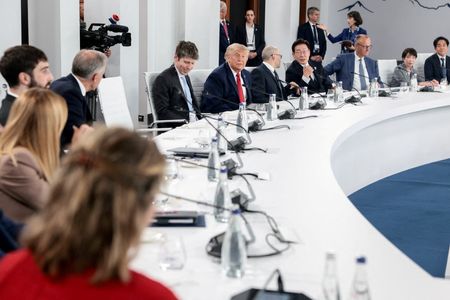
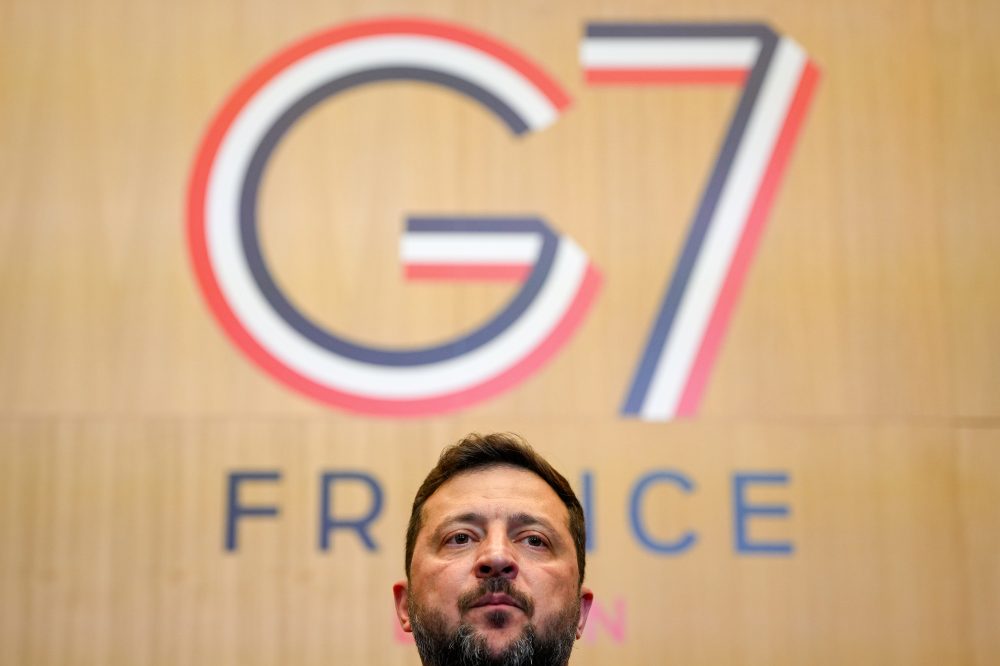
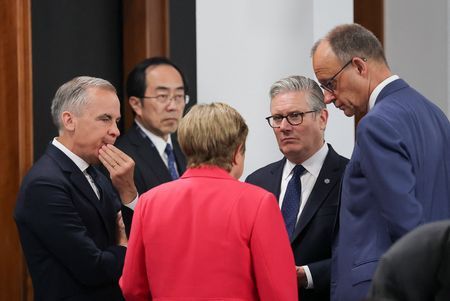
EVIAN-LES-BAINS, France — On the final day of the Group of Seven summit held June 15-17 at the French resort of Evian-les-Bains, world leaders committed to strengthening cooperation on both the dangers and the potential of advanced artificial intelligence technology.
In a joint statement issued Wednesday, the G7 leaders said they would direct finance officials, regulators, and cybersecurity specialists to examine how the most advanced AI models might affect financial stability, worker productivity, and job markets.
A significant point of discussion was a proposed “trusted partners” program that could allow non-U.S. countries to gain access to advanced American AI systems from companies such as Anthropic — potentially offering a way around recent U.S. access restrictions.
The proposal came in response to a directive from U.S. President Donald Trump last week, ordering Anthropic to cut off foreign nationals from its most advanced AI models due to national security concerns. As Reuters reported Tuesday, the “trusted partners” designation could apply to both nations and companies, enabling them to use those models to build stronger cybersecurity defenses against rivals such as China.
Meanwhile, cybersecurity experts have raised alarms about Anthropic’s Mythos — a tool designed to identify coding weaknesses and strengthen cyber defenses — warning that it could potentially be turned around to supercharge attacks on the very systems it was built to protect.
On Wednesday, executives from Anthropic, OpenAI, and Google joined G7 leaders for a working lunch focused on AI regulation and infrastructure development. All three companies are actively building highly advanced AI models.
Europe’s struggle to strike the right balance between technological independence and keeping pace with U.S.-led innovation was also a central theme at the summit. European policymakers have increasingly framed AI as both an economic and a national security priority. The European Commission recently unveiled plans for AI “gigafactories” and large-scale computing infrastructure aimed at giving the region its own access to computing power, and has proposed legislation to grow domestic cloud, AI, and semiconductor industries while reducing reliance on major U.S. technology firms — though critics argue Europe remains years behind its American counterparts.
European Commission President Ursula von der Leyen, speaking at the tech executives’ lunch, argued that it serves both the U.S. and the European Union for Europe to have access to the best AI tools available. She also praised American efforts to ensure AI companies act responsibly when rolling out powerful new systems.
“We use each other’s trusted technology, and our financial systems are interconnected,” von der Leyen said.
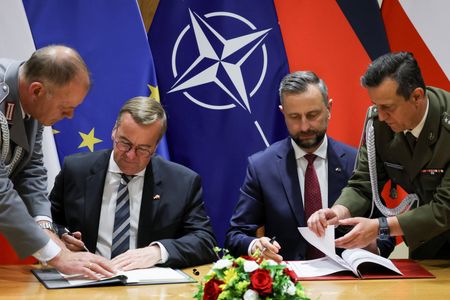
WARSAW — Poland and Germany have formalized a new bilateral defense agreement, with the defense ministers of both nations announcing the deal on Wednesday as Poland works to strengthen its alliances amid what it considers a growing threat from Russia.
The new pact is part of a broader effort by Poland to build a network of defense partnerships across Europe. Warsaw has already completed similar defense treaties with France and Britain, and negotiations are currently underway with Italy.
Speaking at a joint press conference alongside Germany’s Defense Minister Boris Pistorius, Poland’s Defense Minister Wladyslaw Kosiniak-Kamysz outlined the scope of the agreement. “The defence agreement… opens up new areas for cooperation. In the field of cybersecurity, joint responsibility, joint command in the Baltic, new technologies,” he said.
Kosiniak-Kamysz added that the deal also addresses military logistics and infrastructure. “It opens up new opportunities regarding military mobility as well as the development of infrastructure for this mobility between our states,” he said.
The signing carried symbolic weight as well — the document was finalized on the 35th anniversary of the signing of the Polish-German Treaty of Good Neighbourly Relations and Friendly Cooperation.
On the sidelines of the G7 summit in the French lakeside resort of Evian-les-Bains, President Donald Trump told reporters Wednesday that his conversations with both Russian President Vladimir Putin and Ukrainian President Volodymyr Zelenskiy had gone well.
Zelenskiy traveled to the summit alongside European allies with a specific goal in mind — to convince Trump that Ukraine’s military situation had improved, pointing to the country’s drone strikes that have reached deep into Russian territory.
When reporters pressed Trump on whether he believed Putin bore more responsibility for the ongoing conflict in Ukraine, the president declined to assign blame. “Well, I don’t want to comment on that, because I’m trying to get it settled, and that doesn’t make it easy,” Trump said.
Trump also addressed Ukraine’s interest in manufacturing U.S. missiles on European soil, saying the request would receive consideration. “They would like to be able to do that. We’ll take a look at it,” he said.
Meanwhile, a waiver that had allowed Russian seaborne oil to avoid U.S. sanctions expired at midnight Wednesday, and the U.S. Treasury did not issue a renewal. However, Trump administration officials did not immediately clarify whether that meant sanctions on Russian oil had been formally reinstated.
When asked directly whether Russian oil sanctions would be brought back, Trump told reporters: “We are looking at that, we’re seeing how far the price of oil comes down, it’s, it’s really tumbling.”
Luigi Mangione, the man charged with killing a major health insurance executive on a Manhattan street, intends to claim at trial that he was experiencing an “extreme emotional disturbance” when the shooting allegedly took place, according to a judge who revealed the defense strategy during a court hearing Wednesday.
Mangione stands accused of fatally shooting UnitedHealthcare CEO Brian Thompson outside a Midtown hotel in December 2024. The high-profile killing drew condemnation from public officials across the country, yet at the same time became a symbol of widespread American anger over soaring healthcare costs and health insurance industry practices.
In December 2024, Mangione entered a not guilty plea to state charges of murder, weapons violations, and forgery filed by Manhattan District Attorney Alvin Bragg. His state trial is scheduled to begin in September before Justice Gregory Carro in Manhattan.
Under New York law, a murder defendant may argue that extreme emotional disturbance prevented them from being fully responsible for their actions at the time of the killing. If that argument succeeds, a murder conviction can be reduced to manslaughter, which carries a substantially lighter sentence.
Thompson was the head of UnitedHealth Group’s insurance division. He was shot and killed in the early morning hours outside a hotel where he had been staying for an investor conference.
Graphic video of the shooting and a five-day manhunt for the suspected gunman turned the case into a major media story and social media phenomenon. Mangione was ultimately taken into custody in Pennsylvania.
In a separate legal matter, Mangione pleaded not guilty in April 2025 to federal charges of murder, weapons violations, and stalking brought by Manhattan federal prosecutors. U.S. District Judge Margaret Garnett, who is presiding over that case, dismissed the murder and weapons charges in January due to legal technicalities in a ruling that surprised many legal observers. That dismissal removed the possibility of the death penalty, though Mangione could still face life in prison without the possibility of parole if convicted on the stalking charge.
Jury selection in the federal case is expected to begin in September, with opening statements in the trial set for November.
MILAN — The son of the late founder of EssilorLuxottica is pursuing a major financial move that could make him the single largest shareholder in the family’s holding company, Delfin — the top investor in the $100 billion eyewear giant.
Leonardo Maria Del Vecchio, 31, who serves as EssilorLuxottica’s chief strategy officer and president of the Ray-Ban brand, is exploring private debt financing options to fund a roughly €10 billion ($11.6 billion) transaction, according to a source close to him. Delfin also holds the largest stake in Italian bank Monte dei Paschi, which is currently the target of a €30 billion takeover bid from Italy’s biggest bank, Intesa Sanpaolo.
Until just a few years ago, Leonardo Maria Del Vecchio was largely unknown in financial circles. That has changed dramatically. In 2022 — the same year his father passed away — he launched his own personal investment vehicle, LMDV Capital, and began making a series of smaller acquisitions.
LMDV Capital has since assembled a diverse portfolio that spans hospitality, food and beverage, real estate, healthcare, and technology. Among its holdings are mineral water brand Acqua Fiuggi, hospitality company Twiga — which operates a beach club in the Tuscan resort of Forte dei Marmi — along with restaurants and digital businesses. The company reached breakeven in 2024 while carrying €360 million in debt, according to company filings.
Del Vecchio drew broader public attention last year when he attempted to purchase la Repubblica, one of Italy’s most prominent newspapers. That deal ultimately fell through, with the publication being sold to Greece’s Antenna instead. Undeterred, he moved forward with other media investments, acquiring a 30% stake in the conservative daily Il Giornale and a controlling interest in Quotidiano Nazionale, which publishes regional papers including Il Giorno, La Nazione, and Il Resto del Carlino.
In an interview with Corriere della Sera, he said his goal was to build an Italian media group “untied from political colours.”
Recognizable by his long dark hair, beard, and glasses, Del Vecchio has become a more prominent figure through his efforts to restructure the ownership of Delfin. The Luxembourg-based holding company controls 32.4% of EssilorLuxottica, holds a 17.5% stake in Monte dei Paschi making it that bank’s largest shareholder, and also owns 10.1% of insurer Assicurazioni Generali along with roughly 2.8% of bank UniCredit.
When the elder Del Vecchio died, he divided Delfin equally among eight heirs, each receiving a 12.5% share. He also granted significant authority to a board chaired by EssilorLuxottica CEO Francesco Milleri and required large supermajorities for major decisions. Those requirements have since led to friction among shareholders, with one notable consequence being that the holding company has never distributed more than 10% of the dividends outlined as a baseline in its own bylaws.
In an effort to break through that gridlock, Leonardo Maria Del Vecchio has offered to purchase the stakes held by two of his siblings in the €10 billion deal, which would raise his total share to 37.5% and position him as Delfin’s largest individual shareholder. However, major decisions would still require the support of other heirs under supermajority rules requiring two-thirds or 88% approval. The deal would also leave him carrying a substantial debt load.
A graduate of Milan’s Bocconi University, Del Vecchio joined the family eyewear business in 2017 and has steadily taken on more responsibility over the years. He is now the only direct Del Vecchio heir still working within the company, following the departure of his stepbrother Rocco Basilico last year.
Tropical Storm Arthur has formed near the middle Texas coast, according to the National Hurricane Center, marking an early-season storm that forecasters say could bring dangerous flooding to portions of the southeastern United States.
As of 10:00 AM Central Daylight Time on Wednesday, June 17, the storm’s center was positioned near coordinates 28.6 degrees north latitude and 95.8 degrees west longitude. Arthur was tracking toward the northeast at approximately 9 miles per hour.
The storm’s minimum central pressure was recorded at 1001 millibars, with maximum sustained winds clocking in at around 40 mph — just above the threshold needed for tropical storm classification.
Forecasters are warning that life-threatening flooding is expected across parts of the southeastern United States as the system continues to move inland. Residents in affected areas are encouraged to follow guidance from local emergency management officials and stay updated on the latest forecasts.
The National Hurricane Center in Miami issued Forecast Advisory Number 5 for Tropical Storm Arthur at 3:00 p.m. UTC on Wednesday, June 17, 2026.
As of the advisory, the storm’s center was located near latitude 28.6 North, longitude 95.8 West. The position is considered accurate within 40 nautical miles. Arthur was moving toward the northeast at approximately 8 knots, or about 45 degrees on the compass.
The storm had a minimum central pressure of 1001 millibars, with maximum sustained winds of 35 knots and gusts reaching up to 45 knots. Tropical storm-force winds of 34 knots or greater extended 150 nautical miles to the northeast and 150 nautical miles to the southeast of the center.
Looking ahead, forecasters expect Arthur to move inland by midnight UTC on June 18, at which point winds are expected to drop to 30 knots with gusts up to 40 knots. By noon UTC on June 18, the system is forecast to downgrade to a post-tropical remnant low near latitude 31.9 North, longitude 91.6 West, with winds of 20 knots and gusts to 30 knots.
The storm is expected to fully dissipate by midnight UTC on June 19, 2026.
The National Hurricane Center is requesting ship reports every three hours from vessels within 300 miles of the storm’s current position. The next full advisory was scheduled for 9:00 p.m. UTC on June 17, with an intermediate public advisory expected at 6:00 p.m. UTC. Forecaster Reinhart issued this advisory.
The National Hurricane Center in Miami officially upgraded a low-pressure system near the middle Texas coast to Tropical Storm Arthur on Wednesday morning, June 17, 2026, citing growing evidence of tropical storm conditions developing around the storm’s center.
Forecasters say the system has been producing sustained thunderstorm activity well to the east of its center. A morning analysis using a standard storm classification method found enough organization to designate it as a sheared tropical cyclone. Buoy readings and a report from a nearby ship confirmed tropical-storm-force winds within that storm activity. Air Force Reserve Hurricane Hunter aircraft flying into the storm recorded peak upper-level winds of up to 52 knots, further supporting the tropical storm designation. Based on all of that data, Arthur was assigned an initial intensity of 35 knots.
The storm is beginning to pick up speed, moving to the northeast at about 8 knots as stronger winds in the atmosphere push it along. Forecasters say Arthur’s center is expected to move along or over the Texas coast Wednesday and then push inland across southeastern Texas and into southwestern Louisiana by Wednesday night. The forecast track has not changed significantly from earlier projections.
Forecasters do not expect much additional strengthening before the storm moves ashore. Strong winds from the west are tearing at the storm’s structure, and its close proximity to land limits any further development. Tropical-storm-force winds are currently confined to the eastern side of the storm and are mainly affecting offshore waters. Arthur is expected to hold its current intensity while over water, then begin weakening once it moves inland Wednesday night. Computer weather models suggest the storm will break apart into a trough of low pressure shortly after landfall, and forecasters expect Arthur to fully dissipate before the 24-hour forecast point — though that point was included in the forecast for consistency.
Weather models are also showing a signal for possible low-pressure development over the western Atlantic later this week or into the weekend, as energy from Arthur emerges off the southeastern U.S. coastline. Forecasters say the exact nature of that potential system is still unclear and will continue to be monitored for any signs of tropical cyclone formation.
The primary danger from Arthur is heavy rainfall and life-threatening flash flooding. The Tropical Storm Warning has been extended westward along the upper Texas coast to High Island based on the latest observations.
Key Hazards:
Potentially life-threatening flash flooding and urban flooding are expected through Friday across southern Louisiana, southern Mississippi, southern Alabama, southwestern Georgia, and the Florida Panhandle, with possible flooding near the upper Texas coast. Heavy ongoing rainfall could extend the flood threat into the weekend.
Tropical-storm-force winds are expected along the upper Texas and Louisiana coasts Wednesday, from High Island to Morgan City, where a Tropical Storm Warning is currently in effect.
Minor to moderate coastal flooding is also expected along portions of the upper Texas and Louisiana coastlines Wednesday.
The forecast calls for Arthur to be at 30 knots and inland by Wednesday night, weakening to 20 knots by Thursday morning, and fully dissipated by Thursday evening. This forecast was prepared by Forecaster Reinhart.
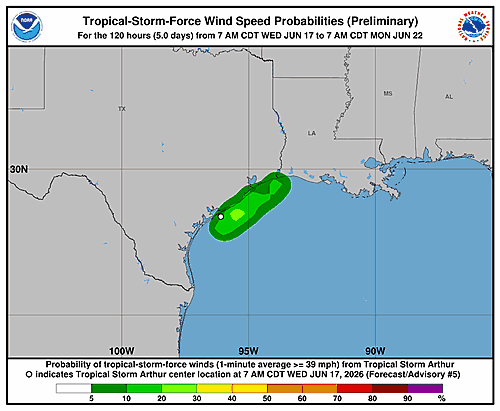
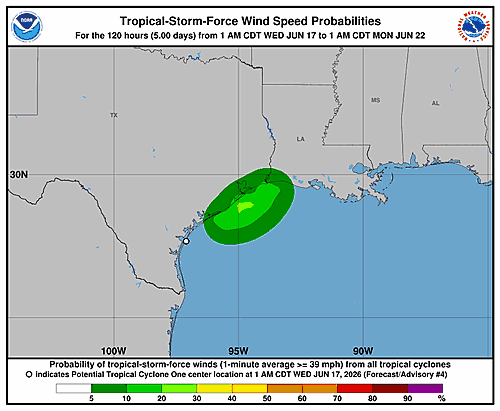
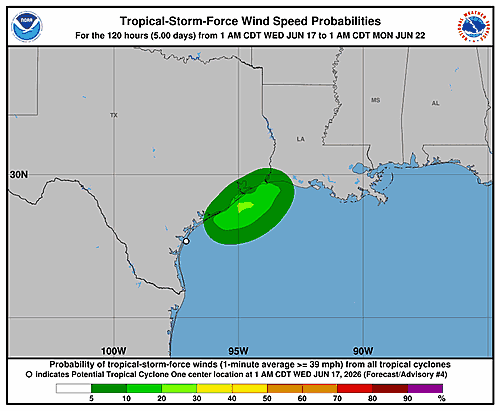
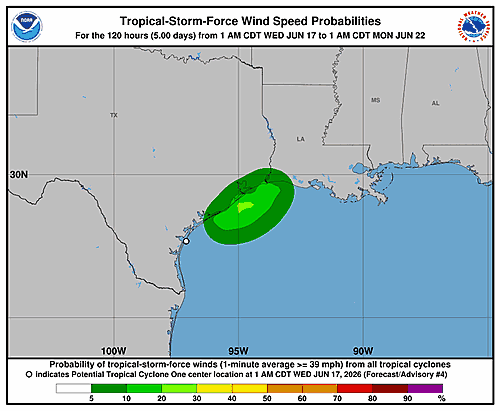
The National Hurricane Center in Miami issued its fifth wind speed probability update for Tropical Storm Arthur on Wednesday, June 17, 2026, at 3:00 p.m. Coordinated Universal Time.
At the time of the advisory, the center of Tropical Storm Arthur was positioned near latitude 28.6 North and longitude 95.8 West, with maximum sustained winds of approximately 35 knots — equivalent to 40 miles per hour or 65 kilometers per hour.
The advisory outlines the probability of locations experiencing sustained wind speeds reaching at least 39 mph (tropical storm force), 58 mph, or 74 mph over the next five days. These probabilities are broken down into individual time periods as well as cumulative chances from Wednesday through the following Monday.
Among the locations listed in the probability table, Galveston, Texas, carries the highest cumulative chance of seeing tropical-storm-force winds at 16 percent. Cameron, Louisiana, follows with a 7 percent cumulative probability, while Matagorda, Texas, also shows a 7 percent cumulative chance. Port O’Connor, Texas, has the lowest listed probability at 3 percent cumulative.
None of the listed locations showed meaningful probabilities for winds reaching 58 mph or higher, suggesting Arthur is not expected to significantly intensify as it affects these coastal communities.
The advisory was prepared by Forecaster Reinhart at the National Hurricane Center.
The National Hurricane Center has released updated wind speed probability graphics for Tropical Storm Arthur, providing forecasters and the public with the latest information on where tropical-storm-force winds may occur.
The graphics depict the probability of 34-knot winds — the threshold for tropical storm conditions — reaching various locations over a five-day, or 120-hour, forecast window.
According to the National Hurricane Center, the wind speed probability data was last updated on Wednesday, June 17, 2026, at approximately 2:56 p.m. GMT.
Residents in potentially affected areas are encouraged to monitor the latest updates from the National Hurricane Center as Tropical Storm Arthur continues to develop.
A right shoulder closure is currently affecting Willow Grove Road between Cataldi Way and West Lebanon Road, also known as Route 10, according to transportation officials.
The closure is expected to remain in effect until 4 p.m. Drivers traveling through the area should allow extra time and remain alert for changed traffic conditions.
Motorists are encouraged to check for the latest traffic updates before heading out and to use caution when passing through the affected stretch of roadway.
Meeting in Evian-les-Bains, France on Wednesday, leaders of the G7 nations announced an agreement to boost coordination on the supply of critical minerals, outlining a framework for joint stockpiling and the creation of a new international cooperation platform with an expanded role for the International Energy Agency.
The decision reflects growing urgency among Western nations to diversify where they source metals that are essential to the defense, technology, and renewable energy sectors. Concerns intensified last year when China imposed export restrictions on permanent magnets, bringing some industries to a near standstill and exposing just how dependent the world had become on a single supplier.
In a joint statement, the G7 leaders declared: “We are committed to working towards establishing harmonized, interoperable mechanisms… This would start with two pilot critical minerals – lithium and nickel – and aim to avoid undermining competitiveness or imposing excessive cost burdens.”
The group also announced plans for a dedicated platform designed to coordinate policy decisions, share data, and manage crisis situations. The International Energy Agency will play a central role in monitoring global markets and identifying emerging risks — a development first reported by Reuters ahead of the official announcement.
According to the joint statement, the new platform will rely on the agency to deliver analysis and provide “early warnings of market distortions” before they escalate into broader economic disruptions.
The University of Delaware softball team is bringing in new pitching talent for the upcoming 2027 season, announcing the addition of transfer Madison Steppe.
Steppe comes to Newark from Hofstra, where she previously played as a pitcher. She will join the Blue Hens roster as the program continues to build its squad for the 2027 campaign.
Polish Prime Minister Donald Tusk declared Wednesday that the fatal shooting of a Russian artist who openly criticized President Vladimir Putin appears to carry all the signs of a politically motivated killing.
The victim, Robert Kuzovkov — who worked under the artist name Semyon Skrepetsky — was shot at close range near his residence in Biala Podlaska, a city in eastern Poland, on Monday, according to statements from prosecutors released Tuesday.
“Everything points to this being a political murder,” Tusk told reporters at a news briefing in Warsaw. “But we must wait for evidence or more concrete indications. Because if that was the case — if it was ordered by Russia — then it is an extremely serious matter internationally. It would constitute state terrorism.”
Polish authorities initially took two Belarusian nationals into custody, but Tusk confirmed Tuesday that both had been released after investigators found no direct evidence linking them to the killing.
Tusk noted that law enforcement is continuing to build its case and acknowledged the complexity of the investigation.
“The case is difficult. If there’s a hired killer involved, it’s unfortunately not easy to identify such a person,” Tusk said. He also revealed that Polish authorities had previously offered the artist protective security, which Skrepetsky declined.
Polish prosecutors stated that through his work, Skrepetsky “expressed criticism of the current policies of the Russian authorities.” His paintings included unflattering depictions of Putin, Chechen leader Ramzan Kadyrov, and other senior Russian officials. Among his works was a painting showing Putin cradled in the arms of Soviet dictator Josef Stalin.
Just the day before his death, on Sunday, Skrepetsky posted a video to his YouTube channel showing him in Berlin placing a Russian flag into a trash can — a symbolic act timed to June 12, the holiday commemorating Russian sovereignty.
According to prosecutors, an unidentified man approached the artist near his home at approximately 9:45 a.m. Monday, fired two shots, then shot him three additional times at close range before fleeing the scene. The artist died from gunshot wounds to the head, chest, and back.
Since launching its invasion of Ukraine in 2022, Russia has faced repeated accusations of attempting to eliminate critics and dissidents living abroad, including alleged targeting of exiled activists in France and Lithuania.
German officials have also disrupted plots aimed at the leader of a German arms company supplying Ukraine and a Ukrainian military figure. In 2024, Polish authorities arrested a man in connection with an alleged plot to kill Ukrainian President Volodymyr Zelenskyy. That same year, a Russian helicopter pilot who had defected to the West was killed in Spain, with Russian intelligence operatives considered the primary suspects.
ROME (AP) — Carlo Ginzburg, an Italian historian whose groundbreaking approach to the past gave a platform to people long excluded from mainstream historical narratives, passed away Wednesday at the age of 87.
The Scuola Normale Superiore in Pisa — an institution where Ginzburg studied and later served as professor emeritus — confirmed that he died in the northern Italian city of Bologna.
Ginzburg was widely recognized as a trailblazer in the field of microhistory, a discipline that examines small, specific subjects — an individual person, a single community, or one particular event — in order to shed light on much larger historical patterns and social questions.
As one of the most influential figures in modern historical scholarship, Ginzburg developed what became known as the “evidential paradigm” — an approach that relies on reading clues, traces, and seemingly insignificant details to reconstruct the lives and experiences of those left out of dominant historical accounts.
His early scholarship centered on the “benandanti,” a pagan fertility cult that existed in the Friuli region of Italy during the 16th and 17th centuries. Members of the group, who were regarded as shamanic healers, faced accusations of heresy from the Inquisition.
That research formed the foundation of his first book, released in 1966, in which he connected the cult’s origins to older belief systems rooted in Central Europe.
His most celebrated work, “The Cheese and the Worms,” published in 1976, is widely considered one of the most significant contributions to Italian historical writing. The book reconstructed the trial of a Friulian miller from the 16th century who was accused of holding unconventional views about the creation of the world and the nature of Jesus Christ.
By drawing on records from inquisitorial proceedings, Ginzburg demonstrated how the same documents can simultaneously reflect both power and resistance, using individual cases to illuminate broader conflicts between elite and popular culture, and between authority and those who challenged it.
Born in Turin in 1939, Ginzburg was the son of writer Natalia Ginzburg and anti-fascist activist Leone Ginzburg. Over the course of his career, he held teaching positions at Harvard, Yale, Princeton, and the University of California, Los Angeles. His body of work was translated into more than 30 languages.
He was the recipient of numerous prestigious international awards, among them the Prix Aby Warburg, the Balzan Prize, the Antonio Feltrinelli Prize, and the Humboldt Research Award.
In a 2023 interview with the Italian cultural publication Lucy, Ginzburg reflected that his scholarly method had uses beyond the academic world, saying it should be applied “in everyday life” as a way to better understand other people.
In a formal statement, the Scuola Normale Superiore said Ginzburg “changed the way of practicing the historian’s craft,” noting that he “restores voice to those who lack it, shows that the rigor of proof is a form of justice, and upholds a demanding idea of truth.”
He is survived by two daughters — Silvia, an art historian, and Lisa, a writer and essayist — from his marriage to the late historian Anna Rossi-Doria.
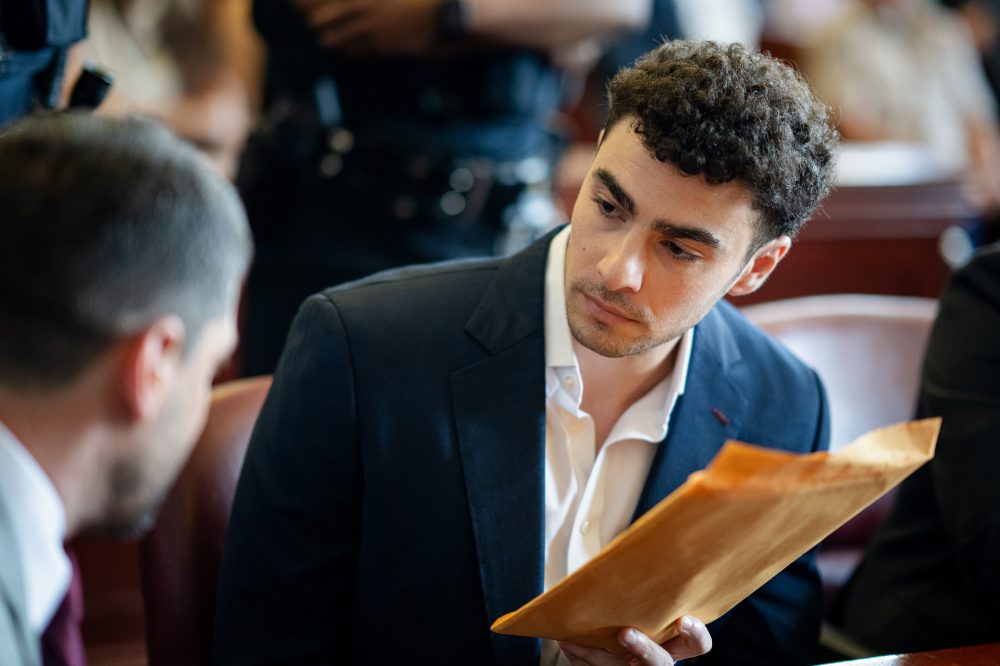
NEW YORK — A New York judge confirmed Wednesday that Luigi Mangione’s defense attorneys plan to argue he was suffering from a psychiatric condition at the time of the killing of UnitedHealthcare CEO Brian Thompson.
Judge Gregory Carro announced that Mangione’s legal team intends to demonstrate he was experiencing “extreme emotional disturbance at the time of the occurrence.” A successful psychiatric defense could result in Mangione being sent to a mental health treatment facility rather than serving time in prison.
Judge Carro’s announcement came approximately two weeks after he held a closed-door hearing on the matter, which was requested by the defense. He stated he will now unseal records connected to that private hearing and to the psychiatric defense strategy.
“The reasons for the sealing was to give the defense an opportunity to determine whether they were going forth with that defense and the nature of that defense,” Carro explained in court.
Mangione’s attorney, Karen Friedman Agnifilo, raised concerns about making those records public, arguing it could damage her client’s position in his separate federal case.
“The reason why we asked for the sealing is that this defense is not available federally and Mr. Mangione is being prosecuted federally and this is prejudicial to his defense to the exact same facts,” Friedman Agnifilo said.
The ruling had originally been scheduled for Tuesday but was pushed back one day after prosecutors failed to notify Mangione’s jail that he was required in court. Mangione appeared Wednesday wearing a blue suit and a light-colored button-down shirt, seated between his attorneys. His state trial is scheduled to begin September 8.
Mangione, 28, has entered not guilty pleas to both state and federal charges in connection with the December 4, 2024 killing. A separate federal trial involving stalking charges is set to get underway October 13. A conviction in either case could result in a life sentence.
Thompson, 50, was shot and killed outside a Manhattan hotel where UnitedHealth Group was holding its annual investor conference. Surveillance footage captured a masked gunman firing at him from behind. Investigators say the words “delay,” “deny,” and “depose” were found on the ammunition — a phrase commonly associated with tactics insurers use to avoid paying out claims.
Mangione, an Ivy League graduate from a wealthy Maryland family, was taken into custody five days after the shooting at a McDonald’s restaurant in Altoona, Pennsylvania, roughly 230 miles west of Manhattan. At a May 18 hearing, Judge Carro ruled that a firearm and a notebook recovered from Mangione could be used as evidence in the state trial.
Prosecutors say the weapon — a 3D-printed pistol — is consistent with the gun used to kill Thompson. The notebook reportedly contains references to wanting to “wack” a health insurance executive and expresses opposition to what it describes as “the deadly, greed fueled health insurance cartel.”
Also on Wednesday, Judge Carro dismissed a charge related to a gun magazine that he had previously ruled inadmissible, after determining it was discovered during an initial search of Mangione’s backpack at the McDonald’s location.
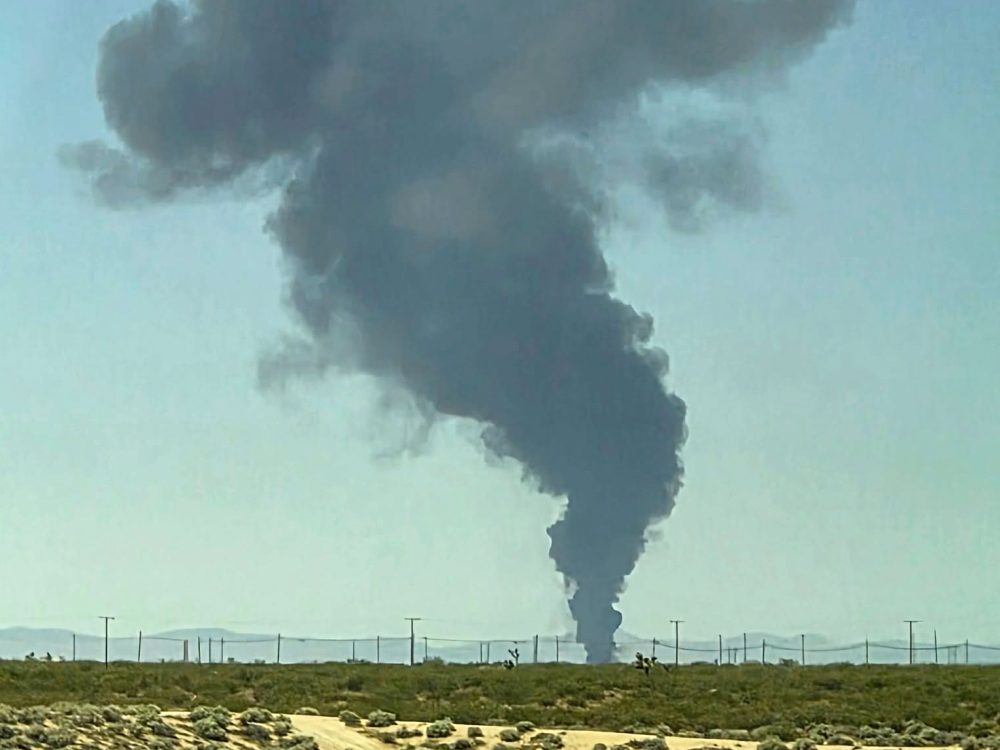
Twenty-one people lost their lives in three separate aircraft crashes across the United States in a matter of days, with accidents occurring in Missouri, California, and Texas. Federal investigators are now working to determine what caused each of the deadly incidents.
A business jet carrying six people went down on a Texas highway late Tuesday night, killing one person. Eight people aboard a B-52 military bomber died Monday when the aircraft crashed during takeoff at a California air force base. And on Sunday, a small plane carrying skydivers crashed in Missouri, killing all 12 people on board.
The National Transportation Safety Board is investigating all three crashes, and officials say it is too early to draw conclusions about what went wrong in any of them.
Texas: Business Jet Crashes on Laredo Highway
A Cessna Citation Latitude twin jet was flying from Los Cabos International Airport in Mexico to Austin, Texas, when it came down on a highway near Laredo International Airport at approximately 10 p.m. local time Tuesday.
Dashcam video shared on social media captured the jet skidding down the roadway, striking a light pole before coming to a stop. Witnesses described the scene as surreal, comparing it to something out of a movie, as bystanders rushed from their vehicles in a desperate effort to free the six occupants while the plane burned.
Two people approached the burning aircraft armed with a sledgehammer and a shovel, using them to break through the cockpit glass and attempt to pry open the door. With the jet tipped on its side and nearly split in two, several passengers managed to climb out on their own. A firefighter used a small ladder to reach and rescue the final passenger, who appeared to be unconscious at the time. One person on the plane did not survive, and five police officers were taken to a hospital for smoke inhalation.
Laredo International Airport Director Gilberto Sanchez told a local television station that the plane appeared to have suffered a mechanical failure, though he offered no further details. NTSB investigators arrived at the scene on Wednesday.
California: B-52 Bomber Crashes at Edwards Air Force Base
A Boeing B-52 Stratofortress crashed Monday while taking off at Edwards Air Force Base, bursting into flames on the runway and killing all eight people on board. The aircraft had barely left the ground before it slammed back down approximately halfway along the runway.
Base officials said the bomber was participating in a test mission connected to a program designed to keep the aging aircraft — which first entered service in 1955 — operational for decades into the future. Both military personnel and government contractors were on board. Aircraft manufacturer Boeing confirmed that two of its employees were among those killed.
Aviation safety experts said early impressions pointed to a possible failure in either the flight controls or the engines, though investigators have not yet identified an official cause.
Col. James Hayes, the deputy commander for the 412 Test Wing, said the aircraft was supporting a radar modernization program. In 2025, Boeing had sent a B-52 to Edwards equipped with an upgraded radar system intended to keep the bomber flying through at least 2050. The B-52 has seen service in U.S. military conflicts ranging from Vietnam to Iran.
Authorities have not publicly released the names of those who died. However, Lauren Smith spoke to local television reporters and identified her husband, Jeromy Smith, a flight test engineer with the U.S. Department of Defense, as one of the victims.
Missouri: Skydiving Plane Crashes Near Butler
A pilot and 11 skydivers died Sunday when a single-engine Pacific Aerospace 750XL crashed shortly after departing a small airport in Butler, Missouri, located roughly 65 miles south of Kansas City.
The plane had reached only about 100 feet in altitude and appeared to be losing power when it made a sharp left turn and went down on what witnesses described as a clear, sunny day. Acting airport manager and Bates County Emergency Management Agency director Dennis Jacobs said it appeared the pilot was trying to clear a nearby highway and bring the plane down for a landing, but the aircraft stalled, nosedived, and caught fire in a field.
The passengers were described by family and friends as passionate and experienced skydivers. Among those killed was a skydiving instructor with more than 6,800 jumps to his name, a drummer from Kansas City-area bands who credited the sport with helping him achieve sobriety, and a grandfather who was jumping in honor of his sister who had died from cancer.
The turboprop, built in 2010, was operated by Skydive Kansas City out of Butler Memorial Airport, where flight tracking data from FlightRadar24.com shows it had arrived for the first time on June 5. Prior to that, the plane had been operating in Tennessee and Wisconsin for weeks at a time.
The NTSB said its investigation will examine all contributing factors, including the pilot’s experience with this specific aircraft model and any mechanical or structural issues with the plane itself.
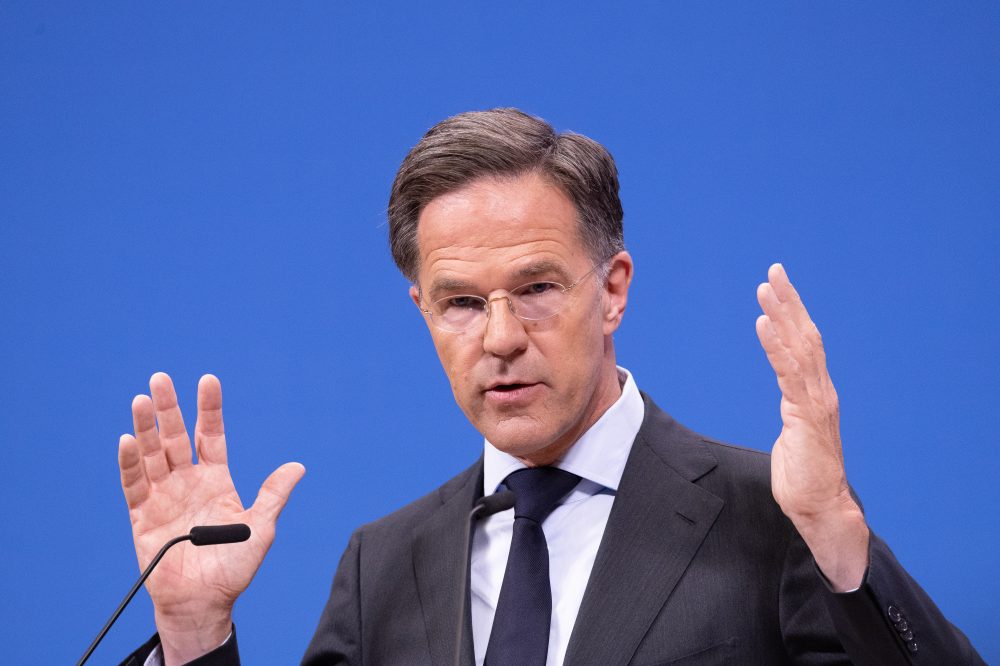
BRUSSELS (AP) — NATO Secretary-General Mark Rutte sought Wednesday to minimize concerns over the Trump administration’s move to scale back the number of American troops and military resources it would make available to allies in the event of an attack.
NATO’s top military commander — an American — has been developing alternative defense plans for Europe after the U.S. signaled on June 3 that it would no longer commit an aircraft carrier, support vessels, aerial refueling aircraft, and dozens of fighter jets, among other assets, to alliance emergencies.
Rutte was quick to clarify, however, that American forces are not being pulled out of Europe. “This is not about where forces and assets are currently located,” he said on the day before a NATO defense ministers meeting he will lead in Brussels.
“It’s about who would do what if our defense plans were activated. So, let’s say in case of an Article 5 situation,” Rutte told reporters.
Article 5 of NATO’s founding treaty — the alliance’s collective defense guarantee — holds that an attack against one of the 32 member nations is considered an attack against all of them. It does not require military assistance, though many allies would likely respond with force.
In practical terms, the United States is reducing the role it would play if an ally invoked Article 5. The U.S. commands by far the largest military force within NATO. The country has not signaled any intention to remove its nuclear weapons from Europe, which remain a cornerstone of the alliance’s deterrence strategy.
The NATO Force Model serves as the alliance’s primary framework for organizing military contributions from all 32 member nations during peacetime, crises, or armed conflict. It defines what military resources commanders can draw upon across the first six months of any potential conflict.
Earlier this month, the Pentagon notified NATO allies that it would be reducing its commitments to the alliance as it shifts focus toward other potential threats, particularly from China in the Indo-Pacific region.
Rutte said NATO’s supreme commander, U.S. Gen. Alex Grynkewich, believes “there are largely capabilities available that other allies already have, or will have in the near future,” that can offset the reduction in American contributions.
“The overall picture is looking good,” Rutte added.
Still, some of the withheld equipment has caught U.S. allies off guard. Many of those assets are scarce in Europe. The U.S. is pressing allies to outline how they plan to replace or compensate for the missing resources before President Donald Trump and fellow heads of state gather for a NATO summit on July 7-8.
Ahead of that summit, European allies and Canada are seeking a clearer picture from U.S. Defense Secretary Pete Hegseth about the administration’s agenda for the gathering in Ankara, Turkey’s capital. Hegseth was absent from the alliance’s previous ministerial meeting in February.
Trump added to the confusion last month when he announced plans to send 5,000 additional U.S. troops to Poland — a move that conflicted with his administration’s stated goal of reducing America’s military presence in Europe.
Reductions are already underway. NATO’s military headquarters announced Friday that it will shrink the size of its peacekeeping force in Kosovo, with American troops expected to be among those withdrawn.
The U.S. currently has 590 soldiers serving with KFOR in Kosovo, placing it second among the 31 contributing nations behind Italy, which has 907 personnel deployed. U.S. Black Hawk helicopters are also based at Camp Bondsteel, the large American installation in the country.
KFOR was established in 1999 to maintain stability between Kosovo and Serbia. Once numbering 50,000 troops, the force has been gradually reduced as tensions declined over the years, though 1,000 additional soldiers were deployed in 2023 following an outbreak of renewed violence.
Rutte confirmed Wednesday that more than 1,000 KFOR personnel would be withdrawn. Gen. Grynkewich has stated that the situation in Kosovo is now stable enough to “optimize” the mission’s troop levels.
WASHINGTON — Contracts signed to purchase previously owned homes across the country surged beyond expectations in May, though the housing market continues to face headwinds from high mortgage rates and a limited number of available homes.
The National Association of Realtors reported Wednesday that its pending home sales index climbed 3.8% last month, reaching 76.8 — the strongest reading since November of last year. Economists surveyed by Reuters had only anticipated a 0.8% increase. These contracts typically turn into completed sales within one to two months.
Every region of the country posted gains. The Northeast led with an 8.7% jump, followed by the Midwest at 8.1%. Compared to the same time last year, contracts were up 4.8% nationally.
Mortgage rates have been pushed higher as the U.S.-backed war with Iran sent oil prices upward, fueling inflation and driving up Treasury yields. According to data from Freddie Mac, the rate on the widely used 30-year fixed mortgage has climbed more than 50 basis points since the conflict began in late February.
On Sunday, Washington and Tehran announced they had reached an agreement to end the war and reopen the Strait of Hormuz.
Lawrence Yun, the NAR’s chief economist, pointed to a notable shift in the Northeast. “The inventory-constrained Northeast region, which has seen faster home price growth but slower home sales for several months, is now showing more buyer contract signings,” he said. “More supply is needed to help moderate home price growth.”
LONDON — Britain’s publicly funded broadcaster, the BBC, announced Wednesday that it will eliminate 550 jobs across its news and content divisions as part of a sweeping cost-cutting initiative aimed at saving £500 million over the next three years.
The move comes as the iconic broadcaster struggles to remain relevant in an era when viewers — especially younger ones — are increasingly turning to streaming services and digital platforms rather than traditional television.
The BBC’s new director-general, former Google executive Matt Brittin, was appointed to lead the organization back in March. At the time, BBC Chair Samir Shah described the need for dramatic change at the publicly funded institution, while Brittin himself warned the broadcaster was facing a moment of “real risk.”
Within the news division specifically, the restructuring will involve shutting down some long-standing programs, combining production teams across different shows, and conducting a review of senior on-air positions.
The BBC employed roughly 21,500 people as of March of last year. The organization said the changes announced Wednesday would account for approximately £160 million of the overall £500 million savings goal. Additional cuts — including the elimination of around 700 jobs in corporate divisions — are expected to be announced in the months ahead.
When all is said and done, the BBC projects total job losses of somewhere between 1,800 and 2,000 positions over the coming three years.
Brittin also faces the challenge of negotiating a new funding arrangement before the broadcaster’s Royal Charter comes to an end in late 2027. Among the options being considered are keeping the existing licence fee paid by households that watch television, switching to a subscription model, or pursuing advertising-based funding.
Russia is pointing the finger at Ukraine over a drone strike it says struck a bus carrying Belarusian children, but Ukraine is calling the accusation completely false.
The acting governor of Russia’s Bryansk region, which shares a border with Ukraine, identified as Yegor Kovalchuk, said the bus had been transporting a youth soccer team on a holiday trip from Belarus to southern Russia. According to Russia’s Foreign Ministry, one woman traveling with the children lost her life, and eight others were hurt — among them six children. The ministry described the incident as “another monstrous crime.”
Ukraine’s military General Staff pushed back firmly, stating on Telegram that “during the specified period, the Defence Forces of Ukraine did not employ unmanned aerial vehicles against targets in Bryansk Oblast.”
Reuters was not able to verify the claims independently. It should be noted that both countries deny deliberately targeting civilians.
Kovalchuk shared photos online depicting a silver bus with shattered windows, a damaged front tire on the right side, and what appeared to be bloodstains on some of the interior seats.
Russian investigators launched a terrorism probe into the incident. Authorities said the bus had been traveling from Gomel in Belarus to Gelendzhik in Russia and had 44 people on board, including 28 children.
This is not the first such accusation this month. Russia also blamed Ukraine earlier in June for a separate drone attack on a bus in a Russian-controlled area of the Donetsk region in eastern Ukraine, claiming that strike killed eight civilians and injured 11 more.
Russia has carried out repeated strikes on Ukrainian cities, including the capital Kyiv, since launching its full-scale invasion in February 2022. In recent months, Ukraine has ramped up its own drone campaign targeting Russian territory, aiming to strain Moscow’s economy and push for an end to a war that has claimed thousands of Ukrainian civilian lives.
U.S. stock markets kicked off Wednesday’s trading session on an upbeat note, with semiconductor stocks bouncing back ahead of a closely watched interest rate announcement from the Federal Reserve.
When trading began at 9:30 a.m. Eastern Time, the Dow Jones Industrial Average edged up 11.12 points, a gain of 0.02%, reaching 52,010.79. The S&P 500 climbed 8.44 points, or 0.11%, to land at 7,519.79, while the Nasdaq Composite posted a stronger advance of 113.22 points — up 0.43% — to hit 26,489.56.
The day’s market activity comes as Wall Street waits for the first interest rate decision under Federal Reserve Chair Kevin Warsh, who now leads the nation’s central bank.
Artificial intelligence startup Genspark.ai announced Wednesday that it secured $100 million in an extended investment round, giving the company a valuation of $2.6 billion.
The Palo Alto, California-based firm said the additional capital brings its total Series B funding to $485 million.
The investment is part of a broader trend in which venture capital continues to flow heavily into AI companies developing software designed to automate business tasks and boost workplace productivity.
The funding round was supported by a group of existing backers, including Sozo Ventures, Korea Mirae Asset, and UpHonest Capital.
Genspark operates as an AI workspace company, leveraging multiple artificial intelligence models to handle and automate business processes for both corporate clients and individual users.
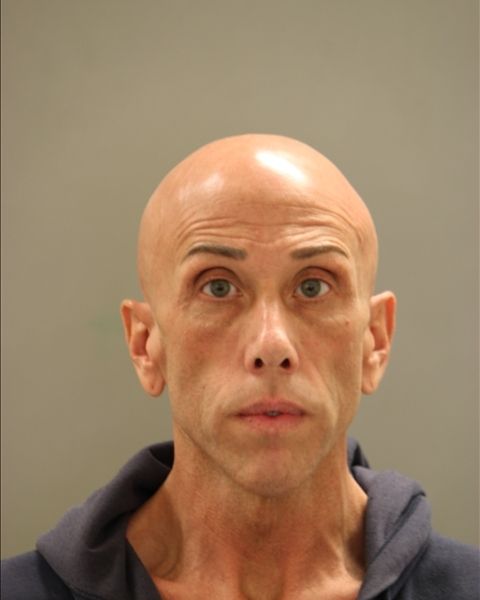
New Castle County Division of Police detectives have arrested and charged a 46-year-old Wilmington man with several felony offenses in connection with the sexual assault of a juvenile.
Investigators identified the suspect as Todd Hill of Wilmington. According to authorities, the alleged assault took place in the unit block of South Cannon Drive in Wilmington.
During the course of the investigation, detectives determined that Hill was employed as a manager at a local swim school at the time of the alleged offense.
The charges against Hill include multiple felony counts related to unlawful sexual contact. The New Castle County Division of Police has not released additional details about the investigation at this time.
Motorists traveling on Jupiter Road should be aware of intermittent lane closures currently in effect due to ongoing construction work.
The affected stretch runs between Venus Drive and the cul-de-sac located at the end of the road. Drivers in the area may experience brief delays as crews work in the roadway.
The lane closures are expected to remain in place until 4:00 PM. Drivers are encouraged to use caution when passing through the construction zone.
Agricultural and dairy industry officials are exploring the use of bulk tank milk testing as a potential tool for detecting and responding to foot and mouth disease outbreaks.
The approach involves testing milk collected in bulk storage tanks, which could allow health and agriculture officials to identify the presence of the disease at an early stage across multiple farms simultaneously.
Foot and mouth disease is a highly contagious viral illness that affects cloven-hoofed animals, including cattle, and can cause significant economic damage to the livestock and dairy industries if not quickly contained.
By screening bulk tank milk — which is collected from many animals at once — officials could potentially detect signs of an outbreak faster than traditional methods, giving response teams more time to act before the disease spreads further.
The proposal is being reviewed as part of broader efforts to strengthen the nation’s preparedness and response capabilities in the event of a foot and mouth disease outbreak.
Morningstar’s wealth division has announced a partnership with three major financial firms — Apollo Global Management, Franklin Templeton, and J.P. Morgan Asset Management — to roll out a new series of investment portfolios designed to give everyday retail investors a foothold in both private and public markets.
According to Morningstar, the initial portfolios will provide exposure to private credit and real estate through what are known as interval funds. Those interval funds are expected to make up approximately 12% to 20% of each portfolio’s total allocation.
The portfolios are scheduled to become available later this year and will be structured using exchange-traded funds alongside interval funds, with the goal of making private market investments more accessible to individual investors.
This collaboration reflects a broader shift happening across Wall Street, where major financial institutions are working to open up private markets to a wider audience. Historically, these types of investments have been available only to large institutional investors and individuals with extremely high net worth.
Franklin Templeton’s CEO Jenny Johnson spoke to the significance of the moment, saying: “When I think about why private markets matter now more than ever, it’s not just access but also focus on the long-term in a short-term world. We are living in an environment of persistent inflation and structural uncertainty.”
Morningstar’s new public/private select series will feature six different portfolios built around varying levels of risk tolerance, spanning from conservative capital preservation strategies all the way to more aggressive growth options.
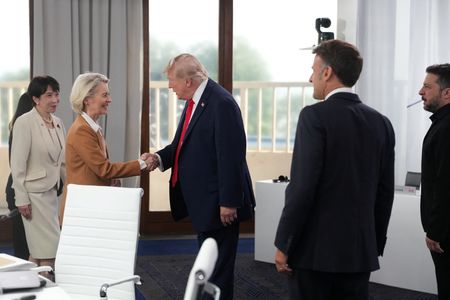
European Commission President Ursula von der Leyen addressed G7 leaders and technology executives on Wednesday, making the case that the United States and the European Union both stand to benefit from ensuring Europeans have access to top-tier artificial intelligence tools.
Speaking at a lunch in Evian-les-Bains, France, von der Leyen emphasized the deep ties between the two economies. “We use each other’s trusted technology, and our financial systems are interconnected. It is in our mutual interest that our citizens and companies can safely use the best AI models,” she said.
The EU chief also offered an analogy to underscore her point about safety standards: “We test planes before flying them. The US and EU are world leaders in aviation safety, and we can also show the way also in AI… I’m looking forward to working together with the U.S. on this.”
Her comments came in the wake of a significant disruption in the AI sector. Anthropic pulled its most advanced AI models from users last week after the U.S. government directed the company to cut off access for foreign nationals.
One of those models, Anthropic’s Mythos, was designed to identify weaknesses in computer code as a way to strengthen defenses against cyberattacks. However, cybersecurity experts have raised concerns that the same technology could potentially be used to supercharge attacks on the very banking systems it was built to protect.
BUNIA, Congo — A toddler not yet two years old and his mother have beaten Ebola, offering a rare bright spot in an outbreak that health officials fear could become the deadliest in history.
The mother and her 16-month-old son walked out of the Rwampara Treatment Center on Tuesday alongside five other survivors. The facility is located near Bunia, in Congo’s Ituri province — the heart of the current outbreak.
“The joy is immense given the state he was in at first,” said Kahindo Mireille Pierrette, speaking about her infant son. “If you had seen him before, you wouldn’t believe he could have this strength now.”
Pierrette said she rushed her child to the treatment center at the end of May after he began bleeding from his mouth and nose and could barely move. A PCR test confirmed Ebola on his second day there, and a doctor named Modet Camara said the baby was then treated with antibiotics.
Congo’s Ministry of Health reported Tuesday that 837 cases have been confirmed in total, along with 196 confirmed deaths. Officials believe the true number of cases is actually higher, since the outbreak was officially confirmed on May 15 — weeks after it is thought to have started. Of those infected since mid-May, 49 people have recovered, the ministry said.
This particular outbreak is being driven by the rare Bundibugyo strain of Ebola, for which there is currently no approved treatment or vaccine. That sets it apart from the more common Zaire strain, which now has a vaccine and was responsible for the majority of Congo’s previous 16 outbreaks.
More than 90% of current cases are concentrated in the eastern province of Ituri, though infections have also been recorded in North Kivu and South Kivu provinces. The virus has even crossed the border into Uganda.
The head of Africa’s Centres for Disease Control and Prevention issued a stark warning Tuesday, saying the outbreak could break all previous records if it is not stopped soon. Tens of thousands of contacts of infected patients have still not been tracked down.
“If we don’t stop the outbreak very soon it will be worse than what we had in West Africa and eastern DRC,” said Africa CDC Director-General Jean Kaseya during a virtual gathering of African heads of state.
The outbreak he referenced — which struck several West African nations about a decade ago — remains the worst Ebola outbreak ever recorded, with more than 28,000 cases and over 11,000 deaths.
Containing this current outbreak is proving especially challenging. The United Nations humanitarian office reports that nearly one million people have been displaced in Ituri due to years of ongoing conflict. Many residents are constantly on the move, fleeing violence or traveling through a vast region of dense forests, poor roads, and remote villages that can take days to reach. Tracing the contacts of infected individuals is also complicated by the thousands of miners who frequently travel between isolated sites in the mineral-rich area.
NEW YORK (AP) — American consumers stepped up their spending in May, fueled by warmer weather and a dip in gasoline prices at the pump.
New data from the Commerce Department, released Wednesday, showed retail sales climbed 0.9% last month — surpassing expectations and improving on a revised 0.4% gain recorded in April. Government tax refunds provided a financial cushion for shoppers in both April and May, though economists caution that benefit is beginning to wear off.
When gas station purchases are removed from the equation, retail sales still rose a solid 0.7% in May.
Breaking down the numbers by category: clothing and accessories stores saw a 0.3% uptick, while home furnishings and furniture retailers posted a 1% gain. Electronics and appliance stores bucked the trend with a 0.5% drop. Online shopping was a bright spot, climbing 1.5%.
It’s worth noting that the Commerce Department figures capture only a portion of overall consumer activity — things like hotel stays and travel are not reflected in the data. Among service-related categories, restaurants were the only one tracked, and they posted a slight 0.1% decline.
Consumer spending remains the backbone of the U.S. economy, accounting for the majority of the country’s economic output. Despite persistent price increases and a sluggish job market, household spending has held up through the first half of the year.
Inflation climbed to its highest point in three years, according to government figures released last week, with consumer prices up 4.2% in May compared to the same month a year earlier. A major contributor has been rising fuel costs tied to the Iran war.
A tentative agreement to end the Iran conflict and reopen the Strait of Hormuz has been reached, though analysts note it could take some time before oil supplies from the Middle East normalize and prices fully stabilize.
As of the latest figures from motor club AAA, gas prices slipped about a penny overnight to $4.02 per gallon — down 11% from $4.51 a month ago. AAA also noted the national average has not fallen below $4 since March.
Steve Lamar, the CEO of the American Apparel & Footwear Association trade group, offered a cautious take on the situation. “While the deal is encouraging, our industry is still holding its breath,” he said. “Our question now is, will this agreement be strong enough for our global industry to begin recovering?”
Even with gas prices easing, some analysts believe consumers may hold onto habits they developed during the price surge — such as filling up at big-box retailers that offer member discounts.
R.J. Hottovy, head of analytical research at Placer.ai — a firm that monitors foot traffic patterns using cellphone data — said visits to gas stations operated by large membership-based chains like BJ’s, Costco, and Sam’s Club began accelerating in early March, right as fuel prices were spiking sharply.
WASHINGTON — Cameron Hamilton, President Donald Trump’s choice to lead the Federal Emergency Management Agency, sat before senators Wednesday fielding tough questions about his fitness to run an organization that the administration itself has threatened to shut down.
Hamilton had a brief stint leading FEMA earlier this year before being let go after he spoke out in defense of the agency’s continued existence. His nomination arrives at a time when the Republican administration appears to be softening its stance on earlier promises to do away with an agency that the president has sharply criticized.
Hamilton was appointed as temporary director in January 2025, just days after the president publicly floated the idea of “getting rid” of FEMA. At the time of his appointment, Hamilton had no prior experience as a state or local emergency management director, and had himself been critical of FEMA before taking the role.
After stepping into the position, Hamilton expressed concern about efforts to abolish the agency. At a congressional hearing last year, he stated that he did not “believe it is in the best interest of the American people to eliminate” FEMA. He was dismissed the following day.
Should the Senate confirm him, Hamilton would serve as the top adviser to both Trump and Homeland Security Secretary Markwayne Mullin on matters of emergency management. FEMA operates under the Department of Homeland Security.
Hamilton would become the first permanent FEMA administrator during Trump’s second term. The agency has cycled through four temporary leaders, including Hamilton’s own stint from January to May of 2025.
He would be stepping into an agency still struggling in the aftermath of turbulent leadership at the Department of Homeland Security. FEMA has been battered by a wave of staff departures, operational restrictions, and a lengthy DHS shutdown.
Among the challenges Hamilton would face is making sure FEMA is ready for the summer disaster season, all while answering to a president who is expected to push for major reforms after a council he appointed called for sweeping changes at the agency.
Also being considered at Wednesday’s hearing was David Cummins, Trump’s nominee to lead the Transportation Security Administration.
BEIRUT/DUBAI — A preliminary agreement reached between Iran and the United States is poised to give Hezbollah a significant financial and political boost in Lebanon, with Tehran reportedly pledging increased support for the group once its frozen assets become accessible, according to four sources with knowledge of the relationship between Iran and the organization.
An influx of Iranian money could help Hezbollah rebuild after suffering devastating losses during a 2024 war with Israel, potentially undermining Israeli efforts to weaken the group. Israel, which dealt Hezbollah severe blows during that conflict, has actively lobbied against any easing of sanctions on Tehran.
The U.S.-Iranian memorandum of understanding, which was set to be formally signed on Friday, is expected to bring hostilities to a halt across multiple fronts, according to mediator Pakistan — though the specific terms of the agreement have not been released to the public.
The halt to fighting, which Iran insisted upon, extends to Lebanon. There, Hezbollah launched attacks against Israel on March 2 in a show of solidarity with Tehran, triggering an Israeli military offensive that has killed thousands of people and resulted in Israel invading southern Lebanon — a conflict running alongside the broader standoff between the U.S. and Iran.
Southern Lebanon remains unstable. Iran issued a warning to Israel on Tuesday, threatening a military response if Israeli attacks in the south did not stop. Israel has stated it intends to keep forces in the area, and lower-level violence has continued.
The ceasefire leaves Hezbollah in a stronger political position after two difficult years, which included the fall of its Syrian ally Bashar al-Assad in December 2024.
The deal also puts Lebanon’s U.S.-backed government in a difficult spot. Over the past two months, Lebanese officials held direct talks with Israeli counterparts in Washington in hopes of reaching a broader ceasefire that could limit Hezbollah’s military role — those efforts ultimately failed.
Hezbollah, a Shi’ite Muslim organization that Washington has designated as a terrorist group, has been armed and funded by Tehran since the Revolutionary Guards established it in 1982.
Two regional diplomats who were briefed by Tehran said Iran assured Hezbollah it would receive additional funds once its assets are unfrozen. A senior Lebanese source said Iran promised to deliver funds as soon as possible, while another Lebanese source said Iran was expected to increase its support. None of the sources provided specific dollar amounts.
Hezbollah’s media office said Iran had publicly declared its ongoing support for the group. When asked whether Hezbollah would receive a portion of any released Iranian funds, the media office told Reuters that Tehran would continue to back Lebanon “regardless of the details of the retrieval of its funds.”
A U.S. official pushed back on the idea, stating that Washington had made clear to Iran that “funds will not be unfrozen if they are going to any terror organization.” The official added, “The MoU also incentivizes Iran to keep proxy groups in check, as if they fail to do so, they will be unable to access any benefits of the agreement.”
The Israeli prime minister’s office and Iran’s foreign ministry did not respond to requests for comment.
Despite years of heavy U.S. sanctions, Iran has continued to channel money to Hezbollah. According to the U.S. Treasury Department, Iran transferred $1 billion to the group in just the first ten months of 2025.
The war has taken an enormous toll on Lebanon. Israeli forces have displaced roughly one-fifth of the country’s population and destroyed villages in the south, with Israel claiming Hezbollah uses civilian areas for its operations.
Hezbollah acknowledged in May that it had been forced to scale back cash payments due to financial strain. Earlier this month, the group offered $200 to displaced families — the first direct cash assistance it had provided since the war began, according to recipients.
Mohanad Hage Ali of the Carnegie Middle East Center described a major injection of Iranian cash as “a game changer” for Hezbollah, saying it would allow the group to support its constituents and mend strained political relationships within Lebanon. He also predicted that the question of Hezbollah disarming would “take a backseat,” noting the group could point to Israeli military presence as justification for keeping its weapons. He characterized Hezbollah as a strategic asset Iran is unlikely to surrender.
Iran is pushing for Israel to withdraw its troops from Lebanon. The Iranian foreign minister said Tuesday that continued Israeli troop presence there would be seen as a violation of the memorandum of understanding.
Hezbollah believes Iran will not finalize a nuclear agreement with Washington unless Israel pulls out of Lebanon.
Iran’s push for a Lebanon ceasefire and its demands for Israeli withdrawal have complicated Beirut’s attempts to assert its own authority and negotiate an end to the conflict.
President Joseph Aoun sharply criticized Iran earlier this month, accusing it of using Lebanon as leverage in its negotiations with the U.S. However, on Monday he spoke with Iran’s foreign minister and expressed support for the memorandum of understanding.
Andreas Krieg of the School of Security Studies at King’s College London said Israeli withdrawal “can realistically only be achieved through diplomacy,” raising the question of what Hezbollah might be prepared to offer in return.
Israel wants Hezbollah to be dismantled entirely, but the group has ruled out any disarmament. Krieg suggested a more realistic resolution might involve some form of demilitarization of southern Lebanon in exchange for an Israeli withdrawal.
Previous ceasefires have called for Hezbollah to remove fighters from the zone between Israel and the Litani River, which runs east to west across southern Lebanon. Hezbollah’s media office said the group could not engage in discussions about its weapons while Israeli soldiers remain on Lebanese soil.
Hezbollah officials have said the group calculated that entering the war would place Lebanon at the center of U.S.-Iranian negotiations, and that Iran could secure a stronger ceasefire than the one that ended the previous round of fighting in November 2024.
Israel continued striking Hezbollah members after that earlier ceasefire, even as the group refrained from retaliating.
Hezbollah’s media office said Israel could not return to the situation that existed before March 2 “without there being a response.” The group also renewed its demand that the Lebanese government reverse a decision that banned its military activities.
Nick Blanford, a senior fellow at the Atlantic Council, said Israeli occupation had reinvigorated “Hezbollah’s resistance narrative and it’s going to be very difficult for the government to move against Hezbollah now, particularly if fighting flares up again.”
JOHANNESBURG — South Africa’s most powerful labor unions are telling workers to stay on the job and avoid anti-immigrant demonstrations that have been spreading across the country, warning that those who miss work to take part in the protests could put their jobs at risk.
Tension is building across South Africa as June 30 approaches — a deadline set by anti-immigrant groups demanding that all undocumented foreigners leave the nation. Weeks of sometimes violent xenophobic attacks have already occurred, and further unrest is anticipated around that date.
Four major unions, including the Congress of South African Trade Unions (COSATU) — which represents roughly 2 million workers — issued a joint statement making clear that employees would have no protection if they fail to show up for work on June 30.
“We urge workers to report for duty and not place their employment at risk,” the unions stated.
The unions also backed a call made the previous day by President Cyril Ramaphosa, who urged South Africans not to blame migrants for the country’s difficulties.
“Removing foreign nationals from workplaces, communities or public spaces will not reopen factories, repair municipalities, strengthen public healthcare or create sustainable jobs,” said the unions COSATU, FEDUSA, SAFTU, and NACTU in their joint statement.
As the continent’s largest economy, South Africa has historically drawn significant numbers of foreign workers seeking opportunities unavailable in other parts of Africa. In recent months, some politicians have used immigration as a political issue, pointing to migrants as the cause of widespread poverty and crime.
South African news outlets reported Wednesday that clashes broke out between police and thousands of Malawian nationals waiting to be sent home in the coastal city of Durban. According to News24, officers deployed stun grenades and teargas after the crowd grew agitated.
Earlier in the week, Malawi announced that approximately 10,000 of its citizens were in distress and seeking to return home from South Africa. The Malawian government has been organizing buses to transport them back, and even issued a public appeal for donations to help fund the effort.
“Government is resolute in its commitment to bring home every Malawian who wishes to return from South Africa,” the Malawian government said, adding that “the scale and urgency of the operation have created unprecedented financial, logistical, and humanitarian demands.”
Several other nations — including Ghana, Nigeria, and Mozambique — have also been working to bring their citizens home due to safety concerns in South Africa.
Taiwan’s government is accusing Kenya of blocking its delegates from participating in a major international ocean conference held in the east African nation, saying the decision came under pressure from China.
China considers Taiwan part of its own territory and objects to the island being treated as an independent nation. Taiwan’s government firmly rejects those claims of sovereignty.
According to a statement posted on X by Taiwan’s Ocean Affairs Council (OAC), visas that had already been granted to Taiwanese scientists were suddenly revoked at the last minute. The agency also reported that some of the would-be attendees had their passports and mobile phones seized by authorities for more than 20 hours.
Kenya’s foreign ministry and the conference organizers did not respond when contacted for comment.
Taiwan’s foreign minister, Lin Chia-lung, addressed reporters in Taipei on Wednesday, saying Kenyan authorities had gone far beyond any reasonable interpretation of the ‘One China’ principle. “They insisted on unilaterally distorting their so-called interpretation of ‘One China,’ expanding it without limit to the point of blocking our people from attending the meeting,” he said. “This is absolutely wrong, and we strongly protest it.”
The OAC also issued a sharp rebuke, calling the actions taken against its scientists “barbaric obstruction” that prevented them from taking part in the “Our Ocean Conference, 2026,” which was being held in the Kenyan port city of Mombasa.
China’s foreign ministry, responding to a request for comment from Reuters, described the “One China principle” as a foundational norm of international relations. In a separate statement, it said, “China highly appraises Kenya for resolutely upholding the One China principle.”
The Our Ocean Conference is a gathering that brings together governments, scientists, and civil society organizations to address marine conservation and the sustainable use of ocean resources.
WASHINGTON — American consumers spent more than expected at retail stores in May, though economists are cautioning that the momentum may not last as the financial cushion from tax refunds begins to fade.
The Commerce Department’s Census Bureau announced Wednesday that retail sales rose 0.9% in May, following a downwardly revised 0.4% gain in April. Analysts surveyed by Reuters had projected a more modest 0.5% increase for the month. It’s worth noting that these figures are not adjusted for inflation and primarily reflect spending on goods.
Part of the jump in sales was driven by higher prices at the gas pump, which pushed up receipts at service stations. Gasoline prices had surged to four-year highs during the U.S.-Israeli conflict with Iran, though prices have since pulled back. The national average at the pump dipped below $4 per gallon this week for the first time since April.
On Sunday, the U.S. and Iran announced they had reached an agreement to end the war and reopen the Strait of Hormuz. In addition to easing energy costs, tax refunds and a rising stock market have helped support consumer spending — though that spending has come at the cost of personal savings. The national saving rate fell to a four-year low in April.
Economists at PNC Financial say their internal data analysis found that “households are spending down refunds more quickly than in prior years, with higher gas outlays accounting for much of the difference.” They added that the trend was “especially pronounced for households in the bottom quartile by refund size, which have drawn down more than 60% of their refunds in 2026 versus 43% at the same point last year.”
With the tax filing season now behind us and much of those refunds already spent, analysts expect consumer spending to slow in the months ahead.
A key measure of core retail sales — which strips out automobiles, gasoline, building materials, and food services — rose 0.7% in May after a 0.5% gain in April. This figure is closely watched because it aligns most directly with the consumer spending portion of the nation’s gross domestic product.
Consumer spending makes up more than two-thirds of the overall U.S. economy. It grew at a 1.4% annualized rate in the first quarter, a period when the broader economy expanded at a 1.6% pace. The Atlanta Fed’s GDP tracking tool now shows the economy growing at a 2.8% rate in the current quarter.
As for interest rates, the retail sales report is not expected to shift the Federal Reserve’s approach. The central bank was anticipated Wednesday to hold its benchmark overnight interest rate steady in the 3.50% to 3.75% range. While the chances of a rate hike have grown somewhat as prices rise, most economists do not foresee any policy tightening this year, pointing to declining oil prices as a stabilizing factor.
CME Group announced Wednesday that Lynne Fitzpatrick, an insider at the exchange operator, has been selected as its next chief executive officer, taking over from longtime leader Terry Duffy.
Duffy, who became chairman in 2002 and has guided CME for over a quarter century, is set to step down from the CEO role on March 1 and will move into an executive chairman position. Following the announcement, shares of the company fell 4% in premarket trading.
Fitzpatrick currently serves as CME’s president and chief financial officer. When she officially assumes the CEO role, she will also be added to the company’s board of directors, according to CME.
Drivers heading southbound on New Castle Avenue should be aware of a lane restriction currently in place due to construction activity in the area.
The left lane on southbound New Castle Avenue, between Pearl Street and C Street, is closed as crews work in the corridor. The closure is expected to last until 4 p.m.
Motorists are encouraged to allow extra travel time or consider alternate routes to avoid delays in the affected stretch of roadway.
WASHINGTON — For the first time in a generation, residents of Washington D.C. are facing a general election that does not include the name of Del. Eleanor Holmes Norton.
Norton served 18 terms as the District of Columbia’s nonvoting representative in Congress before deciding not to seek another term. Growing concerns that the 89-year-old could no longer effectively push back against a Republican-led Congress and presidential administration that repeatedly overrode decisions made by the heavily Democratic city played a major role in her decision. While D.C. residents elect their own local leaders, Congress holds ultimate authority over the city’s laws and budget.
D.C. Council member Robert White Jr. claimed the Democratic primary victory to fill Norton’s seat and is widely anticipated to win the general election come November. He will face Republican Denise Rosado, an immigration attorney who ran without opposition in her primary.
White, a D.C. native and lifelong resident, is an attorney who spent five years working as Norton’s legislative counsel. He also served in the District of Columbia’s attorney general’s office before winning a special election in 2016 for an at-large seat on the D.C. Council.
After polls closed Tuesday, White addressed an enthusiastic crowd of supporters, saying: “Our turn will never come unless we demand it. Eleanor Holmes Norton understood that. The generations before us understood that. And before this night is over, I hope every Washingtonian understands it, too: We will not yield.”
Although the D.C. delegate position carries no voting power, it gives the district’s nearly 700,000 residents — who have no other representation in Congress — a way to be heard through speeches on the House floor and the ability to introduce legislation.
During her time in Congress, Norton fought for education, including securing a grant program that provided up to $10,000 per year to D.C. high school graduates to help cover out-of-state college tuition. She also advocated for federal legislation that helped rescue the city from financial collapse.
Pressure for Norton to step down intensified after President Donald Trump sent a surge of federal law enforcement officers and National Guard troops into the city last year. Critics, including her former chief of staff, argued that she no longer had the energy and presence needed to effectively confront the administration.
The calls for generational change directed at Norton came amid a broader Democratic Party debate sparked by President Joe Biden — also in his 80s — attempting to run for reelection despite widespread age-related concerns. Biden ultimately withdrew from the race and threw his support behind Vice President Kamala Harris, who went on to lose to Trump, setting off ongoing debate within the party.
Before entering politics, Norton was deeply rooted in the Civil Rights Movement. In 1963, she divided her time between Yale Law School and Mississippi, where she volunteered with the Student Nonviolent Coordinating Committee. During Freedom Summer, civil rights activist Medgar Evers picked her up at the Jackson airport — he was assassinated that very night. Norton also helped organize and participated in the 1963 March on Washington.
She later became the first woman to chair the Equal Employment Opportunity Commission, the federal agency responsible for enforcing workplace anti-discrimination laws.
Political historian Matt Dallek said Norton’s background gives her a level of moral authority that “I think a lot of residents in the district could respond to and did respond to. It resonated with them.”
Dallek added, “That kind of generational moral clarity and moral gravitas that she and others brought to the political arena is being lost. That’s not to say that others can’t pick up that mantle,” noting that White will face a different set of challenges in a city that is changing demographically.
If elected, White would become only the third person to serve as Washington’s delegate to Congress since 1971, when Walter Fauntroy Jr. was chosen as the first nonvoting delegate. The position itself was established in 1970 through the District of Columbia Delegate Act.
George Derek Musgrove, an associate professor of history at the University of Maryland-Baltimore County, noted that none of the candidates seeking the office carry the national stature of their predecessors, calling it “one of the biggest changes in the city.” He said both Fauntroy and Norton “leveraged their national political contacts to do the work of the delegate.”
White centered his campaign on pursuing D.C. statehood and resisting federal interference in local governance.
Amanda Huron, a professor at the University of the District of Columbia who teaches courses on D.C. history and politics, said White will need to forge key relationships quickly — particularly with a Congress that frequently steps into local affairs.
“One of the real challenges of governing D.C. locally is that you’ve got these people in Congress who we don’t elect so these decisions are being made at a congressional level where we don’t even have any representation effectively,” Huron said.
Maurice Jackson, a historian at Georgetown University, described Norton as not only a civil rights legend and EEOC pioneer but also a brilliant constitutional lawyer. Even so, he said, change does not have to be negative.
The real question, Jackson said, is whether White will fight for all of the city’s residents and work to address the ongoing departure of the Black population from a rapidly changing city.
Reflecting on the loss of Martin Luther King Jr., Jackson said, “everybody knew there would never be another King. So there’s no need to worry about whether there’ll be another Norton. There are people who can step forward.”
A coalition of major technology companies dedicated to advancing carbon removal technology announced Wednesday it will pour an additional $915 million into the sector, while also welcoming two new members to its ranks.
The group, known as Frontier and launched in 2022 by companies including Stripe and Google, works to accelerate the growth of carbon removal technologies by committing to purchase credits before projects are fully operational. This advance purchasing approach reduces financial risk for developers and helps the projects scale up more rapidly.
With the new funding commitment, Frontier’s total pledges now stand at $1.8 billion. Anthropic and Salesforce were announced as the newest participants in the coalition.
The freshly committed funds will be directed toward several emerging approaches to removing carbon from the atmosphere, including ocean alkalinity enhancement, biomass-based removal, enhanced rock weathering, and direct air capture.
Frontier noted that these technologies have the potential to collectively reach gigaton-scale removal capacity, though each one comes with its own set of cost and technological challenges.
Going forward, the coalition said it plans to make roughly 10 to 15 targeted investments through long-term offtake contracts spanning eight to ten years, with some agreements extending as far out as 2040. The organization did not provide a breakdown of how much each individual company contributed to the new funding total.
Scientists have emphasized that carbon removal initiatives are a critical tool for counterbalancing emissions from sectors of the economy that continue to rely on fossil fuels.
Quantum technology company EigenQ announced Wednesday it will enter the public market by merging with blank-check company Silicon Valley Acquisition in a transaction that values the firm at roughly $3 billion.
At the heart of EigenQ’s business is the development of cybersecurity systems designed to shield networks and devices from potential attacks by next-generation quantum computers.
The approach, known as post-quantum cryptography, aims to replace today’s standard encryption methods with new algorithms capable of withstanding the processing power of quantum computers — ensuring that sensitive data and digital systems remain protected well into the future.
Companies around the world are moving toward this technology amid a growing concern that bad actors could collect encrypted data today and hold onto it until quantum computers become powerful enough to break through current security measures. This threat is commonly referred to in the industry as “harvest now, decrypt later.”
Beyond cybersecurity, EigenQ is also working on quantum-safe communication networks and advanced sensing technologies intended for use in defense, industrial, environmental, and strategic settings.
“We believe going public will provide the resources, visibility, and strategic flexibility necessary to accelerate commercialization, expand our technology portfolio,” EigenQ CEO Jose R Rosas-Bustos said in a prepared statement.
The company has formed partnerships with major global technology firms including HPE and AMD. Its early commercialization focus is on government agencies, the defense sector, and critical infrastructure — areas where security regulations and mandates are already generating strong demand for its products.
The merger is anticipated to be completed during the fourth quarter of this year.
EVIAN-LES-BAINS, France — President Donald Trump made clear on Wednesday that a preliminary agreement with Iran remains tentative, warning he would not hesitate to restart military strikes against the country if the deal falls apart or if Iran fails to comply with its terms.
Speaking on the margins of a G7 summit in France, Trump described the arrangement bluntly: “It’s a memorandum of understanding. And if I don’t like it, we’ll go back to shooting at them, dropping bombs on their head. If I don’t like it, if they don’t behave, we’ll go right back to dropping bombs right smack in the middle of their head, OK?”
Trump confirmed that the current memorandum of understanding does not provide Iran with any immediate relief from existing sanctions.
Despite the tough tone, the president spoke highly of the framework his administration negotiated, saying: “That’s a very strong deal. Nobody knows what it is, but it’s very strong, and most people seem to be very happy.”
Trump also pointed to the agreement’s potential positive impact on financial markets, stating: “There’s nothing so smart as the market, and the market loves it beyond anything that I’ve actually seen.” He added that rejecting the deal would have had severe global consequences, warning: “The alternative would be a worldwide depression.”
Oil prices hovered near a three-month low on Wednesday, with Trump forecasting further declines ahead. “I think oil prices might get lower than where they were before the war,” he said.
A cyber warfare startup known as Twenty announced Wednesday that it has secured $100 million in new funding, pushing its overall valuation to $1 billion.
The funding round was led by Accel and also drew investments from Point72 Ventures, Friends & Family Capital, and Caffeinated Capital.
With this latest round of financing, Twenty’s total funding now stands at $138 million.
The company was established in 2024 and is headquartered in Arlington, Virginia. Twenty focuses on developing artificial intelligence-driven cyber capabilities designed to support the U.S. military and the nation’s intelligence community.
Jazz Pharmaceuticals announced Wednesday that it has entered into a research collaboration and licensing agreement with AbCellera, a Canadian biotechnology company, to develop T-cell engaging multispecific antibodies aimed at treating cancer.
Under the terms of the agreement, AbCellera will receive $56 million upfront to cover two initial research programs set to launch within the next 12 months. An additional $28 million will be paid when a third program gets underway. Beyond those initial payments, AbCellera stands to collect up to $792 million per program in option fees and milestone payments, depending on how Jazz chooses to advance the resulting drug candidates. The company would also earn tiered royalties on any future product sales.
The collaboration will center on developing therapies for gastrointestinal cancers and other solid tumors. Jazz described the effort as consistent with its broader strategy to grow its oncology business while continuing to support its rare disease operations.
AbCellera will take the lead on early-stage discovery work, drawing on its proprietary antibody development platform. If Jazz exercises its options, it would gain exclusive worldwide rights to develop and bring any resulting treatments to market.
The two companies may also choose to broaden the partnership to include as many as two additional research programs. AbCellera could also play a role in later stages of development, potentially assisting with studies required to file investigational new drug applications and with manufacturing clinical supply.
T-cell engaging antibodies work by directing the body’s own immune cells — specifically T-cells — to identify and attack cancer cells. This approach has gained growing attention in the medical research community as a potential strategy for tackling tumors that are difficult to treat with conventional therapies.
Delaware farmers who have been hit hard by deer destroying their crops are getting more help this year. The state’s Department of Natural Resources and Environmental Control, known as DNREC, has expanded its deer damage assistance programs following a sharp increase in reports of crop losses tied to deer activity.
As part of the expanded effort, DNREC is now offering farmers a streamlined, direct enrollment option into the Extreme Deer Damage Assistance Program. The move is a direct response to the growing number of complaints from Delaware agricultural producers who say deer have caused significant damage to their fields and are expecting even greater losses ahead.
Drivers heading northbound on Delaware Route 1 near Frederica Road should be aware of an active lane restriction this morning.
The right lane on northbound DE 1 at Frederica Road is currently closed as a result of construction work in the area. The closure is expected to remain in place until 11 a.m.
Motorists are advised to allow extra travel time or consider alternate routes to avoid potential slowdowns in the construction zone.
The National Hurricane Center has issued wind speed probability graphics for a system designated as Potential Tropical Cyclone One.
The graphics show the likelihood of 34-knot wind speeds affecting various areas over a 120-hour period. According to the National Hurricane Center, the wind speed probability information was last updated on Wednesday, June 17, 2026, at 9:21 a.m. GMT.
Residents are encouraged to continue monitoring the National Hurricane Center for the latest updates as this system develops.
The Senate was prepared to kick off confirmation proceedings for Jay Clayton, President Trump’s nominee to lead the nation’s intelligence community as Director of National Intelligence. However, President Trump is now calling for that process to be put on hold.
Clayton had been set to appear before the Senate Intelligence Committee on Wednesday for his confirmation hearing. The nomination comes after Clayton previously served as chairman of the Securities and Exchange Commission, a role he was confirmed for following a Senate Banking Committee hearing back in March 2017.
No explanation for the president’s request to postpone the confirmation process was immediately available.
A developing tropical system is moving up the middle Texas coastline and poses a serious flooding threat to portions of the southeastern United States, according to forecasters.
As of 7:00 AM Central Daylight Time on Wednesday, June 17, the center of Potential Tropical Cyclone One was located near coordinates 28.3 degrees north, 96.2 degrees west. The system was tracking to the northeast at approximately 7 miles per hour.
The storm’s minimum central pressure was recorded at 1002 millibars, with maximum sustained winds of about 30 miles per hour.
Forecasters are warning that the system is expected to produce life-threatening flooding across portions of the southeastern United States as it continues to move inland.
A New York state assemblyman’s campaign for a seat in Congress has triggered a massive spending war between rival corners of the technology industry, turning a Manhattan Democratic primary into one of the most expensive and closely watched races in the country.
Assemblyman Alex Bores, a former computer engineer, is competing in the June 23 Democratic primary for a U.S. House seat covering upper and midtown Manhattan — one of the wealthiest and most heavily Democratic districts in the nation. The seat is being vacated by retiring Democratic Rep. Jerry Nadler.
The trouble for Bores began after he championed legislation in Albany to regulate artificial intelligence. A political group called Leading the Future, backed by investors in OpenAI, responded by pouring more than $7 million into advertising aimed at derailing his congressional run. The group’s donor list includes prominent Silicon Valley figures, major venture capitalists, and former members of President Donald Trump’s Republican administration.
Bores publicly criticized the spending, warning that it could discourage other state and federal lawmakers from attempting to place guardrails on the rapidly expanding AI industry. His story quickly gained national attention as a symbol of a grassroots politician being outgunned by tech money.
But the story didn’t end there. A separate faction of the tech world stepped in to support Bores. Political groups partly funded by Anthropic — the company behind the AI chatbot Claude — have spent more than $10 million on his behalf. Crypto billionaire Chris Larsen, an investor in Anthropic, has pledged an additional $3.5 million to support Bores.
The race has evolved into a proxy fight over two very different philosophies about how government should handle AI and the broader technology sector. Complicating the picture is Bores’ history working for the data analytics company Palantir, which he left during Trump’s first term, citing concerns about the firm’s involvement in immigration enforcement.
“The lines are being drawn, and this primary is very much an expression of that,” said Morten Bay, a research fellow at the Center for the Digital Future at the University of Southern California. “The core divide is regulation — whether you’re for or against it.”
The split reflects a broader divide within Silicon Valley itself. Some tech leaders have aligned with Trump and his administration’s push to roll back government regulations, while a significant portion of the industry remains more traditionally Democratic and supportive of some level of government oversight.
Leading the Future — whose donors include OpenAI President Greg Brockman, venture capitalist Marc Andreesen, and Palantir co-founder Joe Lonsdale, all major Trump supporters — has spent $7.6 million through a subsidiary to oppose Bores. The group says it supports AI regulation in principle but believes Congress, not individual states, should lead that effort. The organization also argues that Bores is the one candidate who has been financially captured by outside interests.
“As we have said from day one, Anthropic, its investors and the dark-money groups it funds would spend millions to send Alex Bores to Congress, and that is exactly what has happened,” said Josh Vlasto, a co-lead of Leading the Future.
Bores points to his legislative record as evidence of how he would approach AI policy in Washington. The measure he led, called the RAISE Act, is regarded as one of the most comprehensive attempts by any state to regulate artificial intelligence. It requires large AI companies to submit reports on protections against “catastrophic” risks — scenarios such as AI triggering nuclear meltdowns or creating dangerous new viruses — that could harm more than 50 people.
Leading the Future initially opposed the RAISE Act before ultimately accepting a revised version that was signed into law. Despite that outcome, the group has made clear it still views Bores’ positions as extreme.
The RAISE Act is the type of state-level regulation that would be wiped out under a proposed federal AI framework backed by Trump, which would prevent states from passing their own AI rules in favor of a single national standard. However, Congress has made little progress toward creating such a standard, leaving the AI industry largely without federal oversight.
Bores’ rivals in the primary have echoed Leading the Future’s argument that he is simply a pawn in a corporate battle between tech giants. Among those in the race is Jack Schlossberg, the Kennedy family heir and social media personality.
“You’re in the middle of a civil war between OpenAI and Anthropic. It has nothing to do with standing up to Trump’s mega donors,” Schlossberg said.
Bores and his supporters reject that framing, saying opponents are trying to muddy the waters for voters.
“This race started with AI megadonors pledging $10 million to stop me because they were afraid after I passed the strongest AI safety law in the country,” Bores said in a statement. “Since then, everyone who supports AI regulation and safety — from teachers to tech workers, from AI safety advocates to progressive activists — has united to take the other side. This isn’t one company versus another, this is one ideology versus another: regulate the powerful and protect people, or don’t.”
Brad Carson, a former Democratic congressman from Oklahoma, runs a political action committee called Public First, which has spent more than $6 million supporting Bores through a subsidiary. Carson said the group was created specifically to counter Leading the Future and grew out of a nonprofit he helped fund to advocate for AI regulation. He pushed back on the idea that his organization is simply doing Anthropic’s bidding, saying it raised $30 million from nongovernmental organizations before Anthropic contributed $20 million.
“It’s not like two billionaires fighting it out,” Carson said. “It’s two philosophical movements fighting it out. All of them have wealthy supporters.”
Chris Larsen, the cryptocurrency billionaire backing Bores, said in a statement that his involvement “resulted directly from OpenAI’s threats to make examples of candidates who seek common-sense regulation.”
Bay, the University of Southern California research fellow, noted that the Manhattan district is an unusual target for groups aligned with Trump’s political movement, given how liberal the electorate is. Bores’ top competitor in the race, Assemblyman Micah Lasher, also supported the RAISE Act. Carson said his group is pulling for Bores but would be satisfied with a Lasher victory as well.
“He’s very good on AI issues too,” Carson said. “We win either way.”
If rising gas prices have you searching for a smarter way to get around, a used plug-in hybrid electric vehicle might be worth a serious look. These vehicles work like a standard hybrid but come equipped with a rechargeable battery that allows you to travel short distances using electricity alone. Plug it in regularly at home, and you could dramatically cut down on how often you visit the gas station.
The catch for many buyers is the price tag — new plug-in hybrids tend to cost significantly more than conventional hybrids. That’s where the used market comes in. The automotive experts at Edmunds have put together a list of five used plug-in hybrid models spanning different vehicle types that they consider among the best available. All of the vehicles are less than eight years old, and many have logged fewer than 50,000 miles. Prices will vary based on condition, but Edmunds has provided estimates based on what buyers can expect to find at national retailers like CarMax and Carvana.
Toyota Prius Prime (2023-2024) — Estimated price: $30,000
Toyota gave the Prius a complete makeover for the 2023 model year, bringing a sharper look, better performance, and updated technology. The Prius Prime is the plug-in hybrid version of the iconic hatchback, delivering up to an EPA-estimated 45 miles of all-electric driving before the gas engine kicks in — at which point it achieves up to 52 mpg. With 220 horsepower and a hatchback body that offers more cargo room than a traditional sedan, a used 2023 or 2024 Prius Prime makes for a capable and efficient daily driver. It comes in SE, XSE, and XSE Premium trim levels.
If you need more passenger and cargo room than a compact car can offer, a plug-in hybrid SUV might be a better fit. The Hyundai Tucson Plug-in Hybrid delivers up to an EPA-estimated 33 miles of electric range and achieves 35 mpg in combined city and highway driving. Standard all-wheel drive and a turbocharged engine producing 261 horsepower make for confident acceleration. With up to 66.3 cubic feet of cargo space and a strong suite of technology, safety, and convenience features, the Tucson is a well-rounded choice.
Kia Sorento Plug-in Hybrid (2022-2025) — Estimated price: $30,000
For families that occasionally need a third-row seat, the Kia Sorento Plug-in Hybrid is worth considering. While it’s smaller than a full-size three-row SUV, its compact third row can accommodate children and shorter adults for shorter trips. Fold that row down, and you get up to 45 cubic feet of cargo space. The turbocharged 261-horsepower powertrain offers up to an EPA-estimated 32 miles of electric range and up to 34 mpg in hybrid mode. Buyers with a flexible budget may want to look at a 2025 model for its refreshed styling, interior, and technology upgrades.
BMW X5 Plug-in Hybrid (2021-2023) — Estimated price: $35,000
Most used BMW X5s on the market come with a standard gas engine, but a plug-in hybrid version is also available — and thanks to steep depreciation, it’s more attainable than you might expect. The 2021-2023 X5 plug-in hybrid offers an EPA-estimated 31 miles of electric range and 20 mpg when running in hybrid mode. BMW updated the powertrain for the 2024 and 2025 model years, bumping range to 39 miles and efficiency to 22 mpg. All versions seat up to five people in a roomy, upscale midsize package.
It may seem unexpected, but Porsche offers a plug-in hybrid in the form of the Panamera 4 E-Hybrid — the brand’s flagship luxury sedan with an electrified powertrain. These vehicles are harder to find on the used market, but it’s possible to snag one for under $50,000. Porsche estimates the 4 E-Hybrid can sprint from 0 to 60 mph in just 4.4 seconds. The electric-only range of roughly 14 to 16 miles isn’t exceptional, but the car returns up to 23 mpg and delivers a more exhilarating ride than most plug-in hybrids on this list.
According to Edmunds, plug-in hybrids come in a wide variety of shapes and sizes, but they all share one key advantage: they let drivers ease into electric vehicle ownership without giving up the reassurance of a gasoline engine. Charge one overnight when electricity rates are typically lower, and you’re likely to see real savings on fuel over time.
This story was provided to The Associated Press by the automotive website Edmunds. Christian Wardlaw is a contributor at Edmunds.
EVIAN-LES-BAINS, France — Canadian Prime Minister Mark Carney is heading home from the G7 summit this Wednesday without a formal bilateral sit-down with U.S. President Donald Trump, even as the future of a major free trade agreement between the two countries hangs in the balance.
While it has long been customary for Canadian leaders to hold one-on-one meetings with U.S. presidents at gatherings of the world’s top industrialized democracies, Carney pushed back on any interpretation that the absence of such a meeting was a diplomatic slight.
“I wouldn’t take a big message from that,” Carney said. “I had seven or eight discussions with President Trump over the course of last 36 hours. I’ll have more today, a wide range of subjects from the economy, relations, his birthday, artificial intelligence, Ukraine, obviously Iran.”
The timing is significant. The North American free trade pact — which has linked the economies of Canada, the United States, and Mexico since the early 1990s — is due for renewal on July 1. Trump indicated last week that he may choose not to renew the agreement, raising alarms for Canada, which sends roughly 75% of its exports to the American market.
On the trade negotiation front, Canada’s minister responsible for U.S. trade, Dominic LeBlanc, along with Canada’s chief negotiator Janice Charette, held talks at the summit with U.S. Trade Ambassador Jamieson Greer. LeBlanc reported that the discussions moved forward productively. He has previously expressed concern that the Trump administration may push for annual reviews of the trade deal, deliberately keeping its long-term status uncertain.
Among the G7 leaders, French President Emmanuel Macron — who is hosting the summit — was the only one to secure a formal bilateral session with Trump. Trump also held separate one-on-one meetings with leaders from Qatar, the United Arab Emirates, Egypt, and India, none of which are G7 members. Carney acknowledged that the host nation traditionally meets individually with the U.S. president.
Despite the absence of a formal meeting, Carney found moments to connect with Trump on trade issues, sometimes using humor. At one point, a microphone picked up the two leaders joking about stealing Macron’s watch. The conversation then shifted to a more serious topic — Chinese electric vehicles entering the Canadian market.
A recording captured Carney explaining to Trump that Canada had capped Chinese electric vehicle imports at fewer than 49,000 cars, representing less than 3% of Canada’s market, following a deal struck with Beijing.
“It’s a cap, we capped, a hard line,” Carney told Trump. “I thought you’d actually like that.”
“That’s good, I like it,” Trump replied.
Earlier this year, Canada broke from the U.S. approach by agreeing to reduce its 100% tariff on Chinese electric vehicles in exchange for lower Chinese tariffs on Canadian agricultural products. Carney said he raised the subject with Trump on two separate occasions during the summit.
“I’m not surprised that the president of the United States doesn’t follow every detail of every agreement that Canada has, and he likes the structure. Actually, we had a follow-up conversation about it as well,” Carney said.
Peter Boehm, a Canadian senator who has overseen multiple G7 summits on Canada’s behalf, said Carney likely had ample opportunity for meaningful exchanges with Trump throughout the event.
“I wouldn’t see it as a snub,” Boehm said. “It’s amazing how much time leaders can actually have to have conversations.”
NYON, Switzerland — Heart of Midlothian suffered a gut-wrenching title loss on the final day of the Scottish Premiership season, and now the Edinburgh club faces a long road through Champions League qualifying, beginning with a trip to Austria next month.
The draw held Wednesday placed Hearts against Austrian side Sturm Graz in the second qualifying round. The Scottish club must successfully navigate three qualifying rounds before it can earn a spot in the 36-team league phase, which kicks off in September.
Scottish champion Celtic — the club that snatched the title from Hearts with a victory in the season’s final match — enters the competition at a later stage, beginning in the qualifying playoffs round in late August.
In another second qualifying round matchup involving runner-up clubs from mid-ranked leagues, Fenerbahce was drawn to face Gornik Zabrze.
First-leg matches are scheduled for July 21 and 22 — just two days after the World Cup final — with the return legs taking place one week after that.
Hearts’ troubles have only deepened since the title slipped away. Star forward Lawrence Shankland, currently representing Scotland at the World Cup, has departed to join Rangers. On top of that, Hearts is also set to lose coach Derek McInnes to the storied Glasgow club — and that departure is expected just five weeks before Hearts begins its Champions League qualifying campaign.
Should Hearts advance past Sturm Graz, potential third qualifying round opponents could include Bodo/Glimt, Lyon, or Union Saint-Gilloise.
Wednesday’s draw also featured a separate second qualifying round bracket for first-time national champions, and the two clubs involved came away with very different assignments.
Swiss champion Thun drew a difficult opponent in Champions League regular Dinamo Zagreb, with Thun hosting the first leg.
Sweden’s Mjällby will also play the opening leg at home, facing the winner of a first qualifying round tie between Lincoln Red Imps of Gibraltar and Inter Club d’Escaldes of Andorra. That first-round matchup is set for early July.
Both Thun and Mjällby entered the draw as unseeded clubs, guaranteeing each a seeded opponent. The seeded options available were Dinamo Zagreb, former European champion Red Star Belgrade, and Lincoln — which holds a higher UEFA ranking thanks to its participation in last season’s third-tier Conference League.
Red Star Belgrade, winners of the 1991 European Cup, was drawn to play their away leg first against either Tre Fiori of San Marino or Northern Ireland’s Larne.
BOSTON (AP) — For generations, Boston families have gathered on the gently sloping green lawns surrounding the Bunker Hill Monument to play and enjoy picnics — all while remnants of one of the American Revolution’s most pivotal battles lay quietly buried just beneath the surface.
Now, guided by a map that is centuries old, a team of archaeologists has been carefully excavating the park that marks the spot where American patriots hurriedly built an earthen fortification in an effort to slow the advance of British forces during what history remembers as the Battle of Bunker Hill.
Using ground-penetrating radar, researchers pinpointed possible locations of the fort within Boston’s Charlestown neighborhood. Shortly after breaking ground on the first trench, the team — led by Joe Bagley, the city of Boston’s official archaeologist — discovered clear evidence of a ditch that had been dug in the hours leading up to the battle on June 17, 1775, one of the earliest engagements of the American Revolution.
“The part that’s really crazy to me is that we get to stand in the same ditch,” Bagley said, speaking from one of two active dig sites where workers remove soil roughly four inches at a time, place it into buckets, and sift it through screens. Every item uncovered is bagged and catalogued.
The excavation has already produced musket balls and pieces of a musket from the battle itself. Researchers also recovered objects believed to have been left by British soldiers who held the area following the battle, among them tea cups, tobacco pipes, sleeve buttons, and a wig curler. Although nearly 150 combatants lost their lives at the site, no human remains have been found — though a forensic archaeologist is present to examine any bones that may surface.
“Everything about the ditch is from 1775. You’ve got musket balls, gun flints. It’s what you would expect to see,” Bagley said. “It’s pretty powerful because these things are being dropped in the middle of the battle.”
While many people associate the beginning of the American Revolution with the battles of Lexington and Concord on April 19, 1775, a number of historians consider Bunker Hill and June 17 to represent the war’s first truly significant military engagement.
The colonial rebels had originally planned to fortify Bunker Hill — a 110-foot-high slope in Charlestown situated across the Charles River from British-held Boston — in anticipation of a possible British assault. For reasons that remain unclear to historians, they instead took up a position on a smaller and more exposed ridge called Breed’s Hill, where the bulk of the fighting occurred.
Though the battle concluded with the rebels withdrawing, the British suffered more than 1,000 casualties in the process. Bunker Hill is frequently viewed as a moral victory for the American side, as the British failed to achieve a decisive win and the engagement helped unite the colonies in their resistance. A 221-foot white stone obelisk now stands atop Breed’s Hill as a memorial to the battle.
At the dig site, battlefield archaeologist Joel Bohy, who focuses on identifying weaponry from the American Revolution, expressed amazement at what the earth has given up. One volunteer cradled two jagged stones in her hand — a gray English gun flint and a beige French gun flint. When a musket’s trigger was pulled, the flint would strike steel, creating sparks that set off the gunpowder charge.
Eight marble-sized musket balls from both sides of the conflict were also recovered. The shape and markings on some of the balls indicated they had been fired but had not struck anyone — rounds that hit a person would have been visibly deformed.
“You can see the ramrod mark from when the soldier rammed it down. You can see the little ring on the top where it was pushed down,” Bohy said, noting that “marks on the edge of the ball” confirm it had been fired.
On the night before the battle, more than 1,000 provincial soldiers and local residents used pickaxes and shovels to dig through the darkness and construct a ditch three feet deep and more than six feet wide. The excavated soil was piled in front of the ditch to form a six-foot-high wall, or parapet, that stretched 150 feet along each of the fort’s four sides.
A map created by Henry Pelham just two months after the battle depicted a square redoubt on Breed’s Hill. Until this current dig, however, no one had physically confirmed that the shape shown on the map was accurate. Earlier excavations conducted in the 1990s had turned up battle-related items and some indications of the ditches, but nothing conclusive.
“If you come to the site, we have the monument, we have a lot of maps on display, and the landscape is beautiful. But you can’t really see the fort, the fortifications that were built,” Bagley said. “Very little of what’s here visibly is from 1775. So, this trench is the reason why all of this is here.”
In addition to locating the fort itself, the dig is giving visitors the opportunity to hold “a piece of the battle in their hand,” Bohy said. “In a way, it makes the history more dimensional when you look at these objects from the battle itself.”
A group of tourists from Colorado paused to observe the ongoing work. One of them, Greg Nockleby, who had spent a week in Boston exploring American history, described the scene as a “wonderful surprise.”
“A live dig happening right now to uncover our nation’s history is amazing,” he said. “To see that there has been people here who have died for our freedom and our nation is very immersive.”
Weather forecasters have issued wind speed probability graphics for a system designated as Potential Tropical Cyclone One, with the latest update posted on Wednesday, June 17, 2026.
The graphics, released by the National Hurricane Center, illustrate the probability of 34-knot wind speeds occurring within a 120-hour forecast window. These types of probability maps help residents and emergency managers understand the likelihood of tropical-force winds reaching various areas as the storm system develops.
Forecasters are continuing to monitor the system closely. Anyone in potentially affected regions is encouraged to keep a close watch on official weather updates as conditions evolve.
When someone is sent to a federal prison, they retain at least one significant right — the ability to formally complain about how they are being treated. Whether the issue involves physical abuse, denial of medical attention, or basic everyday needs, the grievance system is supposed to be the primary way incarcerated people can speak out.
But a new investigation suggests that system is largely failing them.
An analysis of federal data conducted by The Marshall Project and NPR found that in the vast majority of cases, grievances filed by people in federal prisons go absolutely nowhere. Complaints are routinely rejected, leaving those behind bars without recourse for issues that can range from minor inconveniences to serious health and safety concerns.
The investigation highlights how the grievance process — which is supposed to serve as a check on prison conditions and staff conduct — often acts instead as a barrier, stonewalling inmates for years and denying them the care or relief they are seeking.
For many incarcerated individuals, the grievance system is not just a formality. It is frequently a required first step before a person can pursue any legal action. When that system fails to function properly, it can effectively shut the door on any further attempts to seek justice.
The U.S. Supreme Court has declined to hear an appeal from a pro-life high school student group, turning away the case without any comment from the justices.
The student club had sought to challenge a school policy that prevented them from posting flyers critical of Planned Parenthood on hallway walls. It’s worth noting that the group was permitted to hand the flyers directly to fellow students — the restriction applied only to putting them up on school walls.
Courts at the lower level had sided with the school, determining that allowing the club to display flyers on hallway walls would amount to what is legally defined as “government speech” — meaning the school itself would effectively be seen as endorsing the message.
With the Supreme Court’s decision not to intervene, those lower court rulings remain in place.
Bethany Christian Services is making a major policy reversal, announcing it will no longer place children with same-sex couples — a significant shift from the direction the agency took five years ago.
When Bethany first announced it would allow children to be placed with gay couples, the decision drew intense criticism from many within the Christian community. Now, the agency is walking that back entirely.
In an official press release, the organization stated: “The Board of Directors has voted to take steps to clarify and reinforce the Christian faith commitments and beliefs that have shaped our work for more than 80 years.”
The move signals a return to the agency’s traditional, faith-based adoption policies that defined its work for decades before the earlier policy change.
Drivers traveling along North Star Road should be prepared for intermittent lane closures between Planet Road and Beech Road due to active construction work in the area.
The lane restrictions are expected to remain in place until 5:00 PM. Motorists are encouraged to allow extra travel time or consider using an alternate route to avoid potential delays.
No additional details about the nature of the construction project were provided. Drivers should remain alert to flaggers and traffic control personnel who may be present in the work zone.
The San Francisco Giants recently held a Gay Pride celebration at their stadium, outfitting all players with special uniforms featuring rainbow colors for the occasion.
However, three members of the team chose to make their own statement by writing Bible verses on their hats. The passages selected came from the Book of Genesis and referenced what the players described as the true meaning of the rainbow.
In response, Major League Baseball stepped in with a warning directed at the players, making clear that the Pride uniforms are not to be modified or altered in any way.
Illinois may have some of the most permissive abortion laws in the United States, but secretly administering abortion pills to a woman without her knowledge or consent remains a serious crime in the state.
Emerson Evans, 32, learned that lesson the hard way after being convicted of doing exactly that to his girlfriend. He will now spend seven years in prison for the offense.
The case is part of a broader pattern that has emerged since abortion medications became more widely accessible under the Biden administration. Authorities say a rising number of men have faced criminal charges for obtaining those drugs and using them to force women into unwanted abortions.
NEW YORK (AP) — For New York Knicks fans, Thursday’s celebration has been a long time coming.
The NBA champions will finally receive a ticker-tape parade through New York City — something that never happened when the team won titles in 1970 and 1973. This will mark the first time the Knicks have been honored with the city’s iconic lower Broadway procession.
Why did those earlier championships go without the famous “Canyon of Heroes” treatment? There’s no single clear answer, but history offers some clues. During the 1970s, then-Mayor John Lindsay had scaled back the grand confetti-filled events. Instead, he celebrated the Knicks at the mayoral mansion and at City Hall — respectable venues, but not the legendary Broadway route.
Current Mayor Zohran Mamdani appears eager to make up for lost time. He has boldly predicted that Thursday’s event could go down as “the largest parade in New York City history.”
“There will be performances, there will be New Yorkers, there will be the team and there will be history,” the mayor, a Democrat, said Monday while touring a city facility that was producing temporary “Champions Way” signs for the parade route. The celebration is scheduled to kick off at 10 a.m. Thursday near Battery Park and wrap up at City Hall.
The roots of New York’s ticker-tape tradition stretch back to the late 1800s. According to the Downtown Alliance, a lower Manhattan advocacy group, brokerage workers watching parades from their office windows began tossing out the narrow paper strips used by telegraph-era stock ticker machines — apparently as a form of decoration. The Downtown Alliance partnered with the private Museum of the City of New York to research and document the parade history.
Both organizations trace the tradition’s origin to an 1886 event marking the dedication of the Statue of Liberty. It became a city-organized affair in 1919 to welcome home soldiers returning from World War I. Athletes were first honored with a ticker-tape celebration in 1924, when the U.S. Olympic team received the treatment.
Over the decades, the parades multiplied, recognizing achievements in aviation, military service, sports, music, space exploration, and more, according to the museum and the Downtown Alliance.
The celebrations covered a wide range of occasions — historical anniversaries, firefighters, the Red Cross, ship rescues, an attempted ship rescue, and even a ship replica (the Mayflower II received the honor in 1957). A number of U.S. presidents were feted, as were dozens of foreign dignitaries — some with troubling legacies. French Marshal Henri Petain, for instance, was showered with ticker tape in 1931, only to later be convicted of treason for leading the Vichy government that collaborated with Nazi Germany during World War II.
By the time Lindsay took office in 1966, enthusiasm for the parades had begun to wane. Lower Manhattan businesses grew frustrated with the repeated disruptions, and some New Yorkers viewed the spectacles as hollow and overly routine. Lindsay and his public events commissioner — former Knicks captain John “Bud” Palmer — moved away from ticker-tape blowouts for visiting dignitaries, preferring smaller, more personal and cost-effective gatherings, according to reporting by The Associated Press and other outlets from that era.
The economic climate of 1970 made things even harder. The country was in a recession, the city’s events budget had been slashed, and Palmer — who worked for a symbolic salary of just $1 — was already irritated after a $372 expense bill (worth roughly $3,300 today) for materials used in a 1969 ticker-tape parade for the New York Mets’ World Series win was rejected, according to documents uncovered by the city Department of Records & Information Services.
The New York Jets’ Super Bowl victory that same year also went without a ticker-tape parade, even though one had recently been held to honor the Apollo 8 astronauts for their historic orbit around the moon.
Later in 1970, the Knicks defeated the Los Angeles Lakers to claim the NBA title. Lindsay, a liberal Republican, sent a congratulatory telegram and hosted a reception for the team at the official mayoral residence, according to news accounts from the time.
When the Knicks beat the Lakers again for the 1973 championship, Lindsay organized a celebration in front of City Hall and encouraged “every New Yorker who can to come.”
City officials were apparently caught off guard when more than 2,000 mostly young fans took him up on the offer. Police had difficulty keeping the area around the speakers’ platform clear, according to a New York Times report from that day.
The ceremony proceeded as planned, and Lindsay presented the team with a uniquely civic honor: medals commemorating the 75th anniversary of the consolidation of New York’s five boroughs into a single city.
Championship parades became more common in the following decades. The most recent ticker-tape event in New York City celebrated the WNBA’s New York Liberty in 2024.
SRN News brings its regular ‘Global Landscape’ feature to listeners this Wednesday, offering a compact two-minute rundown of the most noteworthy religion-focused stories making headlines around the world.
The segment is designed to keep audiences informed about significant events, cultural developments, and major shifts at the crossroads of faith and international affairs. Each edition delivers timely coverage in a format that is easy to follow and digest.
For the full audio segment and more details, listeners can visit SRN News online.
Nearly half of all American school-age children will soon live in states that provide public funding for private education. Texas has become the newest state to join the movement, setting aside one billion dollars to fund private and religious school scholarships as well as homeschooling costs starting this fall. Beginning next year, the federal government plans to offer incentives to encourage private school scholarship programs in states that have not previously had them. The shift is being driven in part by parents who want to remove their children from public schools due to concerns over issues including transgenderism and reading materials they consider inappropriate. Religious schools have emerged as a major beneficiary, with many families turning to them in search of a stronger educational environment.
A small community in Texas finds itself in an unusual standoff with a major religious institution. The town of Fairview is asking the Mormon Church to voluntarily scale back the steeple on its planned Fairview Temple — from 120 feet down to 100 feet. Town officials have described the request as a goodwill gesture toward the church’s surrounding neighbors. Fairview already went to court in an attempt to require the shorter steeple and lost that legal battle. The town council is now seeking a direct conversation with Mormon leadership to find a resolution. When the town previously attempted to use zoning rules to limit the structure, the Church successfully defended itself by invoking the Religious Land Use and Institutionalized Persons Act. The Fairview Temple is projected to be finished in the summer of 2028.
Among the lesser-discussed consequences of Russia’s ongoing war against Ukraine is the widespread destruction of the country’s historic religious buildings. The latest wave of Russian bombardment targeting Ukraine’s major cities has set fire to a portion of a significant Eastern Orthodox landmark. Church and cultural heritage officials report that the Dormition Cathedral, located within a historic monastery complex in Kyiv, sustained damage this week. The monastery was constructed over a period spanning the 11th through 19th centuries and holds UNESCO World Heritage status. Since Russia launched its invasion in 2022, approximately 740 churches and other religious structures across Ukraine have been either destroyed or seriously damaged. While the majority have been Orthodox sites, Protestant, Catholic, and Jewish buildings have also been hit.
Vice President J.D. Vance, for whom religious faith has played a defining role in his adult life, has authored a new book tracing his personal spiritual path. The book, titled “Communion: Finding My Way Back to Faith,” is being viewed by some observers as a potential foundation for a future presidential run. Vance worked on the project during an eventful decade that included a Hollywood film based on his upbringing, a term as a U.S. senator from Ohio, and his current role as vice president alongside Donald Trump. “Communion” functions in part as a statement of beliefs about the place of religion in public life. The book is arriving in stores fewer than five months before the midterm elections.
NAIROBI, Kenya — Taiwan is accusing Kenya of committing human rights abuses against Taiwanese nationals who traveled to Mombasa for a global oceans conference, and is pointing the finger at China for pressuring the East African nation into taking action.
According to Taiwan’s foreign ministry, the scholars had their passports and mobile phones taken away and were held in detention for more than 20 hours before ultimately being expelled from the country.
Taiwan’s Ministry of Foreign Affairs in Taipei released a statement saying it “strongly protests and condemns China’s pressure on the Kenyan government to refuse Taiwanese scholars’ attendance at the international ocean academic exchange conference, as well as the barbaric acts of confiscating passports, mobile phones, and restricting personal and communication freedoms — actions that violate human rights and international norms.”
Kenya, however, stood by its decision to remove the Taiwanese nationals. The country’s Foreign Ministry Principal Secretary Korir Sing’oei stated that Kenya’s foreign policy “recognizes only one China.”
Sing’oei went on to say, “Any person purporting to hold a Taiwanese passport would ordinarily not be allowed through our borders for lacking proper documentation and would not in any event be part of a formal state meeting convened by Kenya government.”
Kenya is currently hosting the annual oceans conference, an event centered on tackling pressing ocean-related challenges such as climate change, biodiversity loss, and pollution.
The conference has drawn hundreds of delegates from across Africa, the United States, the European Union, and climate-vulnerable nations in the Caribbean and Pacific islands. Event organizers have worked to highlight Africa’s role — as the first-ever host of the gathering — as a leading voice in global ocean governance.
The tension between Taiwan and China stretches back to 1949, when the two sides split following a civil war. For decades, China has maintained that Taiwan is part of its territory and has insisted the island must eventually come under its authority, by force if necessary.
KYIV, Ukraine — Ukrainian President Volodymyr Zelenskyy announced Wednesday that leaders from the world’s top industrial nations, gathered at the Group of Seven summit in France, have made important new commitments to support Ukraine in its war against Russia.
The assembled leaders agreed to boost Ukraine’s air defense systems, safeguard the country’s energy infrastructure, and ramp up economic pressure on Moscow through additional sanctions — all as Ukraine’s battle against Russia’s full-scale invasion pushes into a fifth year with no clear end on the horizon.
Zelenskyy, who attended the summit in person, posted on X that the gathering produced meaningful outcomes. “The G7 Summit in France delivered important results for Ukraine. Most importantly, we agreed on additional strengthening of Ukraine’s air defense,” he wrote.
He added that allied nations would continue backing Ukraine’s military and energy stability, saying, “Our partners will ensure support for our defense and energy resilience,” and confirming that new sanctions against Russia would follow.
Since Russia launched its full-scale invasion in February 2022, Zelenskyy has worked tirelessly to build international backing for Ukraine while working to diplomatically isolate Russian President Vladimir Putin on the world stage.
Following the G7 gathering, Zelenskyy was set to travel to Brussels on Thursday for a European Union summit. Ukraine formally began EU membership talks on Monday, kicking off what is expected to be a lengthy process even as the country remains at war.
The ongoing conflict in Iran has pulled Washington’s attention away from its largely unsuccessful year-long push to bring the Ukraine war to an end. Zelenskyy used the G7 gathering — where key European leaders were also present — to engage directly with U.S. President Donald Trump.
Putin, meanwhile, has attempted to sideline both Europe and Kyiv, seeking to negotiate Ukraine’s fate in direct talks with Washington alone.
In a joint statement released overnight, the leaders of Japan, the United Kingdom, France, Germany, Italy, Canada, and the United States expressed their backing for Ukraine. “We commend Ukraine for its resilience and progress on the battlefield in recent months and emphasize there is now a new momentum” in Kyiv’s resistance, the statement read.
Western officials and analysts have noted a marked improvement in Ukraine’s battlefield performance in recent months, despite facing a much larger Russian military force.
Advanced Ukrainian drones have been effective at pinning down Russian troops along the front lines, disrupting supply routes in Russian-occupied Ukrainian territory, and striking oil production facilities deep within Russia — a key source of revenue for Moscow. These developments have brought the war into sharper focus for ordinary Russians and increased pressure on Putin.
However, Ukraine is facing a critical shortage of American-made Patriot air defense missiles, partly due to U.S. stockpiles being drawn down by the conflict in the Middle East. That shortage leaves Ukraine exposed to the ballistic missiles Russia deploys in its strategic bombing campaign against Ukrainian cities and infrastructure.
The G7 joint statement pledged additional air defense capabilities for Ukraine, though it did not specify which types of weapons systems would be provided.
Leaders also indicated they would look into allowing Ukraine to obtain licenses to produce Western weapons domestically. Kyiv has specifically requested permission to manufacture Patriot missiles on its own soil.
Among the attacks reported Wednesday, a Russian drone hit a children’s equestrian sports school in Ukraine’s northeastern Sumy region overnight, striking a stable and killing horses. Oleh Hryhorov of the Sumy regional military administration said school staff were unharmed, based on preliminary information.
Russia’s Defense Ministry, meanwhile, reported that its air defenses intercepted 157 Ukrainian drones between late Tuesday and early Wednesday.
MOSCOW (AP) — Russian President Vladimir Putin has opened a two-day summit in Kazan with leaders from the Association of Southeast Asian Nations, aiming to deepen business and diplomatic ties between Russia and the regional bloc.
The Russia-ASEAN summit is focused on expanding what Russia calls a “strategic partnership” with ASEAN’s member nations, which include Brunei, Cambodia, Indonesia, Laos, Malaysia, Myanmar, the Philippines, Singapore, Thailand, East Timor, and Vietnam.
ASEAN has long maintained relations with Moscow as a “dialogue partner,” with top-level meetings held annually. This year’s gathering in Kazan carries added significance as it commemorates the 35th anniversary of the Russia-ASEAN relationship.
In remarks to participants at a business forum running alongside the summit, Putin expressed confidence that the event would “create new opportunities for expanding mutually beneficial trade, investment, and industrial cooperation, while also strengthening direct dialogue between our business communities.”
Kremlin foreign affairs adviser Yuri Ushakov outlined the summit’s agenda, saying it would include discussions on global and regional issues as well as a review of progress in Russia-ASEAN relations. He noted that participants are expected to reaffirm their commitment to “forming a just and democratic multipolar world order based on the principles of international law and the United Nations Charter.”
Ushakov also confirmed that Putin planned to hold one-on-one meetings with individual ASEAN leaders throughout the summit.
The member nations of ASEAN vary widely in their global alignments. The Philippines, which currently holds the bloc’s rotating annual presidency, is considered closely aligned with the United States. Other members maintain significant trade and security ties with both China and Russia.
Several ASEAN countries — including the Philippines, Indonesia, Thailand, and Vietnam — have either already purchased Russian crude oil or expressed interest in doing so, following a sharp rise in global fuel prices in the aftermath of the war in Ukraine.
A weeks-long leadership battle inside the Philippine Senate came to an end Wednesday when a Duterte-aligned senator was ousted from the chamber’s top position — just as the body prepares to put the former president’s daughter on trial.
Sherwin Gatchalian, an ally of President Ferdinand Marcos Jr., secured the Senate presidency after winning the backing of 13 out of 24 senators. His opponent, Alan Peter Cayetano — a key supporter of former President Rodrigo Duterte — acknowledged the loss after one of his own allied senators switched sides, handing the rival faction a clear majority.
“It’s a relief,” said Jean Franco, a political professor at the state-run University of the Philippines. However, she cautioned that the country’s democracy, “with its weak and fragile institutions,” still faces significant challenges ahead.
The Senate power struggle has widely been viewed as an extension of the bitter political feud between Marcos and Vice President Sara Duterte. The two were once political partners before a very public and acrimonious falling out — a conflict that highlights the deep divisions and turbulent nature of Philippine politics.
Vice President Duterte has held Marcos responsible for her father’s arrest and his transfer to the International Criminal Court in The Hague last year. The elder Duterte is set to face trial before the global court beginning in November on charges of crimes against humanity.
Those charges are rooted in the violent anti-drug campaign he carried out while in office, during which thousands of mostly low-income drug suspects were killed. Rodrigo Duterte has denied ever ordering extrajudicial killings.
Cayetano had originally seized the Senate presidency on May 11 after his faction gained a narrow majority when Sen. Ronald dela Rosa resurfaced following months out of public view to cast a supporting vote. Dela Rosa, who once served as Rodrigo Duterte’s national police chief, has been identified by the ICC as a co-perpetrator in the widespread killings of drug suspects. An ICC arrest warrant for dela Rosa was unsealed on May 11, after which he went back into hiding and has not been found.
A separate blow to Cayetano’s faction came on June 1, when another allied senator, Jinggoy Estrada, was arrested and jailed following an indictment on a plunder charge. Estrada is accused of accepting large kickbacks connected to a flood control project — an allegation he denies.
Control of the Senate carries enormous significance. The chamber is expected to begin the impeachment trial of Vice President Sara Duterte in July, after the House of Representatives voted last month to impeach her. The charges against her include unexplained wealth and publicly threatening to have President Marcos assassinated.
The House of Representatives is largely controlled by Marcos allies. The vice president has denied all of the allegations. Her supporters argue the charges were fabricated to block her from running for president when Marcos’ six-year term concludes in 2028.
DUBAI, United Arab Emirates — Leaked copies of a tentative agreement between the United States and Iran indicate that Tehran will immediately move to reopen the Strait of Hormuz once the deal is officially signed, and will be permitted to sell its oil without any restrictions, according to officials who say the leaked text closely reflects the actual document.
The agreement is scheduled to be formally signed at a ceremony in Switzerland on Friday. Under its terms, the U.S. would work to secure at least $300 billion to help rebuild Iran following the war, and would pursue the removal of all American and United Nations sanctions against Tehran — provided a final agreement on Iran’s nuclear program is eventually reached.
The U.S. concessions — including immediately allowing Iran to sell oil freely and the eventual lifting of all sanctions — go further than the terms Iran received under its 2015 nuclear deal with world powers. U.S. President Donald Trump pulled the United States out of that earlier agreement during his first term, calling it the “worst deal ever.” The new accord is expected to face sharp criticism in Washington and appears to be a significant blow to Israeli Prime Minister Benjamin Netanyahu, who launched the war alongside Trump on Feb. 28.
The agreement also calls for an immediate halt to all fighting in Lebanon between Israel and the Iranian-backed militia Hezbollah. That provision is among the most sensitive in the deal, as Israel has insisted it retains the right to defend itself and continues to occupy large portions of Lebanon. Iran has stated that Israel must withdraw under the terms of the deal, though the leaked versions contain no specific language about a withdrawal.
Both sides are expected to begin 60 days of negotiations aimed at reaching a final agreement — one that the Trump administration says will permanently prevent Iran from developing a nuclear weapon. The generous U.S. offers appear designed to draw Iran into striking a longer-term deal.
In the near term, however, Iran appears to be receiving significant benefits upfront while giving up relatively little. Much of the interim agreement would restore conditions to what they were before the war began, including the cessation of hostilities and the reopening of the strait — a critical passage for global oil and natural gas supplies whose closure triggered a historic energy crisis.
Other major concessions to Iran — including reconstruction funding, full sanctions relief, and the release of frozen assets — appear tied to the outcome of future negotiations over Iran’s nuclear program.
A person briefed on the memorandum of understanding after it was signed, and another who reviewed a copy beforehand, both said the leaked text largely matched what was published by Saudi-owned broadcaster Al Arabiya, which reported details of the deal on Tuesday. Both individuals spoke on condition of anonymity due to the sensitivity of the matter. Two additional officials in the Middle East, also speaking anonymously for the same reason, confirmed that versions published by Al Arabiya and Bloomberg broadly matched the final agreement.
The White House and other American officials have not released the terms of the deal and did not immediately respond to requests for comment. Iran has also not published an official version. Iran’s semiofficial Tasnim news agency, which has close ties to the paramilitary Revolutionary Guard, claimed Wednesday that Bloomberg’s version was missing sections, without providing a complete accounting of what was absent.
The reopening of the Strait of Hormuz represents a major victory for the global economy. The narrow waterway at the mouth of the Persian Gulf once carried a fifth of all oil and natural gas traded worldwide before the war began. Iranian attacks on shipping and threats to vessels effectively shut down the strait, driving up energy prices globally and making everyday goods — including food — more expensive. Iran allowed some vessels to pass after paying tolls, an unprecedented practice in the strait, which sits in the territorial waters of Iran and Oman and has long been regarded as an international waterway. The U.S. later provided military assistance to help other tankers through, but traffic never returned to prewar levels.
Under the deal, the U.S. would lift a blockade on Iranian ports, and the strait would be expected to return to its prewar traffic levels within 30 days. The agreement also acknowledges that Iranian mines may still be present in the waterway and will need to be cleared.
While full sanctions relief for Iran will depend on future negotiations, the U.S. will immediately issue waivers allowing Iranian oil sales to proceed. Granting those waivers at the outset of the 60-day talks removes a significant point of leverage for the U.S. In the years leading up to the 2015 nuclear deal, Iranian oil faced international sanctions that sharply limited sales, and those sanctions were only lifted upon the completion of that overall agreement.
The interim deal also opens the possibility of ending all sanctions Iran faces from both the U.S. and the United Nations — though the timeline for that would be determined in later talks. That goes well beyond the 2015 deal, which only lifted certain sanctions in exchange for Iran significantly scaling back its uranium enrichment and stockpile.
The accord would also provide Iran with at least $300 billion for reconstruction following an intensive U.S. and Israeli bombing campaign. U.S. Vice President JD Vance has said Gulf Arab nations would supply that amount in the form of investments in Iran.
The interim deal establishes a 60-day window — which can be extended — to negotiate limits on Iran’s nuclear program, a topic that has been discussed across multiple rounds of talks during Trump’s second administration without a breakthrough. Iran maintains its nuclear program is peaceful, though the International Atomic Energy Agency has said Iran possesses enough highly enriched uranium to construct multiple atomic bombs if it chose to do so.
In the interim deal, Iran reaffirms that it will never produce nuclear weapons — a pledge it also made in the 2015 accord. Iranian diplomats have long pointed to statements from the late Ayatollah Ali Khamenei that Iran would not build an atomic bomb. Whether Iran’s new Supreme Leader, Ayatollah Mojtaba Khamenei, will uphold that position remains uncertain.
Trump has cited varying goals for the war at different points, including vowing to eliminate Iran’s nuclear and missile programs, end its support for Hezbollah and other proxy groups, and at times suggesting the conflict could lead to the fall of the Iranian government. The interim deal falls short of all of those objectives.
The negotiations have also exposed a growing rift between Netanyahu and Trump — Netanyahu’s closest and most powerful international ally — at a time when Netanyahu is facing a reelection campaign and heavy domestic criticism over the emerging deal. Despite that pressure, Netanyahu will find it difficult to oppose Trump given Israel’s deep dependence on U.S. diplomatic and military support.
American stock markets could be in for a major transformation as the Securities and Exchange Commission prepares to release a new policy that would open the door for crypto companies to offer blockchain-based versions of traditional stocks, according to analysts and legal experts.
These so-called tokenized stocks are digital instruments built on blockchain technology that mirror the value of regular equities. Proponents in the crypto industry argue they could fundamentally change how stock markets work — enabling trading around the clock, settling transactions instantly, improving liquidity, and cutting down on costs.
Industry insiders are expecting SEC Chair Paul Atkins, appointed by President Donald Trump, to announce what’s being called an “innovation exemption” in the near future. Atkins has described the exemption as a way for companies to test out new digital asset business models without needing to follow all of the SEC’s standard disclosure and investor-protection requirements. Most significantly, the exemption is expected to let firms offer trading in tokenized versions of existing U.S. stocks.
Crypto Exchanges Gearing Up
Several major names in the crypto world have already signaled their intentions. Coinbase has indicated it plans to launch tokenized stocks in the United States once regulations permit. Meanwhile, Robinhood, Kraken, and other crypto exchanges are already offering these products in markets outside the U.S. Coinbase announced on Tuesday that it would soon be launching similar offerings internationally.
While Atkins has described the innovation exemption as temporary and limited in scope, analysts and attorneys say it could set the stage for lasting structural changes to equity markets over the long haul. It could put crypto firms in direct competition with established brokerages. Some regulatory experts and traditional financial institutions have cautioned that tokenized stock trading could introduce new risks to the financial system and to everyday investors, depending on how the exemption is ultimately structured.
The overall value of tokenized public stocks aimed at retail investors has surged dramatically. At the end of 2024, the market was worth just a few million dollars, according to RWA.xyz, a firm that tracks tokenized assets. Today, that market capitalization has climbed to more than $6.4 billion, according to data provider CoinMarketCap.
Ladan Stewart, global head of fintech and a partner at the law firm White & Case, called the innovation exemption a “significant win” for the crypto industry. She noted it could potentially allow crypto firms to handle multiple stock market functions at once — such as trade execution and clearing — without having to comply with the full rulebook that applies to SEC-registered intermediaries like exchanges and broker-dealers.
The SEC declined to offer any comment on the matter.
Concerns About Investor Safety and Market Stability
The innovation exemption fits into a broader reversal of SEC crypto policy under the Trump administration. During his campaign, President Trump actively courted support from the crypto industry by promising to roll back the crackdown that had taken place under the previous administration.
Atkins has also signaled that the agency is working on a proposed rule that would create a safe harbor allowing certain crypto companies to raise capital without adhering to traditional securities offering requirements. Analysts say both policy efforts have grown more urgent as the timeline for Congress to pass major crypto legislation continues to shrink.
Not everyone is on board, however. Several prominent Wall Street firms and industry organizations, including Citadel Securities and the Securities Industry and Financial Markets Association, have come out against the innovation exemption. They argue that changes of this magnitude should not be made on a case-by-case basis and should instead go through a formal rule-change process.
Atkins acknowledged last month that, beyond the innovation exemption, the SEC may also pursue a formal rulemaking process.
Citadel Securities previously raised concerns with the SEC that tokenization could pull liquidity away from public markets. Both Citadel Securities and the Securities Industry and Financial Markets Association declined to comment for this report.
Legal and regulatory experts have also flagged potential dangers for investors. Most tokenized stocks are tied to publicly traded companies and issued by outside parties. Some are backed one-to-one by actual shares, while others provide exposure through financial derivatives. Although many are marketed similarly to traditional stocks, they don’t always come with the same rights, disclosures, and legal protections that standard equities carry.
SEC Commissioner Hester Peirce addressed some of those concerns in a social media post last month, indicating she expects the innovation exemption would only apply to tokenized stocks that provide investors with the same rights and protections as conventional equities. Peirce declined to comment further.
Senate Republicans are pressing for a rapid confirmation vote on Jay Clayton, President Trump’s choice to serve as Director of National Intelligence, but Democrats are holding off on any commitments until after his scheduled Senate Intelligence Committee hearing on Wednesday.
Trump put forward Clayton’s name less than a week ago, following a political storm over his selection of a close ally to temporarily fill the intelligence director role. That interim pick, Federal Housing Finance Agency director Bill Pulte, has no background in national security — a fact that drew concern even from some Republicans, who worried he could use access to classified information to go after Trump’s political opponents.
Clayton’s nomination was widely seen as a relief. While he doesn’t have deep national security credentials, he is generally well-regarded by members of both parties. He currently holds the position of U.S. attorney for the Southern District of New York, one of the most prestigious prosecutor roles in the country.
Democrats made clear Tuesday that they plan to press Clayton with tough questions, but stopped short of announcing whether they would support or oppose him before the hearing takes place.
Senator Ron Wyden of Oregon, a senior Democrat on the Intelligence Committee, told reporters: “I favor a full vetting… a thorough examination of all of the issues.”
Senate Democratic leader Chuck Schumer of New York said his caucus would determine its next steps only after the hearing concludes.
On the Republican side, Senate Majority Leader John Thune of South Dakota is urging Democrats to agree to bypass standard Senate procedures so a confirmation vote could happen as early as this week. At a Tuesday news conference, Thune described Clayton as “eminently qualified” and pointed out that his role as a U.S. attorney already puts him in contact with intelligence matters.
Clayton’s swift confirmation could also open the door for renewal of Section 702 of the Foreign Intelligence Surveillance Act — a law that permits law enforcement agencies to gather foreign intelligence, which can sometimes include information on American citizens, without needing a court order. Democrats had previously signaled they would block renewal of that law while Pulte remained in the acting DNI role.
“It needs to be fixed quickly, and I hope that the Democrats will work with us in order to make that happen,” Thune said.
Clayton’s office is currently overseeing the legal case against former Venezuelan President Nicolas Maduro, who was apprehended in a swift operation on January 3. That case could come up during Wednesday’s hearing.
Clayton may also face questions about a false claim he made on television shortly before his nomination, in which he suggested there may have been fraud in the vote count for the Los Angeles mayoral race. Election officials note that vote tallying in California often takes time because mail-in ballots can be postmarked by Election Day and still arrive up to seven days afterward.
Trump has echoed similar statements recently and has continued to repeat unverified claims that the 2020 presidential election was stolen — allegations that Democrats warn could signal an intent to interfere in future elections.
It remains uncertain whether Pulte will serve any time as interim intelligence director following the departure of Tulsi Gabbard, whose last day in the role is June 19. Gabbard, a former Democrat who also lacked deep intelligence experience, faced Democratic accusations that she used the position to further Trump’s efforts to retaliate against his critics and spread debunked claims about election fraud.
Senators are also expected to question Clayton about reported plans to dramatically reduce staffing at the DNI’s office — or potentially shut it down altogether. Trump had previously indicated he wanted Pulte to pursue significant cuts during his time as interim director.
WASHINGTON — As the Federal Reserve prepares to announce its latest interest rate decision, economists who help manage billions of dollars in investments are finding themselves on opposite ends of the spectrum when it comes to what the central bank should do next.
The core question dividing the financial community: Will American consumers start pulling back in the second half of 2026 and drag the economy down with them — or will stubborn inflation and a strengthening job market force the Fed to raise rates to cool things off, much like what happened during the COVID-19 pandemic era?
Chris Hodge, the top U.S. economist at Natixis CIB Americas, believes the Fed’s next move will be a rate cut. “The next move will be lower. (Inflation) expectations are anchored, real wage gains are negative,” he said, pointing to consumer weakness and declining inflation-adjusted wages as reasons for two quarter-point cuts in the coming months. He added, “Are they going to want to hike in an environment when inflation is driven by supply considerations?”
That view gets additional support from economists at Citi, who are forecasting an even more aggressive series of rate reductions — sequential cuts at the Fed’s September, October, and December meetings.
Part of the backdrop for that outlook involves oil prices. Since the U.S. and Iran reached a deal to reopen the Strait of Hormuz, global oil prices have dropped sharply to below $80 a barrel. That’s only about 10% higher than where prices stood before U.S.-backed military action caused Iran to close the crucial waterway — erasing most of the 70%-plus price spike that occurred during the conflict.
Taking the opposing view, Robert Sockin, Chief Economist at PGIM, believes the Fed will need to raise rates three times. He describes an economy that “continues to power along with above-trend growth, above-target inflation, and now a warming labor market” that, after a slow start to the year, is now adding jobs at a pace resembling the pre-pandemic years.
The wide range of professional opinion reflects just how many moving parts are in play right now. Ongoing uncertainty surrounds U.S. import tariffs, which remain under legal challenge even as President Donald Trump pursues new avenues to enforce them. Meanwhile, a massive wave of investment in artificial intelligence is creating tension with the declining share of economic growth going to workers.
Wednesday’s announcement will mark the conclusion of the first Fed meeting chaired by new Chairman Kevin Warsh. Rates are broadly expected to stay within the current range of 3.50% to 3.75%, but attention will be focused on a fresh set of economic projections and Warsh’s debut press conference for any hints about whether the Fed sees lower inflation ahead or the need for higher borrowing costs. Investors currently anticipate just one quarter-point rate increase before year’s end.
Thomas Simons, chief economist at Jefferies, captured the uncertainty well. “There are 19 Fed policymakers, and it wouldn’t be a stretch to say that they have 19 different views on the balance of risks regarding the conflict in Iran, the impact on the outlook for growth and inflation, and the appropriate policy response,” he wrote. He added that “solid labor market fundamentals and a lack of bleed-through of high energy prices to core inflation gives the FOMC breathing room to maintain their wait-and-see approach.”
With so much uncertainty in the air, the new Fed chairman may have every reason to keep his cards close to his chest at his first press conference.
Fifty people have died inside U.S. immigration detention facilities since President Donald Trump launched his mass deportation effort in January 2025, according to Immigration and Customs Enforcement records — and the rate at which detainees are dying has more than doubled compared to the previous 15 years.
A Reuters analysis of ICE data found that between 2009 and 2024, one detainee died for every 3,848 people held in immigration facilities, based on average daily population figures. Since Trump returned to the White House, that rate has surged to roughly one death per 1,630 detainees, based on preliminary figures through early June.
The data was obtained by the Deportation Data Project through a public records request and later processed by the Vera Institute of Justice, a nonprofit that advocates for reduced incarceration.
Three experts in detention-related deaths who reviewed ICE records and autopsies for Reuters said the climbing death rate and other findings raised serious questions about the level of supervision and medical care being provided at facilities whose populations have expanded dramatically under the Trump administration.
Detention numbers had already been rising in the final year of the Biden administration amid election-year pressure to increase enforcement. ICE was holding roughly 40,000 immigrants when Trump took office, up from a low of about 14,000 in February 2021 during the COVID-19 pandemic. Under Trump, that number climbed to a peak of approximately 70,000 in January during an aggressive crackdown in Minneapolis, before dropping back to about 57,000 by early June.
Of the 50 deaths, 21 were discovered only after the detainee was already deceased or unresponsive, ICE records show. That group included 10 suicides. Sanjay Basu, an associate physician at the University of California, San Francisco, who has studied ICE detention deaths and reviewed the data for Reuters, said those cases are particularly alarming because they may point to failures in both physical and mental health monitoring.
Heart attacks and cardiovascular-related problems accounted for 16 of the deaths. Medical experts said that pattern suggests possible shortcomings in initial health screenings and the management of chronic conditions.
Chanelle Diaz, an assistant professor of medicine at the Columbia University Irving Medical Center, said the data and records indicate the agency is choosing to hold medically vulnerable individuals, producing what she called a “spike in preventable deaths.”
“The system is not designed for chronic-care management,” Diaz said, adding that at least two detainees who died had dementia and posed no threat to public safety.
The Department of Homeland Security declined to provide detailed records of the Trump-era deaths that Reuters reviewed. The agency said it remains committed to maintaining a “safe, secure and humane” environment in its detention facilities.
“Comprehensive medical care is provided from the moment individuals arrive and throughout the entirety of their stay,” DHS spokesperson Lauren Bis said in a statement.
Experts reviewing the Trump administration’s detention death reports said those documents contained less information than reports from prior administrations. Many were missing critical details such as the detainee’s medical history, current medications, and specifics about emergency responses.
Michele Heisler, medical director at the nonprofit Physicians for Human Rights, highlighted the case of Santos Reyes Banegas, a Honduran man who died at the Nassau County Correctional Center on Long Island, New York, last September. According to an ICE report, a nurse noted symptoms of alcohol withdrawal during his intake at 11:22 a.m. on September 17, 2025. About two hours later, a doctor observed tremors and prescribed withdrawal medications, though the report does not name the medications or confirm they were given. At 6:25 a.m. the next day, Reyes was found unresponsive in his cell and was pronounced dead 20 minutes later.
Heisler said prompt hospital treatment can dramatically reduce the dangers of alcohol withdrawal. “It raises the question of why wasn’t he immediately sent to an emergency department,” she said. DHS said the death is still under investigation but that “the preliminary cause appears to be liver failure complicated by alcoholism.” An investigation by the New York State attorney general’s office found that the officer on duty did not cause Reyes’ death.
Among those who died was Tuan Van Bui, a 55-year-old Vietnamese man who arrived on November 19 at the Miami Correctional Facility in Bunker Hill, Indiana — a repurposed maximum-security prison the Trump administration has nicknamed the “Speedway Slammer.” Bui had suffered a stroke in late 2023 and had been prescribed medication for high blood pressure and cholesterol after being detained. In February, he filed a federal court petition seeking his release, saying he relied on a cane to walk and that detention was making his health worse. In March, a physician diagnosed him with chronic obstructive pulmonary disease.
On April 1, Bui collapsed. Fellow detainees called out to a nearby guard for help. Ibrahim Ibrahim, an Iraqi detainee who had learned CPR while working as a military translator during the Iraq War, immediately began chest compressions. According to Ibrahim and two other detainees who spoke with Reuters, it took approximately 15 minutes for a guard to arrive, and medical staff did not appear until 10 minutes after that.
“By the time medical came, he was dead,” Ibrahim said in a phone interview.
Federal immigration detention standards require a four-minute response time for medical emergencies. When asked about the timeline in Bui’s case, DHS spokesperson Bis said staff “immediately initiated” life-saving measures and “immediately contacted emergency services personnel, who swiftly responded.” The ICE death report on Bui stated that detention staff began CPR, started defibrillation, and called emergency medical services before a supervising physician declared him dead around 6 p.m. The report made no mention of Ibrahim performing CPR first. The local coroner attributed Bui’s death to natural causes stemming from cardiovascular disease.
Bui’s stepdaughter, Ly Wang, said her family had been bracing for the possibility he would be deported to Vietnam. “The worst case scenario for us was that he was going to get deported,” she said, “not that he was going to die.”
In another case, staff at the Moshannon Valley Processing Center in Pennsylvania discovered the body of 32-year-old Chinese immigrant Chaofeng Ge hanging in a shower stall early on the morning of August 5. Ge had been transferred to the immigration facility less than a week earlier after spending seven months in a Pennsylvania county prison awaiting trial on fraud charges involving $154.62 in gift cards. His brother said through a translator that Ge had crossed the U.S.-Mexico border illegally in 2023 and had been working as a delivery driver in New York City.
Records from the county prison where Ge had been held show he attempted suicide by hanging on January 25 of last year. Emergency care was provided at a University of Pittsburgh Medical Center facility, which noted in a summary: “Patient should be monitored for suicidal ideation/plan.” Two days after that attempt, a social worker documented signs of depression and bipolar disorder, and a psychiatrist later prescribed an antipsychotic drug and an antidepressant.
Tom Weber, CEO of PrimeCare Medical, which provided medical services at the county prison, said his facility sent Ge’s records to ICE when he was transferred. Reuters was unable to independently confirm delivery of those records. ICE stated in a press release that Ge arrived at the immigration detention center without medical records from his prior incarceration, and that a nurse conducting his intake interview — through an interpreter — recorded that he had no prior medical or mental health conditions and placed him in the general population.
In a separate case, Mohammad Paktiawal, 41, a former Afghan special forces soldier who had been evacuated to the United States by the U.S. military during the Taliban’s 2021 takeover, was detained by ICE on March 13 in a Dallas suburb while driving five of his six children to school. That same day he was transferred to a hospital for chest pain and shortness of breath. The following morning, hospital staff noticed his tongue was swollen, administered an allergy medication, and began life-saving measures three minutes later, but he was pronounced dead.
Experts who reviewed the ICE records found no indication of a failure in emergency response in Paktiawal’s case. However, his brother Naseer Paktiawal said the family is still waiting for answers from ICE and the Dallas County medical examiner three months after his death. Paktiawal had applied for asylum and was the sole provider for his family, working at a local Afghan market, his brother said.
Paktiawal had been indicted in September on a felony charge of improperly using more than $200 in federal food stamps for business purposes. Two months later he was arrested for attempted theft of roughly $220 in groceries and then released. Under the Laken Riley Act, enacted shortly after Trump took office, ICE is required to detain anyone arrested for shoplifting and similar offenses — a policy that would have made Paktiawal a detention priority under the new rules.
In a press release confirming Paktiawal’s death on March 15, ICE highlighted his criminal record. The release read: “Criminal illegal alien from Afghanistan with previous arrests for fraud and theft passes away at Texas hospital.”
WASHINGTON — The Federal Reserve is widely anticipated to leave interest rates unchanged on Wednesday, wrapping up the first policy meeting led by new Fed Chair Kevin Warsh. A fresh policy statement and updated economic forecasts are expected to signal growing worry about inflation driven by the war with Iran, even as global oil prices have pulled back on optimism surrounding a potential peace agreement.
Recent economic data has shown solid job growth in the United States, an unemployment rate sitting at a relatively modest 4.3%, and inflation running well above the Fed’s 2% target. Given that backdrop, many analysts expect the Fed to drop wording from its policy statement about “additional adjustments” to its benchmark rate — language that had previously signaled the likelihood of future rate reductions.
Warsh has publicly expressed skepticism about the practice of giving forward guidance on monetary policy, and several Fed officials have recently suggested it’s time to drop the so-called “easing bias” in favor of more neutral language that leaves open the possibility of rate increases down the road.
Markets currently expect the Fed’s policy-setting Federal Open Market Committee to raise rates by a quarter percentage point in December.
Michael Feroli, chief U.S. economist at JP Morgan, wrote ahead of the meeting: “We expect a more neutral bias.” He added that “it’s possible the committee, under Warsh, takes a cleaver” to the statement and eliminates rate guidance entirely, either at this meeting or a future one.
Feroli also noted that changes to the statement could bring aboard the three policymakers who dissented in favor of tougher language at the April 28-29 meeting. That would give Warsh — who has described dissent as a sign of institutional health and wants Fed meetings to resemble a “family fight” — a unanimous vote in his debut as chair.
The Fed’s rate decision, updated policy statement, and revised economic projections will be made public at 2 p.m. Eastern time Wednesday. Warsh, who took over from former Fed chief Jerome Powell last month, will hold a press conference 30 minutes later, keeping to the schedule his predecessor established.
Powell will remain a voting member of the policy committee in his continuing role as a Fed governor.
During his Senate confirmation hearing, Warsh said he believes Fed officials speak too frequently and contribute too little to meaningful policy debate — a possible sign he may scale back his own public appearances and reduce media access going forward.
Warsh, 56, was confirmed last month to a four-year term as Fed chair and a 14-year term on the Board of Governors. He stepped into the role amid significant tension between Powell and the White House, stemming from Powell’s refusal to deliver the steep rate cuts demanded by President Donald Trump.
That friction included Trump’s effort to gain greater influence over the central bank by attempting to remove Fed Governor Lisa Cook — an unprecedented presidential move — as well as the launch of a criminal investigation into Powell that has since been dropped.
The U.S. Supreme Court is expected to rule this month on whether Cook can remain in her position. Although the decision is anticipated to favor her, it could carry significant consequences for how the Fed is governed in the future.
Powell, who attended Cook’s Supreme Court hearing, has been widely praised for standing firm against White House pressure. Warsh has not publicly commented on the Cook situation or the broader pressure campaign directed at his predecessor.
ECONOMIC UNCERTAINTY COMPLICATES THE OUTLOOK
Although Warsh begins his tenure on better terms with the White House than Powell did, the window for potential rate cuts appears to be closing.
The quarterly projections being released this week are expected to show that the median Fed official no longer foresees the policy rate declining this year. Instead, rates are projected to stay in the current 3.50%-3.75% range, reflecting expectations of higher inflation and potentially a lower unemployment rate by year’s end. Some officials may indicate they expect a rate increase.
Warsh’s first press conference is likely to be dominated by sweeping questions about his agenda. In the period leading up to his nomination by Trump, Warsh repeatedly criticized the Powell-led Fed’s approach to policymaking and communications, called for reducing the central bank’s financial asset holdings, and promised wide-ranging reforms.
More immediate issues are also in play, particularly the apparent winding down of the U.S.-backed conflict with Iran and the reopening of the Strait of Hormuz. Although those developments have pushed global oil prices sharply lower — toward levels seen before the conflict began in late February — Fed officials must now evaluate how much inflationary pressure remains from the recent energy price spike and the anticipated slow resumption of global commodity shipments through the strategic waterway.
With global oil prices near $80 per barrel and some confidence that a Middle East ceasefire could hold, David Mericle, chief U.S. economist at Goldman Sachs, wrote in an analysis of this week’s meeting that “so far the impact on inflation looks more like the usual pass-through from large oil shocks” and likely won’t force Warsh to raise rates.
Still, rate cuts appear unlikely until at least mid-next year — if they happen at all — given that headline inflation is projected to climb above 4% in the coming months and stay above 3% through 2026.
“A long pause would increase the probability that the FOMC could instead decide that the (federal) funds rate is already in an appropriate place if the economy continues to perform well,” Mericle wrote. “We see a flat path as a plausible alternative.”
The 2026 World Cup is only days old, but the scoring has already reached spectacular heights. Argentina’s Lionel Messi put on a dazzling display, finding the net three times as his team opened defense of its 2022 championship title against Algeria in Kansas City, Missouri.
On that same remarkable day, France’s Kylian Mbappé added to the offensive fireworks by scoring twice in his squad’s contest. The back-to-back performances from two of the sport’s biggest names signaled that the world’s premier goal scorers arrived at this tournament ready to compete at the highest level.
Messi’s hat trick included what was recorded as Argentina’s second and third goals in the match, helping propel his squad forward as they look to repeat as world champions. The early days of the tournament have given soccer fans around the globe plenty to talk about as the competition continues to heat up.
Good morning, Delmarva! We’re heading into a mostly sunny Wednesday with just a slight chance of rain showers before 2 p.m. — so don’t let that minor morning uncertainty spoil your plans. Skies clear out nicely through the afternoon, with a pleasant high near 84°F and a gentle southeast breeze of 5 to 10 mph. Any rainfall would be minimal, less than a tenth of an inch.
Tonight stays comfortable and partly cloudy, with temperatures dipping to around 71°F — a nice evening to keep the windows open.
Now, heads up for Thursday: it’s going to be a hot one. We’re looking at a high near 93°F, so stay hydrated and limit time outdoors during peak afternoon heat. Afternoon and evening storms are possible as that heat builds, continuing into Thursday night. If you have outdoor plans, keep an eye on the sky and have a backup plan ready.
Stay cool out there, Delmarva — and we’ll keep watching those storms for you. Have a great Wednesday!
The United Nations World Food Programme announced Wednesday that it is welcoming an $800 million contribution from the United States — a major infusion of cash that comes after the Trump administration had previously slashed the agency’s American funding.
The WFP said the money would be used to scale up food assistance and respond quickly to emerging crises at a time when global hunger has reached record levels and the number of people facing severe food shortages is expected to climb further this year.
The United States is the WFP’s largest donor, but its contributions dropped by more than half between 2024 and 2025, falling to roughly $2 billion. The new $800 million grant would allow the agency to stockpile food supplies in advance, expand cash assistance programs, and keep supply chains running in crisis zones including Lebanon, Haiti, and the Democratic Republic of Congo.
The broader picture of U.S. humanitarian aid has also shifted dramatically. Overall U.S. humanitarian funding to the United Nations fell from $14.1 billion to approximately $3.38 billion in 2025 following significant spending cuts.
Just one day earlier, on Tuesday, the U.S. State Department announced a separate $218 million assistance package for UNICEF, the UN’s children’s agency.
The WFP is currently operating under temporary leadership as the United States works to install another American at the top of the organization. That search follows the resignation of Cindy McCain, who stepped down for health reasons.
Rebecca Simonitsch had just received life-changing news — she could be a candidate for brain surgery. As she made her way home, she had no way of knowing that the person sitting beside her on the plane would help her make sense of what was coming.
The stranger seated next to her on the flight took out a notebook and began walking her through what the process ahead might involve, offering a kind of clarity she hadn’t expected to find at 30,000 feet.
It was a chance encounter that ended up meaning far more than either of them may have anticipated — a quiet act of kindness during one of the most uncertain moments of her life.
A new El Niño weather pattern is now underway, triggered by unusually warm water temperatures in the tropical Pacific Ocean. While the phenomenon has officially begun, forecasters say the bigger question now is just how strong it will get — and which regions around the globe will bear the brunt of its effects.
El Niño is known for reshaping weather conditions across large parts of the world, with potential consequences including elevated heat and prolonged dry spells. Scientists and meteorologists are closely monitoring the developing pattern to determine the scope of its reach and intensity.
The arrival of El Niño puts forecasters on alert for a range of possible weather disruptions. Heat waves and drought conditions are among the most closely watched outcomes as the pattern continues to evolve in the months ahead.
W. Stein Highway is currently closed in both directions following a crash, according to traffic officials.
The closure affects the stretch of roadway between Chapel Branch Road and Sussex Avenue. Motorists traveling through the area should expect delays and plan for alternate routes until the road is cleared and reopened.
No additional details regarding the crash or an estimated time of reopening have been released at this time. Drivers are encouraged to stay alert for updates as conditions change.
The National Hurricane Center has issued updated wind speed probability graphics for Potential Tropical Cyclone One, with the latest data released on Wednesday, June 17, 2026, at 9:21 a.m. GMT.
The graphics show the probability of 34-knot wind speeds affecting various areas over a 120-hour forecast period. Forecasters will continue to monitor the storm system as it develops.
Residents in potentially affected coastal regions are encouraged to stay informed and follow guidance from local emergency management officials as the situation evolves.
LONDON (AP) — UK Prime Minister Keir Starmer stepped forward Wednesday to condemn the crew of a Russian warship for what he called reckless behavior, after the vessel fired warning shots near a British sailboat in the English Channel — though he suggested the situation was less alarming than it might appear.
The 40-foot sailboat involved, named Bright Future, was making its way across the English Channel toward Cherbourg, France, early Tuesday morning when its owners say they encountered a Russian warship that fired shots in their direction. Russia’s account confirms that the crew of the frigate Admiral Grigorovich discharged rounds into the air after the sailboat reportedly ignored repeated warnings to alter its path.
Nobody aboard was hurt, but the confrontation has drawn fresh attention to the growing friction between the United Kingdom and Russia.
Starmer, speaking from the G7 summit being held in France, described the incident as “deeply concerning,” while also noting that British defense officials had determined the shots were not “anything more sinister” than an attempt to prevent a collision between the two vessels.
“That doesn’t take away from the fact that clearly Russia is aggressive across Europe,” Starmer said.
The episode unfolded just two days after Britain seized a tanker linked to Russia’s so-called shadow fleet — a network of vessels that Western nations allege is used to dodge sanctions placed on Russian oil following the invasion of Ukraine. The UK has also leveled accusations at Russia of running a campaign of sabotage and disinformation aimed at destabilizing European countries that back Ukraine.
The British couple on board the Bright Future, Jane Kelvey, 68, and her husband Alan, 70, said the shots were fired roughly 20 nautical miles — about 23 miles or 37 kilometers — south of the Isle of Wight, in waters outside UK territorial boundaries.
Jane Kelvey described the moment to the i Paper: “It was a bit scary. I crouched down. I didn’t think our safety was in danger. But it was certainly unusual. As we sailed away, we said to each other, what the hell just happened?”
Russia’s Defense Ministry offered its own version of events, stating that the frigate’s crew had spotted the yacht traveling on what it called a “dangerous course in close proximity with the warship.” According to the ministry, the ship launched flares and sounded audio signals when the yacht failed to respond.
“After the distance had closed to 150 meters (500 feet), the frigate’s commander decided to fire warning shots across the vessel’s bow using small arms,” the ministry stated, adding that the yacht then changed direction and departed the area.
MADRID — Former Spanish Prime Minister José Luis Rodríguez Zapatero stood before a judge in Madrid on Wednesday, answering questions tied to his alleged role in a government airline rescue and jewelry uncovered during a police search of his office.
Wednesday’s court appearance marks the first time Zapatero has faced the National Court judge since being placed under investigation last month. He is accused of possible influence peddling, money laundering, and other financial misconduct connected to the Spanish government’s bailout of Plus Ultra airline.
Zapatero, 65, served as Spain’s prime minister from 2004 to 2011. He had been out of public office for roughly a decade when Plus Ultra received 53 million euros — approximately $61.5 million — in public funds in 2021 drawn from a COVID-19 economic recovery program.
Judge José Luis Calama is also looking into potential tax fraud and contraband charges related to jewelry valued at 1.3 million euros that officers found inside a safe when they searched Zapatero’s office in May.
Zapatero has flatly denied any involvement in wrongdoing related to the airline bailout. As for the jewelry, he has stated that the items were either inherited or given to him as gifts.
Despite the legal troubles, Zapatero continues to hold influence within the Socialist party, which is currently led by Prime Minister Pedro Sánchez. That party has faced a series of corruption scandals over the past two years.
Plus Ultra was an airline focused on routes connecting Spain with South America and had investors based in Venezuela.
Following his departure from office, Zapatero devoted much of his time to maintaining communication with Venezuela’s government, a country that had become largely cut off from Western nations after it moved to suppress its democratic opposition.
Under Spain’s legal system, an investigative judge examines evidence to determine whether suspected crimes warrant a trial. If the evidence is deemed sufficient, the case is forwarded to a separate judge who presides over the trial itself. The entire process can stretch from several months to well over a year.
ULAANBAATAR, Mongolia — A group of demonstrators in Mongolia brought copper exports to a standstill at a major Rio Tinto mining operation on Wednesday, cutting into the flow of a critical material that fuels China’s renewable energy industry.
The demonstrators belong to an organization known as the Radical Reform Movement, which has long pushed for Mongolians to receive a bigger cut of the wealth generated by the country’s mineral resources. Despite sitting atop enormous reserves of valuable minerals, Mongolia continues to struggle with widespread poverty. Copper plays a central role in manufacturing electric vehicles and building solar and wind energy systems — sectors where China holds a dominant global position.
Whether the demonstration would last only a single day as a way of raising awareness, or stretch into a prolonged blockade with serious economic consequences for both nations, remained unclear.
The Radical Reform Movement shared footage on Facebook showing a small number of protesters gathered around a barrier placed across a two-lane road cutting through a remote, open landscape under bright sunshine. A white banner bearing the words “Stop Rio Tinto” in red lettering was stretched across a large tree branch blocking the road, positioned in front of a wall of tires.
The Oyu Tolgoi mine is an enormous operation tapping into one of the world’s largest copper deposits, buried deep beneath the Gobi Desert roughly 80 kilometers — about 50 miles — north of the Chinese border. The site also holds substantial gold reserves and is expected to rank as the fourth largest copper mine on the planet once it reaches full production, according to Rio Tinto. The British-Australian mining company holds a 66% ownership stake in the mine, while the Mongolian government owns the remaining 34%.
The jointly operated mining company confirmed that shipments of copper concentrate were stopped after the road was blocked Wednesday morning. The company noted that the Oyu Tolgoi mine accounts for roughly 9% of Mongolia’s total tax revenue, and cautioned that a week-long disruption could cost the Mongolian government 35 billion Mongolian Tugrik, equivalent to approximately $13.3 million.
During a Cabinet meeting, Mongolian Prime Minister Uchral Nyam-Osor directed the minister of justice and internal affairs to uphold the law and pursue accountability for anyone unlawfully obstructing or interfering with business operations that are being carried out in compliance with existing laws and regulations, according to a post on the government’s official Facebook page.
While the Radical Reform Movement has gone so far as to call for foreign investors to be removed from the country entirely, not everyone shares that position. However, there are voices within the Mongolian government who are calling for the country’s agreement with Rio Tinto to be renegotiated so that Mongolia receives a greater share of the financial benefits.
WASHINGTON — A sweeping new national poll reveals that most Americans hold the rights outlined in the country’s founding documents close to their hearts — but worry deeply that those freedoms are slipping away.
The survey, conducted by The Associated Press-NORC Center for Public Affairs Research, found broad agreement across different groups of Americans that the right to vote, freedom of speech, and religious freedom are essential to what the United States stands for. However, fewer than one-third of those surveyed felt any of those rights were actually safe from threats today.
The poll was conducted April 16-20, before a recent Supreme Court decision that narrowed a portion of the Voting Rights Act. It paints a picture of a nation that still deeply values personal liberty but is increasingly anxious about the country’s direction — even as Americans prepare for a summer of celebrations marking the nation’s 250th birthday.
“Our idea of rights has been very consistent in this country until the last few years,” said Louise Rochon, 85, of Connecticut. “Now, they’re all under threat. Every single last one of them.”
Roughly 9 in 10 Americans said the right to vote is “extremely” or “very” important to the country’s identity. A similar share said the same about freedom of speech. About 8 in 10 said freedom of religion is central to American identity, while approximately 6 in 10 placed the right to keep and bear arms in that category.
Despite that widespread appreciation for these rights, many Americans feel they are in jeopardy. About two-thirds said voting rights are facing some level of threat — with around one-third calling it a “major threat” and about 3 in 10 describing it as a “minor threat.” Only about one-third said voting rights faced no threat at all.
Nearly half of Americans said freedom of speech is under major threat. About 3 in 10 said the same about gun rights and religious freedom.
Tracy Gonzales, an independent voter from San Antonio, Texas, said the country is going “down the drain.” She said Americans across the political spectrum have “thrown religion to the side at the moment” and allowed other civil liberties to erode amid heated debates over immigration and the economy.
“Given everything going on with our president, you really don’t have time to think of anything else,” said Gonzales, 37, referring to President Donald Trump’s immigration crackdowns. “There are so many other crimes that are being committed and people that actually need help, and you’re focused on the ones that are trying to get it together.”
The poll also uncovered nuanced views among Black Americans — perspectives that are likely shaped, at least in part, by the country’s long history of denying voting rights and full citizenship to people of African descent.
Black Americans were less likely than white Americans to describe the right to vote as “extremely” or “very important” to American identity — about three-quarters held that view, compared to roughly 9 in 10 white Americans. At the same time, about 4 in 10 Black Americans said voting rights face a “major” threat today, a higher proportion than any other racial group surveyed.
“You cannot feel like you are a total and full part of the American experiment unless you have the right to vote,” said Antonio Williams, a school administrator in Dallas, Texas, who is Black. “And African Americans didn’t fully get to enjoy the right to vote until about 60 years ago, and I feel like it’s under threat right now.”
Younger adults and independents were less likely than the general public to view voting and free speech as central to American identity.
“My age group has grown up a lot more with social media as part of their existence in life and the microcosms that that creates in politics,” said Julian Goodwin-Ferris, 28, a professional dancer from New Jersey. “I think we feel more like our voice doesn’t matter as much because it feels like we’ve grown up with our rights sort of being more ignored.”
On partisan lines, Democrats and Republicans differed on which freedoms concerned them most. Democrats were more likely to see free speech as under major threat — about 6 in 10 Democrats felt that way, compared to about 4 in 10 independents and roughly one-third of Republicans.
When it comes to gun rights, about 8 in 10 Republicans said the right to bear arms is at least “very important” to the nation’s identity, compared to about 4 in 10 Democrats and half of independents. About 4 in 10 Republicans said gun rights are currently under threat — an increase compared to October 2025 — a shift not seen among Democrats or independents.
“We have the Bill of Rights for a reason,” said Nuri Simmons, a warehouse worker in New York and a registered Democrat. Simmons, 31, said threats to different rights “bleed into each other,” and while he is most worried about voting rights, he acknowledged others may prioritize different concerns.
“Like when people try to bring some gun control into it, I think some people look at that as an attack on their rights. I guess that all depends on your politics,” he said.
The AP-NORC poll surveyed 2,596 adults from April 16-20, using a sample drawn from NORC’s probability-based AmeriSpeak Panel, which is designed to represent the U.S. population. The margin of sampling error for adults overall is plus or minus 2.6 percentage points.
President Donald Trump announced Wednesday that he is putting the brakes on Jay Clayton’s nomination to serve as the nation’s top intelligence official, using the delay as pressure on Congress to pass a voter ID measure that currently doesn’t have enough votes to clear either chamber.
In a lengthy post on his social media platform, Trump said Bill Pulte, who currently holds a senior position in U.S. housing, will remain as acting director of national intelligence. Members of both parties had pushed back against Pulte’s nomination, pointing to what they viewed as his lack of relevant intelligence experience — opposition that effectively pushed Trump toward Clayton as an alternative.
Clayton had been scheduled to appear before the Senate for a confirmation hearing on Wednesday, a process that had been fast-tracked following the expiration of a critical surveillance program. That program lapsed largely because of widespread bipartisan anger over Trump’s original choice of Pulte.
Democrats had previously indicated they would agree to renew the expired surveillance programs once Trump pulled back Pulte’s nomination.
In his social media post, Trump accused Democrats of going back on an agreement to restore the program after he put Clayton’s name forward. Trump also stated he does not want to remove Clayton from the U.S. attorney’s office before Clayton’s would-be replacement, Jamie McDonald, receives approval.
Trump then added yet another condition, saying he would not approve the surveillance program — known as FISA — unless Congress also passed the voter ID legislation he calls the Save America Act.
“Therefore, to add a slight bit of intrigue but, for the Good of the Nation, and the People of our Country, I will not approve FISA without THE SAVE AMERICA ACT going along with it,” Trump wrote in the post.
The voter ID bill has stalled in the Republican-controlled Congress because it lacks sufficient backing in both the House and Senate, particularly among Democrats.
Trump made his announcement from Evian-les-Bains, France, where he was attending the final day of the Group of Seven summit, a gathering of leaders from the world’s major industrial economies.
PARIS — The chairman of global advertising firm Publicis is urging France and Germany to take the lead in establishing a large-scale European artificial intelligence fund, warning that companies across the continent face serious risks from their heavy dependence on American technology providers.
Maurice Lévy made the call Tuesday at the VivaTech conference in Paris, arguing that Europe needs a 100 billion euro — roughly $115 billion — fund dedicated to supporting artificial intelligence development across the bloc.
Lévy said the urgency behind the proposal stems from what he described as a wake-up call: European companies losing access overnight to cutting-edge AI models from U.S. startup Anthropic, with no advance warning.
“There is a need to create a fund at a European scale,” Lévy told Reuters. “It’s a bit like having someone with an on/off switch… who can flip it at will.”
Lévy acknowledged the concept is not entirely new, pointing to previous efforts by France and Germany to strengthen digital cooperation, as well as a push he credited to European Commission President Ursula von der Leyen.
He stressed that Europe must treat artificial intelligence as a matter of strategic importance, arguing that continued reliance on foreign providers could undermine the competitiveness of European businesses — and in some cases, threaten their very survival.
BERLIN — A growing share of German businesses say they would choose a cloud computing solution based entirely within Germany, even if it meant giving up some features, rather than continue relying heavily on foreign providers — especially those based in the United States, according to a survey released Wednesday.
The poll, conducted by German digital industry association Bitkom among 603 companies, found that 85% of respondents believe Germany is too dependent on U.S. cloud providers. That figure is up from 78% just one year ago.
The willingness to accept trade-offs for a Germany-only cloud solution has also grown sharply. Nearly 40% of companies said they would now use a cloud service that keeps all data processing within German borders, even if that came with drawbacks — a significant jump from 27% the previous year.
The survey also found that almost two-thirds of businesses currently using cloud computing feel pressured by U.S. government policies to reconsider how they manage their cloud operations. A year ago, that figure stood at 50%.
Bitkom President Ralf Wintergerst stressed the urgency of the situation. “Germany needs to break free from one-sided dependencies in the cloud sector, particularly in light of the growing importance of AI and data,” he said.
Leaders of the G7 nations gathered at a summit in the French town of Evian-les-Bains on Lake Geneva Wednesday, issuing a joint call for a ceasefire in Lebanon while expressing support for a preliminary agreement between Washington and Tehran aimed at ending the war between the two countries.
The interim deal, a memorandum of understanding signed by the United States and Iran this week, extends a ceasefire that was first announced in April by an additional 60 days. That window is intended to give negotiators time to work toward a lasting peace agreement. The conflict has resulted in more than 7,000 deaths, with most casualties occurring in Iran and Lebanon.
The full details of the agreement had not yet been made public as of Wednesday, but a formal announcement was expected Friday across the nearby Swiss border. In their joint statement, the G7 leaders said: “We underline the need for the negotiation … to address the threats posed by Iran in the region and beyond and ensure that they never obtain a nuclear weapon.”
The summit gave U.S. President Donald Trump an opportunity to present the agreement to key allies — Britain, Canada, France, Germany, Italy and Japan. While those nations broadly share American concerns about Iran’s nuclear activities, they never endorsed the decision to go to war. They have also expressed worry that Tehran gained a degree of leverage by withstanding the military campaign and asserting control over the Strait of Hormuz.
The G7 leaders said they are prepared to help put the agreement into practice. A coalition led by Britain and France is expected to assist in securing shipping lanes once the Strait of Hormuz reopens, which is anticipated to happen Friday.
Critics have noted that the U.S. president appears to have fallen short of several goals he outlined at the start of the conflict. Iran’s government remains in power, its stockpile of highly enriched uranium has not been handed over, its ballistic missile program has not been dismantled, and it has not cut ties with anti-Israel militant groups such as Hezbollah in Lebanon. Trump has stated that the agreement affirms Iran will not develop a nuclear weapon — a position Iran has officially held since the 1970s — and U.S. officials say further talks will lead to the removal or destruction of its enriched uranium supply.
Ending the war under these conditions could still draw criticism, including from within Trump’s own Republican Party, as the country heads toward midterm elections in November.
One of the most unresolved issues surrounding the truce involves Lebanon. Israel invaded the country in March in an effort to root out Hezbollah, after the militant group fired across the border in solidarity with Tehran following U.S. and Israeli strikes on Iran. Israeli forces continue to occupy a portion of southern Lebanon, where more than one million people have been displaced. Hezbollah has not been defeated.
Iran has insisted that any ceasefire must also bring an end to hostilities in Lebanon and that a permanent agreement must include an Israeli withdrawal. Israel, which was not included in the U.S.-Iran peace talks, has said it will not withdraw and maintains the right to use military force.
That stance has created a visible rift between Israel and the United States. Trump publicly criticized Israeli Prime Minister Benjamin Netanyahu, saying at the summit Tuesday that he was “not happy” with how Israel has conducted itself. He added: “Without us, without the United States, there would be no Israel. Without me, there would be no Israel, because no other president was willing to do what I did.”
In their joint statement, the G7 leaders called for an “immediate robust ceasefire” in Lebanon along with the disarmament of Hezbollah. A Hezbollah spokesperson told Reuters the group believes Iran would not agree to a permanent truce unless the Israeli occupation comes to an end.
The memorandum also includes a $300 billion reconstruction fund, to be financed by neighboring Gulf states, contingent on Iran meeting other terms of the agreement. A senior U.S. official confirmed that the deal includes a waiver on sanctions against Iranian oil, which could bring millions of additional barrels to the global market — though industry officials caution that full recovery of Middle East oil and gas production could take several months.
Oil prices dropped again Wednesday in anticipation of the Strait of Hormuz reopening, with Brent crude futures falling below $80 per barrel — their lowest point since the early stages of the U.S.-Iran conflict.
The G7 leaders also pledged to “accelerate the diversification of energy supply routes in order to reduce global vulnerability to the Strait of Hormuz and to increase our energy stocks.” Negotiations on more difficult issues, including the future of Iran’s nuclear program, are expected to resume during the 60-day ceasefire period. Iran’s support for regional militant groups and its missile capabilities do not appear to be part of those upcoming discussions.
BUDAPEST — Hungary has opened an internal investigation targeting its tax authority, counter-terrorism units, and other government agencies following the controversial detention of a Ukrainian bank’s routine cash transport earlier this year.
The incident occurred in March, when seven Ukrainian nationals transporting $82 million in cash and gold aboard two armored vehicles were briefly taken into custody on suspicion of money laundering. The detention took place while the government of Viktor Orban — a Russian ally who has since been removed from power — was in a bitter dispute with Ukraine.
Ukraine’s Oschadbank stated that the employees involved were conducting a standard operation, the same type of transfer the bank had been performing on a weekly basis since Russia’s invasion of Ukraine began.
Prime Minister Peter Magyar, who won April’s election by a wide margin, took to Facebook on Wednesday to demand action. He wrote that the prosecutor general “must address the matter without delay.”
During his time in office, Orban had made skepticism toward supporting Ukraine in its war with Russia a cornerstone of his political platform. He blocked new European Union sanctions against Moscow and opposed a financial loan intended for Kyiv.
Before Magyar was officially sworn into office, Hungary returned the seized cash and gold to Ukraine.
When the Bank of Japan’s second-highest official had to fill in for his ailing superior at a historic policy meeting this week, he wasted no time sending a stark warning: the central bank was at risk of falling behind on inflation.
Deputy Governor Shinichi Uchida — a career central banker considered a potential future head of the institution — stepped into the spotlight to address reporters following the BOJ’s decision to raise interest rates to 1%, their highest level in 31 years.
Though Uchida stopped short of signaling exactly when the next rate increase might come, his tone leaned hawkish enough to prevent a sharp drop in the yen, something analysts attributed to his well-honed understanding of financial markets.
Rather than using the cautious, layered language that Governor Kazuo Ueda has often employed at post-meeting briefings, Uchida — widely credited as a key architect of many BOJ policies — gave investors an unusually candid look at how the bank views inflation risks.
“Price rises are broadening, and there is a risk that underlying inflation may deviate from our target,” Uchida said, emphasizing the importance of keeping price growth anchored near the 2% goal.
He also noted the BOJ was closely monitoring movements in the yen, as businesses have grown more willing to pass along higher costs stemming from the currency’s weakness.
Former BOJ official Shigeto Nagai, now head of Japan economics at Oxford Economics, praised the deputy’s approach. “Uchida was as always, clear and stable. His remarks left no room for error, leaving FX markets with no opportunity to engage in speculative trading,” Nagai said.
That stands in sharp contrast to past statements by Ueda, which some markets interpreted as an acceptance of a weak yen — comments that sent the currency tumbling and prompted yen-buying intervention by Japan’s Ministry of Finance.
Having only recently been discharged from a hospital stay for leukemia treatment, the 63-year-old deputy read carefully from a prepared statement at the start of the briefing, making the case for continued rate increases to head off the risk of inflation running too hot.
The central message was consistent: with financial conditions still relatively loose, the BOJ intends to keep nudging borrowing costs higher while keeping a watchful eye on outside threats, including instability in the Middle East.
What differed was the delivery. Governor Ueda, who came to the role from academia, tends to offer detailed, model-driven explanations of his thinking. Uchida, by contrast, is known for a more practical, grounded approach — focused on real-world decision-making under uncertain conditions, according to those who have worked alongside him.
“While Ueda would add layers of explanations to make his case, Uchida keeps his comments simple and concise,” said Seisaku Kameda, a former senior BOJ economist who worked under both men. “Uchida will be clear and brief on what the BOJ knows or can say. For the unknowns, he’s completely silent.”
That difference showed clearly when Uchida flatly downplayed the usefulness of the BOJ’s neutral rate estimate as a guide for future policy decisions — a more blunt take than Ueda’s, who had previously suggested the bank should work to improve those estimates internally.
Before being appointed deputy governor in 2023, Uchida spent the bulk of his career in the BOJ’s monetary affairs department, the division responsible for developing policy ideas and drafting executive speeches. He played a role in both the launch and the eventual unwinding of negative interest rates and yield curve control — unconventional tools the bank had used to stimulate the economy.
Given his extensive background, some market observers view Uchida as a leading candidate to one day take over as governor when Ueda’s term concludes in 2028.
“Uchida’s remarks were solid and grounded on his long experience as a career central banker,” said Mari Iwashita, executive rates strategist at Nomura Securities. “Instead of elaborating on the various uncertainties, he laid out the BOJ’s focus on inflation risks very clearly.”
By expressing confidence that Japan is now experiencing a lasting cycle of moderate wage and price increases, Uchida pushed back against a perception in some corners of the market that he is a policy dove — a label tied in part to his earlier resistance to rate hikes.
Under former Governor Haruhiko Kuroda, Uchida had authored a speech attributing Japan’s prolonged deflation to sluggish wage growth, and he championed ultra-loose monetary policy designed to overheat the economy enough to force employers to raise pay.
This week, he declared that era of deflation effectively over, crediting the BOJ’s past stimulus, and pointed to upward pressure on prices as the new challenge to manage.
The BOJ has indicated that Governor Ueda is expected to return from the hospital in time to chair the next policy meeting in July.
Still, Uchida’s comments are expected to remain a focal point for markets, given his considerable influence over policy direction and his track record of offering clear hints about near-term shifts. Assuming his health permits, he is expected to make public appearances a few times per year, in line with other board members.
Some analysts now anticipate that Ueda may begin more openly echoing his deputy’s concern that the BOJ is not moving fast enough to address inflation.
“For the first time, the BOJ cited the risk of being behind the curve as among reasons to raise rates. That’s a big change showing its alarm over mounting price pressures,” said Kameda, who now works as an economist at Japan’s Sompo Institute Plus. “With such imminent and real risk looming, the policy message should be pretty clear with little room for ambiguity.”
FBI Director Kash Patel revealed that federal agents stepped in to stop a plot aimed at attacking a UFC fighting event held at the White House on Sunday.
The director’s announcement highlighted a serious security threat that was disrupted before it could be carried out. The event, which took place at the nation’s executive residence, was the target of what authorities described as a coordinated plan.
A former Homeland Security official, Juliette Kayyem, spoke about the foiled plot and its implications for security at high-profile public events.
As the United States prepares to mark 250 years since its founding, the organization StoryCorps has launched an ambitious new project to document the voices and stories of people across the country.
The initiative, known as “Connect 250,” is focused on recording conversations between Americans as a way of capturing a snapshot of life in the nation at this historic milestone.
StoryCorps founder Dave Isay spoke with NPR’s Steve Inskeep about the project and what it hopes to achieve — building what amounts to a time capsule of American experiences told in the words of the people living them.
A developing tropical system is tracking northeastward along the middle Texas coast and is raising serious concerns about life-threatening flooding across portions of the southeastern United States.
According to a 4:00 AM CDT update issued Wednesday, June 17, the center of Potential Tropical Cyclone One was positioned near latitude 28.0 north, longitude 96.7 west. The storm was moving to the northeast at approximately 6 miles per hour.
The system’s minimum central pressure was recorded at 1003 millibars, with maximum sustained winds of roughly 30 mph. While the winds remain relatively modest at this stage, forecasters are emphasizing the flooding threat as the primary danger for communities in the storm’s path.
Residents across the southeastern United States are urged to monitor updates from weather officials and be prepared for rapidly changing conditions as the system continues to move inland.