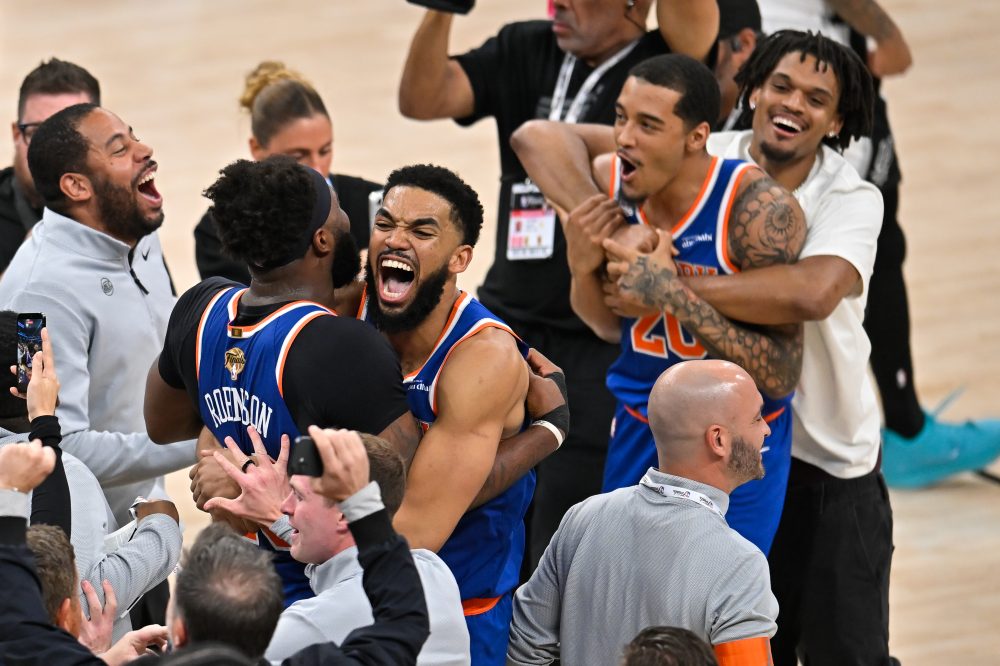

NEW YORK (AP) — For New York Knicks fans, Thursday’s celebration has been a long time coming.
The NBA champions will finally receive a ticker-tape parade through New York City — something that never happened when the team won titles in 1970 and 1973. This will mark the first time the Knicks have been honored with the city’s iconic lower Broadway procession.
Why did those earlier championships go without the famous “Canyon of Heroes” treatment? There’s no single clear answer, but history offers some clues. During the 1970s, then-Mayor John Lindsay had scaled back the grand confetti-filled events. Instead, he celebrated the Knicks at the mayoral mansion and at City Hall — respectable venues, but not the legendary Broadway route.
Current Mayor Zohran Mamdani appears eager to make up for lost time. He has boldly predicted that Thursday’s event could go down as “the largest parade in New York City history.”
“There will be performances, there will be New Yorkers, there will be the team and there will be history,” the mayor, a Democrat, said Monday while touring a city facility that was producing temporary “Champions Way” signs for the parade route. The celebration is scheduled to kick off at 10 a.m. Thursday near Battery Park and wrap up at City Hall.
The roots of New York’s ticker-tape tradition stretch back to the late 1800s. According to the Downtown Alliance, a lower Manhattan advocacy group, brokerage workers watching parades from their office windows began tossing out the narrow paper strips used by telegraph-era stock ticker machines — apparently as a form of decoration. The Downtown Alliance partnered with the private Museum of the City of New York to research and document the parade history.
Both organizations trace the tradition’s origin to an 1886 event marking the dedication of the Statue of Liberty. It became a city-organized affair in 1919 to welcome home soldiers returning from World War I. Athletes were first honored with a ticker-tape celebration in 1924, when the U.S. Olympic team received the treatment.
Over the decades, the parades multiplied, recognizing achievements in aviation, military service, sports, music, space exploration, and more, according to the museum and the Downtown Alliance.
The celebrations covered a wide range of occasions — historical anniversaries, firefighters, the Red Cross, ship rescues, an attempted ship rescue, and even a ship replica (the Mayflower II received the honor in 1957). A number of U.S. presidents were feted, as were dozens of foreign dignitaries — some with troubling legacies. French Marshal Henri Petain, for instance, was showered with ticker tape in 1931, only to later be convicted of treason for leading the Vichy government that collaborated with Nazi Germany during World War II.
By the time Lindsay took office in 1966, enthusiasm for the parades had begun to wane. Lower Manhattan businesses grew frustrated with the repeated disruptions, and some New Yorkers viewed the spectacles as hollow and overly routine. Lindsay and his public events commissioner — former Knicks captain John “Bud” Palmer — moved away from ticker-tape blowouts for visiting dignitaries, preferring smaller, more personal and cost-effective gatherings, according to reporting by The Associated Press and other outlets from that era.
The economic climate of 1970 made things even harder. The country was in a recession, the city’s events budget had been slashed, and Palmer — who worked for a symbolic salary of just $1 — was already irritated after a $372 expense bill (worth roughly $3,300 today) for materials used in a 1969 ticker-tape parade for the New York Mets’ World Series win was rejected, according to documents uncovered by the city Department of Records & Information Services.
The New York Jets’ Super Bowl victory that same year also went without a ticker-tape parade, even though one had recently been held to honor the Apollo 8 astronauts for their historic orbit around the moon.
Later in 1970, the Knicks defeated the Los Angeles Lakers to claim the NBA title. Lindsay, a liberal Republican, sent a congratulatory telegram and hosted a reception for the team at the official mayoral residence, according to news accounts from the time.
When the Knicks beat the Lakers again for the 1973 championship, Lindsay organized a celebration in front of City Hall and encouraged “every New Yorker who can to come.”
City officials were apparently caught off guard when more than 2,000 mostly young fans took him up on the offer. Police had difficulty keeping the area around the speakers’ platform clear, according to a New York Times report from that day.
The ceremony proceeded as planned, and Lindsay presented the team with a uniquely civic honor: medals commemorating the 75th anniversary of the consolidation of New York’s five boroughs into a single city.
Championship parades became more common in the following decades. The most recent ticker-tape event in New York City celebrated the WNBA’s New York Liberty in 2024.