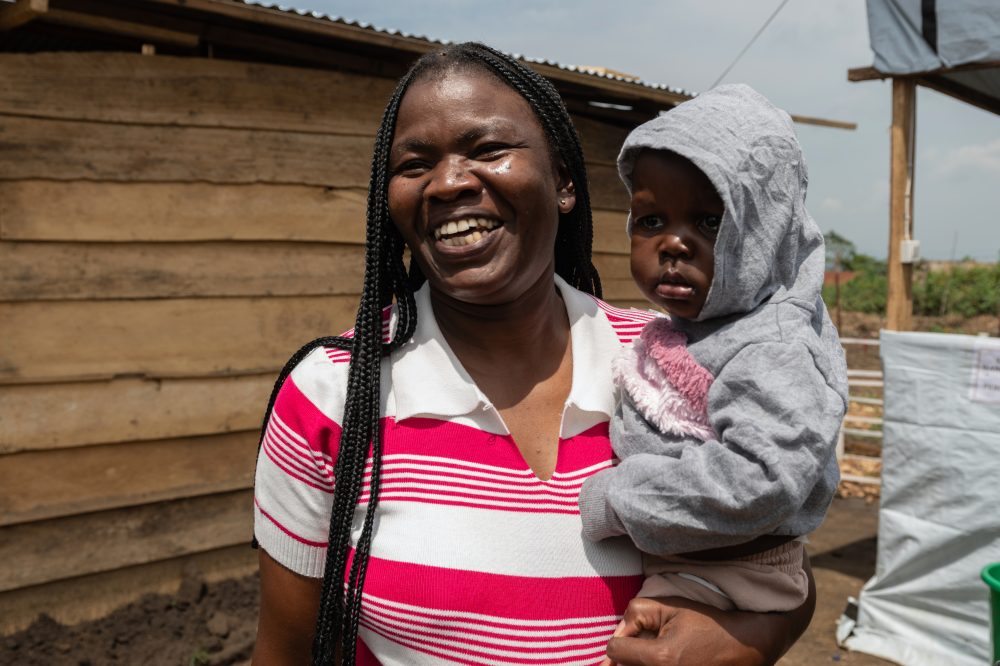

BUNIA, Congo — A toddler not yet two years old and his mother have beaten Ebola, offering a rare bright spot in an outbreak that health officials fear could become the deadliest in history.
The mother and her 16-month-old son walked out of the Rwampara Treatment Center on Tuesday alongside five other survivors. The facility is located near Bunia, in Congo’s Ituri province — the heart of the current outbreak.
“The joy is immense given the state he was in at first,” said Kahindo Mireille Pierrette, speaking about her infant son. “If you had seen him before, you wouldn’t believe he could have this strength now.”
Pierrette said she rushed her child to the treatment center at the end of May after he began bleeding from his mouth and nose and could barely move. A PCR test confirmed Ebola on his second day there, and a doctor named Modet Camara said the baby was then treated with antibiotics.
Congo’s Ministry of Health reported Tuesday that 837 cases have been confirmed in total, along with 196 confirmed deaths. Officials believe the true number of cases is actually higher, since the outbreak was officially confirmed on May 15 — weeks after it is thought to have started. Of those infected since mid-May, 49 people have recovered, the ministry said.
This particular outbreak is being driven by the rare Bundibugyo strain of Ebola, for which there is currently no approved treatment or vaccine. That sets it apart from the more common Zaire strain, which now has a vaccine and was responsible for the majority of Congo’s previous 16 outbreaks.
More than 90% of current cases are concentrated in the eastern province of Ituri, though infections have also been recorded in North Kivu and South Kivu provinces. The virus has even crossed the border into Uganda.
The head of Africa’s Centres for Disease Control and Prevention issued a stark warning Tuesday, saying the outbreak could break all previous records if it is not stopped soon. Tens of thousands of contacts of infected patients have still not been tracked down.
“If we don’t stop the outbreak very soon it will be worse than what we had in West Africa and eastern DRC,” said Africa CDC Director-General Jean Kaseya during a virtual gathering of African heads of state.
The outbreak he referenced — which struck several West African nations about a decade ago — remains the worst Ebola outbreak ever recorded, with more than 28,000 cases and over 11,000 deaths.
Containing this current outbreak is proving especially challenging. The United Nations humanitarian office reports that nearly one million people have been displaced in Ituri due to years of ongoing conflict. Many residents are constantly on the move, fleeing violence or traveling through a vast region of dense forests, poor roads, and remote villages that can take days to reach. Tracing the contacts of infected individuals is also complicated by the thousands of miners who frequently travel between isolated sites in the mineral-rich area.