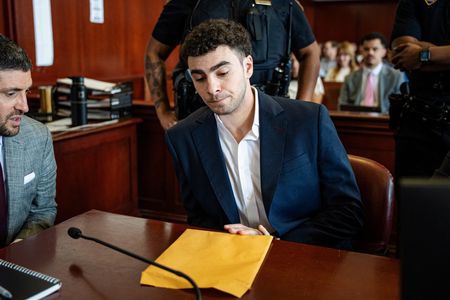

Luigi Mangione, the man charged with killing a major health insurance executive on a Manhattan street, intends to claim at trial that he was experiencing an “extreme emotional disturbance” when the shooting allegedly took place, according to a judge who revealed the defense strategy during a court hearing Wednesday.
Mangione stands accused of fatally shooting UnitedHealthcare CEO Brian Thompson outside a Midtown hotel in December 2024. The high-profile killing drew condemnation from public officials across the country, yet at the same time became a symbol of widespread American anger over soaring healthcare costs and health insurance industry practices.
In December 2024, Mangione entered a not guilty plea to state charges of murder, weapons violations, and forgery filed by Manhattan District Attorney Alvin Bragg. His state trial is scheduled to begin in September before Justice Gregory Carro in Manhattan.
Under New York law, a murder defendant may argue that extreme emotional disturbance prevented them from being fully responsible for their actions at the time of the killing. If that argument succeeds, a murder conviction can be reduced to manslaughter, which carries a substantially lighter sentence.
Thompson was the head of UnitedHealth Group’s insurance division. He was shot and killed in the early morning hours outside a hotel where he had been staying for an investor conference.
Graphic video of the shooting and a five-day manhunt for the suspected gunman turned the case into a major media story and social media phenomenon. Mangione was ultimately taken into custody in Pennsylvania.
In a separate legal matter, Mangione pleaded not guilty in April 2025 to federal charges of murder, weapons violations, and stalking brought by Manhattan federal prosecutors. U.S. District Judge Margaret Garnett, who is presiding over that case, dismissed the murder and weapons charges in January due to legal technicalities in a ruling that surprised many legal observers. That dismissal removed the possibility of the death penalty, though Mangione could still face life in prison without the possibility of parole if convicted on the stalking charge.
Jury selection in the federal case is expected to begin in September, with opening statements in the trial set for November.