
WASHINGTON — A sweeping new national poll reveals that most Americans hold the rights outlined in the country’s founding documents close to their hearts — but worry deeply that those freedoms are slipping away.
The survey, conducted by The Associated Press-NORC Center for Public Affairs Research, found broad agreement across different groups of Americans that the right to vote, freedom of speech, and religious freedom are essential to what the United States stands for. However, fewer than one-third of those surveyed felt any of those rights were actually safe from threats today.
The poll was conducted April 16-20, before a recent Supreme Court decision that narrowed a portion of the Voting Rights Act. It paints a picture of a nation that still deeply values personal liberty but is increasingly anxious about the country’s direction — even as Americans prepare for a summer of celebrations marking the nation’s 250th birthday.
“Our idea of rights has been very consistent in this country until the last few years,” said Louise Rochon, 85, of Connecticut. “Now, they’re all under threat. Every single last one of them.”
Roughly 9 in 10 Americans said the right to vote is “extremely” or “very” important to the country’s identity. A similar share said the same about freedom of speech. About 8 in 10 said freedom of religion is central to American identity, while approximately 6 in 10 placed the right to keep and bear arms in that category.
Despite that widespread appreciation for these rights, many Americans feel they are in jeopardy. About two-thirds said voting rights are facing some level of threat — with around one-third calling it a “major threat” and about 3 in 10 describing it as a “minor threat.” Only about one-third said voting rights faced no threat at all.
Nearly half of Americans said freedom of speech is under major threat. About 3 in 10 said the same about gun rights and religious freedom.
Tracy Gonzales, an independent voter from San Antonio, Texas, said the country is going “down the drain.” She said Americans across the political spectrum have “thrown religion to the side at the moment” and allowed other civil liberties to erode amid heated debates over immigration and the economy.
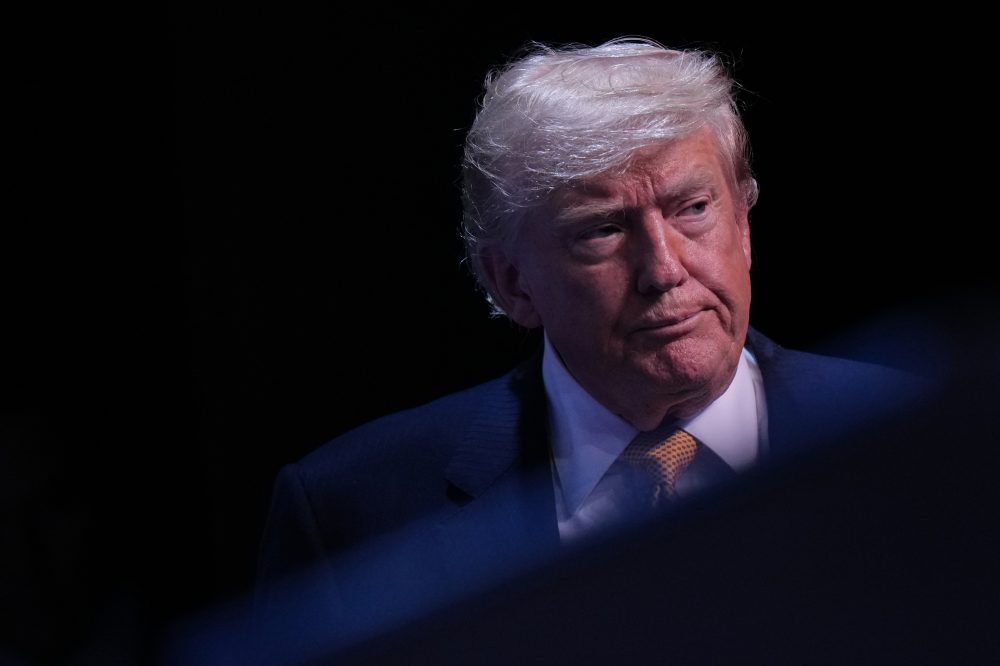
“Given everything going on with our president, you really don’t have time to think of anything else,” said Gonzales, 37, referring to President Donald Trump’s immigration crackdowns. “There are so many other crimes that are being committed and people that actually need help, and you’re focused on the ones that are trying to get it together.”
The poll also uncovered nuanced views among Black Americans — perspectives that are likely shaped, at least in part, by the country’s long history of denying voting rights and full citizenship to people of African descent.
Black Americans were less likely than white Americans to describe the right to vote as “extremely” or “very important” to American identity — about three-quarters held that view, compared to roughly 9 in 10 white Americans. At the same time, about 4 in 10 Black Americans said voting rights face a “major” threat today, a higher proportion than any other racial group surveyed.
“You cannot feel like you are a total and full part of the American experiment unless you have the right to vote,” said Antonio Williams, a school administrator in Dallas, Texas, who is Black. “And African Americans didn’t fully get to enjoy the right to vote until about 60 years ago, and I feel like it’s under threat right now.”
Younger adults and independents were less likely than the general public to view voting and free speech as central to American identity.
“My age group has grown up a lot more with social media as part of their existence in life and the microcosms that that creates in politics,” said Julian Goodwin-Ferris, 28, a professional dancer from New Jersey. “I think we feel more like our voice doesn’t matter as much because it feels like we’ve grown up with our rights sort of being more ignored.”
On partisan lines, Democrats and Republicans differed on which freedoms concerned them most. Democrats were more likely to see free speech as under major threat — about 6 in 10 Democrats felt that way, compared to about 4 in 10 independents and roughly one-third of Republicans.
When it comes to gun rights, about 8 in 10 Republicans said the right to bear arms is at least “very important” to the nation’s identity, compared to about 4 in 10 Democrats and half of independents. About 4 in 10 Republicans said gun rights are currently under threat — an increase compared to October 2025 — a shift not seen among Democrats or independents.
“We have the Bill of Rights for a reason,” said Nuri Simmons, a warehouse worker in New York and a registered Democrat. Simmons, 31, said threats to different rights “bleed into each other,” and while he is most worried about voting rights, he acknowledged others may prioritize different concerns.
“Like when people try to bring some gun control into it, I think some people look at that as an attack on their rights. I guess that all depends on your politics,” he said.
The AP-NORC poll surveyed 2,596 adults from April 16-20, using a sample drawn from NORC’s probability-based AmeriSpeak Panel, which is designed to represent the U.S. population. The margin of sampling error for adults overall is plus or minus 2.6 percentage points.