Fresh off a playoff run that extended into the second round, the Philadelphia Flyers wasted no time making moves this offseason — landing a new goaltender and defenseman in a deal with the Toronto Maple Leafs.
The trade, completed Tuesday, brings goaltender Joseph Woll and defenseman Simon Benoit to Philadelphia. In exchange, the Flyers shipped goalie Samuel Ersson, defenseman Emil Andrae, and a third-round pick in next week’s draft north to Toronto.
The addition of Woll is expected to give Philadelphia a reliable backup option alongside projected starter Dan Vladar, who just wrapped up the best season of his career. Vladar helped the Flyers knock out Pittsburgh in the first round of the playoffs before falling to Carolina — the team that went on to win the Stanley Cup.
“We thought it was a chance to improve the team, help them take another step,” Flyers general manager Daniel Briere told reporters at a predraft news conference in Voorhees, New Jersey. “We felt that Woll is a step forward for us and will be able to help Vladdy in a tandem role.”
Vladar becomes eligible to sign a contract extension on July 1. Briere indicated the team and Vladar’s representatives are working toward getting that deal done. The hope is that pairing Vladar with Woll creates a more balanced goaltending situation than what played out early last season, when Ersson ran into difficulties.
“The better you can have both of them going, I think it helps,” Briere said. “It prevents injuries and (Vladar) stays fresh and he can, I think, perform better. We hope that they can push each other that way.”
On the defensive side, Benoit — who is 28 years old, stands 6-foot-4, and weighs over 200 pounds — brings a physical presence that Briere felt was missing. With smaller defensemen Cam York and Jamie Drysdale already on the roster, the general manager said he wanted someone with Benoit’s size and strength.
“It’s going to probably be a little easier for the coaches having a guy like Simon Benoit back there to use,” Briere said. “We like the physicality that he brings, and we like the size and the skating aspect, too. He’s a really good skater.”
For Toronto, this transaction marks the first roster move by new general manager John Chayka since he took over in early May. Chayka described the deal as an opportunity to gain salary cap flexibility while also picking up a defenseman in his mid-20s in Andrae.
“What we like about this opportunity was it allowed us to create some flexibility,” Chayka said during a video call with reporters. “We think flexibility and optionality are assets to any great organization, and certainly this allows us to be in a better spot as we think about the entire offseason plan.”
Woll carries a cap hit of $3.67 million over each of the next two seasons, while Benoit is under contract for one more year at $1.35 million. Both Andrae and Ersson are restricted free agents. With Anthony Stolarz and Dennis Hildeby expected to lead Toronto’s goaltending depth chart, Chayka was noncommittal when asked whether the Leafs would extend a qualifying offer to keep Ersson’s rights.
“He’s a good, young goaltender,” Chayka said. “He’s someone that we identified as having some upside and someone that our staff could work with.”
ARLINGTON, Texas — When St. Louis Cardinals manager Oliver Marmol learned his team had an unexpected Saturday off in the middle of a road series, his first thought was getting to a World Cup match.
The question he asked: “Can I make it to the soccer game?”
The FIFA World Cup, the international soccer tournament that takes place every four years, is currently underway across 16 host sites in the United States, Canada, and Mexico. Eleven of those markets are also home to a total of 13 Major League Baseball teams, creating an unusual and exciting overlap between the two sports.
Kansas City is hosting six World Cup matches at an NFL stadium located in the same complex as the Royals’ ballpark. When the Cardinals visit Kansas City for a three-game series opening Thursday, both teams will have Saturday off — the same day Ecuador takes on Curaçao in a World Cup match.
“That is the goal, yes,” Marmol said when asked whether he planned to attend.
Royals first baseman Vinnie Pasquantino is also planning to go, along with his wife, who played soccer at Old Dominion University.
“It’s strange, but it’s special circumstances,” Pasquantino said. “It’s awesome that Kansas City got access to World Cup games. So, however many years until the United States hosts again, we’ll be all right with some off days like that.”
This marks the first time World Cup matches have been held on U.S. soil since 1994.
In the Dallas-Arlington area, AT&T Stadium — home of the NFL’s Dallas Cowboys and located right next to Globe Life Field — is set to host a tournament-high nine matches. The neighboring Texas Rangers will have a Monday off on July 6, the date of a round of 16 match, sandwiched between two home series.
Texas is currently wrapping up a three-game series against Minnesota, which concludes Thursday, following a Wednesday pause when England faces Croatia in its World Cup opener.
Rangers designated hitter Joc Pederson, who grew up playing soccer in California, called the experience something rare.
“It’s a once-in-a-lifetime opportunity,” Pederson said.
The Rangers also got a taste of World Cup fever during a recent road trip to Boston. Thousands of Scottish fans filled Fenway Park, chanting and singing the night after Scotland beat Haiti in the country’s first World Cup appearance in 28 years. That match was held at Gillette Stadium in Foxborough, roughly 30 miles from Fenway.
Rangers manager Skip Schumaker said the energy from the Scottish supporters made the ballpark feel like a European soccer match. The experience was so electric that he and most of his coaching staff are now scrambling to find tickets to a Cup game.
“It was so much fun that on the off day the majority of our staff is trying to find a way to get tickets to go to a game that they know really nothing about because of the atmosphere that was so incredible,” Schumaker said. “The passion was insane.”
In Philadelphia, the Phillies will have a day off Friday during their home series against the New York Mets, coinciding with Brazil’s match against Haiti at nearby Lincoln Financial Field.
Like the Rangers, Royals, and Seattle Mariners, the Phillies’ home stadium shares a parking lot with an NFL venue hosting World Cup matches. The nearly six-week tournament features 104 total matches with 48 nations competing.
Both Texas and Kansas City are off on July 3 for round of 32 Cup matches. The Rangers will have already started a series against Detroit, while the Royals are set for an unusual Saturday-through-Monday home series against the Phillies.
At MetLife Stadium in New Jersey, World Cup matches are scheduled on eight dates — and either the Mets or Yankees have a home game on every single one of those days. That includes the championship match on July 19, when the Yankees also host Shohei Ohtani and the World Series champion Los Angeles Dodgers. Yankee Stadium sits about 14 miles from the Meadowlands, with Citi Field approximately 24 miles away.
On the West Coast, World Cup matches at SoFi Stadium in Inglewood will be about 13 miles from Dodger Stadium and 35 miles from Angel Stadium. The Dodgers or Angels will be playing at home on six of the eight match days in Inglewood, with the remaining two falling on regular off days during homestands.
In cities like Atlanta, Boston, Houston, Miami, and Toronto — where the stadiums are farther apart — teams will still play multiple home games that overlap with World Cup matches in their markets.
The Angels will also experience a split series during a trip to Seattle, with a midweek break scheduled July 1 for a round of 16 match.
The Mariners originally had a home doubleheader planned for Saturday against Boston, the same day the United States was set to play Australia in Seattle. However, when the match time at Lumen Field was confirmed for noon local time on Friday instead, the Mariners and Red Sox adjusted to a traditional three-game series starting Friday night — avoiding what would have been MLB’s first scheduled doubleheader in two years.
DAKAR, Senegal — Congo’s opposition forces are pushing back hard against a newly passed bill that critics say is designed to keep President Félix Tshisekedi in power beyond his current term limits.
The Senate approved the measure on Monday, following an earlier vote in the National Assembly. The bill now sits on President Tshisekedi’s desk awaiting his signature. If signed into law, it would create a path for a national referendum on a new constitution — one under which Tshisekedi’s past terms in office would not be counted, essentially starting his term clock over from scratch.
Tshisekedi, who is 62 years old, has held the presidency since 2019. He has publicly stated his intention to pursue a third term, but only if voters give their approval through a referendum. As of now, no date for such a vote has been announced.
Congo’s current constitution explicitly prohibits any changes to presidential term limits. The new bill gets around that restriction by allowing the president to amend the constitution if a “major dysfunction” is determined to be paralyzing the country’s governmental institutions.
The central African nation is currently grappling with a number of serious crises, including an active Ebola outbreak and an intensifying conflict with the Rwanda-backed M23 rebel group — just one of more than 100 armed factions fighting for dominance in the country’s eastern provinces.
Congo’s next presidential election is scheduled for 2028. Tshisekedi stated last month that the country will not be in a position to organize or hold elections until the ongoing conflict is resolved and stability is restored.
Notably, both the Senate and National Assembly votes were conducted without opposition lawmakers present. Those legislators had walked out weeks earlier as a form of protest against the legislation.
Senate President Jean-Michel Sama Lukondé praised the outcome of the vote, saying it gives the Congolese people a structure through which to “exercise their sovereignty” via a referendum.
Congo’s major opposition parties, which have been at odds with one another in recent years, united in May under a coalition known as C64, or Coalition Article 64, specifically to fight the bill. The coalition has characterized the legislation as Tshisekedi’s attempt to hold onto power indefinitely.
Prominent opposition figure Martin Fayulu made his position clear during a coalition news conference on Tuesday. “Tshisekedi has betrayed his oath to respect the constitution and is therefore worthless,” Fayulu declared.
Fayulu also announced that the coalition plans to march to the presidential palace on July 8, calling for Tshisekedi’s resignation.
The legislative votes came just days after violent confrontations broke out at a protest against the bill in Congo’s capital city of Kinshasa. Several people were injured in those clashes, among them opposition leaders Martin Fayulu, Jean-Marc Kabund, and Delly Sesanga.
Toronto police announced Tuesday that they have connected several shootings in the city — including a March attack on the U.S. Consulate — to what they describe as “multilayered” gun-for-hire networks. Those same networks are also believed to be behind shootings targeting synagogues in the city.
At a news conference, Toronto Police Chief Myron Demkiw explained that young adults are being recruited through encrypted messaging platforms and paid to carry out the attacks. To receive payment, the shooters are required to record the incidents on video. Investigators have recovered several of the weapons used in the attacks.
“What we know is bad actors are using criminal elements in our city to carry out these dangerous incidents,” Demkiw said. “It is clear that some of the people hiring these criminals want to create a sense of fear in our communities, including the Jewish community.”
A veteran Toronto police officer lost his life last week during a search operation connected to the investigation. Constable Marc Pinizzotto, 43, was shot Thursday when officers executed a search warrant at an apartment building in the northwestern part of the city. He was transported to a hospital, where he later died.
A 19-year-old suspect, Nicholas Bennett, was shot by police during the incident and remains hospitalized. He is expected to face a charge of first-degree murder.
Authorities are also actively searching for a second suspect, 19-year-old Zara Jabbi, who is wanted in connection with the U.S. Consulate shooting. Police consider Jabbi to be armed and dangerous.
Demkiw said Toronto police are working alongside the Royal Canadian Mounted Police and the FBI to identify who is funding the attacks. Two firearms recovered during the investigation — believed to be connected to more than 25 shootings across the Toronto area — were traced back to the United States. Ballistics testing on those weapons is still ongoing.
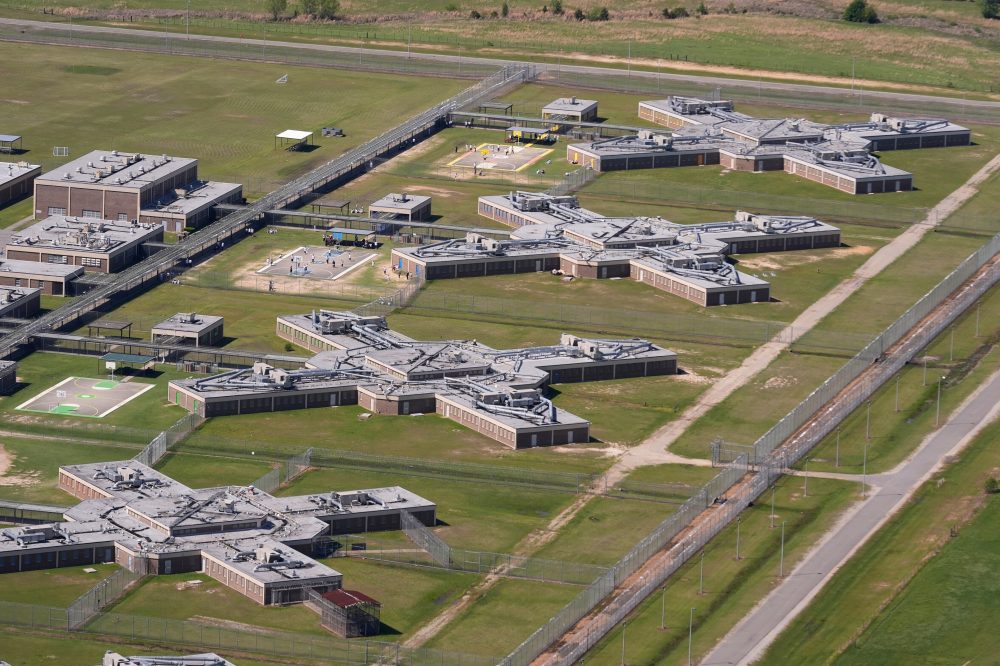
Immigration and Customs Enforcement has unveiled revised detention standards that allow contractors running its facilities to lean more heavily on artificial intelligence tools when communicating with detainees and to continue paying as little as $1 per day for detainee labor — changes the agency says are designed to ease the load on facility operators.
ICE stated the updated rules, which govern for-profit contractors and jails that hold immigration detainees, were revised to “reduce the burden on our detention operators.” Experts, however, say the changes primarily benefit contractors by limiting their legal exposure, cutting costs, and granting greater operational freedom — while doing little or nothing to improve life for the approximately 60,000 people currently in ICE custody.
“100% it’s going to result in deterioration of already problematic conditions of detention,” said Michelle Brane, a former Department of Homeland Security ombudsman who oversaw immigration detention practices during part of the Biden administration. “It’s consistent with their general practice, which is to eliminate accountability and oversight. They are not concerned with people’s basic rights or safety of detainees.”
The updated standards arrive at a time when ICE detention facilities are recording deaths at historically high rates and are facing allegations of medical neglect, insufficient food, and other harsh conditions. They also come as ICE has received a major funding boost, securing more than half of the $70 billion immigration enforcement spending bill recently signed by President Donald Trump.
Dr. Sanjay Basu, a public health researcher who has studied deaths in ICE custody, acknowledged the revisions include “genuine improvements” in areas like suicide prevention and mental health care. However, he said the overall direction is “toward weaker standards governing a growing share of the detained population.”
ICE framed the changes as a way to streamline its rules and bring them closer in line with the more relaxed standards used by the U.S. Marshals Service for holding pretrial federal inmates in jails. The agency said it weighed input from facility operators “alongside operational, legal and policy requirements when making a final decision.”
Dr. Homer Venters, an expert in correctional health care, warned that the changes could reduce access to language assistance. Previous standards required in-person and telephone interpretation and translation services; the revised rules allow facilities to use AI tools — such as machine-learning translation or generative AI — for what they describe as “noncritical communication” or “informal interactions with detainees.” That category could include conversations during intake, discussions in housing units, and responses to detainee grievances or concerns.
Venters called this shift alarming, noting that grievances often contain “very urgent or even emergent information such as when a patient has been denied lifesaving care.” He also raised concerns that the new language leaves open the question of whether health screenings — critical for identifying medical and mental health needs — could be carried out through AI. ICE maintained that the standards still require contractors to provide interpretation and translation services “at no cost to the detainees.”
Several experts flagged another change that prevents facility operators from turning away any detainee sent to them by ICE. Critics say this could mean severely ill or disabled detainees end up in facilities that cannot properly care for them, with delays of several days before ICE is even asked to transfer them elsewhere. At the same time, analysts noted the change may actually reduce contractors’ legal liability if a detainee dies after being admitted.
New language in the standards explicitly states that detainees who participate in voluntary work programs are not considered employees and are therefore not entitled to wages or benefits. Dora Schriro, who served as director of ICE’s Office of Detention Policy and Planning during the Obama administration, called this provision “a favor” to ICE’s for-profit contractors.
Advocates for detainees have pursued lawsuits for years arguing that these work programs — in which detainees can earn as little as $1 per workday — amount to forced labor. Those cases have sought millions in unpaid wages from major ICE contractors. Carmen Iguina Gonzalez, an immigration detention expert at the American Civil Liberties Union, noted that the new rules also prohibit facilities from paying above the $1-per-day minimum stipend — a practice that had previously been allowed and had been used as evidence against contractors in court.
Claire Trickler-McNulty, a former official with the Department of Homeland Security and ICE who specializes in detention standards, said ICE’s expanded budget could have been used to improve conditions rather than roll back protections. She recalled pushing ICE facilities under previous administrations to add recreational amenities like soccer fields using surplus funds.
“Their goal is to make it easier for the jail operators,” she said. “No longer are they trying to make sure the focus is on the detainees and their care and the experience in custody.”
A Boeing B-52 Stratofortress involved in a deadly crash at a California Air Force base made a sharp right turn, nearly completed a full 180-degree turn, and then plummeted to the ground at close to a mile per minute, according to limited flight tracking data released Tuesday.
All eight people aboard were killed when the bomber went down in flames Monday at Edwards Air Force Base. The aircraft was taking part in a routine mission connected to a broader program aimed at keeping the long-serving plane operational for decades to come. The cause of the crash shortly after takeoff remains unknown, and officials at the base said the investigation could take as long as six months to wrap up.
The airfield was still closed as of Tuesday. Crews were working to make the crash site safe enough for search and recovery teams to enter, following fires that continued burning overnight. Mike Paoli, a spokesperson for the 412 Test Wing at Edwards, provided that update.
Flight tracking data from AirNav Systems shows the bomber turned to the northeast immediately after liftoff, nearly completing a sharp turn before going down on another runway. The tracking system used — known as multilateration — does not provide precise altitude or speed readings, but it does indicate the aircraft dropped at a rate of 5,056 feet (1,541 meters) per minute. That is nearly ten times faster than a typical plane descends when coming in for a landing.
The plane was supporting a radar modernization program, according to Col. James Hayes, the deputy commander for the 412 Test Wing, who spoke Monday. In 2025, Boeing delivered a B-52 to Edwards equipped with an upgraded radar system that is central to keeping the bomber airworthy through at least 2050 — nearly a century after it first entered military service.
A test team had planned to carry out both ground and flight test activities on the aircraft throughout 2026 to inform a production decision, the Air Force stated in a 2025 news release. The new Active Electronically Scanned Array, or AESA, radar replaced the plane’s outdated radar system. It was not immediately clear whether the aircraft involved in Monday’s crash was the same one used in that program.
The AESA system replaced radar technology dating back to the 1960s and provides improved navigation and targeting capabilities, according to a 2023 news release from Raytheon, the company that designed the new system for the entire B-52 fleet.
The B-52 is a long-range bomber that entered service in 1955 and is capable of carrying both conventional and nuclear weapons. It has been deployed in U.S. military conflicts ranging from Vietnam to Iran.
In addition to the radar upgrade, the fleet of 76 B-52s is scheduled to receive a range of other improvements, including new engines, crew compartments, communication systems for both conventional and nuclear operations, avionics, and weapons. The military’s goal is to have the B-52 serve alongside the Air Force’s newest strategic bomber, the B-21 Raider.
Aerial footage of the crash site showed virtually nothing remained of the aircraft, which went down at the base located in the Mojave Desert roughly 100 miles (161 kilometers) northeast of Los Angeles. Officials said after reviewing crash footage that survival was not possible, according to Hayes, who spoke at a news conference.
Those aboard the aircraft included both government contractors and active military personnel. Aircraft manufacturer Boeing confirmed that two of its employees were among those killed.
Edwards Air Force Base is home to a significant share of the U.S. Air Force’s aircraft testing and development work. The 412th Test Wing, which oversees operations at the base, handles developmental testing of all Air Force aircraft, weapons systems, software, and components — both before purchase and throughout their operational lives. The base is also historically notable as the location where Air Force test pilot Chuck Yeager broke the sound barrier in 1947, reaching Mach 1.05.
Aviation safety expert Jeff Guzzetti said the way the B-52 crashed so rapidly after takeoff — without gaining much altitude or distance — leads him to suspect some type of flight control malfunction. He suggested the controls may have been improperly set following maintenance, or that a catastrophic engine problem or a failure in equipment being tested could be to blame.
“I think it was definitely a controllability issue. Now, whether that was tied to an engine failure, a flight control failure, or some new testing device failure, I’m not sure,” said Guzzetti, who previously investigated crashes for both the Federal Aviation Administration and the National Transportation Safety Board.
Fatal Air Force training accidents in recent years have included an instructor pilot killed in 2024 when an ejection seat activated while the aircraft was still on the ground in Texas, an Air Force ROTC cadet who died in a 2022 Humvee accident during a training exercise in Idaho, and two Air Force pilots killed when a trainer jet crashed near an Alabama airport in 2021.
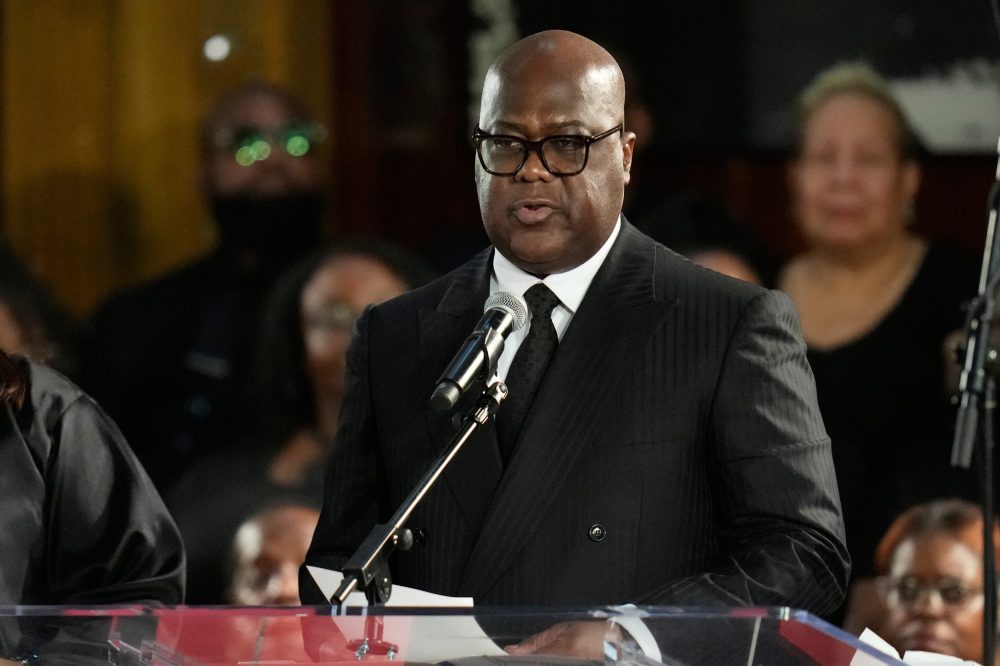
Three men who served as attorneys or aides to President Donald Trump during the 2020 campaign entered not guilty pleas Tuesday in a Wisconsin courtroom, facing felony forgery charges connected to an effort to reverse Trump’s election loss in that state.
Jim Troupis, a former judge who served as Trump’s Wisconsin campaign attorney, Mike Roman, who oversaw Trump’s Election Day operations in 2020, and Ken Chesebro, a one-time legal adviser to Trump, all entered their pleas in Dane County Circuit Court. Troupis, who resides in the Madison area, was present in the courtroom, while Roman and Chesebro joined the proceedings remotely via Zoom.
The Wisconsin case is pressing ahead even as comparable legal efforts in Michigan and Georgia have run into trouble. A special prosecutor previously dropped a federal case accusing Trump of conspiring to overturn the 2020 election results. A related case in Nevada, however, remains active.
The fake elector scheme — in which Republican electors in contested states submitted paperwork to Congress falsely claiming Trump had won their states despite losing to Joe Biden — is said to have originated in Wisconsin.
Troupis, Roman, and Chesebro maintain that they broke no laws and were simply preserving legal options in the event a court determined Trump had legitimately won Wisconsin. Prosecutors, however, allege the three men deceived the 10 Wisconsin Republican electors who cast their votes for Trump in 2020.
According to prosecutors, the defendants misled the electors about how the certificate they signed would actually be used — specifically, as part of a plan to send paperwork to then-Vice President Mike Pence falsely asserting Trump had carried the state. Court documents indicate that most of the electors told investigators they did not believe their signatures would be forwarded to Congress without a court order, and that a majority said they never agreed to have their signatures used as though Trump had won without such a ruling.
Tuesday’s arraignment came roughly two years and two weeks after Wisconsin Democratic Attorney General Josh Kaul first filed charges against the trio. Each of the three defendants faces 11 felony forgery counts, with each charge carrying a potential penalty of up to six years behind bars and a $10,000 fine.
Both Troupis and Roman filed legal motions requesting that the trial be moved from Dane County — which encompasses Madison — to neighboring Jefferson County, citing concerns that negative media coverage had compromised the potential jury pool. Trump carried Jefferson County by 15 percentage points in 2020, while he lost Dane County by nearly 53 points.
“This case is headed to trial,” wrote Joe Bugni, Troupis’s attorney, in the motion. “No question. Neither side is going to blink. And when we get to trial, Troupis has the right to a fair and impartial jury.”
Troupis and Roman also argued that one of the 11 felony counts against them should be dismissed, citing a pardon issued by Trump covering federal crimes related to their involvement in the fake elector effort. They contend that because casting electoral votes is a federal process, the state cannot prosecute them on that particular count and that Trump’s pardon therefore applies. Trump also pardoned Chesebro.
The presiding judge said Tuesday that he would establish a schedule for hearing arguments on those motions.
The state-level charges against the three men are the only ones filed in Wisconsin in connection with the scheme. None of the 10 Wisconsin electors have faced criminal charges. The electors, along with Chesebro and Troupis, previously settled a civil lawsuit brought by Democrats seeking financial damages.
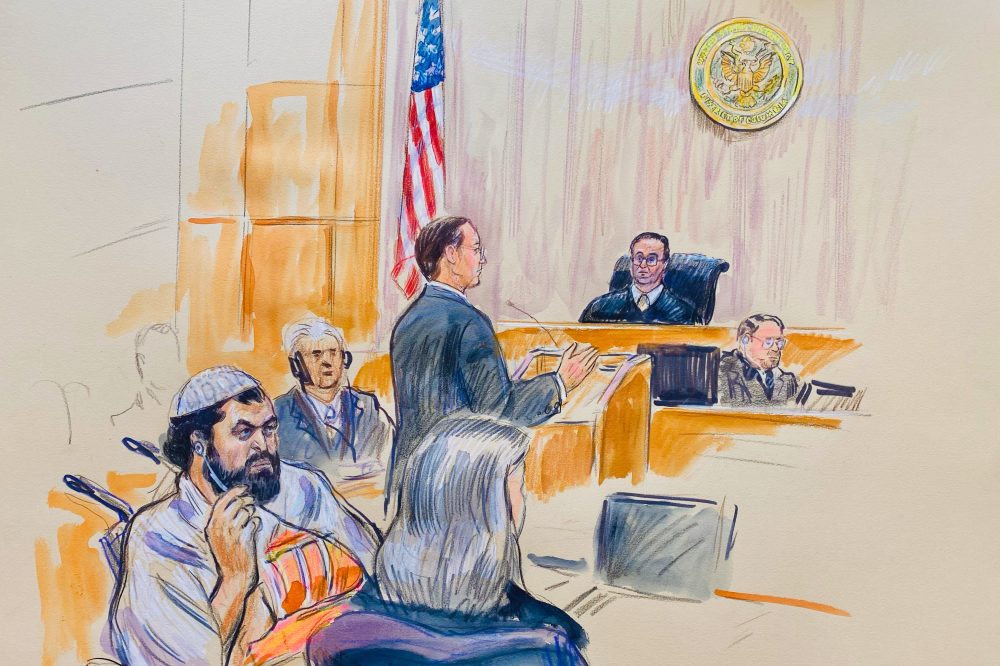
WASHINGTON — An Afghan national accused of ambushing two National Guard soldiers near the White House — killing one and seriously wounding the other — appeared in court Tuesday and pleaded not guilty to charges in a new federal indictment that could put him on death row if convicted.
Rahmanullah Lakanwal was arraigned on 17 counts, including first-degree murder, after a federal grand jury in Washington handed up the new indictment. He had originally entered a not guilty plea in January to nine charges related to the November 2025 shooting that claimed the life of Spc. Sarah Beckstrom and left Staff Sgt. Andrew Wolfe critically injured.
Before the Justice Department decides whether to pursue the death penalty, Lakanwal’s defense team will have the opportunity to meet with prosecutors and present any mitigating evidence they believe should weigh against such a sentence.
Beckstrom, 20, and Wolfe, 24, were members of the West Virginia National Guard serving as part of a federal law-enforcement surge in Washington, D.C., that began in August under orders from President Donald Trump.
Prosecutors allege that Lakanwal drove from Bellingham, Washington, to the nation’s capital while carrying a stolen firearm, then ambushed the two soldiers outside a subway station just three blocks from the White House.
According to a police report, another Guard member nearby heard the gunshots and watched as Beckstrom and Wolfe fell to the ground while Lakanwal fired his weapon and shouted, “Allahu Akbar!”
Lakanwal, who sustained a gunshot wound during the incident, appeared in a wheelchair at Tuesday’s arraignment. He remained silent throughout the proceedings, with one of his attorneys entering the not guilty plea on his behalf.
Lakanwal came to the United States in 2021 through a Biden administration program that evacuated and resettled tens of thousands of Afghans following the U.S. military withdrawal from that country. CIA Director John Ratcliffe has stated that Lakanwal previously worked with the American government, including the CIA, “as a member of a partner force” in Kandahar, Afghanistan.
Lakanwal is scheduled to return to court on September 16. No trial date has been set in the case.
MIAMI (AP) — A developing storm system along the Gulf Coast may become the first named tropical storm of the 2026 Atlantic hurricane season, according to the National Hurricane Center.
The storm cluster was positioned Tuesday afternoon roughly 55 miles south-southwest of Corpus Christi, Texas, and threatened to unleash heavy rainfall capable of triggering dangerous flooding across southern states, including Texas and Louisiana.
National Hurricane Center director Michael Brennan said forecasters expect the system to gain strength, potentially reaching tropical storm status by early Wednesday. He noted that coastal communities could face tropical storm conditions this week regardless of whether the system earns an official name.
“The main hazard with these types of systems is largely the flooding from the heavy rainfall,” Brennan said. “And we could see potentially life-threatening flash and urban flooding across the Texas coast eastward into central Mississippi through Thursday. Prolonged rainfall may extend the flood threat into the weekend.”
Forecasters also warned that tornadoes were possible stretching from the upper Texas coast through southern Louisiana, Mississippi, Alabama, and into the Florida Panhandle.
As of Tuesday, the storm’s maximum sustained winds were clocking in at around 30 mph — just under the 39 mph threshold required to be officially classified as a tropical storm. The National Hurricane Center put the odds of the system developing into a tropical cyclone within the next two days at 70%.
Houston, which is set to host a World Cup match between Portugal and the Democratic Republic of the Congo on Wednesday, has been under a flood warning since Monday. The match venue has a covered roof, and officials have not announced any plans to relocate or reschedule the game.
Rainfall totals by Thursday could reach 4 to 8 inches across the affected region, with some isolated coastal areas potentially seeing up to a foot of rain.
A tropical storm watch was already in place from Sargent, Texas, to Morgan City, Louisiana. Dangerous rip currents are expected along Gulf Coast beaches over the next several days due to rough surf.
A new weather system is taking shape in the Gulf of Mexico, with the U.S. National Hurricane Center announcing Tuesday that Potential Tropical Cyclone One has formed roughly 65 miles southwest of Corpus Christi, Texas. The storm is raising concerns about severe flash flooding and possible disruptions to a major energy-producing region along the Gulf Coast.
If the system gains enough strength to become a named storm, it would be called Arthur and would mark the first named storm of the 2026 Atlantic hurricane season. As of Tuesday, the storm was producing maximum sustained winds of 30 miles per hour. A tropical storm watch has been put in place for a stretch of the northwestern Gulf Coast running from Sargent, Texas, to Morgan City, Louisiana.
According to the National Hurricane Center, the disturbance is expected to move offshore along the Texas coast Tuesday night or early Wednesday, then travel roughly parallel to the upper Texas coast later Wednesday before pushing back inland over far eastern Texas or southwestern Louisiana late Wednesday or early Thursday.
Regardless of whether the storm intensifies further, forecasters say it is on track to drop between 4 and 8 inches of rain — with some isolated areas potentially seeing up to 12 inches — through Thursday across the Texas coast and much of Louisiana. The NHC also cautioned that a dangerous storm surge could push water into areas that are normally dry.
Texas Governor Greg Abbott declared a disaster for 101 counties in the state on Monday ahead of the storm’s arrival.
The rain is also expected to affect the FIFA World Cup match between Portugal and DR Congo scheduled to take place in Houston on Wednesday. Beyond the sporting event, energy industry experts are keeping a close eye on potential impacts to oil and gas infrastructure throughout the region. Tony Dupont, COO at Earth Science Associates, offered an early assessment, saying the storm “doesn’t look too strong” at this point.
Andrew Polk, a weather risk manager at data consultancy DTN, noted that major oil production sites in the Gulf are currently sitting outside the projected path of tropical storm-force winds. However, he warned that some disruptions could still occur. “There may still be some disruptions, primarily due to the overall impact of helicopter operations which may disrupt and delay crew changes from occurring due to the winds and thunderstorms associated with Potential Tropical Cyclone One,” Polk said in an emailed statement, adding that wave heights are expected to climb to between 7 and 9 feet to the east and south of the storm.
Polk further explained that “the wave impacts primarily disrupt operations in the water with lift boats and/or diving operations,” and said the main concern from the storm will be the total amount of rainfall expected to fall along the Texas and Louisiana coastlines.
The stakes are high for the region’s energy infrastructure. The U.S. Gulf of America federal offshore zone produced close to 2 million barrels of crude oil each day in March, making up roughly 14% of all U.S. crude production. Shell, BP, Chevron, and Occidental are among the biggest deepwater operators working in those waters.
The Gulf Coast refining corridor, which stretches from Corpus Christi to the Mississippi River, handles around half of the entire U.S. refining capacity of 18.4 million barrels per day. The country’s largest refinery — the Saudi Aramco-owned Motiva Enterprises plant in Port Arthur, Texas — processes 730,000 barrels per day on its own. Other significant facilities in the region include Marathon Petroleum’s Galveston Bay plant, ExxonMobil’s Beaumont and Baytown refineries, and ExxonMobil’s Baton Rouge, Louisiana, facility.
Major liquefied natural gas companies, including Cheniere and Venture Global, also operate large facilities along the same coastal stretch.
World leaders gathered at the G7 summit in Evian-les-Bains, France are weighing a plan that would allow a select group of so-called “trusted partners” to gain access to top-tier American artificial intelligence models, three diplomatic sources revealed Tuesday.
The discussions follow a decision made last week by Washington to cut off foreign nationals from Anthropic’s most advanced AI models, a move the U.S. government justified on national security grounds.
According to one of the sources, a number of delegates raised the idea during informal conversations with U.S. representatives — primarily U.S. Commerce Secretary Howard Lutnick — on the sidelines of the G7’s opening dinner at the French lakeside resort.
A second source, who asked not to be identified because the discussions are still ongoing, said the “trusted partners” in question could include both countries and private companies.
A third source confirmed that no official statement regarding the proposed framework was anticipated Wednesday, even as technology-related issues were scheduled to be part of the day’s G7 agenda.
Cybersecurity experts have raised concerns about one specific Anthropic model called Mythos, which is designed to identify weaknesses in computer code. They warn it could significantly amplify attacks on banks’ technology systems. The model has not yet been made available to any European banks, and the European Union has been seeking access to Mythos to better understand its potential implications.
The Financial Times was first to report on the “trusted partners” proposal.
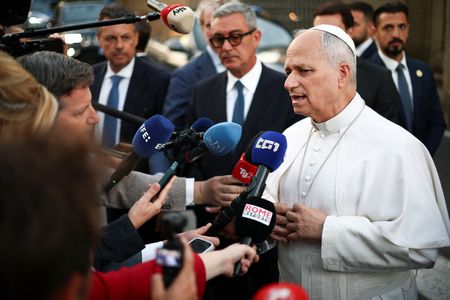
CASTEL GANDOLFO, Italy — Pope Leo is welcoming the temporary agreement between the United States and Iran aimed at ending the ongoing war in the Middle East, offering words of gratitude and hope as the two nations prepare to make the deal official.
Speaking to reporters outside his residence in Castel Gandolfo, Italy on Tuesday, Leo expressed relief over the development, saying “thanks be to God” as the formal signing is set for Friday.
The pontiff, who previously drew criticism from U.S. President Donald Trump after speaking out against the Iran war, made clear he is optimistic — but realistic — about the road ahead.
“There will still be several points to settle, but it is always better to do so through dialogue, through negotiations, and not by returning to war,” said Leo, who holds the distinction of being the first American-born pope.
He added that he is holding out hope for a permanent resolution to the conflict. “I hope that it truly is a solution to the war, that the war really is over, and that we can move forward,” he told journalists.
U.S. Health Secretary Robert F. Kennedy Jr. has directed an American woman to remain in quarantine against her will and contrary to medical guidance, the Wall Street Journal reported Tuesday.
The woman, Angela Perryman, 47, is one of 18 Americans who were placed in quarantine at a Nebraska facility after Andes hantavirus cases were identified aboard a cruise ship earlier this year.
A Department of Health and Human Services official told Reuters that the 42-day monitoring period will be completed at midnight on June 21. The remaining passengers at the Nebraska quarantine unit are expected to depart on June 22. That 42-day window began when the group returned to the United States on May 10, the official said.
Eight U.S. residents from the hantavirus-affected MV Hondius were released to their home states after three weeks of observation at the National Quarantine Unit at the University of Nebraska Medical Center, according to the facility. Ten others continued to be monitored.
The Centers for Disease Control and Prevention had previously requested that all individuals from the cruise ship remain at the quarantine unit through May 31.
The New York Times reported that some passengers were permitted to complete their quarantine at home through June 22, as long as local health authorities agreed to have law enforcement or a community health worker check on them. The World Health Organization recommends a 42-day monitoring and quarantine period for high-risk contacts following exposure.
Perryman wanted to return to her home in Florida, but state officials there declined to provide the required monitoring, according to both the Wall Street Journal and the Times. The CDC said during a quarantine hearing that she should be permitted to return home for the rest of the quarantine period, and a CDC medical review noted that her chances of developing symptoms were decreasing over time, the Journal reported.
Perryman told both publications that a copy of an order from Kennedy was slipped under her room door, informing her she could not go home. The order stated that despite the doctor’s findings, Perryman was reasonably believed to have been infected with or exposed to the disease, according to the Journal.
Reuters was unable to reach Perryman at the facility by phone.
President Donald Trump said Tuesday he is prepared to send his interim agreement with Iran to Congress for review — but many lawmakers, including fellow Republicans, say they still have no idea what is actually in the deal.
The agreement between the U.S. and Iran, which was announced on Sunday, has generated cautious hope that a conflict responsible for thousands of deaths and significant disruption to the global economy may be nearing its end.
According to officials from both nations, the memorandum of understanding would extend a fragile ceasefire — first announced in April — by an additional 60 days. It would also reopen the Strait of Hormuz, a critical international shipping lane that has been effectively closed since the U.S. and Israel launched military strikes against Iran on February 28.
Despite the announcement, the full text of the agreement has not been released to the public or shared with Congress, leaving many details unknown.
Trump also stated Tuesday that Iran would give up its nuclear weapons program as part of the deal. Iran has consistently maintained that its nuclear activities are intended for peaceful purposes only.
Democratic lawmakers have expressed deep skepticism about the president’s latest claims of a breakthrough.
Senate Democratic leader Chuck Schumer of New York opened Tuesday’s Senate session with pointed criticism. “We’ve been told dozens of times that the war is over and dozens of times we’ve been disappointed,” he said.
Schumer also noted the lack of transparency since the deal was first announced. “It’s been two days since Trump claimed he had reached an ‘understanding’ with Iran and he still hasn’t released any details… about what it actually is,” he said.
The Democratic leader called on the Trump administration to hold a classified briefing for Congress’s “Gang of Eight” — the select group of intelligence committee chairs and congressional leadership who are typically informed about major national security matters. Schumer also urged the administration to brief the full Congress and keep the American public informed. As of Tuesday, no such briefings had been announced.
Trump, speaking to reporters in France on the sidelines of the G7 summit during a meeting with Mohamed bin Zayed Al Nahyan, the president of the United Arab Emirates, said the idea of sending the deal to Congress had not originally crossed his mind — but that he was now on board. “I like the idea,” he said. Trump added that he wants to wait until after a formal signing ceremony expected to take place on Friday.
The president may also have a legal obligation to involve Congress. A 2015 law known as the Iran Nuclear Agreement Review Act — passed during Democratic President Barack Obama’s administration as it was finalizing a separate Iran nuclear deal — requires that any such agreement be submitted to Congress before sanctions can be reduced or lifted. That process would give lawmakers the opportunity to attempt to block portions of the agreement.
While some Republican lawmakers have previously broken with Trump — voting alongside Democrats in unsuccessful attempts to require the president to seek congressional authorization for the Iran war — most members of the party have shown little willingness during Trump’s second term to challenge his foreign policy decisions. Republicans currently hold narrow majorities in both the Senate and the House of Representatives.
Senator John Thune of South Dakota, the Senate’s top Republican, told reporters at the Capitol on Tuesday that GOP members are pushing the White House to hand over the text of the memorandum of understanding. “We’re trying to get it,” he said, acknowledging the unusual nature of the situation. “Since I’ve been in this job, we haven’t had this issue,” Thune added.
Republicans weren’t alone in voicing frustration. Senator Thom Tillis of North Carolina, a Republican, put it bluntly when speaking to reporters Monday evening: “If it’s a secret deal, then how can I take it seriously?”
Drivers traveling along SR 1 near Dover should plan for possible delays as the Delaware Department of Transportation prepares to carry out storm drain inspections along the highway.
The inspections will take place on both the northbound and southbound lanes of SR 1 in Dover, beginning June 22, 2026, and continuing through June 30, 2026.
During the inspection period, motorists may encounter rolling single-lane closures between Simms Woods Road and the Dover Toll Plaza.
Transportation officials are reminding drivers to move over a lane when it is safe to do so if they spot a vehicle stopped on the roadside with emergency lights flashing. If the posted speed limit is 50 mph or higher and changing lanes is not possible, drivers should reduce their speed by at least 20 mph.
Weather forecasters have issued updated graphics tracking Potential Tropical Cyclone One, including wind speed probability data covering a five-day forecast window.
The latest wind speed probability graphic was updated Tuesday, June 16, 2026, and shows the chances of 34-knot winds affecting various areas within the storm’s projected path over the next 120 hours.
Residents in coastal communities are encouraged to keep a close eye on the latest forecasts as the system continues to develop. Officials will provide additional updates as the storm’s track and intensity become clearer.
Sussex County now has a finalized budget for the coming fiscal year after County Council voted to approve a $300 million spending plan on Tuesday, June 16, 2026, following a public hearing held the same day.
The new budget covers Fiscal Year 2027, which kicks off July 1. Delaware law requires Sussex County to pass a balanced budget no later than June 30 each year.
Property owners will not see a change in their tax bill under the new plan. The property tax rate stays at 2.14 cents per $100 of assessed value — a figure established last year after Delaware’s court-ordered reassessment process. While the budget continues to fund the day-to-day services residents rely on, it also introduces some first-of-their-kind programs, including a new surcharge on building permits that will direct money to local independent public school districts, and a centralized billing and ambulance purchase cost-sharing arrangement to support local fire and emergency medical services companies.
County Administrator Todd F. Lawson highlighted the balance the budget strikes between innovation and fiscal discipline.
“While this budget makes significant new investments in fire service and education, it does so without abandoning our long-standing commitment to responsible, efficient government,” Lawson said. “We’re focusing resources where the community needs them most.”
The total budget has grown by nearly $15 million, or 5.2 percent, compared to the current year. Much of that increase is tied to capital spending on public wastewater improvements. The general fund — which covers everyday government operations — is rising by a more modest $4 million, or 3.6 percent.
The county draws its revenue from a variety of sources, including property taxes, realty transfer taxes, sewer service fees, building permit fees, and document recording fees. Several of those revenue streams are increasing in the new budget, including fees for sewer and water services, along with new and adjusted fees tied to the Geographic Information, Engineering, and Planning and Zoning offices. That money funds a range of services such as paramedics, 911 dispatchers, wastewater treatment, building inspections, and public libraries.
Key spending highlights in the FY2027 budget include:
— $74.6 million for wastewater infrastructure, covering the expansion of two treatment plants, new service areas, increased capacity, and other system upgrades.
— $7.6 million for local fire companies and ambulance squads to help with operational costs, including paid EMT salaries, plus an additional $1.6 million for a centralized ambulance billing and unit purchase cost-share program to support basic life support services.
— $7.4 million to purchase open space and farmland for long-term preservation.
— Up to $7 million — depending on construction activity — generated through a new $5 per $1,000 of construction value surcharge on most building permits, with proceeds directed to local school districts for capacity-related capital needs.
— An increase in funding, from $5.8 million to $6.1 million, for the county’s contract with the State of Delaware for supplemental state police troopers assigned to Sussex County.
— $1.25 million for affordable housing efforts, including home rehabilitation assistance for low-income households and homebuying settlement help.
— $1 million for municipalities that provide local law enforcement services.
— $3.4 million for new paramedic stations in the Dewey Beach, Lincoln, and Milton areas.
County Finance Director Gina A. Jennings described the budget as a product of careful, balanced decision-making despite growing demands on county services and the rising costs that come with them.
Council President Doug Hudson praised the budget team for addressing issues that matter most to residents, including emergency services and public education.
“The public wants to see their tax dollars hard at work and producing results,” President Hudson said. “This budget does that. It funds the services people have come to depend on and expect, while also looking forward to meet the needs of future generations.”
The full Fiscal Year 2027 budget and accompanying budget presentation are available for download at www.sussexcountyde.gov/county-budget.
DUBAI — A massive $300 billion private investment fund is embedded in the framework agreement between the United States and Iran, and more than half of that money has already been committed, according to a source with firsthand knowledge of the deal who spoke to Reuters.
The fund is intended to give both nations a financial reason to push through to a final agreement, the source said, speaking anonymously because the plan had not yet been publicly announced as both sides prepared to sign on Friday.
U.S. and Iranian officials announced Sunday that they had reached a framework to end their war — which began when American and Israeli forces struck Iran on February 28 — halt the U.S. naval blockade of Iran, and reopen the Strait of Hormuz, a critical corridor for the world’s oil and gas supply.
The fund is structured as a private investment vehicle, not a government aid or reparations program. No public money or grants will be involved, the source said. Companies from the United States, Gulf Arab nations, Asia, South America, and Africa have already pledged financing, with commitments spanning the energy, logistics, manufacturing, and transportation sectors.
A senior Iranian source told Reuters that Tehran had originally pushed for $400 billion in compensation for war damages, but Washington refused. The idea for what is now being called the Reconstruction and Development Fund grew out of those stalled negotiations.
Under the proposed structure, regional countries would participate in various ways — through loans, credit lines, or direct funding to rebuild sites damaged during the conflict. Among the facilities cited are the Mobarakeh Steel complex, refineries, airports, and broader infrastructure destroyed in the war.
Iran is one of the Middle East’s largest economies but has attracted virtually no significant foreign investment over the past four decades, having been shut out of global capital markets by repeated rounds of U.S. and international sanctions. The country holds the world’s second-largest proven natural gas reserves and fourth-largest proven oil reserves. It also has a young and educated population of more than 92 million, a diverse industrial base, and significant untapped potential in sectors including petrochemicals, mining, tourism, and agriculture.
The source stressed that the investment fund is completely separate from ongoing negotiations over lifting U.S. sanctions and unfreezing Iranian assets held abroad, describing the two as distinct financial mechanisms with different purposes and timelines.
The fund will not be established or begin operating until a final, satisfactory agreement is signed. The memorandum of understanding, once executed, is designed to structure the next 60 days of negotiations.
NABATIYEH, Lebanon — In the early morning hours of Tuesday, a woman named Aida Jleilati and her daughter began sifting through the wreckage of what used to be their home in the southern Lebanese city of Nabatiyeh, salvaging whatever survived an Israeli airstrike that hit in late May.
The two women were part of a small wave of residents who made their way back to the city after news broke of an agreement between the United States and Iran to bring their conflict to a close. Iranian officials have stated that the deal will also require an end to the ongoing war between Israel and Hezbollah in Lebanon.
While the violence in southern Lebanon has not fully ceased, strikes have become less frequent since the U.S.-Iran agreement was announced, giving many displaced residents a window to go back and assess the damage to their homes.
Jleilati and her 22-year-old daughter, Sukaina al-Muhtadi, had been living on the ground floor of a three-story, six-unit apartment building that was completely destroyed in the strike. Jleilati was able to recover most of her husband’s scuba diving gear along with some clothing. Her daughter’s main priority was locating a photo album filled with pictures from her childhood.
“What can I say? All that we have gathered in our life has been wasted,” Jleilati said. She noted that the family first learned their home was gone on May 26, when al-Muhtadi spotted images of the destroyed building on a social media platform.
Since the beginning of the latest round of fighting between Israel and Hezbollah, Nabatiyeh — a city with ancient roots — has endured relentless airstrikes and shelling that have left scores of people dead or wounded.
The city’s once-thriving marketplace has been heavily damaged. On Tuesday, several bulldozers were clearing away rubble and debris as some residents returned in the wake of the late Sunday agreement between the U.S. and Iran.
Jleilati and other returning residents expressed doubt about whether the truce will hold, pointing to previous ceasefires that first took effect on April 17 but quickly broke down as both Israel and Hezbollah continued their attacks.
In recent weeks, Israeli ground forces have advanced deep into southern Lebanon, pushing to within about 4 kilometers — roughly 2.5 miles — southeast of Nabatiyeh, a city that has served as a regional trade center for centuries. The city is well known for its Monday market, where people from surrounding villages traditionally gathered to sell their goods.
Nabatiyeh has long held historical and cultural significance. Since Lebanon was established in 1920 following the collapse of the Ottoman Empire, the city and its surrounding area have been a hub for Shiite religious and cultural life, with strong ties to the holy cities of Najaf and Karbala in present-day Iraq. Historically, the city served as the capital of the predominantly Shiite Jabal Amel region, and some of its religious scholars traveled to Iran in the 16th century, playing a role in helping the country’s Safavid rulers convert much of the population to Shiite Islam.
Nabatiyeh is also one of Lebanon’s most prominent centers for the observance of Ashoura, a solemn Shiite commemoration marking the 7th-century martyrdom of Imam Hussein, the Prophet Muhammad’s grandson. The ten-day mourning period, which concludes on the 10th day of the Muslim month of Muharram, was set to begin on Wednesday.
At the heart of the city, 75-year-old Kamel al-Kamel stood in stunned silence before the charred remains of his business — a supermarket and coffee roastery — housed in a century-old building that had crumbled to the ground. Walking with a cane, al-Kamal estimated his losses at $2.5 million. He said that compared to every previous conflict he has lived through — including Lebanon’s 15-year civil war that began in 1975, Israel’s 1982 invasion, and multiple rounds of Israel-Hezbollah fighting — this latest war has been the most devastating.
“Thank God we are still alive,” he said, recounting how he wept as he walked back into Nabatiyeh on Thursday.
Another returning resident, Samar Zuraik, was relieved to find her home still standing, though it sustained damage that will require repairs. But she said no amount of material recovery could make up for the loss of her 27-year-old son Ali, who was killed in an Israeli airstrike on the outskirts of the city.
Zuraik said that despite the Iran-U.S. agreement, Nabatiyeh remains uninhabitable right now — still under fire and without electricity, phone service, or internet access.
“I wish I lost my house and my son stayed alive,” she said.
The Nabatiyeh area is home to three major hospitals. The oldest, Najdeh El Chaabiyeh Hospital on the edge of the city, treated hundreds of people wounded during the latest conflict. The hospital’s medical director, Dr. Shafi Fouani, said the current war was comparable in intensity to the previous conflict in 2024.
“It was a very harsh war,” he said of the latest round of fighting, which he said broke out on March 2 after Hezbollah fired rockets into northern Israel — two days after the U.S. and Israel launched attacks against Iran. He said the hospital recorded roughly 500 deaths and treated close to 1,200 patients during the conflict, with some of the most critically injured being transferred to medical facilities in Beirut or the southern city of Sidon.
Lebanon’s Health Ministry reports that more than 3,800 people have been killed in Lebanon during the latest fighting. According to Israeli Prime Minister Benjamin Netanyahu’s office, 30 Israeli soldiers and one defense contractor have been killed in or near southern Lebanon, and two civilians have died in northern Israel.
On Tuesday, Israeli forces fired artillery toward the outskirts of Nabatiyeh while Hezbollah launched rockets at Israeli positions near the city. The sounds of explosions were clearly audible throughout Nabatiyeh as Israeli troops continued efforts to seize the Ali Taher hill, a strategic high point overlooking much of the city. Lebanese military forces closed certain roads leading to areas where Israeli troops are operating inside Lebanon.
As Jleilati and her daughter picked through the ruins of their former home, al-Muhtadi came across a watch her mother had given her as a young girl. The two women planned to return later Tuesday to a suburb of Beirut where they have been sheltering, saying they are waiting to see whether the truce holds before coming back to Nabatiyeh to rent an apartment while their building is eventually rebuilt.
“We cannot live outside Nabatiyeh,” al-Muhtadi said.
A federal judge in Wisconsin ruled Tuesday that the obstruction of justice conviction of former Milwaukee County Circuit Court Judge Hannah Dugan will stand, rejecting efforts to have the verdict thrown out.
Dugan’s case drew national attention as one of the first major legal tests of how courts would respond to President Donald Trump’s aggressive immigration enforcement push. Trump’s allies labeled her an activist judge, while those who supported her argued she was being unfairly singled out.
U.S. District Judge Lynn Adelman had delayed Dugan’s sentencing on June 3 to weigh arguments over whether the conviction should be overturned. On Tuesday, Adelman issued his ruling — the conviction stays. He did not announce a new sentencing date.
Dugan’s legal team wasted no time responding. “The court’s decision is wrong,” her defense attorneys said in a statement.
Her attorney had argued the conviction should be invalidated because a federal appeals court in April struck down a key ruling in a Virginia immigration case that had been cited by both the judge and prosecutors during Dugan’s trial. In that Virginia case, an undocumented immigrant who had been detained by U.S. Immigration and Customs Enforcement agents later escaped, was recaptured, and was charged with obstructing a pending immigration proceeding. The appeals court determined that the ICE action in that case did not meet the legal definition of a “pending proceeding” under federal obstruction law.
Dugan’s attorneys applied the same reasoning to her situation, arguing that because ICE agents at the Milwaukee courthouse only had an administrative arrest warrant — not a formal court proceeding — there was no “pending proceeding” to obstruct. Therefore, they contended, the charge against her was invalid.
Prosecutors pushed back, saying the facts in the Virginia case are distinct from Dugan’s and that other legal precedents support her conviction.
Judge Adelman agreed with prosecutors, ruling that the attempted arrest of the immigrant, Eduardo Flores-Ruiz, did qualify as a “pending proceeding.” He noted a key distinction: the ICE operation was a planned, targeted effort — not a random encounter.
“Defendant argues that ICE was acting as a law enforcement agency here,” Adelman wrote in his ruling. “But this ignores the fact that, unlike, say, the FBI, ICE can issue its own warrants and adjudicate and effectuate a removal, as it did with Flores-Ruiz, without the involvement of a court. This makes a difference.”
Dugan, 67, was convicted by a jury on December 19 and faces a maximum sentence of five years in prison. However, legal experts note she is unlikely to serve any time, as federal sentencing guidelines typically call for probation in cases involving defendants with no prior criminal record who are convicted of nonviolent offenses.
She resigned from the bench two weeks after her conviction amid calls for her impeachment from Republican state lawmakers. She had served as a judge for nine years.
The events that led to her arrest unfolded on April 18, 2025, when immigration officers arrived at the Milwaukee County courthouse. They had learned that Flores-Ruiz, who had reentered the country illegally, was scheduled to appear before Dugan for a hearing in a state battery case.
Dugan confronted the agents outside her courtroom and directed them to the chief judge’s office, telling them their administrative warrant was not sufficient grounds to detain Flores-Ruiz. After the agents left, she guided Flores-Ruiz and his attorney out through a private jury door. Agents spotted Flores-Ruiz in a hallway, pursued him outside, and arrested him following a foot chase. One week later, FBI agents arrested Dugan inside the courthouse, escorting her out in handcuffs.
Dugan’s case was historic — it marked the first time a Wisconsin state judge had gone to trial on charges of obstructing immigration agents. She was acquitted on a separate misdemeanor charge of concealing an individual to prevent arrest. Flores-Ruiz was deported in November.
A cyber extortion group is claiming responsibility for a massive data theft targeting Novo Nordisk, the Danish pharmaceutical company behind popular diabetes and obesity drugs including Ozempic and Wegovy — and says it tried to squeeze $25 million out of the company after the breach.
The group, known as FulcrumSec, posted a lengthy statement to its website Tuesday saying it spent more than two months quietly moving through Novo Nordisk’s computer networks, making off with what it described as more than a terabyte of sensitive information. According to the group, the stolen data includes company source code, details on both released and unreleased medications, clinical trial records, employee and patient information, data related to company production facilities, and internal artificial intelligence model data.
Novo Nordisk had already disclosed a cybersecurity incident on June 11, acknowledging that unauthorized parties had gained access to a limited number of internal IT systems and certain personal data. The company did not immediately respond to a request for comment regarding FulcrumSec’s specific claims, and Reuters was unable to immediately confirm whether the data the hacking group posted was authentic. FulcrumSec also did not respond to a request for comment.
After Novo Nordisk declined to pay the $25 million demand, FulcrumSec said it is now “exploring private sales” for some of the stolen data tied to certain drugs and other internal company information.
Thomas Willkan, who leads research at cybersecurity company Lab-1 and has closely followed FulcrumSec since the group appeared in October 2025, offered some context on the group’s credibility. He described FulcrumSec as “usually quite legit in terms of both their capabilities and also their claims.”
Despite threatening to sell some data, the group said it would hold back certain categories of information. That includes personal data belonging to thousands of company employees and physicians, as well as records for roughly 11,500 clinical trial patients whose identities had been partially obscured. FulcrumSec also said it would not release data connected to the machinery and software used at Novo Nordisk’s manufacturing facilities, describing that decision as part of a “harm-reduction strategy.”
The cybersecurity blog DataBreaches.net reported on June 15 that FulcrumSec told the site on June 14 that it first broke into Novo Nordisk’s network back in March. The blog also shared what it described as correspondence between FulcrumSec and Novo Nordisk beginning June 1, which included a file list of more than 700,000 items totaling approximately 1.3 terabytes of data.
Separately, the malware research site VX-Underground reported Monday that an unnamed hacker had also compromised Novo Nordisk. FulcrumSec addressed that report directly, stating that its own attack is a separate, unrelated incident.
Hezbollah announced Tuesday that it believes Iran will walk away from any final nuclear agreement with Washington if Israel does not first pull its troops out of Lebanon. The statement came on the same day Iran’s foreign minister warned that Israel’s continued military presence in the country would be treated as a breach of the U.S.-Iran memorandum of understanding.
Israeli forces continue to hold a portion of southern Lebanon captured during a three-month military campaign — combining air and ground operations — against Hezbollah. That offensive launched after the Iran-backed group opened fire on Israel on March 2 in a show of support for Tehran.
While the level of fighting in Lebanon dropped considerably following the U.S.-Iran memorandum of understanding, it has not come to a complete halt. Israel has stated its soldiers will remain in southern Lebanon for the time being.
Hezbollah has strongly opposed Israel’s ongoing occupation of that territory. The group’s media office said Tuesday that it understands Iran intends to push for an Israeli withdrawal during the next phase of U.S.-Iran negotiations — talks that are scheduled to begin after the two countries formally sign their memorandum of understanding this coming Friday.
Those upcoming discussions are expected to tackle some of the most contentious issues, including the future direction of Iran’s nuclear program.
“We believe there will be no nuclear deal between Iran and the United States if Israel does not withdraw,” Hezbollah’s media office told Reuters. The statement marked the first time the group has directly tied an Israeli military pullout to the outcome of a potential nuclear agreement.
Hezbollah clarified that an Israeli withdrawal would be an outcome of those negotiations — not a condition that must be met before talks begin. The group also said it has received assurances from Iran that any Israeli violation of the Lebanon ceasefire would have consequences for the upcoming diplomatic process.
Iran’s Foreign Minister Abbas Araqchi stated Tuesday that a true end to the broader regional conflict must include a resolution in Lebanon — specifically what he called “the end of the occupation” of Lebanese land.
“Without the withdrawal of Israeli forces from the territories they have occupied in this war, a full end to the war has not been achieved,” Araqchi said.
He went further, stating that any Israeli military strike on Lebanon or continued occupation of Lebanese territory “will, in our view, be considered a violation of the memorandum of understanding.”
The world’s largest eyewear manufacturer, EssilorLuxottica, has entered into a long-term partnership with chipmaking equipment company Applied Materials to develop augmented reality display technology and AI-powered glasses, the two companies announced Tuesday.
Under the agreement, the two companies will work together to expand the commercial availability of AI glasses, with research and development centered on cutting-edge optical technologies.
EssilorLuxottica is already a major player in the AI glasses space through an ongoing partnership with Meta, selling smart glasses under both the Ray-Ban and Oakley brand names. The companies took another step forward in 2025 with the launch of the Ray-Ban Meta Display — their first device to feature a built-in screen.
AI-powered glasses work by embedding a camera, microphone, and speakers directly into a standard eyeglass frame. An AI voice assistant built into the device can answer questions and describe what the wearer is looking at.
Augmented reality technology — which layers digital images over a person’s natural field of vision — presents a significantly more difficult optical engineering challenge than standard AI glasses.
Applied Materials, headquartered in California, manufactures the specialized equipment used to build the ultra-thin layers of material found at the core of the semiconductor chips required to power AR displays.
A boom in private golf club memberships following the COVID-19 pandemic is fueling a wave of major acquisitions in the luxury club industry, with Apollo Global Management’s sale of the largest private country-club operator in North America serving as the latest and largest example.
Invited Clubs, which operates well-known venues including Firestone Country Club in Akron, Ohio, and TPC Craig Ranch in McKinney, Texas, announced it has been sold to KSL Capital Partners in a deal worth approximately $3 billion, including debt — confirming what Reuters had previously reported.
Daniel Cohen, a partner at Apollo, pointed to a shift in consumer mindset as a driving force behind the trend. “Post-COVID, there is obviously just a lot more focus on this FOMO or YOLO mentality, the shift of spending money on experiences more than things is never more prevalent than your country club membership for your entire family,” he said, referencing the phrases “fear of missing out” and “you only live once.” Apollo originally acquired Invited nearly a decade ago.
According to data compiled by Reuters, merger and acquisition activity — measured by deal size — for golf and private membership clubs has reached its highest point in at least ten years during 2025.
Exclusivity Commands a High Price Tag
Annual dues at private clubs can easily climb into the tens of thousands of dollars, and some require initiation fees topping $100,000. For the ultra-wealthy, the appeal goes beyond the facilities themselves — privacy and exclusivity carry enormous value. A source familiar with Invited Clubs said the average net worth of its roughly 140,000 members is around $3 million.
The trend toward keeping clubs exclusive has played out in other corners of the industry as well. Soho House was taken private earlier this year in a $2.7 billion transaction involving a group that included MCR Hotels and Apollo, after the company struggled to generate a profit and lost some of its exclusive appeal as a publicly traded company that had grown its membership rolls considerably and reported earnings every quarter.
In another significant deal, Concert Golf — which runs 39 clubs across the country — was acquired by Bain Capital for more than $1.3 billion, including debt, last year. Meanwhile, Reuters reported in May that KKR is looking into selling The Bay Club Company, a West Coast chain offering amenities ranging from spa treatments to golf.
Pandemic Gave Golf a Second Wind
Golf had been losing popularity before the pandemic, largely due to an aging player base. But the sport found a new audience when people turned to it as an activity that allowed for social distancing — and many of those newcomers never stopped playing. Entertainment chain Topgolf, which was valued at $1.1 billion after Leonard Green & Partners purchased a majority stake this year, also helped draw younger players into the sport.
Bank of America data aggregated from debit and credit card transactions showed that golfers spent 37% more at courses last year compared to pre-pandemic averages. That figure outpaced most leisure categories, coming in second only to the cruise industry and ahead of theme parks and boating.
“The experience economy is alive and well, and we see golf as a key beneficiary of this trend,” the bank’s report, released in March, stated.
Invited Clubs: A Resilient Business Through Tough Times
Apollo’s sale of Invited Clubs — which owns more than 150 properties — to KSL represents the largest private-club transaction of the year so far.
Interestingly, KSL is not a stranger to this company. The firm previously owned it under its former name, ClubCorp, from 2006 to 2013, purchasing it for $1.8 billion before eventually taking it public. Apollo then brought Invited back into private hands in 2017 at an enterprise value of $2.2 billion, including debt. Shortly after, the pandemic forced the cancellation of all weddings and large-scale events at its properties.
Cohen noted that golf club membership revenue tends to be remarkably stable — customers rarely cancel, making it a dependable source of recurring income. “A lot of people who belong to country clubs, this is your entire social life,” he said. He added that even when the oil market cratered in the mid-2010s and Texas faced economic hardship, membership at Invited’s Texas clubs held steady.
That durability also showed up during the pandemic itself. Invited’s golf memberships actually grew between 2019 and 2021. The company adapted by converting some tennis courts into pickleball courts and purchasing hundreds of outdoor heaters in March 2020. “By the time the fall came, when the virus was obviously still everywhere, the clubs were able to reopen and have a lot of outdoor activity,” Cohen said.
Reuters reported in December that Apollo had been preparing Invited for a potential return to public markets, but ultimately chose to sell. Under Apollo’s ownership, the company’s annual operating earnings more than doubled to over $350 million, not counting divested clubs and businesses, according to a source with knowledge of the company.
KSL Capital Partners declined to comment. An Invited Clubs spokesperson offered this statement: “As we move forward with KSL Capital Partners, we remain focused on executing our growth strategy, investing in our clubs and member experience, and creating long-term value for our members, employees, and communities.”
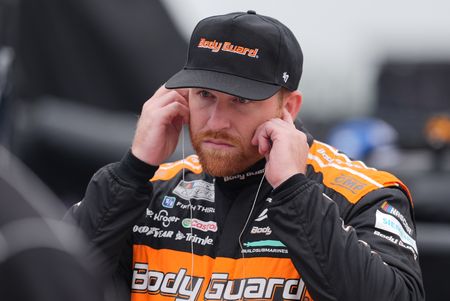
RFK Racing has locked up NASCAR Cup Series driver Chris Buescher for the foreseeable future, announcing a multiyear contract extension with the 33-year-old on Tuesday.
Buescher has been piloting the team’s No. 17 Ford since the 2020 season and is currently having a strong year, sitting seventh in the Cup Series standings. Through 16 races, he has recorded eight top-10 finishes, highlighted by a second-place result at Talladega on April 26.
In a statement released by the team, Buescher expressed deep appreciation for the organization that has shaped much of his career. “RFK Racing has been home for most of my racing career, and that’s something I don’t take for granted,” he said. “I’ve grown up with this organization, and I’m incredibly proud of what we’ve built together over the last several years. The direction we’re heading, the people we have in place and the commitment throughout the company make me excited about the future. I’m grateful to Mr. Jack (Roush), Brad (Keselowski), Fenway Sports Group and everyone at RFK Racing for their belief in me. I’m looking forward to continuing to chase wins and championships together.”
Since breaking into the Cup Series in 2015, Buescher has accumulated six victories, with his most recent coming at Watkins Glen in 2024.
Co-owner Jack Roush spoke highly of the driver’s contributions both on and off the track. “Chris has been part of this organization for most of his professional career, and there is a tremendous amount of pride in seeing what he has become,” Roush said. “He is an exceptional driver, but just as importantly, he is the kind of person who makes our organization stronger. His work ethic, intelligence and commitment to our success have earned the respect of everyone at RFK Racing, and we’re proud that his story with us will continue.”
Buescher’s history with the organization — formerly known as Roush Fenway Racing — goes back to 2009, when he joined as a development driver. He began competing in the NASCAR Xfinity Series for the team in 2011 before eventually earning a spot in the Cup Series.
A developing tropical weather system is causing dangerous flash flooding across portions of Texas and Louisiana, according to the National Hurricane Center.
As of 1:00 PM Central Daylight Time on Tuesday, June 16, the center of Potential Tropical Cyclone One was located near coordinates 27.1 degrees north, 97.8 degrees west. The storm was moving to the northeast at approximately 6 miles per hour.
The system had a minimum central pressure of 1006 millibars and maximum sustained winds of roughly 30 miles per hour at the time of the report.
Authorities are warning that the flash flooding occurring in the region poses a significant danger to those in its path. Residents in affected areas of Texas and Louisiana are urged to stay alert and follow guidance from local emergency officials.
NEWARK, Del. — Twelve student-athletes from the University of Delaware have earned spots on the 2026 College Sports Communicators (CSC) At-Large Academic All-District Team, according to an announcement made by the organization on Tuesday.
The at-large designation recognizes student-athletes competing across all four levels of college athletics — NCAA Division I, NCAA Division II, NCAA Division III, and the NAIA — for their academic accomplishments alongside their athletic careers.
LONDON — Britain’s Defense Ministry has launched an investigation after a U.K.-registered yacht reported being fired upon by a Russian naval vessel in the English Channel on Tuesday.
According to the ministry, the yacht reported that a Russian warship fired warning shots from approximately 500 yards — or about 460 meters — away. The encounter took place roughly 20 miles, or about 30 kilometers, south of the Isle of Wight, in waters beyond the United Kingdom’s territorial boundary.
No one aboard the yacht was injured, and the vessel sustained no damage. The Russian government had not responded to requests for comment as of the time of the report.
British media identified the Russian vessel as the frigate Admiral Grigorovich. Russian warships traveling through the English Channel are typically shadowed by the Royal Navy, and the patrol vessel HMS Mersey was already keeping watch on the Russian ship when the reported incident unfolded.
The episode came just two days after British commandos boarded and seized a sanctioned tanker in the Channel suspected of belonging to Russia’s so-called “shadow fleet.” Officials have stated they are not connecting the two incidents.
The captain of that tanker — an Indian national accused of transporting Russian oil in defiance of international sanctions tied to Moscow’s ongoing war in Ukraine — was ordered held in custody following a court appearance on Tuesday.
This latest incident is part of a broader pattern of tense encounters between British and Russian forces in the region. In November, the British military put Moscow on notice that it was prepared to respond to any intrusion into its territory, after the Russian spy ship Yantar was spotted near the edge of U.K. waters north of Scotland.
Then in April, Britain and Norway announced they had spent several weeks tracking a Russian attack submarine and two spy submarines operating north of the United Kingdom. A Royal Navy frigate, supporting aircraft, and hundreds of personnel were involved in the operation. Then-Defense Secretary John Healey said the effort successfully stopped the Russian vessels from carrying out “nefarious” activities targeting underwater infrastructure.
Healey also accused Moscow of exploiting the distraction created by the Iran war to escalate its hostile activities against Europe.
The current incident echoes a similar event from five years ago, when Russia claimed one of its warships fired warning shots and a military aircraft dropped bombs in the Black Sea to drive away the British destroyer HMS Defender from waters near Crimea that Moscow considers its own territory. The United Kingdom rejected that account, denying its ship had been fired upon. It marked the first time since the Cold War that Russia acknowledged deploying live ammunition to warn off a NATO warship — an episode that unfolded roughly six months before Russia launched its full-scale invasion of Ukraine.
Ocean City, Maryland is pulling out all the stops this Fourth of July as the nation marks a major milestone — the 250th anniversary of American independence.
The popular beach town has announced plans for an expanded Independence Day celebration, inviting both local residents and out-of-town visitors to join in the festivities. This year’s event is being billed as a historic occasion, with a high-energy schedule of activities spread across two separate locations.
The dual-site format is designed to accommodate the large crowds expected to turn out for the landmark celebration, which coincides with the United States’ 250th birthday.
American soybean farmers could soon have a significant new source of demand, and it may be coming from an unexpected place — city vehicle fleets.
According to the United Soybean Board, soy-based biofuels are increasingly being considered by municipalities looking for cleaner fuel options for the trucks, buses, and other vehicles they operate. The connection between the American farm and the city garage is becoming more than just a concept.
As cities across the country look for ways to cut down on vehicle emissions, soy-based biodiesel is emerging as a viable alternative to traditional petroleum-based fuels. Unlike electric vehicles, which require significant infrastructure investment, biodiesel can often be used in existing engines with little or no modification.
For soybean growers, this represents a meaningful opportunity to expand the market for their crop beyond traditional food and feed uses. Fleet adoption of soy-based fuels could translate into steady, large-scale demand that benefits farmers throughout the supply chain.
The United Soybean Board has been highlighting this growing connection between agricultural production and urban transportation as part of a broader effort to promote the versatility and value of U.S. soy.
Federal prosecutors on Tuesday unveiled charges against 15 people accused of obstructing federal immigration agents during a sweeping enforcement operation carried out earlier this year in Minnesota under the Trump administration.
Minnesota U.S. Attorney Daniel N. Rosen announced at a press conference that the investigation focused on two Minneapolis-based groups he described as “antifa” organizations whose members had been trained in “surveillance, operational planning and rapid mobilization against law enforcement.”
The charges arrive as the Trump administration has ramped up its focus on “antifa” — a broad term referring to a loosely organized movement of militant left-wing activists. President Donald Trump has characterized the movement as a domestic terror group.
Rosen said some of the individuals arrested had self-identified as “antifa” and used various methods to disrupt the immigration operation, including what he called “stalking” federal agents and placing blocks of ice in the path of their vehicle convoys. When asked whether any federal agents were physically hurt, Rosen declined to answer directly.
“Whether or not they actually, at the end of the day, cause bodily harm is not the measure of whether or not they committed a serious federal crime,” Rosen told reporters.
Of the 15 charged, 12 were arrested Tuesday, one was already in custody, and two remain at large. The identities of those arrested and the specific charges they face were not immediately released.
The case stems from the administration’s “Operation Metro Surge,” which brought thousands of federal agents flooding into the Twin Cities area. The operation triggered widespread protests and resulted in the fatal shooting of two U.S. citizens.
During the crackdown, convoys of federal agents in unmarked SUVs moved through residential neighborhoods — in some cases forcing their way into homes, waiting near schools, and demanding that residents show proof of citizenship.
In response, a large and largely informal network of Minnesota residents quickly organized — mainly through anonymous neighborhood messaging platforms — with everyday citizens and activists using whistles and car horns to draw attention to the masked and heavily armed agents.
Border czar Tom Homan had signaled at the time that federal authorities were already looking into “the organization and funding of the attacks on ICE.”
“They’ll be held accountable,” Homan said. “Justice is coming.”
Last September, President Trump signed an executive order formally classifying antifa as a domestic terror organization and instructing federal agencies to “investigate, disrupt, and dismantle” its affiliates and those who fund them.
The designation has drawn criticism from Democrats and multiple First Amendment advocacy groups. While the federal government has the authority to label foreign organizations as terror groups, no formal legal mechanism exists to apply that same classification to domestic groups.
Trump has repeatedly used the “antifa” label broadly, at times directing it toward political opponents and peaceful demonstrators who do not hold anarchist views.
The National Hurricane Center has issued updated wind speed probability graphics for Potential Tropical Cyclone One, designated as system AL012026 in the Atlantic basin.
The graphics, which were last updated Tuesday, June 16, 2026 at approximately 15:22 GMT, display the probability of 34-knot wind speeds affecting different regions over a five-day forecast window.
Residents along the Atlantic coast are encouraged to keep a close eye on further updates from the National Hurricane Center as forecasters continue to monitor the development and track of this potential tropical system.
The Trump administration is pushing forward with plans to significantly reduce the role of the U.S. Department of Education, announcing the transfer of two of its core functions to other parts of the federal government.
Oversight of special education programs would be handed off to the Department of Health and Human Services under the proposal, while civil rights enforcement responsibilities would be moved to the Department of Justice.
The changes represent another major step in President Donald Trump’s broader effort to dismantle the Department of Education — an agency he has repeatedly pledged to eliminate altogether.
Israel’s Knesset House Committee voted Monday to recommend shielding Likud lawmaker Tally Gotliv from criminal prosecution, handing the governing coalition an early win in its push to keep charges against her out of court. The 11-to-3 vote is not the final word — the full Knesset must still weigh in and decide whether Gotliv deserves protection from prosecution over accusations that she exposed classified information tied to a current Shin Bet employee. The case has grown into a broader clash over the boundaries of parliamentary immunity, national security confidentiality, and the power of the attorney general.
The charges stem from an indictment approved by Attorney General Gali Baharav-Miara in May, accusing Gotliv of disclosing and publishing restricted information in violation of the Shin Bet law. Prosecutors allege the material she published identified the partner of anti-government protest figure Shikma Bressler as a Shin Bet employee and connected him to claims surrounding the October 7 attacks. Israeli security officials have disputed those claims, and prosecutors maintain that what Gotliv did was not a spontaneous comment during parliamentary debate, but rather a deliberate act carried out repeatedly.
Gotliv tells a very different story. She contends she was acting in her capacity as an elected official, pursuing what she describes as unresolved questions about the October 7 attacks and the behavior of state institutions. Her immunity request rests on the argument that her actions were part of her duties as a member of Knesset and that allowing a criminal case to proceed would undermine her ability to serve her constituents. Her stance has transformed the hearing into a broader test of the coalition’s position that lawmakers must be free to challenge legal and security institutions without the threat of criminal charges hanging over them.
The legal protections available to Gotliv are more limited than the political argument surrounding them. Under Israeli law, a lawmaker who receives a draft indictment from the attorney general may ask the Knesset to block the case from being filed for as long as the current parliament is seated. This is a procedural shield — it does not mean the allegations have been found to be without merit.
A separate, broader form of immunity covers actions or statements made in the course of parliamentary duties and can remain in place even after a lawmaker leaves office. The central question now before the Knesset is whether Gotliv’s alleged actions fall within those protections, or whether the indictment should be allowed to move forward in court.
A legal memo prepared for committee members noted that immunity hearings are meant to function as quasi-judicial proceedings, with members expected to weigh the arguments from both the lawmaker and the attorney general and reach a decision based on the law rather than party loyalty. In reality, Monday’s vote broke along predictable political lines — coalition members supported Gotliv, while opposition members voted against granting immunity.
Those opposed to the committee’s decision argue the case involves more than political speech. Both the Shin Bet employee’s attorney and the Movement for Quality Government urged the committee to turn down Gotliv’s request, saying the alleged disclosures were planned, repeated, and well outside the normal scope of parliamentary activity.
Critics of the move warn that if the Knesset ultimately grants immunity, it could set a troubling precedent allowing political majorities to halt security-related prosecutions before they ever reach a judge. The next step is a vote by the full Knesset, where the coalition must decide whether to complete the immunity process or allow the indictment to proceed.
If the full Knesset approves immunity, the charges will be put on hold for the duration of the current parliament’s term, barring a change in circumstances. If the plenum votes against it, the attorney general will be free to formally file the indictment and Gotliv will face the case as a criminal defendant rather than solely as a lawmaker waging a political fight.
A major milestone has been reached in Delaware’s effort to green the state — the Tree for Every Delawarean Initiative, known as TEDI, has now exceeded 500,000 trees planted.
The program is working toward an ambitious target of planting one million trees across the state by the year 2030, and the latest numbers show it has now crossed the halfway point.
Along with the milestone announcement, officials have opened up a new application window for groups and organizations that are interested in receiving funding for tree planting projects planned for spring 2027.
Those who want to take part in the initiative are encouraged to apply during this current funding period.
The Delaware Department of Transportation (DelDOT) is warning motorists about upcoming overnight lane restrictions affecting E-ZPass lanes in Newark and at Biddles Corner in New Castle County.
Tonight, travelers heading northbound on I-95 will encounter an E-ZPass lane closure running from 9:00 p.m. through 5:00 a.m.
The following night, Wednesday, June 17th, the restrictions shift to southbound I-95, with another E-ZPass lane closure scheduled from 9:00 p.m. to 5:00 a.m.
Drivers are encouraged to allow extra travel time or plan alternate routes during those overnight hours.
Eight Salisbury University Sea Gulls have earned spots on the 2025-26 Academic All-District® Men’s and Women’s At-Large teams, as selected by College Sports Communicators (CSC).
The Academic All-District recognition is given to the nation’s top student-athletes who demonstrate outstanding achievement both on the field of play and in their academic pursuits.
The CSC Academic All-America® program recognizes at-large honorees across five separate divisions: NCAA Division I, NCAA Division II, NCAA Division III, NAIA, and the College Division.
The eight Sea Gulls honored represent the university’s continued commitment to balancing competitive athletics with strong academic performance.
Governor Matt Meyer is urging swift action to bring down energy costs and shield Delaware residents from rising utility bills. The governor made the call during the closing stretch of the legislative session, pressing regulators, utility companies, state lawmakers, and members of the public to make energy affordability a top priority.
Meyer was joined by Senator Stephanie Hansen, Representative Frank Burns, Delaware Public Advocate Jameson Tweedie, and Public Service Commission Director Matt Hartigan as he made his case for protecting ratepayers across the state.
Eight people lost their lives Tuesday when a B-52 bomber crashed at Edwards Air Force Base in southern California, making it the deadliest accident involving that type of aircraft since 1982.
The B-52 Stratofortress — an eight-engine jet built to carry both nuclear and conventional weapons — went down during what military officials called a routine test mission. The aircraft had lifted off from the remote base at 11:20 a.m. local time before the crash occurred.
At a press conference, Col. James Hayes addressed the tragedy head-on. “Today, Edwards Air Force Base experienced a terrible tragedy, and we lost eight great Americans,” he said. Hayes went on to describe the victims as a “mixed crew of military, government civilians, and government contractors.”
Earlier in the day, the base had released a statement saying initial indications suggested the crash “was not survivable.” Military officials confirmed that response efforts have since transitioned fully to recovery operations. Black smoke rising from the crash site could be seen from miles away.
Boeing, the manufacturer of the aircraft, confirmed that two of its employees were among those on board. “We are in contact with their families and are offering support,” the company said in a statement.
The tragedy drew condolences from high-ranking officials across the country. Secretary of the Air Force Troy E. Meink and House Speaker Mike Johnson both took to social media to express their sympathies. California Gov. Gavin Newsom also offered his condolences to “the entire Edwards Air Force Base community” and praised the first responders who answered the call.
Col. Hayes said military investigators will work to piece together what led to the crash, but cautioned that detailed findings are not expected to be made public for roughly six months.
No information about the identities of the victims or the specific circumstances of the crash has been released. Authorities say the priority right now is recovery, followed by a thorough investigation into one of the worst B-52 disasters in decades.
Northbound travelers on Interstate 495 near the Christiana River Bridge are facing a right lane closure as crews carry out a sweeping operation in the area.
The lane restriction is in effect while the maintenance work is underway. Drivers are encouraged to use caution when passing through the affected stretch of roadway.
No word yet on how long the closure is expected to remain in place. Motorists should consider alternate routes or allow additional time for their commute until the operation is complete.
Pakistani Prime Minister Shehbaz Sharif announced Monday that Pakistan helped bring about a landmark peace agreement between the United States and Iran, with a formal signing ceremony scheduled for Friday, June 19, in Switzerland.
Speaking before the National Assembly, Sharif declared that “after the darkness of war, the sun of peace has risen,” noting that both Iran and the United States had agreed to stop all military operations immediately.
Sharif extended his congratulations to US President Donald Trump, Iran’s Supreme Leader Mojtaba Khamenei, and Iranian President Masoud Pezeshkian for reaching the accord. He also expressed gratitude to Qatar’s Emir Tamim bin Hamad Al Thani, Saudi Crown Prince Mohammed bin Salman, and Turkish President Recep Tayyip Erdogan for their contributions to making the agreement possible.
The Pakistani prime minister also pointed to Chinese President Xi Jinping’s important role in pushing the agreement forward. China’s Foreign Ministry spokesperson Lin Jian confirmed Beijing’s support, telling reporters that China welcomes the deal and holds Pakistan’s mediation efforts in high regard.
Sharif described the recognition Pakistan has received for its peacemaking role as unprecedented, calling the agreement far more than a bilateral deal. In his words, it represents “a victory for peace and dialogue.”
He praised both the American and Iranian leaderships for showing patience and wisdom throughout the difficult negotiation process, stating: “Today, as a result of these efforts, the entire world is witnessing this historic day.”
Sharif had first broken the news late Sunday night in a post on the social media platform X, writing: “After prolonged and productive negotiations, a peace agreement has been reached between the United States and Iran. The formal signing ceremony of the agreement will be held on Friday, June 19, in Switzerland.”
He noted that the deal covers an immediate and permanent end to military operations on all fronts, Lebanon included, and thanked both nations for choosing a diplomatic path to resolve the conflict.
The announcement drew widespread praise from world leaders, many of whom called it a major breakthrough for both regional stability and global diplomacy. Pakistan’s role as a mediator drew particular attention, with observers crediting Islamabad for bringing both sides to the negotiating table.
United Nations Secretary-General António Guterres offered his congratulations to both countries, describing the agreement as “a highly important step toward the peaceful resolution of the conflict” and calling it a rare encouraging moment for diplomacy amid heightened global tensions.
Guterres also acknowledged the countries that helped make the deal happen, saying: “I am deeply grateful to Pakistan, Qatar, Egypt, Saudi Arabia, Turkey, and other regional countries for their constructive role in the success of these negotiations.”
President Donald Trump pushed back hard against a Financial Times report claiming his administration was supporting a massive $300 billion reconstruction fund for Iran, labeling the story “fake news” while affirming that Tehran had committed to giving up its pursuit of nuclear weapons.
According to the Financial Times, the proposed fund could be created if Iran agrees to the terms laid out in a memorandum of understanding designed to end hostilities and reach a nuclear deal. The report described the fund as being financed mainly through private investors and international partners — not directly by U.S. taxpayer dollars — though it would carry the backing of the Trump administration.
Trump fired back on social media, dismissing the story and pointing the finger at what he called “Dumocrats” — an apparent jab at Democrats.
“Iran has agreed to never have a Nuclear Weapon! Also, the story that the U.S. is paying Iran 300 million Dollars is Fake News, put out by the Dumocrats!!!” he wrote.
Notably, Trump’s post referenced “300 million Dollars,” while the Financial Times report cited a figure of $300 billion — a significant discrepancy. The original report also never stated the money would come directly from the U.S. government, describing instead a privately and internationally financed structure.
The controversy unfolded shortly after Trump announced that the United States and Iran had reached an agreement to resolve their conflict. He then headed to the G-7 summit in Évian-les-Bains, France, where he expressed optimism about the deal and indicated further talks would be needed.
“We have our deal done with Iran, and it should be successful, it goes to a second stage, which I think would be actually easier,” Trump told reporters at the summit.
He characterized the agreement as serving as “a wall to a nuclear weapon” for Iran.
Pakistani Prime Minister Shebaz Sharif indicated that the proposal is expected to move toward a formal signing ceremony on Friday in Geneva.
Northbound travelers on Interstate 495 are facing a lane restriction near the Christiana River Bridge as crews conduct a sweeping operation in the area.
The right lane of I-495 northbound at the Christiana River Bridge has been closed to allow the work to take place safely. Drivers in the area should expect some slowdowns and are encouraged to use caution while passing through the work zone.
No additional details regarding the expected duration of the closure were immediately available. Motorists are urged to stay alert, reduce speed, and be prepared for changing traffic conditions near the bridge.
LAS VEGAS — The Vegas Golden Knights have decided not to retain John Tortorella as their head coach, despite the fact that he steered the team all the way to the Stanley Cup Final while serving in an interim role.
General manager Kelly McCrimmon broke the news Tuesday, confirming Tortorella’s departure from the organization.
“We thank Torts for the guidance he provided our team since joining the organization in March,” McCrimmon said. “When the decision was made to bring Torts to Vegas, we needed an immediate impact to help us at a pivotal point in the season. Torts’ experience and leadership proved to be the boost that we were looking for, helping guide us to the Stanley Cup Final. We are grateful for Torts’ passion, sincerity, and commitment to our organization, and we wish him and his family the best.”
McCrimmon had brought Tortorella on board on March 30, the same day he let go of Bruce Cassidy with only eight games remaining in the regular season. The Golden Knights responded by winning seven of those eight games and then advanced through three playoff rounds before ultimately falling to Carolina in six games in the Stanley Cup Final.
Kansas City Chiefs wide receiver Rashee Rice walked out of a Dallas County jail on Tuesday, having completed a 30-day sentence handed down for a probation violation connected to a multi-injury car crash on a Texas highway.
The 26-year-old was booked into the facility on May 19 after a positive test for THC. When he emerged from jail, Rice moved quickly past waiting reporters and climbed into a waiting SUV that drove him away from the scene.
Prior to beginning his sentence, Rice underwent surgery on his right knee to address debris that had been causing inflammation. His legal team successfully petitioned a judge to allow Rice to receive treatment at Parkland Hospital during his incarceration.
Rice was absent for all of the Chiefs’ voluntary offseason workouts and missed the team’s mandatory minicamp, which wrapped up last week. Despite that, head coach Andy Reid has indicated he expects the receiver to arrive on time when training camp opens at the end of July.
“(Chiefs trainer) Rick (Burkholder) has talked to him more than what I have,” Reid said, “just making sure that everything was set there where he could do some rehab with it and still do the time that he needed to take care of. So he’s on top of that, and thank goodness that they’re allowing him to do that. So, they’ve been great with that.”
The Chiefs are counting on Rice to provide a boost to an offense that struggled significantly during a disappointing 6-11 finish last season.
When healthy and available, Rice has proven to be a valuable contributor, recording 156 receptions for 1,797 yards and 14 touchdowns, and playing a role in the team’s Super Bowl victory in the 2023 season. However, suspensions and injuries have limited him to just 28 games played across three seasons.
“We’re moving forward as normal as we go here,” Reid said during voluntary workouts. “When he gets back, we’ve got to get him caught up in doing what he needs to do, and make sure he gets it. It’s not an easy thing he’s going through.”
“Life lessons are important,” Reid added, “but we’re all given chances to learn, and he’s in that position now.”
SAN FRANCISCO (AP) — The family of former NFL defensive star Aldon Smith has sent his brain to the Boston University CTE Center, where researchers will study the long-term impact of repeated head trauma, following his unexpected death at just 36 years old.
Smith passed away Saturday, just hours after he had delivered pizzas to a homeless charity in the San Francisco Bay area. No official cause of death has been released.
His family has brought on attorneys Harry Daniels, Bakari Sellers, and Wayne Kendall to look into the circumstances of his death. In a statement issued Tuesday, the legal team said: “As with anyone who dies so suddenly at such a young age, we understand that there is a great deal of interest in and speculation about Aldon Smith’s passing and we intend to get to the bottom of it. To that end, we have taken a number of steps including sending his brain to Boston where medical experts will examine it for CTE as well as other damage caused by years of concussions and additional trauma.”
The attorneys also asked the public to “keep Aldon’s family in our prayers and respect their privacy as they struggle to come to grips with this terrible loss.”
According to Smith’s friend Amir Shirazi, who spoke with the San Francisco Chronicle, he discovered Smith slumped over in the front passenger seat of a vehicle after the pizza delivery on Saturday. Smith was transported to a hospital, where he was pronounced dead.
Former teammate Anthony Dixon paid tribute on social media, writing: “He was a creative mind, so smart, so fierce, so real, so powerful, his presence, his passion and his aura meant a lot to me as a brother and I wish I could’ve did more to help him and pray to God he doesn’t have to hurt anymore.”
Smith entered the league when San Francisco selected him seventh overall out of Missouri in the 2011 NFL Draft. He made an immediate splash, helping the 49ers end a playoff drought and advance to the NFC Championship Game in each of his first three seasons, including one Super Bowl appearance.
As a rookie, Smith recorded 14 sacks and finished as the runner-up to Von Miller in AP Defensive Rookie of the Year voting. The following year, he set a franchise record with 19 and a half sacks and earned first-team All-Pro honors. His combined 33 and a half sacks across his first two seasons remain the most in NFL history.
Smith continued that dominance into 2013, posting four and a half sacks in the first three games before off-field troubles began to mount. A DUI arrest and a stint in rehab for substance abuse cost him five games that season.
San Francisco released him in August 2015 following a fifth arrest in three years — another drunk driving charge. He signed with Oakland shortly before the 2015 season kicked off and recorded three and a half sacks in nine games before facing another suspension.
Smith sought reinstatement to the NFL in 2016 but was initially denied. Oakland released him in 2018 after a domestic violence arrest, though a plea agreement was later reached in that case.
He was ultimately reinstated in 2020 and played all 16 games for Dallas that year, contributing five sacks. He signed with Seattle the following season but was arrested again on a battery charge and released during training camp. In 2023, he served a six-month jail sentence for DUI and never returned to the NFL.
Smith wrapped up his professional career with 52 and a half sacks across 75 games.
KANSAS CITY, Mo. — When World Cup fans show up to cheer on their national teams, they’re not just carrying flags, jerseys, and team songs — many are also toting cups and metal straws to share a round of yerba mate.
The energizing beverage, a staple in many South American countries, has grown in popularity alongside the global reach of soccer. In the United States, it has even become a go-to drink for elite athletes both on and off the field.
When reigning World Cup champions Argentina arrived at their Kansas City hotel, supporters gathered outside sharing yerba mate from gourd-shaped cups, sipping through metal bombillas — a special filtered straw designed for the steeped leaves. At Cafe Corazon, considered one of the largest yerba mate importers in the Midwest, a crowd of fans dressed in Argentina’s signature sky blue-and-white jerseys stretched nearly to the door on Monday — the day before Argentina’s opening World Cup match.
“Our mate has been flying off the shelves,” said Dulcinea Herrera, a co-owner of Cafe Corazon. “So a lot of people have been coming in to try it. People who aren’t Argentinian want to just have that experience. And we have a lot of Argentinians coming in saying, ‘Oh, this reminds me of home.’”
Several of the World Cup’s most recognizable players are well-known mate enthusiasts, including Uruguay’s Luis Suarez and Argentina’s Lionel Messi. After Argentina’s 2022 World Cup victory, Messi famously shared a photo of himself holding a mate cup in one hand and the championship trophy in the other — a moment that firmly placed the drink among the most iconic images in sports history.
The beverage traces its origins to Indigenous peoples and gauchos — the traditional cowboys of South America — and has since traveled the globe. Christine Folch, a cultural anthropologist at Duke University and author of “The Book of Yerba Mate,” notes that different cultures around the world have put their own unique spin on the drink.
Mate drinkers from Paraguay, Uruguay, Argentina, and Brazil each have distinct preferences for how the drink is prepared and what vessel it’s served in, which can serve as a cultural marker when fans from those regions cross paths at a match. Folch herself owns an extensive collection of mate cups, ranging from those crafted from cow hooves and horns to hand-stitched, leather-wrapped metal containers and traditional gourds.
Folch also explained that in the early 1900s, mate gained a strong following in Syria and Lebanon — which is why Middle Eastern grocery stores in the United States remain one of the primary places to find the dried leaves. In the American market, mate is frequently sold in refrigerated cans and promoted as a natural energy drink, often blended with fruit flavors. Some Cuban Americans enjoy a sweetened, carbonated version, while in Berlin, a sparkling mate drink called Club Mate is widely popular and frequently mixed with alcohol.
In its traditional form, the leaves are smoked during preparation, giving mate a slightly smoky quality along with a bold, earthy, grassy taste. Many drinkers say it provides an energy boost without the jittery feeling associated with coffee.
And for those new to ordering it — the correct pronunciation is MAH-teh, not like the word for a teammate on the soccer field.
Folch describes mate as a naturally social drink, well-suited for gatherings like sporting events, where it’s customary to share a single cup or bring enough for everyone around you.
“When somebody offers you mate and you accept, what you have done is you have stepped into a relationship. So it’s a way of bonding with people,” Folch said.
Sebastian Cufre and his father Rene, who was born in Argentina, made the drive from Albuquerque to Kansas City hoping to land last-minute tickets to Argentina’s match. At Cafe Corazon, they connected with fellow Argentina fans and passed a cup of mate around the table.
“It’s like something that you pass around during the games,” Cufre said.
While he has sampled the canned American version of the drink, he’s not impressed by it.
“Honestly, I don’t even consider that to be mate,” Cufre said. “That’s like a completely different class of beverage.”
Regardless of how someone prefers their mate, fans of the drink are encouraging North Americans to give it a try if they spot a cup being passed around at a cafe, restaurant, or watch party.
“It’s not only a drink, but a social thing,” said Fernando Villagran, originally from Salta, Argentina, who traveled from California to support his country’s team. “It is about friendship.”
WASHINGTON — Indiana has joined a small but growing list of states gaining new freedom over how they spend federal education money, becoming the third state to receive special exemptions from the U.S. Education Department under the Trump administration’s effort to “return education to the states.”
Under the approved plan, Indiana will combine $50 million in federal funding from five different funding streams into a single pool with fewer rules about how the money must be spent. State officials say the arrangement will cut compliance and paperwork costs by roughly $20 million. Iowa and Louisiana received similar exemptions earlier this year.
Education Secretary Linda McMahon traveled to Indiana on Tuesday to formally approve the plan alongside state Secretary of Education Katie Jenner and Gov. Mike Braun, a Republican.
Jenner expressed enthusiasm about the increased authority over federal dollars, saying states have long had control over standards, curriculum, and assessments — but not over how federal funding is used.
“As states, we have significant control over education in that we set the standards, we can choose our curriculum, we can design our assessments,” Jenner said. “But when it comes to federal funding, our hands have always been tied. Until now.”
Each year, the federal government sends billions of dollars to schools across the country, with funding levels determined by Congress. That money arrives through dozens of separate grants, each designated for specific purposes, and while it represents only a portion of most school budgets, it plays a critical role for many districts.
Federal waivers have existed for years and were heavily used during the pandemic. Under the current administration — which has pledged to dramatically reduce the federal government’s role in education — these waivers have taken on new significance as a tool for scaling back federal oversight of local school decisions.
Indiana’s waiver is also notable as the first approved by the Trump administration that touches the accountability system, permitting the state to reduce how much weight academic performance indicators carry in school ratings.
However, there are limits to what the federal government can approve. Indiana had asked to redirect money meant for struggling schools toward higher-performing schools that accept transfer students — essentially creating a school choice program — but that portion of the request was denied. An Education Department official explained that the proposal would have changed how funds are distributed to recipients, which falls outside the secretary’s legal authority to waive.
Iowa’s experience was similar. The state originally sought flexibility over major funding streams including Title I — which delivers more than $100 million to Iowa schools with large numbers of low-income students — and wanted to merge 10 funding streams into one. The department approved a much narrower waiver, combining just four funding streams worth a total of $9.8 million, covering teacher training, English learner programs, after-school activities, and academic enrichment.
Additional waivers are expected in the coming months, as several conservative-led states have either signaled interest or already submitted their own proposals seeking greater spending flexibility.
The Trump administration has framed the waivers as a way to empower state leaders and cut down on administrative red tape. The administration has also been a strong supporter of the school choice movement, in which taxpayer dollars are used to help families pay for private school or homeschooling. A federally run school choice program is set to launch next year.
Many of the funding streams being consolidated were originally set aside to help disadvantaged groups, including students in rural and low-income schools and those still learning English. Critics argue that without those specific designations, money intended for the most vulnerable students could get absorbed into broader spending that doesn’t directly address their needs. All three waivers approved so far roll English-language learner funding into a general spending pool.
The Education Department also signed off on Indiana’s request to overhaul its school accountability system using state-developed benchmarks, with a stronger emphasis on college and career readiness.
Denise Forte, CEO of EdTrust, an organization that advocates for educational equity, criticized both the waiver and the new accountability framework, arguing they reduce transparency and downplay reading and math performance.
“The Department of Education will allow Indiana to rewrite its accountability system in a way that will mask student performance and move millions of dollars in dedicated funding away from students who need it most,” Forte said in a written statement.
If you’ve ever shopped for groceries in certain countries, you may have noticed large black warning symbols plastered on food packaging. Known as front-of-package labels, or FOPLs, these markings are designed to alert consumers when a product contains elevated levels of added sugar, sodium, or saturated fat. The goal is to encourage healthier eating — but critics say the system is deeply flawed, often flagging a carton of whole milk or chocolate milk with warning signs while leaving a can of diet soda untouched.
When a public health policy ends up discouraging people from eating genuinely nutritious foods, something has gone wrong. That’s the argument being made by the National Milk Producers Federation and the U.S. Dairy Export Council, who say these labeling systems misrepresent dairy’s well-documented health benefits and threaten demand in key export markets — ultimately hurting American dairy farmers.
Three Major Battles in Latin America
The most active regulatory fights are currently playing out across Latin America.
In Chile — a market that generated $100 million in U.S. dairy exports last year — a front-of-package labeling requirement has been in place since 2019. Under that system, milk, yogurt, and cheese that exceed government thresholds for calories, saturated fats, sugars, and sodium must carry prominent warning labels. The National Milk Producers Federation and the U.S. Dairy Export Council have been teaming up with the Chilean Federation of Milk Producers to seek exemptions specifically for dairy products and to bring the labeling rules in line with Chile’s own dietary guidelines, which acknowledge dairy’s health value.
In Colombia, a market worth $183 million in U.S. dairy exports last year, regulators are considering a draft proposal that could classify most dairy products as “ultra-processed” — simply because making them involves certain processing steps or added functional ingredients. The two organizations filed formal comments with Colombian officials last month and are working alongside Colombian dairy industry partners to push for exemptions for nutrient-rich dairy foods.
In Mexico, the effort has been ongoing for six years. That market represents $2.6 billion in dairy exports, making the stakes enormous. The work there has focused on shaping Mexico’s labeling regulations in a more reasonable direction and preventing a final regulatory phase that could have banned many dairy products from publicly funded settings such as schools and hospitals.
Getting Policymakers Up to Speed on the Science
Changing policy requires more than advocacy — it requires educating the people who write the rules. To that end, the U.S. Dairy Export Council, with backing from the National Dairy Council and the National Milk Producers Federation, organized the NutriLact Congress 2026, a dairy nutrition conference held this past February in Lima, Peru. The event drew more than 300 scientists, health officials, policymakers, and other participants from 17 countries across Latin America. The conference made the case that dairy products play a unique role in filling nutritional gaps at every stage of life — from pregnancy and early childhood all the way through healthy aging.
What This Means for Dairy Farmers
A warning label on a block of cheese sold overseas might seem like a faraway concern, but the ripple effects are real. Reduced demand in export markets affects the bottom line for dairy farmers everywhere. The National Milk Producers Federation and the U.S. Dairy Export Council say they are committed to ensuring American dairy isn’t unfairly branded with misleading warning symbols. Through regional partnerships and educational initiatives like NutriLact, the industry is working to build the long-term relationships needed to win this global labeling fight.
VANCOUVER — A highly anticipated World Cup showdown is scheduled for Thursday as Canada takes on Qatar at BC Place stadium in Vancouver, with Group B remaining wide open and three points on the line for both teams.
Co-host Canada is coming off a 1-1 tie with Bosnia and Herzegovina in Toronto during its tournament opener. The team can count on enthusiastic home support once again in Vancouver, where fans have already shown they are ready to embrace the sport in a country better known for its passion for ice hockey.
Qatar, which hosted the 2022 World Cup, also kicked off this tournament with a 1-1 draw, that time against Switzerland out in California.
BC Place has already demonstrated its enthusiasm for the competition, packing in a strong crowd for Australia’s 2-0 victory over Turkey. The stadium is expected to deliver a lively atmosphere as Canada pushes for a home win.
Canada enters as the favorite despite still being in search of their first-ever World Cup victory. Star forward Jonathan David, the country’s all-time leading scorer, will be looking to step up after substitute Cyle Larin scored the goal in the opening match.
A significant question mark hangs over the fitness of captain and left-back Alphonso Davies, who is dealing with a hamstring issue. That leaves head coach Jesse Marsch with a major lineup decision heading into the match.
Defender Joel Waterman is also hoping to see time on the field. He sat on the bench during the opener, but playing in his home city would make this game especially meaningful for him.
Qatar has had a tough road when it comes to earning respect on the World Cup stage. Heading into this tournament, the team had gone without a win across six matches played at the 1986 and 2022 editions. In 2022, they finished last in their group without earning a single point.
Still, Qatar has already shown improvement over that dismal 2022 showing and now has a chance to build on their opening draw with another strong result.
Waterman summed up the stakes heading into Thursday’s match. “The group is wide open,” he told reporters. “We want to top the group. The focus has never changed for us.”
“It’s a big game on Thursday to beat Qatar and then we’ve got to try and beat Switzerland as well,” Waterman continued. “We’re going to try and pick up the six points and go on to the next round.”
NEWARK, Del. — The University of Delaware field hockey team is looking ahead to the 2026 season after head coach Tara Zollinger unveiled the program’s full schedule on Tuesday.
The Fightin’ Blue Hens are set to compete in 18 games during the upcoming campaign, with 10 of those matchups taking place at Fred P. Rullo Stadium in Newark. The double-digit home game total marks the second year in a row the program has welcomed fans to 10 or more contests on their home turf.
The Federal Communications Commission announced Tuesday that new models of Chinese-made toy drones will be permitted for import into the United States.
Back in December, the FCC had moved to block all new models of foreign-manufactured drones and key components from entering the country, specifically targeting products from China’s DJI and Autel, citing unacceptable threats to national security. Since then, the agency has gradually allowed some new drone models back in.
The latest decision stems from a Pentagon finding that “unsophisticated, low-risk toys” lacking the “organic capabilities and features in range, endurance, sensing, payload, connectivity, and data collection and storage” associated with conventional drones do not present national security concerns.
The FCC laid out tight criteria for what qualifies as a toy drone under this exemption. Qualifying devices must weigh no more than 150 grams — about 5.29 ounces — and can only be operated within a line-of-sight distance of 100 meters or less, which is roughly 328 feet. They also cannot have any network or connectivity features, cannot carry cameras or sensors capable of recording or collecting data, and are limited to no more than 10 minutes of flight time.
The U.S. government has been taking a number of steps to restrict Chinese technology products, and the FCC is weighing additional measures. Last month, the agency said it would allow Chinese drones and consumer routers already sold in the United States to continue receiving critical software updates at least through the end of 2028.
Separately, the FCC is reviewing whether to ban the import of Chinese equipment from a group of manufacturers, having already prohibited the import or sale of their new models back in 2022.
The commission is also considering a proposal that would bar U.S. telecommunications carriers from connecting their networks with Chinese telecom companies identified as national security risks — a move that would also prevent those Chinese firms from operating data centers on American soil.
The Islamic State announced Tuesday that it was behind a deadly assault on a Syrian interior ministry camp located in the city of Raqqa, which took place the day before.
According to Syria’s Interior Ministry, one of its security personnel lost their life during the Monday incident, in which two Islamic State militants attempted to storm a command headquarters belonging to the country’s internal security forces in Raqqa. Syrian forces were ultimately able to repel the attack.
The National Hurricane Center has issued wind speed probability graphics for a developing weather system designated as Potential Tropical Cyclone One.
Forecasters released an updated 34-knot wind speed probability graphic on Tuesday, June 16, 2026, at approximately 3:00 p.m. GMT. The graphic provides a 120-hour outlook showing the likelihood of tropical-force winds affecting various areas.
Residents and communities in potentially affected regions are encouraged to keep a close eye on updates from the National Hurricane Center as the system continues to develop.
A team of researchers says it has taken a fresh look at data from a particular kind of stellar explosion and confirmed what scientists have long believed — that the universe is expanding at an ever-increasing rate. That conclusion is the same one that led scientists in the 1990s to identify a mysterious cosmic force known as dark energy.
The new findings directly contradict a study published earlier this year that claimed the universe’s expansion was no longer speeding up — a conclusion that would have upended our basic understanding of how the cosmos works.
“The universe is still accelerating,” said astrophysicist Brodie Popovic of the University of Southampton in England, one of the lead researchers behind the study, which was published this month in the journal Monthly Notices of the Royal Astronomical Society. “There’s still a lot we don’t know and are excited to learn, but we think we’re on the right track,” Popovic added.
The research team, which included two Nobel Prize recipients, used observations from two separate datasets involving what are known as Type Ia supernovas — powerful stellar explosions — to calculate enormous distances across the cosmos. These explosions occur when an object called a white dwarf, the dense leftover core of a low- to intermediate-mass star at the end of its life, is destroyed.
This category of supernova has become a key tool for astronomers because all such explosions appear to release roughly the same amount of light. That means scientists can use how bright or faint they appear from Earth to figure out how far away they are — essentially using them as cosmic measuring sticks. By tracking the brightness of these events, scientists can determine how fast the universe is expanding and how that rate has changed over time. Because light takes time to travel through space, observing distant objects is effectively a look back into the past.
The universe began with the Big Bang approximately 13.8 billion years ago and has been growing ever since. In 1998, scientists revealed that this growth is actually speeding up, attributing the acceleration to a poorly understood invisible force called dark energy. Ordinary matter — stars, planets, gas, dust, and everything familiar on Earth — makes up an estimated 5% of the universe’s total contents. Dark matter, which is detected through its gravitational pull on galaxies and stars, accounts for roughly 27%, while dark energy is estimated to comprise about 68%.
The earlier 2025 study, also published in the same journal, argued that dark energy is fading and has stopped driving the universe’s accelerating expansion.
“Type Ia supernovae are the premier tool for measuring the expansion history of the universe, and provided the first evidence in 1998 that cosmic expansion is accelerating due to dark energy,” said astrophysicist Adam Riess of Johns Hopkins University in Maryland, a co-author of the new study and a Nobel laureate in physics in 2011 for helping discover the accelerating expansion of the universe.
Riess went on to explain the core disagreement: “Over the past decade, a group at Yonsei University has argued that supernova distances should be calibrated differently by accounting for the ages of the stars that eventually explode, and that this ‘age effect’ could substantially alter the evidence for acceleration. In our study, we found no evidence for the claimed ‘age effect’ in the largest calibrated supernova samples used by the cosmology community over the last decade.”
Astrophysicist Young-Wook Lee of Yonsei University in Seoul, one of the leaders of the earlier 2025 study, stood by his team’s work. Lee said the arguments put forward by the authors of the new study have “serious methodological flaws or lead to conclusions that are internally inconsistent by their own logic.”
The researchers behind the new study said they remain confident in both their methods and their conclusion that the universe’s expansion is indeed still accelerating.
The true nature of dark energy remains one of science’s biggest unsolved mysteries. New tools, including the recently opened Vera Rubin Observatory in Chile and the Nancy Grace Roman Space Telescope — set for launch in August — could shed new light on the question.
“We’re hoping the new data we get from Vera Rubin and the Nancy Grace Roman Space Telescope will help us narrow down what dark energy really is,” Popovic said.
A local weather statement was issued at 10:10 AM CDT for the Lake Charles, Louisiana region, according to information released through the National Hurricane Center’s official text notification system.
The bulletin was distributed via the National Hurricane Center’s public advisory channel. No additional details beyond the issuance time and source location were included in the available information.
Residents in and around the Lake Charles area are advised to monitor local weather authorities for the latest updates and any instructions related to this statement.
An Israeli airstrike claimed the lives of at least two Palestinians in the central Gaza Strip on Monday, health officials reported, while Israeli ground forces extended their reach deeper into a northern Gaza neighborhood, sending families scrambling to escape.
According to medics, the strike hit near a residential building in the Nuseirat refugee camp, killing two brothers identified as Ahmed and Mahmoud Abu Heen. The Israeli military offered no immediate response to requests for comment.
A ceasefire brokered by U.S. President Donald Trump in October 2025 has not succeeded in stopping Israeli military operations in Gaza, nor has it brought about the disarmament of Hamas militants.
With these latest fatalities, the death toll among Palestinians from Israeli strikes since October has climbed to nearly 1,000, according to the Gaza health ministry. Israel reports that four of its own soldiers have been killed by militants during that same stretch of time.
Amid the ongoing violence, Nickolay Mladenov, Trump’s Board of Peace envoy for Gaza, traveled to Cairo to advance negotiations. Sources familiar with the discussions say mediators from Egypt, Qatar, and Turkey have been meeting with Hamas leadership regarding the second phase of Trump’s Gaza plan. That plan calls for Hamas to surrender its weapons and for Israeli forces to withdraw — terms that both sides have so far been unable to agree upon.
Israeli troops currently hold more than 60% of Gaza’s land, areas from which civilians have been ordered to leave and where structures have been demolished. On May 28, Prime Minister Benjamin Netanyahu publicly confirmed he had instructed the military to push that figure to 70%.
Witnesses in southern Gaza report that over recent days, Israeli forces have pushed the boundaries of the so-called “Yellow Zone” — the areas under their control — outward into eastern Khan Younis and northern Rafah, where new boundary markers and concrete barriers have appeared.
On Sunday, Israeli tanks rolled further into the Al-Tuffah neighborhood of Gaza City in the north, compelling multiple families to abandon their homes. Video footage captured on Monday showed yellow boundary blocks that had been repositioned closer to residential buildings.
“I swear we don’t know where to go,” said Umm Muhammad Junaynah, a resident of Al-Tuffah, visibly struggling to hold back tears as she gathered her belongings. “We are getting our furniture out, we don’t know where to go. We don’t know where to go, we have nowhere to go.”
Almost all of Gaza’s roughly 2 million residents — the majority of whom have already been uprooted multiple times — are now crowded into a narrow coastal strip, living in makeshift tents or partially destroyed buildings under Hamas control.
Nour Shabat, a 27-year-old woman from Al-Tuffah, described the terror of Sunday night. “It was a night of terror, we were scared,” she said.
Gaza has been reduced to rubble over the course of a two-year Israeli military campaign that began following Hamas’s 2023 attack on southern Israel.
Shabat expressed her exhaustion with the repeated upheaval. “I’m tired of displacement, honestly I’m tired of displacement. What is our fault that this is happening to us?” she said. “Should I take my belongings, myself and go sleep in the street? I have slept in the streets many times and I have been displaced many times. I’m tired and can’t handle anymore. Enough, I am tired.”
A traffic crash has prompted the closure of Foulk Road at its intersection with Weldin Road, according to transportation officials.
Motorists traveling through the area are advised to avoid the intersection and plan for alternate routes until the roadway is reopened. The closure is in effect as crews respond to the scene.
No further details regarding the crash, including the number of vehicles involved or any injuries, have been made available at this time. Drivers should remain alert and allow extra travel time if commuting through the affected area.
The National Hurricane Center has issued updated wind speed probability graphics for a weather system currently being tracked as Potential Tropical Cyclone One.
The graphics, last updated Tuesday, June 16, 2026, show the probability of 34-knot winds — roughly 39 miles per hour — affecting different areas within a five-day forecast window.
Forecasters are closely watching the system as it has the potential to develop further. Residents in coastal areas are encouraged to stay informed and monitor the latest updates from official weather authorities.
Major League Baseball has put players on notice about writing on their uniforms after three San Francisco Giants pitchers inscribed Bible verses on their caps during the team’s Pride Night game last week.
Giants starter Landen Roupp took the mound Friday night in a 5-1 loss to the Chicago Cubs with “Gen 9:12-16” written on his cap. The inscription partially covered the rainbow SF logo that players were wearing to mark Pride Night. San Francisco relievers JT Brubaker and Ryan Walker also had Bible verses written on their caps during the game.
A fourth Giants pitcher, left-hander Sam Hentges, chose to wear the team’s regular black cap with the orange logo rather than the Pride Night version.
In response, MLB released a statement saying the writing broke league uniform rules and that the players involved have been cautioned about repeating the violation. “The writing on the cap violates our rules and consistent with normal practice we have warned the players about future violations,” the league said.
The Genesis passage referenced by Roupp describes God’s covenant with Noah — a promise never to send another worldwide flood — with the rainbow serving as the symbol of that agreement.
Roupp explained his decision to reporters after the game. “That’s just kind of something I believe in, and I stand firm in that, and I’m thankful we live in a country where, you know, we have the freedom to believe what we want … and express what we want,” he said.
Giants manager Tony Vitello told reporters the topic was never brought up with the pitchers before the game, adding that it was “just kind of a general knowledge” that players “have the freedom to do what they think is best.”
FLORENCE, Italy — Two of the most recognizable paintings from the Italian Renaissance have been given a fresh new layout at Florence’s celebrated Uffizi Gallery, as the museum continues its efforts to improve the visitor experience.
Beginning Tuesday, guests at Italy’s most visited museum will find Sandro Botticelli’s “The Birth of Venus” displayed in one room, with “Primavera” visible by simply turning around — hanging on the opposite wall in an adjacent space.
The reorganization comes under the direction of Uffizi director Simone Verde, who stepped into the role in January 2024 and has been guiding the museum through a broader renovation process.
Verde described the updated Botticelli rooms as a bridge between the museum’s storied past and its future vision. “The Botticelli rooms seek to present visitors with the Uffizi of the future, while keeping its feet firmly on the ground and its roots deeply planted in the history of this extraordinary museum,” he said.
The two paintings had most recently been displayed side by side on neighboring walls, giving visitors a simultaneous view of both works. In earlier decades, the paintings faced each other across a single room — an arrangement that contributed to overcrowding and made it difficult for guests to fully appreciate either piece.
When most people think about war affecting oil prices, they picture gasoline at the pump — but the conflict with Iran is hitting drivers in a different way: through the rising cost of motor oil.
The United States may rank as the top producer of crude oil on the planet, but that distinction does not extend to motor oil. The country’s lubricant supply chain tells a very different story, and it’s one that’s costing consumers more every time they pull into a service bay for an oil change.
The price of lubricants has been climbing sharply since the war with Iran began. According to a trade group, the cost of group III base oil — a key ingredient used in motor oil blends — has jumped 175% since the conflict started.
What makes the situation particularly frustrating for drivers is that there may be no quick fix on the horizon. Even if a tentative agreement to end the war were reached, industry analysts say it would not be enough to immediately bring those lubricant costs back down.
A local weather statement was issued at 10:38 AM CDT for the Houston and Galveston, Texas region, according to information released through the National Hurricane Center’s official alert system.
The statement, identified as a local advisory bulletin, was distributed through the NHC’s text notification service. No further details regarding the specific content or nature of the weather concern were available in the released text.
Residents in the Houston and Galveston, Texas area are encouraged to monitor official weather channels for the latest updates and guidance.
PARIS (AP) — For weeks, a dark mountain-like structure towered over the Seine River where Paris’ oldest bridge normally stands. On Monday evening, the doors to that structure swung open to the public.
Stepping inside, visitors immediately notice that Paris smells different. The air carries the scent of wet earth, aged stone, damp cellar walls, and a faint hint of smoke.
From the bright riverfront, guests enter a dim corridor lined with illuminated photographs of caves, while a low electronic rhythm seems to pulse through the surrounding walls.
Underfoot, the original cobblestones of the Pont Neuf still rise and fall with every step.
The installation, called the Pont Neuf Cavern, is the work of French street artist JR — sometimes referred to as the French Banksy. It is free to enter at any hour of the day and will remain open through June 28.
Constructed primarily from printed fabric and air, the structure converts the 17th-century bridge into a simulated cavern that reaches 18 meters — roughly 59 feet — above the Seine.
“It feels like the city has disappeared,” said Léa Martin, a 22-year-old art student from Lyon who visited on Tuesday. “You know the river is right outside, but for a moment you’re somewhere ancient.”
The scent experience is a deliberate and central part of the illusion. Olfactory expert Sarah Bouasse designed two evolving fragrances drawing on geosmin and isoborneol — chemical compounds linked to the smell produced when rain falls on dry ground.
The scent shifts as visitors cross the bridge: beginning with wet soil and mineral dampness, it gradually transitions into something warmer, smokier, and faintly animal in nature.
“Usually I cross here without looking up once,” said Michel Dupré, a 67-year-old retiree, as he blinked stepping back into daylight. “Today I felt the stones under my feet. And smelled them too. It makes you walk like a child again.”
Adding to the atmosphere is a sound installation by Thomas Bangalter, formerly one half of the French electronic music duo Daft Punk. His composition fills the cavern with deep rumbles, echoes, and rhythmic pulses.
The Pont Neuf was completed in 1607 and, despite its name translating to “New Bridge,” remains the oldest bridge still standing in Paris.
JR’s creation invites people to experience this familiar crossing in a completely new way — through their sense of smell, hearing, and touch.
The installation also serves as a tribute to artists Christo and Jeanne-Claude, who in 1985 wrapped the Pont Neuf in pale golden fabric, drawing an estimated 3 million visitors. That project bathed the bridge in light. JR’s version takes visitors into darkness.
“You enter into the darkness,” JR has said, “and emerge into the light on the other side.”
Those who wish can hold up their phones to unlock an augmented-reality layer developed with tech company Snap. Through the screen, digital bats streak light across the cave, passing visitors leave ghostly impressions, and a dancer appears to materialize out of thin air.
JR has connected the work to Plato’s allegory of the cave — the ancient philosophical idea that prisoners mistake shadows for reality. In his view, today’s cave walls are the screens and algorithms that filter what people perceive. Even so, the most powerful moments in the installation require no phone at all.
“It’s completely strange,” said Nadia Benali, 34, smiling near the artificial cliff walls. “Paris needs things that make people stop.”
Once the installation closes, its fabric materials will be reused or recycled. The mountain-like structure will disappear, traffic will resume, and the Pont Neuf — a bridge older than the French Revolution itself — will once again stand open to the sky.
WARSAW, Poland — A 44-year-old Russian artist who openly criticized Russian President Vladimir Putin was shot and killed at close range outside his home in the eastern Polish city of Biala Podlaska, according to prosecutors who announced the news Tuesday.
Polish media identified the victim as Robert Kuzovkov, though prosecutors referred to him only as Robert K., as required under Polish privacy laws. He worked under the pseudonym Semyon Skrepetsky.
Two Belarusian nationals, ages 37 and 33, were taken into custody near the Belarusian Consulate following the Monday morning attack.
Prosecutors described the victim as an artist who, through his work, “expressed criticism of the current policies of the Russian authorities.” His paintings included unflattering portrayals of Putin, Chechen leader Ramzan Kadyrov, and other senior Russian officials. One piece depicted Putin being held in the arms of Soviet dictator Josef Stalin.
Just the day before his death, the artist had posted a video to his YouTube channel showing him in Berlin placing a Russian flag into a trash can on June 12 — the holiday commemorating Russian sovereignty.
Prosecutors said an unidentified man approached the artist near his home at approximately 9:45 a.m., fired two shots, then shot him three additional times at close range before fleeing the scene. The victim died at the scene from gunshot wounds to the head, chest, and back.
Polish prosecutors have not linked the killing to the Russian government, and Poland’s Internal Security Agency did not respond to a request for comment.
Since Russia’s invasion of Ukraine in 2022, the country has faced repeated accusations of attempting to eliminate political opponents on foreign soil, including alleged plots targeting exiled activists in France and Lithuania. German officials have also disrupted alleged plots against the head of a German arms supplier to Ukraine and a Ukrainian military official.
In 2024, Polish authorities arrested a man in connection with an alleged plot to assassinate Ukrainian President Volodymyr Zelenskyy. That same year, a Russian helicopter pilot who had defected was killed in Spain, with Russian operatives considered the prime suspects.
NEW YORK (AP) — The rate at which babies in the United States die before their first birthday has dropped to its lowest level ever recorded, according to early government figures released this year.
The Centers for Disease Control and Prevention reports that in 2025, the infant mortality rate came in at just under 5.4 deaths for every 1,000 live births. That’s a step down from roughly 5.5 in 2024 and approximately 5.6 during each of the two years before that. Though the change may seem minor, health researchers say it carries real statistical weight — amounting to hundreds fewer infant deaths annually.
Pinpointing exactly what is behind the improvement is challenging, but Dr. Michael Warren, chief medical and health officer for the March of Dimes, called it a positive sign. “This is an encouraging data point, and we hope that this trend will continue,” he said.
Infant mortality tracks how many babies die before reaching their first birthday. Because the number of births changes from year to year, researchers use rates rather than raw numbers to make meaningful comparisons over time.
The total count of infant deaths is also trending downward. Provisional CDC figures show approximately 19,350 babies died in 2025 — down from around 20,050 in 2024 and about 20,160 in 2023. Those preliminary numbers may shift slightly as further analysis is completed, but the overall direction is expected to hold.
Over the past three decades, the U.S. rate has gradually improved, falling from 7.5 deaths per 1,000 births — a decline credited to advances in medicine and public health campaigns. Even so, the U.S. continues to perform worse than other high-income countries. A study published last year found that in 2022, the American infant mortality rate was nearly double that of several comparable wealthy democracies, including Italy, Japan, Spain, and Sweden. Experts point to poverty, limited access to prenatal care, and other systemic issues as contributing factors.
That 2022 figure was notable for another reason — it marked the first statistically significant increase in the U.S. infant mortality rate in roughly two decades. Health officials linked that spike to a resurgence of RSV and flu infections among infants.
In response, U.S. health authorities in 2023 began recommending two new protective measures: a lab-created antibody shot designed to help infants’ immune systems fight RSV, and an RSV vaccine for pregnant women between 32 and 36 weeks of pregnancy. A March of Dimes expert stated last year that these interventions likely played a role in the improvement seen in 2024.
Warren also noted that a drop in sudden infant death syndrome cases may be connected to growing awareness and education around safe sleep practices for babies.
The CDC posted its 2025 preliminary data in late May. On Tuesday, the agency released a more detailed breakdown of 2024 infant mortality figures. Key findings from that report include:
— Death rates fell for both the youngest infants — those under 28 days old — and for slightly older babies. Preliminary 2025 data suggest those declines have continued.
— Racial disparities in infant mortality remained pronounced in 2024. Babies born to Black women died at more than twice the rate of infants born to Hispanic, white, and Asian American women.
— Researchers observed a drop in the mortality rate for full-term infants born at 39 to 40 weeks gestation, though rates for other gestational age groups did not change significantly.
— Among individual states, Mississippi recorded the highest infant mortality rate at 9.65 deaths per 1,000 births, while New Hampshire had the lowest at just under 3 per 1,000.
Warren addressed the wide variation between states, saying: “These differences are reflective of a variety of reasons related to access to care, community factors, and policies that improve health and outcomes.”
A court hearing in the state murder case against Luigi Mangione was postponed by one day after prosecutors neglected to notify the jail that he was needed in court, forcing a delay in what had been an anticipated ruling by the judge.
Judge Gregory Carro had set the hearing for Tuesday, but the proceeding was adjourned about half an hour after its scheduled start time when Assistant District Attorney Joel Seidemann informed the judge that the prosecution had failed to deliver the necessary paperwork to the jail.
“It’s on us,” Seidemann told the court. “We got the writ signed but we failed to serve it.”
“That’s unfortunate,” Judge Carro responded.
Seidemann pointed out that the judge overseeing Mangione’s federal case, Margaret Garnett, had issued an order to the jail allowing him to appear in court wearing a suit — but acknowledged that order alone was not sufficient to have him physically transported to the courtroom.
Mangione, 28, is currently held at a federal detention facility in Brooklyn while he awaits trial in both state and federal proceedings stemming from the December 4, 2024, killing of UnitedHealthcare CEO Brian Thompson. He has entered not guilty pleas in both cases and faces the possibility of life in prison if convicted in either.
Judge Carro had been expected to issue a ruling Tuesday on an unspecified matter following a closed hearing held two weeks prior. Carro sealed that virtual proceeding at the defense’s request but offered no further explanation at the time. Any ruling from the judge will now be issued Wednesday.
Mangione’s state trial is scheduled to begin September 8, while his federal trial — which includes stalking charges — is set to get underway October 13.
Thompson, 50, was shot and killed as he walked toward a Manhattan hotel where UnitedHealth Group was holding its annual investor conference. Surveillance footage captured a masked gunman firing at him from behind. Investigators say the words “delay,” “deny,” and “depose” were found written on the ammunition — a phrase commonly associated with tactics used by insurance companies to avoid paying out claims.
Mangione, an Ivy League graduate from a wealthy Maryland family, was taken into custody five days after the shooting at a McDonald’s restaurant in Altoona, Pennsylvania, roughly 230 miles — or about 370 kilometers — west of Manhattan.
At a hearing last month, Judge Carro ruled that both a firearm and a notebook found in connection with Mangione can be used as evidence at trial. Prosecutors say the weapon — a 3D-printed pistol — is consistent with the gun used to kill Thompson. The notebook, they say, contains writings about wanting to “wack” a health insurance executive and references to fighting back against “the deadly, greed fueled health insurance cartel.”
ATLANTA — A federal judge who faced discipline following an investigation into serious misconduct has stepped away from a Georgia election records case after the U.S. Department of Justice questioned whether she could remain impartial.
U.S. District Judge Eleanor Ross filed an order on Tuesday recusing herself from the case, saying she was doing so “out of an abundance of caution for the potential perception of bias.”
The Justice Department had moved to have Ross removed from the proceedings, pointing to her reported attendance at an event connected to Fulton County District Attorney Fani Willis — the prosecutor who brought charges against President Donald Trump related to Georgia’s 2020 election.
The case before Ross involved the Justice Department’s lawsuit against Georgia Secretary of State Brad Raffensperger, in which the federal government is seeking an unredacted copy of the statewide voter list.
In her recusal order, Ross acknowledged the politically charged nature of the situation. “Both the Trump administration’s present and Willis’s past efforts have become heavily polarized,” she wrote, adding that she “cannot discount” that a neutral outside observer might view her attendance at a Willis campaign-sponsored event as a sign of support for the district attorney — even though she said she only attended to reconnect with former colleagues.
Ross previously worked in the Fulton County District Attorney’s Office and crossed paths with Willis there before Willis rose to become district attorney.
A prior court investigation found that Ross had sex with a high-ranking uniformed police officer inside the courthouse within earshot of staff members, attended a partisan political event, and then initially denied the allegations when confronted. As a result, she received a “private reprimand.”
According to the investigation report, the event Ross attended was hosted by a district attorney’s campaign. Ross stated that the district attorney had been a personal friend since 1999 and that she had attended a private gathering on the sidelines of the event to visit with former coworkers from the district attorney’s office.
Willis secured an indictment in August 2023 against Trump and 18 other individuals, alleging they took part in a broad effort to reverse the outcome of Georgia’s 2020 presidential election. That criminal case was ultimately dismissed in November.
Nigeria is intensifying its legal offensive against Islamist militancy, with hundreds of additional suspects now facing prosecution in what officials describe as a continued push to stamp out terrorism, the country’s Attorney-General Lateef Fagbemi announced Tuesday.
The West African nation has been battling a 17-year insurgency driven by Boko Haram and Islamic State West Africa Province, known as ISWAP, primarily in the country’s northeastern region. Aid organizations report the violence has left thousands dead and forced at least 2 million people from their homes.
Fagbemi said 84 additional suspects were scheduled to appear in court Tuesday, joining roughly 490 others who have already been brought before a federal court in Abuja since Monday. An additional 102 cases were carried over from a prior round of proceedings.
“The message is to let everybody know that terrorism in whatever shape or form is not to be condoned or tolerated,” Fagbemi said.
This week’s proceedings mark the fourth phase of terrorism trials held under President Bola Tinubu. Over the past decade, large-scale mass trials have become a central tool in the Nigerian government’s strategy to combat militant activity.
In April, authorities announced that 386 suspected Islamist militants had been convicted, receiving sentences that ranged from five years in prison to life behind bars.
BEIJING — China’s National Disease Control and Prevention Administration rolled out a revised Ebola prevention and control plan on Tuesday, tightening procedures for tracking close contacts, strengthening oversight at medical facilities, and expanding monitoring at the country’s borders.
The updated plan was prompted by recent Ebola outbreaks in the Democratic Republic of the Congo and Uganda, according to a statement from the administration.
Under the new guidelines, anyone considered a close contact — meaning someone who has had direct exposure to the blood, bodily fluids, secretions, excrement, or contaminated belongings of a confirmed or suspected Ebola patient — must be tracked and placed under quarantined medical observation for 21 days starting from their last point of contact with the infected person or contaminated item.
Medical facilities, disease control agencies, and customs offices at every level are required to report both suspected and confirmed Ebola cases through a designated online system within two hours of identification.
The scope of surveillance is also being broadened. In addition to existing port health checks and domestic disease tracking, monitoring will now include alerts from international health organizations, testing conducted by domestic laboratory institutions, and wastewater screening on aircraft arriving from abroad.
Travelers arriving in China from Ebola-affected countries or regions — or anyone who has visited such areas within the past 21 days — will be required to monitor their own health for 21 days after entering the country.
Disease control agencies at the provincial level have been directed to work with relevant government departments to follow up with individuals who have traveled to Ebola-affected regions, maintaining contact until the 21-day monitoring period is complete.
PARIS — World leaders representing the G7 nations issued a joint demand Tuesday for a powerful and well-coordinated effort to combat the Ebola outbreak currently affecting Congo, pressing other countries to contribute resources toward stopping the virus from spreading further.
In a formal statement, the leaders said, “We continue to closely monitor the situation as it evolves, along with our partners, to ensure that this dangerous virus does not spread, including across borders.”
BEIJING — China’s embassy in the United Kingdom has filed a formal protest with British authorities following London’s announcement of new sanctions that include four Chinese entities accused of providing key military supplies to Russia.
In a statement posted on the embassy’s website, officials called on Britain to acknowledge and correct what they described as a “mistake” and to pull back the sanctions. The embassy also warned that China would take whatever steps are needed to defend the rights and interests of its businesses.
“On the Ukraine crisis, China has consistently promoted peace talks and strictly controlled exports of dual-use goods,” an embassy spokesperson said in the statement. “Normal exchanges and cooperation between China and Russia should not be disrupted or affected.”
The latest British sanctions package, unveiled on Tuesday, takes aim at Russia’s network of so-called “shadow” ships and financial channels used to evade existing restrictions. It also targets suppliers of critical military equipment to Russia operating in China, Thailand, and Turkey.
World number one Scottie Scheffler will step onto the course Thursday morning at Shinnecock Hills Golf Club in Southampton, New York, with a historic goal in mind — completing a career Grand Slam. He will play alongside defending U.S. Open champion J.J. Spaun and amateur Mason Howell, with their group scheduled to begin from the par-four, 394-yard first hole at 8:14 a.m. ET.
Scheffler, a two-time Masters champion who captured both the PGA Championship and the British Open last year, is attempting to become just the seventh man in history to win all four of golf’s major titles. If he succeeds, he would join Rory McIlroy, Tiger Woods, Jack Nicklaus, Gary Player, Ben Hogan, and Gene Sarazen in that exclusive club.
Australian Adam Scott, who is marking his 100th consecutive major appearance this week, will play in the group just ahead of Scheffler, alongside Harris English and Nick Taylor.
McIlroy, who successfully defended his Masters title in April and finished tied for seventh at last month’s PGA Championship, will tee off from the 10th hole at 7:52 a.m. with Sweden’s Ludvig Aberg and England’s Tommy Fleetwood.
Former U.S. Open champion Jon Rahm, one of 13 LIV Golf players competing in the 156-man field and a joint runner-up at the PGA Championship, is set to begin from the 10th tee at 2:09 p.m. alongside Justin Rose and Jordan Spieth.
Two-time U.S. Open champion Bryson DeChambeau, also competing on the LIV Golf circuit, will look to bounce back after missing the cut at both the Masters and the PGA Championship. He tees off from the back nine at 1:25 p.m. with Viktor Hovland and 2022 U.S. Open winner Matt Fitzpatrick.
A developing tropical weather system is posing a serious flooding threat as it slowly pushes inland, forecasters warned Tuesday morning.
According to the National Hurricane Center, as of 10:00 AM CDT on Tuesday, June 16, the center of Potential Tropical Cyclone One was positioned near coordinates 27.0 degrees north latitude and 98.0 degrees west longitude. The storm was tracking to the northeast at approximately 6 miles per hour.
The system had a minimum central pressure of 1007 millibars and maximum sustained winds of around 30 miles per hour at the time of the advisory.
Despite its relatively modest wind speeds, forecasters are emphasizing that the primary danger from this system is not wind — it is water. Very heavy rainfall and dangerous flash flooding are expected as the storm moves through the region.
Residents in the storm’s path are urged to monitor local emergency management guidance and avoid low-lying areas that may be susceptible to rapid flooding.
The National Hurricane Center in Miami issued its first forecast advisory Tuesday afternoon for Potential Tropical Cyclone One, a developing weather system that could pose a threat to portions of the Gulf Coast.
As of 3:00 p.m. UTC on Tuesday, June 16, 2026, the center of the disturbance was located near 27.0 degrees north latitude and 98.0 degrees west longitude, an area near the Texas-Mexico border region. The position is estimated to be accurate within 60 nautical miles.
The system is currently drifting toward the northeast at about 5 knots, or roughly 6 miles per hour. Maximum sustained winds are currently at 25 knots, with gusts reaching up to 35 knots. The minimum central pressure is estimated at 1007 millibars.
According to the forecast, the system is expected to strengthen into a tropical storm by the morning of June 17, with maximum sustained winds increasing to 35 knots and gusts up to 45 knots. The storm is forecast to continue tracking northeast toward the Louisiana and Texas coast.
By the afternoon of June 18, the system is expected to move inland, with winds weakening to 25 knots. Forecasters predict the storm will fully dissipate by June 19, 2026.
The National Hurricane Center has requested ship reports from vessels within 300 miles of the storm’s current position. The next full advisory was scheduled for 9:00 p.m. UTC Tuesday, with an intermediate advisory expected at 6:00 p.m. UTC. Forecaster Blake issued the advisory.
The National Hurricane Center in Miami issued its first advisory Tuesday morning on Potential Tropical Cyclone One, a weather disturbance that has been tracked for several days as it traveled across the southern Gulf of America and into northeastern Mexico before pushing into southern Texas.
The system, previously identified as AL90, is generating significant rainfall but has not yet developed a well-defined center of circulation. Forecasters say most computer models indicate the system will move back offshore overnight Tuesday, with winds expected to reach tropical storm strength by Wednesday. As a result, Tropical Storm Watches have been put in place for parts of the Upper Texas coast and southwestern Louisiana shoreline — specifically from Sargent, Texas, to Morgan City, Louisiana.
Regardless of whether the disturbance officially becomes a tropical cyclone, forecasters are warning that heavy rain and life-threatening flash flooding remain the most serious dangers. The initial wind intensity has been set at 25 knots, or about 30 miles per hour, based on surface and radar observations.
The storm is currently drifting slowly to the northeast. Forecasters expect it to pick up speed as it interacts with a broad weather trough sitting over the eastern United States. Models suggest the system will hug the Texas coastline Wednesday before moving back onshore late Wednesday or early Thursday. Forecasters project the system will dissipate by early Friday.
Upper-level atmospheric conditions are not particularly favorable for significant strengthening, with notable wind shear and the system’s close proximity to land working against it. However, a jet stream to the north and warm Gulf waters are expected to support some intensification through Wednesday. Due to the shear, the storm is unlikely to take on a classic tropical appearance on satellite imagery — instead, rainfall and winds will be concentrated heavily on the eastern side of the system.
Key hazards forecasters are highlighting include:
Flooding: Potentially life-threatening flash and urban flooding is expected along the Texas coast eastward into central Mississippi through Thursday. If rainfall is prolonged, flood threats could stretch into the weekend. Small stream and minor river flooding is anticipated along the Texas coast into southwestern Louisiana, with isolated pockets of significant river flooding possible in those areas.
Tropical Storm Threat: The system is forecast to strengthen into a tropical storm as it moves along or just off the northwestern Gulf Coast through Wednesday.
Coastal Flooding: Minor to moderate coastal flooding is expected along portions of the Upper Texas and Louisiana coastlines.
This advisory was issued by Forecaster Blake at the National Hurricane Center.
The National Hurricane Center in Miami issued its first wind speed probability advisory for Potential Tropical Cyclone One at 3:00 p.m. Coordinated Universal Time on Tuesday, June 16, 2026.
At the time of the advisory, the center of the system was positioned near latitude 27.0 North, longitude 98.0 West. Maximum sustained winds were estimated at approximately 25 knots — equivalent to 30 miles per hour or 45 kilometers per hour.
The advisory, prepared by Forecaster Blake, outlines the probability of tropical-storm-force winds of at least 34 knots (39 mph), 50-knot winds (58 mph), and hurricane-force winds of 64 knots (74 mph) reaching various locations along the Gulf Coast over the next five days.
Among the locations with notable cumulative probabilities of experiencing at least tropical-storm-force winds are Cameron, Louisiana, with a 25 percent cumulative chance; Galveston, Texas, at 25 percent; and a Gulf forecast grid point near 28.0 North, 95.0 West, carrying a 37 percent cumulative probability — the highest listed in the advisory.
Other areas listed in the probability table include Baton Rouge, Lafayette, Alexandria, New Iberia, and Lake Charles in Louisiana, as well as Port Arthur, Freeport, High Island, Matagorda, Port O’Connor, and Rockport in Texas.
Residents and interests along the Gulf Coast are encouraged to monitor updates from the National Hurricane Center as the system continues to develop.
The National Hurricane Center is keeping a close watch on a developing weather system in the Atlantic that has been designated Potential Tropical Cyclone One.
Forecasters are tracking the storm’s movement and intensity as it continues to develop. Residents along the Eastern Seaboard, including those on the Delmarva Peninsula, are encouraged to monitor updates from official weather sources.
Tropical systems can change rapidly, and officials urge the public to stay informed and have a preparedness plan in place as the Atlantic hurricane season gets underway.
Northbound travelers on South Chapel Street are facing a right lane closure along the stretch between Dawson Drive and DE-4.
The lane restriction is currently in place, and drivers in the area should be prepared for potential delays. Motorists are encouraged to use caution when passing through the affected zone.
No additional details regarding the cause or expected duration of the closure were provided at this time. Drivers may want to consider alternate routes until the lane is fully reopened.
NEW YORK — The next generation of Hollywood directors isn’t coming from traditional film schools. Increasingly, they’re arriving with millions of online subscribers and a proven ability to capture an audience’s attention.
The back-to-back success of two films — “Obsession” and “Backrooms” — both helmed by filmmakers in their 20s who got their start on YouTube, has shined a bright light on a growing trend in the entertainment industry.
Studio executives are now actively combing through platforms like YouTube, TikTok, and Instagram in search of the next great directing talent. These digital spaces aren’t just where young creators hone their skills — they’re also where those creators build loyal, engaged fan bases that can follow them straight to the multiplex.
Mike De Luca, co-chair of Warner Bros. Motion Picture Group, spoke about the phenomenon at a conference last month. “These filmmakers are in a dialogue with their audience from the word ‘Go’. Their subscribers have direct input in each iteration of these things,” he said. “By the time you get to the movie, they’ve had a billion test screenings.”
This isn’t entirely new territory. Issa Rae and Bo Burnham are among the well-known names who first found their footing on YouTube. But the number of today’s independent filmmakers with digital roots continues to grow. Here’s a look at some of the creators who have already made the leap — and a few who appear to be on their way.
Known online as “Kane Pixels,” 20-year-old Parsons is the director behind the A24 horror hit “Backrooms.” A native of Petaluma, California, he started posting videos online when he was just 9 years old. A video series he created based on the creepypasta Backrooms internet meme eventually led to his feature film debut, which stars Chiwetel Ejiofor and Renate Reinsve. The film has earned $250 million at the worldwide box office, and a sequel is already in the works.
At 26, Barker grew up in Mobile, Alabama, and briefly attended film school in Los Angeles before shifting his focus to YouTube sketch videos. He later produced a horror short called “The Chair” and a found-footage horror film titled “Milk & Serial” — made for just $800. After Tea Shop Productions saw “The Chair,” the company backed Barker’s next project, “Obsession,” with a $750,000 budget. The film premiered at the Toronto International Film Festival, where Focus Features picked it up for $15 million. It is expected to surpass $300 million in global ticket sales soon. Barker has already completed his next film, “Anything But Ghosts,” for Blumhouse Productions, and A24 has tapped him to direct a reboot of “The Texas Chainsaw Massacre.”
Mark Fischbach — better known online as Markiplier — is 36 years old and built a YouTube following of more than 38 million subscribers through video game playthrough content. He branched out into series and podcasts before making his directorial debut earlier this year with “Iron Lung,” a sci-fi horror film he also wrote and edited. Based on a 2022 video game, the film was made for under $5 million and self-distributed, yet it pulled in more than $50 million at the box office.
At 34, Firstman grew up in New Jersey and first gained attention through a series of comedic short skits posted on Instagram Live during the pandemic. As a comedian, writer, and actor, he followed a more conventional path toward filmmaking — co-starring in the 2025 HBO series “I Love LA” and serving as a consulting producer on the animated series “Big Mouth.” In May of this year, Firstman made his directorial debut with “Club Kid” at the Cannes Film Festival. The film, in which Firstman plays a gay nightclub promoter who learns he has a son, was a standout at the festival. Following a bidding war, A24 acquired it for $17 million.
Clark, who is from northern Virginia, has spent the past eight years posting horror short films on YouTube. He is now developing his most popular short, “Portrait of God,” into a full-length feature, with Jordan Peele and Sam Raimi on board as producers. Clark has also been chosen by Lionsgate and Blumhouse to direct a new version of “The Blair Witch Project.”
In April, Neon announced that Evenson will direct a feature-length adaptation of his viral 2014 short film “Mora.” The 12-minute short, which has been viewed nearly 5 million times on Evenson’s YouTube channel, Grimoire Horror, follows a struggling artist searching for a bloody, disfigured woman who keeps appearing in AI-generated images. Roy Lee, producer of “Weapons,” is attached to produce. The project will serve as Evenson’s directorial debut, though he already has an extensive visual effects resume that includes credits on “Dune: Part Two” and “The Last of Us.”
NEW YORK (AP) — Just days before his movie hit theaters, 26-year-old director Curry Barker struck a friendly wager with his manager and agent: if “Obsession” opened above $20 million at the box office, they would all get tattoos.
The film came close but missed the mark, debuting at $17 million. Still, nobody was complaining. Barker had made the horror film for just $750,000, making even that opening a remarkable achievement. But what happened next surprised everyone. The second weekend, the film cleared $20 million — and then did it again. And again. And nearly a fourth time, displaying a staying power that is virtually unheard of in the film industry.
“It was just like: Holy cow. I didn’t think that was an option,” Barker said. “Now we’ve said if it hits $300 million, we’ll all get the tattoo. We had to make a new milestone. And I think we’ll reach it.”
Over the past month, “Obsession” has rattled the entertainment industry. The microbudget thriller has now pulled in $286 million worldwide and is still drawing audiences. During its fifth weekend in theaters, it ranked second only to Steven Spielberg’s “Disclosure Day,” earning $19 million. In North America, it has outperformed “Star Wars: The Mandalorian and Grogu.” It stands as the biggest release in the 24-year history of Focus Features, which has had to push back its video-on-demand release date. By any measure, it ranks among the most profitable films ever produced.
Barker, who cultivated a following through sketches and short films on YouTube, is now living the dream that countless aspiring filmmakers chase. Life, he acknowledged in a recent interview, has changed considerably.
“My day to day is pretty much the same. It’s just that when I go out in public, it’s a lot different,” he said with a laugh. “I actually feel a little unsafe sometimes.”
That’s a somewhat ironic turn for the man behind a film that has been frightening audiences across the country. In “Obsession,” a character named Bear Bailey (played by Michael Johnston) uses an antique toy called a One Wish Willow to wish that his crush, Nikki (played by Inde Navarrette), would fall in love with him. The spell — loosely drawn from an old “Simpsons” Halloween episode — works in deeply unsettling ways.
The film’s remarkable run has sparked widespread conversation across Hollywood. Alongside the A24 hit “Backrooms,” directed by 20-year-old Kane Parsons, it has highlighted YouTube as a launching pad for the next wave of filmmakers.
The film has also drawn younger Gen Z audiences — already a significant and growing portion of regular moviegoers — back into theaters. Summer box office has long been ruled by established franchises, but “Obsession” may signal a shift in that trend.
“If there’s a lesson from ‘Obsession,’ I think it’s about audiences,” said Peter Kujawski, chairman of Focus Features. “We have a generation that grew up online, approaches culture with enormous curiosity and playfulness, and is far less concerned with where a filmmaker comes from than whether the story connects. They’re engaged, incredibly film-literate and eager to champion new voices and original stories.”
Barker grew up in Mobile, Alabama, before relocating to Los Angeles at age 18. He says he feels a deep connection to his generation and believes the response to “Obsession” speaks to something many young people are feeling.
“I get it because I think we’re a little tired of being at home. Our generation is the COVID generation,” Barker said. “I was fortunate enough to have all four years of high school experience. My brother, Riley, lost two years of that. We’re sick of the phones.”
Before filmmaking, Barker had dreams of becoming an actor. An early encounter with “The Texas Chainsaw Massacre” at age 11 helped steer him toward horror, though his earliest passions were quite different.
“I was a huge Harry Potter fan growing up. Huge. I was obsessed,” Barker said with a smile. “I had all the wands. I would dress up.”
Barker spent a year at a Los Angeles film school, where he connected with Cooper Tomlinson, who would later become a co-star and producer on “Obsession.” The two eventually charted their own course on YouTube and TikTok, building an audience through a comedy sketch series called “That’s a Bad Idea.”
Barker wrote and directed a 2023 short film called “The Chair,” which caught the attention of Tea Shop Productions. Producer James Harris approached him about expanding it into a feature, but Barker had a different idea — he wanted to make “Obsession,” a film that drew on similar themes. Around the same time, he also produced an $800 found-footage horror film called “Milk & Serial.” When he couldn’t find a distributor, he uploaded it directly to YouTube. It went viral and earned him representation.
“Obsession” was selected to premiere at the Toronto International Film Festival, giving it a prestigious platform. A bidding war followed, and Kujawski and Focus Features ultimately acquired the film for $15 million.
“What stands out about Curry is that he isn’t working from an inherited playbook,” Kujawski said. “Whether you look at his earlier work or ‘Obsession,’ there’s a consistency of vision and a confidence in his storytelling that immediately sets him apart. He knows exactly what he wants to say while being absolutely committed to making every minute of his work as entertaining as possible, and he’s willing to take real risks in service of that vision.”
Barker’s rapid rise has made him a symbol of a new kind of filmmaker — one who sharpened his skills as a digital creator and arrived in Hollywood with a built-in fan base. Jason Blum, the chief executive of Blumhouse Productions, has drawn comparisons between Barker and his peers and the generation of bold American filmmakers who emerged in the 1970s, describing them as “making edgy movies that are connecting in theaters in a crazy way.”
“When you really step back, my journey is not really that different than Christopher Nolan or David Fincher or Steven Spielberg,” Barker said. “You can watch their early short films and see their work before they were given a chance. I think YouTube is just a path, a platform we can use now to show the industry what we’ve got.”
Today, Barker is among the most in-demand directors working in Hollywood. He has already completed his next feature, “Anything But Ghosts,” starring Aaron Paul and Bryce Dallas Howard, for Blumhouse. Two months ago, A24 announced that he will write and direct a reboot of “The Texas Chainsaw Massacre.”
Adjusting to the spotlight has been a process. Acclaimed directors including Ari Aster, Zach Cregger, and even Spielberg have reached out personally to praise the film.
“That’s when you start to feel this impostor syndrome of like: What? It’s not that good,” Barker said with a laugh. “All I see when I watch ‘Obsession’ is the problems.”
A sequel is essentially already a given. “A sequel isn’t hard for this movie,” Barker acknowledged. He described how future installments could follow different characters making wishes on One Wish Willows, each story centered on a different human vice — greed, fame, or something else entirely.
As much as it might be tempting to draw parallels between Barker’s success and the wish-granting premise of his own film, the reality is closer to the opposite. In “Obsession,” the main character’s fatal flaw is hesitation — waiting too long to act on his feelings, assuming there will always be more time. Barker, by contrast, never waited. He wanted to make films, so he made them.
“Anyone that asks what advice you have for young filmmakers, I always say the same thing,” Barker said. “I went to a film school for a year out in L.A. and I watched people paralyze themselves with the pressure of: I’ve told people I’m a director so now I have to direct something that has to be good. If it’s not good, everyone’s going to judge me. The result of that thinking is two years on one short film.”
“You can’t put too much pressure on an idea,” he added. “You just got to make it.”
COLUMBUS, Ohio — Ohio’s Republican governor announced Tuesday that the state should do away with the death penalty, stating that both federal and state data show capital punishment fails to discourage violent crime. The announcement marks a dramatic reversal for the 79-year-old governor, who was one of the architects of the very law he now wants to see repealed — legislation he helped craft as a state legislator nearly half a century ago.
Speaking at a news conference, the term-limited governor was direct about his changed position. “I no longer believe the death penalty is a deterrent to murder,” he said, adding, “I believe Ohio should abolish the death penalty.”
Despite the governor’s call for repeal, the chances of the legislature acting on it appear slim. Republican House Speaker Matt Huffman stated back in February that he would “vigorously oppose” any such effort, and the former Republican Ohio Attorney General Dave Yost publicly agreed with that position on social media.
The governor has been quietly extending Ohio’s unofficial moratorium on executions for years, repeatedly pushing back scheduled execution dates because drug manufacturers have refused to supply the chemicals required for lethal injections. In January 2025, President Donald Trump directed then-Attorney General Pam Bondi to assist states in resolving that supply problem. Former Ohio Attorney General Dave Yost, a supporter of capital punishment, told Bondi that “without the assistance of the federal government, Ohio’s situation is unlikely to change.”
The governor has already acknowledged that no executions are expected to take place before his term concludes in 2026. The repeated delays have left Ohio with a backlog of 30 executions scheduled over the next four years, according to the Ohio Department of Rehabilitation and Correction.
Ohio last carried out an execution on July 18, 2018, when Robert Van Hook was put to death for stabbing a man he had met at a Cincinnati bar back in 1985. The current governor took office in 2019.
Ohio had reinstated capital punishment in 1981 under legislation co-authored by the governor, after the practice was ruled unconstitutional in 1972. Executions did not actually resume in the state until 1999, and since that time, 56 people have been executed by lethal injection in Ohio.
The governor’s stance on the death penalty has evolved gradually throughout a political career that began in 1976 and took him from county prosecutor through multiple state offices and a seat in the U.S. Senate. Early in his first term as governor, he directed the state prison system to explore alternative lethal injection drugs. By 2020, he was telling lawmakers they would need to approve a different execution method before any more inmates could be put to death. Since then, neither a bipartisan push to ban capital punishment nor a separate effort to introduce nitrogen gas executions has gained traction.
When the governor first raised the idea of alternatives, he said he had doubts about the death penalty’s value, questioning whether “it in fact did deter crime, which to me is the moral justification.”
Ohio is not alone in reassessing capital punishment. New Hampshire lawmakers overrode a governor’s veto in 2019 to eliminate the death penalty. Colorado abolished it in 2020, and Virginia followed in 2021. Pennsylvania’s governor has urged legislators to do the same, pledging not to sign any new execution warrants. In 2022, Oregon’s governor commuted the sentences of all 17 people on death row and ordered the state’s execution chamber torn down.
A newly released survey from Pew Research is shining a light on a challenge that millions of American families know all too well — the feeling that being a good employee and a good parent at the same time is nearly impossible.
The survey found that many working parents feel they simply cannot give everything they have to both their careers and their home lives simultaneously. As one sentiment captured in the research put it, there is “no way to be two things at once.”
According to the findings, the difficulty of balancing professional responsibilities with family demands leaves many parents feeling stretched too thin on both fronts. Neither their employer nor their children are getting 100% of their attention and energy.
Researchers point to certain workplace benefits as potential solutions that could make a meaningful difference for struggling families. Access to paid sick leave and more affordable childcare were identified as two key supports that could help working parents better manage their dual responsibilities.
The findings underscore a broader national conversation about what employers and policymakers can do to better support the growing number of households where all adults are in the workforce while also raising children.
A Gold Alert that had been issued for Lisa Williamson has officially been canceled after she was located.
Authorities confirmed that Williamson has been found, bringing the alert to a close. No additional details were released regarding the circumstances of her disappearance or recovery.
Chemical producer Olin announced Tuesday it has agreed to purchase fellow U.S. chemical company Huntsman in an all-stock transaction worth roughly $2.43 billion, bringing together two major industry players as chemical companies look to grow larger and cut costs in a difficult business climate.
According to the terms of the deal, Huntsman shareholders will receive 0.5476 shares of Olin stock for every share they currently hold. Based on Huntsman’s 175.35 million shares outstanding, that works out to a deal value of approximately $2.43 billion. The implied price per share comes to $13.85 — about 12.8% less than Huntsman’s most recent closing price. Following the announcement, Huntsman shares tumbled 13%, while Olin shares slipped 2.4% during morning trading.
The broader chemical industry has been under pressure as demand has remained flat, production costs in Europe have climbed, and regulatory requirements continue to shift. Adding to those challenges, the closure of the Strait of Hormuz — a result of heightened regional tensions since late February — has disrupted the flow of oil and petrochemical products, tightening global supply and driving up prices for plastics and polymers.
Together, the two companies would generate more than $12 billion in combined annual revenue and are projected to achieve over $400 million in savings through operational efficiencies. The combination pairs Olin’s manufacturing strengths — including chlorine and caustic soda production — with Huntsman’s expertise in downstream products and chemical formulations, boosting vertical integration and reducing feedstock costs.
During a conference call with investors, company executives stated that Olin’s ammunition brand, Winchester, will stay a central part of the new company’s portfolio and serve as a foundation for future growth, benefiting from the combined company’s supply chain efficiencies. Executives also highlighted opportunities in the epoxy market, noting that the merged company could compete in sectors that were previously out of reach for either company individually.
The newly combined business will operate under the name OlinHuntsman and will be headquartered in The Woodlands, Texas. Olin’s current Chief Executive Ken Lane will lead the company, while Huntsman’s CEO Peter Huntsman will take on the role of non-executive chairman.
If the deal closes as planned in the first half of 2027, Olin shareholders will hold approximately 54.5% of the combined company, with Huntsman shareholders owning the remaining 45.5%.
CLEVELAND — The University of Delaware rowing program is celebrating a strong showing in the classroom, with 19 student-athletes earning MAC All-Academic recognition.
The Mid-American Conference made the announcement on Tuesday, honoring the Blue Hen rowers for their academic achievements alongside their athletic commitments.
China emerged as the fastest-growing market for goods from Latin America and the Caribbean during the first three months of 2026, according to a report released Tuesday by the Inter-American Development Bank (IDB). Despite that rapid growth, the United States continued to hold its position as the region’s dominant trading partner.
The IDB report found that Latin American exports to China jumped 25% in the first quarter of 2026 compared to the same period in 2025. Exports to the rest of Asia climbed 24%, those heading to the European Union increased 19%, and shipments to the U.S. rose 14%.
“The United States contributed most to the total increase in Latin American and Caribbean exports, whilst China and the rest of Asia showed the greatest dynamism,” the IDB stated in its report.
U.S. dominance in the region is largely tied to its trade relationships with Mexico and Central America, while China tends to lead as a trading partner across much of South America.
On the import side, goods flowing from China into Latin America surged 29%, compared to a more modest 4% increase in U.S. exports to the region. Even so, the U.S. share of Latin American imports climbed to a record level approaching 22%, while China’s share dipped slightly to 9.6%.
Overall, Latin American exports grew nearly 16% in the first quarter of 2026 compared to the same stretch of 2025 — double the 8% annual growth rate seen throughout all of 2025. Rising prices and higher volumes of key regional commodities fueled that growth.
Gold prices soared 64% between January and April, as investors turned to the precious metal as a safe-haven asset during times of financial uncertainty. Copper, oil, soybean, and iron ore prices also increased, though more modestly. Meanwhile, coffee and sugar prices dropped by more than 20%.
The conflict involving the U.S., Israel, and Iran pushed fuel prices higher, dealing a significant blow to countries that rely heavily on energy imports. Even nations that export oil and benefited from higher revenues felt the pinch through increased fertilizer and freight costs.
In Venezuela, total exports declined 8.7% during the first quarter of 2026, even as shipments to the U.S. ticked up slightly. That modest uptick followed the U.S. capture of President Nicolas Maduro at the beginning of the year and the imposition of significant oversight over the OPEC nation’s oil sector.
The IDB cautioned that “instability in global trade policies and the proliferation of geopolitical conflicts are creating a high degree of uncertainty,” while noting this environment presents “both risks and opportunities for the region.”
Motorists traveling northbound on South Dupont Highway, also known as Route 13, are facing a right lane closure between Quigley Boulevard and Lisa Drive.
The lane restriction is the result of ongoing construction in the area. Drivers are advised to plan accordingly and allow for extra travel time while the work is underway.
The closure is expected to be lifted by 3 PM. Travelers are encouraged to use caution when passing through the construction zone.
The Maryland Department of Natural Resources (DNR) is once again opening its doors to public nominations for one of the state’s most distinguished environmental honors — the Admiral of the Chesapeake Bay Award.
First established by Governor J. Millard Tawes in 1959, the award is a lifetime achievement recognition presented by the governor to individuals who have shown an exceptional dedication to conserving and restoring the Chesapeake Bay.
DNR officials say they are specifically looking for candidates who have spent their careers building community support, leading restoration projects, advancing scientific knowledge of the Bay, or contributing in other meaningful ways to improving the overall health of the Chesapeake Bay and its surrounding watershed.
Those wishing to nominate someone can submit a nomination form through DNR’s official website. The deadline to submit nominations is August 31. A volunteer committee of DNR staff members will review all submissions and provide recommendations to the Secretary and the Governor. Winners will be publicly announced once selected, with DNR aiming to make those announcements before the close of the year.
This marks the second year that DNR has offered a public nomination process for the award. The first time it was used, last year, it resulted in Professor Thomas Miller — a longtime fisheries biologist at the University of Maryland Center for Environmental Science — being chosen as the recipient. He received the award during a public ceremony featuring Gov. Wes Moore at the Board of Public Works.
The award has now been given to more than 100 individuals over the decades. Past recipients include Captain Eldridge Meredith, a waterman and charter boat captain who spent 80 years working in and around the Bay; David M. Goshorn, who currently serves as DNR’s Deputy Secretary and previously worked as DNR’s Chesapeake Bay restoration officer; and John Page Williams, a master naturalist and environmental educator who devoted 46 years to work with the Chesapeake Bay Foundation.
Motorists traveling northbound on South DuPont Highway, also known as Route 13, are being advised of a right lane closure currently in effect between Quigley Boulevard and Lisa Drive.
The lane restriction is the result of construction work in the area. Drivers should plan for possible delays and consider allowing extra travel time or using an alternate route if available.
The closure is expected to remain in place until 3 PM, at which point the lane is anticipated to reopen to traffic.
There’s nothing quite like pushing yourself on a long hike through the woods, breathing in fresh air and soaking up the peace and quiet. But too often, that healthy feeling disappears the moment you get back to camp and reach for a packaged hot dog stuffed into a white bread bun with a slice of processed cheese.
It doesn’t have to be that way, according to Aaron Owens Mayhew, a dietitian and long-distance hiker based in Orcutt, California.
“It always made me sad that people who train so hard, they exercise, they eat well at home, and then they go backpacking and pick up honey buns,” Owens Mayhew said.
Spending time outdoors is widely known to benefit both mental and physical health — but campers and hikers frequently undo some of that good by relying on heavily processed foods packed with saturated fat, salt, and sugar.
So how do you rethink what’s on your camp menu?
Most people understand that a little processed food isn’t going to hurt, especially when you’re burning extra calories on the trail. The real issue, said Owens Mayhew, is how the body handles it. She founded Backcountry Foodie, a website focused on bringing better nutrition to outdoor adventures.
Simple carbohydrates — think sugary baked goods and candy bars — can send blood sugar spiking and then crashing, leaving hikers feeling more worn out than before. Heavily processed foods tend to be calorie-dense but short on the vitamins, minerals, and protein your body needs to keep performing.
Eating well in the wild, on the other hand, can deliver steady energy all day long and help your body recover faster.
“I like to think of food as one variable that can be controlled, unlike a sprained ankle or bad weather,” Owens Mayhew said.
Her advice? Keep eating what you normally eat at home. Instead of frying bacon and eggs over a fire just because that’s a camping tradition, bring the bran cereal you have every morning — this time paired with powdered milk, which you can find in the baking aisle at the grocery store.
Many of the recipes on her website are healthier takes on family classics, including tuna casserole, garlic-Parmesan noodles, and sweet potato casserole. She also recommends packing instant brown rice, quinoa, and couscous to serve alongside grilled meat or fish. These options are lightweight, nutritious, and only require boiling water to prepare.
For extra flavor, try adding fresh ginger, herbs, or garlic and onion powder. Tossing in nuts, dried mushrooms, grated Parmesan, sun-dried tomatoes, or dried fruit can transform a simple starch into a satisfying full meal.
Planning ahead is everything when it comes to camp cooking, said Rashad Frazier, founder of Camp Yoshi, a gourmet adventure outfitter. Trying to figure it out on the fly usually doesn’t end well.
Long before your trip, take time to map out your meals and prep as many ingredients as possible. Chop your onions and grate your ginger at home, then store them in zip-top bags or containers. That way, when you’re out there, you can spend your time watching the sunset instead of doing prep work.
“There’s no extra bonus points for cutting onions and making mango chutney at camp,” Frazier said.
His cookbook, “Cook Out,” includes a whole section on pantry staples you can prepare before you leave. His universal spice mix, salsa verde, chutneys, curry paste, and pickled onions are all flavor-packed additions that don’t pile on extra calories. Mix and match them with whatever meat, vegetables, or grains you have on hand, he said.
Frazier also strongly recommends having a backup meal ready for when weather or other unexpected problems throw off your plans. His go-to is a Bolognese sauce he keeps frozen until it’s time to head out. But a homemade pureed soup or even a peanut butter and jelly sandwich can save the day.
“Have that one dish that’s always like, in the event of emergency, break glass, eat this,” he said.
Here are two recipes to help take your campsite cooking up a notch:
Universal Camping Spice Mix From the cookbook “Cook Out”
1 tablespoon kosher salt 1 teaspoon fresh cracked black pepper 1 teaspoon smoked paprika 1 teaspoon thyme 1/2 teaspoon garlic powder 1/2 teaspoon onion powder 1/2 teaspoon cayenne (adjust to your heat preference)
Mix everything together at home and store in a sealed container. Rub onto any meat, fish, or vegetable before grilling on a well-oiled surface.
Parmesan Pesto Ramen One serving — From Backcountry Foodie
1 package ramen noodles 2 tablespoons pine nuts or almonds 1 tablespoon dried basil (or 2 tablespoons fresh, if you have it) 1/8 teaspoon garlic powder 1/8 teaspoon table salt 2 tablespoons grated Parmesan cheese 3 tablespoons olive oil 6 oz water
Before you leave home, throw away the ramen’s high-sodium seasoning packet. Make a pesto packet by combining the nuts, herbs, garlic, and cheese in a small bag. At camp, boil water, cook the noodles until tender, drain the water, then stir in the pesto packet and olive oil. Add fresh basil if you have it.
Pizza Hut is changing hands in a pair of deals worth a combined $2.7 billion, as parent company Yum Brands moves to offload the struggling chain.
Back in February, Yum Brands announced it was exploring a sale of Pizza Hut, around the same time the chain was looking to shut down roughly 250 locations across the United States. The brand has faced ongoing challenges, including aging restaurant locations and stiff competition in the pizza industry.
Pizza Hut got its start in 1958 in Wichita, Kansas. PepsiCo took over the chain in 1977, and later spun off its restaurant division in 1997 — a move that eventually gave rise to Yum Brands.
Private equity firm LongRange Capital has agreed to purchase Pizza Hut — excluding its mainland China operations — for roughly $1.5 billion, the company confirmed Tuesday. Separately, the mainland China portion of the business will be acquired by Yum China Holdings Inc. for approximately $1.2 billion.
Yum Brands CEO Chris Turner expressed confidence in the new ownership arrangements. “Under LongRange and Yum China, Pizza Hut will be well positioned for future growth with ownership that brings deep expertise in the restaurant industry,” Turner said in a written statement.
Yum Brands — which also owns KFC and Taco Bell — kicked off a formal strategic review of Pizza Hut’s future back in November, following a period of falling sales at comparable store locations.
Neil Saunders, managing director of GlobalData, offered a blunt assessment of the situation. “Pizza Hut has long been the weak link in Yum’s portfolio,” Saunders said. “Despite efforts to revitalize the brand and shut underperforming locations, it has become increasingly clear that pushing the division back into growth will require a level of investment and patience that Yum is just not prepared to commit to.”
Saunders also noted that shedding Pizza Hut will allow Yum Brands to put more energy and resources behind its stronger-performing brands.
Yum Brands, headquartered in Louisville, Kentucky, anticipates both transactions will be finalized during the third quarter of this year. The company’s stock dipped slightly in early pre-market trading following the announcement.
Singer Bonnie Tyler has regained consciousness after being placed in an induced coma, but the Grammy-nominated pop star is still in intensive care and described as “very unwell,” according to a statement posted Monday on her official website.
The 75-year-old vocalist was admitted to a hospital in Faro, Portugal — where she currently resides — last month for emergency intestinal surgery. Following the procedure, doctors placed her in an induced coma as part of her treatment.
The update offered cautious optimism, noting that while her condition is heading in the right direction, the road ahead will not be quick. “Although her condition is improving it is a slow process. Her doctors remain confident that she will make a good recovery but it is going to take time,” the statement read.
All of Tyler’s scheduled performances through August have been either canceled or postponed. However, her team expressed hope that fall concert dates would still go forward, saying, “we are still hopeful that our shows in the autumn will go ahead.”
Tyler earned a permanent place in pop culture history with her thunderous 1983 power ballad “Total Eclipse of the Heart,” a karaoke staple written by Jim Steinman — the producer and songwriter behind Meat Loaf’s music. The song continues to find new audiences every time a solar or lunar eclipse captures public attention.
Born and raised in Wales, the daughter of a coal miner first broke through in 1978 with the hit “It’s a Heartache” before achieving worldwide fame with “Total Eclipse of the Heart.”
British supermodel Naomi Campbell appeared before a London court on Tuesday, taking the stand in her effort to reverse an official ruling that prohibits her from serving as a charity trustee in England and Wales.
The UK’s charity regulator handed down a five-year disqualification against Campbell, 56, in 2024, citing serious financial mismanagement at Fashion for Relief, a charity she founded.
The Charity Commission revealed at the time that thousands of pounds from the charity’s funds were spent on a luxury hotel stay in Cannes, France, benefiting Campbell personally — including spa treatments, room service, and even cigarettes.
The regulator also found that only 8.5% of the charity’s total spending went toward charitable grants over a six-year span beginning in 2016.
Campbell filed an appeal against the ban last year, asserting that she had been a “victim of fraud and forgery.” In a written statement submitted ahead of her courtroom testimony Tuesday, she declared that she has “never undertaken philanthropic work for personal gain, nor will I ever do so.”
“My investigation has revealed identity fraud and deception and helps uncover why most of the funds weren’t used as intended,” she stated. “What my legal team has unearthed is shocking, involving fake email addresses and forged communications with the authorities.”
The Charity Commission’s findings also implicated fellow trustee Bianka Hellmich, who allegedly received approximately 290,000 pounds — roughly $385,000 — in unauthorized payments for consultancy services. Hellmich has been disqualified from serving as a trustee for nine years. A third trustee, Veronica Chou, received a four-year ban.
Fashion for Relief was established in 2015 with the goal of bringing together the fashion world to combat poverty and assist people impacted by natural disasters and other crises globally. The organization was dissolved and removed from the official charities register in 2024.
LONDON (AP) — Kensington Palace confirmed Tuesday that Britain’s Prince George will be heading to Eton College when the new school year begins this fall, walking the same path as his father, Prince William, before him.
For months, royal watchers had been buzzing with guesses about where the second in line to the throne would pursue his secondary education. Many had expected he might choose Marlborough College, the school where his mother, Princess Catherine, received her education.
The palace made it official with a straightforward statement: “Kensington Palace can confirm that Prince George will attend Eton College from this September.”
Eton is a boarding school with deep roots in British history, having been established in 1440 by King Henry VI. The school takes pride in its tradition of shaping the country’s future leaders, counting former Prime Ministers Robert Walpole, David Cameron, and Boris Johnson among its notable alumni. Beyond his father, Prince George’s uncle Prince Harry and his great-uncle, Earl Charles Spencer, are also Eton graduates. Students at the school continue to wear a distinctive traditional uniform consisting of tailcoats, stiff white collars, and pinstriped trousers.
Currently, the 12-year-old prince is enrolled at Lambrook, a private preparatory school located in Berkshire. His younger siblings — Princess Charlotte, age 11, and Prince Louis, age 8 — also attend Lambrook, which sits close to the family’s home in Windsor, to the west of London.
In honor of America’s 250th birthday, McDonald’s is bringing back one of its most nostalgic menu items — the fried apple pie.
The fast food giant announced Tuesday that the beloved treat is making its return for the first time in more than 30 years. Beginning June 23, customers can find the fried apple pie at most McDonald’s locations across the country for a limited time.
McDonald’s isn’t the only chain getting into the patriotic spirit. Burger King recently launched its Firecracker Cookie Pie, featuring a sugar cookie crust topped with red, white, and blue star-shaped sprinkles. Sonic is selling a red, white, and blue slush float for $2.50, while Hardee’s is offering an iced Star-Spangled Biscuit decorated with red and blue sprinkles.
Here’s a closer look at the history of McDonald’s fried apple pie by the numbers:
1968: That’s the year McDonald’s first introduced the fried apple pie, along with the iconic Big Mac. A McDonald’s franchisee in Tennessee named Litton Cochran created the rectangle-shaped pie, which came packaged in a cardboard sleeve. The year 1968 was historically significant, marked by the assassinations of Martin Luther King Jr. in Memphis and Robert F. Kennedy in Los Angeles, widespread protests against the Vietnam War, and the passage of a federal law banning housing discrimination.
1992: McDonald’s swapped out the fried version for a baked apple pie at most of its U.S. restaurants that year, responding to increased public concern about fat and cholesterol in the diet. The U.S. Department of Agriculture also released its first food guide pyramid in 1992. Notably, the fried apple pie never disappeared entirely — it has remained on McDonald’s menus in several other countries, including Mexico, Australia, and China.
230: That’s the calorie count in McDonald’s baked apple pie — actually 10 more calories than the fried version, according to the company’s own website. For comparison, a cup of boiled lentils, a single almond Snickers bar, and a grande coffee Frappuccino from Starbucks each contain roughly the same number of calories.
130: The number of members currently in the Facebook group called “Bring Back the Original McDonald’s Fried Apple Pie.”
170 million: The number of American-grown apples McDonald’s says it uses each year at its U.S. restaurants.
35: The height in feet of a massive fried apple pie installation McDonald’s is placing along Route 66 in Joliet, Illinois, near its Chicago headquarters. That’s roughly the same height as a three-story building or certain species of palm trees. The oversized pie is scheduled to remain on display through July 4.
SHERMAN, Texas — Nvidia CEO Jensen Huang, whose company makes the computer chips at the heart of the artificial intelligence revolution, is now betting that the AI buildout can breathe new life into U.S. manufacturing — and a factory just north of Dallas may be the proving ground for that idea.
On Tuesday, Nvidia formally announced a major expansion of its AI infrastructure through a $2 billion partnership with Coherent, the company that owns the Sherman, Texas facility. The factory will manufacture the material needed to produce a specialized laser that transmits data between computer chips, allowing them to function together as a unified, more powerful and efficient system. Executives described the technology ahead of the public announcement.
“AI factories are the infrastructure of the new industrial revolution,” Huang said in a statement.
The facility represents a real-world challenge to a central question in the AI debate: will the technology create jobs, or will it replace workers as machines become capable of writing software, analyzing data, running assembly lines, and even operating vehicles with little human involvement?
Under Huang’s leadership, Nvidia has grown into the world’s most valuable company, valued at roughly $5 trillion. The company is now looking beyond chip manufacturing toward building complete AI systems. The businesses expected to rely on those systems to advance AI development could soon join the group of companies valued at more than $1 trillion. How that wealth is distributed — and what consequences the technology brings — has become a central debate about the direction of the United States.
AI is fueling breakthroughs in research and carries the promise of significant economic growth. But while stock markets have responded positively, many Americans have raised concerns about the technology’s electricity demands, potential job losses, and emerging national security implications.
President Donald Trump’s administration, which had previously favored a hands-off regulatory approach to encourage AI development, has recently begun changing direction. It imposed export controls on AI company Anthropic’s newest models, prompting the company to shut down all public access to those models on Friday over security concerns.
Trump, a Republican, signed an executive order calling for new AI models to be voluntarily reviewed by the federal government. He has also floated the idea of the government taking an ownership stake in AI companies, so the public could share in the financial gains — though that would blur the boundary between the public and private sectors.
At the same time, Trump is counting on the AI industry to drive economic growth, boost manufacturing and construction, and push stock markets higher. He has made a point of including Huang on international trips, most recently having Air Force One stop in Alaska to pick up the leather-jacketed CEO while heading to China for a state visit.
Trump has described Huang as “smart,” a “friend,” and “amazing,” and has publicly acknowledged that he once considered breaking up Nvidia due to its market dominance — before concluding that Huang was someone he needed as an ally.
“We are proud to have you in our country,” Trump told the Taiwanese immigrant last year.
The Coherent factory in Sherman received support from both political parties. The Biden administration approved $33 million in funding through the CHIPS and Science Act to help build out the facility, while the Trump administration followed with an additional $17 million grant to help ensure this piece of AI infrastructure would be produced domestically.
Coherent estimates the factory will generate approximately 1,000 jobs in total, including construction workers, with around 550 positions in advanced manufacturing, engineering, and technical fields.
The factory expansion will ramp up production of Indium Phosphide, a material used to make a laser with the optical intensity of the surface of the Sun. Every second, light pulses hundreds of billions of times through a fiber the width of a human hair, enabling Nvidia’s chips to share information and operate as one combined system — what Huang calls “AI factories.”
The technology could cut power consumption by as much as 50%, allowing computations to happen faster and at significantly lower cost. Reducing the cost of tokens — the industry’s measurement of AI usage — could help the technology expand its reach and capabilities.
“This investment expands America’s capacity to manufacture critical AI-enabling technologies, creates high-value jobs, and reinforces U.S. leadership in advanced manufacturing, photonics, and innovation,” said Coherent CEO Jim Anderson in a statement.
A paper published this month by economists Jessica Wachter and Jonathan Wachter found that the five largest U.S. technology companies invested $380 billion last year as part of the AI buildout — a figure that could roughly double in the current year. Based on that level of investment, the economists see the potential for rapid economic growth as AI takes up a larger share of U.S. gross domestic product. While AI currently makes up about 3% of the economy, that share could grow to somewhere between 8% and 39%.
One Nvidia executive, speaking on background to outline the company’s industrial strategy, said Nvidia is transitioning from selling computer chips to delivering complete AI systems. That shift has meant concentrating more production in the U.S., with chip manufacturing increasingly based in Arizona and assembly operations increasingly centered in Texas, creating a more dependable domestic supply chain.
The executive described Nvidia as providing both a brain and a nervous system to its customers, allowing the intelligence produced to be applied to their businesses in ways that generate new products and uncover savings. That could enable manufacturers currently relying on overseas suppliers to bring production back to the U.S. — taking AI from laptops into factory floors where it can, in their words, “move atoms.”
President Trump has made clear he views the AI industry as central to American strength. “It’s an amazing industry,” Trump told reporters last week. “It’s bigger than any industry anyone’s ever seen. We are leading China by a lot. And whoever leads that is going to really lead the world to a large extent, that’s how big it is.”
How much is a presidential endorsement really worth? That question is at the heart of Tuesday’s primary elections across four states and the District of Columbia, as voters weigh in on contests where President Donald Trump has placed his political stamp.
Trump’s backing has generally helped Republican candidates in this year’s midterm cycle, but Tuesday brings fresh challenges to that track record in Alabama, Oklahoma, and Georgia.
In Alabama, U.S. Rep. Barry Moore, a three-term congressman backed by Trump, is locked in a GOP runoff against Jared Hudson, a former Navy SEAL and first-time political candidate. Hudson has leaned into an outsider message — similar to Trump’s own original campaign strategy — portraying Moore as a Washington insider. Trump held a phone rally in support of Moore just last week. The two are competing for the Senate seat being vacated by Republican Sen. Tommy Tuberville, who is now running for governor. The runoff winner will face the Democratic nominee this fall.
In Oklahoma, the Senate landscape has shifted following the departure of former U.S. Sen. Markwayne Mullin, who left his seat to become Homeland Security secretary, replacing Kristi Noem. GOP Gov. Kevin Stitt is term-limited and cannot run again. Republican Alan Armstrong, an energy executive, currently holds the Senate seat as an interim appointee but is barred by state law from seeking a full term. Trump-endorsed Rep. Kevin Hern, a four-term congressman, is running against four lower-profile opponents in the Republican Senate primary. The GOP gubernatorial race is more competitive, with nine candidates on the ballot — a field so large that an August 25 runoff may be needed if no one clears 50 percent.
In Georgia, two separate high-profile races are drawing national attention. In the U.S. Senate primary, Rep. Mike Collins — a second-term congressman who describes himself as a “MAGA warrior” — is squaring off against Derek Dooley, a former football coach making his first run for office. Trump endorsed Collins on Sunday. The winner will face Democratic Sen. Jon Ossoff in what is expected to be a closely watched November race. In the governor’s race, Lt. Gov. Burt Jones, who received Trump’s endorsement last August, is facing billionaire Rick Jackson. The winner of that contest will go up against Democrat Keisha Lance Bottoms, the former mayor of Atlanta, in the general election.
Tuesday’s runoffs in Georgia were triggered because no Republican candidate secured a majority during the May primary.
Also in the news surrounding Tuesday’s elections, a Democrat previously considered a leading candidate for California governor stepped down in April after a woman accused him of sexually assaulting her on two occasions — once in 2019 and again in 2024 — including at a time when she worked for him. Additional allegations of sexual misconduct were also reported. The San Francisco Chronicle first broke the story, with the woman stating she had been too intoxicated to consent. The Democrat has denied the allegations and has said he intends to defend himself in the matter.
Meanwhile, voters in Washington D.C. are participating in what political observers are calling one of the most significant primaries the city has seen in decades. It marks the first time since 1990 that D.C. Democrats have had the opportunity to vote for both a new mayor and a new congressional delegate in the same election.
Speaking to reporters at the G7 summit in Évian-les-Bains, France on Tuesday, President Donald Trump stated that a memorandum of understanding reached with Iran makes one thing unmistakably clear: Iran will not be allowed to obtain a nuclear weapon.
Trump indicated he intends to release the full text of the U.S.-Iran memorandum in a formal setting at a later time.
The president also expressed support for sending the agreement to Congress for review, a step that some Republican lawmakers have been pushing for.
“I never thought about sending it, never even thought about it, but I will,” Trump said. “I will send it to Congress. I like the idea.”
The current U.S.-Iran deal serves as a framework, with both sides expected to work out the finer details over the coming weeks. A 60-day deadline has been set for the next round of negotiations.
“I think it’s going to go pretty quickly,” Trump said when asked about the timeline for those talks.
Trump elaborated on his confidence while meeting with Mohamed bin Zayed Al Nahyan, the president of the United Arab Emirates, on the sidelines of the G7 gathering. “Iran wants to get it done. They have to get back to business, and the relationship is now normalized, so I think it’s going to go pretty quickly,” he said.
He added that while the pace of negotiations could vary, there is potential for a swift resolution. “Could go faster, could take longer too, but it could go fast,” Trump said.