SEAFORD, Del. — Motorists traveling through the Seaford area will need to find an alternate route this summer as a portion of Concord Road is set to close for an extended period.
The Delaware Department of Transportation (DelDOT) is scheduled to begin work on Bridge 3-243, which carries Concord Road over Tubbs Branch, on Tuesday, July 7, 2026. The project is part of a Pavement and Rehabilitation and Bridge Rehabilitation contract.
The bridge rehabilitation work will require a full road closure between Honeysuckle Drive and Church Road on Concord Road. The closure is expected to remain in place from July 7, 2026 through September 21, 2026.
DelDOT has established a detour for drivers heading westbound on SR 20 (Concord Road). Those drivers should turn left onto US 9 (County Seat Highway), then turn right onto US 13 (Sussex Highway), which will reconnect them to SR 20 (Concord Road).
Drivers are encouraged to plan ahead and allow extra travel time during the closure period.
The University of Delaware’s Athletics and Campus Recreation departments joined forces for their very first Day of Service, launching what organizers hope will become a cherished annual tradition.
Student-athletes, coaches, and staff members participated in the inaugural event, dedicating their time and energy to giving back to the community around them.
The Day of Service represents a commitment by Delaware Athletics and Campus Recreation to community engagement beyond the playing field, reinforcing the values of teamwork and service that extend well past athletic competition.
Officials indicated the event is intended to be held annually going forward, building on the momentum of this first gathering and expanding the program’s positive impact in the years to come.
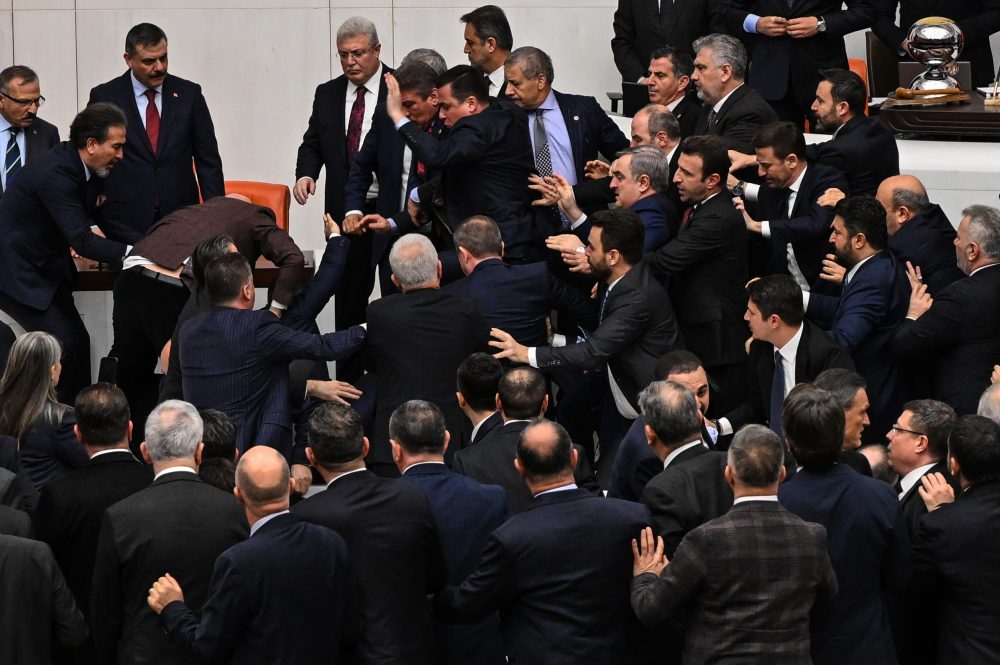
ANKARA, Turkey — Turkey on Wednesday sharply condemned a European Parliament report that called on the European Union to consider imposing sanctions on the country’s justice minister and other officials accused of undermining human rights and civil liberties.
The report, approved during a full parliamentary session earlier that day, recommends that the EU look into freezing the assets of certain Turkish officials. Among those named is Akin Gurlek, who previously served as Istanbul’s chief public prosecutor before being elevated to justice minister earlier this year.
In its findings, the European Parliament described Gurlek as a central figure in what it characterized as “the state’s repressive machinery.” The report argued that his promotion suggested “that throughout his career he has always been a political actor following a political agenda.”
Turkey’s Foreign Ministry fired back with a forceful statement, accusing the report of unfairly singling out the justice minister. “We categorically reject the report’s distortion of legal processes conducted by the independent Turkish judiciary and its targeting of our Minister of Justice with baseless accusations,” the ministry said.
During his time as Istanbul’s top prosecutor, Gurlek oversaw several high-profile legal cases against members of the main opposition party, the Republican People’s Party, known as the CHP. Opposition figures have long argued those proceedings were driven by politics rather than law.
Hundreds of officials tied to CHP-governed municipalities have faced arrest in corruption investigations. One of the most prominent cases involved Istanbul’s Mayor Ekrem Imamoglu — widely regarded as President Recep Tayyip Erdogan’s top political rival — who was taken into custody last year.
In a more recent development, a court order removed CHP party leader Ozgur Ozel from his position, reinstating his largely unpopular predecessor, Kemal Kilicdaroglu, in his place. Critics have called the move a deliberate effort by the government to weaken opposition leadership.
Erdogan’s administration, however, continues to maintain that Turkey’s courts operate free from political influence.
Whether EU leaders would risk straining relations with Ankara by sanctioning a senior Turkish government official remains an open question. Turkey plays a significant role as an EU partner in managing migration flows and serves as a key member of NATO.
The European Parliament issues annual reports as part of the process of evaluating Turkey’s progress toward EU membership — a process that has largely stalled due to ongoing concerns about the country’s democratic direction.
Messi ties World Cup scoring record with hat trick in Argentina’s 3-0 win over Algeria
KANSAS CITY, Mo. (AP) — Lionel Messi delivered the first hat trick of his World Cup career Tuesday night, tying Miroslav Klose’s all-time tournament scoring record in front of a packed house of Argentina supporters at Arrowhead Stadium. The defending champions cruised to a 3-0 victory over Algeria. Messi put his team on the board in the opening minutes, added a second goal early in the second half, and completed the hat trick shortly before being substituted out. The milestone came exactly 20 years after Messi’s World Cup debut — in which he also found the back of the net. He now has 16 World Cup goals across six tournament appearances. His dominant showing overshadowed big nights from Kylian Mbappé and Erling Haaland, both of whom also scored twice in their respective matches earlier in the evening.
Argentina fans sparing no expense to follow their beloved team
KANSAS CITY, Mo. (AP) — Die-hard Argentina supporters are going to extraordinary lengths to follow the defending World Cup champions across the United States. One group made a 20-hour road trip to Tuesday’s opener in Kansas City against Algeria, surviving on sandwiches to cut costs. But with Lionel Messi potentially playing in his final World Cup, fans say no journey is too far and no ticket too expensive. Among them is Juan Martin, who is spending $20,000 to trail the team throughout the tournament. He compares the squad and its captain to the Chicago Bulls dynasty led by Michael Jordan. Their devotion paid off as Messi scored all three of Argentina’s goals.
Mbappé surpasses Pelé’s record with two goals as France defeats Senegal 3-1
EAST RUTHERFORD, N.J. (AP) — Kylian Mbappé scored a pair of goals Tuesday to push his career World Cup total to 14, moving him past Pelé on the all-time list. Bradley Barcola also scored as France overcame a sluggish opening half to defeat Senegal 3-1. Mbappé had just 14 touches in a scoreless first half — the fewest of any player on the field — before turning on the jets in the second. He gave France the lead in the 66th minute and added another in stoppage time. Barcola came on as a substitute in the 80th minute and scored just two minutes after entering. Ibrahim Mbaye pulled one back for Senegal with an angled shot late in stoppage time.
Haaland scores twice in World Cup debut as Norway rolls past Iraq 4-1
FOXBOROUGH, Mass. (AP) — Erling Haaland announced himself on the World Cup stage Tuesday, scoring his first two goals in the tournament to lead Norway to a 4-1 victory over Iraq in Group I. The goals were the 56th and 57th international strikes for the Manchester City forward, and they came in Norway’s first World Cup appearance since 1998. Leo Ostigard extended the lead to 3-1 in the 76th minute off a corner kick from Martin Odegaard, and an own goal by Iraq’s Aymen Hussein sealed the result just before the final whistle. Iraq had briefly leveled the score nine minutes after Haaland’s opening goal, with Hussein netting that equalizer as well.
U.S. pushes back on Iran’s complaints about post-match departure
WASHINGTON (AP) — The Trump administration is defending its handling of Iran’s national soccer team after Iranian officials complained the squad was forced to immediately leave the United States following its first World Cup match rather than being allowed a day to rest. Andrew Giuliani, executive director of the White House FIFA Task Force, told the Associated Press on Tuesday that the U.S. had been upfront about the arrangement, stating the country “was clear this was the process.” Separately, Iran winger Mehdi Torabi’s entry visa expired after the team’s first game. Both U.S. State Department officials and team representatives confirmed Tuesday afternoon that Torabi had obtained a new multiple-entry visa.
U.S. team says Pochettino has built a tough mentality ahead of World Cup group play
IRVINE, Calif. (AP) — The U.S. World Cup squad says it is mentally and physically ready for a rugged matchup against Australia in group play this week, and players credit head coach Mauricio Pochettino for that edge. Midfielder Sebastian Berhalter says Pochettino has drilled a key message into the team: “We’re American. We don’t take (crap).” That attitude was shaped in part during an October friendly against Australia, which the U.S. won 2-1 in a scrappy contest in Colorado. Pochettino reportedly tore into his players at halftime, demanding they push back after the Australians played an aggressive, physical style.
Scheffler chasing career Grand Slam at U.S. Open, but says it’s not his driving force
SOUTHAMPTON, N.Y. (AP) — Scottie Scheffler stands on the verge of completing a career Grand Slam at the U.S. Open, a feat that would draw yet another comparison to Tiger Woods. This marks Scheffler’s first opportunity to join golf’s most exclusive club. Woods is the only player in the modern era to accomplish the Grand Slam on his first attempt. Between Scheffler and that goal is Shinnecock Hills, one of the most demanding courses in the country — and that’s before the USGA adds its own challenges. Rory McIlroy noted the course is playing relatively gently at the moment, but with wind in the forecast, conditions could shift in a hurry.
Authorities say they foiled planned drone and gun attack on White House UFC event
WASHINGTON (AP) — Federal authorities say they disrupted a plot to carry out a violent attack on the UFC cage-fighting event held at the White House last weekend. Court documents unsealed Tuesday reveal that those involved discussed using explosives-laden drones and opening fire on crowd members as they fled in panic. Encrypted text messages obtained by the FBI showed roughly 20 individuals sharing detailed maps of the area and talking about securing a safe house and planning escape routes. It remains unclear from court records how close the plotters came to executing the scheme, which was stopped last week. Among those arrested was a 19-year-old man from Ohio, according to the FBI.
What does a winning score look like at the U.S. Open? Experts say under par is the new standard
SOUTHAMPTON, N.Y. (AP) — Arnold Palmer famously declared that a score of 280 always wins the U.S. Open — a statement he made in 1960 during his celebrated charge at Cherry Hills, when even par was considered the benchmark. But the game has evolved dramatically over the past six decades, and so has the standard for winning. With Shinnecock Hills hosting this week’s tournament, the course’s reputation as one of America’s toughest tracks — combined with wind in the forecast — is generating plenty of conversation. Still, some former major champions believe that finishing anywhere from 5 to 10 under par would be a sign that the course has truly lived up to its difficult billing.
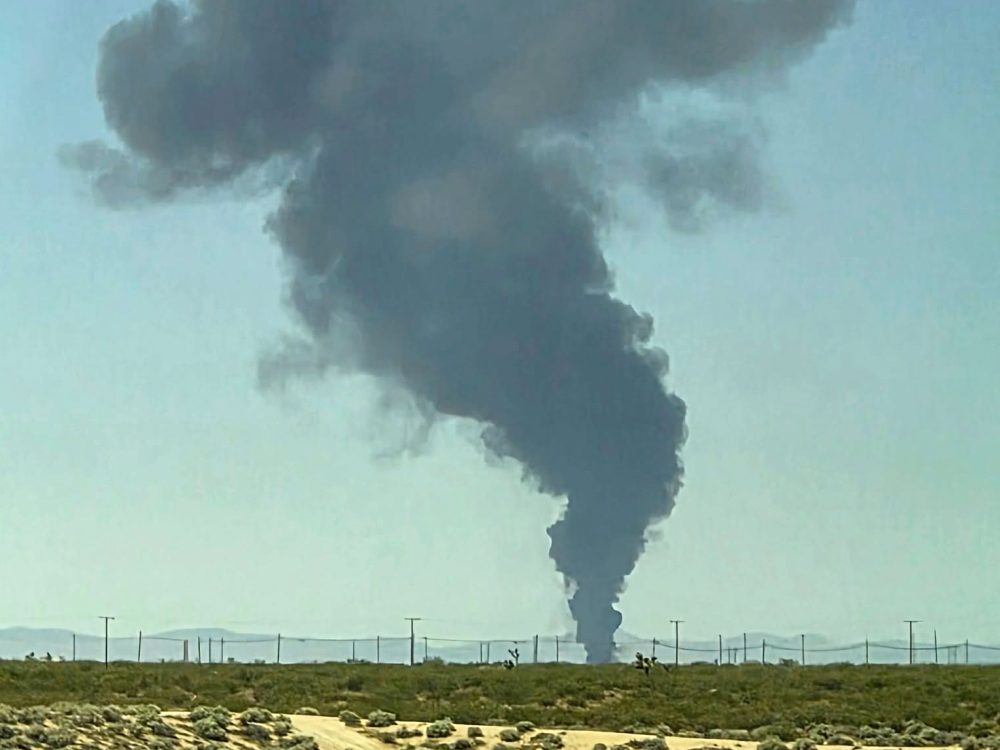
Military officials on Wednesday released the identities of all eight people who lost their lives when a B-52 bomber went down in a fiery crash earlier this week at Edwards Air Force Base in Southern California.
According to an official statement, the victims were men ranging in age from 32 to 53. Among the eight were four active duty airmen, one reservist, and three civilians.
Col. Thomas Tauer, commander of the 412th Test Wing at Edwards, paid tribute to those lost, saying, “They were dedicated professionals, beloved family members and irreplaceable teammates.”
The runway where Monday’s crash took place remains closed, though other operations at the base have since resumed. Investigators have not yet pinpointed a cause, and officials warned the full inquiry could take as long as six months to wrap up.
The Boeing B-52 Stratofortress involved in the crash had been flying as part of a test mission connected to a program designed to extend the life of one of the oldest aircraft still serving in the U.S. military fleet. The bomber had been delivered to Edwards in December following upgrades to its radar system, which were carried out at a Boeing facility in San Antonio, Texas.
Two major United Nations food agencies issued a stark warning Wednesday that acute hunger is expected to get worse across 13 global crisis zones over the coming months, driven by ongoing conflict, deep cuts to humanitarian funding, and climate-related disasters.
The Food and Agriculture Organization and the World Food Program released a joint report projecting that conditions will deteriorate between June and November 2026. Approximately 266 million people are already experiencing high levels of acute food insecurity, and the agencies are urging immediate action from the international community.
The report identified Sudan, South Sudan, Yemen, and Palestine as the countries of greatest concern. Nigeria and Somalia have now been added to that top-concern category as conditions in those nations continue to deteriorate and the risk of famine grows.
According to the agencies, conflict and violence are the primary forces driving hunger in nearly every one of the identified hot spots. Those pressures are being made worse by economic instability, steep reductions in humanitarian aid funding, and the anticipated effects of an El Niño weather pattern that could bring droughts and floods to already vulnerable regions.
Funding for food assistance programs has fallen dramatically — dropping roughly 59% since 2022 — even as the number of people in need has climbed, the report noted.
WFP Acting Executive Director Carl Skau stressed the urgency of the situation. “The warnings in this report cannot be ignored,” he said. “Without action now, millions more are expected to face worsening levels of hunger in the months ahead, pushing some closer to famine.”
In the Gaza Strip, a ceasefire reached in October 2025 has led to some improvement, but the situation remains unstable. Earlier this year, approximately 1.6 million people — about 77% of the population studied — were found to be acutely food insecure and in need of immediate help. That figure includes more than half a million people at emergency levels and a smaller number facing catastrophic conditions.
Officials also flagged additional threats worsening the overall outlook, including ripple effects from the broader Middle East conflict and an Ebola outbreak in eastern Congo, both of which are disrupting local markets, livelihoods, and the ability of aid organizations to reach people in need.
The Food and Agriculture Organization and the World Food Program jointly called for fast, coordinated global action to expand aid delivery, protect people’s livelihoods, and stop conditions from deteriorating further. Without swift intervention, the agencies warned, millions more could face catastrophic levels of hunger in the months to come.
The Trump administration announced Wednesday that it has reached an agreement to purchase back four offshore wind leases from an energy company, pushing the total amount spent on these types of deals to nearly $2.6 billion.
Chicago-based Invenergy has agreed to surrender its four offshore wind leases — all of which were in very early stages of development — in exchange for $765 million in lease fee reimbursements. The company had already pulled the plug on the largest of the four projects, Leading Light Wind off the New Jersey coast, back in November. The remaining three projects were located off the coasts of Maine and California. Invenergy plans to put that money toward natural gas and geothermal projects that can be completed more quickly.
The Republican administration’s lease buyback strategy is designed to halt offshore wind development that President Donald Trump opposes, while steering money toward fossil fuel projects he supports. The approach came after federal courts blocked Trump’s attempts to halt offshore wind development through executive orders. Trump has repeatedly expressed his opposition to wind power, often calling turbines unsightly.
Interior Secretary Doug Burgum praised the deal in a statement, saying, “Under President Trump, companies are shifting investment back toward dependable, secure energy infrastructure that can power our economy and lower utility costs. We applaud Invenergy for recognizing the importance of baseload power and investing in energy solutions that deliver real benefits to American consumers.”
However, not everyone is on board. Hillary Bright, executive director of the offshore wind advocacy group Turn Forward, pushed back on the idea that these deals represent an equal trade. She pointed out that the fossil fuel projects being funded won’t deliver electricity to the same regions that would have benefited from the offshore wind farms.
“Replacing coastal offshore wind with geothermal or natural gas infrastructure in another region does nothing to address rising ratepayer affordability concerns, reliability challenges or potential gaps in power supply in the Northeast and mid-Atlantic,” Bright said in a statement.
This is not the first such deal. Back in March, French energy company TotalEnergies reached the first agreement of this kind, receiving close to $1 billion — essentially a full refund on two offshore wind leases off the coasts of North Carolina and New York — on the condition that the money be reinvested in fossil fuels. New York is currently leading a lawsuit challenging that agreement, and Democratic members of Congress have launched an investigation into it.
In April, two additional companies — Golden State Wind and Bluepoint Wind — agreed to give up their leases in exchange for reimbursements totaling nearly $900 million, with the same requirement to reinvest equally in fossil fuels. California is investigating the Golden State Wind deal, which involved a floating offshore wind project proposed off the state’s central coast. Bluepoint Wind was an early-stage project planned for waters off New Jersey and New York.
Invenergy holds four offshore leases in total: the Leading Light Wind lease area, which would have used traditional turbines anchored to the seafloor; two leases for floating turbine projects in the Gulf of Maine; and one lease for a floating project off California’s central coast. The company is North America’s largest privately held independent power producer.
For Invenergy, the agreement provides a path to move forward with energy projects that can get power to customers faster than the stalled offshore wind leases could. The Trump administration has created significant obstacles for wind energy permitting while simultaneously working to fast-track fossil fuel development.
The company left open the possibility of returning to offshore wind down the road. Daniel Runyan, senior vice president for development at Invenergy, said in a statement that given unprecedented energy demand, they “will deploy additional capital into projects that can be delivered on a commercially reasonable timeline and meet customer demand while continuing to evaluate opportunities as market conditions evolve.”
Leading Light Wind had been designed to generate as much as 2.4 gigawatts of electricity — enough to power more than one million homes. When Invenergy canceled it in November, the company cited supply chain difficulties, equipment and vendor challenges, and shifting regulatory requirements as reasons.
The floating offshore wind projects were so early in the planning stages that Invenergy had not yet determined how much power those locations could ultimately produce.
Invenergy is already a significant player in the natural gas industry, with 14 natural gas facilities currently in operation. The company is also expanding into geothermal energy, holding 45 leases covering 144,000 acres across Nevada, Idaho, California, Utah, and New Mexico. The $765 million from this latest deal is earmarked for natural gas facilities in Indiana, Wisconsin, Iowa, Kansas, and Missouri, as well as geothermal development in the West. The company will not be reimbursed for interest paid on lease payments or additional development costs already incurred.
It’s worth noting that Invenergy’s portfolio extends well beyond offshore wind. The company operates roughly 125 land-based wind farms, more than 60 solar projects, and nearly 30 battery storage facilities, with many more in active development.
The Maryland Department of Agriculture has announced that its 2026 Cover Crop Grant Program will be accepting applications beginning June 22, with the sign-up window closing on July 17, 2026.
Farmers interested in participating can register at their local soil conservation districts throughout the state.
The grant program, which has proven popular among the agricultural community, offers financial support to help farmers cover the expenses associated with planting fall cover crops. The conservation-focused initiative is designed to make it more affordable for growers to implement this environmentally beneficial farming practice.
The National Hurricane Center in Miami issued a brief update Wednesday morning indicating that a special advisory for Tropical Storm Arthur was set to be released shortly after 11:27 AM CDT.
According to the update, the purpose of the upcoming special advisory is to extend the Tropical Storm Warning southward to Sargent, Texas, expanding the area under the warning along the Texas Gulf Coast.
The update was authored by Forecaster Kelly at the National Hurricane Center. Additional details on the storm’s track, intensity, and full warning zones were expected to be included in the special advisory to follow.
Tropical Storm Arthur is posing a serious threat to parts of the southeastern United States, with forecasters warning that life-threatening flooding is expected as the storm pushes inland.
According to the latest update issued at 11:30 AM CDT on Wednesday, June 17, the center of Arthur was positioned near coordinates 28.8 degrees north, 95.5 degrees west. The storm was tracking to the northeast at approximately 9 miles per hour.
Meteorologists recorded a minimum central pressure of 999 millibars, with maximum sustained winds clocking in at around 45 miles per hour. A tropical storm warning has been extended further southward as the system continues to develop.
Authorities are urging residents in the storm’s path to take the flooding threat seriously, as conditions could become dangerous and potentially deadly across portions of the Southeast.
It was a big night for the Boston Fleet at the 2026 PWHL Awards, held Tuesday in Detroit, as the team walked away with five of the seven individual honors handed out at the event.
Goaltender Aerin Frankel was the star of the evening, earning two major distinctions — the Billie Jean King MVP Award and the Goaltender of the Year Award. The 26-year-old becomes the first goaltender in league history to receive MVP recognition. During the season, Frankel set new league records with 19 wins and eight shutouts, helping the Fleet tie for the PWHL lead with 62 points across 30 games.
Boston’s success extended beyond Frankel. Defender Megan Keller was recognized as the Defender of the Year, while Haley Winn earned Rookie of the Year honors. Head coach Kris Sparre was also celebrated, taking home the Coach of the Year award.
Two other awards went to players from different teams. Kelly Pannek of the Minnesota Frost was named the Forward of the Year. Rebecca Leslie of the Ottawa Charge received the PWHL “Hockey For All” Award, given to the player who has made the greatest positive impact in her community.
The PWHL also announced its All-Star teams for the season.
The First All-Star Team featured forwards Taylor Heise of Minnesota, Brianne Jenner of Ottawa, and Kelly Pannek of Minnesota. The defensive spots went to Sophie Jaques of Vancouver and Megan Keller of Boston, with Aerin Frankel of Boston named as goaltender.
On the Second All-Star Team, the forwards selected were Britta Curl-Salemme of Minnesota, Rebecca Leslie of Ottawa, and Laura Stacey of Montreal. Defenders Nicole Gosling of Montreal and Haley Winn of Boston rounded out the back end, with Ann-Renee Desbiens of Montreal named as goaltender.
The All-Rookie Team included forwards Kristyna Kaltounkova of New York, Abby Newhook of Boston, and Casey O’Brien of New York. Defenders Nicole Gosling of Montreal and Haley Winn of Boston were also named, with Hannah Murphy of Seattle earning the goaltender spot.
Nippon Steel, ranked third among the world’s largest steelmakers, is bullish on the American steel market and believes favorable conditions could push U.S. Steel’s earnings well above current projections, according to the company’s Vice Chairman Takahiro Mori.
“We are confident that U.S. Steel will be able to post profits in excess of 100 billion yen ($624 million) this year,” Mori said. He added that the positive market outlook stretching through 2027 points to even greater potential gains, and that U.S. Steel could generate between 300 billion yen and 400 billion yen in annual profit over the long term.
Mori described conditions in the U.S. as exceptionally favorable, noting that hot-rolled steel sheet prices have climbed above $1,200 per metric ton — more than twice what the same product fetches in Asian markets. To take advantage of those pricing conditions, U.S. Steel brought back online a previously idled blast furnace in Illinois in March and is now running it at full capacity.
These remarks come roughly a year after Nippon Steel wrapped up its $14.9 billion acquisition of U.S. Steel, a deal that took 18 months to complete and encountered significant political and regulatory resistance in Washington.
Mori said approximately 100 Nippon Steel employees seconded from Japan are currently working on 260 separate operational improvement initiatives aimed at increasing efficiency and generating synergies between the two companies. He also noted that U.S. Steel’s board has already signed off on about one-third of the $11 billion investment package Nippon Steel pledged to deliver through 2028, with projected returns expected to grow to $3 billion annually by 2035.
While Mori acknowledged potential headwinds — including cost pressures tied to inflation and competition for workers among major projects — he said the U.S. government has not stepped in to influence day-to-day management decisions since the acquisition closed, despite holding what is known as a “golden share” in the company.
Looking beyond the U.S., Mori said Nippon Steel plans to keep expanding internationally, with a focus on markets in India, Thailand, Europe, and the United States, even as geopolitical tensions and rising protectionism create uncertainty worldwide.
“We aim to lift overseas profit to more than 500 billion yen by 2030, nearly five times fiscal 2025 levels,” Mori said.
Mori, who personally led the negotiations to acquire U.S. Steel, said shifts in the global landscape have made it increasingly important for multinational companies to cultivate relationships with key government officials and align their business strategies with national industrial priorities.
U.S. Ambassador to Israel Mike Huckabee made a sweeping declaration on Tuesday, asserting that the United States owes its very existence to the Jewish heritage tied to the land of Israel.
Huckabee delivered his remarks at the International Conference on Israeli Heritage in Judea and Samaria, where he described communicating Israel’s significance to Americans as a core part of his role as ambassador.
“It is your heritage, without a doubt, but it is also the heritage of the United States. Without Israel, without the Jewish foundation, there would not be America. We owe our very existence to what happened in this land,” Huckabee said.
His comments followed statements made by President Donald Trump at the G7 summit on the same day, where Trump addressed U.S.-Israel relations and weighed in on Israel’s military campaign against Hezbollah in Lebanon.
“Without the US, there would be no Israel. Without me, there would be no Israel because no other president was willing to do what I did. I have had a great relationship with Bibi. Now Bibi has to be more responsible with respect to Lebanon,” Trump said.
Trump also indicated that Israel had been engaged in fighting in Lebanon for too long, and said he had proposed that Syria take on the responsibility of dealing with the Hezbollah threat.
Reports indicate that Israeli strikes on Hezbollah have been the subject of reportedly heated private exchanges between Trump and Israeli Prime Minister Netanyahu over the past two weeks.
Netanyahu and Israeli Defense Minister Israel Katz have both maintained that Israel reserves the right to keep forces in Lebanon and carry out operations against Hezbollah whenever needed to safeguard communities in northern Israel.
NEWARK, Del. — The University of Delaware women’s lacrosse team has bolstered its roster with the addition of transfer goalkeeper Allie Hanlon, head coach Amy Altig announced Wednesday.
Hanlon becomes the program’s second transfer pickup of the offseason, arriving via the transfer portal from Syracuse University. The Camillus, New York native spent two seasons with the Orange, during which she was part of a team that earned back-to-back trips to the second round of the NCAA Tournament.
Hanlon will join the Fightin’ Blue Hens as they look to strengthen their presence between the posts heading into the upcoming season.
The National Hurricane Center in Miami issued Special Forecast Advisory Number 6 for Tropical Storm Arthur at 4:30 p.m. UTC on Wednesday, June 17, 2026.
As of the advisory, the storm’s center was located near latitude 28.8 North, longitude 95.5 West, with that position accurate to within 30 nautical miles. The storm was moving toward the northeast at approximately 8 knots, or about 9 miles per hour.
Arthur had maximum sustained winds of 40 knots — roughly 46 miles per hour — with gusts reaching up to 50 knots. The storm’s estimated minimum central pressure stood at 999 millibars. Tropical storm-force winds of 34 knots extended outward 150 nautical miles to the northeast and southeast of the center.
According to the forecast, Arthur was expected to move inland by midnight Wednesday night, at which point maximum winds were projected to drop to 30 knots with gusts to 40 knots. By Thursday morning, the system was forecast to weaken further into a post-tropical remnant low near latitude 31.9 North, longitude 91.6 West, with winds down to 20 knots.
The National Hurricane Center forecasts the storm will fully dissipate by Thursday evening, June 19.
The advisory was issued by Forecaster Reinhart. The next full advisory was scheduled for 9:00 p.m. UTC Wednesday, with an intermediate public advisory expected at 6:00 p.m. UTC.
Ships within 300 miles of the storm’s center were asked to submit reports every three hours to assist in tracking the system.
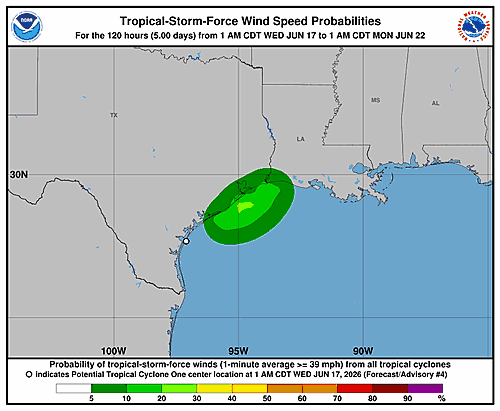
The National Hurricane Center has issued updated wind speed probability graphics for Tropical Storm Arthur, providing forecasters and the public with the latest outlook on where dangerous winds may be felt.
The graphics depict the probability of 34-knot wind speeds occurring across a 120-hour forecast window, helping residents in potentially affected areas prepare for the storm’s impact.
According to the National Hurricane Center, the wind speed probability data was last updated on Wednesday, June 17, 2026, at 4:33 PM GMT. Residents in coastal areas are encouraged to monitor the latest updates from the National Hurricane Center as Tropical Storm Arthur continues to develop.
The 2026 Atlantic hurricane season has officially gotten underway with the formation of Tropical Storm Arthur, the first named storm of the year.
Weather forecasters are warning that Arthur poses a serious risk of life-threatening flash flooding along the northern coast of the Gulf of Mexico. Satellite imagery captured the storm system as it continued to develop.
Despite the flooding concerns, forecasters say Arthur is not expected to gain much additional strength before it moves onshore. The National Hurricane Center has indicated the system will likely remain at roughly its current intensity heading into landfall.
Residents along the northern Gulf Coast are urged to stay alert to local warnings and be prepared for the possibility of rapidly rising water as the storm approaches.
Somaliland’s President, H.E. Abdirahman Mohamed Abdillahi, was honored with the Friends of Zion Award at a ceremony held Tuesday at the Friends of Zion Heritage Center in Jerusalem. The event celebrated Somaliland’s friendship with Israel, its cooperative relationship with the Jewish state, and its decision to establish an embassy in Jerusalem.
Dr. Mike Evans, who founded the Friends of Zion Heritage Center, presented the award to Abdillahi. The ceremony drew diplomats, business leaders, Christian leaders, and international guests.
Addressing those gathered, Abdillahi described the honor as deeply meaningful. “It is a great honor for me to receive the Friends of Zion Award. I am deeply moved and grateful for this recognition. This award symbolizes the growing friendship and strengthening ties between Somaliland and Israel. We are committed to further deepening the relationship between our peoples and building a future based on cooperation, mutual respect, and friendship. I thank Dr. Mike Evans and Friends of Zion for this distinguished honor.”
Evans praised Abdillahi’s leadership in building stronger ties with Israel, pointing specifically to the embassy decision. “At a time when Israel faces complex security and diplomatic challenges, true friendship carries special significance. President Abdirahman Mohamed Abdillahi has demonstrated leadership, courage, and vision in advancing relations with Israel and strengthening the bonds between our peoples.”
He went on to say, “The decision to open an embassy in Jerusalem sends a clear message of friendship, mutual respect, and cooperation.”
Evans also revealed his intention to bring Somaliland’s case directly to the White House. Recalling a personal connection to the region, he stated, “I was in Mogadishu in October 1993 when the Black Hawk was shot down. It’s time to bless all states that bless Israel.”
He continued, “Somaliland has shown genuine friendship toward the Jewish state, and I intend to speak with US President Donald Trump about the importance of formal American recognition of Somaliland.”
The Friends of Zion Award was created by the late Shimon Peres, who served as Israel’s ninth president and was the former international chairman of Friends of Zion. Organizers noted that roughly 26 world leaders have received the award over the years, among them President Donald Trump, former President George W. Bush, and former Vice President Mike Pence.
The Friends of Zion Heritage Center was established in Jerusalem in 2015 by Evans. The organization states that its mission includes fighting antisemitism, opposing the BDS movement, and building global support for Israel.
The National Hurricane Center issued a special advisory Wednesday morning, announcing the extension of a Tropical Storm Warning along the Upper Texas coast southward to Sargent, Texas. The advisory, issued at 11:30 a.m. CDT on June 17, 2026, noted that recent surface observations and readings from NOAA buoy 42035 show maximum sustained winds near 40 knots, with the storm’s minimum pressure dropping to 999 millibars.
The system, now officially designated as Tropical Storm Arthur, was identified after a combination of data sources confirmed it had reached tropical storm strength. A 12:00 UTC Dvorak classification from the Tropical Analysis and Forecast Branch showed enough organized convective activity to classify it as a sheared tropical cyclone. Buoy readings and a ship report confirmed tropical-storm-force winds within the storm’s convective area, and Air Force Reserve Hurricane Hunters flying through the system recorded peak flight-level winds up to 52 knots at 850 millibars — further confirming tropical storm intensity. Arthur was officially designated with an initial intensity of 35 knots.
Arthur is accelerating toward the northeast at roughly 8 knots, carried along by strengthening southwesterly flow tied to a low- to mid-level trough. Forecasters expect the storm’s center to track along or over the Texas coast before pushing inland across southeastern Texas and into southwestern Louisiana by Wednesday night. The National Hurricane Center’s updated track forecast closely mirrors its previous projection.
Due to persistent westerly wind shear and Arthur’s nearness to land, forecasters say significant strengthening is unlikely. Tropical-storm-force winds are currently limited to the storm’s eastern half and are primarily affecting offshore waters. Arthur is expected to hold its current intensity while over water, then begin weakening once it moves inland tonight. Global weather models suggest the storm will eventually break apart into a trough, and forecasters note that Arthur should dissipate before the 24-hour forecast point, which was included mainly for continuity.
Forecasters are also watching for the possibility of new low pressure development over the western Atlantic later this week or over the weekend, as leftover energy from Arthur moves off the southeastern U.S. coast. The nature of that potential system remains uncertain, and the National Hurricane Center says it will continue tracking model trends to assess any risk of tropical cyclone formation.
The primary danger from Arthur is heavy rainfall and the potential for life-threatening flash flooding. The Tropical Storm Warning has been extended westward along the Upper Texas coast to High Island based on the latest observations.
Key threats identified by the National Hurricane Center include:
Flash and urban flooding: Potentially life-threatening flooding is expected through Friday across southern Louisiana, southern Mississippi, southern Alabama, southwestern Georgia, and the Florida Panhandle. Flooding is also possible near the Upper Texas coast, and ongoing heavy rain could extend the threat into the weekend.
Tropical-storm-force winds: Wind impacts are expected along the Upper Texas and Louisiana coasts Wednesday, from High Island to Morgan City, where a Tropical Storm Warning remains in effect.
Coastal flooding: Minor to moderate coastal flooding is anticipated along portions of the Upper Texas and Louisiana shorelines throughout the day.
The forecast calls for Arthur to weaken to a remnant low by 24 hours and fully dissipate within 36 hours. The advisory was prepared by Forecaster Reinhart.
The National Hurricane Center in Miami released its sixth special wind speed probability update for Tropical Storm Arthur on Wednesday, June 17, 2026, at 12:30 p.m. Eastern Daylight Time.
At the time of the report, the center of Tropical Storm Arthur was located near latitude 28.8 North and longitude 95.5 West. The storm was producing maximum sustained winds of approximately 40 knots — equivalent to 45 miles per hour or 75 kilometers per hour.
The bulletin provided the probability that sustained winds of at least 39 mph, 58 mph, or 74 mph could affect specific coastal locations over the following five days. These probabilities are broken into individual time periods as well as cumulative totals from Wednesday through Monday.
According to the data, Galveston, Texas carried the highest cumulative probability of experiencing tropical-storm-force winds of at least 39 mph, at 16 percent. Cameron, Louisiana followed with a 7 percent cumulative probability. Matagorda, Texas also showed a 7 percent cumulative chance, while Port O’Connor had a 3 percent cumulative probability of reaching those wind thresholds.
No locations in the forecast showed meaningful probabilities for winds reaching 58 mph or higher based on the five-day outlook.
The update was issued by forecaster Reinhart at the National Hurricane Center.
Nearly three years have passed since Hamas carried out its shocking assault on Israel on October 7, dragging the country into a war on multiple fronts simultaneously. Today, Israel finds itself at a critical turning point, particularly as a newly announced US-Iran memorandum of understanding reshapes the dynamics of the broader region.
On the international stage, Israel remains largely on its own. Its military is still deployed in Gaza, Lebanon, and Syria, and long-sought normalization with Saudi Arabia continues to be out of reach. None of the conflicts Israel has been engaged in has reached a definitive conclusion, and its relationship with Washington has grown increasingly complicated.
The preliminary framework between the US and Iran, reached earlier this week, marks a significant shift in the regional equation.
Israel has demonstrated its military reach across the Middle East, causing widespread destruction in Gaza and southern Lebanon while also launching airstrikes in Syria, Iran, Yemen, and Qatar. A strike carried out in September 2025 targeted Hamas leaders in Doha, Qatar, and sparked international condemnation for violating that country’s sovereignty.
Chuck Freilich, a former Israeli national security adviser who now teaches at Tel Aviv University and Columbia University, offered a stark assessment. “There is a great gap between the military picture and the strategic picture, which is one of overall defeat and collapse of Israel’s strategy,” he told The Media Line.
Despite Israel’s battlefield accomplishments, its core objectives remain elusive. “It did not succeed in destroying Hamas or unseating it from power, Hezbollah is coming back despite downgrading its capabilities greatly, and Iran believes with good reason that it won the war by surviving an attack by the world’s superpower and greatly out-negotiated the US, coming ahead on the diplomatic level as well,” Freilich added.
Israeli Prime Minister Benjamin Netanyahu had pledged to dismantle Hamas in Gaza, completely destroy Hezbollah’s military capacity, and eliminate the nuclear threat posed by Iran.
On a more positive note, the Abraham Accords — the normalization agreements Israel struck with several Arab nations — have held up throughout the conflict, even when they appeared vulnerable. However, a deal with Saudi Arabia, something Netanyahu has long pursued and multiple US administrations have tried to broker, remains out of reach.
Prof. Jonathan Rynhold, a senior researcher at the BESA Center for Strategic Studies at Bar-Ilan University, offered a mixed assessment: “All of Israel’s enemies are significantly weaker; there is wider interest in the Abraham Accords because of the threat from Iran, but Israel’s diplomatic and political situation internationally is much worse, particularly in the United States. Israel has been far more isolated than this during its history.”
The situation on each of Israel’s major fronts remains complicated. For decades, Israel has considered Iran its most serious strategic adversary and the main backer of the armed groups that encircle it. Joint American-Israeli strikes caused significant damage to Iranian military infrastructure and reportedly disrupted parts of Tehran’s nuclear program. However, the conflict ended without toppling the Islamic Republic, and Iran may have emerged with even stronger nuclear ambitions.
Iranian officials and state media declared victory, claiming Tehran had survived direct military action from both Israel and the United States while keeping its government and strategic position largely intact.
“Iran believes that it won the war, doing so by withstanding a major American and Israeli operation,” said Freilich. “They come out feeling stronger and invigorated. Israel and the US helped them achieve progress towards their goal of being a regional hegemon.”
The US-Iran memorandum highlighted Israel’s reliance on American diplomatic support while also exposing a rift between Netanyahu and President Donald Trump over what the ultimate outcome should look like. Israel sees Iran as a threat requiring ongoing pressure, while Washington has focused on preventing a wider war, reopening the Strait of Hormuz to maritime traffic, and stabilizing the region.
At this point, neither side has achieved a clear-cut victory. Iran came out militarily weakened but politically intact, while Israel demonstrated an impressive military reach without fully neutralizing the threat it set out to eliminate.
“Israel faces a real problem,” said Rynhold. “If Iran is not limited in its conventional missile stockpile, Israel will want to attack, and it will be constrained by the US.”
The future of sanctions on Iran also remains uncertain, with both sides agreeing to a 60-day window to negotiate the final terms of a deal. “From Israel’s perspective, the worse the Iranian dilemma between survival and building military power is, the better,” Rynhold said. “Sanctions relief would be a strategic failure if it becomes part of any future agreement between the US and Iran.”
When Hamas launched its surprise attack on October 7, 2023, thousands of militants crossed into Israel from the south. Netanyahu vowed to retaliate, promising to free all 251 hostages taken and remove Hamas from power. The military campaign that followed drew widespread international criticism, with some close allies accusing Israel of excessive force and war crimes — allegations Israel strongly rejects.
More than two and a half years later, a fragile ceasefire is holding, and all hostages — including the remains of those who died — have been returned. Israel currently controls more than half of the Gaza Strip, with Hamas still holding sway over the remainder. The next phase of the ceasefire, which would require Israel to withdraw, is tied to Hamas disarming — something the group has refused to do. Netanyahu has indicated Israel will maintain its presence in Gaza and has suggested the military could push even further into Palestinian territory.
“Hamas’ military capabilities are a fraction of what they were,” said Freilich. “They no longer constitute a military threat, but they constitute a threat to the forces in Gaza, and they are still in power politically. Israel will be forced to withdraw from Gaza sooner or later, whether it likes it or not.”
Freilich also noted that further military action in Gaza could happen now that no hostages remain there, and suggested Trump might give Netanyahu some leeway in Gaza, particularly ahead of an election.
Netanyahu leads a far-right coalition whose members support intensifying military pressure on Hamas. Meanwhile, international criticism of Israel has grown, ranging from genocide allegations brought by South Africa to cultural, academic, and weapons embargoes.
“Any Israeli government will not move in a hurry,” said Rynhold. “There are a number of reasons for this — psychologically for the Israeli public, it keeps Hamas further away from the border and also because withdrawal is a hard thing to do.”
Some senior members of Netanyahu’s government have pushed for resettling Gaza with a Jewish population, a position Netanyahu has resisted but one that continues to generate significant international attention and backlash. “As long as Israel won’t allow settlers in, Israel has the ability to shape what goes on there — possibly keeping military control but giving other Palestinian factions civilian control,” Rynhold said.
Israel is set to hold national elections by late October, and the results are expected to significantly shape the future direction of the Gaza situation.
Hezbollah, the Iran-backed militant group in Lebanon, was once considered Israel’s most immediate danger. It joined the fight alongside Hamas just days after the October 7 attack. Israel believed it had nearly defeated Hezbollah by late 2024, but the strategic balance between the two has since shifted again. Iran is now using Hezbollah as a deterrent, threatening to strike Israel if Israel targets its key proxy.
“Israel cannot allow itself to live with that equation,” said Freilich. “This is another failure of its strategy.”
Still, Hezbollah has taken a serious beating. “Hezbollah is infinitely militarily, financially, and politically weaker than it was before October 7,” said Rynhold.
Hezbollah began firing at Israel two days after the joint American-Israeli attack on Iran got underway in March of this year, triggering an Israeli campaign in Lebanon that continued into June. Fighting has slowed since the US-Iran memorandum was announced, but Israeli forces remain in southern Lebanon. Israel has continued striking Hezbollah targets there, deepening its foothold in a zone Hezbollah says should fall under earlier ceasefire terms.
Iran’s threats have made it harder for Israel to strike Hezbollah’s stronghold in the Dahieh neighborhood of Beirut. President Trump reportedly made clear to Netanyahu that any Israeli action there would jeopardize broader efforts to reach an arrangement with Iran. Analysts suggest Hezbollah and Iran may actually emerge from the current situation with more leverage, despite the heavy losses both have suffered.
As Israel approaches nearly three years since October 7, it finds itself in a paradoxical position — militarily powerful yet strategically adrift. Hamas still operates in Gaza, Hezbollah continues to challenge Israel from Lebanon, and Iran has survived and may feel emboldened. With elections approaching, Israel faces a fundamental question: how to turn battlefield success into a lasting and stable regional order.
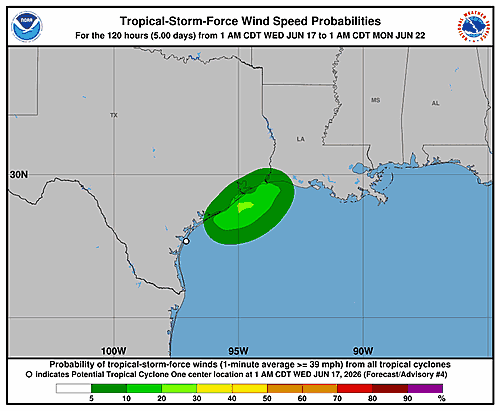
The National Hurricane Center has released updated wind speed probability graphics for Tropical Storm Arthur, providing the latest outlook on where dangerous winds may impact coastal areas.
The graphics, which track the probability of 34-knot wind speeds over a 120-hour period, were last updated on Wednesday, June 17, 2026, at 4:33 PM GMT.
Residents and boaters in potentially affected areas are encouraged to stay informed and monitor the latest updates from the National Hurricane Center as the storm continues to develop.
A resolution aimed at reining in President Donald Trump’s power to order military strikes against Iran without congressional approval was defeated in the U.S. Senate on Tuesday — and it wasn’t even close to close. The measure failed by just a single vote, with the final tally standing at 47 in favor and 48 against.
Sen. Raphael Warnock introduced the resolution as lawmakers pushed to reassert Congress’s role in authorizing military action, particularly with a preliminary peace deal between the United States and Iran expected to be signed in the coming days.
While most Democrats backed the measure, the resolution drew support from an unlikely group of four Republican senators: Lisa Murkowski, Susan Collins, Rand Paul, and Bill Cassidy. On the other side of the aisle, Sen. John Fetterman broke with his party and voted alongside Republicans in opposition.
Five senators were absent from the vote entirely. Republicans Mitch McConnell of Kentucky and Josh Hawley of Missouri did not participate, nor did Democrats Michael Bennet of Colorado and Cory Booker of New Jersey. Independent Sen. Bernie Sanders of Vermont also missed the vote.
Tuesday’s failed resolution marked the ninth time since February that Democrats have attempted to limit the president’s authority to order strikes, following the launch of air attacks against Iran by both the United States and Israel earlier this year.
The resolution was designed to strengthen the War Powers Resolution, a law intended to restore Congress’s constitutional role in decisions about military conflict. That law gives Congress the ability to direct the withdrawal of U.S. forces from unauthorized military engagements.
The vote unfolded as senators were awaiting further information about a memorandum of understanding set to be signed this Friday in Geneva. The agreement is designed to bring the U.S.-Iran conflict to an end and open the door to negotiations over Iran’s nuclear program.
TORONTO (AP) — The Toronto Maple Leafs made a major coaching hire Wednesday, naming Jim Hiller as the 41st head coach in the franchise’s history. Hiller is no stranger to the organization, having previously served as an assistant coach with the club from 2015 to 2019.
At 57 years old, Hiller steps in to replace Craig Berube as new general manager John Chayka continues to reshape the team during the offseason.
Hiller comes to Toronto after serving as head coach of the Los Angeles Kings, where he put together a 93-58-24 record across parts of three seasons. His tenure with Los Angeles ended on March 1 when the Kings dismissed him following an 8-1 defeat to Edmonton. Prior to taking over as head coach, Hiller had spent two seasons with the Kings as an assistant.
Born in Port Alberni, British Columbia, Hiller built his coaching foundation over 11 seasons in junior hockey. His resume includes time with the WHL’s Tri-City Americans and multiple teams in the British Columbia Hockey League before he made the jump to the NHL level.
Berube was let go on May 13 after two seasons behind the bench, a departure that followed a dramatic fall from grace for the Leafs. Toronto had finished first in the Atlantic Division in 2024-25 and advanced to the second round of the playoffs, only to crash to last place in the division and 28th overall in the NHL the following season.
Berube’s dismissal came just 10 days after Chayka was brought in to replace Brad Treliving. Chayka described the decision to move on from Berube as “an opportunity to start fresh” and indicated the team would conduct a broad coaching search.
In addition to the front-office changes, Chayka made a notable trade Tuesday, sending goaltender Joseph Woll and depth defenseman Simon Benoit to the Philadelphia Flyers in exchange for defenseman Emil Andrae, goalie Samuel Ersson, and a third-round selection at next week’s NHL draft.
Toronto also holds the No. 1 overall pick in the upcoming draft — the franchise’s first top pick since selecting Auston Matthews with the first pick in the 2016 draft.
When Kansas freshman Darryn Peterson was healthy and on the floor, he looked like a legitimate candidate to go first overall in the NBA draft. The trouble was staying on the court.
The 6-foot-5, 199-pound combo guard put up 20.2 points per game but sat out 11 contests due to various injuries and health issues. He stands as the marquee name at a position loaded with freshman talent, joining top-10 prospects such as Arkansas’ Darius Acuff Jr., Illinois’ Keaton Wagler, Louisville’s Mikel Brown Jr., and Houston’s Kingston Flemings ahead of Tuesday’s first round.
Here’s a closer look at the top guards entering the draft:
DARRYN PETERSON, Kansas
What he brings: Peterson is a dynamic scoring playmaker capable of creating off the dribble, operating in the halfcourt, and running in transition. He connected on 38.2% of his three-point attempts, including a six-three performance in a victory at Oklahoma State. He was also a reliable free throw shooter, converting 82.6% of his attempts and drawing contact frequently — logging six games with at least eight foul shot attempts, including one game with 16 against TCU in the Big 12 Tournament and another with 15 while pouring in a season-best 32 points in an overtime comeback against TCU. He also chipped in 4.2 rebounds and 1.6 assists per game.
Questions to answer: His availability was a constant concern throughout the season. He was hospitalized before the year even started due to full-body cramping. Beyond the games he missed entirely, he sometimes played limited minutes and was abruptly pulled from games — a pattern that will give NBA front offices pause. On a positive note, he played 37 minutes against Cal Baptist and 36 minutes against St. John’s in his two NCAA Tournament appearances.
DARIUS ACUFF JR., Arkansas
What he brings: The 6-2, 186-pound freshman earned first-team Associated Press All-American honors and his offensive game is the centerpiece of his draft profile. He ranked third in the country in scoring at 23.5 points per game and 14th in assists at 6.4. He helped lead Arkansas to its first Southeastern Conference Tournament championship in 26 years and a Sweet 16 appearance. Acuff thrived as a pick-and-roll ball handler, rated “Excellent” in the 89th percentile by Synergy, and also graded “Very Good” in isolation situations at the 74th percentile. His standout moment came when he set a program freshman record with 49 points in a double-overtime loss at Alabama. He also put up 91 points and 12 three-pointers across three SEC Tournament victories.
Questions to answer: Defense is a notable concern, particularly his ability to guard bigger guards at the next level.
KEATON WAGLER, Illinois
What he brings: Wagler arrived as a four-star recruit and left as a second-team AP All-American after helping Illinois reach the Final Four for the first time in 21 years. The 6-5, 188-pound freshman demonstrated a well-rounded game with the size to play on or off the ball. He averaged 17.9 points, 5.1 rebounds, and 4.2 assists while shooting 39.7% from three-point range, including a nine-three explosion for 46 points against Purdue. Synergy graded him “Excellent” as a pick-and-roll ball handler and with his shot off the dribble, on catch-and-shoot opportunities, and in contested situations.
Questions to answer: His slender build could be a liability against stronger defenders, and he doesn’t possess elite athleticism.
MIKEL BROWN JR., Louisville
What he brings: The Louisville freshman is a high-upside scorer measuring in at 6-5 and 180 pounds. He averaged 18.2 points and 4.7 assists per game. His signature performance was a 45-point, 10-three-pointer effort in a blowout win over N.C. State, which broke the Atlantic Coast Conference freshman scoring record previously held by 2025 No. 1 overall pick Cooper Flagg.
Questions to answer: He’ll need to add physical strength and fill out his frame over time. He also dealt with back problems that kept him out of eight games at midseason, and those issues returned to sideline him for the final six games of the year, including two NCAA Tournament contests.
KINGSTON FLEMINGS, Houston
What he brings: The 6-3, 183-pound freshman earned third-team AP All-American recognition as a lead guard with defensive upside. He averaged 16.1 points, 4.1 rebounds, and 5.2 assists while shooting 47.6% from the field, 38.7% from three, and 84.5% from the foul line. He set a Houston freshman scoring record with 42 points in a loss to Texas Tech and finished the season with a nearly 3-to-1 assist-to-turnover ratio. At the NBA combine, Flemings ranked in the top six among tested players in lane-agility time, shuttle run, and three-quarter-court sprint.
Questions to answer: He’ll need to bulk up to handle physical play at the next level, and his shooting mechanics have been identified as an area that needs work.
Others worth watching:
— BRAYDEN BURRIES: The 6-4, 215-pound Arizona freshman is a sturdy two-way combo guard and top-10 prospect who shot 39.1% from three and finished fourth at the combine in standing vertical leap at 35 inches.
— LABARON PHILON JR.: The 6-3, 176-pound Alabama sophomore was a third-team AP All-American after averaging 22.0 points and 5.0 assists. The potential late-lottery pick improved his shooting efficiency to 50.1% overall and 39.9% from three while excelling as a pick-and-roll ball handler, ranking in the 94th percentile by Synergy.
— CAMERON CARR: The 6-5, 184-pound sophomore transferred from Tennessee to Baylor, putting up 18.9 points, 5.8 rebounds, and 2.6 assists per game. The first-round prospect ranked second at the combine in standing vertical leap at 38 inches and third in max vertical at 42.5 inches.
— BENNETT STIRTZ: The 6-3, 186-pound point guard made the jump from Division II to Drake to Iowa, where he led the Hawkeyes to their first Elite Eight appearance since 1987. He averaged 19.8 points, 4.4 assists, and 1.4 steals. Synergy rated him “Excellent” as a pick-and-roll ball handler in the 91st percentile and as a finisher at the rim in the 90th.
— DAILYN SWAIN: The 6-7, 211-pound wing transferred from Xavier to Texas, averaging 17.3 points, 7.5 rebounds, and 3.6 assists. The first-round prospect averaged 1.6 steals but connected on just 29.3% of his three-point attempts across three seasons.
— CHRISTIAN ANDERSON: The 6-1, 180-pound Texas Tech sophomore was a third-team AP All-American who averaged 18.5 points while ranking fifth nationally in assists at 7.4 per game. He projects as a scoring playmaker and shot 40% from three over two seasons, though his size is a concern.
— EBUKA OKORIE: The four-star prospect emerged as a surprise freshman standout at Stanford, ranking seventh nationally in scoring at 23.2 points per game with a high of 40 against Georgia Tech. The first-round prospect is undersized at 6-1 and 186 pounds but showed the burst to score in both transition and the halfcourt.
— ISAIAH EVANS: The Duke sophomore is a late first-round candidate who can get hot from outside, shooting 38% on threes over two seasons, including a clutch game-winner to defeat reigning national champion Florida. He needs to add strength to his 6-6, 186-pound frame.
— MELEEK THOMAS: The 6-3, 190-pound Arkansas freshman is a late first-round prospect who averaged 15.6 points. He shot 47.9% from three-point range over a 25-game stretch after Christmas that included the SEC Tournament title run and a trip to the NCAA Sweet 16.
When the United States and Israel launched military operations against Iran on February 28, President Donald Trump stated that one of the primary goals was stopping Iran from developing a nuclear weapon. That objective has drawn fresh attention to Iran’s uranium stockpile and the technical process used to transform this naturally occurring element into material capable of sustaining a nuclear reaction — a procedure known as enrichment.
Several of Iran’s key nuclear facilities were struck by U.S. and Israeli forces last summer and again during the most recent conflict. Iran’s leadership continues to maintain that its nuclear program exists solely for peaceful purposes. However, prior to the start of the war, the International Atomic Energy Agency reported that Iran held a supply of enriched uranium that was only a short technical step away from weapons-grade material. The IAEA and Western nations say Iran operated an organized nuclear weapons program until 2003.
So what exactly is uranium enrichment, and why does it matter?
Uranium occurs naturally in slightly different forms. One version, called U-235, is the most effective at powering nuclear reactions. It is less stable than the more common form, making it easier to split apart and release the energy required for generating electricity or building a weapon. The catch is that U-235 makes up less than one percent of all uranium found in nature.
To increase the concentration of U-235, scientists must remove its more stable counterpart, U-238, through the enrichment process.
The most widely used method involves spinning uranium in gas form inside a centrifuge. Because U-235 is lighter than U-238, the two separate during spinning. This is carried out in multiple stages using many centrifuges working together to gradually increase the concentration of U-235.
Nuclear security specialist Sébastien Philippe at the University of Wisconsin-Madison explained that the early stages of enrichment are the most labor-intensive because there is so much more U-238 present. As the process continues, it becomes progressively easier. Depending on the size of the facility, the technology in use, and the desired enrichment level, the entire process can take anywhere from a few days to several months or even years.
Uranium enriched to around 5% is sufficient to power a standard electricity-generating nuclear reactor. Reactors used for scientific research operate on uranium enriched up to 20%. According to the Center for Arms Control and Non-Proliferation, anything enriched to 20% or higher is classified as “highly enriched” uranium, while material enriched above 90% is considered weapons-grade — though some highly enriched uranium is used for research and medical applications.
The IAEA estimates that Iran currently holds approximately 972 pounds, or 441 kilograms, of uranium enriched to 60% purity. Philippe noted that a basic nuclear weapon could potentially be constructed using uranium at that enrichment level, and that further enriching it to the 90% threshold needed for a missile-ready bomb is a relatively straightforward step.
IAEA Director General Rafael Grossi told the Associated Press last year that Iran’s existing stockpile could theoretically be used to build as many as 10 nuclear bombs if the country chose to weaponize its program — though he emphasized that this does not mean Iran currently possesses such weapons.
Once uranium has been enriched, it undergoes additional processing before being converted back into solid form, pressed into pellets, and loaded into sealed metal fuel rods for use in a nuclear reactor. Alternatively, enriched uranium can be shaped into the core of a nuclear weapon — a highly complex process that involves significant engineering challenges, including making the warhead small and light enough to be mounted on a missile.
More than 100 countries, including both the United States and Iran, are signatories to the Treaty on the Non-Proliferation of Nuclear Weapons, which first took effect in 1970 and has been updated periodically since. Under the agreement, nations without nuclear weapons commit to using nuclear materials only for peaceful purposes, while those that already possess nuclear weapons agree to work toward disarmament. The IAEA conducts regular on-site inspections to verify compliance.
Iran was found to be in violation of the treaty in the early 2000s because of a covert nuclear weapons program. It was again found out of compliance in June 2025, this time for failing to provide what the IAEA called “technically credible” explanations for uranium particles discovered by inspectors at several locations in Iran that had not been officially declared.
According to a confidential IAEA report circulated to member states and reviewed by the Associated Press in February, Iran has not permitted inspectors access to the nuclear facilities that were bombed by Israel and the United States during a 12-day conflict in June 2025. The report noted that the agency “cannot verify whether Iran has suspended all enrichment-related activities,” or determine the size of Iran’s uranium stockpile at the affected sites.
HAVANA (AP) — Cuba’s ruling Communist Party, known as the PCC, convened an emergency plenary session Wednesday, just days after President Miguel Díaz-Canel unveiled a package of economic reforms intended to loosen restrictions on the island’s struggling economy.
In an unexpected development the same day, Cuba’s National Assembly was also called to meet Thursday, immediately following the party’s gathering.
Both meetings are taking place at a particularly difficult moment for Cuba, as the country continues to feel the strain of a U.S. energy blockade designed to pressure the island into changing its economic system.
Cuba has been locked in a deepening financial crisis for several years — a situation made worse by an energy embargo put in place under U.S. President Donald Trump. The consequences have fallen hardest on the island’s most vulnerable citizens. Ongoing power blackouts, cuts to government-provided food rations, and critical shortages of both water and medicine have made everyday life increasingly difficult for the island’s nearly 10 million people.
Speaking to reporters last week, Díaz-Canel said the forthcoming reforms would broaden permissions for private businesses, which were first allowed under Cuban law five years ago. While he did not offer specific details or a timeline, the president said the plan would permit Cubans living on the island as well as those living abroad to invest in the tourism sector. He also said state-owned companies would gain more flexibility to work alongside private businesses.
Díaz-Canel also indicated that changes to the currency exchange system are on the horizon and suggested that private enterprises might eventually be allowed to handle imports and exports on their own, without going through the state middlemen currently required by law.
Before the sessions got underway, Díaz-Canel noted that Cuba’s parliament is already reviewing legislation that would reduce the size of the government bureaucracy, cutting the number of ministries from 27 down to 20.
The PCC is the only political party permitted to operate legally in Cuba. It does not participate in elections and is led by Díaz-Canel in his role as first secretary. Under Cuba’s constitution, the party is charged with setting the direction for all branches of government, including the legislature.
The Delaware Department of Transportation (DelDOT) is alerting drivers to date changes for scheduled tree work along Route 141 and Interstate 95 ramps in the Wilmington area.
Southbound Route 141, between Alapocas Drive and the Tyler McConnell Bridge, will now see tree work on Saturday, June 27th, between 6:00 a.m. and 8:00 a.m.
Additionally, the off ramp from Southbound I-95 to Marsh Road, as well as the ramp from Marsh Road back onto Southbound I-95, are now scheduled for work on Saturday, June 27th, running from 6:00 a.m. through 3:00 p.m.
Motorists traveling through these areas on that Saturday morning should allow extra time and watch for crews on the roadway.
A U.S. Senate committee has announced it will hold a vote next week on the nomination of Brett Matsumoto, President Donald Trump’s chosen candidate to lead the Bureau of Labor Statistics — the federal agency responsible for producing critical economic data, including monthly jobs reports and inflation figures.
The Senate Health, Education, Labor and Pensions Committee has scheduled that vote for June 24, according to a posting on the committee’s website.
Matsumoto faced the panel at a confirmation hearing last week, where he pushed back against claims that BLS data had been falsified or manipulated. His remarks stood in contrast to Trump’s past accusations that the former BLS commissioner had released fraudulent employment numbers.
An economist by training, Matsumoto has been employed at the BLS since 2015, though he is currently on leave to serve at the White House’s Council of Economic Advisers. During his hearing, he expressed confidence in the career staff members who gather and process the agency’s data, and pledged that their work would be what ultimately gets published.
Matsumoto also acknowledged that the BLS has faced technical problems in recent years that have affected data quality, and said he would work to resolve those issues. However, he stopped short of repeating Trump’s unsupported claims that the agency’s output had been politically manipulated.
Trump dismissed the agency’s previous commissioner, Erika McEntarfer — who had been appointed by former President Joe Biden — last August. Her firing came after the release of a monthly jobs report that contained unusually large revisions to earlier job creation figures.
Trump had initially tapped conservative economist E.J. Antoni to run the agency, but that nomination was later pulled.
The Senate committee, which is controlled by Republicans — as is the full Senate — would need to approve Matsumoto’s nomination before it could advance to a chamber-wide vote.
LONDON — Top seed Alex de Minaur had little trouble dispatching Canadian Denis Shapovalov on Wednesday, cruising into the Queen’s Club quarterfinals with a 6-4, 6-1 victory that lasted barely more than 60 minutes.
Ranked sixth in the world, de Minaur put on a polished performance on a sun-soaked Andy Murray Arena, extending his personal winning record against Shapovalov to an impressive 6-0.
The display was a noticeable step up from his previous match, in which he defeated fellow Canadian Gabriel Diallo. De Minaur looked every bit the skilled grass-court competitor throughout the contest.
Standing in his way in the quarterfinals will be American Brandon Nakashima, who advanced with a commanding 6-2, 6-2 victory over Peru’s Ignacio Buse.
British wildcard Arthur Fery also punched his ticket to the quarterfinals, getting past crafty French veteran Adrian Mannarino in a 7-6(7), 6-4 effort.
Italian tennis star Lorenzo Musetti announced Wednesday that he will not compete at Wimbledon this year, as he continues his recovery from a thigh injury that has kept him off the court since mid-May.
The 24-year-old, who reached the Wimbledon semi-finals in 2024 and was once ranked as high as fifth in the world, last played when he lost to Casper Ruud in the fourth round of the Italian Open in Rome. That same injury caused him to miss the French Open as well.
Musetti shared the news with fans through Instagram, offering an update on how his rehabilitation is progressing. “I want to update you on my recovery from the injury I sustained in Rome: rehabilitation is going very well and the medical results are encouraging,” he wrote.
Despite the positive signs in his recovery, Musetti said he has not yet been cleared to begin a full athletic training program, making a return to competition at Wimbledon impossible. “Unfortunately, as I have not yet been able to begin a full athletic training program, and after careful evaluation, we have come to the difficult conclusion that I will not be able to participate in Wimbledon this year,” he said.
He acknowledged the weight of the decision but stood by it, adding: “It is not an easy decision, but it is the right one.”
BRUSSELS — The office of European Council President Antonio Costa has quietly reached out to the Kremlin in recent weeks, making what an EU official described as “brief contacts at diplomatic level” aimed at opening lines of communication with Russia.
The official, who spoke on the condition of anonymity, emphasized that no policy matters were on the table. “Nothing was discussed on substance,” the official said. “In any future scenario, the EU has specific interests that will need to be defended, therefore it is important to have established diplomatic channels with Russia.”
The official was also clear about the EU’s role in the ongoing conflict: “The EU is not a mediator. It supports Ukraine in its efforts to achieve a just and lasting peace.”
European leaders have been increasingly discussing the idea of engaging directly with Russia over the Ukraine war and broader security concerns — a significant shift after years of cutting Moscow off diplomatically. However, no unified approach has been agreed upon, and several European nations have expressed hesitation about entering into dialogue with Moscow. The United States has been the primary driver of diplomatic efforts to broker a peace agreement between Ukraine and Russia.
There has also been pushback from some European leaders against Britain, France, and Germany — collectively known as the E3 — taking the diplomatic lead on behalf of Europe in any future talks with Russia.
Italian Prime Minister Giorgia Meloni, speaking Wednesday at the conclusion of a G7 summit held in France, renewed her call for the European Union to designate a single envoy to manage contact with Russia on the Ukraine issue. She suggested that individual should not come from one of Europe’s larger nations.
Meloni warned reporters that having multiple competing diplomatic groups within Europe risked sending a muddled message, making it critical for the bloc to speak with one unified voice when dealing with Moscow.
“It would be very difficult to put forward someone from one of the largest European countries,” she said, adding: “In my view, proposing one of those candidates would make an agreement harder to reach, so I would look instead to the EU’s medium-sized powers.”
Dover Police have arrested a 17-year-old male on multiple firearms-related charges following a foot chase in the Capital Green neighborhood Tuesday evening.
The incident unfolded around 5:26 p.m. on June 16th, when officers assigned to the Enhanced Visibility Patrol initiative tried to make contact with a group of individuals who were standing in the roadway at the intersection of River Road and New Castle Avenue. As officers moved in, the teenager broke away and ran. He was caught a short distance away in an alley situated between New Castle and Kent Avenues.
Once the suspect was in custody, officers discovered he was carrying a loaded 9mm polymer handgun. The weapon was fitted with an extended magazine capable of holding 40 rounds of ammunition. It also had a device known as a “switch” attached to it — a modification that allows a semi-automatic firearm to fire continuously like an automatic weapon.
The 17-year-old was committed to Stevenson House and is being held on a $40,501 secured bond. He faces the following charges:
– Carry Concealed Deadly Weapon – Possession of Handgun/Ammo by Person Under 21 (two counts) – Possession of an Extended Magazine – Resisting Arrest – Possession of a Destructive Weapon
Anyone with questions regarding this case can contact Dover Police Department Public Information Officer Lieutenant Mark Hoffman at [email protected].
The National Hurricane Center has released updated wind speed probability graphics for Tropical Storm Arthur, providing forecasters and the public with the latest outlook on where potentially dangerous winds could reach.
The graphics, which track the probability of 34-knot wind speeds, were last updated on Wednesday, June 17, 2026, at 15:21 GMT. The 120-hour forecast window gives residents and emergency managers an extended look at where the storm’s winds may have an impact.
Residents in potentially affected areas are encouraged to monitor the latest updates from the National Hurricane Center as the storm continues to develop.
NEW YORK (AP) — A new scientific discovery has pushed back the known history of the plague by roughly 200 years, with researchers now tracing the disease’s earliest outbreaks to approximately 5,500 years ago.
The plague has afflicted human populations for millennia, most famously devastating Europe’s population during the 14th century in what became known as the Black Death. While the disease is rare today, it still exists and can be treated with antibiotics.
“To understand our own history, we believe that understanding the history of plague is extremely important,” said study co-author Eske Willerslev, an evolutionary geneticist with the University of Copenhagen in Denmark.
Willerslev and a team of researchers examined remains from four burial sites near Lake Baikal in Siberia, searching for traces of the bacteria responsible for the plague. Their efforts turned up plague DNA in the teeth of 18 ancient hunter-gatherers.
Carbon dating of the bones revealed that the plague caused two separate outbreaks, with the earliest cases appearing around 5,500 years ago.
Researchers determined that the prehistoric version of the plague developed gradually and struck several small family groups. It is believed to have originated in marmots — large rodents native to the region — and spread to humans who consumed raw organs or handled infected animal hides while butchering them. The disease also passed between people through respiratory droplets from coughing and sneezing, according to the study’s authors.
A significant portion of those who perished were young children between the ages of 8 and 11. The study, published Wednesday in the journal Nature, noted that three young girls were buried together, two of whom were likely cousins. An aunt and nephew were also found in the same grave, while her niece was buried separately in another shared plot.
“People were around to bury the dead who knew who these people were when they were alive. And that’s a really human element to all of the scientific work,” said study co-author Ruairidh Macleod, who studies ancient DNA at the University of Oxford.
Researchers suggested that children may have faced greater danger because their immune systems were not fully developed.
The fact that multiple victims were found together indicates the prehistoric plague could cause both isolated cases and larger outbreaks, according to geneticist Aida Andrades Valtueña with the Max Planck Institute for Evolutionary Anthropology, who was not involved in the study.
The research also showed that this early form of the plague existed long before the bubonic plague strain that caused the Black Death in medieval Europe. Yet evidence suggests these earlier outbreaks were equally lethal, wiping out not just densely populated urban centers but also small, mobile hunter-gatherer communities.
Understanding this history can help scientists “understand the steps that the bacterium took to become the deadly pathogen we know today, and that can provide clues on how pathogens may emerge in the future,” Andrades Valtueña said in an email.
A piece of Delaware’s LGBTQ heritage is about to be officially recognized with a new state historical marker. The Delaware Public Archives has announced plans to unveil a State of Delaware Historical Marker dedicated to Poodle Beach on Saturday, June 27, 2026.
The ceremony is scheduled to begin at 9:00 a.m. at the corner of Prospect Street and the South Boardwalk in Rehoboth Beach. The marker will honor Poodle Beach as a landmark in Delaware’s LGBTQ history.
Rehoboth Beach has long been regarded as a welcoming destination for LGBTQ visitors and residents, with Poodle Beach playing a notable role in that tradition for generations.
LONDON (AP) — British TV personality Jeremy Clarkson has opened up about a prostate cancer diagnosis, sharing the news with viewers through the closing episodes of his popular farming reality show.
The 66-year-old described the cancer as “aggressive,” but said doctors caught it at an early stage.
Before the episodes aired, Clarkson took to social media on Tuesday to prepare fans for difficult news tied to the fifth season finale of “Clarkson’s Farm,” a show that follows the trials of operating Diddly Squat Farm in Oxfordshire. The episodes became available to stream on Wednesday.
“Ordinarily we try to keep the show bucolic and charming, and cheerful, but two episodes which drop in the middle of the night tonight are, they’re none of those things,” he posted on Instagram. “They’re a difficult watch, they’re really, really difficult.”
Within one of the episodes, Clarkson broke the news to farm manager Kaleb Cooper and consultant Charlie Ireland while the group was in the middle of harvest planning discussions. “I’ve got cancer,” he told them plainly.
Clarkson built his fame as the outspoken host of the BBC automotive program “Top Gear.” He underwent a heart procedure two years ago, and at that time wrote in his column for The Sun tabloid that his doctor had advised him to swap work for golf.
In 2023, Clarkson faced backlash from media regulators after writing in his column about fantasizing that Prince Harry’s wife, Meghan, be paraded naked through the streets and pelted with feces. He later apologized after a press watchdog ruled the piece was sexist.
Since entering the world of farming in 2019, Clarkson has become a vocal supporter of the agricultural community, publicly opposing the government’s move to impose an inheritance tax on farmland, a policy introduced in November 2024.
During the season five finale, Clarkson appeared speaking from a hospital bed, explaining that a surgeon had removed part of his prostate and that he expected to learn his prognosis in November.
“If this is all successful, I’ll see you for season six, and if it isn’t, I won’t,” he said. “Take care, everyone.”
Gaza’s Health Ministry announced Wednesday that Israeli military operations have claimed the lives of 1,005 Palestinians in the eight months that have passed since a ceasefire was established between Israel and the militant group Hamas.
Despite the ceasefire agreement, the Gaza Strip has experienced near-constant violence, including airstrikes, artillery shelling, and gunfire along the boundary separating Israeli-controlled and Palestinian-controlled portions of the territory. Among the most recent fatalities were victims of a series of Israeli drone strikes carried out over several days, killing multiple people in central Gaza and Gaza City.
Earlier this week, the Health Ministry reported that the total number of deaths from the broader Israel-Hamas war has now exceeded 73,000 in Gaza. The ministry, which is staffed by medical professionals and keeps detailed records, does not distinguish between civilian and combatant casualties. International observers generally consider its data to be reliable.
KAMPALA, Uganda — A Ugandan magistrate’s court on Wednesday formally charged a well-known opposition attorney with concealing treason, deepening a confrontation between the lawyer and the nation’s military commander, whom he had been attempting to hold legally responsible for alleged human rights abuses.
Erias Lukwago appeared before a magistrate’s court in Kampala, Uganda’s capital, just days after soldiers forcibly removed him from his home on the orders of army chief Gen. Muhoozi Kainerugaba.
The charge against Lukwago — known legally as “misprision of treason” — was described by the presiding magistrate as stemming from his alleged failure to report acts of treason committed by others. Lukwago has denied all charges against him.
Lukwago serves as president of the People’s Front for Freedom opposition group and is also the legal representative for Kizza Besigye, a four-time presidential candidate currently imprisoned on treason charges — a case that Besigye’s supporters widely consider to be politically driven. Lukwago, who previously served as mayor of Kampala, has long been a vocal critic of President Yoweri Museveni and Museveni’s son, Kainerugaba.
The way soldiers carried out Lukwago’s arrest — climbing over the perimeter wall of his home — alarmed many observers and intensified concerns about Kainerugaba’s expanding reach. The army chief posted on the social platform X that Lukwago would experience “hurt and pain” and could face up to ten years behind bars. Kainerugaba frequently uses X to publicly target those he views as adversaries.
Though Museveni was sworn in for a seventh straight term last month, Kainerugaba has increasingly operated as Uganda’s de facto leader. He has openly stated his intention to one day assume the presidency — a scenario that appears more plausible as his 81-year-old father leans more heavily on his son’s military authority.
The charges against Lukwago appear to be a direct response to his stated intention, shared with reporters before his arrest, to take legal action against Kainerugaba over his alleged involvement in violations of Besigye’s rights. Those alleged violations include Besigye’s abduction in Nairobi, the Kenyan capital, in November 2024, and his subsequent imprisonment in Uganda without bail. Kainerugaba has publicly threatened Besigye, accusing him of plotting against Museveni.
On Monday, Kainerugaba expressed fury on X after Lukwago attempted to serve him with court documents. “This fool will learn the lesson he has been begging for,” he wrote. He later shared photographs showing a blindfolded Lukwago appearing to plead for mercy.
The Uganda Law Society responded by calling for Lukwago’s immediate release, arguing that his arrest showed contempt for court procedures.
Museveni, who has governed Uganda since 1986, has given no indication of when he plans to step down. With no challengers within the ruling party, many observers believe the military will ultimately play a decisive role in determining who leads the country next.
Kainerugaba’s associates describe him as a committed military officer who tends to avoid flashy displays of wealth. He received military training at institutions in the United States and Britain before taking command of a presidential guard unit that has since grown into an elite special forces division. His father appointed him as the country’s top military commander in 2024.
Beyond his military role, Kainerugaba founded a political activist organization called the Patriotic League of Uganda, whose members and supporters include government ministers and business figures alike.
This week, Kainerugaba claimed that even the speaker of parliament and the deputy speaker serve as his group’s representatives to the legislature.
MOMBASA, Kenya — Representatives from fifteen nations spanning Africa, Asia, Europe, the Caribbean, and the Pacific came together Wednesday to sign a landmark agreement aimed at cracking down on illegal fishing, a global problem that experts estimate drains up to $50 billion from the world economy every year.
The agreement, known as the Mombasa Declaration, takes its name from the Kenyan city where the 11th Our Ocean Conference is being held. The declaration calls on participating governments to open up access to information about fishing vessels, their ownership, and their licensing, while also strengthening the sharing of data to better monitor fishing activity and enforce the rules.
Of the more than 30 countries represented at the summit, 15 ultimately signed onto the agreement: Belgium, Cameroon, Chile, the Dominican Republic, France, Gambia, Ghana, Guinea, Liberia, Panama, Papua New Guinea, Peru, the Republic of the Congo, Somalia, and South Korea.
In a joint statement, the signing nations said the measures are designed to address illegal, unreported, and unregulated fishing — commonly referred to as IUU fishing — which poses a serious threat to ocean ecosystems and the millions of people worldwide whose livelihoods depend on fisheries.
Ghana’s fisheries minister, Emelia Arthur, spoke to the deep importance of the issue for her country. “In my country, our very existence depends on fish,” she said. “Over 60% of our animal protein comes from fish, and 10% of our population depends on the fisheries value chain for livelihood.”
Arthur went on to describe fisheries as both a cultural issue and a matter of national security for Ghana, saying the declaration gives countries a platform to “fight together for transparency in the fisheries sector.”
Illegal fishing hits coastal communities and small-scale fishers especially hard, particularly in developing nations, by wiping out fish populations, threatening food supplies, and distorting markets. Experts have also connected illegal fishing operations to serious human rights violations, including forced labor and dangerous conditions for workers aboard fishing vessels.
The Mombasa Declaration is designed to advance support for the Global Charter for Fisheries Transparency, which outlines ten policy principles focused on improving ocean governance through practical, low-cost reforms — such as updating vessel registries and making fishing authorizations publicly available.
French Minister Delegate for the Sea and Fisheries Catherine Chabaud emphasized that no single country can tackle the problem alone, with France taking a leading role among European nations in backing the agreement. “We will not be able to effectively combat illegal fishing without greater transparency and international cooperation,” she said. “Limited transparency in vessel ownership, tracking, and fishing activity and supply chains allow these illegal practices to thrive, making stronger access to reliable fisheries data and accountability mechanisms essential to protecting marine ecosystems and the communities that depend on them.”
Environmental and conservation organizations praised the declaration as a sign of growing international commitment to holding bad actors accountable on the water. “For too long, illegal fishing has thrived in the dark,” said Tony Long, CEO of the nonprofit Global Fishing Watch. “When governments commit to transparency, they create an interconnected network where bad actors have nowhere left to hide.”
Beth Lowell, vice president of the environmental advocacy group Oceana, said the agreement shows that governments are “ready to act against illegal fishing and work together for a more transparent, equitable and sustainable ocean.”
Countries that have signed the declaration are expected to begin acting on their commitments right away. Additional nations are anticipated to join the initiative ahead of the next Our Ocean Conference, scheduled for 2027, which serves as a major annual gathering focused on pressing ocean-related challenges.
MIAMI (AP) — The Atlantic hurricane season got off to an active start Wednesday as the first tropical storm of the year took shape near the Gulf Coast, threatening Texas, Louisiana, and surrounding states with heavy downpours and dangerous flash flooding, according to meteorologists.
Tropical Storm Arthur developed from a loosely organized group of storm systems that had already been producing rainfall for several days across parts of eastern Mexico and the Gulf of Mexico. The National Hurricane Center, based in Miami, indicated that atmospheric conditions were favorable for a brief tropical storm to develop.
Forecasters expect Arthur to track toward the northwestern Gulf Coast, with Texas, Louisiana, and Mississippi all in its path. Residents in those areas could experience gusty winds and coastal flooding as the storm moves onshore.
National Hurricane Center director Michael Brennan warned Tuesday that the storm’s impact may not end quickly. “Prolonged rainfall may extend the flood threat into the weekend,” Brennan said.
EVIAN-LES-BAINS, France — On the final day of the Group of Seven summit held June 15-17 at the French resort of Evian-les-Bains, world leaders committed to strengthening cooperation on both the dangers and the potential of advanced artificial intelligence technology.
In a joint statement issued Wednesday, the G7 leaders said they would direct finance officials, regulators, and cybersecurity specialists to examine how the most advanced AI models might affect financial stability, worker productivity, and job markets.
A significant point of discussion was a proposed “trusted partners” program that could allow non-U.S. countries to gain access to advanced American AI systems from companies such as Anthropic — potentially offering a way around recent U.S. access restrictions.
The proposal came in response to a directive from U.S. President Donald Trump last week, ordering Anthropic to cut off foreign nationals from its most advanced AI models due to national security concerns. As Reuters reported Tuesday, the “trusted partners” designation could apply to both nations and companies, enabling them to use those models to build stronger cybersecurity defenses against rivals such as China.
Meanwhile, cybersecurity experts have raised alarms about Anthropic’s Mythos — a tool designed to identify coding weaknesses and strengthen cyber defenses — warning that it could potentially be turned around to supercharge attacks on the very systems it was built to protect.
On Wednesday, executives from Anthropic, OpenAI, and Google joined G7 leaders for a working lunch focused on AI regulation and infrastructure development. All three companies are actively building highly advanced AI models.
Europe’s struggle to strike the right balance between technological independence and keeping pace with U.S.-led innovation was also a central theme at the summit. European policymakers have increasingly framed AI as both an economic and a national security priority. The European Commission recently unveiled plans for AI “gigafactories” and large-scale computing infrastructure aimed at giving the region its own access to computing power, and has proposed legislation to grow domestic cloud, AI, and semiconductor industries while reducing reliance on major U.S. technology firms — though critics argue Europe remains years behind its American counterparts.
European Commission President Ursula von der Leyen, speaking at the tech executives’ lunch, argued that it serves both the U.S. and the European Union for Europe to have access to the best AI tools available. She also praised American efforts to ensure AI companies act responsibly when rolling out powerful new systems.
“We use each other’s trusted technology, and our financial systems are interconnected,” von der Leyen said.
WARSAW — Poland and Germany have formalized a new bilateral defense agreement, with the defense ministers of both nations announcing the deal on Wednesday as Poland works to strengthen its alliances amid what it considers a growing threat from Russia.
The new pact is part of a broader effort by Poland to build a network of defense partnerships across Europe. Warsaw has already completed similar defense treaties with France and Britain, and negotiations are currently underway with Italy.
Speaking at a joint press conference alongside Germany’s Defense Minister Boris Pistorius, Poland’s Defense Minister Wladyslaw Kosiniak-Kamysz outlined the scope of the agreement. “The defence agreement… opens up new areas for cooperation. In the field of cybersecurity, joint responsibility, joint command in the Baltic, new technologies,” he said.
Kosiniak-Kamysz added that the deal also addresses military logistics and infrastructure. “It opens up new opportunities regarding military mobility as well as the development of infrastructure for this mobility between our states,” he said.
The signing carried symbolic weight as well — the document was finalized on the 35th anniversary of the signing of the Polish-German Treaty of Good Neighbourly Relations and Friendly Cooperation.
On the sidelines of the G7 summit in the French lakeside resort of Evian-les-Bains, President Donald Trump told reporters Wednesday that his conversations with both Russian President Vladimir Putin and Ukrainian President Volodymyr Zelenskiy had gone well.
Zelenskiy traveled to the summit alongside European allies with a specific goal in mind — to convince Trump that Ukraine’s military situation had improved, pointing to the country’s drone strikes that have reached deep into Russian territory.
When reporters pressed Trump on whether he believed Putin bore more responsibility for the ongoing conflict in Ukraine, the president declined to assign blame. “Well, I don’t want to comment on that, because I’m trying to get it settled, and that doesn’t make it easy,” Trump said.
Trump also addressed Ukraine’s interest in manufacturing U.S. missiles on European soil, saying the request would receive consideration. “They would like to be able to do that. We’ll take a look at it,” he said.
Meanwhile, a waiver that had allowed Russian seaborne oil to avoid U.S. sanctions expired at midnight Wednesday, and the U.S. Treasury did not issue a renewal. However, Trump administration officials did not immediately clarify whether that meant sanctions on Russian oil had been formally reinstated.
When asked directly whether Russian oil sanctions would be brought back, Trump told reporters: “We are looking at that, we’re seeing how far the price of oil comes down, it’s, it’s really tumbling.”
Luigi Mangione, the man charged with killing a major health insurance executive on a Manhattan street, intends to claim at trial that he was experiencing an “extreme emotional disturbance” when the shooting allegedly took place, according to a judge who revealed the defense strategy during a court hearing Wednesday.
Mangione stands accused of fatally shooting UnitedHealthcare CEO Brian Thompson outside a Midtown hotel in December 2024. The high-profile killing drew condemnation from public officials across the country, yet at the same time became a symbol of widespread American anger over soaring healthcare costs and health insurance industry practices.
In December 2024, Mangione entered a not guilty plea to state charges of murder, weapons violations, and forgery filed by Manhattan District Attorney Alvin Bragg. His state trial is scheduled to begin in September before Justice Gregory Carro in Manhattan.
Under New York law, a murder defendant may argue that extreme emotional disturbance prevented them from being fully responsible for their actions at the time of the killing. If that argument succeeds, a murder conviction can be reduced to manslaughter, which carries a substantially lighter sentence.
Thompson was the head of UnitedHealth Group’s insurance division. He was shot and killed in the early morning hours outside a hotel where he had been staying for an investor conference.
Graphic video of the shooting and a five-day manhunt for the suspected gunman turned the case into a major media story and social media phenomenon. Mangione was ultimately taken into custody in Pennsylvania.
In a separate legal matter, Mangione pleaded not guilty in April 2025 to federal charges of murder, weapons violations, and stalking brought by Manhattan federal prosecutors. U.S. District Judge Margaret Garnett, who is presiding over that case, dismissed the murder and weapons charges in January due to legal technicalities in a ruling that surprised many legal observers. That dismissal removed the possibility of the death penalty, though Mangione could still face life in prison without the possibility of parole if convicted on the stalking charge.
Jury selection in the federal case is expected to begin in September, with opening statements in the trial set for November.
MILAN — The son of the late founder of EssilorLuxottica is pursuing a major financial move that could make him the single largest shareholder in the family’s holding company, Delfin — the top investor in the $100 billion eyewear giant.
Leonardo Maria Del Vecchio, 31, who serves as EssilorLuxottica’s chief strategy officer and president of the Ray-Ban brand, is exploring private debt financing options to fund a roughly €10 billion ($11.6 billion) transaction, according to a source close to him. Delfin also holds the largest stake in Italian bank Monte dei Paschi, which is currently the target of a €30 billion takeover bid from Italy’s biggest bank, Intesa Sanpaolo.
Until just a few years ago, Leonardo Maria Del Vecchio was largely unknown in financial circles. That has changed dramatically. In 2022 — the same year his father passed away — he launched his own personal investment vehicle, LMDV Capital, and began making a series of smaller acquisitions.
LMDV Capital has since assembled a diverse portfolio that spans hospitality, food and beverage, real estate, healthcare, and technology. Among its holdings are mineral water brand Acqua Fiuggi, hospitality company Twiga — which operates a beach club in the Tuscan resort of Forte dei Marmi — along with restaurants and digital businesses. The company reached breakeven in 2024 while carrying €360 million in debt, according to company filings.
Del Vecchio drew broader public attention last year when he attempted to purchase la Repubblica, one of Italy’s most prominent newspapers. That deal ultimately fell through, with the publication being sold to Greece’s Antenna instead. Undeterred, he moved forward with other media investments, acquiring a 30% stake in the conservative daily Il Giornale and a controlling interest in Quotidiano Nazionale, which publishes regional papers including Il Giorno, La Nazione, and Il Resto del Carlino.
In an interview with Corriere della Sera, he said his goal was to build an Italian media group “untied from political colours.”
Recognizable by his long dark hair, beard, and glasses, Del Vecchio has become a more prominent figure through his efforts to restructure the ownership of Delfin. The Luxembourg-based holding company controls 32.4% of EssilorLuxottica, holds a 17.5% stake in Monte dei Paschi making it that bank’s largest shareholder, and also owns 10.1% of insurer Assicurazioni Generali along with roughly 2.8% of bank UniCredit.
When the elder Del Vecchio died, he divided Delfin equally among eight heirs, each receiving a 12.5% share. He also granted significant authority to a board chaired by EssilorLuxottica CEO Francesco Milleri and required large supermajorities for major decisions. Those requirements have since led to friction among shareholders, with one notable consequence being that the holding company has never distributed more than 10% of the dividends outlined as a baseline in its own bylaws.
In an effort to break through that gridlock, Leonardo Maria Del Vecchio has offered to purchase the stakes held by two of his siblings in the €10 billion deal, which would raise his total share to 37.5% and position him as Delfin’s largest individual shareholder. However, major decisions would still require the support of other heirs under supermajority rules requiring two-thirds or 88% approval. The deal would also leave him carrying a substantial debt load.
A graduate of Milan’s Bocconi University, Del Vecchio joined the family eyewear business in 2017 and has steadily taken on more responsibility over the years. He is now the only direct Del Vecchio heir still working within the company, following the departure of his stepbrother Rocco Basilico last year.
Tropical Storm Arthur has formed near the middle Texas coast, according to the National Hurricane Center, marking an early-season storm that forecasters say could bring dangerous flooding to portions of the southeastern United States.
As of 10:00 AM Central Daylight Time on Wednesday, June 17, the storm’s center was positioned near coordinates 28.6 degrees north latitude and 95.8 degrees west longitude. Arthur was tracking toward the northeast at approximately 9 miles per hour.
The storm’s minimum central pressure was recorded at 1001 millibars, with maximum sustained winds clocking in at around 40 mph — just above the threshold needed for tropical storm classification.
Forecasters are warning that life-threatening flooding is expected across parts of the southeastern United States as the system continues to move inland. Residents in affected areas are encouraged to follow guidance from local emergency management officials and stay updated on the latest forecasts.
The National Hurricane Center in Miami issued Forecast Advisory Number 5 for Tropical Storm Arthur at 3:00 p.m. UTC on Wednesday, June 17, 2026.
As of the advisory, the storm’s center was located near latitude 28.6 North, longitude 95.8 West. The position is considered accurate within 40 nautical miles. Arthur was moving toward the northeast at approximately 8 knots, or about 45 degrees on the compass.
The storm had a minimum central pressure of 1001 millibars, with maximum sustained winds of 35 knots and gusts reaching up to 45 knots. Tropical storm-force winds of 34 knots or greater extended 150 nautical miles to the northeast and 150 nautical miles to the southeast of the center.
Looking ahead, forecasters expect Arthur to move inland by midnight UTC on June 18, at which point winds are expected to drop to 30 knots with gusts up to 40 knots. By noon UTC on June 18, the system is forecast to downgrade to a post-tropical remnant low near latitude 31.9 North, longitude 91.6 West, with winds of 20 knots and gusts to 30 knots.
The storm is expected to fully dissipate by midnight UTC on June 19, 2026.
The National Hurricane Center is requesting ship reports every three hours from vessels within 300 miles of the storm’s current position. The next full advisory was scheduled for 9:00 p.m. UTC on June 17, with an intermediate public advisory expected at 6:00 p.m. UTC. Forecaster Reinhart issued this advisory.
The National Hurricane Center in Miami officially upgraded a low-pressure system near the middle Texas coast to Tropical Storm Arthur on Wednesday morning, June 17, 2026, citing growing evidence of tropical storm conditions developing around the storm’s center.
Forecasters say the system has been producing sustained thunderstorm activity well to the east of its center. A morning analysis using a standard storm classification method found enough organization to designate it as a sheared tropical cyclone. Buoy readings and a report from a nearby ship confirmed tropical-storm-force winds within that storm activity. Air Force Reserve Hurricane Hunter aircraft flying into the storm recorded peak upper-level winds of up to 52 knots, further supporting the tropical storm designation. Based on all of that data, Arthur was assigned an initial intensity of 35 knots.
The storm is beginning to pick up speed, moving to the northeast at about 8 knots as stronger winds in the atmosphere push it along. Forecasters say Arthur’s center is expected to move along or over the Texas coast Wednesday and then push inland across southeastern Texas and into southwestern Louisiana by Wednesday night. The forecast track has not changed significantly from earlier projections.
Forecasters do not expect much additional strengthening before the storm moves ashore. Strong winds from the west are tearing at the storm’s structure, and its close proximity to land limits any further development. Tropical-storm-force winds are currently confined to the eastern side of the storm and are mainly affecting offshore waters. Arthur is expected to hold its current intensity while over water, then begin weakening once it moves inland Wednesday night. Computer weather models suggest the storm will break apart into a trough of low pressure shortly after landfall, and forecasters expect Arthur to fully dissipate before the 24-hour forecast point — though that point was included in the forecast for consistency.
Weather models are also showing a signal for possible low-pressure development over the western Atlantic later this week or into the weekend, as energy from Arthur emerges off the southeastern U.S. coastline. Forecasters say the exact nature of that potential system is still unclear and will continue to be monitored for any signs of tropical cyclone formation.
The primary danger from Arthur is heavy rainfall and life-threatening flash flooding. The Tropical Storm Warning has been extended westward along the upper Texas coast to High Island based on the latest observations.
Key Hazards:
Potentially life-threatening flash flooding and urban flooding are expected through Friday across southern Louisiana, southern Mississippi, southern Alabama, southwestern Georgia, and the Florida Panhandle, with possible flooding near the upper Texas coast. Heavy ongoing rainfall could extend the flood threat into the weekend.
Tropical-storm-force winds are expected along the upper Texas and Louisiana coasts Wednesday, from High Island to Morgan City, where a Tropical Storm Warning is currently in effect.
Minor to moderate coastal flooding is also expected along portions of the upper Texas and Louisiana coastlines Wednesday.
The forecast calls for Arthur to be at 30 knots and inland by Wednesday night, weakening to 20 knots by Thursday morning, and fully dissipated by Thursday evening. This forecast was prepared by Forecaster Reinhart.
The National Hurricane Center in Miami issued its fifth wind speed probability update for Tropical Storm Arthur on Wednesday, June 17, 2026, at 3:00 p.m. Coordinated Universal Time.
At the time of the advisory, the center of Tropical Storm Arthur was positioned near latitude 28.6 North and longitude 95.8 West, with maximum sustained winds of approximately 35 knots — equivalent to 40 miles per hour or 65 kilometers per hour.
The advisory outlines the probability of locations experiencing sustained wind speeds reaching at least 39 mph (tropical storm force), 58 mph, or 74 mph over the next five days. These probabilities are broken down into individual time periods as well as cumulative chances from Wednesday through the following Monday.
Among the locations listed in the probability table, Galveston, Texas, carries the highest cumulative chance of seeing tropical-storm-force winds at 16 percent. Cameron, Louisiana, follows with a 7 percent cumulative probability, while Matagorda, Texas, also shows a 7 percent cumulative chance. Port O’Connor, Texas, has the lowest listed probability at 3 percent cumulative.
None of the listed locations showed meaningful probabilities for winds reaching 58 mph or higher, suggesting Arthur is not expected to significantly intensify as it affects these coastal communities.
The advisory was prepared by Forecaster Reinhart at the National Hurricane Center.
The National Hurricane Center has released updated wind speed probability graphics for Tropical Storm Arthur, providing forecasters and the public with the latest information on where tropical-storm-force winds may occur.
The graphics depict the probability of 34-knot winds — the threshold for tropical storm conditions — reaching various locations over a five-day, or 120-hour, forecast window.
According to the National Hurricane Center, the wind speed probability data was last updated on Wednesday, June 17, 2026, at approximately 2:56 p.m. GMT.
Residents in potentially affected areas are encouraged to monitor the latest updates from the National Hurricane Center as Tropical Storm Arthur continues to develop.
A right shoulder closure is currently affecting Willow Grove Road between Cataldi Way and West Lebanon Road, also known as Route 10, according to transportation officials.
The closure is expected to remain in effect until 4 p.m. Drivers traveling through the area should allow extra time and remain alert for changed traffic conditions.
Motorists are encouraged to check for the latest traffic updates before heading out and to use caution when passing through the affected stretch of roadway.
Meeting in Evian-les-Bains, France on Wednesday, leaders of the G7 nations announced an agreement to boost coordination on the supply of critical minerals, outlining a framework for joint stockpiling and the creation of a new international cooperation platform with an expanded role for the International Energy Agency.
The decision reflects growing urgency among Western nations to diversify where they source metals that are essential to the defense, technology, and renewable energy sectors. Concerns intensified last year when China imposed export restrictions on permanent magnets, bringing some industries to a near standstill and exposing just how dependent the world had become on a single supplier.
In a joint statement, the G7 leaders declared: “We are committed to working towards establishing harmonized, interoperable mechanisms… This would start with two pilot critical minerals – lithium and nickel – and aim to avoid undermining competitiveness or imposing excessive cost burdens.”
The group also announced plans for a dedicated platform designed to coordinate policy decisions, share data, and manage crisis situations. The International Energy Agency will play a central role in monitoring global markets and identifying emerging risks — a development first reported by Reuters ahead of the official announcement.
According to the joint statement, the new platform will rely on the agency to deliver analysis and provide “early warnings of market distortions” before they escalate into broader economic disruptions.
The University of Delaware softball team is bringing in new pitching talent for the upcoming 2027 season, announcing the addition of transfer Madison Steppe.
Steppe comes to Newark from Hofstra, where she previously played as a pitcher. She will join the Blue Hens roster as the program continues to build its squad for the 2027 campaign.
Polish Prime Minister Donald Tusk declared Wednesday that the fatal shooting of a Russian artist who openly criticized President Vladimir Putin appears to carry all the signs of a politically motivated killing.
The victim, Robert Kuzovkov — who worked under the artist name Semyon Skrepetsky — was shot at close range near his residence in Biala Podlaska, a city in eastern Poland, on Monday, according to statements from prosecutors released Tuesday.
“Everything points to this being a political murder,” Tusk told reporters at a news briefing in Warsaw. “But we must wait for evidence or more concrete indications. Because if that was the case — if it was ordered by Russia — then it is an extremely serious matter internationally. It would constitute state terrorism.”
Polish authorities initially took two Belarusian nationals into custody, but Tusk confirmed Tuesday that both had been released after investigators found no direct evidence linking them to the killing.
Tusk noted that law enforcement is continuing to build its case and acknowledged the complexity of the investigation.
“The case is difficult. If there’s a hired killer involved, it’s unfortunately not easy to identify such a person,” Tusk said. He also revealed that Polish authorities had previously offered the artist protective security, which Skrepetsky declined.
Polish prosecutors stated that through his work, Skrepetsky “expressed criticism of the current policies of the Russian authorities.” His paintings included unflattering depictions of Putin, Chechen leader Ramzan Kadyrov, and other senior Russian officials. Among his works was a painting showing Putin cradled in the arms of Soviet dictator Josef Stalin.
Just the day before his death, on Sunday, Skrepetsky posted a video to his YouTube channel showing him in Berlin placing a Russian flag into a trash can — a symbolic act timed to June 12, the holiday commemorating Russian sovereignty.
According to prosecutors, an unidentified man approached the artist near his home at approximately 9:45 a.m. Monday, fired two shots, then shot him three additional times at close range before fleeing the scene. The artist died from gunshot wounds to the head, chest, and back.
Since launching its invasion of Ukraine in 2022, Russia has faced repeated accusations of attempting to eliminate critics and dissidents living abroad, including alleged targeting of exiled activists in France and Lithuania.
German officials have also disrupted plots aimed at the leader of a German arms company supplying Ukraine and a Ukrainian military figure. In 2024, Polish authorities arrested a man in connection with an alleged plot to kill Ukrainian President Volodymyr Zelenskyy. That same year, a Russian helicopter pilot who had defected to the West was killed in Spain, with Russian intelligence operatives considered the primary suspects.
ROME (AP) — Carlo Ginzburg, an Italian historian whose groundbreaking approach to the past gave a platform to people long excluded from mainstream historical narratives, passed away Wednesday at the age of 87.
The Scuola Normale Superiore in Pisa — an institution where Ginzburg studied and later served as professor emeritus — confirmed that he died in the northern Italian city of Bologna.
Ginzburg was widely recognized as a trailblazer in the field of microhistory, a discipline that examines small, specific subjects — an individual person, a single community, or one particular event — in order to shed light on much larger historical patterns and social questions.
As one of the most influential figures in modern historical scholarship, Ginzburg developed what became known as the “evidential paradigm” — an approach that relies on reading clues, traces, and seemingly insignificant details to reconstruct the lives and experiences of those left out of dominant historical accounts.
His early scholarship centered on the “benandanti,” a pagan fertility cult that existed in the Friuli region of Italy during the 16th and 17th centuries. Members of the group, who were regarded as shamanic healers, faced accusations of heresy from the Inquisition.
That research formed the foundation of his first book, released in 1966, in which he connected the cult’s origins to older belief systems rooted in Central Europe.
His most celebrated work, “The Cheese and the Worms,” published in 1976, is widely considered one of the most significant contributions to Italian historical writing. The book reconstructed the trial of a Friulian miller from the 16th century who was accused of holding unconventional views about the creation of the world and the nature of Jesus Christ.
By drawing on records from inquisitorial proceedings, Ginzburg demonstrated how the same documents can simultaneously reflect both power and resistance, using individual cases to illuminate broader conflicts between elite and popular culture, and between authority and those who challenged it.
Born in Turin in 1939, Ginzburg was the son of writer Natalia Ginzburg and anti-fascist activist Leone Ginzburg. Over the course of his career, he held teaching positions at Harvard, Yale, Princeton, and the University of California, Los Angeles. His body of work was translated into more than 30 languages.
He was the recipient of numerous prestigious international awards, among them the Prix Aby Warburg, the Balzan Prize, the Antonio Feltrinelli Prize, and the Humboldt Research Award.
In a 2023 interview with the Italian cultural publication Lucy, Ginzburg reflected that his scholarly method had uses beyond the academic world, saying it should be applied “in everyday life” as a way to better understand other people.
In a formal statement, the Scuola Normale Superiore said Ginzburg “changed the way of practicing the historian’s craft,” noting that he “restores voice to those who lack it, shows that the rigor of proof is a form of justice, and upholds a demanding idea of truth.”
He is survived by two daughters — Silvia, an art historian, and Lisa, a writer and essayist — from his marriage to the late historian Anna Rossi-Doria.
NEW YORK — A New York judge confirmed Wednesday that Luigi Mangione’s defense attorneys plan to argue he was suffering from a psychiatric condition at the time of the killing of UnitedHealthcare CEO Brian Thompson.
Judge Gregory Carro announced that Mangione’s legal team intends to demonstrate he was experiencing “extreme emotional disturbance at the time of the occurrence.” A successful psychiatric defense could result in Mangione being sent to a mental health treatment facility rather than serving time in prison.
Judge Carro’s announcement came approximately two weeks after he held a closed-door hearing on the matter, which was requested by the defense. He stated he will now unseal records connected to that private hearing and to the psychiatric defense strategy.
“The reasons for the sealing was to give the defense an opportunity to determine whether they were going forth with that defense and the nature of that defense,” Carro explained in court.
Mangione’s attorney, Karen Friedman Agnifilo, raised concerns about making those records public, arguing it could damage her client’s position in his separate federal case.
“The reason why we asked for the sealing is that this defense is not available federally and Mr. Mangione is being prosecuted federally and this is prejudicial to his defense to the exact same facts,” Friedman Agnifilo said.
The ruling had originally been scheduled for Tuesday but was pushed back one day after prosecutors failed to notify Mangione’s jail that he was required in court. Mangione appeared Wednesday wearing a blue suit and a light-colored button-down shirt, seated between his attorneys. His state trial is scheduled to begin September 8.
Mangione, 28, has entered not guilty pleas to both state and federal charges in connection with the December 4, 2024 killing. A separate federal trial involving stalking charges is set to get underway October 13. A conviction in either case could result in a life sentence.
Thompson, 50, was shot and killed outside a Manhattan hotel where UnitedHealth Group was holding its annual investor conference. Surveillance footage captured a masked gunman firing at him from behind. Investigators say the words “delay,” “deny,” and “depose” were found on the ammunition — a phrase commonly associated with tactics insurers use to avoid paying out claims.
Mangione, an Ivy League graduate from a wealthy Maryland family, was taken into custody five days after the shooting at a McDonald’s restaurant in Altoona, Pennsylvania, roughly 230 miles west of Manhattan. At a May 18 hearing, Judge Carro ruled that a firearm and a notebook recovered from Mangione could be used as evidence in the state trial.
Prosecutors say the weapon — a 3D-printed pistol — is consistent with the gun used to kill Thompson. The notebook reportedly contains references to wanting to “wack” a health insurance executive and expresses opposition to what it describes as “the deadly, greed fueled health insurance cartel.”
Also on Wednesday, Judge Carro dismissed a charge related to a gun magazine that he had previously ruled inadmissible, after determining it was discovered during an initial search of Mangione’s backpack at the McDonald’s location.
Twenty-one people lost their lives in three separate aircraft crashes across the United States in a matter of days, with accidents occurring in Missouri, California, and Texas. Federal investigators are now working to determine what caused each of the deadly incidents.
A business jet carrying six people went down on a Texas highway late Tuesday night, killing one person. Eight people aboard a B-52 military bomber died Monday when the aircraft crashed during takeoff at a California air force base. And on Sunday, a small plane carrying skydivers crashed in Missouri, killing all 12 people on board.
The National Transportation Safety Board is investigating all three crashes, and officials say it is too early to draw conclusions about what went wrong in any of them.
Texas: Business Jet Crashes on Laredo Highway
A Cessna Citation Latitude twin jet was flying from Los Cabos International Airport in Mexico to Austin, Texas, when it came down on a highway near Laredo International Airport at approximately 10 p.m. local time Tuesday.
Dashcam video shared on social media captured the jet skidding down the roadway, striking a light pole before coming to a stop. Witnesses described the scene as surreal, comparing it to something out of a movie, as bystanders rushed from their vehicles in a desperate effort to free the six occupants while the plane burned.
Two people approached the burning aircraft armed with a sledgehammer and a shovel, using them to break through the cockpit glass and attempt to pry open the door. With the jet tipped on its side and nearly split in two, several passengers managed to climb out on their own. A firefighter used a small ladder to reach and rescue the final passenger, who appeared to be unconscious at the time. One person on the plane did not survive, and five police officers were taken to a hospital for smoke inhalation.
Laredo International Airport Director Gilberto Sanchez told a local television station that the plane appeared to have suffered a mechanical failure, though he offered no further details. NTSB investigators arrived at the scene on Wednesday.
California: B-52 Bomber Crashes at Edwards Air Force Base
A Boeing B-52 Stratofortress crashed Monday while taking off at Edwards Air Force Base, bursting into flames on the runway and killing all eight people on board. The aircraft had barely left the ground before it slammed back down approximately halfway along the runway.
Base officials said the bomber was participating in a test mission connected to a program designed to keep the aging aircraft — which first entered service in 1955 — operational for decades into the future. Both military personnel and government contractors were on board. Aircraft manufacturer Boeing confirmed that two of its employees were among those killed.
Aviation safety experts said early impressions pointed to a possible failure in either the flight controls or the engines, though investigators have not yet identified an official cause.
Col. James Hayes, the deputy commander for the 412 Test Wing, said the aircraft was supporting a radar modernization program. In 2025, Boeing had sent a B-52 to Edwards equipped with an upgraded radar system intended to keep the bomber flying through at least 2050. The B-52 has seen service in U.S. military conflicts ranging from Vietnam to Iran.
Authorities have not publicly released the names of those who died. However, Lauren Smith spoke to local television reporters and identified her husband, Jeromy Smith, a flight test engineer with the U.S. Department of Defense, as one of the victims.
Missouri: Skydiving Plane Crashes Near Butler
A pilot and 11 skydivers died Sunday when a single-engine Pacific Aerospace 750XL crashed shortly after departing a small airport in Butler, Missouri, located roughly 65 miles south of Kansas City.
The plane had reached only about 100 feet in altitude and appeared to be losing power when it made a sharp left turn and went down on what witnesses described as a clear, sunny day. Acting airport manager and Bates County Emergency Management Agency director Dennis Jacobs said it appeared the pilot was trying to clear a nearby highway and bring the plane down for a landing, but the aircraft stalled, nosedived, and caught fire in a field.
The passengers were described by family and friends as passionate and experienced skydivers. Among those killed was a skydiving instructor with more than 6,800 jumps to his name, a drummer from Kansas City-area bands who credited the sport with helping him achieve sobriety, and a grandfather who was jumping in honor of his sister who had died from cancer.
The turboprop, built in 2010, was operated by Skydive Kansas City out of Butler Memorial Airport, where flight tracking data from FlightRadar24.com shows it had arrived for the first time on June 5. Prior to that, the plane had been operating in Tennessee and Wisconsin for weeks at a time.
The NTSB said its investigation will examine all contributing factors, including the pilot’s experience with this specific aircraft model and any mechanical or structural issues with the plane itself.
BRUSSELS (AP) — NATO Secretary-General Mark Rutte sought Wednesday to minimize concerns over the Trump administration’s move to scale back the number of American troops and military resources it would make available to allies in the event of an attack.
NATO’s top military commander — an American — has been developing alternative defense plans for Europe after the U.S. signaled on June 3 that it would no longer commit an aircraft carrier, support vessels, aerial refueling aircraft, and dozens of fighter jets, among other assets, to alliance emergencies.
Rutte was quick to clarify, however, that American forces are not being pulled out of Europe. “This is not about where forces and assets are currently located,” he said on the day before a NATO defense ministers meeting he will lead in Brussels.
“It’s about who would do what if our defense plans were activated. So, let’s say in case of an Article 5 situation,” Rutte told reporters.
Article 5 of NATO’s founding treaty — the alliance’s collective defense guarantee — holds that an attack against one of the 32 member nations is considered an attack against all of them. It does not require military assistance, though many allies would likely respond with force.
In practical terms, the United States is reducing the role it would play if an ally invoked Article 5. The U.S. commands by far the largest military force within NATO. The country has not signaled any intention to remove its nuclear weapons from Europe, which remain a cornerstone of the alliance’s deterrence strategy.
The NATO Force Model serves as the alliance’s primary framework for organizing military contributions from all 32 member nations during peacetime, crises, or armed conflict. It defines what military resources commanders can draw upon across the first six months of any potential conflict.
Earlier this month, the Pentagon notified NATO allies that it would be reducing its commitments to the alliance as it shifts focus toward other potential threats, particularly from China in the Indo-Pacific region.
Rutte said NATO’s supreme commander, U.S. Gen. Alex Grynkewich, believes “there are largely capabilities available that other allies already have, or will have in the near future,” that can offset the reduction in American contributions.
“The overall picture is looking good,” Rutte added.
Still, some of the withheld equipment has caught U.S. allies off guard. Many of those assets are scarce in Europe. The U.S. is pressing allies to outline how they plan to replace or compensate for the missing resources before President Donald Trump and fellow heads of state gather for a NATO summit on July 7-8.
Ahead of that summit, European allies and Canada are seeking a clearer picture from U.S. Defense Secretary Pete Hegseth about the administration’s agenda for the gathering in Ankara, Turkey’s capital. Hegseth was absent from the alliance’s previous ministerial meeting in February.
Trump added to the confusion last month when he announced plans to send 5,000 additional U.S. troops to Poland — a move that conflicted with his administration’s stated goal of reducing America’s military presence in Europe.
Reductions are already underway. NATO’s military headquarters announced Friday that it will shrink the size of its peacekeeping force in Kosovo, with American troops expected to be among those withdrawn.
The U.S. currently has 590 soldiers serving with KFOR in Kosovo, placing it second among the 31 contributing nations behind Italy, which has 907 personnel deployed. U.S. Black Hawk helicopters are also based at Camp Bondsteel, the large American installation in the country.
KFOR was established in 1999 to maintain stability between Kosovo and Serbia. Once numbering 50,000 troops, the force has been gradually reduced as tensions declined over the years, though 1,000 additional soldiers were deployed in 2023 following an outbreak of renewed violence.
Rutte confirmed Wednesday that more than 1,000 KFOR personnel would be withdrawn. Gen. Grynkewich has stated that the situation in Kosovo is now stable enough to “optimize” the mission’s troop levels.
WASHINGTON — Contracts signed to purchase previously owned homes across the country surged beyond expectations in May, though the housing market continues to face headwinds from high mortgage rates and a limited number of available homes.
The National Association of Realtors reported Wednesday that its pending home sales index climbed 3.8% last month, reaching 76.8 — the strongest reading since November of last year. Economists surveyed by Reuters had only anticipated a 0.8% increase. These contracts typically turn into completed sales within one to two months.
Every region of the country posted gains. The Northeast led with an 8.7% jump, followed by the Midwest at 8.1%. Compared to the same time last year, contracts were up 4.8% nationally.
Mortgage rates have been pushed higher as the U.S.-backed war with Iran sent oil prices upward, fueling inflation and driving up Treasury yields. According to data from Freddie Mac, the rate on the widely used 30-year fixed mortgage has climbed more than 50 basis points since the conflict began in late February.
On Sunday, Washington and Tehran announced they had reached an agreement to end the war and reopen the Strait of Hormuz.
Lawrence Yun, the NAR’s chief economist, pointed to a notable shift in the Northeast. “The inventory-constrained Northeast region, which has seen faster home price growth but slower home sales for several months, is now showing more buyer contract signings,” he said. “More supply is needed to help moderate home price growth.”
LONDON — Britain’s publicly funded broadcaster, the BBC, announced Wednesday that it will eliminate 550 jobs across its news and content divisions as part of a sweeping cost-cutting initiative aimed at saving £500 million over the next three years.
The move comes as the iconic broadcaster struggles to remain relevant in an era when viewers — especially younger ones — are increasingly turning to streaming services and digital platforms rather than traditional television.
The BBC’s new director-general, former Google executive Matt Brittin, was appointed to lead the organization back in March. At the time, BBC Chair Samir Shah described the need for dramatic change at the publicly funded institution, while Brittin himself warned the broadcaster was facing a moment of “real risk.”
Within the news division specifically, the restructuring will involve shutting down some long-standing programs, combining production teams across different shows, and conducting a review of senior on-air positions.
The BBC employed roughly 21,500 people as of March of last year. The organization said the changes announced Wednesday would account for approximately £160 million of the overall £500 million savings goal. Additional cuts — including the elimination of around 700 jobs in corporate divisions — are expected to be announced in the months ahead.
When all is said and done, the BBC projects total job losses of somewhere between 1,800 and 2,000 positions over the coming three years.
Brittin also faces the challenge of negotiating a new funding arrangement before the broadcaster’s Royal Charter comes to an end in late 2027. Among the options being considered are keeping the existing licence fee paid by households that watch television, switching to a subscription model, or pursuing advertising-based funding.
Russia is pointing the finger at Ukraine over a drone strike it says struck a bus carrying Belarusian children, but Ukraine is calling the accusation completely false.
The acting governor of Russia’s Bryansk region, which shares a border with Ukraine, identified as Yegor Kovalchuk, said the bus had been transporting a youth soccer team on a holiday trip from Belarus to southern Russia. According to Russia’s Foreign Ministry, one woman traveling with the children lost her life, and eight others were hurt — among them six children. The ministry described the incident as “another monstrous crime.”
Ukraine’s military General Staff pushed back firmly, stating on Telegram that “during the specified period, the Defence Forces of Ukraine did not employ unmanned aerial vehicles against targets in Bryansk Oblast.”
Reuters was not able to verify the claims independently. It should be noted that both countries deny deliberately targeting civilians.
Kovalchuk shared photos online depicting a silver bus with shattered windows, a damaged front tire on the right side, and what appeared to be bloodstains on some of the interior seats.
Russian investigators launched a terrorism probe into the incident. Authorities said the bus had been traveling from Gomel in Belarus to Gelendzhik in Russia and had 44 people on board, including 28 children.
This is not the first such accusation this month. Russia also blamed Ukraine earlier in June for a separate drone attack on a bus in a Russian-controlled area of the Donetsk region in eastern Ukraine, claiming that strike killed eight civilians and injured 11 more.
Russia has carried out repeated strikes on Ukrainian cities, including the capital Kyiv, since launching its full-scale invasion in February 2022. In recent months, Ukraine has ramped up its own drone campaign targeting Russian territory, aiming to strain Moscow’s economy and push for an end to a war that has claimed thousands of Ukrainian civilian lives.
U.S. stock markets kicked off Wednesday’s trading session on an upbeat note, with semiconductor stocks bouncing back ahead of a closely watched interest rate announcement from the Federal Reserve.
When trading began at 9:30 a.m. Eastern Time, the Dow Jones Industrial Average edged up 11.12 points, a gain of 0.02%, reaching 52,010.79. The S&P 500 climbed 8.44 points, or 0.11%, to land at 7,519.79, while the Nasdaq Composite posted a stronger advance of 113.22 points — up 0.43% — to hit 26,489.56.
The day’s market activity comes as Wall Street waits for the first interest rate decision under Federal Reserve Chair Kevin Warsh, who now leads the nation’s central bank.
Artificial intelligence startup Genspark.ai announced Wednesday that it secured $100 million in an extended investment round, giving the company a valuation of $2.6 billion.
The Palo Alto, California-based firm said the additional capital brings its total Series B funding to $485 million.
The investment is part of a broader trend in which venture capital continues to flow heavily into AI companies developing software designed to automate business tasks and boost workplace productivity.
The funding round was supported by a group of existing backers, including Sozo Ventures, Korea Mirae Asset, and UpHonest Capital.
Genspark operates as an AI workspace company, leveraging multiple artificial intelligence models to handle and automate business processes for both corporate clients and individual users.
New Castle County Division of Police detectives have arrested and charged a 46-year-old Wilmington man with several felony offenses in connection with the sexual assault of a juvenile.
Investigators identified the suspect as Todd Hill of Wilmington. According to authorities, the alleged assault took place in the unit block of South Cannon Drive in Wilmington.
During the course of the investigation, detectives determined that Hill was employed as a manager at a local swim school at the time of the alleged offense.
The charges against Hill include multiple felony counts related to unlawful sexual contact. The New Castle County Division of Police has not released additional details about the investigation at this time.
Motorists traveling on Jupiter Road should be aware of intermittent lane closures currently in effect due to ongoing construction work.
The affected stretch runs between Venus Drive and the cul-de-sac located at the end of the road. Drivers in the area may experience brief delays as crews work in the roadway.
The lane closures are expected to remain in place until 4:00 PM. Drivers are encouraged to use caution when passing through the construction zone.
Agricultural and dairy industry officials are exploring the use of bulk tank milk testing as a potential tool for detecting and responding to foot and mouth disease outbreaks.
The approach involves testing milk collected in bulk storage tanks, which could allow health and agriculture officials to identify the presence of the disease at an early stage across multiple farms simultaneously.
Foot and mouth disease is a highly contagious viral illness that affects cloven-hoofed animals, including cattle, and can cause significant economic damage to the livestock and dairy industries if not quickly contained.
By screening bulk tank milk — which is collected from many animals at once — officials could potentially detect signs of an outbreak faster than traditional methods, giving response teams more time to act before the disease spreads further.
The proposal is being reviewed as part of broader efforts to strengthen the nation’s preparedness and response capabilities in the event of a foot and mouth disease outbreak.
Morningstar’s wealth division has announced a partnership with three major financial firms — Apollo Global Management, Franklin Templeton, and J.P. Morgan Asset Management — to roll out a new series of investment portfolios designed to give everyday retail investors a foothold in both private and public markets.
According to Morningstar, the initial portfolios will provide exposure to private credit and real estate through what are known as interval funds. Those interval funds are expected to make up approximately 12% to 20% of each portfolio’s total allocation.
The portfolios are scheduled to become available later this year and will be structured using exchange-traded funds alongside interval funds, with the goal of making private market investments more accessible to individual investors.
This collaboration reflects a broader shift happening across Wall Street, where major financial institutions are working to open up private markets to a wider audience. Historically, these types of investments have been available only to large institutional investors and individuals with extremely high net worth.
Franklin Templeton’s CEO Jenny Johnson spoke to the significance of the moment, saying: “When I think about why private markets matter now more than ever, it’s not just access but also focus on the long-term in a short-term world. We are living in an environment of persistent inflation and structural uncertainty.”
Morningstar’s new public/private select series will feature six different portfolios built around varying levels of risk tolerance, spanning from conservative capital preservation strategies all the way to more aggressive growth options.
European Commission President Ursula von der Leyen addressed G7 leaders and technology executives on Wednesday, making the case that the United States and the European Union both stand to benefit from ensuring Europeans have access to top-tier artificial intelligence tools.
Speaking at a lunch in Evian-les-Bains, France, von der Leyen emphasized the deep ties between the two economies. “We use each other’s trusted technology, and our financial systems are interconnected. It is in our mutual interest that our citizens and companies can safely use the best AI models,” she said.
The EU chief also offered an analogy to underscore her point about safety standards: “We test planes before flying them. The US and EU are world leaders in aviation safety, and we can also show the way also in AI… I’m looking forward to working together with the U.S. on this.”
Her comments came in the wake of a significant disruption in the AI sector. Anthropic pulled its most advanced AI models from users last week after the U.S. government directed the company to cut off access for foreign nationals.
One of those models, Anthropic’s Mythos, was designed to identify weaknesses in computer code as a way to strengthen defenses against cyberattacks. However, cybersecurity experts have raised concerns that the same technology could potentially be used to supercharge attacks on the very banking systems it was built to protect.
BUNIA, Congo — A toddler not yet two years old and his mother have beaten Ebola, offering a rare bright spot in an outbreak that health officials fear could become the deadliest in history.
The mother and her 16-month-old son walked out of the Rwampara Treatment Center on Tuesday alongside five other survivors. The facility is located near Bunia, in Congo’s Ituri province — the heart of the current outbreak.
“The joy is immense given the state he was in at first,” said Kahindo Mireille Pierrette, speaking about her infant son. “If you had seen him before, you wouldn’t believe he could have this strength now.”
Pierrette said she rushed her child to the treatment center at the end of May after he began bleeding from his mouth and nose and could barely move. A PCR test confirmed Ebola on his second day there, and a doctor named Modet Camara said the baby was then treated with antibiotics.
Congo’s Ministry of Health reported Tuesday that 837 cases have been confirmed in total, along with 196 confirmed deaths. Officials believe the true number of cases is actually higher, since the outbreak was officially confirmed on May 15 — weeks after it is thought to have started. Of those infected since mid-May, 49 people have recovered, the ministry said.
This particular outbreak is being driven by the rare Bundibugyo strain of Ebola, for which there is currently no approved treatment or vaccine. That sets it apart from the more common Zaire strain, which now has a vaccine and was responsible for the majority of Congo’s previous 16 outbreaks.
More than 90% of current cases are concentrated in the eastern province of Ituri, though infections have also been recorded in North Kivu and South Kivu provinces. The virus has even crossed the border into Uganda.
The head of Africa’s Centres for Disease Control and Prevention issued a stark warning Tuesday, saying the outbreak could break all previous records if it is not stopped soon. Tens of thousands of contacts of infected patients have still not been tracked down.
“If we don’t stop the outbreak very soon it will be worse than what we had in West Africa and eastern DRC,” said Africa CDC Director-General Jean Kaseya during a virtual gathering of African heads of state.
The outbreak he referenced — which struck several West African nations about a decade ago — remains the worst Ebola outbreak ever recorded, with more than 28,000 cases and over 11,000 deaths.
Containing this current outbreak is proving especially challenging. The United Nations humanitarian office reports that nearly one million people have been displaced in Ituri due to years of ongoing conflict. Many residents are constantly on the move, fleeing violence or traveling through a vast region of dense forests, poor roads, and remote villages that can take days to reach. Tracing the contacts of infected individuals is also complicated by the thousands of miners who frequently travel between isolated sites in the mineral-rich area.
NEW YORK (AP) — American consumers stepped up their spending in May, fueled by warmer weather and a dip in gasoline prices at the pump.
New data from the Commerce Department, released Wednesday, showed retail sales climbed 0.9% last month — surpassing expectations and improving on a revised 0.4% gain recorded in April. Government tax refunds provided a financial cushion for shoppers in both April and May, though economists caution that benefit is beginning to wear off.
When gas station purchases are removed from the equation, retail sales still rose a solid 0.7% in May.
Breaking down the numbers by category: clothing and accessories stores saw a 0.3% uptick, while home furnishings and furniture retailers posted a 1% gain. Electronics and appliance stores bucked the trend with a 0.5% drop. Online shopping was a bright spot, climbing 1.5%.
It’s worth noting that the Commerce Department figures capture only a portion of overall consumer activity — things like hotel stays and travel are not reflected in the data. Among service-related categories, restaurants were the only one tracked, and they posted a slight 0.1% decline.
Consumer spending remains the backbone of the U.S. economy, accounting for the majority of the country’s economic output. Despite persistent price increases and a sluggish job market, household spending has held up through the first half of the year.
Inflation climbed to its highest point in three years, according to government figures released last week, with consumer prices up 4.2% in May compared to the same month a year earlier. A major contributor has been rising fuel costs tied to the Iran war.
A tentative agreement to end the Iran conflict and reopen the Strait of Hormuz has been reached, though analysts note it could take some time before oil supplies from the Middle East normalize and prices fully stabilize.
As of the latest figures from motor club AAA, gas prices slipped about a penny overnight to $4.02 per gallon — down 11% from $4.51 a month ago. AAA also noted the national average has not fallen below $4 since March.
Steve Lamar, the CEO of the American Apparel & Footwear Association trade group, offered a cautious take on the situation. “While the deal is encouraging, our industry is still holding its breath,” he said. “Our question now is, will this agreement be strong enough for our global industry to begin recovering?”
Even with gas prices easing, some analysts believe consumers may hold onto habits they developed during the price surge — such as filling up at big-box retailers that offer member discounts.
R.J. Hottovy, head of analytical research at Placer.ai — a firm that monitors foot traffic patterns using cellphone data — said visits to gas stations operated by large membership-based chains like BJ’s, Costco, and Sam’s Club began accelerating in early March, right as fuel prices were spiking sharply.
WASHINGTON — Cameron Hamilton, President Donald Trump’s choice to lead the Federal Emergency Management Agency, sat before senators Wednesday fielding tough questions about his fitness to run an organization that the administration itself has threatened to shut down.
Hamilton had a brief stint leading FEMA earlier this year before being let go after he spoke out in defense of the agency’s continued existence. His nomination arrives at a time when the Republican administration appears to be softening its stance on earlier promises to do away with an agency that the president has sharply criticized.
Hamilton was appointed as temporary director in January 2025, just days after the president publicly floated the idea of “getting rid” of FEMA. At the time of his appointment, Hamilton had no prior experience as a state or local emergency management director, and had himself been critical of FEMA before taking the role.
After stepping into the position, Hamilton expressed concern about efforts to abolish the agency. At a congressional hearing last year, he stated that he did not “believe it is in the best interest of the American people to eliminate” FEMA. He was dismissed the following day.
Should the Senate confirm him, Hamilton would serve as the top adviser to both Trump and Homeland Security Secretary Markwayne Mullin on matters of emergency management. FEMA operates under the Department of Homeland Security.
Hamilton would become the first permanent FEMA administrator during Trump’s second term. The agency has cycled through four temporary leaders, including Hamilton’s own stint from January to May of 2025.
He would be stepping into an agency still struggling in the aftermath of turbulent leadership at the Department of Homeland Security. FEMA has been battered by a wave of staff departures, operational restrictions, and a lengthy DHS shutdown.
Among the challenges Hamilton would face is making sure FEMA is ready for the summer disaster season, all while answering to a president who is expected to push for major reforms after a council he appointed called for sweeping changes at the agency.
Also being considered at Wednesday’s hearing was David Cummins, Trump’s nominee to lead the Transportation Security Administration.
BEIRUT/DUBAI — A preliminary agreement reached between Iran and the United States is poised to give Hezbollah a significant financial and political boost in Lebanon, with Tehran reportedly pledging increased support for the group once its frozen assets become accessible, according to four sources with knowledge of the relationship between Iran and the organization.
An influx of Iranian money could help Hezbollah rebuild after suffering devastating losses during a 2024 war with Israel, potentially undermining Israeli efforts to weaken the group. Israel, which dealt Hezbollah severe blows during that conflict, has actively lobbied against any easing of sanctions on Tehran.
The U.S.-Iranian memorandum of understanding, which was set to be formally signed on Friday, is expected to bring hostilities to a halt across multiple fronts, according to mediator Pakistan — though the specific terms of the agreement have not been released to the public.
The halt to fighting, which Iran insisted upon, extends to Lebanon. There, Hezbollah launched attacks against Israel on March 2 in a show of solidarity with Tehran, triggering an Israeli military offensive that has killed thousands of people and resulted in Israel invading southern Lebanon — a conflict running alongside the broader standoff between the U.S. and Iran.
Southern Lebanon remains unstable. Iran issued a warning to Israel on Tuesday, threatening a military response if Israeli attacks in the south did not stop. Israel has stated it intends to keep forces in the area, and lower-level violence has continued.
The ceasefire leaves Hezbollah in a stronger political position after two difficult years, which included the fall of its Syrian ally Bashar al-Assad in December 2024.
The deal also puts Lebanon’s U.S.-backed government in a difficult spot. Over the past two months, Lebanese officials held direct talks with Israeli counterparts in Washington in hopes of reaching a broader ceasefire that could limit Hezbollah’s military role — those efforts ultimately failed.
Hezbollah, a Shi’ite Muslim organization that Washington has designated as a terrorist group, has been armed and funded by Tehran since the Revolutionary Guards established it in 1982.
Two regional diplomats who were briefed by Tehran said Iran assured Hezbollah it would receive additional funds once its assets are unfrozen. A senior Lebanese source said Iran promised to deliver funds as soon as possible, while another Lebanese source said Iran was expected to increase its support. None of the sources provided specific dollar amounts.
Hezbollah’s media office said Iran had publicly declared its ongoing support for the group. When asked whether Hezbollah would receive a portion of any released Iranian funds, the media office told Reuters that Tehran would continue to back Lebanon “regardless of the details of the retrieval of its funds.”
A U.S. official pushed back on the idea, stating that Washington had made clear to Iran that “funds will not be unfrozen if they are going to any terror organization.” The official added, “The MoU also incentivizes Iran to keep proxy groups in check, as if they fail to do so, they will be unable to access any benefits of the agreement.”
The Israeli prime minister’s office and Iran’s foreign ministry did not respond to requests for comment.
Despite years of heavy U.S. sanctions, Iran has continued to channel money to Hezbollah. According to the U.S. Treasury Department, Iran transferred $1 billion to the group in just the first ten months of 2025.
The war has taken an enormous toll on Lebanon. Israeli forces have displaced roughly one-fifth of the country’s population and destroyed villages in the south, with Israel claiming Hezbollah uses civilian areas for its operations.
Hezbollah acknowledged in May that it had been forced to scale back cash payments due to financial strain. Earlier this month, the group offered $200 to displaced families — the first direct cash assistance it had provided since the war began, according to recipients.
Mohanad Hage Ali of the Carnegie Middle East Center described a major injection of Iranian cash as “a game changer” for Hezbollah, saying it would allow the group to support its constituents and mend strained political relationships within Lebanon. He also predicted that the question of Hezbollah disarming would “take a backseat,” noting the group could point to Israeli military presence as justification for keeping its weapons. He characterized Hezbollah as a strategic asset Iran is unlikely to surrender.
Iran is pushing for Israel to withdraw its troops from Lebanon. The Iranian foreign minister said Tuesday that continued Israeli troop presence there would be seen as a violation of the memorandum of understanding.
Hezbollah believes Iran will not finalize a nuclear agreement with Washington unless Israel pulls out of Lebanon.
Iran’s push for a Lebanon ceasefire and its demands for Israeli withdrawal have complicated Beirut’s attempts to assert its own authority and negotiate an end to the conflict.
President Joseph Aoun sharply criticized Iran earlier this month, accusing it of using Lebanon as leverage in its negotiations with the U.S. However, on Monday he spoke with Iran’s foreign minister and expressed support for the memorandum of understanding.
Andreas Krieg of the School of Security Studies at King’s College London said Israeli withdrawal “can realistically only be achieved through diplomacy,” raising the question of what Hezbollah might be prepared to offer in return.
Israel wants Hezbollah to be dismantled entirely, but the group has ruled out any disarmament. Krieg suggested a more realistic resolution might involve some form of demilitarization of southern Lebanon in exchange for an Israeli withdrawal.
Previous ceasefires have called for Hezbollah to remove fighters from the zone between Israel and the Litani River, which runs east to west across southern Lebanon. Hezbollah’s media office said the group could not engage in discussions about its weapons while Israeli soldiers remain on Lebanese soil.
Hezbollah officials have said the group calculated that entering the war would place Lebanon at the center of U.S.-Iranian negotiations, and that Iran could secure a stronger ceasefire than the one that ended the previous round of fighting in November 2024.
Israel continued striking Hezbollah members after that earlier ceasefire, even as the group refrained from retaliating.
Hezbollah’s media office said Israel could not return to the situation that existed before March 2 “without there being a response.” The group also renewed its demand that the Lebanese government reverse a decision that banned its military activities.
Nick Blanford, a senior fellow at the Atlantic Council, said Israeli occupation had reinvigorated “Hezbollah’s resistance narrative and it’s going to be very difficult for the government to move against Hezbollah now, particularly if fighting flares up again.”
JOHANNESBURG — South Africa’s most powerful labor unions are telling workers to stay on the job and avoid anti-immigrant demonstrations that have been spreading across the country, warning that those who miss work to take part in the protests could put their jobs at risk.
Tension is building across South Africa as June 30 approaches — a deadline set by anti-immigrant groups demanding that all undocumented foreigners leave the nation. Weeks of sometimes violent xenophobic attacks have already occurred, and further unrest is anticipated around that date.
Four major unions, including the Congress of South African Trade Unions (COSATU) — which represents roughly 2 million workers — issued a joint statement making clear that employees would have no protection if they fail to show up for work on June 30.
“We urge workers to report for duty and not place their employment at risk,” the unions stated.
The unions also backed a call made the previous day by President Cyril Ramaphosa, who urged South Africans not to blame migrants for the country’s difficulties.
“Removing foreign nationals from workplaces, communities or public spaces will not reopen factories, repair municipalities, strengthen public healthcare or create sustainable jobs,” said the unions COSATU, FEDUSA, SAFTU, and NACTU in their joint statement.
As the continent’s largest economy, South Africa has historically drawn significant numbers of foreign workers seeking opportunities unavailable in other parts of Africa. In recent months, some politicians have used immigration as a political issue, pointing to migrants as the cause of widespread poverty and crime.
South African news outlets reported Wednesday that clashes broke out between police and thousands of Malawian nationals waiting to be sent home in the coastal city of Durban. According to News24, officers deployed stun grenades and teargas after the crowd grew agitated.
Earlier in the week, Malawi announced that approximately 10,000 of its citizens were in distress and seeking to return home from South Africa. The Malawian government has been organizing buses to transport them back, and even issued a public appeal for donations to help fund the effort.
“Government is resolute in its commitment to bring home every Malawian who wishes to return from South Africa,” the Malawian government said, adding that “the scale and urgency of the operation have created unprecedented financial, logistical, and humanitarian demands.”
Several other nations — including Ghana, Nigeria, and Mozambique — have also been working to bring their citizens home due to safety concerns in South Africa.
Taiwan’s government is accusing Kenya of blocking its delegates from participating in a major international ocean conference held in the east African nation, saying the decision came under pressure from China.
China considers Taiwan part of its own territory and objects to the island being treated as an independent nation. Taiwan’s government firmly rejects those claims of sovereignty.
According to a statement posted on X by Taiwan’s Ocean Affairs Council (OAC), visas that had already been granted to Taiwanese scientists were suddenly revoked at the last minute. The agency also reported that some of the would-be attendees had their passports and mobile phones seized by authorities for more than 20 hours.
Kenya’s foreign ministry and the conference organizers did not respond when contacted for comment.
Taiwan’s foreign minister, Lin Chia-lung, addressed reporters in Taipei on Wednesday, saying Kenyan authorities had gone far beyond any reasonable interpretation of the ‘One China’ principle. “They insisted on unilaterally distorting their so-called interpretation of ‘One China,’ expanding it without limit to the point of blocking our people from attending the meeting,” he said. “This is absolutely wrong, and we strongly protest it.”
The OAC also issued a sharp rebuke, calling the actions taken against its scientists “barbaric obstruction” that prevented them from taking part in the “Our Ocean Conference, 2026,” which was being held in the Kenyan port city of Mombasa.
China’s foreign ministry, responding to a request for comment from Reuters, described the “One China principle” as a foundational norm of international relations. In a separate statement, it said, “China highly appraises Kenya for resolutely upholding the One China principle.”
The Our Ocean Conference is a gathering that brings together governments, scientists, and civil society organizations to address marine conservation and the sustainable use of ocean resources.
WASHINGTON — American consumers spent more than expected at retail stores in May, though economists are cautioning that the momentum may not last as the financial cushion from tax refunds begins to fade.
The Commerce Department’s Census Bureau announced Wednesday that retail sales rose 0.9% in May, following a downwardly revised 0.4% gain in April. Analysts surveyed by Reuters had projected a more modest 0.5% increase for the month. It’s worth noting that these figures are not adjusted for inflation and primarily reflect spending on goods.
Part of the jump in sales was driven by higher prices at the gas pump, which pushed up receipts at service stations. Gasoline prices had surged to four-year highs during the U.S.-Israeli conflict with Iran, though prices have since pulled back. The national average at the pump dipped below $4 per gallon this week for the first time since April.
On Sunday, the U.S. and Iran announced they had reached an agreement to end the war and reopen the Strait of Hormuz. In addition to easing energy costs, tax refunds and a rising stock market have helped support consumer spending — though that spending has come at the cost of personal savings. The national saving rate fell to a four-year low in April.
Economists at PNC Financial say their internal data analysis found that “households are spending down refunds more quickly than in prior years, with higher gas outlays accounting for much of the difference.” They added that the trend was “especially pronounced for households in the bottom quartile by refund size, which have drawn down more than 60% of their refunds in 2026 versus 43% at the same point last year.”
With the tax filing season now behind us and much of those refunds already spent, analysts expect consumer spending to slow in the months ahead.
A key measure of core retail sales — which strips out automobiles, gasoline, building materials, and food services — rose 0.7% in May after a 0.5% gain in April. This figure is closely watched because it aligns most directly with the consumer spending portion of the nation’s gross domestic product.
Consumer spending makes up more than two-thirds of the overall U.S. economy. It grew at a 1.4% annualized rate in the first quarter, a period when the broader economy expanded at a 1.6% pace. The Atlanta Fed’s GDP tracking tool now shows the economy growing at a 2.8% rate in the current quarter.
As for interest rates, the retail sales report is not expected to shift the Federal Reserve’s approach. The central bank was anticipated Wednesday to hold its benchmark overnight interest rate steady in the 3.50% to 3.75% range. While the chances of a rate hike have grown somewhat as prices rise, most economists do not foresee any policy tightening this year, pointing to declining oil prices as a stabilizing factor.
CME Group announced Wednesday that Lynne Fitzpatrick, an insider at the exchange operator, has been selected as its next chief executive officer, taking over from longtime leader Terry Duffy.
Duffy, who became chairman in 2002 and has guided CME for over a quarter century, is set to step down from the CEO role on March 1 and will move into an executive chairman position. Following the announcement, shares of the company fell 4% in premarket trading.
Fitzpatrick currently serves as CME’s president and chief financial officer. When she officially assumes the CEO role, she will also be added to the company’s board of directors, according to CME.
Drivers heading southbound on New Castle Avenue should be aware of a lane restriction currently in place due to construction activity in the area.
The left lane on southbound New Castle Avenue, between Pearl Street and C Street, is closed as crews work in the corridor. The closure is expected to last until 4 p.m.
Motorists are encouraged to allow extra travel time or consider alternate routes to avoid delays in the affected stretch of roadway.
WASHINGTON — For the first time in a generation, residents of Washington D.C. are facing a general election that does not include the name of Del. Eleanor Holmes Norton.
Norton served 18 terms as the District of Columbia’s nonvoting representative in Congress before deciding not to seek another term. Growing concerns that the 89-year-old could no longer effectively push back against a Republican-led Congress and presidential administration that repeatedly overrode decisions made by the heavily Democratic city played a major role in her decision. While D.C. residents elect their own local leaders, Congress holds ultimate authority over the city’s laws and budget.
D.C. Council member Robert White Jr. claimed the Democratic primary victory to fill Norton’s seat and is widely anticipated to win the general election come November. He will face Republican Denise Rosado, an immigration attorney who ran without opposition in her primary.
White, a D.C. native and lifelong resident, is an attorney who spent five years working as Norton’s legislative counsel. He also served in the District of Columbia’s attorney general’s office before winning a special election in 2016 for an at-large seat on the D.C. Council.
After polls closed Tuesday, White addressed an enthusiastic crowd of supporters, saying: “Our turn will never come unless we demand it. Eleanor Holmes Norton understood that. The generations before us understood that. And before this night is over, I hope every Washingtonian understands it, too: We will not yield.”
Although the D.C. delegate position carries no voting power, it gives the district’s nearly 700,000 residents — who have no other representation in Congress — a way to be heard through speeches on the House floor and the ability to introduce legislation.
During her time in Congress, Norton fought for education, including securing a grant program that provided up to $10,000 per year to D.C. high school graduates to help cover out-of-state college tuition. She also advocated for federal legislation that helped rescue the city from financial collapse.
Pressure for Norton to step down intensified after President Donald Trump sent a surge of federal law enforcement officers and National Guard troops into the city last year. Critics, including her former chief of staff, argued that she no longer had the energy and presence needed to effectively confront the administration.
The calls for generational change directed at Norton came amid a broader Democratic Party debate sparked by President Joe Biden — also in his 80s — attempting to run for reelection despite widespread age-related concerns. Biden ultimately withdrew from the race and threw his support behind Vice President Kamala Harris, who went on to lose to Trump, setting off ongoing debate within the party.
Before entering politics, Norton was deeply rooted in the Civil Rights Movement. In 1963, she divided her time between Yale Law School and Mississippi, where she volunteered with the Student Nonviolent Coordinating Committee. During Freedom Summer, civil rights activist Medgar Evers picked her up at the Jackson airport — he was assassinated that very night. Norton also helped organize and participated in the 1963 March on Washington.
She later became the first woman to chair the Equal Employment Opportunity Commission, the federal agency responsible for enforcing workplace anti-discrimination laws.
Political historian Matt Dallek said Norton’s background gives her a level of moral authority that “I think a lot of residents in the district could respond to and did respond to. It resonated with them.”
Dallek added, “That kind of generational moral clarity and moral gravitas that she and others brought to the political arena is being lost. That’s not to say that others can’t pick up that mantle,” noting that White will face a different set of challenges in a city that is changing demographically.
If elected, White would become only the third person to serve as Washington’s delegate to Congress since 1971, when Walter Fauntroy Jr. was chosen as the first nonvoting delegate. The position itself was established in 1970 through the District of Columbia Delegate Act.
George Derek Musgrove, an associate professor of history at the University of Maryland-Baltimore County, noted that none of the candidates seeking the office carry the national stature of their predecessors, calling it “one of the biggest changes in the city.” He said both Fauntroy and Norton “leveraged their national political contacts to do the work of the delegate.”
White centered his campaign on pursuing D.C. statehood and resisting federal interference in local governance.
Amanda Huron, a professor at the University of the District of Columbia who teaches courses on D.C. history and politics, said White will need to forge key relationships quickly — particularly with a Congress that frequently steps into local affairs.
“One of the real challenges of governing D.C. locally is that you’ve got these people in Congress who we don’t elect so these decisions are being made at a congressional level where we don’t even have any representation effectively,” Huron said.
Maurice Jackson, a historian at Georgetown University, described Norton as not only a civil rights legend and EEOC pioneer but also a brilliant constitutional lawyer. Even so, he said, change does not have to be negative.
The real question, Jackson said, is whether White will fight for all of the city’s residents and work to address the ongoing departure of the Black population from a rapidly changing city.
Reflecting on the loss of Martin Luther King Jr., Jackson said, “everybody knew there would never be another King. So there’s no need to worry about whether there’ll be another Norton. There are people who can step forward.”
A coalition of major technology companies dedicated to advancing carbon removal technology announced Wednesday it will pour an additional $915 million into the sector, while also welcoming two new members to its ranks.
The group, known as Frontier and launched in 2022 by companies including Stripe and Google, works to accelerate the growth of carbon removal technologies by committing to purchase credits before projects are fully operational. This advance purchasing approach reduces financial risk for developers and helps the projects scale up more rapidly.
With the new funding commitment, Frontier’s total pledges now stand at $1.8 billion. Anthropic and Salesforce were announced as the newest participants in the coalition.
The freshly committed funds will be directed toward several emerging approaches to removing carbon from the atmosphere, including ocean alkalinity enhancement, biomass-based removal, enhanced rock weathering, and direct air capture.
Frontier noted that these technologies have the potential to collectively reach gigaton-scale removal capacity, though each one comes with its own set of cost and technological challenges.
Going forward, the coalition said it plans to make roughly 10 to 15 targeted investments through long-term offtake contracts spanning eight to ten years, with some agreements extending as far out as 2040. The organization did not provide a breakdown of how much each individual company contributed to the new funding total.
Scientists have emphasized that carbon removal initiatives are a critical tool for counterbalancing emissions from sectors of the economy that continue to rely on fossil fuels.
Quantum technology company EigenQ announced Wednesday it will enter the public market by merging with blank-check company Silicon Valley Acquisition in a transaction that values the firm at roughly $3 billion.
At the heart of EigenQ’s business is the development of cybersecurity systems designed to shield networks and devices from potential attacks by next-generation quantum computers.
The approach, known as post-quantum cryptography, aims to replace today’s standard encryption methods with new algorithms capable of withstanding the processing power of quantum computers — ensuring that sensitive data and digital systems remain protected well into the future.
Companies around the world are moving toward this technology amid a growing concern that bad actors could collect encrypted data today and hold onto it until quantum computers become powerful enough to break through current security measures. This threat is commonly referred to in the industry as “harvest now, decrypt later.”
Beyond cybersecurity, EigenQ is also working on quantum-safe communication networks and advanced sensing technologies intended for use in defense, industrial, environmental, and strategic settings.
“We believe going public will provide the resources, visibility, and strategic flexibility necessary to accelerate commercialization, expand our technology portfolio,” EigenQ CEO Jose R Rosas-Bustos said in a prepared statement.
The company has formed partnerships with major global technology firms including HPE and AMD. Its early commercialization focus is on government agencies, the defense sector, and critical infrastructure — areas where security regulations and mandates are already generating strong demand for its products.
The merger is anticipated to be completed during the fourth quarter of this year.
EVIAN-LES-BAINS, France — President Donald Trump made clear on Wednesday that a preliminary agreement with Iran remains tentative, warning he would not hesitate to restart military strikes against the country if the deal falls apart or if Iran fails to comply with its terms.
Speaking on the margins of a G7 summit in France, Trump described the arrangement bluntly: “It’s a memorandum of understanding. And if I don’t like it, we’ll go back to shooting at them, dropping bombs on their head. If I don’t like it, if they don’t behave, we’ll go right back to dropping bombs right smack in the middle of their head, OK?”
Trump confirmed that the current memorandum of understanding does not provide Iran with any immediate relief from existing sanctions.
Despite the tough tone, the president spoke highly of the framework his administration negotiated, saying: “That’s a very strong deal. Nobody knows what it is, but it’s very strong, and most people seem to be very happy.”
Trump also pointed to the agreement’s potential positive impact on financial markets, stating: “There’s nothing so smart as the market, and the market loves it beyond anything that I’ve actually seen.” He added that rejecting the deal would have had severe global consequences, warning: “The alternative would be a worldwide depression.”
Oil prices hovered near a three-month low on Wednesday, with Trump forecasting further declines ahead. “I think oil prices might get lower than where they were before the war,” he said.
A cyber warfare startup known as Twenty announced Wednesday that it has secured $100 million in new funding, pushing its overall valuation to $1 billion.
The funding round was led by Accel and also drew investments from Point72 Ventures, Friends & Family Capital, and Caffeinated Capital.
With this latest round of financing, Twenty’s total funding now stands at $138 million.
The company was established in 2024 and is headquartered in Arlington, Virginia. Twenty focuses on developing artificial intelligence-driven cyber capabilities designed to support the U.S. military and the nation’s intelligence community.
Jazz Pharmaceuticals announced Wednesday that it has entered into a research collaboration and licensing agreement with AbCellera, a Canadian biotechnology company, to develop T-cell engaging multispecific antibodies aimed at treating cancer.
Under the terms of the agreement, AbCellera will receive $56 million upfront to cover two initial research programs set to launch within the next 12 months. An additional $28 million will be paid when a third program gets underway. Beyond those initial payments, AbCellera stands to collect up to $792 million per program in option fees and milestone payments, depending on how Jazz chooses to advance the resulting drug candidates. The company would also earn tiered royalties on any future product sales.
The collaboration will center on developing therapies for gastrointestinal cancers and other solid tumors. Jazz described the effort as consistent with its broader strategy to grow its oncology business while continuing to support its rare disease operations.
AbCellera will take the lead on early-stage discovery work, drawing on its proprietary antibody development platform. If Jazz exercises its options, it would gain exclusive worldwide rights to develop and bring any resulting treatments to market.
The two companies may also choose to broaden the partnership to include as many as two additional research programs. AbCellera could also play a role in later stages of development, potentially assisting with studies required to file investigational new drug applications and with manufacturing clinical supply.
T-cell engaging antibodies work by directing the body’s own immune cells — specifically T-cells — to identify and attack cancer cells. This approach has gained growing attention in the medical research community as a potential strategy for tackling tumors that are difficult to treat with conventional therapies.
Delaware farmers who have been hit hard by deer destroying their crops are getting more help this year. The state’s Department of Natural Resources and Environmental Control, known as DNREC, has expanded its deer damage assistance programs following a sharp increase in reports of crop losses tied to deer activity.
As part of the expanded effort, DNREC is now offering farmers a streamlined, direct enrollment option into the Extreme Deer Damage Assistance Program. The move is a direct response to the growing number of complaints from Delaware agricultural producers who say deer have caused significant damage to their fields and are expecting even greater losses ahead.
Drivers heading northbound on Delaware Route 1 near Frederica Road should be aware of an active lane restriction this morning.
The right lane on northbound DE 1 at Frederica Road is currently closed as a result of construction work in the area. The closure is expected to remain in place until 11 a.m.
Motorists are advised to allow extra travel time or consider alternate routes to avoid potential slowdowns in the construction zone.
The National Hurricane Center has issued wind speed probability graphics for a system designated as Potential Tropical Cyclone One.
The graphics show the likelihood of 34-knot wind speeds affecting various areas over a 120-hour period. According to the National Hurricane Center, the wind speed probability information was last updated on Wednesday, June 17, 2026, at 9:21 a.m. GMT.
Residents are encouraged to continue monitoring the National Hurricane Center for the latest updates as this system develops.
The Senate was prepared to kick off confirmation proceedings for Jay Clayton, President Trump’s nominee to lead the nation’s intelligence community as Director of National Intelligence. However, President Trump is now calling for that process to be put on hold.
Clayton had been set to appear before the Senate Intelligence Committee on Wednesday for his confirmation hearing. The nomination comes after Clayton previously served as chairman of the Securities and Exchange Commission, a role he was confirmed for following a Senate Banking Committee hearing back in March 2017.
No explanation for the president’s request to postpone the confirmation process was immediately available.
A developing tropical system is moving up the middle Texas coastline and poses a serious flooding threat to portions of the southeastern United States, according to forecasters.
As of 7:00 AM Central Daylight Time on Wednesday, June 17, the center of Potential Tropical Cyclone One was located near coordinates 28.3 degrees north, 96.2 degrees west. The system was tracking to the northeast at approximately 7 miles per hour.
The storm’s minimum central pressure was recorded at 1002 millibars, with maximum sustained winds of about 30 miles per hour.
Forecasters are warning that the system is expected to produce life-threatening flooding across portions of the southeastern United States as it continues to move inland.
A New York state assemblyman’s campaign for a seat in Congress has triggered a massive spending war between rival corners of the technology industry, turning a Manhattan Democratic primary into one of the most expensive and closely watched races in the country.
Assemblyman Alex Bores, a former computer engineer, is competing in the June 23 Democratic primary for a U.S. House seat covering upper and midtown Manhattan — one of the wealthiest and most heavily Democratic districts in the nation. The seat is being vacated by retiring Democratic Rep. Jerry Nadler.
The trouble for Bores began after he championed legislation in Albany to regulate artificial intelligence. A political group called Leading the Future, backed by investors in OpenAI, responded by pouring more than $7 million into advertising aimed at derailing his congressional run. The group’s donor list includes prominent Silicon Valley figures, major venture capitalists, and former members of President Donald Trump’s Republican administration.
Bores publicly criticized the spending, warning that it could discourage other state and federal lawmakers from attempting to place guardrails on the rapidly expanding AI industry. His story quickly gained national attention as a symbol of a grassroots politician being outgunned by tech money.
But the story didn’t end there. A separate faction of the tech world stepped in to support Bores. Political groups partly funded by Anthropic — the company behind the AI chatbot Claude — have spent more than $10 million on his behalf. Crypto billionaire Chris Larsen, an investor in Anthropic, has pledged an additional $3.5 million to support Bores.
The race has evolved into a proxy fight over two very different philosophies about how government should handle AI and the broader technology sector. Complicating the picture is Bores’ history working for the data analytics company Palantir, which he left during Trump’s first term, citing concerns about the firm’s involvement in immigration enforcement.
“The lines are being drawn, and this primary is very much an expression of that,” said Morten Bay, a research fellow at the Center for the Digital Future at the University of Southern California. “The core divide is regulation — whether you’re for or against it.”
The split reflects a broader divide within Silicon Valley itself. Some tech leaders have aligned with Trump and his administration’s push to roll back government regulations, while a significant portion of the industry remains more traditionally Democratic and supportive of some level of government oversight.
Leading the Future — whose donors include OpenAI President Greg Brockman, venture capitalist Marc Andreesen, and Palantir co-founder Joe Lonsdale, all major Trump supporters — has spent $7.6 million through a subsidiary to oppose Bores. The group says it supports AI regulation in principle but believes Congress, not individual states, should lead that effort. The organization also argues that Bores is the one candidate who has been financially captured by outside interests.
“As we have said from day one, Anthropic, its investors and the dark-money groups it funds would spend millions to send Alex Bores to Congress, and that is exactly what has happened,” said Josh Vlasto, a co-lead of Leading the Future.
Bores points to his legislative record as evidence of how he would approach AI policy in Washington. The measure he led, called the RAISE Act, is regarded as one of the most comprehensive attempts by any state to regulate artificial intelligence. It requires large AI companies to submit reports on protections against “catastrophic” risks — scenarios such as AI triggering nuclear meltdowns or creating dangerous new viruses — that could harm more than 50 people.
Leading the Future initially opposed the RAISE Act before ultimately accepting a revised version that was signed into law. Despite that outcome, the group has made clear it still views Bores’ positions as extreme.
The RAISE Act is the type of state-level regulation that would be wiped out under a proposed federal AI framework backed by Trump, which would prevent states from passing their own AI rules in favor of a single national standard. However, Congress has made little progress toward creating such a standard, leaving the AI industry largely without federal oversight.
Bores’ rivals in the primary have echoed Leading the Future’s argument that he is simply a pawn in a corporate battle between tech giants. Among those in the race is Jack Schlossberg, the Kennedy family heir and social media personality.
“You’re in the middle of a civil war between OpenAI and Anthropic. It has nothing to do with standing up to Trump’s mega donors,” Schlossberg said.
Bores and his supporters reject that framing, saying opponents are trying to muddy the waters for voters.
“This race started with AI megadonors pledging $10 million to stop me because they were afraid after I passed the strongest AI safety law in the country,” Bores said in a statement. “Since then, everyone who supports AI regulation and safety — from teachers to tech workers, from AI safety advocates to progressive activists — has united to take the other side. This isn’t one company versus another, this is one ideology versus another: regulate the powerful and protect people, or don’t.”
Brad Carson, a former Democratic congressman from Oklahoma, runs a political action committee called Public First, which has spent more than $6 million supporting Bores through a subsidiary. Carson said the group was created specifically to counter Leading the Future and grew out of a nonprofit he helped fund to advocate for AI regulation. He pushed back on the idea that his organization is simply doing Anthropic’s bidding, saying it raised $30 million from nongovernmental organizations before Anthropic contributed $20 million.
“It’s not like two billionaires fighting it out,” Carson said. “It’s two philosophical movements fighting it out. All of them have wealthy supporters.”
Chris Larsen, the cryptocurrency billionaire backing Bores, said in a statement that his involvement “resulted directly from OpenAI’s threats to make examples of candidates who seek common-sense regulation.”
Bay, the University of Southern California research fellow, noted that the Manhattan district is an unusual target for groups aligned with Trump’s political movement, given how liberal the electorate is. Bores’ top competitor in the race, Assemblyman Micah Lasher, also supported the RAISE Act. Carson said his group is pulling for Bores but would be satisfied with a Lasher victory as well.
“He’s very good on AI issues too,” Carson said. “We win either way.”
If rising gas prices have you searching for a smarter way to get around, a used plug-in hybrid electric vehicle might be worth a serious look. These vehicles work like a standard hybrid but come equipped with a rechargeable battery that allows you to travel short distances using electricity alone. Plug it in regularly at home, and you could dramatically cut down on how often you visit the gas station.
The catch for many buyers is the price tag — new plug-in hybrids tend to cost significantly more than conventional hybrids. That’s where the used market comes in. The automotive experts at Edmunds have put together a list of five used plug-in hybrid models spanning different vehicle types that they consider among the best available. All of the vehicles are less than eight years old, and many have logged fewer than 50,000 miles. Prices will vary based on condition, but Edmunds has provided estimates based on what buyers can expect to find at national retailers like CarMax and Carvana.
Toyota Prius Prime (2023-2024) — Estimated price: $30,000
Toyota gave the Prius a complete makeover for the 2023 model year, bringing a sharper look, better performance, and updated technology. The Prius Prime is the plug-in hybrid version of the iconic hatchback, delivering up to an EPA-estimated 45 miles of all-electric driving before the gas engine kicks in — at which point it achieves up to 52 mpg. With 220 horsepower and a hatchback body that offers more cargo room than a traditional sedan, a used 2023 or 2024 Prius Prime makes for a capable and efficient daily driver. It comes in SE, XSE, and XSE Premium trim levels.
If you need more passenger and cargo room than a compact car can offer, a plug-in hybrid SUV might be a better fit. The Hyundai Tucson Plug-in Hybrid delivers up to an EPA-estimated 33 miles of electric range and achieves 35 mpg in combined city and highway driving. Standard all-wheel drive and a turbocharged engine producing 261 horsepower make for confident acceleration. With up to 66.3 cubic feet of cargo space and a strong suite of technology, safety, and convenience features, the Tucson is a well-rounded choice.
Kia Sorento Plug-in Hybrid (2022-2025) — Estimated price: $30,000
For families that occasionally need a third-row seat, the Kia Sorento Plug-in Hybrid is worth considering. While it’s smaller than a full-size three-row SUV, its compact third row can accommodate children and shorter adults for shorter trips. Fold that row down, and you get up to 45 cubic feet of cargo space. The turbocharged 261-horsepower powertrain offers up to an EPA-estimated 32 miles of electric range and up to 34 mpg in hybrid mode. Buyers with a flexible budget may want to look at a 2025 model for its refreshed styling, interior, and technology upgrades.
BMW X5 Plug-in Hybrid (2021-2023) — Estimated price: $35,000
Most used BMW X5s on the market come with a standard gas engine, but a plug-in hybrid version is also available — and thanks to steep depreciation, it’s more attainable than you might expect. The 2021-2023 X5 plug-in hybrid offers an EPA-estimated 31 miles of electric range and 20 mpg when running in hybrid mode. BMW updated the powertrain for the 2024 and 2025 model years, bumping range to 39 miles and efficiency to 22 mpg. All versions seat up to five people in a roomy, upscale midsize package.
It may seem unexpected, but Porsche offers a plug-in hybrid in the form of the Panamera 4 E-Hybrid — the brand’s flagship luxury sedan with an electrified powertrain. These vehicles are harder to find on the used market, but it’s possible to snag one for under $50,000. Porsche estimates the 4 E-Hybrid can sprint from 0 to 60 mph in just 4.4 seconds. The electric-only range of roughly 14 to 16 miles isn’t exceptional, but the car returns up to 23 mpg and delivers a more exhilarating ride than most plug-in hybrids on this list.
According to Edmunds, plug-in hybrids come in a wide variety of shapes and sizes, but they all share one key advantage: they let drivers ease into electric vehicle ownership without giving up the reassurance of a gasoline engine. Charge one overnight when electricity rates are typically lower, and you’re likely to see real savings on fuel over time.
This story was provided to The Associated Press by the automotive website Edmunds. Christian Wardlaw is a contributor at Edmunds.
EVIAN-LES-BAINS, France — Canadian Prime Minister Mark Carney is heading home from the G7 summit this Wednesday without a formal bilateral sit-down with U.S. President Donald Trump, even as the future of a major free trade agreement between the two countries hangs in the balance.
While it has long been customary for Canadian leaders to hold one-on-one meetings with U.S. presidents at gatherings of the world’s top industrialized democracies, Carney pushed back on any interpretation that the absence of such a meeting was a diplomatic slight.
“I wouldn’t take a big message from that,” Carney said. “I had seven or eight discussions with President Trump over the course of last 36 hours. I’ll have more today, a wide range of subjects from the economy, relations, his birthday, artificial intelligence, Ukraine, obviously Iran.”
The timing is significant. The North American free trade pact — which has linked the economies of Canada, the United States, and Mexico since the early 1990s — is due for renewal on July 1. Trump indicated last week that he may choose not to renew the agreement, raising alarms for Canada, which sends roughly 75% of its exports to the American market.
On the trade negotiation front, Canada’s minister responsible for U.S. trade, Dominic LeBlanc, along with Canada’s chief negotiator Janice Charette, held talks at the summit with U.S. Trade Ambassador Jamieson Greer. LeBlanc reported that the discussions moved forward productively. He has previously expressed concern that the Trump administration may push for annual reviews of the trade deal, deliberately keeping its long-term status uncertain.
Among the G7 leaders, French President Emmanuel Macron — who is hosting the summit — was the only one to secure a formal bilateral session with Trump. Trump also held separate one-on-one meetings with leaders from Qatar, the United Arab Emirates, Egypt, and India, none of which are G7 members. Carney acknowledged that the host nation traditionally meets individually with the U.S. president.
Despite the absence of a formal meeting, Carney found moments to connect with Trump on trade issues, sometimes using humor. At one point, a microphone picked up the two leaders joking about stealing Macron’s watch. The conversation then shifted to a more serious topic — Chinese electric vehicles entering the Canadian market.
A recording captured Carney explaining to Trump that Canada had capped Chinese electric vehicle imports at fewer than 49,000 cars, representing less than 3% of Canada’s market, following a deal struck with Beijing.
“It’s a cap, we capped, a hard line,” Carney told Trump. “I thought you’d actually like that.”
“That’s good, I like it,” Trump replied.
Earlier this year, Canada broke from the U.S. approach by agreeing to reduce its 100% tariff on Chinese electric vehicles in exchange for lower Chinese tariffs on Canadian agricultural products. Carney said he raised the subject with Trump on two separate occasions during the summit.
“I’m not surprised that the president of the United States doesn’t follow every detail of every agreement that Canada has, and he likes the structure. Actually, we had a follow-up conversation about it as well,” Carney said.
Peter Boehm, a Canadian senator who has overseen multiple G7 summits on Canada’s behalf, said Carney likely had ample opportunity for meaningful exchanges with Trump throughout the event.
“I wouldn’t see it as a snub,” Boehm said. “It’s amazing how much time leaders can actually have to have conversations.”
NYON, Switzerland — Heart of Midlothian suffered a gut-wrenching title loss on the final day of the Scottish Premiership season, and now the Edinburgh club faces a long road through Champions League qualifying, beginning with a trip to Austria next month.
The draw held Wednesday placed Hearts against Austrian side Sturm Graz in the second qualifying round. The Scottish club must successfully navigate three qualifying rounds before it can earn a spot in the 36-team league phase, which kicks off in September.
Scottish champion Celtic — the club that snatched the title from Hearts with a victory in the season’s final match — enters the competition at a later stage, beginning in the qualifying playoffs round in late August.
In another second qualifying round matchup involving runner-up clubs from mid-ranked leagues, Fenerbahce was drawn to face Gornik Zabrze.
First-leg matches are scheduled for July 21 and 22 — just two days after the World Cup final — with the return legs taking place one week after that.
Hearts’ troubles have only deepened since the title slipped away. Star forward Lawrence Shankland, currently representing Scotland at the World Cup, has departed to join Rangers. On top of that, Hearts is also set to lose coach Derek McInnes to the storied Glasgow club — and that departure is expected just five weeks before Hearts begins its Champions League qualifying campaign.
Should Hearts advance past Sturm Graz, potential third qualifying round opponents could include Bodo/Glimt, Lyon, or Union Saint-Gilloise.
Wednesday’s draw also featured a separate second qualifying round bracket for first-time national champions, and the two clubs involved came away with very different assignments.
Swiss champion Thun drew a difficult opponent in Champions League regular Dinamo Zagreb, with Thun hosting the first leg.
Sweden’s Mjällby will also play the opening leg at home, facing the winner of a first qualifying round tie between Lincoln Red Imps of Gibraltar and Inter Club d’Escaldes of Andorra. That first-round matchup is set for early July.
Both Thun and Mjällby entered the draw as unseeded clubs, guaranteeing each a seeded opponent. The seeded options available were Dinamo Zagreb, former European champion Red Star Belgrade, and Lincoln — which holds a higher UEFA ranking thanks to its participation in last season’s third-tier Conference League.
Red Star Belgrade, winners of the 1991 European Cup, was drawn to play their away leg first against either Tre Fiori of San Marino or Northern Ireland’s Larne.
BOSTON (AP) — For generations, Boston families have gathered on the gently sloping green lawns surrounding the Bunker Hill Monument to play and enjoy picnics — all while remnants of one of the American Revolution’s most pivotal battles lay quietly buried just beneath the surface.
Now, guided by a map that is centuries old, a team of archaeologists has been carefully excavating the park that marks the spot where American patriots hurriedly built an earthen fortification in an effort to slow the advance of British forces during what history remembers as the Battle of Bunker Hill.
Using ground-penetrating radar, researchers pinpointed possible locations of the fort within Boston’s Charlestown neighborhood. Shortly after breaking ground on the first trench, the team — led by Joe Bagley, the city of Boston’s official archaeologist — discovered clear evidence of a ditch that had been dug in the hours leading up to the battle on June 17, 1775, one of the earliest engagements of the American Revolution.
“The part that’s really crazy to me is that we get to stand in the same ditch,” Bagley said, speaking from one of two active dig sites where workers remove soil roughly four inches at a time, place it into buckets, and sift it through screens. Every item uncovered is bagged and catalogued.
The excavation has already produced musket balls and pieces of a musket from the battle itself. Researchers also recovered objects believed to have been left by British soldiers who held the area following the battle, among them tea cups, tobacco pipes, sleeve buttons, and a wig curler. Although nearly 150 combatants lost their lives at the site, no human remains have been found — though a forensic archaeologist is present to examine any bones that may surface.
“Everything about the ditch is from 1775. You’ve got musket balls, gun flints. It’s what you would expect to see,” Bagley said. “It’s pretty powerful because these things are being dropped in the middle of the battle.”
While many people associate the beginning of the American Revolution with the battles of Lexington and Concord on April 19, 1775, a number of historians consider Bunker Hill and June 17 to represent the war’s first truly significant military engagement.
The colonial rebels had originally planned to fortify Bunker Hill — a 110-foot-high slope in Charlestown situated across the Charles River from British-held Boston — in anticipation of a possible British assault. For reasons that remain unclear to historians, they instead took up a position on a smaller and more exposed ridge called Breed’s Hill, where the bulk of the fighting occurred.
Though the battle concluded with the rebels withdrawing, the British suffered more than 1,000 casualties in the process. Bunker Hill is frequently viewed as a moral victory for the American side, as the British failed to achieve a decisive win and the engagement helped unite the colonies in their resistance. A 221-foot white stone obelisk now stands atop Breed’s Hill as a memorial to the battle.
At the dig site, battlefield archaeologist Joel Bohy, who focuses on identifying weaponry from the American Revolution, expressed amazement at what the earth has given up. One volunteer cradled two jagged stones in her hand — a gray English gun flint and a beige French gun flint. When a musket’s trigger was pulled, the flint would strike steel, creating sparks that set off the gunpowder charge.
Eight marble-sized musket balls from both sides of the conflict were also recovered. The shape and markings on some of the balls indicated they had been fired but had not struck anyone — rounds that hit a person would have been visibly deformed.
“You can see the ramrod mark from when the soldier rammed it down. You can see the little ring on the top where it was pushed down,” Bohy said, noting that “marks on the edge of the ball” confirm it had been fired.
On the night before the battle, more than 1,000 provincial soldiers and local residents used pickaxes and shovels to dig through the darkness and construct a ditch three feet deep and more than six feet wide. The excavated soil was piled in front of the ditch to form a six-foot-high wall, or parapet, that stretched 150 feet along each of the fort’s four sides.
A map created by Henry Pelham just two months after the battle depicted a square redoubt on Breed’s Hill. Until this current dig, however, no one had physically confirmed that the shape shown on the map was accurate. Earlier excavations conducted in the 1990s had turned up battle-related items and some indications of the ditches, but nothing conclusive.
“If you come to the site, we have the monument, we have a lot of maps on display, and the landscape is beautiful. But you can’t really see the fort, the fortifications that were built,” Bagley said. “Very little of what’s here visibly is from 1775. So, this trench is the reason why all of this is here.”
In addition to locating the fort itself, the dig is giving visitors the opportunity to hold “a piece of the battle in their hand,” Bohy said. “In a way, it makes the history more dimensional when you look at these objects from the battle itself.”
A group of tourists from Colorado paused to observe the ongoing work. One of them, Greg Nockleby, who had spent a week in Boston exploring American history, described the scene as a “wonderful surprise.”
“A live dig happening right now to uncover our nation’s history is amazing,” he said. “To see that there has been people here who have died for our freedom and our nation is very immersive.”
Weather forecasters have issued wind speed probability graphics for a system designated as Potential Tropical Cyclone One, with the latest update posted on Wednesday, June 17, 2026.
The graphics, released by the National Hurricane Center, illustrate the probability of 34-knot wind speeds occurring within a 120-hour forecast window. These types of probability maps help residents and emergency managers understand the likelihood of tropical-force winds reaching various areas as the storm system develops.
Forecasters are continuing to monitor the system closely. Anyone in potentially affected regions is encouraged to keep a close watch on official weather updates as conditions evolve.
When someone is sent to a federal prison, they retain at least one significant right — the ability to formally complain about how they are being treated. Whether the issue involves physical abuse, denial of medical attention, or basic everyday needs, the grievance system is supposed to be the primary way incarcerated people can speak out.
But a new investigation suggests that system is largely failing them.
An analysis of federal data conducted by The Marshall Project and NPR found that in the vast majority of cases, grievances filed by people in federal prisons go absolutely nowhere. Complaints are routinely rejected, leaving those behind bars without recourse for issues that can range from minor inconveniences to serious health and safety concerns.
The investigation highlights how the grievance process — which is supposed to serve as a check on prison conditions and staff conduct — often acts instead as a barrier, stonewalling inmates for years and denying them the care or relief they are seeking.
For many incarcerated individuals, the grievance system is not just a formality. It is frequently a required first step before a person can pursue any legal action. When that system fails to function properly, it can effectively shut the door on any further attempts to seek justice.
The U.S. Supreme Court has declined to hear an appeal from a pro-life high school student group, turning away the case without any comment from the justices.
The student club had sought to challenge a school policy that prevented them from posting flyers critical of Planned Parenthood on hallway walls. It’s worth noting that the group was permitted to hand the flyers directly to fellow students — the restriction applied only to putting them up on school walls.
Courts at the lower level had sided with the school, determining that allowing the club to display flyers on hallway walls would amount to what is legally defined as “government speech” — meaning the school itself would effectively be seen as endorsing the message.
With the Supreme Court’s decision not to intervene, those lower court rulings remain in place.
Bethany Christian Services is making a major policy reversal, announcing it will no longer place children with same-sex couples — a significant shift from the direction the agency took five years ago.
When Bethany first announced it would allow children to be placed with gay couples, the decision drew intense criticism from many within the Christian community. Now, the agency is walking that back entirely.
In an official press release, the organization stated: “The Board of Directors has voted to take steps to clarify and reinforce the Christian faith commitments and beliefs that have shaped our work for more than 80 years.”
The move signals a return to the agency’s traditional, faith-based adoption policies that defined its work for decades before the earlier policy change.
Drivers traveling along North Star Road should be prepared for intermittent lane closures between Planet Road and Beech Road due to active construction work in the area.
The lane restrictions are expected to remain in place until 5:00 PM. Motorists are encouraged to allow extra travel time or consider using an alternate route to avoid potential delays.
No additional details about the nature of the construction project were provided. Drivers should remain alert to flaggers and traffic control personnel who may be present in the work zone.