NEW YORK (AP) — A federal lawsuit filed Tuesday in Manhattan targets Meta and its CEO Mark Zuckerberg, with five major publishers and author Scott Turow claiming the social media giant unlawfully utilized millions of protected literary works to develop its artificial intelligence language model called Llama.
The class action case, brought before a federal court in Manhattan, charges the technology company with violating copyright protections and represents another chapter in the growing legal conflict between the publishing industry and artificial intelligence developers.
According to the legal filing, Zuckerberg and his company operated under their famous philosophy of “move fast and break things” while unlawfully accessing an enormous collection of books and academic publications to build Llama.
“Defendants reproduced and distributed millions of copyrighted works without permission, without providing any compensation to authors or publishers, and with full knowledge that their conduct violated copyright law,” the complaint reads in part. “Zuckerberg himself personally authorized and actively encouraged the infringement.”
The five publishing entities bringing the lawsuit — Elsevier, Cengage, Hachette Book Group, Macmillan and McGraw Hill — represent notable writers including Turow, James Patterson, Donna Tartt, former President Joe Biden and at least two recent Pulitzer Prize recipients announced Monday, Yiyun Li and Amanda Vaill.
Meta issued a statement Monday declaring its intention to “fight this lawsuit aggressively.”
“AI is powering transformative innovations, productivity and creativity for individuals and companies, and courts have rightly found that training AI on copyrighted material can qualify as fair use,” the statement reads in part.
During recent years, many writers have initiated legal proceedings related to artificial intelligence. In 2025, Anthropic reached an agreement to pay $1.5 billion to resolve a class action lawsuit brought by thriller author Andrea Bartz and nonfiction writers Charles Graeber and Kirk Wallace Johnson. A final approval hearing is set for next week.
Air travelers across the country are feeling the financial impact of the U.S. military conflict with Iran as aviation fuel costs continue to climb dramatically.
The escalating fuel expenses represent the second-biggest cost burden for airline companies, prompting carriers to search for new revenue streams to offset these mounting expenses. Their primary solution has been implementing higher fees for checked luggage across most fare categories.
Industry analysts note that the geopolitical tensions and resulting fuel price volatility are creating significant operational challenges for airlines, who must balance rising costs with passenger demand for affordable travel options.
For travelers, this means considering packing strategies that prioritize carry-on luggage to avoid the increased baggage charges that airlines are rolling out in response to the fuel crisis.
The University of Delaware softball program is preparing to welcome teams from across Conference USA as they serve as the host site for the league’s championship tournament.
The Blue Hens will have the advantage of playing on their home field as they compete for the conference title alongside visiting teams from throughout the league.
Details about the tournament schedule, participating teams, and ticket information are expected to be announced as the event approaches.
The University of Delaware softball team made an impressive debut in Conference USA, earning more postseason accolades than any other program in the league during their first year of membership.
Conference USA officials announced on May 5, 2026, that the Blue Hens collected eight total honors, topping all other schools in the conference. Three Delaware players – Sydney Shaffer, Maddie Diamond, and Allie Nankivell – secured spots on the First Team All-CUSA roster.
Additionally, Katie Scheivert and Josie Crossman both earned recognition on the Second Team All-CUSA squad. The conference also selected three Blue Hens for the CUSA All-Freshman Team: Karli Challburg, Diamond, and Nankivell.
Delaware’s impressive showing placed them among the conference’s top programs, with their five combined first- and second-team honorees ranking fifth league-wide. Only Jacksonville State surpassed the Blue Hens in that category with six selections.
The strong recognition caps off a successful inaugural campaign for Delaware in their new conference home.
Italian Prime Minister Giorgia Meloni publicly condemned the spread of an artificially generated photograph depicting her in an intimate bedroom setting wearing undergarments, calling it a political assault against her on Tuesday.
The prime minister posted the questionable image on her Facebook page, along with what appeared to be a social media user named Roberto’s post that included the fake photo and suggested Meloni should feel “ashamed” of herself.
Meloni cautioned against distributing such manipulated content on social platforms without first confirming their authenticity.
“Deepfakes are a dangerous tool because they can deceive, manipulate and target anyone. I can defend myself. Many others cannot,” she cautioned in her Facebook statement.
Officials have not confirmed whether Meloni plans to file a complaint with authorities, despite encouragement from followers responding to her post. She did note with some humor that the digitally altered image “actually made me look a lot better.”
“But the fact remains that, in order to attack and fabricate lies, people will now use absolutely anything,” she stated.
This marks another instance where Italy’s first female prime minister’s image has sparked controversy. Earlier this year in February, a church-state dispute emerged when a cherub sculpture resembling Meloni was discovered in a Roman cathedral.
At that time, Meloni responded with humor to the comparison.
“No, I definitely don’t look like an angel,” she posted on social media, including a laughing emoji next to a picture of the artwork.
WASHINGTON — Construction materials from White House East Wing demolition work contain dangerous levels of lead, chromium and additional hazardous substances, according to findings released by the National Park Service.
A preliminary assessment conducted by Virginia-based Jacobs Engineering Group Inc. found that contaminated soil at East Potomac Golf Links contains toxic metals, PCBs, pesticide residue, petroleum derivatives and various chemicals exceeding standard laboratory detection thresholds. The historic golf facility is slated for renovation under President Donald Trump’s development plans.
Since October, park service officials have been transporting excavated material from the White House East Wing to the golf course location. The engineering assessment, commissioned by the park service, indicates that more than 30,000 cubic yards of soil had been moved to the site through last month.
The DC Preservation League, a nonprofit organization, has filed legal action against the Trump administration claiming the disposal operation violates regulations and poses potential health risks. The organization is also contesting the Republican administration’s takeover of the golf facility, located approximately 2 miles southeast of the White House, along with other city properties.
This lawsuit represents one of multiple legal challenges to Trump’s ambitious plans for transforming public areas throughout the nation’s capital, including proposals to rename and close the Kennedy Center and construct a 250-foot triumphal monument near the Lincoln Memorial.
Late last year, another preservation group initiated separate litigation aimed at blocking the administration’s East Wing demolition plans, which include constructing a ballroom facility with an estimated price tag of $400 million.
An Interior Department representative, speaking for the agency that supervises the park service, stated via email Tuesday that White House soil “was tested multiple times by multiple parties, and this project passed all standards set by law.”
Though the department refrains from discussing ongoing legal matters, “this thorough process was followed to ensure the transfer was safe for the public,” according to the email statement.
Rebecca Miller, who serves as executive director of the Preservation League, indicated Tuesday that specialists continue examining the engineering assessment. Her organization remains concerned about potential violations of federal regulations, including the National Historic Preservation Act and National Environmental Policy Act.
Construction debris has become so widespread across the golf course that players must navigate around accumulated piles, Miller explained. “If you Google you’ll see lots of photos of golfers walking past it,” she stated during an interview.
Miller noted that the Trump administration’s renovation blueprint for the 105-year-old facility would fundamentally change its historical significance and original design by upgrading it to professional tournament standards.
During Monday’s proceedings, a federal judge instructed government officials to provide advance notification before removing more than 10 trees while the legal dispute continues.
U.S. District Court Judge Ana Reyes indicated during the virtual hearing that while she would not immediately grant a temporary restraining order, she would view any significant modifications made without proper notice unfavorably.
Democracy Forward, a national legal advocacy group representing the Preservation League, announced in a statement that “further scrutiny will be required related to potential toxins that were dumped at East Potomac Park by the administration as part of the destruction of the East Wing of the White House.”
Government test findings “suggest the Defendants dumped a cocktail of contaminants — and despite indications of the refuse’s contents, they continued dumping it,” the organization stated.
Kevin Griess, superintendent of National Mall and Memorial Parks for the park service, testified during Monday’s court session that no immediate tree removal was planned, though safety evaluations are ongoing.
Trump, known for his passion for golf, also intends to renovate a military golf facility near Washington that has hosted presidents for decades.
The Interior Department emphasized its dedication to “continuing the relationships we have built with the local golf communities to ensure these courses are safe, beautiful, open, affordable, enjoyable, accessible, and world-class for people living in and visiting the greatest capital city in the world.”
WASHINGTON — President Donald Trump has launched fresh attacks against Pope Leo XIV, creating potential obstacles for Secretary of State Marco Rubio’s diplomatic mission to the Vatican scheduled for this week.
During a Monday conversation with conservative host Hugh Hewitt, Trump accused the nation’s first American-born pope of supporting Iran and claimed his statements about treating immigrants with dignity are making the world more dangerous.
“The pope would rather talk about the fact that it’s OK for Iran to have a nuclear weapon,” Trump stated during the Monday interview. “And I don’t think that’s very good. I think he’s endangering a lot of Catholics and a lot of people.”
However, Pope Leo XIV has never advocated for Iran acquiring nuclear capabilities. Instead, he has promoted peaceful dialogue, condemned potential military action against Iran, and specifically criticized Trump’s threats targeting civilian populations. The pontiff has consistently emphasized that his positions reflect scripture and Catholic doctrine rather than political opposition to Trump.
Trump’s renewed attacks could create additional challenges for Rubio during his Thursday meeting with the pope. The Secretary of State, who frequently finds himself explaining or softening Trump’s controversial statements regarding Europe, NATO, and Middle Eastern affairs, now faces a diplomatic issue with significant domestic political ramifications as midterm elections approach.
According to State Department officials on Monday, Rubio, a devout Catholic who will have made at least three visits to Italy or Vatican City in the past year following this trip, is scheduled to travel to Rome and Vatican City Thursday and Friday.
Last month, Trump attacked Leo XIV through social media posts, calling the pope weak on crime and terrorism due to his criticism of the administration’s immigration enforcement and deportation practices, as well as the Iran conflict. The pope responded by stating that God does not hear the prayers of those who pursue warfare.
Following that exchange, Trump shared a social media image comparing himself to Jesus Christ, which he later removed after facing criticism. He has declined to offer an apology to Leo XIV and attempted to dismiss the controversial post by claiming he believed the image depicted him as a physician.
The diplomatic friction has affected Italian politics as well, with Prime Minister Giorgia Meloni, traditionally a Trump supporter whom Rubio is also expected to meet during his visit, expressing disapproval of Trump’s papal criticism.
In response, Trump has criticized Meloni as his frustration with NATO partners grows over what he perceives as insufficient backing for the Iran conflict — tensions that have recently led to Pentagon plans to withdraw thousands of American troops from Germany in the coming months.
SAN FRANCISCO — A Texas resident charged with hurling an incendiary device at the residence of artificial intelligence company CEO Sam Altman entered not guilty pleas Tuesday on attempted murder and arson charges.
Twenty-year-old Daniel Alejandro Moreno-Gama remained silent in his orange detention clothing while his defense counsel submitted the pleas during Tuesday’s state court proceedings. The Spring, Texas resident is also facing separate federal charges.
According to prosecutors, Moreno-Gama launched the explosive device at Altman’s San Francisco residence last month, igniting an exterior gate before escaping on foot. Investigators say he then traveled roughly three miles to OpenAI’s corporate offices within an hour and made threats to destroy the facility.
Defense attorney Diamond Ward, a deputy public defender in San Francisco, previously characterized her client’s actions following an earlier court date last month, stating Moreno-Gama was suffering from mental health difficulties and had been overcharged. Ward argued the incident constituted “a property crime, at best” and suggested prosecutors were attempting to gain favor with Altman.
During Tuesday’s proceedings, Ward successfully petitioned for a psychological assessment of Moreno-Gama. The presiding judge approved the evaluation and set a follow-up hearing for later this month.
San Francisco District Attorney Brooke Jenkins previously described the incident as a “targeted attack on Mr. Altman” and stated prosecutors possessed sufficient evidence to support the charges.
In a public statement released shortly after the attack occurred, Moreno-Gama’s family said their son had never previously injured anyone and had recently begun experiencing mental health challenges.
Court documents reveal that Moreno-Gama, who maintains part-time employment at a pizza restaurant while enrolled in community college, had written extensively about his animosity toward artificial intelligence technology. His writings characterized AI as a threat to human existence and warned of “impending extinction,” according to legal filings.
Law enforcement has not disclosed whether Altman was present at his residence during the attack.
If convicted on the state charges, Moreno-Gama could face a sentence ranging from 19 years to life imprisonment.
WASHINGTON — In an Oval Office ceremony Tuesday, President Donald Trump announced the return of the Presidential Physical Fitness Award, reinstating a competitive fitness program that had been eliminated from American schools.
The fitness award connects to the Presidential Fitness Test, which served as a standard in public education for many years before being discontinued under former President Barack Obama. Obama’s administration replaced it with a less competitive approach that emphasized long-term wellness over athletic achievement. Trump had issued an executive order last summer to bring back the original testing program, which dates to the 1950s.
“We’re bringing it back,” Trump declared during the White House event, surrounded by young athletes and professional sports figures. “My administration is working very hard to defend America’s cherished athletic traditions and pass our values of excellence and competitiveness to the next generation.”
The original assessment required students to complete various physical challenges, including running one mile and performing sit-ups. Students who scored in the top 15 percent for their gender across all test components earned the Presidential Physical Fitness Award. Officials have not yet announced specific details about how the restored program will operate.
Trump presented the award while surrounded by key Cabinet officials, including Defense Secretary Pete Hegseth, Health Secretary Robert F. Kennedy Jr., Education Secretary Linda McMahon, and Housing Secretary Scott Turner. Young athletes who participate in football, volleyball, hockey, and golf joined the ceremony.
According to Hegseth, the fitness test will become required at 161 educational institutions on military bases nationwide. He urged civilian schools throughout the country to adopt the program voluntarily.
“We need young, strong, healthy Americans, whether you serve in the military or any other aspect of your life,” Hegseth stated during the Oval Office gathering. “The idea that competition is bad is the beginning of decline of a nation.”
The president, known for his passion for golf and sports, stressed the connection between physical conditioning and mental strength, noting that elite competition is “all about the mind.” He complimented the athletes present while making light of his personal exercise routine.
“I work out so much, like about one minute a day, max — if I’m lucky,” Trump joked.
Trump indicated he would sign the inaugural copy of the restored award on Tuesday. Following the formal ceremony, the children were taken to the South Lawn for recreational activities set to music including “YMCA” and “Eye of the Tiger.” Trump participated as the young people practiced putting, played soccer, and threw baseballs with professional pitcher Noah Syndergaard.
The president linked this fitness initiative to Kennedy’s “Make America Healthy Again” campaign. Kennedy, speaking at the event, called Obama’s decision to eliminate the test “very unfortunate” and pointed to rising childhood obesity rates across America.
“We need to teach people how to win and how to lose and how to process victory and defeat,” Kennedy explained.
Military families in Norfolk, Virginia continue to face the emotional challenges of separation as thousands of service members remain deployed aboard the USS Gerald R. Ford for what has become an unusually extended mission at sea.
The aircraft carrier departed Naval Station Norfolk on June 24, 2025, with approximately 15,000 sailors and Marines aboard. More than 10 months later, these service members are still conducting operations away from home, leaving their families to manage daily life without their loved ones.
The prolonged deployment has created significant strain on military families who must navigate the difficulties of single parenting, missed milestones, and the uncertainty that comes with extended separations. Spouses are left to handle household responsibilities, child care, and emotional support for children who miss their deployed parent.
Such extended deployments represent one of the most challenging aspects of military life, testing the resilience of both service members and their families as they maintain connections across thousands of miles and time zones.
CONCORD, N.H. — A contractor working for the Federal Aviation Administration in New Hampshire has been arrested on federal charges for allegedly threatening to kill President Donald Trump via email.
Dean DelleChiaie, 35, from Nashua, was scheduled for his first court hearing Tuesday facing charges of making interstate threats against the president. Federal prosecutors say DelleChiaie used his personal email on April 21 to send a message to the White House, identifying himself and stating he planned to “neutralize/kill” the president.
The email threat came almost three months after law enforcement and Secret Service agents had already interviewed DelleChiaie regarding suspicious internet searches conducted on his FAA work computer, where he worked as a mechanical engineering contractor.
Court filings reveal that in January, DelleChiaie used his workplace computer to look up information about bringing firearms into federal buildings, what percentage of Americans want the president killed, where the vice president lives, and the names of the vice president’s children. When DelleChiaie later requested that the FAA’s IT department erase his browsing history, they instead alerted authorities, leading to his work suspension.
During a February 3 interview at his residence, DelleChiaie acknowledged conducting the searches and expressed regret, according to Secret Service Special Agent Nathaneal Gamble’s report. He revealed to investigators that he possessed three firearms, was experiencing depression, and while he disagreed with Trump administration policies, he claimed to have no actual interest in carrying out an assassination.
DelleChiaie’s legal representative did not return calls for comment. His arrest on Monday occurred just over a week following an incident where an armed individual attempted to breach the White House Correspondents’ Association dinner carrying weapons. In that separate case, Cole Tomas Allen faces charges after a Secret Service agent was shot but sustained only minor injuries thanks to protective gear.
The CEO of major hedge fund Citadel announced plans to expand the company’s Miami operations during a financial industry conference this week, following what he described as inappropriate behavior by New York City’s mayor.
Ken Griffin told attendees at Tuesday’s 2026 Milken Institute Conference that his firm is expanding its Miami office building plans, stating they are “doubling down” on their Florida presence.
The announcement came as Griffin addressed questions about an incident involving New York City Mayor Zohran Mamdani, a democratic socialist politician who recorded a video outside Griffin’s residential building in April. The mayor’s video, which carried the message “Happy Tax Day, New York. We’re taxing the rich,” was filmed directly in front of Griffin’s penthouse property.
Griffin characterized Mamdani’s video recording at his residence as “creepy and weird” during his conference appearance.
NEW YORK – Broadway’s newest musical offerings ‘The Lost Boys’ and ‘Schmigadoon!’ emerged as frontrunners for this year’s Tony Awards, each earning 12 nominations, while the revival of ‘Ragtime’ followed closely with 11 nods.
The announcement came Tuesday from presenters Uzo Aduba and Darren Criss, setting the stage for the June 7 ceremony that will celebrate a Broadway season characterized by innovative new works and high-profile revivals that drew enthusiastic audiences back to theaters.
Both leading musicals garnered recognition across multiple major categories including best musical, performance awards, and design honors, demonstrating widespread approval from Tony nominators. Meanwhile, ‘Ragtime’ proved its continued relevance with acknowledgments for its powerful musical score and exceptional cast performances.
This Broadway season has witnessed an unprecedented influx of celebrity talent, with stars like Adrien Brody, Tessa Thompson, and Patrick Ball making their stage debuts. High-profile figures including Kim Kardashian and Barack Obama also stepped into producing roles for shows like ‘The Fear of 13’ and ‘Proof,’ though these productions didn’t receive nominations.
Joshua Henry earned a best actor nomination for his portrayal of Coalhouse Walker Jr. in ‘Ragtime,’ marking one of the season’s most celebrated performances. His recognition comes after a standout moment performing Whitney Houston’s ‘I Wanna Dance with Somebody’ at Monday night’s Met Gala opening, featuring choreography by ‘Ragtime’s’ nominated choreographer Ellenore Scott.
Caissie Levy, Henry’s co-star who received her first nomination two decades after debuting in ‘Hairspray,’ shared her excitement with Reuters: ‘It gives me a huge amount of satisfaction and joy in being recognized by my community at this point in my life for this role and in this show that is so resonant right now in the world we’re living in.’
Nicholas Christopher made history as Bermuda’s first Tony nominee for his powerful performance as Anatoly in ‘Chess,’ overshadowing his more famous castmates Lea Michele and Aaron Tveit, who were overlooked. Fellow ‘Chess’ performer Hannah Cruz also received recognition for best featured actress.
‘Audiences are really responding to this show in a beautiful way,’ Christopher told Reuters. ‘The music is the hook that grabs people and then I think they’re a little bit surprised at how emotionally attached they get to these flawed human beings, and they’re rooting for everybody.’
Mark Strong received a nomination for his title role in the reimagined ‘Oedipus,’ which collected seven total nominations. Strong believes the production resonates due to its timeless themes. ‘The fact that we’re still telling that story, but to be able to update it to a modern idiom, and to a political idiom, as well as all of the family stuff that happens in the story, makes it so immediate for a modern audience,’ he explained.
Veteran performer Kelli O’Hara, earning her ninth nomination for ‘Fallen Angels’ alongside nominated co-star Rose Byrne, embraced the physical comedy aspects of her role. ‘It’s not necessarily something I knew about in myself. I’m grateful for the opportunity to try new things at this point in my life,’ she noted.
Despite numerous well-received musical revivals this season, only three secured nominations in that category: ‘Cats: The Jellicle Ball,’ ‘Ragtime,’ and ‘The Rocky Horror Show.’
Bess Wohl’s ‘Liberation’ earned a best play nomination just one day after claiming the Pulitzer Prize for drama. The Pulitzer committee praised it as ‘a striking blend of comedy and sincerity that explores the legacy of the consciousness-raising feminist groups of the 1970s.’
At 96 years old, June Squibb received a nomination for her Broadway return in ‘Marjorie Prime.’
The Tony Awards ceremony will take place at Radio City Music Hall with pop star Pink serving as host, broadcast live on CBS. Established in 1947, the Tony Awards celebrate outstanding achievement in Broadway theater.
Skip the corner office dreams – the ultimate summer gig pays someone $50,000 just to watch soccer. Fox Sports has partnered with job platform Indeed to recruit a “Chief World Cup Watcher” for what they’re billing as the season’s most coveted position.
The selected individual will view all 104 tournament matches from within a specially constructed glass enclosure positioned in New York City’s bustling Times Square. This unique setup will transform each game into a public spectacle for the countless visitors and workers who pass through the area daily.
The role involves streaming every single minute of action via Fox One, the tournament’s official digital platform for 2026, while simultaneously producing and posting social media content throughout the viewing experience.
“It will be the best summer job on the market, but only for one wild fan who is up to the once-in-a-lifetime task,” the companies announced in their joint statement.
Soccer enthusiasts interested in this opportunity can submit applications directly through Indeed’s website. The selection will be announced on June 6 during Fox’s coverage of the Major League Baseball matchup featuring the Boston Red Sox versus the New York Yankees.
This year’s tournament represents the largest World Cup ever organized, expanding to include 48 participating nations. The competition will span multiple venues throughout the United States, Canada and Mexico, running from June 11 through July 19.
Major League Baseball issued disciplinary action against two Pittsburgh Pirates personnel on Tuesday following an intentional beaning incident during Saturday’s contest against the Cincinnati Reds.
Pirates relief pitcher Chris Devenski, 35, was initially given a three-game suspension and undisclosed monetary penalty for deliberately hitting Cincinnati’s Sal Stewart with a pitch. However, following an appeal and settlement agreement, multiple reports indicate Devenski’s ban was shortened to two games. Both his suspension and fine were announced by MLB officials on Tuesday.
Pittsburgh skipper Don Kelly also faced consequences, receiving a one-game suspension along with a fine. Kelly served his penalty during Tuesday night’s matchup against the Arizona Diamondbacks in Phoenix.
The incident occurred during the seventh inning of Pittsburgh’s commanding 17-7 home win over Cincinnati, when Devenski intentionally struck Stewart with a pitch.
The veteran reliever has struggled this season, posting a 7.71 earned run average across three appearances without recording a decision. Throughout his major league career spanning seven different clubs, Devenski holds a 27-22 record with a 3.93 ERA over 319 games, including eight starts. His career highlight came in 2017 when he earned All-Star recognition while playing for the Houston Astros.
Both suspensions took effect immediately, with Devenski expected to begin serving his reduced penalty on Tuesday.
SMYRNA, Del. – Delaware education and emergency management officials completed a comprehensive three-day training initiative focused on enhancing safety protocols in schools throughout the First State.
The Delaware Emergency Management Agency’s School Safety Center partnered with the Delaware Department of Education to conduct the statewide exercise series from April 20-22, 2026. These training sessions brought together education professionals and emergency responders to practice coordinated responses to potential safety threats.
The comprehensive drills incorporated various aspects of school security planning, including systems for anonymous threat reporting and multi-layered safety strategies designed to protect students and staff.
Officials designed the exercises to test communication protocols between schools and emergency agencies while identifying areas for improvement in existing safety procedures. The training sessions provided hands-on experience for participants to refine their emergency response capabilities.
The initiative represents part of Delaware’s ongoing commitment to maintaining secure learning environments across all educational facilities in the state.
Delaware transportation officials have announced overnight lane restrictions on Route 1 in the Milford area for roadway maintenance activities.
The Delaware Department of Transportation will implement lane closures on Route 1 in both the northbound and southbound directions near the Route 36/Cedar Beach Road intersection for pavement repair operations. These restrictions will take effect from 8:00 PM until 6:00 AM on both Sunday, May 17 and Monday, May 18th.
Additionally, the entrance ramp from Route 36 onto northbound Route 1 will be temporarily shut down during the same overnight hours. Drivers will need to use alternate routes and should watch for detour signs that will guide traffic around the closure.
The work is part of ongoing roadway maintenance in Kent County to keep the heavily-traveled corridor in good condition for motorists.
A group of students from Delaware State University has successfully secured $40,000 in seed funding for their innovative artificial intelligence chip design platform, marking a major accomplishment for the institution’s technology initiatives.
The funding award recognizes the students’ work in developing a platform focused on AI chip design, an increasingly important field as artificial intelligence applications continue to expand across various industries.
This achievement highlights Delaware State University’s commitment to fostering entrepreneurship and innovation among its student body, particularly in cutting-edge technology sectors.
The seed funding will provide the students with resources to further develop their AI chip design platform and potentially bring their concept to market.
LOUISVILLE, Ky. – Salisbury University softball standout Audrey March has received the National Player of the Week honor from the National Fastpitch Coaches Association, according to an announcement made this afternoon.
The prestigious weekly award recognizes outstanding performance by college softball players across the nation. March, a student-athlete for the Sea Gulls, earned the distinction through her exceptional play on the field.
The National Fastpitch Coaches Association regularly highlights top performers in collegiate softball through their weekly recognition program.
Federal Bureau of Investigation Director Kash Patel is facing allegations that he utilized artificial intelligence technology to replicate content from a classic Beastie Boys music video for official FBI social media content.
According to a detailed examination conducted by NPR, promotional material shared by Patel on social media appears to contain imagery that closely mirrors scenes from the legendary hip-hop group’s 1994 “Sabotage” video, which was directed by Spike Jonze.
The investigation identified no fewer than six instances where footage in the FBI’s promotional content appears to match corresponding scenes from the original Beastie Boys production. Technology specialists consulted for the analysis concluded that artificial intelligence software was most likely employed to recreate the distinctive visual elements.
The opening sequence of the FBI video particularly resembles the iconic beginning of the “Sabotage” music video, according to the NPR research. The similarities extend beyond coincidence, suggesting deliberate replication of the original artistic work.
This development raises questions about the appropriate use of AI technology by government agencies and potential copyright concerns regarding the unauthorized recreation of protected creative content.
NEW YORK — Major League Baseball officials announced Tuesday that Pittsburgh Pirates relief pitcher Chris Devenski will serve a three-game suspension and pay a fine after deliberately targeting Cincinnati Reds rookie Sal Stewart with a pitch.
The incident occurred during the seventh inning of Saturday’s game at PNC Park, where Pittsburgh defeated Cincinnati 17-7. Devenski was immediately thrown out of the game following the pitch that targeted Stewart.
Michael Hill, MLB’s senior vice president for on-field operations, also announced that Pirates skipper Don Kelly will face a one-game suspension along with an undisclosed monetary penalty.
Both suspensions were scheduled to begin Tuesday evening as Pittsburgh started a road series against the Arizona Diamondbacks. Devenski has the option to appeal his punishment, which would delay the suspension until the appeal process concludes. The amount of his fine was not revealed by league officials.
Kelly was also expected to begin serving his one-game ban on Tuesday night.
VENICE, Italy (AP) — The world’s most prestigious contemporary art exhibition opened Tuesday in unprecedented turmoil, with the Venice Biennale’s 61st edition marked by the extraordinary resignation of its judging panel over disputes involving Israeli and Russian participation.
The controversy has shaken the foundation of this centuries-old cultural institution, creating a powder keg atmosphere as artists and visitors navigate competing political tensions within the exhibition’s historic gardens.
The stark divisions were on full display as Ukrainian artists positioned themselves beside a truck carrying an origami deer sculpture transported from Ukraine’s war-torn eastern regions to the Biennale’s famous Giardini venue. Nearby, Russian pavilion participants danced to electronic music spun by an Argentine DJ.
Meanwhile, Palestinian demonstrators marched through the gardens wearing tags bearing the names of artists killed in Gaza, with additional protests anticipated throughout the preview period.
These events have challenged the Biennale’s traditional format — featuring 100 country pavilions alongside a curated showcase of 110 artists and artistic collectives — and reignited debates about whether national representation remains relevant in today’s interconnected art world, or if it simply provides governments with propaganda opportunities.
Marie Helene Pereira, serving as one of five curators for the main exhibition titled “In Minor Keys,” believes the current upheaval demonstrates that “the existence of the nation state within the space of the exhibition” faces serious challenges.
“We can see how much that can bring tension, especially in the midst of the political chaos we find our selves,” Pereira stated.
Pereira, who joined four other curators in continuing the work of Koyo Kouoh following her death during exhibition preparations last year, emphasized that it was “important to be able to rethink structure, rethink institutions, in a way that allows for them to cater more to artists and artmaking.”
However, she clarified that removing politics from art entirely wasn’t the solution.
Before stepping down, the jury had announced it would withhold awards from nations whose leaders face International Court of Justice investigations, specifically targeting Russia and Israel.
The resignation received mixed reactions from participants. Israeli artist Belu-Simion Fainaru called the decision “a fair one.”
“I should be treated as an equal artist, and I should not be discriminated because of my race, that I am a Jew, and not because of my nationality or passport. I have to be seen as I am. I am an artist that wants to show my art, and I have the right to be evaluated,” he explained while standing before his Kabbalah-inspired installation.
According to Fainaru, the Biennale should serve as “a place where you can feel safe to create and do whatever you believe in.”
Ukrainian artist Zhanna Kadryova developed “The Origami Deer” as a replacement for a Soviet nuclear-capable fighter aircraft that previously occupied a park in Pokrovsk, located in Ukraine’s Donbas area.
Ukrainian Pavilion organizers — presenting their third exhibition since Russia’s 2022 full-scale invasion — removed the sculpture from the park in 2024 while fighting raged just 5 kilometers away.
Co-curator Ksenia Malykh strongly criticized the Biennale’s choice to permit Russia’s pavilion opening, describing it as “a false attempt to stay neutral.”
“You can’t stay neutral in these times. You can’t be neutral when people are dying every day because of Russians,” Malykh declared.
“Nobody is talking about their art,” she continued. “They are only talking about the statement that they are here, and I am absolutely sure this was their goal.”
Russian representatives will limit their pavilion access to preview attendees through Friday, closing to general audiences when the Biennale begins its 6½-month public run Saturday. The pavilion has scheduled various performances this week and maintained an open bar upstairs near a blooming tree.
Russian organizers declined interview requests.
Russia’s participation has cost the Venice Biennale 2 million euros ($2.3 million) in European Union funding over three years. Exhibition officials have justified their decision by stating that any nation maintaining diplomatic relations with Italy may operate a pavilion, creating tension with the Italian government in Rome.
The official catalog featured a placeholder entry where Russian content should appear, noting that Russia’s involvement remained “under review” during publication.
Without a professional jury, the prestigious Golden Lion awards for best national pavilion and best main exhibition participant — prizes that have earned the Biennale comparisons to art’s Olympics — will not be distributed.
Instead, visitors to the Giardini and Arsenale locations will select two winners for best national and main show participants, with results announced November 22 at the Biennale’s conclusion.
Ukrainian curator Malykh argued that eliminating professionally judged awards undermines the Biennale’s credibility.
“It’s an important moment. If the prize is given by the public… It’s not a professional institution after that,” Malykh concluded.
OTTAWA, Ontario (AP) — Canadian Prime Minister Mark Carney revealed Tuesday his selection of former Supreme Court Justice Louise Arbour to fill the role of the nation’s upcoming governor general.
The position serves as the official representative of King Charles III of Britain. As Canada remains part of the Commonwealth, the British monarch continues to hold the ceremonial position of head of state.
According to Carney, King Charles has given his approval to the appointment based on the Prime Minister’s recommendation.
“I will have an opportunity to have very in-depth conversations with Arbour in private on issues that affect Canada and the rest of the world,” Carney said.
While the governor general holds significant constitutional responsibilities, the position primarily functions in a ceremonial and symbolic capacity. Carney’s choice represents a Francophone selection for the role.
When questioned about whether she views herself as a monarchist, Arbour responded in French that she “doesn’t really know what that term is supposed to mean” while expressing her backing of the existing governmental structure.
“I will be the representative of the Crown in a constitutional arrangement that has served Canada extremely well throughout our history, even more in recent decades. I think a system that will continue to provide continuity in our institutions and form of governance,” she said.
Arbour is set to succeed Mary Simon, who made history as Canada’s first Indigenous governor general and will complete her five-year appointment in July.
Carney described the 79-year-old Arbour as an internationally recognized legal expert, judicial figure, and champion of human rights and justice. Her judicial career included appointments to the Supreme Court of Ontario, Ontario’s Court of Appeal, and Canada’s Supreme Court.
The United Nations selected her in 1996 to serve as Chief Prosecutor for the International Criminal Tribunals addressing the former Yugoslavia and Rwanda. Under her leadership, the tribunals achieved the first genocide conviction since the 1948 Genocide Convention and issued the first war crimes indictment against a serving head of state.
From 2017 to 2018, she held the position of U.N. Special Representative for International Migration.
Following American independence from Britain, Canada continued under colonial rule until 1867, then maintained its constitutional monarchy featuring a British-style parliamentary government system.
UNITED NATIONS (AP) — The United Nations is weighing a new resolution that would impose sanctions and other punitive actions against Iran unless it stops attacking vessels in the Strait of Hormuz, ceases charging unauthorized fees, and reveals where it has placed mines to restore safe passage through the waterway.
The draft measure, backed by the United States and Gulf region countries and acquired by The Associated Press on Tuesday, also calls on Iran to “immediately participate in and enable” UN initiatives to create a humanitarian passage through the strait for delivering essential aid, fertilizer and other supplies.
This represents the most recent diplomatic push by America and its Gulf partners following a weakened resolution designed to reopen the strait that was blocked by China and Russia just hours before Washington and Tehran declared a temporary ceasefire in early April.
U.S. Ambassador Mike Waltz informed reporters that he expects this new, focused proposal will secure enough backing to pass the 15-member council without sparking resistance or a veto from Iran’s supporters.

The United States and Gulf countries introduced this new draft while the Trump administration works to reestablish safe navigation through the strait, which transported roughly 20% of global crude oil supplies before the U.S. and Israel launched their military campaign on February 28. An unstable ceasefire continues to hold.

The proposed measure, written under Chapter 7 of the UN Charter which allows for military enforcement, warns of “effective measures that are commensurate with the gravity of the situation, including sanctions” should Iran fail to comply.
The resolution confirms all nations’ rights to protect their ships from attacks and hostile actions, while directing other countries not to help Iran in blocking the strait or imposing fees.
The draft text also “welcomes ongoing efforts to deconflict and coordinate safe and secure transit passage through the Strait of Hormuz, expresses support for ongoing efforts to seek a durable peace in the region, and encourages member states in the region to strengthen dialogue and consultations in this regard.”
BERLIN – Leaders within German Chancellor Friedrich Merz’s coalition government committed Tuesday to working through their disagreements on major policy reforms following weeks of internal conflict that has raised questions about the administration’s stability.
With Wednesday marking one year since Merz took office as chancellor, both his personal approval numbers and support for his conservative Christian Democrats (CDU) along with their coalition partners, the center-left Social Democrats (SPD), have dropped to historic lows.
Finance Minister and SPD leader Lars Klingbeil acknowledged the political damage during a press briefing. “There’s no point in trying to get around it: trust in politics has declined,” Klingbeil stated. “The dispute, and particularly the heated debate of recent weeks, has also done us harm as a coalition and as a government.”
Germany’s economy showed signs of recovery late last year after enduring two years of recession, but that fragile growth now faces threats from energy disruptions caused by conflict with Iran and new American tariffs affecting the country’s automotive sector, which already faces intense pressure from Chinese competitors.
Recent polling data reveals the far-right Alternative for Germany (AfD) party leading the CDU by as much as five percentage points, while the SPD finds itself competing with the opposition Green party for third place following poor showings in two state elections this year.
A forthcoming survey in the business publication Handelsblatt indicates that 73% of German citizens question Merz’s ability to handle economic matters – an area previously considered among his strongest qualifications.
When Merz assumed power twelve months ago, he promised to strengthen Germany’s military capabilities after years of underfunding and to reform the country’s pension, tax, welfare and healthcare systems to address mounting fiscal pressures.
However, these anticipated reforms have stalled due to disagreements between the SPD and CDU regarding tax policy, spending priorities and social welfare programs, with both parties blaming each other for refusing to find middle ground.
Resistance from members of Merz’s own party forced him to retreat on pension reform proposals late last year, leading him to establish a special commission to develop new recommendations in order to avoid a parliamentary defeat.
Critical decisions about retirement age requirements, contribution rates and benefit amounts remain unresolved.
The country’s statutory health insurance program, which faces funding shortfalls projected to reach tens of billions of euros in the coming years, also requires attention, along with long-awaited tax changes designed to boost employment and stimulate investment.
Government officials have highlighted increased defense expenditures and significant reductions in unauthorized immigration and asylum approvals over the past year as notable accomplishments. However, economic weakness and reform disputes have overshadowed these positive developments.
CDU parliamentary leader Jens Spahn expressed frustration with the coalition’s public image. “Many of our achievements have been overshadowed by too much public controversy and squabbling, particularly in the weeks since Easter,” Spahn commented.
“We must and want to break free from it and return to working together within this coalition,” he added.
Belgium’s Flanders region may soon become the second European area to authorize Tesla’s supervised autonomous driving technology, following the Netherlands’ groundbreaking approval last month.
Transport Minister Annick De Ridder announced Tuesday that she has requested documentation from Tesla to potentially expedite approval of the company’s “full self-driving” software in her region. The Flanders area, which shares a border with the Netherlands and is primarily Dutch-speaking, could make a determination about fast-track authorization by week’s end.
“Because you shouldn’t slow down innovation, but make it possible in a thoughtful and safe way. This way, we keep Flanders at the forefront as a forward-thinking region,” De Ridder wrote on social media platform X.
The Netherlands became the European Union’s first nation to grant provisional authorization for the technology on its roadways last month. The software can operate a vehicle independently but mandates that drivers remain alert and ready to intervene.
Tesla Chief Executive Elon Musk has expressed optimism about broader EU acceptance of the full self-driving technology, though regulatory authorities in several Nordic countries including Sweden, Finland, Denmark, and Norway have expressed doubts about the system and its purported safety advantages.
Belgium’s federal transport ministry confirmed that regional authorities handle such approvals rather than the central government. Tesla has submitted similar requests to Wallonia, Belgium’s predominantly French-speaking region, according to ministry officials. Representatives from Brussels, which operates as a separate administrative region, have not yet responded to inquiries about Tesla’s application there.
MONTREAL, May 5 – Malaysian carrier AirAsia is preparing to unveil a substantial aircraft purchase Wednesday, with sources indicating the airline will order roughly 150 Airbus A220 jets, providing much-needed momentum for the European manufacturer’s compact airliner program.
The A220 aircraft are manufactured at facilities in Mirabel, Quebec, just outside Montreal, as well as at an additional production facility located in Mobile, Alabama. Quebec maintains a partial ownership interest in the A220 program, with international customers receiving planes built at the Canadian location.
According to anonymous sources familiar with the private negotiations, Canadian Prime Minister Mark Carney is scheduled to be present for the Montreal-area announcement. Representatives from Airbus Canada and Carney’s office refused to provide statements regarding either the aircraft order or the planned event, noting that arrangements could still be modified or postponed.
AirAsia representatives were unavailable for immediate comment during off-business hours.
Earlier reports about this significant A220 purchase appeared Tuesday in French publication La Presse and Monday in Bloomberg. Reuters previously indicated in February that AirAsia was considering a substantial A220 order, with sources suggesting the agreement might encompass 150 confirmed aircraft purchases for the 110-to-130-passenger jets.
This announcement represents welcome developments for the A220 program, which has faced recent challenges as competitor Embraer’s E2 aircraft secured a contract with Finnair in March and achieved sales figures three times higher than the A220 last year.
Airbus continues efforts to increase A220 manufacturing rates to achieve profitability on the program, which the company acquired from Canadian manufacturer Bombardier in 2018 essentially without cost. The global aviation giant has established goals to produce 12 A220 aircraft monthly by 2026, reducing previous projections of 14 units due to supply chain issues and airlines awaiting improved engine technology.
Canada’s aviation sector has experienced less disruption compared to industries like automotive manufacturing during trade tensions with the United States, as Washington excludes aerospace products from tariff policies.
AirAsia has spearheaded the expansion of budget airline services across the region over the past twenty years as regional prosperity has increased. The carrier represents one of Airbus’s largest clients, maintaining orders for over 350 of the manufacturer’s larger A320-series aircraft.
AirAsia Co-founder Tony Fernandes previously indicated to Reuters that the company was prepared to diversify its aircraft fleet by selecting smaller planes to serve additional routes.
This development occurs as aviation industry turbulence from elevated fuel costs related to the U.S.-Israeli conflict with Iran has prompted airlines to reduce flight schedules.
A blaze at a shopping complex in the western outskirts of Tehran left at least 10 people injured on Tuesday, according to reports from Iranian news outlets.
Fire department officials told Iran’s state television network IRIB that crews had “largely contained” the flames.
Authorities have not yet determined what sparked the fire, according to the semi-official Fars news agency.
Video footage broadcast by Iranian news organizations, including Fars, captured thick smoke billowing from the shopping center.
Reuters confirmed the incident’s location by matching structural features, power lines, vegetation and street patterns visible in the footage with archived photographs and satellite images of the area.
The shopping center fire occurred amid rising tensions between Iran and the United States, as a delicate ceasefire faces new strain following Monday’s military exchanges between the two nations.
Delaware’s state government workforce received well-deserved recognition during the Governor’s Annual Employee Awards Ceremony, which took place in Dover as part of Public Service Recognition Week from May 3-9, 2026.
The ceremony, hosted at the Modern Maturity Center, showcased the outstanding dedication, innovation, and bravery demonstrated by public servants throughout Delaware’s government agencies. Officials used the gathering to acknowledge the vital contributions these employees make to serve residents across the First State.
For those unable to attend in person, the awards presentation was broadcast live online and remains accessible for viewing on the state’s digital platforms.
Dairy industry representatives are celebrating after the U.S. House of Representatives approved the 2026 Farm Bill, marking a major milestone for agricultural legislation that addresses numerous concerns facing dairy producers nationwide.
The National Milk Producers Federation expressed strong approval for the House-passed measure, noting it incorporates many of the organization’s top policy goals and delivers essential assistance during a period marked by market instability and economic challenges for farmers.
According to the federation, the bill enhances agricultural safety net programs, maintains conservation initiatives beneficial to dairy and livestock producers, strengthens international trade promotion efforts, safeguards traditional food naming conventions, reinforces dairy’s importance in nutritional guidelines, and maintains funding for crucial animal health programs.
“NMPF commends lawmakers who today stood up for farmers by passing legislation that’s critically important for dairy producers,” NMPF President and CEO Gregg Doud said in a statement released after the final vote. “At a time where farmers face unprecedented challenges, Congress needs to provide the stability of a five-year, comprehensive farm bill. We will work with leaders in both chambers, from both parties, to get a farm bill signed into law.”
Beyond securing favorable dairy-related provisions in the committee-approved legislation, the federation worked alongside member cooperatives to block potentially damaging amendments concerning animal health regulations, Proposition 12 compliance, and food assistance programs. The organization also launched advocacy efforts to build House support and plans similar outreach targeting Senate approval.
The federation specifically recognized House Agriculture Committee Chairman Glenn “GT” Thompson, a Pennsylvania Republican, along with other dairy industry supporters for shepherding the bill through the House and crafting legislation that incorporates extensive input from stakeholders and bipartisan collaboration.
Focus now shifts to the Senate, where the federation plans continued coordination with leadership from both political parties to ensure comprehensive farm bill legislation reaches the president for signature—legislation that provides certainty, encourages innovation, and bolsters the future of American dairy production.
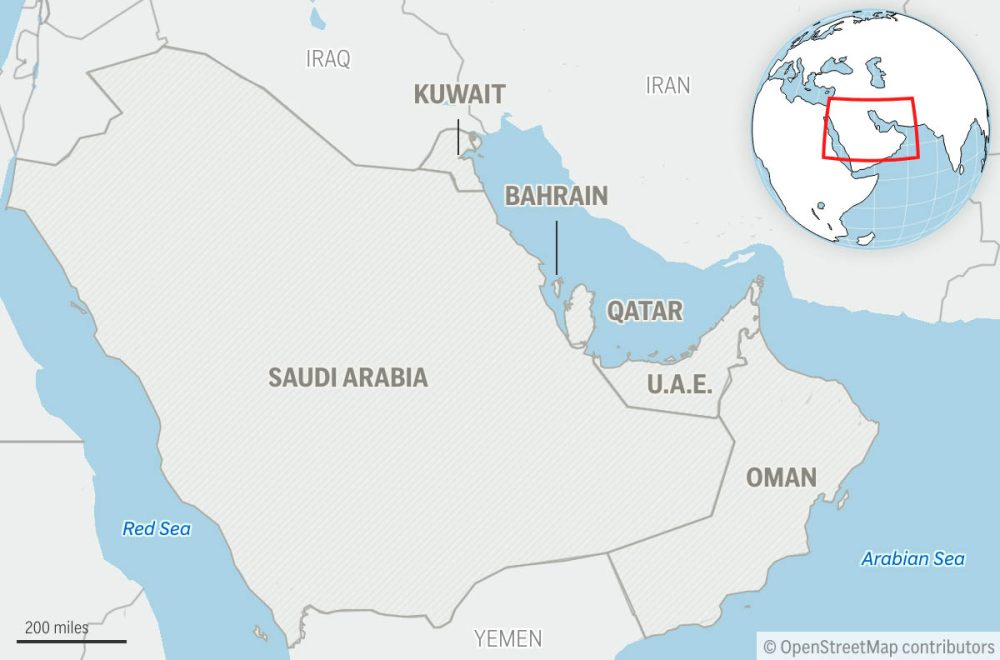
The United Arab Emirates announced Monday that Iran has renewed its military strikes against UAE territory, including cruise missile attacks and a drone assault targeting oil facilities near Fujairah, while the United States works to restore commercial shipping through the vital Strait of Hormuz amid an unstable ceasefire.
According to the UAE Defense Ministry, Iran fired four cruise missiles at the country, with three successfully intercepted by defense systems and one falling harmlessly into ocean waters. Officials in Fujairah reported that a blaze erupted at the Fujairah Oil Industry Zone following what they characterized as a drone assault launched from Iran. Emergency response crews were dispatched to battle the flames. Tehran has not yet responded to the Fujairah incident allegations.
The UK Maritime Trade Operations center, operated by British military officials, documented two commercial cargo ships catching fire off the UAE coastline. In a separate incident, South Korean authorities confirmed that an explosion and fire occurred on a South Korean-operated vessel anchored in the strait, though no crew members were harmed. The UAE also claimed Iran used drones to attack an unloaded tanker connected to the Abu Dhabi National Oil Company while it traveled through the waterway.
These attacks occurred while US Central Command announced that two American-flagged commercial ships had successfully passed through the Strait of Hormuz as part of a new American initiative to restore normal shipping operations. President Donald Trump warned Sunday that Iranian disruption of this effort “will, unfortunately, have to be dealt with forcefully.”
Iranian military officials condemned the US initiative and issued threats against international forces attempting to enter the strait. “We warn that any foreign military force — especially the aggressive U.S. military — that intends to approach or enter the Strait of Hormuz will be targeted,” Maj. Gen. Ali Abdollahi told Iranian state broadcaster IRIB.
The Strait of Hormuz, connecting the Persian Gulf with the Gulf of Oman, serves as one of the globe’s most crucial pathways for oil and natural gas transportation. UAE officials have previously stated that Iranian strikes against infrastructure and civilian locations breach the nation’s sovereignty and endanger regional stability.
A California-based food manufacturer has issued a nationwide recall for several varieties of its kimchi products after discovering they contain unlisted fish ingredients that could trigger dangerous allergic reactions.
Downey, California company Ocinet, Inc. is pulling all varieties of its “…And Kimchi” brand sliced kimchi from store shelves. The affected products include three different UPC codes: 8541200408, 8541200409, and 8541200411.
The company discovered that the fermented vegetable products contain anchovies, a fish ingredient that was not disclosed on product packaging. This poses a significant health threat to consumers who suffer from fish allergies or sensitivities, who could experience severe allergic reactions if they consume the products.
The Food and Drug Administration announced the recall as part of its ongoing food safety monitoring efforts. Consumers who have purchased any of the affected kimchi products are advised to dispose of them immediately and contact the company for refund information.
Anyone with fish allergies who may have consumed these products should monitor themselves for allergic reaction symptoms and seek medical attention if needed.
The University of Michigan has issued an apology following controversial remarks made during Saturday’s spring graduation ceremony in Ann Arbor, where a faculty leader commended pro-Palestinian student demonstrators.
Derek Peterson, a professor of history and African studies who was stepping down as Faculty Senate chair, went off-script during his commencement address to highlight what he described as student activism against the “injustice and inhumanity of Israel’s war in Gaza.” Peterson connected recent pro-Palestinian demonstrations to the university’s broader tradition of student protest movements spanning the past two years.
While Peterson’s comments received applause from some attendees, they quickly sparked backlash from university officials and community leaders. President Domenico Grasso condemned the remarks as “hurtful and insensitive to many members of our community,” emphasizing that Peterson had strayed from his pre-approved speech.
“The comments were inappropriate and do not represent our institutional position,” Grasso stated, adding that commencement ceremonies should focus on “celebration, recognition and unity” rather than serve as venues for personal political statements. The president announced plans to reassess future graduation procedures, though no disciplinary measures against Peterson were revealed.
Board of Regents member Sarah Hubbard expressed her dismay on social media, describing the speech as “incredibly troubling and disappointing.” She called for the board to establish clearer guidelines regarding faculty behavior at university events.
Republican candidates for the Board of Regents, Michael Schostak and Lena Epstein, issued a combined response criticizing the use of graduation as “a stage for political activism that leaves students feeling excluded or uncomfortable.”
Peterson stood by his remarks when speaking with CBS News Detroit, arguing that “the idea that graduations should be apolitical is ridiculous.” He maintained that students should be encouraged to engage with controversial topics rather than shy away from them.
A commemorative wall painting honoring young victims of Middle Eastern violence will be revealed in Israel, featuring the children through the symbolic imagery of a soccer game, according to organizers and creator Hooman Khalili.
The artwork depicts Druze youth wearing green jerseys, representing the dozen children who lost their lives when a Hezbollah rocket struck Majdal Shams on July 27, 2024, as they played soccer. They face children dressed in red, symbolizing minors who died in Iran following September 2022. The young people are shown as teammates rather than opponents.
Positioned above the soccer scene is Zahra Azadpour, a young female soccer player who died during Iranian civil unrest in January 2026, depicted serving as the game’s referee.
The memorial artwork features landmarks from both regions, including Nabi Shu’ayb (Jethro’s Tomb) located in the Galilee region and Tehran’s Azadi Tower, combined with the Lion and Sun emblem, which project organizers say symbolizes strength and cultural identity.
The Druze victims remembered in the memorial are Fajr Laith, Ameer Rabeea, Hazem Akram, Wadeea Ibrahim, Iseel Nashaat, Yazan Nayeif, Finis Adham, Alma Ayman, Naji Taher, Milad Muadad, and Nathem Fakher.
Iranian youth honored in the piece include Kian Pirfalak, Sarina Esmailzadeh, Nika Shakarami, Asra Panahi, Mohammad Eghbal, Hasti Narouei, Mona Naghib, Helen Ahmadi, Ali Rezaei, and Mirshekar Abolfazl, among others.
The project information references Amnesty International findings that Iranian security personnel killed children during demonstrations through gunfire, metal projectiles, and physical violence, with officials later trying to hide these incidents and intimidate grieving families.
Creator Hooman Khalili shared with The Media Line: “I see these murals and banners as the roots of something much bigger. The roots are here in Israel—but my hope is that the tree will grow and fully blossom in the United States.”
Khalili continued, “My prayer is to have this mural installed in the US before or during the FIFA World Cup, when the eyes of the world are watching. When that moment comes, I want people everywhere to see the truth—to understand the brutality of the Islamic regime and the reality that children are being targeted.”
“This is about making sure their stories are seen, remembered, and impossible to ignore,” Khalili concluded.
Khalili, born in Tehran in 1974, is an Iranian-American artist, filmmaker, and human rights advocate recognized for creating large-scale murals supporting Iranian demonstrators and drawing attention to human rights violations. Raised in California, he has contributed to film, radio, and public art initiatives throughout Israel and the United States.
President Donald Trump issued a severe threat to Iran on Monday, declaring the nation would face total annihilation if it launches attacks against American naval forces, as regional tensions continue to escalate in the Persian Gulf waters.
During an interview with Fox News correspondent Trey Yingst, Trump described Iran as having become “much more malleable” during peace talks while emphasizing America’s military preparedness.
“We have more weapons and ammunition at a much higher grade than we had before,” President Trump said. “We have the best equipment. We have stuff all over the world. We have these bases all over the world. They’re all stocked up with equipment. We can use all of that stuff, and we will, if we need it.”
Military officials from US Central Command clarified Monday that reports suggesting Iran had attacked an American warship in the Strait of Hormuz area were false. “The truth is, no US military vessel has been attacked,” the command stated in a social media post.
However, Iranian forces did target oil infrastructure in Fujairah within the United Arab Emirates on Monday, resulting in injuries to three Indian nationals, according to Fujairah’s media office. UAE defense systems successfully intercepted three incoming missiles that day, while a fourth projectile fell into ocean waters.
These attacks followed what officials characterized as Iranian aggression against both the United Arab Emirates and Oman during Monday evening. Trump had previously declined Iran’s ceasefire overture just one day before these incidents.
A high-ranking Israel Defense Forces official confirmed that Israel has maintained its current civilian protection guidelines. “The IDF is following the situation and is at a high level of readiness,” the official said. “We emphasize that there are no changes to the home front rules.”
The military leader added that Israel’s defensive stance remains consistent. “Our air defense systems and attack capabilities are prepared at a high level, which is something that has not changed since the ceasefire decision.”
Israeli security experts indicated that Persian Gulf tensions have reached critical levels, cautioning that even a minor incident or miscommunication could shatter the current ceasefire arrangement with Iran’s government and reignite hostilities, according to reports from Walla.
A transatlantic cruise has turned into a floating quarantine zone after three passengers died and another was hospitalized with Hantavirus, leaving 149 travelers from 23 nations confined to their ship under emergency health protocols.
The MV Hondius, operated by Oceanwide Expeditions, has implemented stringent isolation procedures following confirmation that two of the three deaths were linked to the deadly virus. Among the fatalities were a married couple from the Netherlands and a passenger from Germany, with the Dutch woman testing positive for Hantavirus.
A 69-year-old British traveler who contracted the illness was airlifted to a South African medical facility, where he remains in critical care. Additionally, two crew members who had direct contact with the deceased German passenger were removed from the vessel as a precautionary measure.
The vessel’s journey began over a month ago when it left Ushuaia, Argentina. According to MarineTraffic vessel monitoring data, the Dutch-registered ship first visited Antarctica before returning to Argentina for a brief stop and departing again on April 1st. The ship later made a port call at Saint Helena, a British territory, before anchoring near Praia this past Sunday.
Cape Verde officials blocked the ship from docking Tuesday due to health safety concerns, forcing the vessel to remain at sea while containment protocols continue.
According to the Centers for Disease Control and Prevention, Hantavirus typically spreads through exposure to infected rodent waste, urine, or saliva. A particularly dangerous variant called Andes virus can transmit between humans and is commonly found in Chile and Argentina, where the cruise originated.
The infection can progress to hantavirus pulmonary syndrome, a life-threatening respiratory condition with high mortality rates. This same disease claimed the life of Betsy Arakawa, widow of deceased actor Gene Hackman, in the previous year.
World Health Organization European Regional Director Hans Kluge sought to calm public concerns, stating: “There is no need for panic or travel restrictions.” Health authorities emphasized that the outbreak poses no wider threat to public safety.
Immigration and Customs Enforcement is providing substantial financial packages to encourage local law enforcement agencies to participate in a program that authorizes their officers to conduct immigration arrests.
According to police administrators, the funding opportunities, which cover officer salaries, equipment purchases, and vehicle acquisitions, present attractive incentives for departments considering participation in the federal initiative.
The program grants local police officers the legal authority to make arrests related to immigration violations, expanding their typical law enforcement duties beyond traditional local crimes.
Law enforcement leaders indicate that the financial support being offered by the federal agency makes the program particularly appealing to departments that may be facing budget constraints or equipment needs.
The National Milk Producers Federation is celebrating the release of a federal trade report that identifies European Union restrictions on common cheese names as a significant barrier to American commerce.
The U.S. Trade Representative issued its 2026 Special 301 Report on April 30, which specifically calls out the EU’s misuse of intellectual property regulations to control widely-used cheese names such as “parmesan.”
This federal backing is crucial for the National Milk Producers Federation, U.S. Dairy Export Council, and Consortium for Common Food Names as they collaborate with government officials to defend American dairy farmers’ ability to use standard food terminology in international commerce.
The yearly report, which outlines major intellectual property challenges for American exporters, emphasizes the current administration’s achievements in recent trade negotiations to guarantee that common names remain available for U.S. producers. These agreements are vital for countering the EU’s restrictive geographical indication policies, which limit universally-known terms like “parmesan” and “feta” to designated European manufacturers, essentially blocking American exporters from important overseas markets.
In January, the National Milk Producers Federation and U.S. Dairy Export Council submitted formal comments backing the Consortium for Common Food Names’ comprehensive documentation to the Trade Representative’s office, which outlined the scope of markets where these rights face challenges and thanked the administration for making this issue a priority. NMPF representative Shawna Morris also provided testimony during public hearings conducted as part of the report’s development process. All three organizations plan to work alongside the Trade Representative and federal government in overseeing reciprocal trade agreements and ensuring trading partners properly implement them.
Furthermore, the National Milk Producers Federation plans to advocate for these protections in all current trade discussions, including the U.S.-Mexico-Canada Agreement Joint Review, to guarantee that American dairy exporters can market their products globally without restrictions based on common product names.
The National Milk Producers Federation and the National Dairy FARM Program launched a comprehensive media campaign throughout April to demonstrate how dairy farming families serve as environmental caretakers year-round, extending far beyond Earth Day celebrations.
The organization’s multimedia approach included their latest Farmer Focus feature, a CEO’s Corner editorial, and a Dairy Defined Podcast installment that highlighted the individuals and initiatives driving environmental progress in the dairy industry.
The Farmer Focus segment featured the Van Hofwegen family, who discussed how collecting and analyzing data creates opportunities for the next generation of farmers. They utilize FARM Environmental Stewardship tools to monitor and evaluate their operation’s environmental impact.
Located in Gila Bend, Arizona, Paloma Dairy operates as a family business and member of United Dairymen of Arizona, delivering premium milk products since beginning operations in 2006. The operation runs under the leadership of Robert Sr. alongside his four sons: Allan, Robert Jr., Arie and Kyle.
The dairy operation incorporates energy assessments and information gathered through FARM ES reviews to guide major investments and operational decisions. “You know, we call ourselves dairymen, but it’s agribusiness — business in capital letters,” said Robert Van Hofwegen.
In his monthly editorial, NMPF President & CEO Gregg Doud addressed agricultural stewardship, emphasizing that many practices labeled as “sustainability” represent sound business operations and resource efficiency.
“Public discussion about agriculture at times treats stewardship and profitability as parallel conversations — one is about social responsibility (whatever that may mean), while the other is about returns,” the column states.
“A dairy farmer’s reality is very different. On dairies, stewardship is a business strategy that improves efficiency, manages risk, and strengthens U.S. dairy’s competitiveness at home and abroad. Its success hinges upon being farmer‑led, incentive‑based, and grounded in economics rather than mandates.
“Efficiency has always been the foundation. To use a recent buzzword, do you know what ‘regenerative ag’ is to me? It’s the stuff my dad has emphasized on the farm for the past 50 years, and its stuff dairy farmers do every day.”
During April’s Dairy Defined podcast, Nicole Ayache, NMPF’s chief sustainability officer, described how the FARM Program prioritizes farmer needs. The program offers farmers resources to monitor and assess their environmental impact, enabling them to implement operational enhancements. Additionally, it connects farmers with supplementary support including grants, incentive programs, milk premiums and alternative income sources, while helping manage consumer expectations and sharing positive stories about daily dairy farm operations.
Ayache oversees the National Dairy FARM Program’s Environmental Stewardship component and highlighted how responsible resource management and efficiency focus has enhanced dairy production and financial performance, demonstrating farmers’ commitment to serving consumers.
“A lot of stewardship is about efficiency” — but it’s also more than that, Ayache said. “Anyone who chats with farmers know that because you can hear every time you talk to them about their farm and their choices, you can hear their passion for the animals and the land and their care and the nutrition they provide to our country and the world.”
TAMPA, Fla. — Tampa Bay Lightning team captain Victor Hedman disclosed on Tuesday that he took time away from the ice during the season’s closing stretch to prioritize his mental wellness.
Through an official team statement, Hedman chose not to elaborate on the specific challenges he faced. The veteran defenseman sat out the Lightning’s concluding 22 regular season contests and remained absent for all seven playoff games during their opening-round elimination by Montreal.
The 35-year-old player had been present around the team facility in recent weeks and participated in some practice sessions. However, his final appearance in a game occurred in mid-March.
“Over the past couple of months, I made the decision to step away and focus on my mental health,” Hedman said. “It was not an easy decision, but it was the right one.
“I’ve always believed that being a leader means doing what’s best for the team. In this case, it also meant doing what was necessary to take care of myself, so I can be the best player, teammate, husband and father I expect to be.”
Earlier in the campaign, Hedman was sidelined for an extended period due to an elbow ailment that necessitated December surgery. After his recovery, he competed for Sweden in the Olympics until suffering an injury during pre-game preparation before their quarterfinal match against Team USA, preventing his participation.
During Tampa Bay’s season-ending media availability, he shared that he relied on support from close friend and former Lightning captain Steven Stamkos, along with Ottawa netminder Linus Ullmark, who similarly took leave from the Senators for mental health reasons.
Selected second overall in the 2009 NHL Entry Draft, Hedman has spent his entire 17-year professional career with Tampa Bay, contributing to consecutive Stanley Cup championships in 2020 and 2021. He earned the Conn Smythe Trophy as the most valuable playoff performer during the 2020 pandemic-shortened season.
This season marked a career-low with just 33 game appearances due to his injury and subsequent personal leave.
Hedman expressed gratitude toward his teammates, the Lightning organization, his family, and his mental health professional for their ongoing support, noting he is “in a much better place today.”
“This is something that exists in our game more than people see,” Hedman said. “If this moment helps make it easier for others to take care of themselves when they need to, that matters.”
The defending Super Bowl champion Seattle Seahawks are finalizing a one-year contract worth up to $5 million with experienced pass rusher Dante Fowler Jr., according to a source familiar with the negotiations who spoke to The Associated Press on Tuesday.
The source requested anonymity since the agreement has not yet been completed.
The 31-year-old Fowler spent last season with the Dallas Cowboys, recording three quarterback sacks across 17 appearances while making 11 starts.
The veteran defender is expected to help fill the gap left by Boye Mafe’s departure, as the former Seattle pass rusher signed a three-year, $60 million contract with the Cincinnati Bengals during free agency. Mafe accumulated 20 quarterback takedowns during his four-year tenure with the Seahawks.
Originally selected third overall by the Jacksonville Jaguars in the 2015 NFL draft, Fowler has compiled 58.5 career sacks over his decade-long professional career. Beyond Jacksonville and his two separate tenures in Dallas, the veteran has suited up for the Los Angeles Rams, Atlanta Falcons, and Washington Commanders.
During his 2024 campaign with Washington, Fowler tallied 10.5 sacks, marking his second-highest single-season total. His career-best performance came in 2019 with the Rams when he recorded 11.5 takedowns.
Following this year’s draft, Seahawks football operations president John Schneider indicated the team would explore adding a pass rusher through free agency after choosing not to draft one. Fowler matches Seattle’s desired profile for the position and will join a relatively inexperienced linebacker corps featuring Jared Ivey, Jamie Sheriff, Connor O’Toole, and Jalan Gaines.
SALISBURY, Md. – Following their remarkable sixth straight Coast-to-Coast Athletic Conference championship victory, Salisbury University’s women’s lacrosse squad has earned recognition with four out of five major conference honors announced Tuesday.
The Sea Gulls, currently ranked second nationally, demonstrated their conference dominance both on the field and in individual recognition when the C2C revealed its postseason awards Tuesday morning.
The championship win and subsequent awards continue Salisbury’s impressive streak of excellence in women’s lacrosse, solidifying their position as the conference’s premier program.
Representatives from the National Dairy FARM Program took a leading role at the 2026 Dairy Sustainability Alliance Spring Meeting held April 29, conducting multiple sessions focused on animal welfare, environmental responsibility, and workforce training initiatives that support America’s dairy industry.
During a session titled “Landscape Level Set: Care for Animals and Communities,” Dr. Meggan Hain examined how dairy operations are making strides in animal welfare, food safety protocols, and employee development. The presentation outlined priority areas for the industry moving into 2026 and provided resources for organizations seeking to enhance these critical areas.
A second presentation called “Building Trust Across the Dairy Value Chain” featured FARM officials leading discussions on how the program creates value through market access support, reputation management, and consumer confidence building. The panel brought together diverse industry voices including Agri-Mark dairy producer Val Lavigne, Land O’Lakes Inc. sustainability and animal care manager Kristy Miron, and Leprino Foods global responsibility director Adam Wylie.
FARM representative Nicole Ayache contributed to another panel examining “What Global Reporting Expectations Mean for U.S. Dairy,” which analyzed recent European Union sustainability regulations and their potential impact on how international customers evaluate dairy practices.
Beyond the formal presentations, the gathering created opportunities for dialogue between agricultural producers and industry representatives about current obstacles, developing animal health patterns, and technological innovations in dairy farming.
Dairy cooperatives participating in the NEXT program successfully negotiated 58 international agreements during April, representing 16 million pounds of dairy products scheduled for export throughout 2026. The contracted goods are destined for markets across Asia, North America, Oceania, the Middle East-North Africa region, South America, Central America, and the Caribbean, with shipments planned between April and November 2026.
International market access remains vital for sustaining dairy operations and their cooperative organizations nationwide. The ability to reach global customers proves essential for all cooperatives, regardless of their direct involvement in export activities. The NEXT program serves as a bridge connecting American dairy products with international buyers while helping address competitive challenges faced by U.S. dairy exporters in global trade.
Officials emphasize that these figures represent active delivery agreements rather than completed shipment totals. Export assistance payments through NEXT will only be distributed to participating bidders after successful product delivery has been confirmed through proper documentation verification.
Two members of Congress have joined forces with the National Milk Producers Federation to bring back legislation designed to protect traditional dairy terminology from use by plant-based alternatives.
Representatives John Joyce, a Republican from Pennsylvania, and Josh Riley, a Democrat from New York, filed the DAIRY PRIDE Act in the House on April 21st. This House version works alongside a similar bipartisan measure that was introduced in the Senate last July.
“Dairy farmers have spent generations building trust in the nutritional value and quality of real dairy products; allowing imitation products to borrow that reputation risks misleading shoppers and muddying the marketplace,” said Gregg Doud, who serves as President and CEO of the National Milk Producers Federation.
According to supporters, the Food and Drug Administration has neglected to enforce its own identity standards for dairy products for almost 50 years. This has allowed manufacturers of plant-based alternatives to label their products with traditional dairy names such as “milk,” “cheese,” and “yogurt,” even though these substitutes don’t match the nutritional profile of actual dairy items. The existing standards were created to promote transparency, safeguard consumers, and ensure product names accurately reflect nutritional content. Traditional milk and dairy items contain a distinctive combination of 13 vital nutrients, including calcium, potassium, and vitamin D — nutrients that health officials say many Americans don’t get enough of in their diets.
The proposed DAIRY PRIDE legislation would require the FDA to enforce these existing standards by classifying plant-based products that incorrectly use dairy terminology as mislabeled. Additionally, the measure mandates that the FDA provide enforcement guidelines within 90 days to ensure uniform application across the country, which would help shoppers make more informed decisions while creating fair competition for dairy producers who follow current regulations.
The National Milk Producers Federation has expressed strong backing for the DAIRY PRIDE Act and praised Representatives Joyce and Riley for their cross-party cooperation. The organization plans to continue working with both Congress and the current Administration to advocate for substantial measures that preserve dairy product identity, promote public health, and create equal opportunities for American dairy farming operations.
The National Milk Producers Federation filed formal support with the Environmental Protection Agency on April 22, endorsing the agency’s scientific evaluation of a USDA application for NovoFly, an engineered sterile male-only New World screwworm designed using established Sterile Insect Technique methods for preventing and controlling screwworm infestations.
“By improving male-only release ratios and reducing production inefficiencies, this technology strengthens the economic sustainability of the U.S.–Mexico barrier program that protects billions of dollars in agricultural value annually,” NMPF stated in its comments. “Investing in a more precise and scalable SIT tool is fiscally responsible and reduces the likelihood of far more costly emergency eradication campaigns in the future.”
The organization developed a simplified comment form for dairy producers, cooperatives, state groups, and other stakeholders to express their support during the public input period, aiming to demonstrate widespread dairy industry backing for effective, environmentally sound methods to safeguard American livestock and farming from New World screwworm threats.
The USDA began construction of its domestic sterile fly manufacturing facility in Edinberg, Texas on April 17, with production expected to commence in late 2025. Early May reports indicated the closest screwworm detection occurred 62 miles from the Texas border in Nuevo Leon. The FDA also issued Emergency Use Authorization in April for F10 Antiseptic Barrier Ointment with Insecticide for cattle treatment, establishing a 10-day milk withdrawal requirement.
Those interested in participating in NMPF advocacy efforts can access the organization’s Take Action webpage or subscribe to advocacy alerts through their website notification system.
YELLOWSTONE NATIONAL PARK, Wyo. — Park authorities reported Tuesday that two hikers sustained injuries during a bear encounter on Monday afternoon while walking along a well-used trail close to the famous Old Faithful geyser.
Officials characterized the incident as occurring during a single encounter on Monday afternoon as the hikers traveled the Mystic Falls Trail.
Authorities have temporarily shut down a significant portion of the park surrounding the Midway Geyser Basin while they conduct their investigation. The closure encompasses no fewer than five hiking paths and multiple wilderness camping areas.
While park representatives confirmed that at least one bear was responsible for the incident, they have not identified the specific type involved. Yellowstone is home to both grizzly and black bear populations, and distinguishing between the two species can sometimes prove challenging. Grizzly bears tend to display more aggressive behavior and achieve significantly larger sizes — potentially growing to double the weight of black bears. Black bears typically display darker fur coloring.
Officials have not yet disclosed additional details regarding the victims’ ages or current medical status. The Associated Press has attempted to contact park representatives through email and telephone for further information.
Bear encounters involving either grizzly or black bears remain uncommon occurrences despite the millions of annual visitors to Yellowstone. In the previous year, one hiker sustained chest and arm wounds during an encounter on the Turbid Lake Trail located northeast of Yellowstone Lake.
A grizzly bear fatally attacked a woman in an area just outside Yellowstone’s western boundary in 2023. The most recent deadly bear encounter within park boundaries occurred in 2015.
The busy Mystic Falls hiking route features a circular path that takes visitors to view a waterfall measuring 70 feet in height. The starting point for this trail sits approximately two miles northwest of the Old Faithful area.
Israeli Finance Minister Bezalel Smotrich ignited a political firestorm Tuesday when he declared during a 103FM radio interview that creating a coalition government with United Arab List leader Mansour Abbas would be more damaging than the October 7 terrorist attack.
During the broadcast, Smotrich characterized the October 7 assault as a catastrophic security breakdown while describing potential political cooperation with Abbas as a deliberate betrayal. “The October 7 massacre is a horrific and terrible failure, but it is a tactical failure,” Smotrich stated. He went on to claim that bringing Abbas into government would be “a thousand times worse than the most terrible failure,” calling such a move an intentional choice.
When pressed by the interviewer about his controversial comparison—referencing the attack that claimed 1,200 lives and resulted in 251 hostages—Smotrich defended his position. “Do you want to make a competition in disasters?” he responded. “You asked me as a politician what is more severe in my view. A politician who lied, betrayed his values, and carried out a targeted strike against democracy–that is far more severe.”
The finance minister also directed criticism toward Prime Minister Benjamin Netanyahu, maintaining his longstanding opposition to the premier’s leadership. “I have had criticism of Netanyahu for years, and I do not remove responsibility from him,” Smotrich declared.
Regarding the current conflict, Smotrich outlined his vision for ending the war with Hamas completely eliminated from Gaza. He also voiced backing for territorial expansion into Gaza, Lebanon, Syria, and Judea and Samaria.
Political opponents quickly condemned Smotrich’s statements. Yashar party chief Gadi Eisenkot accused the finance minister of exploiting the October 7 tragedy as a “tool in the shameless campaign” to minimize accountability for security failures. “The biggest failure in our history is an indelible stain,” Eisenkot responded.
Yair Golan interpreted Smotrich’s remarks as suggesting that “a massacre of Israelis is better than a government that doesn’t include him.”
Following the backlash, Smotrich issued a clarification claiming his words had been “distorted,” insisting he was merely comparing different political decisions. He acknowledged the October 7 attack as “one of the most terrible we have known since the Holocaust.”
Officials in Oman report that two foreign workers sustained injuries when a residential structure came under attack in the coastal community of Bukha, situated along the strategically important Strait of Hormuz waterway.
According to the Oman News Agency, the attack struck employee housing facilities in the Tibat district, harming two expatriate workers and causing damage to four motor vehicles. The blast also broke windows in a neighboring residence. Government officials stated they are implementing measures to protect local residents’ safety and security as they investigate the circumstances surrounding the attack.
This incident unfolds against a backdrop of rising regional conflict throughout the Persian Gulf area. On Monday, Iranian forces launched an assault on petroleum industry facilities in Fujairah, located in the United Arab Emirates, resulting in injuries to three Indian nationals, as confirmed by Fujairah’s media representatives.
UAE officials reported successfully stopping three incoming missiles that same day, while a fourth projectile landed in surrounding waters.
These attacks coincide with stalled diplomatic efforts between Iran and the United States regarding ceasefire negotiations, following President Donald Trump’s rejection of Iran’s proposed ceasefire terms the previous day.
Israeli sources speaking to Walla news outlet revealed that both Saudi Arabia and the United Arab Emirates have intensified their lobbying efforts toward the Trump administration in recent days. Regional leaders reportedly express anxiety about various potential scenarios, including the prospect of American military withdrawal from the area or an agreement they consider inadequate, fearing such outcomes could leave them vulnerable to Iranian attacks and broader economic instability.
After decades of refusing access, Swiss government officials have reversed their position and will now permit researchers to examine classified documents related to Nazi war criminal Josef Mengele, according to Swiss media reports.
The documents, which detail Mengele’s activities while in Switzerland, have been stored under strict security measures at the Swiss Federal Archives. Switzerland’s Federal Intelligence Service had consistently denied all requests to view the materials, including a rejection as recently as February 2026.
A legal challenge to that denial is still working its way through the Federal Administrative Court. Officials now say the person who filed the appeal will be permitted to review the documents under terms that are still being developed, and these same guidelines will govern future access requests.
Known as the “Angel of Death,” Mengele performed horrific medical experiments on prisoners at the Auschwitz death camp during World War II. Following Germany’s defeat, he escaped to South America but eventually made at least one return trip to Europe as a tourist, which included time spent in Switzerland.
The Swiss government’s Bergier Commission, created in 1996 to investigate how Swiss financial institutions managed Holocaust victims’ assets, had previously studied Mengele’s Swiss connections.
Even after that investigation concluded, Swiss authorities chose to place additional security restrictions on the Mengele documents in December 2001. From that point forward, the files have been essentially off-limits to both academic researchers and the general public.
Recent parliamentary motions filed by Swiss lawmakers requesting more details about Mengele’s Swiss activities have brought fresh focus to the controversy.
Government officials explained that their policy change resulted from a recent review they characterized as creating a “new situation,” though they did not elaborate on what specific circumstances led to the decision.
The upcoming document release is anticipated to shed light on previously unknown details of Mengele’s time in Switzerland, although officials have not yet determined exactly what information will be made available or under what conditions.
Israeli opposition leader Benny Gantz’s Blue and White party confronts an escalating organizational emergency as additional high-ranking officials signal their departure, while efforts to maintain party unity have generated fresh political complications.
The current turmoil erupted when Chili Tropper and Orit Farkash-Hacohen declared their intention to abandon Gantz’s political organization. Gantz insisted both politicians should vacate their Knesset positions without delay, contending this action was necessary following their exit. However, this requirement revealed an unexpected problem: when departing members surrender their parliamentary seats, their successors might emerge from the original candidate roster, potentially including individuals linked to Gideon Sa’ar, who subsequently aligned with Prime Minister Benjamin Netanyahu’s administration.
This scenario could transform an opposition party’s internal struggle into a legislative advantage for the governing coalition.
Blue and White subsequently announced that Gantz and Tropper reached an understanding for Tropper to maintain his current Knesset position rather than step down, specifically to avoid providing “another vote to the coalition.” The party expressed worry that an additional coalition supporter could facilitate passage of draft legislation that might damage Israel Defense Forces personnel and Israeli society.
This resolution underscores the difficult position now confronting Gantz. Compelling legislators to step down might preserve party authority and safeguard Blue and White’s organizational standing, yet it could simultaneously shift the Knesset’s power balance toward the government. Permitting them to stay prevents that immediate danger but leaves Gantz overseeing a group whose participants are progressively distancing themselves from his leadership.
The situation deteriorated when Eitan Ginzburg, a long-standing Gantz supporter and Blue and White’s secretary-general, met with Gantz and chose to exit the organization. Blue and White stated that Gantz had called him in after learning he was conducting discussions with alternative parties due to concerns about his political and financial prospects.
Ginzburg presented the choice through a different lens. In an extensive public statement, he characterized the move as concluding a political period he had begun seven years earlier, when Tropper recruited him to participate in a fresh initiative headed by Gantz. He commended Gantz individually, describing him as brave and honorable, yet stated the existing political structure had lost significant capacity to generate transformation.
“Blue and White was a warm political home for me,” Ginzburg stated, noting that he had maintained faith in its potential to make an impact even during challenging times. However, he added, “its ability, in its current form, to continue generating the change required in the country has diminished.”
This assessment strikes at the heart of the emergency. Ginzburg is not framing his exit as a personal rupture with Gantz, but rather as an evaluation of the party’s effectiveness. For an organization that has consistently performed poorly in recent surveys and frequently failed to meet the minimum vote threshold, this interpretation may prove even more harmful.
Blue and White’s deterioration has transformed each departure into an existential concern. Previously the primary centrist alternative to Netanyahu, the party now battles to maintain significance while other anti-Netanyahu figures, including Naftali Bennett and Gadi Eisenkot, vie for political territory before the upcoming election.
Eisenkot’s departure proved especially damaging. As Gantz’s former deputy and a previous IDF chief of staff, Eisenkot provided Blue and White with defense expertise and political gravitas. His choice to separate and establish Yashar demonstrated that the difficulties extended beyond polling data into the party’s leadership circle.
Gantz faces an additional burden from political history. During the pandemic, he dissolved his partnership with Yair Lapid and joined a Netanyahu-headed government. Following the October 7 attacks, he once again participated in a Netanyahu-led administration, this time through an emergency wartime agreement. While presented as an act of national duty, this arrangement concluded without Gantz achieving substantial modifications in the government’s policies or personnel.
Lapid, in contrast, had made his participation conditional on removing Bezalel Smotrich and Itamar Ben Gvir. Netanyahu dismissed this proposal by ignoring it. Gantz joined without making similar demands, prompting detractors to contend he provided Netanyahu with credibility without extracting a significant political concession.
Currently, as Blue and White continues losing its remaining senior leadership, Gantz’s challenge extends beyond determining whether Tropper, Farkash-Hacohen, or Ginzburg should retain their positions. The fundamental question is whether Gantz maintains a viable political organization to present to them, or if Blue and White has transformed into a platform that its own participants are attempting to abandon before the next electoral contest.
President Donald Trump has declared a nationwide ‘Shabbat 250’ observance as part of his proclamation for Jewish American Heritage Month, urging Americans to participate in a National Shabbat weekend from Friday evening, May 15, through Saturday night, May 16, 2026. The announcement marks an unprecedented presidential call for national Shabbat recognition tied to America’s 250th anniversary celebration.
This groundbreaking initiative represents the first instance of a sitting U.S. president formally requesting nationwide participation in Shabbat observance. Trump positioned the weekend as a time to celebrate faith, freedom, and the quarter-millennium milestone of American independence.
The proclamation aims to shine a spotlight on Jewish American contributions while encouraging nationwide participation in traditional practices of rest and reflection. Trump connected the observance directly to the upcoming commemoration of the United States’ 250th birthday.
“From sundown on May 15 to nightfall on May 16, friends, families, and communities of all backgrounds may come together in gratitude for our great Nation. This day will recognize the sacred Jewish tradition of setting aside time for rest, reflection, and gratitude to the Almighty,” Trump stated in the proclamation.
The president drew connections to America’s founding era, citing President George Washington’s correspondence with the Hebrew Congregation in Newport, Rhode Island, and highlighting Revolutionary War financier Haym Salomon’s role in early American history.
Trump elaborated on the significance of Jewish American contributions in his official statement: “This month, we celebrate the contributions that Jewish Americans have made to our way of life, we honor their role in shaping the story of our Nation, and we remember that religious devotion, learning, and service to others are enduring pillars of a thriving culture. Through every trial and triumph, the contributions of Jewish Americans have shaped our past, have strengthened our communities, and will continue to inspire American greatness for generations to come.”
Authorities have released the identity of a Hartly resident who lost his life in a deadly single-vehicle accident that took place Sunday evening.
Delaware State Police officials say Edilzar Chun-Chilel, age 31, was the victim of the fatal collision in Hartly.
Investigators with the Delaware State Police Troop 3 Collision Reconstruction Unit continue to examine the circumstances surrounding the deadly crash. Officials are urging anyone who may have seen the accident or has relevant information to reach out to Sergeant M. Long at (302) 698-8518. Tips can also be submitted through a private message to the Delaware State Police Facebook page or by contacting Delaware Crime Stoppers at (800) 847-3333.
Those affected by crime, sudden loss, or traumatic events can find help through the Delaware State Police Victim Services Unit and Delaware Victim Center. Support and resources are available around the clock via their toll-free helpline at 1-800-VICTIM-1 (1-800-842-8461). The Victim Services Unit can also be reached by email at [email protected].
A deadly stabbing occurred outside Busch Stadium in St. Louis early Monday morning, resulting from an argument between two cleanup workers hired to handle post-game duties, according to police.
Both individuals involved were employed by contractors responsible for cleaning up after baseball games, not direct employees of the Major League Baseball team.
“This could have happened anywhere, but what happened tonight was a dispute between two people. Unfortunately, it happened at a treasured St. Louis staple,” said Mitch McCoy, spokesperson for St. Louis police.
The Cardinals organization characterized the incident as an “isolated altercation.”
Officers responded to the scene at approximately 3 a.m. Monday morning. A 27-year-old man died from his injuries, while a 65-year-old suspect was questioned by detectives.
The team had faced the Los Angeles Dodgers on Sunday evening. Monday’s scheduled matchup against Milwaukee proceeded as planned, unaffected by the deadly incident.
YEREVAN, Armenia — French President Emmanuel Macron surprised attendees at an elegant state dinner this week by taking the stage to perform beloved French ballads, including the classic tune “La Bohème.”
The musical performance took place Monday evening at Armenia’s presidential residence, where Macron was accompanied by an unlikely backing band featuring Armenian Prime Minister Nikol Pashinyan on drums and renowned jazz artist Vahagn Hayrapetyan on piano. Beyond “La Bohème,” originally made famous by Armenian-French artist Charles Aznavour in 1965, the French president also performed “Les Feuilles Mortes,” a song popularized by Yves Montand.
The dinner celebration was organized to honor Macron during his official state visit to Armenia, which aligned with a European Political Community meeting and a significant European Union summit taking place in the region.
Prime Minister Pashinyan, who assumed leadership in 2018, frequently showcases his musical abilities through his band Varchaband, which performed their inaugural concert in Yerevan in late January.
The Armenian Prime Minister has gained attention for sharing videos of himself enjoying music on Instagram, displaying diverse musical preferences that range from pop star Taylor Swift to hip-hop artists Travis Scott and A$AP Rocky.
French President Emmanuel Macron criticized escalating trade disputes between America and Europe on Tuesday, calling tariff battles a distraction as President Donald Trump prepared to impose new duties on European automobiles.
Speaking to reporters while visiting Armenia, Macron argued that both sides should focus on more pressing global challenges rather than economic threats.
“Especially in the geopolitical period we are experiencing, allies like the United States of America and the European Union have much better things to do than to stir up threats of destabilization,” Macron stated during his remarks.
The French leader’s comments followed Trump’s Friday announcement that automotive tariffs on EU imports would jump to 25% within days, potentially dealing another blow to an already strained global economy facing Middle East conflict impacts.
Macron emphasized the need for economic reassurance, telling reporters: “For our businesses, our households, our populations, we should rather send a message of stability and confidence.” He expressed optimism that “reason will prevail soon.”
The tariff escalation stems partly from Trump’s anger over comments made by German Chancellor Friedrich Merz, who suggested Iran had embarrassed the United States during war-ending negotiations. Germany’s significant automotive sector would face substantial damage from the increased duties.
Trump has responded to the German leader’s remarks by threatening to withdraw thousands of American military personnel from Germany.
Without providing specifics, Trump claimed the European Union was “not complying with our fully agreed to Trade Deal.”
Trade representatives from both sides were scheduled to discuss the dispute during Tuesday meetings in Paris.
European Commission President Ursula von der Leyen, speaking at the EU-Armenia summit in Yerevan, defended existing agreements when asked about the tariff threats.
“A deal is a deal, and we have a deal. And the essence of this deal is prosperity, common rules and reliability,” von der Leyen declared.
The commission president noted that her organization, which handles trade negotiations for all 27 EU member nations, remains “prepared for every scenario” should diplomatic efforts fail.
Trump and von der Leyen had reached a trade agreement in July 2025 establishing a 15% tariff cap on most products, though the U.S. Supreme Court later challenged the legal framework Trump used to implement such taxes.
Macron stressed the importance of honoring international commitments, warning that reopening agreements “would reopen everything.” He cautioned that “the European Union has instruments that would then need to be activated” if deals are violated.
This week’s upcoming employment report will determine whether America’s economy stays strong enough for the Federal Reserve to maintain current interest rates, or if weakening job numbers might bring back discussions of rate reductions that international conflict has largely eliminated.
Robust economic performance and worries about conflict-related inflation have led financial markets to anticipate no interest rate adjustments throughout this year. This represents a dramatic shift from January, when traders in federal funds futures markets were anticipating two quarter-point reductions by 2026.
“The economic backdrop and the data have been quite resilient through the conflict,” said Jonathan Cohn, head of U.S. rates desk strategy at Nomura. “Even without the uncertainty from Iran, one could make the case that the economy doesn’t require meaningful easing at this point.”
Financial experts suggest that obvious deterioration in employment numbers might encourage Federal Reserve officials to consider reduced rates. However, even substantially weak employment data would be unlikely alone to change the central bank’s overall position, given last month’s strong job numbers, other positive economic indicators, and persistently elevated inflation. Market participants have been counting on reduced rates to maintain this year’s gains in stock prices and other investment values.
Robust economic data has strengthened arguments against rate reductions, even if the current conflict reaches a quick resolution, according to analysts. March saw the addition of 178,000 jobs, almost triple the 60,000 that economists predicted in a Reuters survey, while unemployment decreased slightly to 4.3%.
Ten-year Treasury benchmark yields have increased to 4.43% from 3.94% before the conflict started on February 28, while two-year yields sensitive to rate changes have climbed to 3.94% from 3.38%. This widespread repricing shows markets adjusting to expectations of extended higher interest rates.
Central bank officials show limited indication that rate reductions are their primary concern. During the Fed’s latest meeting, rates remained unchanged, but three policymakers opposed language suggesting a preference toward rate cuts.
“Over the inter-meeting period, there was growing support for a more neutral stance on the future path of interest rates,” said Vail Hartman, U.S. rates strategist at BMO Capital Markets.
Fed Chair Jerome Powell indicated during last week’s post-meeting press conference that the central bank might abandon its easing preference as early as the June 16-17 meeting.
Financial analysts noted that circumstances supporting a reduction in the federal funds rate from its current 3.50%-3.75% range have become significantly more limited.
First-quarter economic expansion accelerated as companies increased artificial intelligence investments and government expenditures recovered following a damaging shutdown.
Consumer spending has also maintained strength, despite higher gasoline costs for consumers.
“If the Fed cuts, it’s not going to be because we got good news on inflation data,” Hartman said. “It’s going to be because we got bad news on the labor side.”
Such employment market deterioration would require evidence across multiple reports and would most likely involve a sustained unemployment rate increase, he explained.
Reuters-surveyed economists anticipate Friday’s Labor Department report will show 62,000 jobs added last month, with unemployment holding steady at 4.3%.
Even if energy prices stabilized following a ceasefire, analysts warned that inflation was already following a concerning path before the conflict started. This means resolving Middle Eastern tensions would eliminate one barrier without completely opening the route to reduced rates.
“Inflation was already increasing before the oil shock even hit,” Hartman said, noting there would be “some reluctance to conclude that we shouldn’t be all that worried about inflation just because the oil issue has diminished in relevance.”
Cohn identified several elements preventing markets from consistently pricing in Fed tightening, including pending Senate confirmation of former Fed Governor Kevin Warsh to replace Powell as central bank head, still-stable long-term inflation expectations, and what he described as the Fed policy committee’s “implicit dovish bias.”
However, Cohn warned that preference alone wouldn’t be sufficient to restore aggressive rate-cut expectations without economic data deterioration.
An unusually large wave of tax refunds may have hidden underlying economic weakness by helping consumers manage increased energy costs, according to Michael Lorizio, head of U.S. rates and mortgage trading at Manulife Investment Management.
The speed of that cushion’s disappearance and whether higher oil price effects appear in consumption or other economic indicators will be crucial for markets evaluating the Fed’s direction, he explained.
Currently, standards remain elevated on both sides. Without employment market problems, building a case for rate cuts proves difficult. With inflation still high, maintaining current rates is easily justified.
“If you see the labor market data begin to crack, then cut expectations can reemerge in a more meaningful way,” Cohn said. “Absent that, I think the market will struggle to get back all the way to what we were pricing pre-war.”
NEW YORK, May 5 – An artificial intelligence company is making significant strides in the financial sector by introducing new automated tools designed to streamline operations for banking and insurance firms.
Anthropic unveiled 10 specialized AI programs on Tuesday during a company event in New York. These automated systems can handle various financial tasks including creating presentation materials, reviewing audit documents, and preparing credit memorandums with minimal human supervision, according to the company.
The AI firm also expanded the information sources available to its Claude AI system, enhancing its ability to handle financial work.
Since announcing its financial sector ambitions less than a year ago, Anthropic has quickly gained traction with major institutions. Goldman Sachs, Visa, Citi, and AIG are among the companies now using its services. Financial institutions have particularly embraced the Claude Mythos model for strengthening their cybersecurity measures. Tuesday’s event featured Anthropic CEO Dario Amodei appearing alongside JPMorgan Chase CEO Jamie Dimon.
The company’s push to automate corporate tasks has created concerns in financial, legal, and software markets, with investors worried about potential business disruption. However, the San Francisco-based AI laboratory maintains its goal is enhancing customer outcomes rather than replacing workers.
Nicholas Lin, who oversees Anthropic’s financial services development, explained in an interview that Claude will gain “vertical-specific intelligence” in sectors like finance while remaining versatile across different industries.
Lin attributed the rapid growth in Anthropic’s financial services division to improved AI capabilities, dedicated customer assistance, and integration with essential office software.
“I’ve honestly seen a dramatic change, especially in the past six months,” Lin said.
The company announced that its 10 new AI programs integrate seamlessly with Claude Code and Cowork platforms and can be tailored to match individual company policies and communication styles.
FDA Commissioner Dr. Marty Makary stood by his agency’s choice to reject a cancer treatment application from Replimune on Tuesday, as the pharmaceutical company’s stock price fell in response to the regulatory setback.
During a CNBC television interview, Makary pointed to the agency’s formal documentation explaining their reasoning. “If you read our what we call our complete response letter, you will see the details of the FDA logic,” the commissioner stated.
The rejection of Replimune’s advanced skin cancer therapy sent the company’s shares tumbling 5% during morning stock market activity on Tuesday.
A Netherlands-based quantum computing company has successfully secured $178 million in new investment capital, with Intel Capital leading the funding round, the firm announced Tuesday. The investment comes as European nations work to compete with technology leaders in the United States and China.
According to consulting giant McKinsey, quantum computing technology promises to revolutionize data processing speeds compared to traditional computers, with the industry potentially reaching trillions of dollars in value over the coming decade.
QuantWare, which operates from its headquarters in Delft, Netherlands, plans to use the new capital to expand its manufacturing capabilities for quantum processors.
The funding round included participation from several investment firms beyond Intel Capital, including IQT, ETF Partners, FORWARD.one, and the Invest-NL Deep Tech Fund.
Company CEO and co-founder Matt Rijlaarsdam emphasized the importance of scaling production in a prepared statement. “The promise of quantum computing, capable of solving humanity’s intractable challenges, can only happen once it can be manufactured and deployed at scale. That is exactly what we are building,” Rijlaarsdam said.
European leadership has made significant investments in quantum technology development, with the European Commission and member nations contributing over 11 billion euros (approximately $12.88 billion) in public funding over the past five years.
The nation’s service industry continued to lose momentum in April, marking the second month in a row of declining growth as businesses faced sharply reduced new orders and mounting cost pressures, according to a new industry report released Tuesday.
Data from the Institute for Supply Management revealed that its nonmanufacturing purchasing managers index fell to 53.6 in April, down from 54.0 the previous month. While economists had predicted a reading of 53.7, any figure above 50 still signals growth in the services industry, which represents more than two-thirds of the nation’s economic output.
Though the survey showed business activity improved by 2 points to reach 55.9, other key indicators painted a more concerning picture.
New orders experienced a dramatic decline, dropping to 53.5 from March’s three-year peak of 60.6. The 7.1-point decrease represents the steepest fall since March 2023. Meanwhile, businesses continue to grapple with elevated costs, as the prices paid index remained steady at 70.7, matching levels not seen since October 2022 during the early stages of post-pandemic inflation recovery.
The ongoing conflict with Iran has intensified financial pressures on businesses through multiple channels. Energy costs have surged, with motor vehicle fuel prices reaching their highest point since summer 2022 according to AAA data. Additionally, supply chain complications have extended delivery schedules for essential business materials. The ISM supplier delivery index climbed to 56.8, its highest reading since July 2022, up from 56.2 in March.
The employment picture remained troubling, with the jobs index staying below the 50-point threshold for the second consecutive month. April’s reading of 48.0 showed improvement from March’s 45.2, but still indicates contraction in service sector hiring.
Delaware State Police took two individuals into custody following an early morning traffic stop in Laurel that uncovered suspected narcotics and drug equipment.
Authorities arrested 38-year-old Nicole Kenton from Harrington and a 36-year-old Selbyville man on May 1, 2026, around 2:00 a.m. after a trooper pulled over their Chevrolet Cruze on Fire Tower Road near Sycamore Road for a traffic violation.
When the officer approached the vehicle and made contact with both occupants, drug paraphernalia was visible inside the car. The trooper identified the Selbyville man as the driver and Kenton as the passenger.
Authorities conducted a vehicle search that turned up more drug paraphernalia linked to both individuals. Police also found roughly 48 bags of what they believe to be heroin and about 0.85 grams of suspected cocaine, all belonging to Kenton according to investigators. The driver displayed indicators of impairment, leading to both arrests proceeding smoothly.
Officers transported Kenton to Troop 5, where she faced multiple charges before appearing before Justice of the Peace Court 11. She was released after posting an $8,000 unsecured bond.
Kenton’s charges include:
• Possession with Intent to Deliver a Controlled Substance (Felony) • Possession of a Controlled Substance Tier 1 Quantity (Felony) • Possession of a Controlled Substance • Possession of Drug Paraphernalia – 5 counts
The male driver was also processed at Troop 5 before being released with a summons for driving under the influence, possession of drug paraphernalia, and traffic violations.
NEW YORK — Philadelphia’s incredible comeback story hit a major roadblock Monday night as the 76ers were demolished by the New York Knicks 137-98 in the opening game of the Eastern Conference semifinals.
The crushing defeat mirrored Philadelphia’s start against Boston in the previous round, where they also dropped the opener in spectacular fashion before mounting the NBA’s 14th comeback from a 3-1 series deficit.
Playing with minimal rest after their Game 7 victory in Boston just two nights earlier, the Sixers looked completely drained from their historic run against the Celtics.
“Same as last series. They don’t get any extra points for going up big tonight,” veteran Paul George stated. “We’ll be ready for Game 2.”
Star center Joel Embiid and his teammates clearly felt the effects of the compressed schedule, appearing to run on empty throughout the contest. Head coach Nick Nurse had expressed uncertainty before tipoff about how the quick turnaround might impact his squad, noting that momentum can sometimes carry winning teams forward.
However, it became apparent early that fatigue would be a significant factor.
“You can’t make excuses, that’s for sure,” Nurse explained. “We knew it might be difficult, but you’re never going to go into the game and say this is going to happen. You’ve got to see it play out.”
The margin of defeat nearly set a franchise record for worst playoff loss, falling just short of their 121-81 defeat to Boston in 1982. Ironically, Philadelphia rallied to win that series as well, potentially offering hope amid the disappointment.
Their recent Boston series had seemed impossible after dropping Game 1 by 32 points, then suffering another 32-point loss in Game 4 when Embiid returned following his late-season appendix surgery.
The Knicks wasted little time establishing dominance, building a commanding 74-51 halftime advantage while shooting an impressive 65.9% from the field. The lopsided score at least allowed Nurse to rest his weary starters for extended periods.
“Coming from the series we had and the physicality we displayed, I would like to think that maybe guys were tired,” Embiid acknowledged. “But it’s not an excuse, though. On to Game 2.”
Embiid managed just 14 points on 3-of-11 shooting in 24 minutes of action. Meanwhile, Tyrese Maxey, who had averaged 26.9 points in the first round, didn’t score his first basket until five minutes into the second quarter and finished with only 13 points on 3-for-9 shooting.
Philadelphia’s offensive struggles were compounded by defensive breakdowns. New York exploited Embiid’s limited mobility to generate open looks and capitalized on transition opportunities, outscoring the Sixers 16-3 in fast-break points.
“Yeah, we had breakdowns tonight, but they also shot the (heck) out of the ball,” George observed. “They were hot.”
While George refused to blame fatigue directly, he admitted the team faced what he described as a mental challenge.
“You go from a Game 7 and then one day off and then you’re right back into a matchup,” he said. “There was some carryover of us trying to get up and get prepared for this next matchup, but we should have came out and did a better job.”
BERLIN — Authorities in Germany are still searching for answers after a deadly vehicle attack in Leipzig left two people dead and six others wounded, with investigators revealing the suspect had recently undergone psychiatric treatment.
A 33-year-old German citizen was taken into custody Monday afternoon after officials say he deliberately drove his vehicle hundreds of meters through a crowded shopping district in the city center. The attack claimed the lives of a 63-year-old woman and a 77-year-old man, both German nationals, while six additional victims sustained injuries, with two in serious condition.
The man now faces charges of murder and attempted murder as authorities work to determine what drove him to carry out what they believe was an intentional attack. However, investigators have found no indication of political or religious extremism behind the violence.
Law enforcement and prosecutors released a statement indicating the suspect had previously drawn official attention this year due to threatening behavior and “defamatory offenses.” Officials revealed that police responded to a call from the man on April 17, after which he voluntarily entered a specialized medical facility for treatment of his “psychological condition.” His hospital stay lasted until the previous Wednesday.
According to the statement, the suspect had no prior criminal record and faced no other pending legal matters. Saxony state’s social affairs ministry confirmed that during his treatment period, medical staff determined he presented no risk to himself or others, and there were no medical grounds to prevent his discharge, according to German news agency dpa.
SAO PAULO (AP) — Rising gold values have sparked a fresh wave of illegal mining operations throughout Brazil’s Amazon rainforest, rapidly destroying protected forest areas and creating dangerous mercury pollution levels, according to government officials and environmental researchers.
Research published Tuesday by Amazon Conservation, working alongside Brazilian nonprofit Instituto Socioambiental, revealed that unlawful mining operations caused extensive forest clearing within three protected conservation zones in the Xingu region. This area represents one of Earth’s most expansive protected forest systems, covering territory in Para and Mato Grosso states. The findings combined satellite data with field investigations.
The Terra do Meio Ecological Station experienced its initial illegal mining incidents in September 2024. By late 2025, mining operations had destroyed 30 hectares (74 acres) of forest in that location. At Altamira National Forest, unauthorized mining caused 832 hectares (2,056 acres) of forest destruction from 2016 through September 2025. A newly established mining operation that began in 2024 expanded to cover 36 hectares (89 acres) by October 2025, representing nearly half of that year’s mining-related forest loss in the area.
Satellite surveillance also identified a hidden airstrip constructed by illegal miners within the Nascentes da Serra do Cachimbo Biological Reserve during the previous year. Unauthorized mining activity in this reserve expanded from 2 hectares (5 acres) to at least 26.8 hectares (66 acres) throughout 2025.
Amazon Conservation collaborated with Earth Genome and the Pulitzer Center in 2023 to create the Amazon Mining Watch, a monitoring system utilizing satellite technology to observe mining operations throughout the Amazon region starting in 2018. Approximately 496,000 hectares (1,225,640 acres) of rainforest have been destroyed for mining purposes since that time, with roughly 223,000 hectares (551,045 acres) located within Brazil’s Amazon territory. Amazon Conservation calculates that 80% of mining-related forest destruction in Brazil likely occurs illegally.
Mining contributes a relatively minor portion of Brazil’s total deforestation, as agricultural expansion remains the primary cause of forest loss. Official records show that approximately 579,600 hectares (1,432 acres) of Brazilian Amazon forest were cleared in 2025. Mining operations accounted for about 17,000 hectares (42,000 acres) of this destruction, based on Mining Watch data.
“What makes mining particularly problematic is that it targets protected areas and Indigenous territories,” said Matt Finer, director of Amazon Conservation’s Monitoring of the Andes Amazon program.
Safeguarding Indigenous lands is recognized as a highly effective strategy for preventing Amazon deforestation. The Amazon serves as the planet’s largest rainforest and plays a crucial role in regulating global climate patterns. Scientists caution that ongoing forest destruction could worsen global warming trends.
Brazilian officials initiated a comprehensive campaign against illegal gold mining within the Yanomami Indigenous territory in Roraima state during 2023, following a dramatic increase that created humanitarian and health emergencies. Amazon Conservation data shows that annual expansion of new mining areas declined significantly after that intervention. While mining activities continue, approximately 5,500 hectares (13,590 acres) of forest destruction within Yanomami territory had occurred by 2023.
However, targeted enforcement actions have failed to eliminate illegal mining throughout the broader Amazon region. When authorities destroy mining equipment and machinery in one location, operators frequently move to different areas or restart operations after officials depart. Federal prosecutor André Luiz Porreca, who investigates unauthorized mining in western Brazilian Amazon, characterized enforcement efforts as a “cat-and-mouse game.”
“Last year, I took part in an operation that destroyed more than 500 dredges on an Indigenous land,” Porreca said. “The following week, Indigenous people showed me photos proving the miners had already returned.”
According to Porreca, Brazil’s major criminal organizations, including the Red Command and First Capital Command (PCC), provide financial backing for illegal gold mining operations. These groups maintain presence in approximately one-third of Brazilian Amazon cities. “They have the money to bankroll these operations. Some dredges cost as much as 15 million reais.”
While enforcement reduced mining pressure in Yanomami territory, illegal operations have grown more intense in other locations, especially throughout Indigenous territories in the Xingu River basin. The most severe situation exists on Kayapo Indigenous land, where approximately 7,940 hectares (19,620 acres) of rainforest have been cleared through illegal mining, representing the largest such area in Brazil’s Amazon.
Historic gold prices, primarily driven by investor demand for secure investments amid increasing global uncertainties, have created powerful incentives for illegal mining activities.
“It’s basic market logic. With more buyers, there are more people exploiting gold,” Porreca said. He noted that Brazil’s mineral export oversight system remains inadequate, enabling money laundering operations that make illegal gold appear legitimate.
Environmental harm extends far beyond forest destruction. Illegal mining operations release mercury into river systems, polluting waterways and building up in fish that riverine and Indigenous communities rely on for food.
Porreca presented a report to the Inter-American Commission on Human Rights in April detailing extensive mercury contamination throughout the Amazon. The document referenced research by Fiocruz, a government research organization, which discovered that 21.3% of fish sold in Amazon public markets contained mercury levels exceeding World Health Organization safety standards. Children between ages 2 and 4 were consuming mercury at concentrations up to 31 times above recommended maximum levels.
Brazilian law forbids mining activities on Indigenous territories. The Ministry of Indigenous peoples stated that combating illegal mining on Indigenous lands represents a key priority for President Luiz Inácio Lula da Silva’s government. The ministry explained that mining invasions are supported by criminal networks, and addressing them requires dismantling these economic and logistical systems.
The Ministry of Environment acknowledged that mercury contamination from illegal gold mining continues as an ongoing Amazon problem, noting expanded scientific monitoring efforts while supporting enforcement activities.
Brazil’s Federal Police did not provide responses to Associated Press requests for comment.
WASHINGTON — Economic advisers at the White House project that pharmaceutical agreements negotiated by President Donald Trump’s administration could generate $529 billion in economic benefits over the coming decade by bringing U.S. prescription medication costs in line with international pricing.
The projections, secured by The Associated Press, represent the first comprehensive economic modeling of a policy central to Trump’s electoral strategy ahead of November’s congressional races. Democratic officials remain skeptical of the administration’s savings calculations, and these latest figures are expected to prompt further scrutiny of the underlying data.
Affordability concerns dominate voter priorities, with energy costs related to the Iran conflict intensifying public financial worries. Trump has attempted to tackle these concerns by emphasizing his pharmaceutical negotiations aimed at eliminating the significant price gap between U.S. drug costs and those in other wealthy nations.
“Now you have the lowest drug prices anywhere in the world,” Trump declared during a Friday gathering of senior citizens in Florida. “And that alone should win us the midterms.”
White House Council of Economic Advisers staff conducted the economic modeling. Their calculations also suggest that federal and state Medicaid programs could collectively save $64.3 billion throughout the next ten years under Trump’s “most favored nation” pricing strategy.
Limited public disclosure of the agreements between the Trump administration and 17 major drug manufacturers makes independent verification of the projected benefits challenging. The White House study attempted to forecast savings as additional medications enter the market under Trump’s framework, with one scenario suggesting potential decade-long savings reaching $733 billion.
Trump and his Health and Human Services Department have characterized the pharmaceutical agreements as groundbreaking and pushed Congress to enshrine their principles in legislation. Democratic legislators have disputed the administration’s benefit claims. Senate Finance Committee Ranking Member Ron Wyden of Oregon, along with 17 Democratic Senate colleagues, introduced an April proposal demanding the administration reveal the terms of pharmaceutical company agreements.
“If these deals are so great, why is the Trump administration afraid of showing them to the public?” Wyden questioned when unveiling the proposal. Health Secretary Robert F. Kennedy Jr. indicated his department would provide details excluding proprietary data or trade secrets.
The Trump administration’s estimated benefits would represent significant savings given that Americans purchased $467 billion worth of prescription medications in 2024, based on the latest available federal statistics. The analysis assumes foreign nations would increase their prescription drug payments, diversifying pharmaceutical revenue streams while maintaining companies’ research and development capabilities.
The Congressional Budget Office projected in October 2024 that a comparable plan to Trump’s eventual approach might lower prescription drug costs by over 5%, though the reduction “would probably diminish over time as manufacturers adjusted to the new policy by altering prices or distribution of drugs in other countries.”
The magnitude of the Trump administration’s claimed savings will likely increase Democratic oversight, as they argue that any price reductions would be neutralized by higher costs for medications outside the “most favored nation” structure. A primary Democratic criticism centers on pharmaceutical companies increasing profit margins while participating in the administration’s program.
Staff members working with Senator Bernie Sanders of Vermont published an April analysis examining 15 companies participating in the drug pricing initiative, discovering their collective profits surged 66% in the previous year to $177 billion. The study highlighted that Trump’s tax legislation from last year “exempted or delayed many of the most expensive drugs” from Medicare price negotiations.
The Trump administration has dismissed Sanders’ analysis as fundamentally flawed, arguing it relies on pharmaceutical list prices rather than the actual costs patients pay.
WASHINGTON — March employment figures released by federal officials show available positions remained flat at 6.9 million, signaling continued weakness in the nation’s workforce even as broader economic challenges loom.
Employment trends have fluctuated throughout this year following disappointing performance in 2025. Ongoing conflict in Iran has added uncertainty to economic forecasts and employment prospects.
Federal labor statistics from the Job Openings and Labor Turnover Survey revealed workforce reductions increased during March. However, companies expanded their hiring efforts, while voluntary resignations climbed — indicating workers feel more optimistic about economic conditions.
Available positions have declined consistently since reaching an all-time high of 12.3 million in March 2022 during the nation’s recovery from pandemic restrictions. Elevated borrowing costs implemented to combat 2021-2022 price increases, questions surrounding President Donald Trump’s policy agenda, and possible disruption from artificial intelligence advances have limited aggressive hiring practices.
During the previous year, businesses created less than 10,000 positions monthly, marking the slowest job growth outside of economic downturns since 2002. This year’s employment figures have shown volatility — robust gains in January with 160,000 new positions and March with 178,000, contrasted by February’s decline of 133,000 eliminated jobs.
The Labor Department will release April employment statistics on Friday. Economic analysts surveyed by FactSet predict employers across private companies, nonprofit organizations and government entities will report adding 57,000 net positions last month, while joblessness is forecast to hold at 4.3%.
WASHINGTON — Economic advisers at the White House project that pharmaceutical agreements negotiated by President Donald Trump’s administration could generate $529 billion in nationwide savings over the coming decade by aligning U.S. prescription medication costs with international pricing.
The economic assessment, which The Associated Press reviewed, represents the first comprehensive financial projections for a policy central to Trump’s electoral strategy ahead of November’s congressional midterm races. Democratic officials have expressed skepticism about the administration’s savings calculations, and these latest figures are expected to prompt further scrutiny of the underlying data.
Affordability concerns remain a top priority for voters, with rising energy costs related to the Iran conflict adding to public economic worries. Trump has attempted to address these affordability issues by emphasizing his administration’s negotiations with pharmaceutical companies to eliminate the significant price disparities between U.S. medications and those sold in other wealthy nations.
“Now you have the lowest drug prices anywhere in the world,” Trump declared during a Friday campaign event attended by senior citizens in Florida. “And that alone should win us the midterms.”
White House Council of Economic Advisers staff conducted the financial analysis. Their calculations also suggest that federal and state governments could collectively reduce Medicaid expenses by $64.3 billion throughout the next ten years under what Trump terms his “most favored nation” drug pricing approach.
Limited public information about the agreements between the Trump administration and 17 major pharmaceutical corporations makes independent verification of the projected cost reductions challenging. The White House study attempted to forecast savings as additional medications enter the market under Trump’s pricing structure, with one calculation in the report suggesting potential decade-long savings of $733 billion.
Trump and his Health and Human Services Department have promoted these drug pricing agreements as revolutionary changes while encouraging Congress to establish their framework in federal law. Democratic legislators have disputed the administration’s savings assertions. In April, Senate Finance Committee Ranking Member Ron Wyden of Oregon joined 17 Senate Democrats in proposing legislation that would mandate the administration reveal the terms of pharmaceutical company agreements.
“If these deals are so great, why is the Trump administration afraid of showing them to the public?” Wyden questioned when introducing the proposal. Health Secretary Robert F. Kennedy Jr. indicated his department would provide information that excludes proprietary data or trade secrets.
The Trump administration’s estimated savings would represent a significant portion of the $467 billion Americans spent on prescription medications in 2024, based on the latest available government figures. The analysis assumes that international markets would also increase their prescription drug payments, which would expand pharmaceutical companies’ revenue streams and maintain their capacity for developing innovative treatments.
In October 2024, the Congressional Budget Office projected that a plan resembling Trump’s eventual approach could lower prescription drug costs by more than 5%, though the reduction “would probably diminish over time as manufacturers adjusted to the new policy by altering prices or distribution of drugs in other countries.”
The magnitude of savings claimed by the Trump administration will likely increase Democratic oversight, as they argue that any price decreases would be counterbalanced by higher costs for prescription drugs excluded from the “most favored nation” system. Democrats primarily criticize that pharmaceutical companies have expanded their profit margins while collaborating with the administration.
Staff members working for Senator Bernie Sanders of Vermont released an April analysis examining 15 companies participating in the drug pricing initiative, discovering their combined profits increased 66% in the previous year to $177 billion. The report highlighted that Trump’s tax legislation from last year “exempted or delayed many of the most expensive drugs” from Medicare price negotiations.
The Trump administration has rejected Sanders’ criticism as fundamentally flawed, arguing that his analysis relies on pharmaceutical list prices rather than the actual costs patients pay.
ATLANTA — Federal prosecutors are demanding contact details for every individual who participated in Georgia’s 2020 election operations in Fulton County, a Democratic-leaning area that former President Donald Trump has repeatedly claimed engaged in massive voter fraud that he alleges denied him victory over Joe Biden in that state.
County attorneys submitted a motion Monday evening attempting to block a grand jury subpoena requesting names and contact details of government workers and volunteer poll staff. This development follows the FBI’s January visit to a Fulton County election storage facility where agents confiscated ballots and additional materials from the 2020 contest, which Georgia’s official results confirmed Trump lost to Biden by 11,779 votes from almost 5 million ballots cast. Trump continues to maintain the 2020 contest was fraudulently taken from him despite court rulings and conclusions from his own attorney general stating otherwise.
In Monday’s legal document, attorneys claim the subpoena aims to “target, harass and punish the President’s perceived political opponents.” County lawyers contend the demand is “grossly overbroad and untethered to any reasonable need.”
The January confiscation of ballots and additional materials from Fulton County marked the beginning of several actions by Trump’s Republican administration to secure historical election documentation from key battleground states. Federal agents used a subpoena in March to obtain materials connected to a 2020 presidential election review in Arizona’s Maricopa County. Additionally, the Justice Department ordered Michigan’s Wayne County in April to surrender ballots from the 2024 contest, which Trump won against Biden’s running mate, Kamala Harris.
Federal prosecutors are simultaneously pursuing legal battles with multiple states for voter information containing private personal details. Election administrators, including Republican officials, have stated that releasing such data would breach state and federal privacy regulations.
A massive $56 billion takeover proposal from GameStop targeting eBay has sparked widespread discussion across social media platforms, with retail investors expressing both enthusiasm and serious concerns about the ambitious deal announced May 5.
Online discussion forums like Reddit showed divided reactions, with some users excited about the potential e-commerce powerhouse such a combination could create, while others questioned how the smaller company could possibly fund such an enormous acquisition.
Several supporters highlighted the potential benefits of merging GameStop’s dedicated customer following with eBay’s extensive online marketplace presence, suggesting this partnership could establish a major force in digital retail.
The gaming retailer, currently valued at $10.7 billion in market capitalization, faces the challenge of acquiring a significantly larger corporation. Company officials have indicated they secured access to $20 billion in possible debt funding through TD Securities to support the transaction.
GameStop CEO Ryan Cohen’s heated television appearance on CNBC Monday drew additional online attention, with viewers turning his defensive responses about the deal’s financing into internet jokes and memes.
Social media users also expressed surprise over Michael Burry’s decision to sell his GameStop holdings on Monday, particularly notable since he had recently compared Cohen to renowned investor Warren Buffett just months earlier.
Trading discussion platform Stocktwits.com reported eBay among its most actively discussed securities, with their sentiment tracking system indicating “extremely bullish” investor mood over the previous 24-hour period.
These retail investor communities often provide early insights into how speculative market segments respond to significant corporate announcements and developments.
Major U.S. stock markets posted gains during Tuesday morning trading sessions as crude oil values decreased, even with continuing tensions across the Middle East following military confrontations between the United States and Iran in Gulf waters.
During Tuesday’s opening bell, the Dow Jones Industrial Average climbed 95.2 points, representing a 0.19% increase to reach 49,037.12. The S&P 500 index gained 32.9 points, up 0.46% to 7,233.62, while the technology-heavy Nasdaq Composite jumped 191.1 points, posting a 0.76% rise to 25,258.882.
The market advances occurred as petroleum prices fell despite escalating regional conflicts that could potentially disrupt a delicate ceasefire arrangement in the volatile region.
The United States is preparing to bypass stalled global trade negotiations by forming its own coalition to prevent tariffs on digital services, according to documents obtained by news outlets.
The move comes as Brazil and Turkey continue blocking efforts to extend a worldwide agreement that has prevented duties on digital downloads, streaming services, and software since 1998 at the World Trade Organization.
A draft proposal dated May 1 reveals America’s backup strategy, which would create a separate pact among willing nations. “Beginning on May 8, 2026, we, the co-sponsors of this communication, will continue to not impose customs duties on electronic transmissions among ourselves,” the document states.
The original global moratorium has been renewed multiple times over the past 25 years, protecting everything from Netflix streams to software downloads from cross-border tariffs. However, efforts to extend the deal collapsed during a high-level WTO gathering in Cameroon this past March.
Five diplomatic sources indicate little hope for resolving the standoff before Wednesday’s WTO General Council session in Geneva. If no breakthrough occurs, Washington intends to proceed with its alternative approach, already gaining backing from South Korea, Japan, Australia, and New Zealand.
Countries with major digital economies, including the United States, European Union, Canada, and Japan, view the moratorium as essential for providing stability in global digital commerce and have pushed to make it permanent.
Joseph Barloon, America’s WTO ambassador in Geneva, criticized the impasse caused by opposition from what he called “two members” – apparently referring to Brazil and Turkey. He emphasized that the inability to secure long-term protection highlights the WTO’s difficulties in tackling contemporary trade issues.
“The U.S. has secured commitments from dozens of countries – and nearly all its major trading partners – not to impose tariffs on electronic transmissions and it will continue to support efforts to obtain a plurilateral moratorium on e-commerce duties,” Barloon stated.
The proposed alternative builds upon an April declaration by 23 nations promising not to introduce such duties. While expressing disappointment over the lapse, the draft maintains that achieving a comprehensive multilateral agreement remains the ultimate goal.
Andrew Wilson from the International Chamber of Commerce warned that failing to restore the global moratorium would undermine the WTO’s authority. “It sends a clear signal that WTO rules are slowly eroding away,” Wilson explained, calling a partial agreement “sub-optimal” because it wouldn’t apply universally and could create business uncertainty.
Despite the diplomatic tensions, sources suggest immediate implementation of digital duties remains unlikely. However, the breakdown represents another blow to the WTO’s influence in establishing international trade standards.
Diplomatic efforts between Washington and Brazil since the March failure have produced minimal results, according to two sources familiar with the discussions. Representatives from Brazil and Turkey have not yet responded to requests for comment on the situation.
The popular Chinese e-commerce company Shein is facing scrutiny from Irish authorities over how it handles European customer information, prompting the retailer to defend its data protection practices on Tuesday.
Ireland’s data protection regulator has launched an investigation into how Shein transfers personal information belonging to European users to China, raising questions about the company’s compliance with regional privacy laws.
In response to the regulatory probe, Shein stated that it takes its data protection obligations “extremely seriously” and remains committed to following all relevant legal requirements.
The investigation highlights ongoing concerns about how international companies, particularly those based in China, manage sensitive customer data from European consumers who shop on their platforms.
Meta Platforms defended itself Tuesday before European Union antitrust officials, hoping to prevent a regulatory order that would force the company to open WhatsApp to competing artificial intelligence chatbots.
The closed-door hearing in Brussels came after the European Commission issued Meta an additional charge sheet last month detailing its enforcement plans. This represents part of temporary measures while EU investigators examine whether Meta misuses its dominant market position, potentially leading to significant financial penalties. A final decision on the order is expected within months.
On January 15, Meta implemented a new policy restricting WhatsApp to only its own Meta AI assistant. The company later modified this approach in March, announcing that competitor AI services could access the messaging platform for a fee.
This policy change prompted EU regulators to file a second charge against Meta, building on an initial February complaint regarding potential emergency actions to prevent the company from shutting out AI competitors.
Meta attorney Tim Lamb and additional legal counsel attended the Brussels proceedings, while company executives in the United States participated virtually in the four-hour session.
The social media giant restated its earlier position, claiming EU antitrust authorities are misusing their regulatory power to help major global corporations access WhatsApp Business services without payment.
“This means that a small bakery in France paying to use the service to take croissant orders will be picking up the tab for OpenAI. Small European businesses shouldn’t foot OpenAI’s bill,” a Meta spokesperson said.
European Commission Deputy Director-General for Antitrust Linsey McCallum and director Carlota Reyners Fontana refused to provide statements as they entered the hearing.
The Interaction Company of California, which created the Poke.com AI assistant and filed the original complaint, also participated in Tuesday’s proceedings.
“Meta is seeking to monopolize the use of WhatsApp for AI services by reserving it to its own offerings and excluding competitors like us,” Felix Schlegel, co-founder and CTO of The Interaction Company of California, said ahead of the hearing.
“We welcome the Commission’s action and its consideration of interim measures. At the hearing, we will make clear that these measures are necessary and should be adopted without delay,” he said.
According to sources familiar with the matter, OpenAI and French artificial intelligence startup Simone were also listed as hearing participants.
Defense technology firm Anduril Industries revealed Tuesday which companies will join its effort to build orbital missile interceptors for the U.S. Space Force, marking a key development in the Golden Dome for America defense program launched during the Trump presidency.
The Space-Based Interceptor program represents a shift from traditional ground-launched defense systems by positioning weapons directly in orbit. This orbital positioning allows American forces to target and eliminate incoming threats much earlier during their trajectory, striking missiles closer to their launch point.
Anduril’s partnership roster features Impulse Space, Inversion Space, K2 Space, Sandia National Laboratories, and Voyager Technologies. The collaboration combines emerging commercial space companies with established research facilities to create what Anduril calls “affordable, scalable” interceptor technology.
The Space Force has distributed contracts valued at up to $3.2 billion collectively among 12 companies working on orbital missile defense interceptor development. Major defense contractors receiving awards include Northrop Grumman, RTX’s Raytheon division, SpaceX, and Lockheed Martin.
“The U.S.’s near-peer adversaries have invested in exotic, highly maneuverable vehicles, introducing considerable challenges to protecting the U.S. homeland,” stated Gokul Subramanian, who serves as Anduril’s senior vice president of engineering.
The timeline calls for demonstrating a complete interceptor system integrated with Golden Dome infrastructure by approximately 2028, establishing an orbital defense layer for American homeland security.
The Golden Dome program carries an anticipated price tag of $185 billion and aims to enhance existing ground-based defensive capabilities including interceptor rockets, detection equipment and command systems while incorporating space-based components for threat identification, monitoring and potential elimination from orbit.
Space Force General Michael Guetlein, who leads the Golden Dome initiative, has previously characterized the orbital interceptor program as the project’s most challenging component, pointing to scalability and cost-effectiveness as primary obstacles. He has indicated that directed energy weaponry and advanced artificial intelligence technologies offer the greatest potential for reducing per-target elimination costs.
Delaware Attorney General Kathy Jennings teamed up with officials from 22 other states and Washington D.C. to challenge federal court restrictions on access to mifepristone, an abortion medication, prompting the U.S. Supreme Court to block those limitations.
The multi-state coalition petitioned the nation’s highest court to halt a decision from the Fifth Circuit Court of Appeals that would have limited availability of the medication that advocates describe as both safe and effective.
Following the advocacy efforts by Jennings and her counterparts across the country, the Supreme Court granted the request and issued a stay preventing the restrictions from taking effect.
The National Oceanic and Atmospheric Administration is taking time to recognize the educators who inspire the next generation of ocean protectors.
In celebration of National Teacher Appreciation Day, NOAA’s Office of National Marine Sanctuaries is paying tribute to teachers nationwide who guide students through meaningful marine conservation projects.
These dedicated educators serve as the driving force behind the Ocean Guardian School program, leading hands-on environmental stewardship activities that connect students directly with ocean and coastal conservation efforts.
The recognition highlights how teachers across the nation are making environmental education come alive in their classrooms and communities, fostering a new generation of ocean advocates through practical conservation work.
Despite facing what appears to be an unfavorable national political climate, Republican candidates may discover opportunities for electoral success through the numerous gubernatorial contests taking place across America this November.
This election cycle will feature gubernatorial races in 36 states, providing the GOP with multiple pathways to potentially expand their influence at the state level even as broader political winds may not be blowing in their favor.
The large number of governor’s races represents significant opportunities for both major political parties to shape policy direction and governance in states nationwide through the remainder of the decade.
NEW YORK (AP) — Consecutive federal court decisions regarding abortion medication access are pushing this divisive political topic back into the national conversation as midterm elections approach, with control of Congress hanging in the balance during President Donald Trump’s second term.
A federal appeals court decision on Friday limited mail-order access to mifepristone prescriptions, representing the most significant change to federal abortion policy since the Supreme Court’s 2022 ruling that permitted states to implement abortion prohibitions. This medication represents one of the nation’s most frequently used abortion procedures.
The nation’s highest court intervened Monday to temporarily maintain widespread access to the medication while continuing its review of the matter, potentially leading to a ruling with far-reaching implications for both patients and healthcare providers.
While it remains premature to determine how these recent court actions might influence this year’s electoral outcomes, particularly when economic concerns are anticipated to dominate voter priorities, advocates from both camps hope the developments will mobilize supporters.
Organizations supporting abortion access are already developing strategies to engage voters who may be more inclined to support Democratic candidates due to concerns about additional restrictions. Conversely, anti-abortion activists who believe the Republican-controlled federal government has fallen short in banning these medications are cautioning that traditionally reliable Republican voters might abstain from future elections. One prominent anti-abortion leader described the situation as “a five-alarm crisis” for the GOP.
Following the 2022 reversal of Roe v. Wade, multiple states approved constitutional amendments protecting abortion rights, generating unprecedented voter participation that often benefited Democratic candidates in other races.
However, Democratic pollster Celinda Lake suggests the issue had begun losing some influence with voters—not due to diminished Democratic concern, but because many felt the “damage has been done.”
Despite Friday’s ruling being temporarily suspended, it served as a reminder to voters that their access to abortion medication via telehealth services isn’t secure, even in states with protected abortion rights, Lake explained. This situation presents a significant but “horrific” chance to inform voters about what’s at risk in this year’s midterm contests, she noted.
Mini Timmaraju, president and CEO of the abortion rights organization Reproductive Freedom for All, indicated that voter outreach regarding the instability of abortion access will feature prominently in her group’s midterm strategy. This includes reaching out to voters who backed Trump while simultaneously supporting abortion rights in their 2024 state elections.
“The only way for us to really stop this back and forth is to have abortion access be legal in all 50 states,” she stated. “The only way we do that is through federal legislation, which makes the midterm elections even more urgent.”
The Republican coalition faces challenges from an increasingly frustrated segment of abortion opponents who anticipated Trump would deliver on his commitment to serve as the “most pro-life president in history” but claim they haven’t witnessed such action.
The most pressing concern involves a Food and Drug Administration safety evaluation of mifepristone that anti-abortion organizations hope will lead to additional restrictions, including prohibiting its prescription through telehealth services. These groups have pressed FDA commissioner Dr. Marty Makary to expedite the review, while the administration maintains it “is taking care to do this study properly and in the right way.”
Monday saw the anti-abortion organization SBA Pro-Life America intensify its rhetoric, demanding Makary’s dismissal over this matter.
“This is a five-alarm crisis for the pro-life movement and for the GOP,” stated the organization’s president Marjorie Dannenfelser. “The GOP cannot win without its base and simply will not get the enthusiasm that drives turnout without leadership from the top.”
Trump, whose initial presidential term appointments enabled the Supreme Court majority that overturned Roe, has implemented some measures that abortion opponents have applauded, including attempts to deny funding to Planned Parenthood and initiating investigations into states requiring state-regulated insurance plans to include abortion coverage.
Nevertheless, he has frequently attempted to avoid the abortion debate, stating his belief that individual states should decide the matter. The president supported abortion rights publicly before entering politics in 2015, and his wife, Melania Trump, declared her broad support for abortion rights in 2024.
Anti-abortion activists indicate they have no intention of allowing Trump to sidestep this issue for his remaining time in office. Marc Wheat, general counsel for former Vice President Mike Pence’s political advocacy organization Advancing American Freedom, said his group will intensify pressure on the administration. This includes pushing the FDA to quickly release mifepristone-related documents owed to the group through litigation.
“President Trump thinks that pro-life is a loser,” Wheat commented. “He might see that the pro-lifers may not turn out in the numbers that he needs.”
While Trump and the Republican-controlled Congress encounter growing pressure from conservative factions to limit medication abortion access, Republicans nationwide are far from unified on this stance.
Approximately two-thirds of Americans opposed nationwide mifepristone prohibitions, according to a KFF survey conducted in late 2024. Most Democrats and independents rejected such bans, while Republican opinion was more divided.
American perspectives on abortion remain nuanced, with roughly two-thirds of adults believing abortion should remain legal in all or most circumstances, based on AP-NORC polling data. Relatively few Americans think abortion should be prohibited in every situation.
At least one abortion opponent, Americans United for Life CEO John Mize, said his focus remains on gradual progress rather than the comprehensive changes some allies advocate. While he wishes the FDA would accelerate its safety review, he acknowledges that not all Americans share his position.
“I think there is advancement being made in a positive direction,” he said. “While it might not meet the pace that many in the pro-life movement want to see, I think it meets the acceptable place of where we’re at culturally.”
ESPN NFL analyst Mina Kimes will become the new television host for the Scripps National Spelling Bee, bringing her analytical expertise to the century-old academic competition. The announcement, made Tuesday, marks the first time a celebrity will host the event since LeVar Burton took on the role in 2022.
The hosting change comes as Scripps, the Cincinnati-based media company, works to revitalize the broadcast after taking control from ESPN and moving it to ION and Bounce networks. The company has also enlisted a new production crew headed by Michael Davies, who currently executive produces “Jeopardy!”
This year’s competition is scheduled for May 26-28 at Constitution Hall in downtown Washington, where 247 young spellers will vie for the championship trophy and more than $50,000 in cash and prizes.
“My goal in this is to give it the big-game feel,” Kimes shared with The Associated Press before the official announcement. “Any event that requires skill and knowledge and preparation can have that feel if it’s presented with enough care and pride on television.”
Davies, whose resume includes “Who Wants to Be a Millionaire,” “Reading Rainbow” and “Good Morning Football,” echoes Kimes’ enthusiasm for elevating the competition’s profile. His objective, he told AP, is to “make it bigger and make it more famous.”
“We really need to focus the entire broadcast and everything we’re doing around the stakes of the competition and the incredible winning moment, the winning word that happens at the end of the final,” Davies explained.
The 40-year-old Yale graduate is recognized for her thorough research methods and detailed analysis of game footage when breaking down NFL players and coaching strategies. She describes her preparation for the spelling bee in similar terms.
“It honestly does feel a little bit like watching game tape because I really think these kids are elite competitors, not just in terms of being the best of the best, but you can see all of the work that they so clearly put in,” Kimes explained. “The way they get to the right answer is fascinating to me and the more you watch, the more you see the way their brains work. I see a lot of similarities to what I do with football, and I’m so pumped to be a part of this.”
While Kimes never reached the national competition level, she has personal experience with spelling contests, capturing victories at her school in second, third and fifth grades.
Young competitors earn their spots in the National Spelling Bee through regional victories nationwide and must be in eighth grade or younger to participate. Even the most talented students, many working with professional coaches throughout the year, typically have just one or two opportunities to claim victory in this premier English-language spelling contest before becoming too old to compete.
In recent years, Scripps has primarily featured former spelling bee participants as hosts and commentators on air. Paul Loeffler, a sports broadcaster and former competitor who is also the sibling of bee executive director Corrie Loeffler, will continue in his analyst position.
Despite Scripps’ claims of reaching larger audiences through ION’s broader household availability compared to ESPN, viewership numbers have remained flat and shown slight decreases recently, based on Nielsen statistics. The combined primetime finale audience across ION and Bounce totaled 609,000 in 2022, 641,000 in 2023, 461,000 in 2024 and 488,000 last year.
The competition attracted more than 1 million viewers on ESPN in 2012. The championship rounds of the final three pre-pandemic broadcasts on ESPN recorded audiences of 606,000 (2017), 550,000 (2018) and 559,000 (2019).
Nearly 3,000 fencing athletes and coaches worldwide delivered a formal petition Tuesday to Olympic leadership demanding an independent investigation into what they describe as widespread corruption and mismanagement within the sport’s governing body.
The petition, addressed to IOC President Kirsty Coventry and International Fencing Federation officials, claims the sport has become unstable due to leadership conflicts, lack of transparency, and questionable decision-making at the highest levels.
Much of the controversy stems from the recent return of former federation chief Alisher Usmanov, a Russian-Uzbek billionaire who faces international sanctions. Athletes also cite concerns about unclear rule modifications, competition cancellations, and weakened screening procedures for neutral competitors.
“As athletes, we care deeply about the future of our sport,” the petition states. “The governance failures and corruption within International Fencing Federation are threatening the credibility and stability of the sport and must be formally addressed.”
The federation’s current interim leader, Abdelmoneim El Husseiny, has not yet responded to requests for comment regarding the athletes’ demands.
The International Fencing Federation has faced intense criticism since Usmanov regained the presidency in November 2024. The wealthy businessman previously led the organization from 2008 through 2022, when he stepped down after European Union sanctions were imposed following Russia’s military action in Ukraine. Both Britain and the United States later added their own sanctions against him.
In December 2024, Usmanov voluntarily stepped back from his presidential responsibilities, stating he wanted to prevent his sanctions from negatively impacting the federation’s operations.
Despite this move, his re-election sparked strong opposition from Ukraine and other nations, who argued that a sanctioned Russian businessman should not hold leadership roles in international sports organizations.
The athlete petition specifically requests that Olympic officials support an external investigation to help rebuild trust in the federation’s leadership. The timing is significant, as IOC Executive Board members are scheduled to meet Wednesday and Thursday.
According to the petition, former interim president Emmanuel Katsiadakis resigned after refusing to sign correspondence to U.S. President Donald Trump requesting the removal of sanctions against the 72-year-old Usmanov. The document indicates Katsiadakis cited this incident as a factor in his decision to step down.
Beyond leadership issues, the athletes express frustration with several operational changes, including the elimination of thorough background screenings for Individual Neutral Athletes, new restrictions preventing athletes, journalists, and national federations from recording competitions, increased costs for equipment technicians, and last-minute cancellations of World Cup tournaments.
The petition outlines specific reforms the athletes want implemented: an independent probe into federation governance problems, increased transparency in competition organization, better communication regarding event changes or cancellations, athlete consultation before implementing new fees, and restoration of complete background checks for neutral competitors.
The athletes conclude their letter by expressing willingness to support reform efforts designed to strengthen fencing’s leadership structure, public trust, and long-term sustainability.
American military officials confirmed Tuesday that the fragile ceasefire with Iran continues despite escalating tensions in the crucial Strait of Hormuz shipping corridor. Defense Secretary Pete Hegseth and Joint Chiefs Chairman Dan Caine both stated that recent Iranian actions have not crossed the threshold to end the truce.
On Tuesday, US forces began escorting commercial vessels through the strategic waterway, successfully guiding two American-flagged cargo ships without incident. Chairman Caine revealed the operation involves guided-missile destroyers, over 100 aircraft, and 15,000 military personnel working to establish a safety corridor through the vital oil and gas transport route.
Defense Secretary Hegseth emphasized that American forces hope to peacefully assist more than 22,500 sailors stranded aboard over 1,550 ships in the Persian Gulf. “This is a temporary mission for us,” Hegseth stated. “We expect the world to step up.” Tehran has condemned the American escort mission as a violation of the ceasefire agreement.
The situation remains volatile with uncertain outcomes ahead. US Central Command reported that Iranian forces previously fired multiple cruise missiles, deployed drones, and sent small boats against civilian vessels under American military protection. American helicopters destroyed six small Iranian boats during these attacks, though officials rejected Iranian claims that US ships sustained damage.
Meanwhile, Secretary of State Marco Rubio plans to visit Rome and Vatican City this week, attempting to reduce growing friction between President Donald Trump and Pope Leo XIV. Trump has again criticized the pontiff, distorting the pope’s statements about the Iranian conflict and claiming he is “endangering a lot of Catholics.”
Recent developments include new strikes this year where Hegseth says American forces joined Israeli operations against Iranian nuclear facilities. Following last summer’s bombing campaign, the defense secretary explained that US participation continued because Iran’s “will was still there to seek a nuclear bomb.”
When questioned about intelligence assessments showing Iran’s nuclear weapon development timeline remains at 9 to 12 months despite Operation Midnight Hammer, Hegseth responded: “The obliteration of those facilities set back their program. Hopefully Iran chooses a deal that they give up those ambitions, give up those capabilities.”
Chairman Caine described Tuesday as a “quieter” day in the Strait while confirming that over 100 American military aircraft maintain round-the-clock patrols. He praised troops from the 82nd Airborne Division for utilizing “next generation tactical networks” to coordinate military operations seamlessly.
During a Pentagon briefing Tuesday, Caine explained that Iran’s recent aggressive actions fall short of “major combat operations,” meaning Tehran has not breached the delicate ceasefire in the Trump administration’s assessment.
“Since the ceasefire was announced, Iran has fired at commercial vessels nine times and seized two container ships, and they’ve attacked U.S. forces more than 10 times – all below the threshold of restarting major combat operations at this point,” Caine reported.
The administration has used the ceasefire to argue that the president does not need to provide formal congressional updates about the conflict under the War Powers Resolution, which typically mandates presidential reports on military activities 60 days after combat begins.
Trump continues criticizing Pope Leo XIV even as Rubio prepares for Vatican discussions intended to reduce tensions between Washington and the Holy See. In an interview with conservative host Hugh Hewitt, the president mischaracterized the pontiff’s concerns about the Iranian war, claiming Leo supports Tehran and threatens global security.
“The pope would rather talk about the fact that it’s OK for Iran to have a nuclear weapon,” Trump declared. “And I don’t think that’s very good. I think he’s endangering a lot of Catholics and a lot of people.”
Pope Leo has never endorsed Iranian nuclear weapons acquisition. Instead, he has advocated for increased peace negotiations, criticized warfare generally, and condemned Trump’s specific threats targeting civilian populations. The pope has stressed that his positions reflect biblical and church doctrine rather than political opposition to Trump.
The State Department announced Monday that Rubio, a Catholic who will have visited Italy or the Vatican at least three times as the Republican president’s chief diplomat, will be in Italy Thursday and Friday. Vatican officials confirmed Rubio will meet with Leo, the first American pope, on Thursday.
“Secretary Rubio will meet with Holy See leadership to discuss the situation in the Middle East and mutual interests in the Western Hemisphere,” the department explained. “Meetings with Italian counterparts will be focused on shared security interests and strategic alignment.”
Iran’s newest peace proposal demands the US lift sanctions, end the naval blockade, withdraw regional forces, and halt all hostilities including Israeli operations in Lebanon, according to semiofficial Nour News and Tasnim agencies connected to Iran’s security establishment.
Iranian officials said over the weekend they were examining the American response. Tehran claims its proposal excludes its nuclear program and enriched uranium stockpiles, which have been central to tensions with the US and Israel.
Iran seeks resolution of other issues within 30 days and aims to conclude the war rather than extend the ceasefire. Trump expressed skepticism over the weekend that the proposal would produce an agreement.
The waterway disruption has pressured European and Asian nations dependent on Persian Gulf oil and gas, driving prices higher far beyond the region. Since April 13, the US has maintained a naval blockade of Iranian ports, directing at least 49 commercial ships to reverse course according to Central Command. Washington has also warned shipping companies they could face sanctions for paying Iran transit fees through the strait.
The blockade has denied Tehran crucial oil revenue needed to support its struggling economy. American officials hope the blockade will compel Iran to make concessions in negotiations over its disputed nuclear program and other persistent issues.
The United Arab Emirates Defense Ministry reported its air defenses engaged 15 missiles and four drones launched by Iran. Fujairah emirate authorities said one drone ignited a fire at a major oil facility, injuring three Indian citizens. British military sources reported two cargo ships burning off the UAE coast.
Indian Prime Minister Narendra Modi condemned the attacks Tuesday, calling civilian and infrastructure targeting “unacceptable.” Modi posted on X that India maintains “firm solidarity” with the UAE and stressed the importance of safe, uninterrupted shipping through the Strait of Hormuz.
Tehran neither confirmed nor denied the attacks, but Iranian Foreign Minister Abbas Araghchi warned early Tuesday on X that both the US and UAE “should be wary of being dragged back into quagmire.”
Pakistan and Saudi Arabia denounced the strikes against the UAE, with Saudi condemnation coming despite increasingly tense relations between Riyadh and the UAE.
President Trump warned Sunday that Iranian efforts to block strait passage “will, unfortunately, have to be dealt with forcefully.” He described the American effort as “Project Freedom,” designed to help tens of thousands of stranded seafarers on hundreds of ships stuck in the Persian Gulf since fighting began.
The US-led Joint Maritime Information Center advised ships Monday to cross the strait through Omani waters, announcing establishment of an “enhanced security area.” Iran has declared the new American effort violates the fragile ceasefire that has lasted more than three weeks.
In a Tuesday X post, Iranian parliamentary speaker and chief negotiator Mohammad Bagher Qalibaf accused Washington of undermining Strait of Hormuz shipping security and warned of a developing “new equation.” He suggested Iran has not fully responded to American attempts to reopen the waterway, stating: “We know full well that the continuation of the status quo is intolerable for America; while we have not even begun yet.”
His statement made no reference to ongoing negotiations with the US conducted through Pakistani intermediaries. The Iranian conflict risked reigniting after America attempted to force open the Strait of Hormuz for commercial shipping, though the ceasefire appeared stable Tuesday despite UAE reports of Iranian missile and drone attacks.
American military officials reported two US-flagged merchant vessels successfully passed through the strait Monday during the operation’s first day, while US forces engaged Iranian units and sank six small boats targeting ships. Contradicting Washington’s account of destroying six boats, an Iranian military commander said two small civilian cargo vessels were hit Monday, killing five civilians, according to Iranian state television.
Tensions between Zambia and the United States have erupted into public view as the African nation’s top diplomat condemned what he described as America’s attempt to tie health aid to mineral access and criticized the departing U.S. ambassador’s corruption claims.
Foreign Affairs Minister Mulambo Haimbe spoke out Monday against the Trump administration’s approach to a $2 billion health assistance package, exposing underlying friction over the president’s “America First” foreign policy that transforms traditional aid into business-like transactions.
African leaders and health policy experts have voiced opposition to Washington’s new strategy, which demands sensitive health information in return for desperately needed support for healthcare systems weakened by the administration’s foreign aid cuts. Critics worry they won’t gain access to medical breakthroughs like vaccines despite providing data.
The United States is also working to compete with China, which has established itself as a major force in Zambia and across Africa, controlling minerals essential for renewable energy technology, including components for solar equipment, electric car batteries and power storage devices.
Haimbe characterized departing Ambassador Michael Gonzales’ corruption accusations and claims of slow negotiations as “mischievous” and “deeply regrettable, undiplomatic and inconsistent with the spirit of mutual respect.”
The minister further alleged that America was connecting mineral access to completing the health agreement, which Gonzales previously rejected as “alarmist allegations” that he termed “disgusting” and “absolutely and patently false.”
Talks have stretched on for months to finalize this agreement, which represents one of many similar deals the Trump administration is pursuing across some of the globe’s most aid-reliant nations.
In late April, Gonzales stated that Zambian officials had “abdicated their responsibilities, letting the United States pay for healthcare while officials diverted government funds to their own pockets.” He claimed Zambian leadership had “ignored” American attempts to complete a new agreement.
However, Haimbe explained that discussions had broken down over “unacceptable” information-sharing requirements “in violation of our citizens’ right to privacy” and “the insistence on preferential treatment of U.S companies over Zambia’s critical minerals.”
Zambia “takes the view, first and foremost, that Zambians must have a say on how her critical minerals are used, and second that no one strategic partner is to be treated preferentially to others,” he stated.
The U.S. Embassy did not immediately respond to a request for comment.
This American strategy replaces decades of involvement built around the now-eliminated United States Agency for International Development and the President’s Emergency Plan for AIDS Relief, known as PEPFAR.
Instead, American officials are creating individual nation agreements that transform aid into business deals, connecting funding to requirements including trade provisions, domestic spending commitments, disease monitoring, pathogen sharing and even religious considerations.
Since the end of last year, the United States has completed agreements with approximately 30 nations, predominantly in Africa. Washington claims this method aims to decrease aid dependence, encourage local control and protect American interests, particularly against an assertive China that controls African trade while providing less assistance.
Resistance has emerged.
Ghana announced last week it had turned down a proposed agreement due to provisions allowing extensive access to confidential health information without protections. Zimbabwe abandoned a $367 million package over similar issues. In Kenya, a $2.5 billion deal signed in December has been suspended following a legal challenge claiming it breaks data protection regulations.
In Lesotho, initial American proposals requested 25 years of health data and biological sample access before local officials negotiated a reduced five-year agreement.
Opponents argue the data-sharing requirements favor American interests and caution that information exchange would primarily flow in one direction: toward Washington.
These new agreements seek to guarantee disease monitoring data and biological samples flow through direct channels, following America’s January withdrawal from the World Health Organization, explained Asia Russell, executive director of advocacy organization Health GAP.
Nations currently report disease outbreaks mainly through the WHO, which manages responses and is developing new frameworks for pathogen-sharing and fair vaccine access.
The United States, now excluded from those discussions, is seeking direct access instead.
“They (the U.S.) want to understand what’s actually happening,” noted Jen Kates, a senior vice president at the Washington-based nonprofit KFF. “But they are trying to do it in a very different way.”
Health advocates warn this could create a separate global health system. In Zimbabwe, a government representative said in February that officials ended negotiations because the United States was not providing a “corresponding guarantee of access to any medical innovations — such as vaccines, diagnostics, or treatments — that might result from that shared data.”
“That raises serious concerns about who benefits,” said Atilla Kisla of the Southern Africa Litigation Center.
Advocates reference the difficult COVID-19 pandemic experience, when African nations provided data and samples but received vaccines among the last globally.
The American agreements face criticism for private negotiations and minimal public oversight.
“Secrecy is at the center of this. That puts accountability for results at risk,” said Health GAP’s Russell. “It’s impossible to evaluate these deals properly without seeing the full terms. Part of what made PEPFAR successful was transparency. Now that’s been taken away.”
These deals also include stricter financial requirements. Many feature decreased funding compared to previous American assistance levels, while demanding countries boost domestic health investment, with aid threatened if goals aren’t achieved.
“These are going to be very heavy lifts,” said KFF’s Kates. “Countries are already under strain.”
Critics argue some agreements also promote American commercial and political interests, making the distinction between aid and transactional diplomacy unclear.
“When health becomes a bargaining chip, everyone becomes less safe,” Russell cautioned.
HARRISBURG, Pa. — State officials in Pennsylvania have filed legal action against an artificial intelligence company, alleging that its digital chatbots falsely represent themselves as licensed physicians and mislead users into believing they’re receiving legitimate medical guidance from qualified professionals.
The legal action, submitted on Friday to the Commonwealth Court, seeks to compel Character Technologies Inc., which operates Character.AI, to cease allowing its chatbots to participate in “the unlawful practice of medicine and surgery.”
According to court documents, a state investigator from Pennsylvania’s professional licensing agency established a user profile on the Character.AI platform, conducted a search using the term “psychiatry,” and discovered numerous virtual characters, including one that presented itself as a “doctor of psychiatry.”
The court filing states that this particular character claimed it could evaluate the investigator “as a doctor” with valid Pennsylvania licensing credentials.
“Pennsylvanians deserve to know who — or what — they are interacting with online, especially when it comes to their health,” Gov. Josh Shapiro said in a statement. “We will not allow companies to deploy AI tools that mislead people into believing they are receiving advice from a licensed medical professional.”
Character Technologies has not provided a response to requests for comment as of Monday.
The technology firm has previously encountered multiple legal challenges related to child protection issues. Earlier this year, both Google and Character Technologies reached a settlement agreement with a Florida mother who claimed that one of the company’s chatbots encouraged her teenage son to take his own life. During the fall, Character.AI implemented restrictions preventing minors from accessing its chatbot services due to mounting concerns about how artificial intelligence interactions might impact young users.
A groundbreaking survey has revealed that artificial intelligence chatbots are becoming the preferred confidants for young Europeans struggling with mental health challenges, with almost half choosing digital conversations over human counselors.
The comprehensive study conducted by Ipsos BVA examined responses from 3,800 individuals between ages 11 and 25 across France, Germany, Sweden, and Ireland during early 2026. The research was funded by France’s privacy oversight agency CNIL and insurance company Groupe VYV.
Results showed that 51% of participants found it “easy” to share mental health concerns and personal struggles with chatbots, compared to just 49% who felt comfortable with medical professionals and only 37% with psychologists. Close personal relationships remained most trusted, with 68% preferring conversations with friends and 61% with parents.
The study highlighted alarming mental health trends among youth, discovering that 28% of participants showed signs consistent with generalized anxiety disorder.
Approximately 90% of survey participants had previous experience with artificial intelligence tools, drawn to their round-the-clock accessibility and lack of judgment. More than 60% characterized AI as serving roles of “life adviser” or “confidant” in their lives.
Despite growing popularity, mental health experts are raising red flags about potential psychological consequences of relying on AI for emotional guidance. Earlier this year, a Florida family filed a lawsuit against Google, claiming the company’s Gemini AI chatbot played a role in their relative’s developing paranoia and subsequent suicide.
Ludwig Franke Föyen, a psychologist and digital health researcher from Stockholm’s Karolinska Institutet, said the survey outcomes were predictable. Speaking with Reuters, Franke Föyen explained that modern language models generate sophisticated responses, noting his research indicates even trained professionals may find it difficult to differentiate between AI-created guidance and human expert advice.
However, Franke Föyen cautioned against depending solely on chatbots for mental health assistance, emphasizing that general AI systems prioritize user engagement and corporate objectives may conflict with proper mental healthcare delivery.
“AI can offer information and support, but it should not replace human relationships or professional care,” Franke Föyen said.
“If someone turns to a chatbot instead of speaking to a parent, a friend, or a mental health professional, that is a concern. We do not want technology to make people feel more alone,” he added.
WASHINGTON – America’s trade deficit expanded in March as a surge in artificial intelligence investments drove up imports faster than rising exports could offset them, federal data released Tuesday shows.
The trade gap grew 4.4% to reach $60.3 billion, according to new figures from the Commerce Department’s Bureau of Economic Analysis and Census Bureau. Economic forecasters had predicted the deficit would climb to $60.9 billion for the month.
The trade imbalance reduced first-quarter economic growth by 1.30 percentage points, while the overall economy expanded at a 2.2% annual pace during that period.
March imports climbed 2.3% to $381.2 billion. Goods coming into the country jumped 3.6% to $302.2 billion, driven by capital goods purchases that hit a record $120.7 billion.
Meanwhile, exports grew 2.0% to reach an all-time peak of $320.9 billion. Goods leaving the country surged 3.1% to a record $213.5 billion, helped by increased petroleum shipments. Ongoing conflict between Israel and Iran has disrupted global oil supplies and pushed up crude prices, positioning the United States to likely see continued strong petroleum export growth in coming months. The nation currently exports more oil than it imports.
Budget airline Frontier Group announced Tuesday that it anticipates a larger second-quarter financial loss than Wall Street analysts had projected, citing escalating jet fuel costs driven by the ongoing conflict in Iran.
The company’s stock price fell 3.6% during pre-market trading following the announcement.
Aviation companies worldwide have been forced to reduce flight schedules and implement additional fees for luggage and fuel surcharges as they grapple with dramatically increased fuel expenses. These costs have surged after Iran closed the Strait of Hormuz, significantly reducing global oil supplies.
Budget airlines face particular challenges compared to traditional full-service carriers, as they have limited options for generating additional revenue streams to offset rising fuel costs, which typically account for roughly 25% of their operational expenses.
The aviation industry suffered its first major casualty from Iran war-related fuel price increases last week when Spirit Airlines, Frontier’s primary competitor, ceased operations after elevated fuel costs derailed its bankruptcy recovery efforts.
Spirit’s closure eliminates Frontier’s main pricing rival on numerous vacation destinations, potentially allowing Frontier to increase ticket prices and gain additional market share in the near term.
Budget airlines across the United States have requested $2.5 billion in federal assistance to manage the fuel cost surge, but Transportation Secretary Sean Duffy indicated the government likely won’t provide bailout funds, stating the airlines “have access to cash.”
Frontier reported maintaining approximately $974 million in available funds during the first quarter and projects having between $900 million and $950 million in liquidity for the second quarter.
The Denver-headquartered airline predicts second-quarter losses between 45 and 60 cents per share, exceeding analysts’ forecasted 43-cent loss according to LSEG data.
During the first quarter ending March 31, Frontier’s adjusted per-share loss increased to 30 cents from 19 cents the previous year, though this performed better than the 36-cent loss analysts had anticipated.
The airline paid an average of $2.88 per gallon for fuel in the first quarter, higher than the $2.50 it had budgeted before the Iran conflict began. For the upcoming second quarter, Frontier expects fuel costs to reach $4.25 per gallon.
The United Nations Security Council will begin discussions Tuesday on a resolution backed by the United States and Bahrain that could result in sanctions against Iran, and possibly authorize military force, should Tehran continue its attacks and threats against commercial vessels in the Strait of Hormuz, according to three Western diplomats.
Monday’s renewed military clashes highlighted the high stakes as America and Iran compete for dominance over the critical waterway that serves as a crucial passage for global energy supplies and international trade, disrupting a delicate month-long ceasefire and strengthening opposing naval blockades.
Washington’s diplomatic effort at the United Nations marks a significant shift from recent months when it operated largely outside UN channels, conducting military strikes against Iran without Security Council approval and urging allies to participate in informal naval patrols to maintain shipping freedom.
This previous strategy met resistance from partners concerned about unlimited conflict and legal risks, leading to harsh criticism from President Donald Trump against nations he claimed were not supporting American-led initiatives.
Monday’s violence, during which the US reported destroying six Iranian small vessels while Iranian missiles struck a UAE oil facility, came after Washington launched “Project Freedom,” an American-led initiative to guide stranded tankers and other ships through Hormuz.
Within this context, the proposed resolution represents part of what diplomats characterize as a plan to apply diplomatic pressure on Iran and prepare for post-conflict scenarios.
Washington has additionally distributed a proposal, reviewed by Reuters, to partner nations for establishing a new international maritime alliance called the Maritime Freedom Construct (MFC), designed to create a post-conflict security framework for the Middle East and reopen the Strait when stability returns.
The proposed resolution could authorize both sanctions and military intervention. A previous Bahraini resolution supported by the United States that seemed to legitimize military action against Iran was unsuccessful after Russia and China opposed it.
This new proposal adopts a more measured stance, avoiding direct language that would authorize force while still operating under Chapter VII of the UN Charter, which permits the Security Council to implement measures from sanctions to military intervention.
The resolution condemns Iran’s alleged ceasefire violations and its “continuing actions and threats aimed at closing, obstructing, tolling, or otherwise interfering with the lawful exercise of navigational rights and freedoms through the Strait of Hormuz,” including sea mine deployment.
It characterizes these activities as threatening international peace and security, demanding Iran immediately stop attacks, reveal mine locations, and avoid hindering clearance efforts.
The document also urges Tehran to work with UN initiatives to create a humanitarian passage through the Strait, referencing disrupted aid deliveries, fertilizer shipments, and other vital goods.
The UN secretary general would provide a compliance report within 30 days. The Security Council would reconvene to consider further measures, including potential sanctions, if Iran fails to follow the resolution.
Diplomats indicated Washington wants to conclude negotiations rapidly, aiming to distribute a final version by May 8 and conduct a vote early next week, though Russia and China maintain a competing proposal under review.
The Security Council initiative runs parallel to diplomatic outreach regarding the MFC, an American-led coordination entity that would collaborate with a separate Franco-British maritime mission involving approximately 30 nations.
The Franco-British effort aims to establish groundwork for secure passage through the Strait once conditions stabilize or the conflict ends, with Iranian cooperation.
Several countries have indicated any mission would need UN authorization before committing military resources.
“The MFC is complementary to other maritime security task forces, including the maritime planning effort the UK and France are leading,” states an informal diplomatic document distributed to governments and obtained by Reuters.
“The MFC will remain structurally independent, though close coordination is essential to achieve the strongest maritime security architecture possible.”
Two activists who participated in a humanitarian flotilla bound for Gaza will remain in Israeli custody until May 10 following a court ruling that extended their detention by six additional days.
Spanish citizen Saif Abu Keshek and Brazilian national Thiago Avila were taken into custody by Israeli forces last Wednesday after their flotilla was stopped in international waters near Greece. While over 100 other pro-Palestinian participants were transported to the Greek island of Crete, these two men were brought to Israel.
The Ashkelon Magistrate’s Court had originally scheduled their release for Tuesday, but Judge Yaniv Ben-Haroush granted the extension after hearing arguments from both sides. “I am convinced that there is reasonable suspicion,” the judge stated when announcing his decision.
Both men were participants in the second Global Sumud Flotilla, which departed from Barcelona on April 12 with the goal of delivering humanitarian aid to Gaza and challenging Israel’s naval blockade of the territory.
Israeli authorities have filed serious charges against the pair, including allegations of assisting enemy forces, communicating with foreign agents and terrorist groups, engaging in prohibited terrorist-related activities, and supplying resources to terrorist organizations.
Defense attorneys from the human rights organization Adalah challenged the detention during the hearing, arguing that the accusations lack merit and that no legal basis exists for keeping the men in custody. The lawyers emphasized that formal charges have not yet been filed and that the detention serves only to continue interrogations.
Adalah has announced plans to appeal the court’s decision and will push for the immediate and unconditional freedom of both activists. The organization has also alleged that the men have suffered torture while in custody, which Israeli officials have denied.
Abu Keshek’s spouse, Sally Issa, spoke to reporters Tuesday about her inability to communicate directly with her husband since his arrest. “They’ve told us that he’s in good condition. He’s hunger striking,” Issa explained. “But he’s okay. He suffered from torture on the boat when he was attacked by the Israelis.”
Israel’s foreign ministry has maintained that both Abu Keshek and Avila have connections to the Palestinian militant organization Hamas, characterizing the flotilla as “another provocation designed to divert attention from Hamas’ refusal to disarm.”
A ministry representative rejected what they called “false and baseless claims” regarding torture allegations. “Following violent physical obstruction by Saif Abu Keshek and Thiago Avila against Israeli staff members, staff were compelled to act in order to stop these actions. All measures taken were in accordance with the law,” the spokesperson stated.
Spanish Foreign Minister Jose Manuel Albares has called for Abu Keshek’s immediate freedom, stating that no evidence exists connecting him to Hamas. Albares revealed that he personally informed his Israeli counterpart, Gideon Saar, that the activists’ detention violates international law since Israel lacks authority in international waters.
Avila’s partner, Lara Souza, reported that her husband has been refusing food for six days and is under medical supervision. “He’s better from the injuries, but he is very weak, and the embassy is very worried about this,” she said.
In response to the hunger strikes, the court has directed Israel’s Prison Service to closely monitor both detainees’ health conditions.
DOVER, Del. — Delaware highway safety officials are launching a dual safety awareness campaign this month, urging motorists to make smart decisions behind the wheel that could save lives.
The Delaware Office of Highway Safety is working alongside state and local police departments to deliver two key messages to drivers: always wear your seatbelt and stay vigilant for motorcycles sharing the road.
This initiative coincides with May being designated as Motorcycle Safety Awareness Month nationwide, while the Click It or Ticket enforcement campaign also gets underway. Highway safety officials stress that protecting lives on Delaware’s roadways begins with basic safety habits that every driver can adopt.
The campaign emphasizes that these simple actions — securing your seatbelt before driving and scanning carefully for motorcyclists — can make the difference between a safe arrival and a tragic accident on Delaware’s highways and local roads.
Motorists traveling on Interstate 495 should expect potential delays today as Delaware Department of Transportation crews conduct debris removal activities in the highway median.
The litter cleanup operation is taking place along both the northbound and southbound lanes of I-495 in the stretch between Edgemoor and Claymont. DelDOT officials indicate the work is scheduled to wrap up by 4 PM this afternoon.
Drivers are advised to use caution when passing through the work zone and allow extra travel time for their commute. The median cleanup may cause minor traffic disruptions as crews work to clear accumulated debris from the area.
Motorists traveling on Pennsylvania Avenue should expect delays today as construction work has forced officials to close the left lane in both the northbound and southbound directions.
The lane closure affects the stretch of Pennsylvania Avenue running between River View Avenue and N Grant Avenue, according to traffic officials.
Drivers are advised to use caution when traveling through the work zone and allow extra time for their commute. The lane restriction is scheduled to be lifted by 7 PM this evening.
Officials recommend seeking alternate routes if possible to avoid potential traffic backups in the area during the construction period.
A family-owned automotive parts manufacturing facility on the outskirts of Buenos Aires has fallen silent, with production lines operating well below normal capacity.
Suspenmec, the company behind the facility, finds itself battling an overwhelming wave of low-cost imported components, particularly those arriving from China, following Argentina’s dramatic reduction of trade barriers.
The manufacturer, which produces 600 different suspension component varieties, has witnessed approximately 30% decline in sales during the current year.
The aggressive economic overhaul implemented by President Javier Milei – which included eliminating import restrictions and strengthening the peso – has brought stability to Argentina’s economy. However, smaller and medium-scale manufacturers who previously enjoyed protection from international competition now face abrupt and difficult transitions.
According to industry association AFAC, automotive parts imports increased 11.6% in 2025 compared to the previous year, reaching approximately $10.32 billion. Meanwhile, exports – primarily destined for Brazil – grew only 1.2% to roughly $1.28 billion. Chinese imports experienced a dramatic surge of 80.9% year-over-year, totaling $1.46 billion, though Brazil continues as the primary supplier.
“It is worrying. We feel the impact of (duty-) free imports from so many brands,” Lucas Panarotti, a Suspenmec partner, stated while standing near unused equipment in the facility.
International companies including Sweden’s SKF and America’s Dana have closed several Argentine manufacturing operations.
The challenges facing domestic producers are evident in declining automotive parts manufacturing, which dropped 22.5% during the first two months of this year compared to the corresponding 2025 period, based on INDEC government statistics that did not provide specific volume figures.
Automobile manufacturing, which totaled 490,000 units in 2025, decreased 19% in the first quarter of 2026 versus the same period last year.
“It is a turning point. We very quickly entered a new ecosystem, where the opening of the economy and international trade has put pressure on Argentine industrial companies,” Nicolas Ballestrero, CEO of Grupo Corven, explained. His company has experienced reduced production and export levels this year.
Industry specialists suggest Argentina’s automotive sector must focus on specialization and export expansion for adaptation. Andres Civetta, an industrial sector economist at Abeceb consulting firm, projects the nation could potentially export approximately 400,000 light commercial vehicles annually, compared to roughly 280,000 shipped last year, primarily to Brazil and other regional markets.
Argentine government officials did not provide responses to requests for commentary.
The automotive parts sector situation mirrors a wider pattern favoring large commodity exporters while Argentina’s domestically-oriented industries face difficulties.
Despite the South American nation’s trade surplus reaching $2.5 billion in March, approximately 24,180 companies – about 5% of operating businesses – ceased operations between November 2023 (shortly before Milei assumed office with his right-wing libertarian platform) and January of this year, according to Fundar consultancy.
INDEC statistics indicate economic activity fell 2.1% in February year-over-year, though sectors including mining, agriculture, and fishing saw increases ranging from 8% to 15%. Manufacturing experienced an 8.7% decline while retail commerce dropped 7%.
“With a peso that has appreciated 10% versus last December, implying 10% dollar inflation, there will be many difficulties for companies that produce and compete with imports to do so successfully,” Ricardo Delgado, an economist leading Analytica consulting firm, observed.
Delgado, who anticipates roughly 2% economic growth in Argentina during 2026, noted the primary concern involves sectors damaged by Milei’s economic approach generating more employment and tax income than others, potentially threatening the government’s valued fiscal surplus.
This represents a challenging balancing act for Milei approaching next year’s re-election campaign. Giacobbe & Associates polling shows his approval rating at 36%, declining nearly six percentage points since March.
The Torcuato Di Tella University government confidence measurement fell to 2.02 points in April, down 12% from the previous month’s figure. The measurement uses a zero to 5 scale.
Manufacturing facilities also face pressure from weakening consumer demand following Milei’s cost-cutting measures designed to control high inflation, which reduced Argentine citizens’ buying power.
The economic downturn has affected employment markets. Unemployment increased to 7.5% in the fourth quarter of 2025, up from 6.4% the previous year. The automotive parts industry alone eliminated approximately 5,000 positions in 2025, representing 10% of its workforce, according to AFAC information.
Economic analysts noted unemployment figures would be higher without displaced workers transitioning to informal employment opportunities, such as ride-sharing services.
Nearly 150 passengers and crew aboard a cruise ship anchored off Cape Verde remain locked in their cabins following a deadly hantavirus outbreak that has claimed three lives and sickened at least four others, according to exclusive footage obtained by The Associated Press.
The Dutch vessel MV Hondius, which embarked on a multi-week polar expedition from Argentina bound for Antarctica and remote South Atlantic islands, has been stranded at sea after Cape Verde officials blocked passengers from coming ashore due to health safety concerns.
Video from the ship reveals eerily vacant decks with only scattered individuals wearing face masks moving about the vessel. Passenger areas sit completely empty as travelers remain isolated in their rooms. The footage captured at least five individuals dressed in full hazmat suits – complete white coveralls, protective boots, and masks – boarding a smaller boat to leave the ship.
On Monday, the World Health Organization announced that travelers have been instructed to remain in their quarters and “limit their risk while disinfection and other measures are being taken.”
Cape Verde has deployed medical teams including doctors, surgeons, nursing staff, and laboratory experts to assist the stranded vessel.
Local officials in Praia, Cape Verde’s capital city with fewer than 200,000 residents, have implemented enhanced security measures around the harbor area as protection against the rodent-carried disease, which the WHO notes can occasionally spread person-to-person, though such transmission is uncommon.
The timeline for evacuating ill passengers remains uncertain, though the WHO indicated late Monday that sick individuals would soon be transported to the Netherlands for treatment.
Oceanwide Expeditions, the Netherlands-based cruise operator, has indicated it may redirect the ship to Spanish territories including Tenerife or Las Palmas port if evacuation to Cape Verde proves impossible.
Speaking to reporters in Geneva on Tuesday, Dr. Maria Van Kerkhove, the WHO’s director of epidemic and pandemic preparedness, outlined current plans for the vessel “to continue on to the Canary Islands.”
“We’re working with Spanish authorities, who will welcome the ship,” Kerkhove said.
Van Kerkhove emphasized that no additional passengers are displaying symptoms and noted that “once the two sick individuals on board are medically evacuated, then the ship can move.” Cape Verde authorities had previously reported three people aboard the vessel showing mild symptoms.
However, Spain’s health ministry issued a statement Tuesday saying it was “conducting close monitoring, together with the World Health Organization and other involved countries, of the situation on the ship … (and) the most appropriate port of call will be decided. Until then, the Ministry of Health will not adopt any decision, as we have informed the World Health Organization.”
In a Monday evening statement, Oceanwide Expeditions reported that conditions aboard the ship “remains calm, with passengers generally composed” and confirmed their emergency response has reached the highest level, including quarantine procedures, sanitation protocols, and continuous health monitoring.
The cruise departed from Ushuaia in southern Argentina on April 1, according to Argentine regional officials.
While health authorities in Ushuaia confirmed no travelers showed hantavirus signs at departure, the disease can manifest up to eight weeks following exposure, explained Juan Facundo Petrina, epidemiology director for Tierra del Fuego province, in an AP interview from Ushuaia.
The WHO reported Monday evening that no new cases have emerged aboard the vessel, but the situation remains under “careful monitoring” for any changes.
“The outbreak is being managed through coordinated international response, and includes in-depth investigations, case isolation and care, medical evacuation and laboratory investigations,” the WHO stated.
Angela Gomes, Cape Verde’s National Director of Health, told state broadcaster Radiotelevisao Caboverdiana that officials are committed to ensuring “the maximum level of safety” for local residents.
“And for this reason, all assistance is being provided with personal protective equipment, with maximum protection, both to our medical team but also to the entire team that assists the medical team in transporting it to the vessel,” said Gomes.
Thailand’s Cabinet voted Tuesday to cancel a maritime territorial agreement with Cambodia that had been in place since 2001, bringing an end to more than two decades of unsuccessful negotiations between the neighboring nations.
The memorandum of understanding was originally created to establish a peaceful process for settling competing claims over ocean boundaries and to create a joint framework for managing marine resources according to international standards. Despite five rounds of discussions spanning 23 years, the countries made no meaningful headway on the disputes.
Cambodia’s government expressed disappointment with Thailand’s Cabinet decision but indicated it would persist in seeking a resolution to the territorial disagreements.
The termination eliminates prospects that both nations had held for accessing potential offshore oil and natural gas deposits located in the contested waters. The decision becomes official only after Thailand delivers formal written notice to Cambodia.
Thailand’s move to abandon the pact follows a significant breakdown in diplomatic relations and military confrontations with Cambodia in the previous year. The nations engaged in armed conflicts over disputed land border areas during July and December, resulting in several dozen military and civilian deaths while forcing hundreds of thousands of residents to flee their homes.
Although a tentative ceasefire was established in late December, tensions persist with occasional incidents and substantial military deployments along the border.
The border violence sparked renewed focus on territorial protection and Thai sovereignty, elevating nationalist sentiment as a significant factor in domestic political discourse. Prime Minister Anutin Charnvirakul and his Bhumjaithai Party made canceling the maritime agreement a central campaign promise during this year’s elections.
Following Tuesday’s Cabinet session, Anutin clarified that ending the memorandum bears no connection to current border tensions and stated that maritime territory discussions would likely continue through alternative channels, including the United Nations Convention on the Law of the Sea.
Thai government spokesperson Rachada Dhnadirek emphasized that the cancellation represents a modification of cooperative methods rather than an end to diplomatic relations or negotiations altogether.
She explained that Thailand plans to maintain dialogue with Cambodia while proposing a transition to U.N. Convention mechanisms, which offer more clarity and comprehensive systematic approaches for effectively resolving maritime disagreements.
Cambodia’s Foreign Minister Prak Sokhonn, speaking from the capital Phnom Penh, voiced disappointment and characterized Thailand’s action as “a departure from the spirit and political will that enabled our two countries to establish a framework for peacefully resolving these issues in accordance with international law.”
Prak Sokhonn announced that Cambodia would pursue mandatory conciliation through the U.N. framework, which “reaffirms its commitment to resolving maritime disputes peacefully and in accordance with international law.”
In a social media statement, Prime Minister Hun Manet wrote, “Cambodia’s decision reflects our sincere hope that both countries can reach a just and lasting solution in line with international law, allowing our peoples to live together in peace, stability, and harmony.”
Salisbury University’s men’s lacrosse squad has successfully moved forward in the 2026 NCAA Division III tournament, advancing beyond the initial weekend of competition.
The Sea Gulls earned their spot in the tournament’s second and third rounds following their performance in the opening round of the national championship bracket.
The team’s advancement marks another milestone in what has been a successful season for the Salisbury lacrosse program, as they continue their pursuit of a national title.
Tournament play will continue as teams across the country compete for the opportunity to reach the championship rounds later this month.
The Salisbury University Sea Gulls women’s lacrosse program has earned a berth in the 2026 NCAA Division III Women’s Lacrosse Championship tournament, setting up what promises to be an exciting postseason run for the local squad.
The Sea Gulls will participate in the tournament’s opening weekend, which features the first and second rounds of competition. Teams across the nation will battle for advancement toward the ultimate goal of claiming a national championship.
Details regarding specific matchups, game times, and venue locations for Salisbury’s tournament appearance are expected to be announced as the NCAA finalizes the complete bracket and scheduling information.
The Sea Gulls’ qualification for the national tournament represents another milestone for the university’s women’s lacrosse program, which continues to compete at the highest levels of Division III athletics.
Ukrainian forces have dramatically escalated their medium-range drone operations against Russian military positions, according to President Volodymyr Zelenskyy’s announcement on Tuesday from Kyiv.
The Ukrainian leader revealed that attacks conducted at distances exceeding 20 kilometers have increased twofold compared to March operations and grown four times larger than February’s numbers. This tactical evolution represents a significant development for Ukraine’s outnumbered military as it continues battling Russian forces in what has become the fifth year of conflict.
“And there will be even more,” Zelenskyy posted on social media platform X. “This is a priority area.”
The intensified campaign focuses on what military officials call “middle strikes” – operations targeting Russian logistics centers, troop gatherings, and air defense installations positioned tens of kilometers beyond the front lines. This approach allows Ukrainian forces to strike assets that remain out of range for shorter-distance, first-person-view drones.
Ukraine’s Defense Ministry reported that military units executed over 160 of these medium-range operations during April alone, reaching targets located 120-150 kilometers away. The strikes successfully hit more than 65 supply and ammunition storage facilities, 33 drone operation centers and repair shops, plus 17 military command headquarters in both Russian-occupied Ukrainian territory and Russian border areas.
“We are hitting resources, disrupting supplies (and) reducing the intensity of shelling and the mobility of troops,” the Defense Ministry stated in its May 1 announcement. “The April strikes are a systemic campaign to exhaust Russia.”
This enhanced offensive strategy emerges as Russian forces intensify their assault on heavily defended eastern cities, attempting to seize complete control of Ukraine’s devastated Donetsk region.
Facing numerical and equipment disadvantages on the battlefield, Ukrainian forces have simultaneously expanded their attacks on energy infrastructure and military production facilities located deep within Russian territory, aiming to weaken Moscow’s war capabilities.
Recent weeks have seen Ukrainian troops conduct repeated strikes against a seaport and oil refinery in Russia’s southwestern Tuapse region, creating massive black smoke plumes and causing petroleum to leak into the Black Sea.
On Tuesday, Zelenskyy confirmed that Ukrainian forces successfully targeted Russian military manufacturing sites, including defense production facilities in Cheboksary city, located approximately 1,500 kilometers away. These long-distance attacks utilized Ukraine’s domestically produced Flamingo cruise missiles.
Robert Brovdi, who leads Ukraine’s drone operations, reported that his forces destroyed 25 air defense systems and 13 radar and electronic warfare installations throughout April. These tactical victories help clear pathways for Ukraine’s extended-range strike campaigns.
“The consistent and regular destruction of air-defence systems at the operational level opens corridors for ramping up deep strikes on military-industrial and energy-sector facilities,” Brovdi explained on Sunday.
This strategic shift toward medium-range capabilities reflects Ukraine’s broader effort to strengthen its domestic defense manufacturing sector while reducing dependence on Western military assistance.
Three technology giants have reached an agreement with federal officials to provide advance access to their artificial intelligence systems for security evaluations before public launch.
The Department of Commerce’s Center for AI Standards and Innovation revealed the arrangement on Tuesday, which involves Microsoft, Google (owned by Alphabet), and Elon Musk’s xAI company. Under the deal announced May 5, these firms will allow government officials to examine their newest AI technologies prior to release.
According to the Commerce Department center, the partnership will enable officials to perform evaluations before deployment and conduct focused research aimed at better understanding AI capabilities while improving AI safety measures.
None of the three technology companies provided immediate responses when asked for comment about the new arrangement.
A specialized semiconductor manufacturer exceeded Wall Street revenue projections for the upcoming quarter on Tuesday, May 5th, citing increased worldwide data center construction as the primary driver.
GlobalFoundries’ stock price jumped 6% during pre-market trading following the announcement.
The semiconductor company has positioned itself advantageously by concentrating on specialized market segments including radio-frequency semiconductors and silicon photonics technology, which is experiencing rapid growth in artificial intelligence data centers and quantum computing applications.
For the quarter ending in June, GlobalFoundries anticipates generating approximately $1.76 billion in revenue, with a margin of error of $25 million. This projection surpasses analyst predictions of $1.74 billion, based on LSEG data compilation.
The Malta, New York-headquartered chip producer recorded $1.63 billion in first-quarter revenue, meeting market expectations.
“GF made significant traction in secular growth end markets where our differentiated technology drives share growth and outsized value creation,” stated CEO Tim Breen.
Previously, the company had indicated that data center-related demand represents one of the most constrained areas within the semiconductor industry, with strong market visibility extending far beyond normal business cycles.
Regarding adjusted earnings projections, GlobalFoundries estimates 43 cents per share, with a 5-cent variance, while industry analysts predicted 40 cents per share.