INGLEWOOD, Calif. — Iran moved closer to advancing in the World Cup after playing to a draw with Belgium on Sunday, but the drama happening away from the pitch once again overshadowed the action on it.
When the final whistle blew, at least one person wearing a shirt featuring Iran’s pre-revolutionary flag was detained after attempting to rush onto the field. Following the match, an Associated Press reporter witnessed a fan who had gotten into a physical altercation with protesters being placed into an ambulance — though demonstrations outside were less intense than those seen earlier in the week.
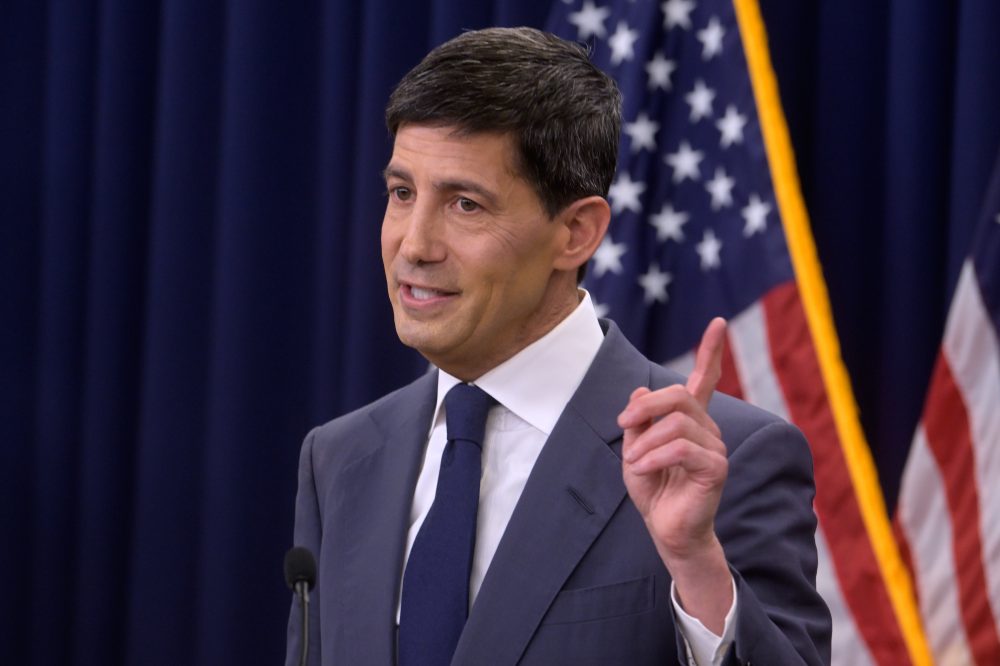
Even before the opening kickoff, controversy was already brewing. U.S. Homeland Security official Markwayne Mullin stated Sunday that Iranian representatives had “tried to get somebody in yesterday” — someone he said had direct connections to Iran’s Revolutionary Guard. Iran’s soccer federation fired back sharply, calling the accusation a flat-out lie.
“The claim that an official representative of the Iranian Football Federation attempted to board a flight to enter the United States yesterday and was prevented from doing so is an outright and undeniable lie,” the federation said in a statement.
Mullin told Fox News that most national teams travel with roughly 120 people, but the U.S. had only cleared 53 individuals from Iran’s delegation. He said those who were denied visas had “direct ties to the IRGC and aren’t their normal traveling group.” The federation responded by calling Mullin’s statements “completely unsupported by any evidence or documentation,” and accused U.S. authorities of trying to hide what it described as discriminatory and unreasonable treatment.
The federation’s pushback reflects a broader complaint Iran has voiced throughout the tournament — that politics keep interfering with soccer. This comes even as U.S. Vice President JD Vance noted there was a chance to “turn over a new leaf” with negotiations underway in Switzerland on an interim deal to end the war. Iran’s players and coaching staff have expressed frustration over being forced to commute to and from Mexico rather than being allowed to train in Tucson, Arizona, and over the exclusion of certain team officials and staff. The federation has indicated it plans to file a complaint with FIFA.
Iranian player Alireza Jahanbakhsh spoke after the match, saying the team is trying to move past the difficult circumstances and is focused on recovering and getting to Seattle for their upcoming match against Egypt. He said he hopes the team can travel there quickly to get settled.
“We don’t ask for much. We just ask for the same procedure as for all the other 47 teams,” Jahanbakhsh said. “Hopefully we can bring everyone who is involved and help us with us.”
At the stadium near Los Angeles, fans draped in green-and-red scarves and sporting stickers and T-shirts had mixed feelings about the team being relocated to train across the border in Mexico. Some felt the situation put Iran at an unfair disadvantage, while others who had traveled to Tijuana to follow the team said they actually enjoyed the rare chance to get closer to the players.
Shamira Ghaemmaghami, 66, from nearby Orange County, said she was cheering for both Iran and Belgium, as she has ties to both countries. She said she respects the right of protesters to speak out but believes sports should bring people together rather than divide them.
“Fighting over these things, sports and politics should not be mixed,” she said. “They worked so hard to get where they are, both sides, actually.”
Outside the venue, several hundred people rallied against Iran’s government. Aside from a few verbal confrontations and the post-match scuffle, the protests were smaller in scale compared to Iran’s first game and had a heavier security presence from the start. Inside the stadium, a number of fans waved the red-and-green flag bearing a golden lion and sun — a symbol that predates Iran’s 1979 Islamic Revolution — which appeared at least as prominent as the current official Iranian flag. They shared the stands with a strong contingent of Belgium supporters in red and yellow, as well as fans wearing jerseys from Argentina, the U.S., Mexico, and other nations.
Gerald Martinez, 66, of Tucson, wore an Iran scarf despite not being Iranian himself. He and his son decided to root for the team after learning it had originally planned to train in their hometown.
“I wish they were all here. I wish they were welcome,” Martinez said, expressing the belief that the team was being put at a disadvantage.
Stefan Arts, 42, who traveled from Antwerp, Belgium, said he has encountered many people of Iranian background who are cheering for Belgium instead of Iran. That sentiment was shared by Arman Sharif, 40, of Los Angeles, who was outside the stadium to protest. Sharif said he views the Iranian players as aligned with the government in Tehran.
“Whoever it is, we’re a fan of the opponents,” Sharif said.