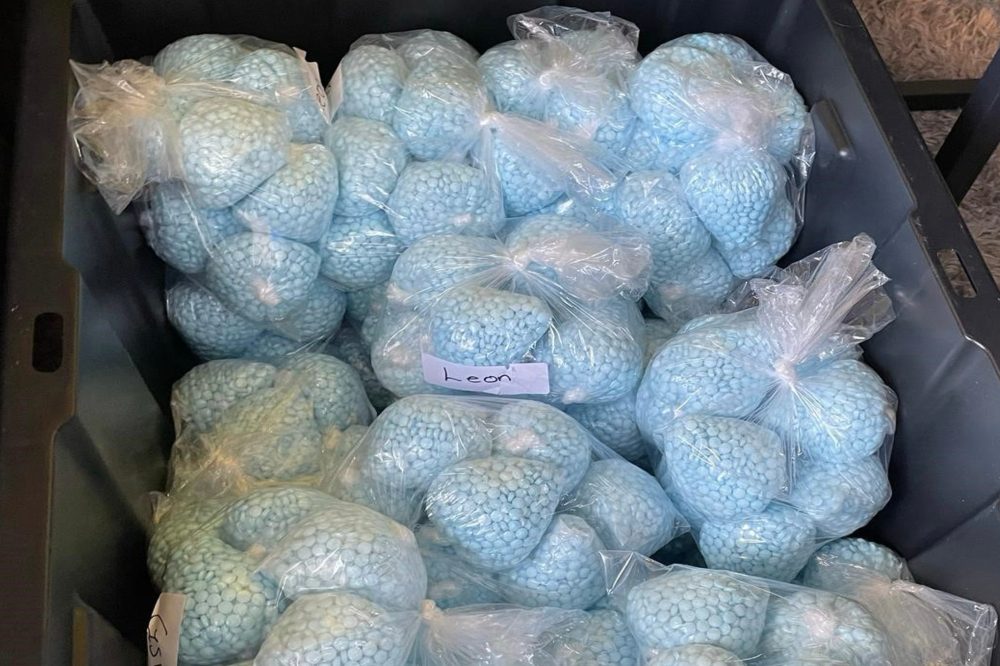

ALBUQUERQUE, N.M. — A new investigation by The Associated Press has shed light on a troubling revelation: the U.S. Drug Enforcement Administration knowingly allowed hundreds of thousands of fentanyl pills to be distributed across New Mexico as part of a strategy aimed at building larger federal criminal cases.
AP journalists Jim Mustian and Joshua Goodman spent months combing through hundreds of internal DEA documents and speaking with current and former agents — including a whistleblower who says the agency took dangerous risks with public safety and broke U.S. Justice Department guidelines regarding the seizure of the deadly synthetic opioid. The White House previously labeled fentanyl a “weapon of mass destruction.”
The investigation began when Goodman discovered a whistleblower complaint alleging that the DEA had let fentanyl reach the streets of New Mexico. The complaint had been sent to the White House in September but went largely unnoticed by the media. Like many government documents, it was heavily blacked out — hiding both the whistleblower’s identity and the quantity of fentanyl that was never seized.
However, there was a small but critical mistake in the redactions. Reporter Mustian noticed that the final letter of the whistleblower’s name — the letter “l” — had been left visible. Using that clue, Mustian reached out on LinkedIn to DEA agents whose names ended in “l” and who had been stationed in Albuquerque. That effort eventually led him to the whistleblower: David Howell. Mustian later flew to New Mexico to meet with him in person.
At the center of the story is fentanyl’s extreme danger. The DEA’s own “One Pill Can Kill” campaign warns that just a tiny amount — roughly enough to fit on the tip of a pencil — can be lethal to an average adult. The fentanyl in question typically comes in counterfeit pills made to look like legitimate prescription painkillers, manufactured by cartels in Mexican labs with unpredictable dosages.
One particularly striking example from the reporting involved a 2023 fentanyl delivery that DEA agents tracked to an Albuquerque mobile home park. Agents had gathered enough intelligence to document that 74,000 pills had been dropped off — yet they chose not to intervene. Howell compared that decision to “providing one fentanyl pill to each person at a football stadium,” noting it came at a time when fatal overdose deaths were at their highest point nationally.
Federal officials pushed back on the criticism. Alex Uballez, who served as the U.S. attorney in Albuquerque at the time, acknowledged that law enforcement does sometimes allow drug shipments to proceed in order to catch a “bigger fish” — a tactic he argued ultimately saves more lives than trying to stop every delivery.
The DEA also defended its conduct. In a written statement, the agency said that “public descriptions suggesting that DEA knowingly permitted fentanyl to reach communities are false and fundamentally mischaracterize the facts.” Spokesperson Amanda Wozniak added in an email that “the investigative decisions at issue were lawful, reasonable under the circumstances and consistent with Department guidance.”
For the reporters, the story underscores a significant gap between what law enforcement agencies do behind closed doors and what the American public is allowed to know — even when it comes to something as serious as the nation’s drug crisis. Federal agents operate with wide latitude and make daily choices that directly affect communities, often without public scrutiny.
The records uncovered in this investigation would not have been released through a standard Freedom of Information Act request. Among the revelations: even as Howell’s complaint raised alarms about fentanyl being allowed to circulate, the Justice Department quietly rewrote its internal — and non-public — rules to give law enforcement even more flexibility in deciding whether to seize the drug.
Howell, who spent 19 years with the DEA, filed a formal whistleblower complaint in late 2023 with the Office of Special Counsel, a federal agency that shields whistleblowers from retaliation. Along with his complaint, he submitted DEA reports, emails, and text messages — including one in which fellow agents discussed a 100,000-pill transaction they witnessed but chose not to stop.
The Office of Special Counsel initially found a “substantial likelihood of wrongdoing” and took the rare step of asking the Justice Department to open an investigation. However, the Justice Department’s Office of Professional Responsibility — essentially the department’s internal affairs division — concluded in 2024 that the DEA and the U.S. attorney’s office had acted reasonably and that their decisions to let drugs go unseized did not pose a “specific danger to public health.”
Howell and others who have raised concerns say that internal review missed the bigger question: whether the DEA permitted enormous quantities of fentanyl to reach the public in the first place.