Delaware students from kindergarten through high school now have a chance to see their artwork displayed in prominent government offices through a new competition announced by Lieutenant Governor Kyle Evans Gay.
The statewide art contest invites young artists to create pieces centered around the theme “Why I love Delaware,” giving students the opportunity to express their favorite aspects of the First State through their creative work.
Winning entries will be featured in Lt. Governor Evans Gay’s offices located in both Dover and Wilmington, providing students with a prestigious platform to showcase their artistic abilities.
The competition is open to all Delaware students in grades K-12, encouraging participation from artists of all skill levels and ages across the state’s public and private schools.
For additional information about the art competition, interested parties can contact Alexis Wrease at [email protected].
RAMALLAH, West Bank — When Palestinian siblings Hajar and Rashid Hathaleen attempted their familiar walk to school this week, they discovered coiled barbed wire blocking their usual route from their neighborhood to the center of Umm al-Khair village.
Video footage shared with The Associated Press by Palestinian residents shows that Israeli settlers erected the barrier during the night. Local Palestinians describe this improvised barrier as another effort by settlers to expand their influence in this section of the occupied West Bank, where government-supported demolitions, fires, and property damage occur frequently, while settler violence—sometimes deadly—rarely faces legal consequences.
The community’s struggles were featured in the 2024 Academy Award-winning documentary “No Other Land,” though the international attention hasn’t reduced the violence or prevented land seizures. Residents claim Israel has leveraged the Iran conflict to strengthen its control over the area, as settler attacks increase and military forces impose new wartime movement limitations for security reasons.
“It was a good chance for settlers to do what they want, with no rules,” said Khalil Hathaleen, who leads the village council and belongs to the extended family that comprises most of Umm al-Khair’s residents. He explained that settlers have taken advantage of the war to claim territory, destroy olive trees, and conduct nighttime raids on neighboring communities.
Similar to Israeli children, Palestinian students remained home until last week’s ceasefire due to the danger of falling missile fragments, which forced school closures.
On Monday and Tuesday, Hajar, Rashid, and their fellow students gathered near Israeli flags, the wire barrier, and recently cut trees while their families and community leaders insisted they be permitted passage. Video evidence shows that on Monday, the children encountered clouds of tear gas and sound grenades thrown by armed individuals in an unmarked white vehicle, including some in military uniforms.
The Israeli military confirmed troops deployed “riot dispersal means” near Carmel, the settlement adjacent to Umm al-Khair. While acknowledging children’s presence, officials stated the unspecified measures targeted adults in the vicinity, not the students. The Har Hevron Regional Council, which governs local settlements in the region, did not respond to inquiries about the fence.
Residents of the Bedouin community and surrounding villages have traveled the 3-kilometer (1.8-mile) route from Khirbet Umm al-Khair neighborhood to the village center for many decades. “We are determined to keep it,” Khalil Hathaleen declared.
This barrier represents another method of limiting Palestinian movement as Israeli settlements expand throughout the occupied West Bank. Palestinians say it follows a familiar sequence where settlers construct fences or claim agricultural land that Palestinians consider theirs, then work to establish this new arrangement with Israeli military support.
According to Hathaleen, Israeli forces occasionally restrain the settlers, but typically they accommodate settler demands. “We are refused a solution,” he stated.
International consensus widely regards the settlements as illegal. Israel considers the territory disputed and maintains its final status depends on future negotiations. These outposts are constructed without Israeli government approval, which sometimes removes them but often ignores them or even provides retroactive legal recognition.
Hathaleen reported that the military’s civil administration department instructed Umm Al-Khair to redirect students along a different path. However, parents explained the alternative route extends roughly twice the distance and poses greater risks, requiring passage near Carmel settlement.
“We have deep concerns as parents and as residents that the (Israeli) occupation and soldiers will attack students,” expressed Al-Mutasim Hathaleen, another parent.
Tuesday saw some students reach school via buses using the alternative route. However, classrooms remained half-vacant and playgrounds stayed empty. Wednesday brought no classes due to Palestinian Authority salary reductions for area teachers. Khalil Hathaleen announced that Thursday, children will attempt their regular route to school again.
Challenging the settlers’ determination carries potential dangers.
Israeli officials and military commanders have recently raised concerns about escalating violence and lawlessness from extremist settlers in the occupied West Bank, where arson attacks and fatal incidents persist. Israeli soldiers and settlers have killed at least 35 Palestinians across the territory in 2026. Settlers have killed eight Palestinians—matching the entire 2025 total.
Following a settler’s killing of a 23-year-old Palestinian man, Israeli rights organization B’Tselem characterized what it termed “daily unbridled violence” as Israeli government policy, observing that many participants serve as army reservists.
“These militias are fully backed by the state of Israel and enjoy complete impunity for killing, assaulting and looting Palestinian residents,” the organization stated.
LONDON — Britain’s national broadcasting service announced Wednesday it will eliminate as many as 2,000 positions during the next two years as part of efforts to reduce spending by 10% of its yearly budget, equivalent to 500 million pounds or $677 million.
The workforce reduction marks the most significant downsizing at the British Broadcasting Corporation in more than ten years, according to company officials who briefed employees during a staff meeting.
“I know this creates real uncertainty, but we wanted to be open about the challenge,” interim Director-General Rhodri Talfan Davies wrote in an email to employees.
Davies explained that rising costs, declining license fee revenues, reduced commercial earnings, and an unstable worldwide economy necessitated the personnel reductions.
Earlier this year, the broadcasting company acknowledged facing “substantial financial pressures” and outlined goals to reduce approximately one-tenth of its budget by 2029. Most of the workforce cuts will occur during the upcoming fiscal year starting April 1, 2027.
The downsizing announcement comes just before former Google executive Matt Brittin assumes the director-general position next month.
Brittin will replace Tim Davie and news chief Deborah Turness, who both stepped down following controversy over misleading editing in a documentary about President Donald Trump’s January 6, 2021 speech before supporters attacked the U.S. Capitol.
Trump has filed a $10 billion defamation lawsuit against the BBC.
The broadcasting organization serves as both a cherished and frequently criticized cultural cornerstone, supported through yearly license fees of 180 pounds ($244) that all U.K. households must pay if they watch live television or any BBC programming.
Critics of the fee system, including competing commercial networks, have become more vocal during the streaming era, as many viewers no longer own traditional television sets or follow conventional viewing schedules.
Britain’s center-left Labour government has promised to provide “sustainable and fair” funding for the BBC, though officials haven’t eliminated the possibility of replacing the license fee structure with alternative financing methods.
Established in 1922 as a radio service with the mission to “inform, educate and entertain,” the BBC now manages 15 national and regional television networks across the U.K., multiple international channels, 10 nationwide radio stations, numerous local radio outlets, the worldwide World Service radio network, and comprehensive digital content including the iPlayer streaming platform.
MILAN (AP) — Italian Prime Minister Giorgia Meloni was once viewed as Europe’s strongest connection to U.S. President Donald Trump. That relationship now appears to be crumbling.
Following his controversial remarks about Pope Leo XIV, Trump has now targeted Meloni, previously among his most supportive European partners, after she denounced his papal comments as “unacceptable” and declined to support the ongoing U.S.-Israel military action against Iran.
“I thought she had courage,” Trump stated during an interview with Italy’s prominent newspaper Corriere della Sera. “I was wrong.”
While Meloni has not issued a direct response to Trump’s criticisms, political observers suggest the confrontation could work in her favor as she navigates recovery from a significant referendum loss last month and attempts to minimize backlash from the widely unpopular Iran conflict, which has contributed to rising energy costs.
“I actually think this is a godsend for her,” explained Nathalie Tocci, a Johns Hopkins SAIS Europe professor and director of the International Affairs Institute. “Trump has become completely toxic across Europe, across much of the world, including Italy.”
Trump escalated his criticism on Wednesday, acknowledging their relationship had deteriorated. “She’s been negative,” Trump informed Fox News. “Anybody that turned us down to helping with this Iran situation, we do not have the same relationship.”
As the sole European Union leader who received an invitation to Trump’s second inauguration, Meloni was positioned to capitalize on her strong connections with him following his return to power 15 months ago. The two leaders appeared naturally aligned, sharing nationalist philosophies and similarly tough positions on immigration issues.
However, Italy has not escaped the impact of Trump’s trade policies, and critics question what benefits she has gained from the relationship. When asked about recent communication between them, Trump informed Corriere, “No, not in a long time.”
Following an awkward Oval Office meeting a year ago where she sidestepped direct confrontation with Trump regarding tariffs, tensions have escalated over the Iran military campaign. Meloni has declared Italy will not join the conflict, and the nation recently denied U.S. military aircraft permission to utilize a crucial Sicilian air base.
Meloni’s recent statement describing Trump’s papal criticism as “unacceptable” represents her most direct public rebuke of the president to date.
“It’s been building up over time, not so much because she is moving away from him but because he has become increasingly unhinged,” Tocci observed.
Adolfo Urso, a cabinet minister from Meloni’s far-right Brothers of Italy party, insisted the dispute would not undermine U.S.-Italy relations.
“Italy and the United States are allied countries and maintain their relationship and alliance within international institutions, starting obviously with the Atlantic Alliance,” he stated on Radio 24, noting that religious moral guidance “cannot crack relationships consecrated in alliances signed a few decades ago.”
Mariangela Zappia, who leads the ISPI think tank and previously served as Italian ambassador to the United States, attributed Trump’s “hot-blooded” response to broader frustrations with Europe beyond just Italy. Apart from lacking support for the Iran campaign, Trump recently lost a key ally when Viktor Orbán suffered an electoral defeat in Hungary’s weekend elections.
Nevertheless, she emphasized that Trump’s personal attacks on Meloni should not be interpreted as undermining the broader alliance.
“Europe absolutely considers the United States its historic ally, but in some way wants to be involved in the decisions that are taken,” Zappia noted.
Trump, meanwhile, is discovering “this European Union is not easy to dismantle,” she added. “We are different, we react differently. Some are clearly anti-Trump, some are pro-Trump but in the end, destroying the European project, separating us on the things on which we see as our future, that is very difficult.”
Meloni has worked to rebuild support following her referendum defeat, which effectively became a test of her leadership capabilities. She conducted a rapid two-day visit to three Gulf nations to secure Italy’s energy supplies amid a deepening crisis, though she returned without concrete agreements.
On Tuesday, she announced Italy would not automatically extend a defense pact with Israel, following an incident where warning shots struck an Italian convoy participating in U.N. peacekeeping operations in southern Lebanon—a decision analysts view as politically motivated rather than strategically significant.
“The Gulf tour was a way to show public opinion that she was being proactive. The fact it didn’t actually lead to anything is beside the point,” Tocci explained. The Israel decision “substantively is rather meaningless because there is not much in this agreement but symbolically it helps because Israel has become just so unpopular in Italian public opinion.”
Despite her damage control efforts following the referendum loss, Roberto D’Alimonte, a professor at the LUISS school of government, anticipates a challenging final year and a half of her term before 2027 elections, primarily due to economic consequences from the Iran conflict.
“People want to see their gas bills go down, not just see Meloni talk about gas. What matters are the bills you get every month,” he concluded.
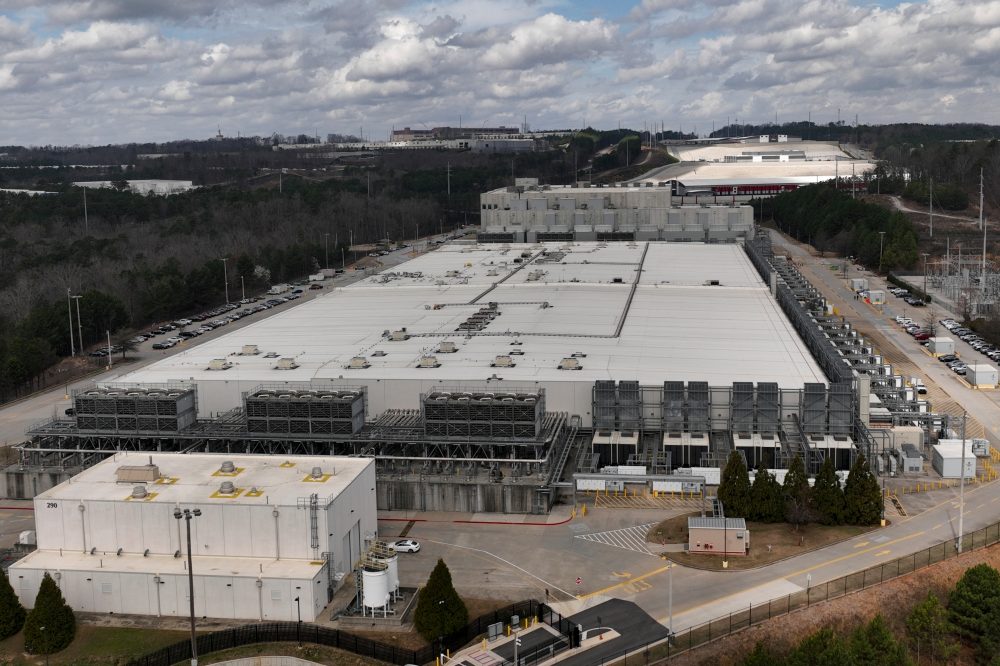
PORTLAND, Maine — Lawmakers in Maine have approved groundbreaking legislation that would establish the country’s first statewide ban on large-scale data centers, reflecting mounting concerns about these facilities’ impact on electrical grids and utility rates.
The bill emerged after several proposed data center projects sparked fierce community opposition in the state, despite Maine not being a major target for the massive computer facilities that support artificial intelligence operations. State legislators in the Democratic-controlled statehouse voted Tuesday to send the measure to Governor Janet Mills, a Democrat currently seeking a U.S. Senate seat.
This development represents a significant escalation in grassroots resistance to data center construction, with opposition now reaching state-level politics. While the Trump administration and numerous governors champion these facilities as economic drivers crucial for competing with China in artificial intelligence development, local communities continue voicing alarm over their massive power consumption. Energy experts have also cautioned about potential blackouts in the mid-Atlantic power grid in upcoming years.
Although similar moratorium proposals have surfaced in at least twelve states, Maine’s legislation marks the first to successfully navigate through a state legislature.
The proposed law would halt construction of data centers exceeding specific size thresholds for over a year while establishing a specialized committee to assist municipalities in evaluating future proposals. Governor Mills has not indicated her position on signing the legislation.
“It’s not that there’s no place for data centers in Maine,” said Democratic Rep. Melanie Sachs, who sponsored the measure. “Frankly, the tradeoffs have not been shown to be of benefit to our ratepayers, water usage or community benefit in terms of economic activity.”
Industry representatives warn that Maine’s moratorium could have lasting consequences for various sectors, even though the state hasn’t been a primary destination for hyperscale data center development.
“It says that the state is willing to essentially put a blanket ban on you if it decides that you may be politically unfavorable,” said Dan Diorio of the Data Center Coalition, a trade association that includes tech companies and developers.
Industry advocates argue the moratorium could discourage data center investment in Maine while depriving the state of significant economic development opportunities that typically attract additional industries. They also contend that local construction workers and trade unions would miss chances to develop specialized skills needed for these projects, potentially putting Maine at a disadvantage compared to other states.
“We think that these data centers could bring good jobs, good opportunities to these regions,” said Montana Towers, a policy analyst with the free market Maine Policy Institute. “And a lot of these concerns about them are luddite in nature.”
However, multiple Maine communities have expressed frustration over limited transparency surrounding potential data center developments. According to Joe Oliva, a spokesperson for the Maine Broadband Coalition supporting the moratorium, the legislation primarily aims to ensure community involvement in the planning process.
“If this is going to come, we want to be in early and often on the conversation,” Oliva said.
Community resistance has intensified since last summer, becoming a major challenge for data center developers as numerous local governments have rejected proposals during planning and zoning meetings filled with concerned residents.
Several U.S. counties and municipalities have enacted their own moratoriums, while legislative proposals have emerged in states with active development like Virginia, Michigan, and Wisconsin.
Some measures failed to advance, including one in Georgia, a major data center hub. Other states have pursued alternative approaches to regulate these facilities through stricter water and energy usage requirements, enhanced transparency measures, and stronger protections for ratepayers and communities.
In Ohio, residents are attempting to circumvent the legislature by placing a November ballot measure that would permanently prohibit hyperscale data centers. The initiative requires gathering over 400,000 voter signatures by July 1, representing perhaps the most restrictive proposal under consideration.
Public officials, developers and other interests could otherwise “make this state a virtually unbroken field of data centers,” said Austin Baurichter, a Cincinnati-area lawyer who is helping organize the effort.
South Dakota’s legislature rejected a similar one-year moratorium after opposition from power plant operators and data center developers. The governor also opposed the measure, arguing that such planning decisions belong at the local level and that statewide restrictions prevent municipalities that welcome data centers from pursuing them.
The bill’s sponsor, Republican Sen. Taffy Howard, told fellow senators that “citizens are asking for this” while characterizing opponents as lobbyists, “billion-dollar corporations” and government officials.
“Are you going to listen to the people or the paid lobbyists?” she asked.
SAN JUAN, Puerto Rico (AP) — Close to 200 organizations are pushing the Trump administration and Puerto Rico’s governor to bring back $350 million in federal money originally designated to fund rooftop solar panels and battery storage for 12,000 low-income households throughout the territory.
Numerous families among those affected have disabilities or health conditions requiring constant power. Worries are mounting that the federal government will leave these residents behind as ongoing electrical outages continue and Atlantic hurricane season approaches.
“For them in particular, whether they get a (solar) system or not is something that is really life or death,” Charlotte Gossett Navarro, Puerto Rico chief director for the Hispanic Federation, said in a phone interview.
The advocacy organization joined others in signing a letter made public Wednesday addressed to Puerto Rico Gov. Jenniffer González and U.S. Energy Secretary Chris Wright.
The Hispanic Federation represents one of seven groups that were slated to assist with solar panel installations and provide educational support to families. Several of these organizations are now formally challenging the funding cancellation or in discussions with the U.S. Department of Energy.
González has stated her administration “had no choice” since federal officials determined Puerto Rico would not receive those funds, which are now expected to go toward the island’s failing electrical infrastructure, devastated by Hurricane Maria in 2017 but already in poor condition due to insufficient investment and upkeep.
Solar system installation remains financially out of reach for many on the island of approximately 3.2 million residents, where poverty affects more than 40% of the population.
Gossett Navarro indicated they have received no responses to outstanding questions regarding the funding as a May 9 deadline looms, signaling the end of a program that never began for some participants.
Installation teams had already completed solar setups for over 6,000 homes through the initiative, but an additional 12,000 families now face uncertainty.
Yvette Rodríguez, 61, who requires a sleep apnea device, and her spouse, Luis Soler, a 67-year-old veteran and double amputee who depends on an electric adjustable bed, are among those waiting.
“There’s a big need for those solar panels,” said Rodríguez, who lives on the small Puerto Rican island of Culebra with her husband, who needs air conditioning because he has heart problems and lives in a region where heat warnings are common.
She expressed frustration that frequent power failures force them to discard spoiled food.
“We’re affected economically in a big way because we have to spend what little money we have so that we can eat,” she said.
The federal funding reduction also impacts María Pérez, 80, and her 88-year-old spouse. She suffers from high blood pressure and cardiac issues that have resulted in multiple hospital stays. She also requires refrigerated eye drops for cataracts.
“I put them on ice, but it’s not the same,” she said. “They have us suffering with that money that they took away from us. It’s not fair.”
Pérez receives $364 monthly through Social Security, but like many Puerto Ricans, her electricity bill often equals that amount.
Gabriela Joglar Burrowes, executive director of Puerto Rico’s Statewide Independent Living Council, also signed the letter to González and Wright.
She explained that solar panels would have delivered not only reliable electricity but also mental comfort.
“If you’re a person who depends on equipment like a ventilator, a dialysis machine or medicine that requires refrigeration, the lack of consistent energy represents a risk that could lead to even death,” she said.
Joglar Burrowes, who lives with a disability, emphasized that thousands of families had waited extensively for the solar installations and deserve consideration. “It seems like sometimes we’re disposable, and we’re not,” she said.
Some of the 12,000 households have completed initial qualification reviews, while others have already undergone home assessments or begun roof repairs in anticipation of solar installation.
The majority of families reside in remote areas, including mountainous communities such as Adjuntas, Jayuya and Orocovis.
“It’s even more concerning,” said Gossett Navarro. “It’s hard to get out of the mountains when there’s a disaster.”
The U.S. Department of Energy indicates on its website that some residents will receive systems, but agency representatives have not specified who will qualify or provided timeline details.
The golf world is buzzing with rumors about LIV Golf’s future after reports surfaced that league leadership was called to an urgent meeting in New York City on Wednesday.
Sources are suggesting a major announcement could be coming, with some claiming the Saudi-funded golf league might be facing serious financial troubles.
Golf reporter Ryan French, who runs the Monday Q Info account on X with nearly 200,000 followers, shared what he’s been hearing from contacts within the industry.
“I have some pretty good sources and I’ve heard that some other people have sources that LIV is shutting down,” French stated.
Golf Channel’s Brandel Chamblee also weighed in, forecasting the demise of the tour that began operations in 2022 and attracted high-profile PGA Tour players like Dustin Johnson, Bryson DeChambeau and Phil Mickelson with massive contracts.
“Given that the product was so ill-conceived and ended up being worse than anyone could have imagined,” Chamblee wrote on X. “With shotgun starts, initially 54 holes, a team concept that was nothing but laughable and tournaments that meant and continue to mean nothing, and such a paltry number of viewers, losing billions along the way — would it surprise anyone if the Saudis came to their corrupted senses and finally euthanized the whole lame-brained tour.”
However, other sources are pushing back against claims of financial difficulties within the organization.
The Flushing It Golf account on X offered a different perspective, stating: “I’ve spoken directly to multiple people within LIV Golf who all say they have had no issue with being paid. Future venues are proceeding as normal, with no indication that anything will change. And players are getting ready to tee it up in today’s pro am, fully expecting LIV Golf Mexico City to go ahead as planned.”
The Mexico City tournament is scheduled to start Thursday, with nine more events planned for the remainder of the 2026 season.
President Donald Trump shared what appears to be an artificially created image on his Truth Social platform Wednesday showing Jesus Christ embracing him, as his administration’s dispute with the Pope continues to intensify.
The digital image depicts Trump with his eyes shut, positioned temple-to-temple with Jesus in a similar pose. Trump appears behind a microphone with an American flag visible in the background. The original posting included text stating: “I was never a very religious man .. but doesn’t it seem, with all these satanic, demonic, child sacrificing monsters being exposed … that God might be playing his Trump card!”
When Trump shared the image, he included his own message: “The Radical Left Lunatics might not like this, but I think it is quite nice!!!”
The social media post comes amid an ongoing dispute between Trump and Pope Leo, who became the Catholic Church’s first American-born leader and has spoken critically about the military conflict that started with combined U.S.-Israeli attacks on Iran.
Trump renewed his criticism of the pontiff Tuesday evening, writing on Truth Social that “someone please tell Pope Leo” about Iranian forces killing demonstrators and declaring that “for Iran to have a Nuclear Bomb is absolutely unacceptable.”
Vice President JD Vance also weighed in Tuesday during remarks at the University of Georgia, challenging the Pope’s statement that Christ’s followers are “never on the side of those who once wielded the sword and today drop bombs.” Vance argued that “it’s very, very important for the pope to be careful when he talks about matters of theology.”
Pope Leo has responded defiantly to Trump’s previous criticisms, stating he has “no fear” of the current administration and will continue speaking out. During a strong speech Monday in Algiers, the Pope condemned “neocolonial” global powers for breaking international law, though he didn’t name specific nations.
Religious voters, particularly Christians, represent a significant portion of Trump’s political support base. Despite not regularly attending church services, Trump secured overwhelming support from Christian voters, including Catholics, during the 2024 election.
Federal health regulators announced Wednesday they will assemble an independent advisory committee this July to determine whether specialty compounding pharmacies should regain permission to produce more than half a dozen peptide compounds that have surged in popularity.
These substances are composed of short amino acid chains that serve as protein building blocks and carry out vital functions throughout the human body.
The compounds being reconsidered were part of a group of 14 products that federal regulators prohibited compounding pharmacies from creating in 2023 during the Biden presidency, pointing to concerns about immune reactions, toxic effects, and contamination issues.
Health officials have maintained that insufficient human testing exists for most of these substances, potentially creating health hazards for users.
Even without comprehensive safety and efficacy research, these compounds have become extremely popular among social media wellness personalities, who frequently endorse them online for healing injuries, reducing inflammation, and losing weight.
The fitness world has also embraced these substances recently, boosted partly by the widespread success of peptide-derived GLP-1 medications for weight management like semaglutide and tirzepatide.
This regulatory reconsideration comes after public endorsement from Health Secretary Robert F. Kennedy Jr., who recently stated on the Joe Rogan podcast that he is a “big fan of peptides” and has used them himself with “really good effect.”
During the July 23 session, committee members will evaluate whether manufacturers should produce BPC-157 for ulcerative colitis treatment, KPV for healing wounds and inflammatory conditions, TB-500 for wound repair, and MOTS-c for obesity and osteoporosis management.
The following day’s July 24 meeting will focus on emideltide for treating opioid withdrawal, chronic sleep disorders, and narcolepsy, semax for brain blood flow issues, migraines, and certain chronic pain conditions, and epitalon for sleep problems.
Stock values for popular retail trading platforms Robinhood and Webull climbed significantly on Wednesday following federal regulatory approval of new day-trading rules that benefit smaller investors.
The Securities and Exchange Commission gave the green light Tuesday evening to a Financial Industry Regulatory Authority proposal that eliminates restrictions previously limiting accounts with less than $25,000 to just three trades during any five-day period.
This regulatory change will reduce obstacles for everyday investors, enabling them to execute unlimited daily trades under updated margin requirement guidelines.
Anthony Denier, who serves as group president and U.S. CEO at Webull, commented on the development: “The shift in intraday margin rules represents a meaningful evolution in how active traders can participate in the markets.”
Individual retail investors have become an increasingly significant market presence in recent years, driven by the introduction of zero-commission trading and easy-to-use mobile applications that have opened stock market participation to younger generations.
Under the regulatory overhaul, current day-trading margin rules will be substituted with updated intraday margin standards.
When these new guidelines take effect, individual investors will gain the ability to execute trades continuously throughout market hours without needing to maintain the previous $25,000 account minimum.
The updated margin criteria will mandate that customers maintain sufficient equity in their margin accounts to cover their current market risk exposure.
Supporters of this regulatory modification had advocated for scrapping the $25,000 minimum balance rule, contending it gave unfair advantages to wealthy investors while creating unnecessary obstacles for those with smaller portfolios.
Financial industry experts characterized this development as significantly beneficial for retail brokerage firms and expect it to generate increased trading activity moving forward.
Northland analyst Mike Grondahl explained the business impact: “Long story short, more day trading equates to more orders per user per day which is a direct benefit to revenue generation.”
He added: “This new ruling should also boost engagement and retention as day traders typically log in more, trade more frequently, and are stickier than standard users.”
The updated system will become operational following FINRA’s publication of the final regulatory framework.
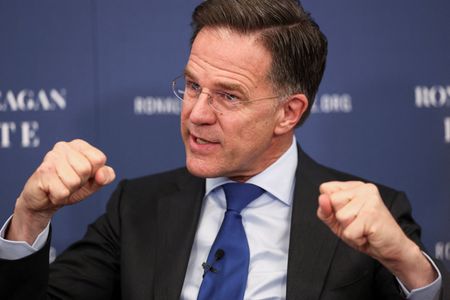
NATO Secretary General Mark Rutte voiced confidence Wednesday that the military alliance will secure defense funding for Ukraine by year’s end, despite ongoing challenges with member nations sharing the financial load equally.
Speaking to reporters after a Ukraine Defence Contact Group meeting in Berlin, Rutte acknowledged the uneven distribution of contributions among NATO members.
“I’m optimistic,” Rutte stated, while noting that “a limited number of countries are doing the heavy lifting — but we are seeing change for the better.”
The NATO chief emphasized the critical importance of maintaining Ukraine’s military capabilities, saying “We have to make sure Ukraine has what it needs to stay in the fight. So there is broad agreement on that on both sides of the Atlantic.”
Rutte’s comments came as NATO works to implement the Prioritised Ukraine Requirements List (PURL) mechanism, designed to coordinate and fund defense assistance to Ukraine as it continues its conflict with Russia.
A traffic incident has resulted in the closure of the right lane on southbound Route 141 where traffic merges from Newport Gap Pike, according to Delaware Department of Transportation officials.
The lane restriction is currently in effect as crews respond to the incident. Drivers traveling through the area should anticipate possible delays and may want to seek alternative routes if possible.
DelDOT has not provided additional details about the nature of the incident or an estimated time for the lane to reopen. Motorists are advised to exercise caution when driving through the work zone.
Federal and state environmental agencies have classified the properties at 317-325 Lake Street as contaminated sites requiring specialized cleanup. The U.S. Environmental Protection Agency and Maryland Department of the Environment have officially recognized these parcels as brownfields – locations where future development faces obstacles due to existing or suspected hazardous materials, pollutants, or contaminants. Environmental testing revealed petroleum contamination affecting both soil and groundwater at the Lake Street location. The main pollutant of concern involves Total Petroleum Hydrocarbons (TPH), which pose serious health risks including cancer, brain and nervous system damage, breathing problems, and reproductive complications. Federal authorities awarded Salisbury $1,791,543.00 to clean up both properties according to EPA requirements.
Property Background
These adjacent lots at 317 and 325 Lake Street operated as a major fuel storage complex featuring fifteen above-ground tanks of different capacities plus two buried storage tanks from the late 1930s through the mid-1980s. The site sat empty until 1990, when 317 Lake Street reopened as a used oil processing operation. A major environmental incident occurred in 1990 when an above-ground tank leaked roughly 12,000 gallons of heavy fuel oil, with approximately 4,000 gallons flowing directly into the Wicomico River. Operations ceased again in 1992 and remained dormant until 2008. The property owner removed all above-ground storage tanks in 2008. Salisbury acquired both parcels in 2020 and tore down all existing structures to foundation level in 2023. Following a comprehensive review of cleanup methods, officials selected a soil capping approach combined with clean soil overlay. The remediation plan involves digging out two feet of polluted soil, installing a two-foot protective soil barrier, and adding eight inches of uncontaminated soil suitable for vegetation.
Community Input Session
Salisbury’s Department of Infrastructure and Development invites residents to attend a public forum to discuss the Lake Street cleanup project progress and share feedback.
Session Information:
Thursday, April 23rd, 2026 from 5:30pm to 7:30pm Government Office Building 125 N. Division Street Room #306 Salisbury, MD 21801
Motorists traveling on Ingleside Road should expect delays due to ongoing lane restrictions between South Dillwyn Road and Stafford Avenue.
Delaware Department of Transportation officials report that intermittent lane closures are currently affecting traffic flow in the area. The temporary restrictions are expected to continue through 6 PM today.
Drivers are advised to seek alternate routes when possible or allow extra travel time when passing through the construction zone.
LIMA, Peru — Two candidates with connections to controversial former leaders have taken the top spots in Peru’s presidential election as vote counting stretched into its fourth consecutive day Wednesday.
Keiko Fujimori, whose father is a former president now in disgrace, holds the lead with conservative Roberto Sánchez, a nationalist legislator and ex-government minister, running second as election officials work through ballot tallies.
Voting had to be extended through Monday because ballots failed to reach polling locations on time.
Official tallies from 90% of ballots cast show Fujimori capturing 16.95% of votes, with Sánchez securing 11.99%. Ultra-conservative Rafael López Aliaga, Lima’s former mayor, follows closely behind in third with 11.94%.
Widespread logistical problems prevented thousands of citizens both domestically and internationally from casting their votes. Election authorities responded by permitting over 52,000 Lima residents to vote Monday. The voting extension, declared after Sunday evening’s count had already begun, also applied to Peruvian voters in Orlando, Florida, and Paterson, New Jersey.
Since no candidate can claim victory without securing more than half of all votes, the top two vote-getters will compete in a runoff scheduled for June 7.
The eventual victor will become Peru’s ninth leader in a decade, taking over from José María Balcázar, who assumed the interim presidency in February. Balcázar succeeded another temporary leader who was removed due to corruption charges after serving just four months.
Making her fourth attempt at the presidency, Fujimori has campaigned on reducing criminal activity while simultaneously supporting legislation that legal experts claim hampers criminal prosecutions. Her party has backed measures eliminating pre-trial detention in specific circumstances and increasing requirements for confiscating criminal proceeds.
Should she win, Fujimori plans to make criminal case judges anonymous and require inmates to work for their meals.
Sánchez previously served as foreign trade minister under Castillo and has vowed to use presidential pardoning authority to free his former boss if elected. Throughout his campaign, he has frequently donned a traditional wide-brimmed Andean hat given to him by Pedro Castillo, his political mentor who is currently imprisoned.
The delayed counting process echoes Peru’s 2021 presidential contest, which required five full days after polling ended to complete final vote tallies.
ANN ARBOR, Mich. — The University of Michigan’s president-elect announced Wednesday that he must withdraw from the position due to a brain cancer diagnosis.
Kent Syverud, who currently serves as Syracuse University’s chancellor, revealed he learned of his condition following health concerns that arose last week.
“I am currently undergoing treatment at the University of Michigan. … I am aware that I am one of many, many people who face a diagnosis like this — people who show up each day with courage,” Syverud stated. “I take inspiration from all of them.”
The university selected Syverud for the presidency in January, with his tenure scheduled to begin in May.
Domenico Grasso, who has been serving as Michigan’s interim president, will continue in that role as the Board of Regents conducts a new search for permanent leadership.
Rather than assuming the presidency, Syverud will join Michigan’s law school faculty and provide advisory support to the Board of Regents, according to university officials.
The position became available after Santa Ono served as president through 2025, when he was expected to transition to leading the University of Florida. However, that appointment fell through when Florida’s Board of Governors rejected his candidacy in a 10-6 vote last June.
Conservative critics had opposed Ono’s appointment, citing his previous advocacy for diversity, equity and inclusion initiatives and other programs they considered problematic liberal policies.
On April 15, Sudan marked a grim milestone as its devastating civil war entered its fourth year, creating what United Nations officials describe as the planet’s most severe humanitarian disaster, even as global attention remains focused elsewhere.
THE WARRING FACTIONS
The conflict involves Sudan’s national military, commanded by General Abdel Fattah al-Burhan, battling against the Rapid Support Forces paramilitary organization under General Mohamed Hamdan Dagalo’s leadership.
These two commanders previously collaborated in 2019 to remove longtime dictator Omar al-Bashir from power, with Burhan subsequently assuming leadership of the country. However, after executing a military takeover that disrupted Sudan’s struggling democratic transition, the generals became adversaries over disagreements regarding new transition plans and military integration.
When hostilities began on April 15, 2023, the conflict rapidly expanded to include numerous local militia groups supporting both sides, along with international actors.
According to UN investigators, US congressional members, and Sudan’s military, the United Arab Emirates has supplied crucial assistance to the RSF through neighboring countries, though the Gulf nation rejects these allegations.
Sudan’s army receives backing from various regional nations including Egypt, Turkey, Saudi Arabia, and Qatar in different capacities.
CURRENT BATTLEFIELD SITUATION
The RSF established firm control over the expansive Darfur region last year, their traditional stronghold in Sudan’s western territory, and promptly began establishing an alternative government structure. The military retains authority over the country’s eastern regions.
Combat currently focuses on the central Kordofan region, along with a recently opened RSF offensive near Sudan’s southeastern border with Ethiopia.
Unmanned aircraft operations have replaced ground battles as the dominant warfare method, enabling the RSF to counter the army’s former aerial superiority. Similar to the artillery strikes and bombardments that characterized earlier conflict phases, drone attacks have increased civilian casualties, killing at least 700 non-combatants this year according to UN data.
CIVILIAN SUFFERING
The warfare has created catastrophic consequences for Sudan’s population, with UN estimates indicating nearly three-quarters require emergency assistance.
Starvation conditions or famine risks have been declared throughout battle zones nationwide, frequently worsened by supply blockades and administrative obstacles imposed by fighting factions.
Illnesses such as dengue fever have spread rapidly as Sudan’s medical infrastructure has collapsed across many regions.
During the war, the RSF has conducted systematic ethnic killings that UN investigators later characterized as displaying genocide characteristics, with recent incidents occurring in North Darfur’s al-Fashir.
Ongoing violence and insufficient funding have prevented accurate death toll calculations. Sudan’s health ministry reported to Reuters documenting 11,209 fatalities across most Sudanese states, though experts believe total excess deaths since fighting started number in the hundreds of thousands.
Despite enormous needs, the UN’s 2026 Sudan aid request has received only 17% of required funding, coinciding with reduced US foreign assistance, European donor budget cuts, and Gulf nations prioritizing direct bilateral aid.
Relief organizations report reducing services while Sudanese community support networks, including the Nobel Peace Prize-nominated Emergency Response Rooms, attempt to address gaps.
However, Islamic Relief released research this week revealing over 40% of local community kitchens operated by these organizations have closed due to inadequate support.
PEACE EFFORTS
Although the conflict has gained attention from international leaders, including US President Donald Trump, few resolution attempts have demonstrated success, with competing regional interests hampering diplomatic efforts.
The United States has coordinated a partnership including Egypt, Saudi Arabia, and the United Arab Emirates, which presented initial ceasefire proposals to both parties last year.
As battlefield conditions have evolved, both the army and RSF have alternately accepted and rejected mediation attempts, with no reduction in fighting anticipated.
The United Nations human rights office has voiced serious alarm about the prosecution of Chinese artist Gao Zhen, who gained recognition for creating satirical sculptures depicting former Chinese leader Mao Zedong.
According to the UN human rights office, Gao faced trial in late March on charges of “slandering national heroes and martyrs” under legislation that was enacted more than ten years after he produced his controversial satirical artwork.
“The case against him raises concerns with regard to retroactive application of criminal law and use of criminal sanctions to punish artistic expression, undermining the principle of legality,” the office said in a statement.
Chinese officials in Geneva have not yet provided a response to requests for comment on the matter.
Gao, who was arrested in 2024 while visiting from the United States, could receive up to three years behind bars, according to his spouse Zhao Yaliang and Shane Yi, who works as a researcher with the Chinese Human Rights Defenders organization based outside China.
The UN rights office has demanded Gao’s immediate freedom from custody, where he remains while awaiting a decision following his private trial that wrapped up on March 30. Officials cited worries about his declining health condition.
The single-day proceedings occurred at Sanhe City People’s Court in Hebei province, which borders the capital city of Beijing, and concluded without announcing a decision, Zhao and Yi reported to news outlets, based on information received from his legal representatives.
In cases like this, final decisions are typically made public several months after trial proceedings end.
Energy research company Rystad Energy released findings Monday showing that reconstruction of war-damaged energy infrastructure throughout the Middle East region may require as much as $58 billion in funding.
The Norwegian-based firm’s latest analysis represents a dramatic jump from their earlier $25 billion assessment released three weeks prior, indicating more extensive destruction than initially calculated following the April 8 ceasefire agreement between the United States and Iran.
Oil and gas installations are expected to account for approximately $50 billion of the total reconstruction bill, according to the research.
“Repair work does not create new capacity. It redirects existing capacity, and that redirection will be felt in project delays and into inflation far beyond the Middle East,” stated Karan Satwani, a senior analyst with Rystad.
Satwani emphasized the broader implications, noting: “The $58 billion bill is the headline, but the knock-on effects on energy investment timelines globally may prove just as significant.”
The energy consultancy predicts actual reconstruction spending will likely settle around $46 billion, with refining operations and petrochemical plants representing the largest portion due to their sophisticated nature and severity of destruction sustained.
Additional infrastructure including industrial facilities, electrical generation plants, and water desalination systems could contribute another $3 billion to $8 billion in repair expenses, the study indicated.
Recovery schedules are beginning to vary significantly between different facilities and nations, highlighting disparities in local rebuilding capabilities and supply chain accessibility, Rystad researchers noted.
Iran confronts the most extensive damage across its territory, with reconstruction expenses potentially totaling $19 billion for gas processing plants, refineries and export terminals.
Meanwhile, Qatar’s damage is more localized but presents greater technical challenges, especially at the Ras Laffan industrial complex, where repair efforts may interfere with existing liquefied natural gas expansion work.
Engineering services and construction activities will represent the majority of expenditures, though equipment procurement delays will likely determine how quickly facilities return to operation, according to the analysis.
The research firm identified obtaining necessary equipment and skilled workers as the primary obstacles facing reconstruction efforts.
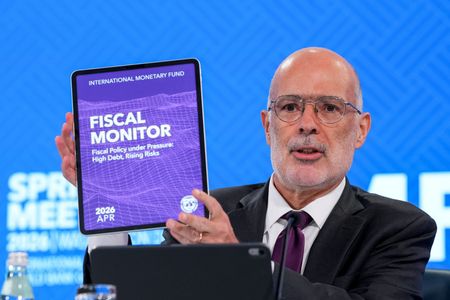
WASHINGTON – Middle East warfare is placing additional pressure on an already strained worldwide financial landscape, as elevated interest rates and climbing energy costs prompt developing nations to seek economic assistance, according to a Wednesday report from the International Monetary Fund’s latest Fiscal Monitor.
Rodrigo Valdes, who recently took over as the IMF’s fiscal affairs director, advised nations to avoid implementing fuel subsidies to assist citizens with oil shortages and corresponding energy price increases. He recommended targeted, short-term direct cash payments that allow higher prices to remain visible and prevent artificially inflated demand.
“We don’t have oil. We don’t have energy. Energy needs to be more expensive for everybody, so that the adjustment happens and we consume less,” Valdes explained during a Reuters interview.
On Tuesday, the IMF reduced its economic growth projections due to conflict-related energy price jumps and supply chain interruptions, warning that the worldwide economy could face recession if hostilities expand and oil remains above $100 per barrel until 2027.
“You can pass through (higher energy prices) and then you can do other things to help,” Valdes explained. “It’s a global shock and if countries suppress the price signal, the global price will be higher … It’s very important to give price signals so demand can adjust.”
Era Dabla-Norris, serving as deputy fiscal affairs director, noted during a press briefing that governmental responses have shown more restraint compared to the energy price crisis following Russia’s 2022 Ukraine invasion.
“Countries are not necessarily coming out in full force with huge packages,” Dabla-Norris stated. “In an environment … where fiscal space is much more constrained and governments are facing many different trade-offs, not just in the near term, but also over the medium term, choosing a sort of more disciplined way of cushioning the impact is what we are advocating.”
Valdes explained that export restriction implementations, energy infrastructure damage levels, and other nations’ abilities to increase oil production will shape the conflict’s consequences and necessary policy responses.
After current pressures subside, he emphasized the importance of nations maintaining focus on longer-term fiscal challenges as public debt continues growing due to expanded permanent spending on social programs or decreased tax revenues, especially among major economies.
The IMF’s recommendation was straightforward: “Rebuild fiscal buffers once conditions stabilize and do so without delay.”
Worldwide government debt hit 93.9% of gross domestic product in 2025, climbing nearly two percentage points from the previous year’s 92%, and projections show it reaching 100% of GDP by 2029, one year sooner than previously anticipated, the IMF’s latest Fiscal Monitor revealed.
This would represent the heaviest government debt load since World War Two’s aftermath, the report indicated. Government debt is projected to continue rising and could reach 102.3% of GDP by 2031. Under the IMF’s worst-case economic scenario, it could hit 121% of GDP within three years, Valdes warned.
Interest payments have also climbed dramatically, reaching nearly 3% of GDP in 2025, compared to 2% four years earlier, the IMF reported.
Valdes highlighted emerging concerns, including debt market restructuring that expands roles for investors like hedge funds, whom he described as “less firm hands to hold debt for the long run.” Debt duration has also shortened, meaning short-term interest rates affect debt dynamics more rapidly.
Additional challenges include increased security expenses, energy and climate transition costs, and growing interest payments while revenues haven’t maintained pace, the IMF noted in an accompanying blog post.
Trade and financial fragmentation could further weaken growth and increase borrowing costs, while political instability may undermine reforms and tax collection. Sudden market changes, including artificial intelligence stock fluctuations, could rapidly tighten financial conditions.
Valdes stressed that countries must begin fiscal consolidation efforts once immediate crises are resolved.
“There are some countries that are taking this seriously but in many others we don’t see yet a plan that is spelled out,” he said, noting that even nations with existing plans require additional work.
“We’re not at a crisis point … but the more you delay the measures, the steeper will be the effort that you need, and the higher the risk of having a disorderly consolidation later.”
Delaware officials have rolled out a new digital mapping system that pinpoints dozens of census areas potentially eligible for the state’s next phase of Opportunity Zone designations.
The Delaware Division of Small Business recently introduced the interactive tool, which identifies 61 specific census tracts throughout the First State that could qualify for nomination in the upcoming round of Opportunity Zone selections.
Users can navigate the mapping platform to view currently designated opportunity zones alongside a specialized overlay feature that distinguishes between rural and urban census tracts meeting eligibility criteria for future consideration.
The web-based tool provides residents, businesses, and investors with a comprehensive view of both existing economic development zones and areas that may soon join the program designed to encourage investment in underserved communities.
President Trump announced that direct negotiations between the United States and Iran may restart in Pakistan within the coming 48 hours, marking a potential second round of peace discussions between the two nations.
The announcement comes amid heightened tensions as the Trump administration has simultaneously implemented a comprehensive naval blockade targeting all of Iran’s ports.
The diplomatic development suggests ongoing efforts to resolve conflicts through dialogue even as military pressure continues to be applied in the region.
Defense contractor Leidos Holdings announced Wednesday it will separate its security and automation divisions to create a new partnership with security imaging company Analogic Corporation.
Analogic, which is owned by investment firm Altaris, specializes in magnetic resonance imaging technology and airport baggage screening systems.
The arrangement will see Leidos transfer its security enterprise solutions, ports and borders, and industrial automation divisions to the new entity. These operations include approximately 1,500 workers and are projected to generate $625 million in revenue by 2026.
According to Leidos, the merger is designed to speed up development of security technologies and promote advancement toward artificial intelligence-based and three-dimensional imaging systems.
The Virginia-based defense contractor will maintain a 41.5% ownership interest in the combined company when the transaction completes. The new entity will continue operating under the Analogic name as a private company with current CEO Tom Ripp remaining in charge.
“This transaction expands our product portfolio and sales channels, enabling us to support global customers across the full lifecycle of security screening,” Ripp said in a separate release.
The companies expect to finalize the deal during the second half of 2026.
International staffing firm Robert Walters experienced its smallest quarterly revenue decline in almost three years, suggesting the challenging hiring market may be starting to turn around.
The London-based recruitment company announced Wednesday that first-quarter net fee income dropped just 2% to 65.2 million pounds ($88.39 million) for the period ending March 31. This marks a significant improvement after experiencing double-digit percentage drops for 11 straight quarters spanning nearly three years.
Company stock jumped 4% following the announcement, as investors welcomed signs of stabilization in key markets despite ongoing challenges in European regions, particularly France and the Netherlands.
Chief Executive Toby Fowlston highlighted emerging positive trends in several geographic areas during an interview, specifically mentioning the United States, Britain, and Spain as bright spots.
“I think what quarter one is showing us – and again, it is early days – that perhaps there is more confidence returning in some of our markets now in the permanent sector,” Fowlston stated.
The company’s largest market, Japan, returned to positive growth during the quarter, providing a significant boost to overall performance. Robert Walters generates 42% of its annual revenue from the Asia Pacific region, giving it a different market exposure than many competitors.
This geographic diversity appears to be paying dividends compared to rivals focused more heavily on European markets. Competitor PageGroup issued warnings Tuesday about an increasingly uncertain business environment for the remainder of the year, citing conflicts in the Middle East along with economic weakness in Germany and France.
Robert Walters downplayed concerns about Middle Eastern tensions affecting its business, noting that region represents only 2% of its total portfolio, limiting potential impact from ongoing conflicts involving Iran.
Financial analysts at Panmure Liberum described the quarterly update as encouraging, particularly noting the company’s continued focus on managing costs during the difficult hiring environment.
The recruitment firm specializes in placing professionals in finance, accounting, and corporate positions across multiple industries. Fowlston observed that greater confidence among job candidates is beginning to drive increased hiring activity, as workers who remained in their positions during the COVID-19 pandemic are now more willing to explore new opportunities.
Robert Walters maintained its guidance projections through 2026 unchanged following the quarterly results.
Industry watchers will get additional perspective Thursday when larger competitor Hays releases its third-quarter business update.
A veteran law enforcement officer with nearly three decades of service is being celebrated by the Salisbury, Maryland Police Department. Colonel Howard Scott Drewer will be honored on April 13, 2026, marking his extensive career in public safety.
Drewer’s journey in law enforcement began in Crisfield before he joined the United States Army and eventually rose through the ranks to become Assistant Chief of Police in Salisbury. Throughout his career spanning almost 28 years, he has been recognized for his dedication to community-oriented policing and his role as a mentor to fellow officers.
The veteran officer’s achievements include multiple awards and recognition, completion of advanced training at the FBI National Academy, and a commitment to ongoing professional development. His work has focused on building stronger relationships between law enforcement and the communities they serve.
Officials describe Drewer’s career as exemplifying the values of honor, bravery, and steadfast dedication to both his community and country. His influence on the Salisbury Police Department and the broader community is expected to have a lasting effect even after his departure.
The police department is inviting the public to join them in recognizing Colonel Drewer’s remarkable service and expressing gratitude for his years of commitment to public safety.
Salisbury’s Department of Waterworks Utilities Division has scheduled sewer line maintenance work for Wednesday, April 15, that will require shutting down a section of Camden Avenue to vehicle traffic.
The repair work will focus on fixing a damaged sewer lateral located in the 800 block of Camden Avenue, which city officials say is part of their continuing initiative to upgrade and maintain the municipality’s wastewater infrastructure.
Motorists will need to find alternate routes as Camden Avenue will be blocked to through traffic from Middle Boulevard to Pennsylvania Avenue while crews complete the underground repairs. City workers anticipate finishing the project by around 4:30 p.m., assuming no unexpected complications arise.
Utility locating services and Central Alarm systems have received advance notice of the planned work.
City officials are asking for community understanding as crews perform this essential infrastructure maintenance.
Shoppers seeking a compact luxury SUV often find themselves choosing between two standout models: the Audi Q5 and BMW X3. Both vehicles deliver practical dimensions, upscale interiors, and an accessible entry point into luxury SUV ownership. Last year brought comprehensive redesigns to both models, with the BMW receiving dramatic styling changes both inside and outside, while Audi focused primarily on upgrading the Q5’s interior technology features.
Automotive experts at Edmunds recently conducted a detailed comparison to determine which vehicle delivers superior value. Their analysis examined performance specifications, comfort levels, technology offerings, and pricing structures across both standard models.
Under the hood, both SUVs feature turbocharged 2.0-liter four-cylinder engines as standard equipment. Audi holds a slight power advantage with 268 horsepower versus BMW’s 255 horsepower output. However, real-world driving performance proves nearly identical between the two vehicles, with both providing adequate acceleration for highway merging and passing maneuvers.
Fuel efficiency creates a clear distinction between the competitors. The Q5 achieves an EPA-estimated 24 miles per gallon in combined driving conditions, while the X3 30 xDrive delivers significantly better economy at 29 mpg combined.
Ride quality remains comfortable in both vehicles, though each maintains the firm, controlled feel typical of German engineering. BMW’s M Sport package can enhance handling characteristics while potentially compromising ride smoothness. The Q5 Prestige trim level includes air suspension technology that provides the smoothest ride experience while allowing adjustable ride height.
Interior space favors the Audi, particularly for rear passengers who benefit from additional legroom and reclining seatbacks – a feature unavailable in the BMW’s fixed rear seats. Both vehicles earned praise for supportive front seats with extensive adjustment capabilities.
Storage capacity appears to favor the BMW on paper, but testing revealed similar real-world cargo capacity between both models. The Q5’s sliding rear seats can create additional cargo space when needed, though this reduces passenger legroom.
Technology systems in both vehicles center around large touchscreen displays that integrate climate control functions, requiring multiple steps for adjustments that previously used simple buttons. Despite this complexity, experts found both systems highly capable and user-friendly.
Connectivity features match closely between the models, with both offering wireless device charging, USB-C ports throughout the cabin, and wireless smartphone integration. Standard navigation systems and digital instrument clusters complete the technology packages.
Safety assistance features overlap significantly, including collision warning, automatic emergency braking, lane keeping assistance, and blind-spot monitoring. The Q5 includes adaptive cruise control as standard equipment, while BMW charges extra for this feature. However, the X3 offers hands-free driving assistance for low-speed traffic situations up to 40 mph, which Audi doesn’t currently provide.
Pricing initially favors the BMW at $52,650 compared to the Q5’s $54,095 base price, including delivery charges. However, the Audi includes several features that require additional cost in the BMW, such as all-wheel drive, panoramic sunroof, leather seating, adaptive cruise control, and smartphone key functionality.
The comparison concludes with nearly identical overall ratings, though the X3 edges ahead slightly in expert scoring. Buyers prioritizing comfort should consider the Q5, while those seeking maximum value may prefer the BMW’s feature-per-dollar ratio.
Delaware’s fire departments will soon have access to enhanced equipment through a newly relaunched state program aimed at bolstering emergency response resources across the First State.
The Delaware Forest Service’s Wildland Fire Program has announced the restart of its Federal Firefighter Property Program, an equipment assistance effort that connects local fire departments with surplus military resources. The program operates through collaborative agreements with both the U.S. Department of Defense and the U.S. Department of Agriculture Forest Service.
This initiative represents a significant opportunity for Delaware’s fire departments to strengthen their operational capabilities by accessing federal surplus equipment that would otherwise be costly to obtain through traditional procurement methods.
The program’s relaunch comes as fire departments statewide continue to face budget constraints while maintaining their commitment to protecting Delaware communities. By providing access to surplus military equipment, the initiative offers a cost-effective solution for departments seeking to upgrade their emergency response capabilities.
Fire departments interested in participating in the Federal Firefighter Property Program can expect to work directly with the Delaware Forest Service to identify available equipment that matches their specific operational needs.
BUDAPEST, Hungary (AP) — Opposition leader Péter Magyar announced Wednesday that Hungary’s president has confirmed his new administration could assume control during the opening week of May, marking a swift transition that would conclude Viktor Orbán’s 16-year tenure as Prime Minister.
After Magyar’s center-right Tisza party secured an overwhelming two-thirds parliamentary majority in Sunday’s electoral contest, the opposition leader has advocated for an expedited power transfer. Hungarian legislation mandates that the new parliament’s opening session, which will select the next prime minister, must convene by May 12th.
After a closed-door discussion with President Tamás Sulyok on Wednesday, Magyar addressed media outside Budapest’s presidential palace, stating that Sulyok confirmed Magyar would receive the presidential nomination for prime minister, with the inaugural session likely scheduled for May 6th or 7th.
“(The president) thinks, and I think everyone thinks, that it’s in the interests of the Hungarian nation that after such an overwhelming mandate from the voters, a change in government and a change of regime should happen as quickly as possible,” Magyar said.
Magyar has pledged to implement sweeping reforms across Hungary’s governmental framework, including establishing independent ministries for health, environmental protection and education that were absent during Orbán’s administration.
During his first broadcast appearance on Hungary’s state television in nearly two years Wednesday morning, Magyar announced his incoming government would halt the network’s news operations — which has operated as Orbán’s Fidesz party propaganda outlet for years — until establishing “conditions are established that are independent, objective, and impartial.”
“One of the key elements of our program is that this factory of lies will come to end once the Tisza government is formed,” he told the host.
Magyar has urged Orbán’s administration to function solely in a caretaker capacity during its remaining weeks, avoiding decisions that might jeopardize Hungary’s national interests or obstruct the incoming government’s agenda.
He revealed asking the president, who was chosen by Orbán’s parliamentary majority, to step down following the new government’s formation, with Sulyok indicating he would “consider” the request.
“I repeated to him that he is unworthy of embodying the unity of the Hungarian nation, and unfit to be the guardian of the law,” Magyar said, adding that if Sulyok does not resign, his new government will make constitutional changes to remove him “along with all the other puppets that the Orbán system has installed.”
With Tisza achieving a supermajority controlling two-thirds of parliamentary seats, the incoming government will possess authority to modify the constitution and reverse numerous Orbán-era policies.
A devastating super typhoon wreaked havoc across US Pacific territories, overturning vehicles and destroying rooftops while leaving thousands without electricity. Remarkably, officials report no fatalities despite the storm’s tremendous destructive power.
Emergency officials have begun evaluating the extensive destruction caused by Super Typhoon Sinlaku, which struck the Northern Mariana Islands on Tuesday evening local time and continued battering the region with powerful winds and heavy rainfall throughout Wednesday.
Electrical service remained down and numerous roadways became blocked throughout Saipan, the largest island in the Mariana chain and a US territory housing approximately 43,000 residents, local authorities confirmed.
Guam, home to multiple American military installations and another US territory, also experienced significant impact from the storm’s tropical-force winds.
According to the National Weather Service, this typhoon represents 2024’s most powerful tropical cyclone globally, bringing sustained winds reaching 150 mph when it struck the islands.
As the massive storm moved northward away from Saipan, Tinian and Rota late Wednesday evening, it maintained winds of 125 mph, meteorologists reported. Forecasters predict Sinlaku will curve toward the sparsely inhabited volcanic islands in the northern Marianas region.
“It was still very windy and rainy roughly 24 hours after the typhoon rattled the islands, but much better than the previous night,” stated Jaden Sanchez, who speaks for the Saipan mayor’s office.
“Preliminary reports include a lot of flooding, uprooted trees and downed power lines, but no deaths,” Sanchez explained.
Photographs from Saipan revealed residential areas covered in wreckage and twisted trees. The fierce winds demolished metal stadium seating at an athletic facility.
Local resident Dong Min Lee captured footage showing one automobile stacked atop two others in his apartment complex parking area. The storm winds also damaged portions of his balcony guardrail.
Emergency shelter operations by the American Red Cross and partner organizations housed more than 1,000 people throughout Guam and the Northern Marianas, according to agency representative Stephanie Fox.
Virginia Farm Bureau has released an educational video showcasing the fascinating transformation of fresh goat milk into handcrafted soap products.
The video demonstration walks viewers through the complete process, highlighting how farmers take raw goat milk and convert it into artisanal soap through traditional methods.
This educational content illustrates the value-added opportunities available to agricultural producers, showing how basic farm products can be transformed into specialty items with higher market value.
The presentation emphasizes the connection between livestock farming and artisanal product creation, demonstrating one way farmers can diversify their operations and income streams.
CHARLOTTE, N.C. — Following Charlotte’s thrilling 127-126 playoff victory over Miami on Tuesday night, Hornets guard LaMelo Ball’s excitement reached unusual heights when he struck team mascot Hugo twice in the head during postgame celebrations.
The dramatic finish saw Ball redeem himself after making two crucial errors in overtime by sinking a driving layup with just 4.7 seconds remaining. Charlotte secured the victory when Miles Bridges rejected Davion Mitchell’s final shot attempt as the buzzer sounded, triggering jubilant celebrations that marked the franchise’s first home playoff victory in ten years.
While Ball was spotted flexing at midcourt following his clutch basket, local station WBTV captured footage of the euphoric player throwing two punches at Hugo’s oversized head before wrapping teammate Coby White in an enthusiastic embrace.
The mascot simply moved away from the situation.
“We drew up a good play, I feel like. Just orchestrated it and it worked,” Ball commented.
Media members didn’t question Ball about the mascot incident during postgame interviews, as the footage hadn’t yet emerged during the chaotic aftermath of a contest where Ball also tripped Miami’s Bam Adebayo, causing a lower back injury that ended the star center’s night.
“The crowd was amazing,” Ball remarked about the capacity audience. “Everyone who came out today was real loud, so it was a good crowd.”
Charlotte forced overtime when White connected on a difficult corner three-pointer with 10.8 seconds left in regulation, while Miami’s Tyler Herro misfired on a potential game-winner.
The Hornets let a five-point overtime advantage slip away due to Ball’s pair of costly mistakes.
Following Herro’s corner three-pointer, Ball committed a turnover at midcourt before fouling Herro during another three-point attempt. Herro converted all three free throws for a 126-125 Miami advantage, creating the stage for Ball’s heroics on the subsequent inbound play.
“We just stayed together throughout it all, it was an up-and-down game. But that’s what the play-in is about,” Bridges explained. “We did a great job executing on offense, LaMelo did a great job getting a layup, and then we executed on defense on the other end.”
Ball remained the focal point throughout the evening.
He seemed to sweep Adebayo’s leg during the second quarter, sending the Miami big man crashing to the floor. Officials didn’t assess a foul, and Adebayo never returned after logging only 11 minutes.
Miami head coach Erik Spoelstra later stated Ball deserved ejection for the play.
Whether Ball faces league discipline for his involvement in the Adebayo situation remains uncertain.
Ball offered an apology postgame, explaining he felt disoriented after taking a blow to the head moments earlier while driving to the basket.
The ninth-seeded Hornets advance to Friday night’s matchup against whichever team loses Wednesday’s contest between Orlando and Philadelphia.
BEIRUT — For the first time in decades, Lebanon and Israel have commenced face-to-face diplomatic discussions this week, triggered by the recent conflict between Israel and Hezbollah, the Iranian-supported militant organization based in Lebanon. The negotiations have generated both optimism and criticism from various quarters.
Government representatives have worked to manage public expectations regarding potential outcomes from these discussions, yet the mere occurrence of such talks marks a notable diplomatic development.
The relationship between these two nations has remained tense and frequently antagonistic since Israel’s establishment in 1948. Similar to most Arab nations, Lebanon maintains no official diplomatic ties with Israel, and Lebanese legislation from 1955 prohibits its citizens from engaging with Israelis, though enforcement of this statute varies.
The current diplomatic initiative stems from events that began March 2, when Hezbollah launched missiles across the Israeli border two days after the U.S. and Israel initiated military action against Iran. Israel retaliated with extensive aerial bombardments and a ground offensive.
Lebanon’s present administration, which assumed office in early 2025 with a reform agenda including the disarmament of non-governmental military groups, expressed frustration with Hezbollah’s decision to join the conflict. The government subsequently outlawed the organization’s armed activities, expelled Iran’s ambassador, and prohibited the Iranian Revolutionary Guard from operating in the country.
President Joseph Aoun proposed face-to-face negotiations with Israel in return for ending hostilities. Initially, neither Israel nor the United States responded to this offer. French President Emmanuel Macron supported Aoun’s initiative, but these appeals were also ignored.
The situation shifted following the announcement of a ceasefire between Iran and the United States, facilitated by Pakistan.
Iran insisted that any permanent ceasefire must encompass Lebanon as well. While Pakistan indicated this was part of the arrangement, Israel rejected Lebanon’s inclusion in the ceasefire agreement, with Washington subsequently taking the same position.
The Lebanese government expressed concerns about being used as leverage in Iranian negotiations and sought to establish a separate diplomatic channel for addressing the Lebanese conflict.
Hezbollah and its allies argued that given Lebanon’s vulnerable position, Beirut should depend on Tehran’s negotiating power rather than engaging directly with Israel during active hostilities. The organization criticized the government for providing “free concessions” to an adversarial nation.
Following Israel’s execution of more than 100 airstrikes across Lebanon, including attacks in central Beirut’s most populated districts that resulted in over 350 deaths, Prime Minister Benjamin Netanyahu announced on April 8 his agreement to direct discussions with Lebanon.
The formal negotiations began Tuesday when Lebanon and Israel’s U.S. ambassadors conducted an in-person preparatory session in Washington.
Both nations are approaching these discussions with vastly different perspectives, leading many Lebanese to worry that Beirut lacks sufficient bargaining power.
Lebanon seeks to follow the Pakistan talks model, establishing a truce before pursuing permanent ceasefire negotiations. Israel has rejected any ceasefire proposal, although it has suspended attacks on Beirut since last Wednesday following Washington’s request.
Beyond seeking a ceasefire, Lebanon demands Israeli military withdrawal from southern Lebanon, release of Lebanese detainees in Israeli custody, return of displaced populations, and reconstruction assistance. Lebanon has also advocated for increased international military funding to enable deployment throughout the country and establish complete territorial sovereignty.
Israel has characterized these discussions as peace negotiations primarily centered on dismantling Hezbollah. Israeli Ambassador to the U.S. Yechiel Leiter praised what he described as shared views on eliminating Hezbollah’s influence from Lebanon, expressing encouragement from a “wonderful exchange.”
Lebanese Ambassador Nada Hamadeh Mouawad described the meeting as “constructive” in a written press statement.
During Tuesday’s Washington meeting — a procedural session focused on logistics rather than substantive issues — the Lebanese and Israeli ambassadors sat across from each other while Secretary of State Marco Rubio and other U.S. officials positioned themselves between the parties. The session concluded without achieving a ceasefire. Both delegations confirmed that formal negotiations would continue without specifying a timeline.
“This is a process, not an event,” Rubio stated. “This is more than just one day. This will take time.”
Historical diplomatic efforts between these countries have frequently stalled or produced agreements that were never completely executed or subsequently canceled.
Indirect negotiations in 1949 produced a non-aggression agreement that lasted until 1967, when Israel withdrew from all previous armistice agreements following the six-day war with multiple Arab nations.
During Lebanon’s civil war in 1982, after Israel’s invasion targeting the Palestinian Liberation Organization, Lebanon’s government engaged in direct talks with Israel. The countries signed an agreement in May 1983 requiring Lebanese recognition of Israel, Israeli withdrawal from Lebanon, and establishment of a southern Lebanon security zone.
Internal conflicts and civil war escalation caused the agreement to collapse, with the Lebanese government formally canceling it one year later.
In 1993, Lebanon joined several Arab countries in direct peace negotiations with Israel preceding the Oslo peace agreement between Israel and the Palestinians. The Lebanese negotiations did not continue beyond that point.
Following U.S.-mediated indirect negotiations in 2022, Israel and Lebanon reached agreement on their disputed maritime boundary as a step toward resolving land border disputes. The agreement was promoted as reducing armed conflict risks.
However, after the October 7, 2023 Hamas-led attack in southern Israel triggered the Gaza war, Hezbollah began cross-border missile attacks as a “support front” for Palestinians. The resulting low-intensity conflict escalated into full-scale war in September 2024.
Lebanon pursued indirect negotiations with Israel for a ceasefire in that conflict, again with Washington’s mediation. The resulting agreement, which included Hezbollah disarmament measures and Israeli withdrawal from southern Lebanon, was never fully implemented. Lebanon now seeks to return to that agreement’s terms.
ABOARD THE PAPAL PLANE (AP) — During his flight to Cameroon on Wednesday, Pope Leo XIV reinforced his commitment to promoting peace and dialogue, even as President Donald Trump’s public attacks against the pontiff persist without pause.
Speaking with reporters while traveling as part of his ongoing African tour, Leo XIV emphasized that his message of harmony represents what “the world needs to hear today.” The pope refrained from directly addressing Trump’s most recent social media attacks or Vice President JD Vance’s warning that the pontiff should “be careful” when discussing theological matters.
Rather than taking questions from the press, Leo XIV concentrated on discussing his recent stop in Algeria and the teachings of St. Augustine of Hippo, who serves as both the foundation of his religious order and his personal spiritual guide.
However, the pope’s remarks appeared to acknowledge the Trump administration’s disapproval of his appeals for peace regarding the U.S.-Israeli conflict with Iran.
Throughout this week, Trump has launched multiple attacks against the first pontiff born in the United States, claiming Leo XIV lacks strength on criminal justice issues, serves leftist interests, and owes his papal position to Trump’s influence. The president also briefly shared, then removed, an artificially generated image depicting himself in a Christ-like manner, which drew widespread criticism from supporters and opponents alike.
In his latest overnight social media activity, Trump responded with “Not good!!!” to a post highlighting Leo XIV’s pre-papal criticisms of the former president. Trump also wrote: “Will someone please tell Pope Leo that Iran has killed at least 42,000 innocent, completely unarmed, protesters in the last two months, and that for Iran to have a Nuclear Bomb is absolutely unacceptable.”
Leo XIV highlighted his Tuesday visit to Annaba, historically known as Hippo, where St. Augustine served as bishop for over three decades and established himself as a major theological and philosophical figure in early Christianity.
“His writings, his teaching, his spirituality, his invitation to search for God and to search for truth is something that is very much needed today, a message that is very real for all of us today as believers in Jesus Christ, but for all people,” Leo XIV stated.
Through his pilgrimage to Hippo, the pope explained his intention to present both the church and global community with St. Augustine’s vision of pursuing “unity among all peoples and respect for all people in spite of the differences.”
Leo XIV noted that while Algeria’s population is predominantly Muslim, its people still revere St. Augustine as “one of the great sons of their land.” He described this perspective as instrumental in creating connections between Christian and Muslim communities while encouraging meaningful dialogue.
The pope also referenced his time at Algiers’ Great Mosque, where he participated in quiet prayer.
“I think the visit to the mosque was significant to say that although we have different beliefs, we have different ways of worshiping, we have different ways of living, we can live together in peace,” he explained.
“And so I think that to promote that kind of image is something which the world needs to hear today.”
The conflict between Trump and Leo XIV began after the pope criticized warfare and declared that God does not support those who use bombs. Leo XIV also described Trump’s promise to destroy Iranian civilization as “truly unacceptable.”
President Donald Trump has issued a fresh warning that he will dismiss Jerome Powell should the Federal Reserve Chairman choose to remain on the central bank’s board following the expiration of his leadership role next month.
During a Wednesday Fox Business interview, Trump responded “Well then I’ll have to fire him, OK?” when asked about Powell’s stated intention to stay with the Fed despite an ongoing Justice Department probe into a $2.5 billion headquarters renovation project.
The president has spent months seeking Powell’s removal from the Fed’s top position, criticizing him for moving too slowly on interest rate reductions that could stimulate economic growth. Powell maintains the investigation serves as a cover to compromise the Federal Reserve’s autonomy in monetary policy decisions.
While Powell’s role as Fed chairman concludes on May 15, his position as a board member continues through January 2028.
This week, federal prosecutors conducted a surprise inspection at the Federal Reserve headquarters construction site that sits at the center of their investigation, according to sources with knowledge of the visit. On Tuesday, two prosecutors and an investigator from U.S. Attorney Jeanine Pirro’s office were denied access by construction workers and directed to contact Fed legal representatives, said one source who requested anonymity due to the sensitive nature of the ongoing probe.
During a private court session last month, a senior official from Pirro’s office acknowledged they have uncovered no criminal wrongdoing in their examination of the headquarters project.
The investigation has drawn criticism from both political parties in Congress and has stalled Senate confirmation proceedings for Kevin Warsh, Trump’s nominee to replace Powell. Republican Senator Thom Tillis of North Carolina has pledged to oppose all Fed nominations until the investigation concludes.
Virginia’s strawberry farming community is facing a significant agricultural challenge as they work to combat the spread of Neo-P disease threatening their crops.
The disease outbreak has prompted local growers to implement various defensive strategies to protect their strawberry harvests and maintain their agricultural operations.
Farming experts and agricultural specialists are closely monitoring the situation as producers work to address this emerging threat to one of the region’s important crop varieties.
The agricultural community continues to develop and share best practices for managing this disease challenge while working to minimize its impact on local strawberry production.
ALBANY, N.Y. — When New York legislators established bold environmental targets in 2017, they proclaimed their commitment to protecting future generations from climate change. Today, with minimal advancement and shifting political winds, Governor Kathy Hochul wants to postpone those deadlines, claiming her priority is protecting residents from financial hardship.
The situation has “radically changed,” Hochul explained, referring to the period since 2019 when New York committed to cutting greenhouse gas emissions by 40% before 2030.
The governor has suggested extending the state’s compliance timeline by several years, arguing that implementing the scheduled pollution fees would result in devastating energy costs for families.
“I cannot in good conscience — knowing the moms and dads and the seniors and the families that are struggling, paying their bills now — I cannot do something I know at this very moment that’s going to raise those prices,” Hochul stated during a recent public event.
As Hochul campaigns for reelection, she joins other Democratic officials attempting to reconcile their party’s historic commitment to environmental policies with current political pressure to prioritize affordability initiatives.
Multiple states throughout the Northeast are reconsidering their environmental objectives, while others examine reducing additional utility bill charges that support energy efficiency initiatives.
These policy reversals have concerned environmental advocates, who characterize them as lacking long-term vision. They emphasize that other states, including California, have maintained their dedication to comparable programs aimed at reducing fossil fuel dependency.
“She’s looking to, ultimately, keep New Yorkers on gas longer when it’s the very fuel that’s causing their bills to rise,” Liz Moran from environmental organization Earthjustice commented regarding Hochul’s proposals.
Hochul maintains she remains committed to addressing climate change. However, she and fellow Democrats argue that reductions in environmental funding during President Donald Trump’s tenure increased the expense of achieving state climate objectives. The Republican president has opposed certain renewable energy initiatives, especially offshore wind projects, which his administration has attempted to halt.
Data from Lawrence Berkeley National Laboratory reveals that average residential electricity costs nationwide increased 27% between 2019 and 2024, with California and northeastern states experiencing the steepest rises. Experts attribute these increases to various factors, including growing demand from data centers and natural gas pricing, which frequently powers electricity generation.
Energy expenses became central issues in recent gubernatorial campaigns won by Democrats in New Jersey and Virginia. These concerns intensified after conflicts involving Iran drove gasoline prices higher.
Rhode Island Governor Dan McKee has suggested extending a 2033 target for achieving complete renewable energy to 2050, as part of his strategy to reduce energy expenses by $1 billion across five years.
Connecticut reduced its renewable energy target for 2030 from 40% to 29% last year. Democratic Governor Ned Lamont declared then that “electric bills are too damn high.”
Massachusetts and New Jersey are considering reducing utility bill surcharges that finance efficiency programs.
“It is hard to talk about climate at times, because everyone is very laser-focused on affordability and customer bills,” explained Kyle Murray, Massachusetts program director for the Acadia Center. “So climate, while still important, is getting kind of pushed aside, unfortunately.”
New York planned to reduce emissions through a “cap-and-invest” program, where polluting companies purchase emission permits and the funds support clean technology and renewable energy development.
California relies on cap-and-invest to meet objectives including cutting greenhouse gas emissions to 40% below 1990 levels by 2030. The state has used program revenues to fund billions in public transportation and clean vehicle incentives.
The program adds 24 cents per gallon at California gas stations and slightly increases utility bills, though the state provides regular “climate credits” to customers, noted Kyle Meng, UC Santa Barbara economics associate professor.
“When you make things more expensive, people conserve. It’s like Econ 101 and that’s the basic idea behind a cap-and-trade program,” Meng explained.
New York officials failed to meet a 2024 deadline for creating regulations governing their cap-and-invest system. Without these guidelines, the program never began. Environmental groups successfully challenged the state in court over the missed deadline, which Hochul has cited in requesting the delay.
The governor’s current proposal, being reviewed by legislative leadership, would allow the state until 2030 to develop regulations and establish new emission targets for 2040.
Hochul warns that maintaining current deadlines will burden consumers financially. Her administration projects that launching a cap-and-invest system immediately could cost some households over $4,000 annually.
Environmental supporters argue the governor is calculating costs for an “extreme” scenario and that her analysis overlooks benefits of encouraging polluters to abandon fossil fuels.
They reference Washington state, where voters decisively chose to maintain their cap-and-invest program in 2024.
“The sky has not fallen,” said Caitlin Krenn from Washington Conservation Action, “and the program is working as intended.”
Bruce Blakeman, a Republican county executive challenging Hochul in the upcoming election, stated he would eliminate the state’s environmental plan entirely if elected.
“Delaying the pain won’t make it disappear — it just leaves bigger bills down the road,” Blakeman said in a statement.
WASHINGTON – Confidence among America’s homebuilders has plummeted to its lowest level in seven months, according to new data released Wednesday. The decline comes as the ongoing conflict with Iran continues to drive up construction material prices and mortgage rates while creating broader economic uncertainty.
The National Association of Home Builders/Wells Fargo Housing Market Index fell four points to reach 34 this month – the weakest reading since September 2025. The index has now remained below the critical 50-point threshold for two full years. Industry analysts had predicted a smaller decline to 37.
“The year started with hopes for housing momentum growth, but risks with respect to the Iran war, energy costs, and declines for consumer confidence have slowed the market,” said NAHB Chairman Bill Owens.
The U.S.-Israel conflict with Iran has caused mortgage rates to climb after they had dropped considerably early this year due to expanded mortgage-backed securities purchases by government-sponsored entities Freddie Mac and Fannie Mae. Since mortgage rates typically follow U.S. Treasury yields, the Middle East tensions have sparked inflation concerns that pushed rates higher.
Federal data released last week revealed that monthly consumer prices rose by the largest margin in nearly four years during March. Consumer confidence also crashed to historic lows in April.
The benchmark 30-year fixed mortgage rate stood at 5.98% in late February just before the war began. By early April, it had surged to 6.46% and averaged 6.37% last week, according to Freddie Mac statistics. This decline in builder sentiment follows recent reports showing existing home sales dropped to a nine-month low in March.
NAHB chief economist Robert Dietz noted that 62% of builders have experienced suppliers raising building material prices due to increased fuel costs for gas and diesel. International oil prices have climbed more than 35% since the conflict started.
“Energy costs make up approximately 4% of residential construction material input and service costs,” said Dietz. “With near-term economic risks elevated, 70% of builders reported challenges pricing homes given uncertainty about material costs.”
These fuel-related cost pressures come on top of President Donald Trump’s broad tariffs on imported construction materials and appliances. Builders also face higher labor expenses as the Trump administration’s mass deportation efforts have reduced the available workforce.
As expenses mount, builders are reducing customer incentives. The percentage of builders cutting prices slightly decreased to 36% from 37% in March. Average price reductions fell to 5% from 6% the previous month. Sales incentive usage dropped to 60% from 64% in March.
The survey’s measurement of current sales conditions declined four points to 37, while future sales expectations fell seven points to 42. Prospective buyer traffic decreased three points to 22.
Two major pizza chains familiar to Delaware families are moving closer to changing hands as both companies face mounting financial pressures from increased competition and rising food costs.
Papa John’s International and Pizza Hut, which is currently owned by Yum Brands, are in serious discussions with potential buyers who could take both companies private, according to five industry insiders with knowledge of the negotiations.
The talks would remove both pizza brands from public stock trading, allowing new management to restructure their operations without the pressure of quarterly financial reporting requirements.
Papa John’s stock has tumbled 28% in the past six months, closing at approximately $34.99 per share on Tuesday. However, the company received a $47 per share buyout proposal in March from Irth Capital, a Qatari-backed investment firm supported by Brookfield Asset Management, according to two sources briefed on the offer.
Irth Capital has spent the last month conducting detailed financial reviews of Papa John’s operations while negotiating a potential purchase. Some industry watchers believe a deal could be finalized by May 7, when Papa John’s reports its quarterly earnings, though sources warn nothing is guaranteed.
Pizza Hut’s parent company Yum Brands has established another deadline this week for interested buyers to submit their final bids, according to three people involved in those discussions.
Several private equity companies are competing for Pizza Hut, including Sycamore Partners, Apollo Global Management, and LongRange Capital. Yum Brands may select a preferred bidder for exclusive negotiations following this week’s submission deadline.
However, sources caution that bidders might not submit offers this week, and Yum Brands could retain ownership or spin off the chain if the proposed prices fall short of expectations.
When contacted for comment, representatives from Yum Brands, Papa John’s, Irth, Apollo, and Sycamore declined to respond. LongRange Capital did not return requests for comment.
The acquisition interest comes as restaurant companies nationwide grapple with cost-conscious consumers and higher ingredient prices due to ongoing food inflation over the past year.
Several smaller restaurant chains have already left public trading in 2025, including Denny’s, which sold for $620 million, and Potbelly, purchased by convenience store chain RaceTrac for $566 million. California Pizza Kitchen was acquired by private investors in December.
“Public quick service restaurant stocks are under pressure as softer consumer demand collides with persistent structural cost headwinds,” explained Will Auchincloss, Americas retail sector leader at EY-Parthenon. “Traffic has weakened as consumers pull back, and at the same time brands are navigating higher labor costs and a far more competitive value environment.”
Papa John’s has struggled with declining same-store sales, reduced revenue, and leadership instability since founder John Schnatter’s departure in 2018. The company’s stock price reached approximately $130 per share in late 2021 before its recent decline.
Pizza Hut has similarly experienced falling sales, becoming a financial burden for Yum Brands while sister brands Taco Bell and KFC show stronger performance. Any new owner would need to modernize hundreds of outdated locations, a process that would be easier without public scrutiny of quarterly earnings.
Both pizza companies have acknowledged the need to close hundreds of underperforming locations to improve profitability.
“For certain restaurant chains, being private offers flexibility to reset the business and invest through this cycle without the pressure of quarterly earnings,” Auchincloss noted.
Industry observers have closely monitored both chains since Yum Brands announced its strategic review of Pizza Hut in November, while Papa John’s rejected significantly higher buyout offers last year.
Papa John’s CEO Todd Penegor, who assumed leadership in late 2024, stated last month that he remains focused on operations despite Irth Capital’s reported offer. This follows previous acquisition attempts in the past year, including a joint bid from Irth and Apollo, and a separate Apollo offer that was later withdrawn.
During a March 12 UBS conference, Penegor addressed questions about potential buyers, saying he couldn’t discuss rumors or market speculation.
“I mean it’s been a constant, right? I’ve been in the role 18 months, and I think almost the full 18 months, we’ve always had some kind of rumor out there around the brand,” Penegor said.
Pope Leo delivered a call for global harmony and peaceful coexistence on Wednesday while traveling between African nations, making his statements just hours following President Donald Trump’s recent social media criticism of the Catholic leader.
During his journey from Cameroon to Algeria as part of his ongoing African tour, the Pope – who is the first American to hold the position – emphasized the importance of showing respect to all people worldwide. He highlighted how his current tour demonstrates the value of maintaining dialogue between diverse communities.
The pontiff’s message of unity comes as tensions continue between the Vatican and the Trump administration over various policy disagreements.
Property owners across Virginia are finding innovative ways to maintain the historical integrity of their century-old farmhouses while making them suitable for modern living and farming operations.
A recent video documentary showcases various approaches being taken throughout the Commonwealth to ensure these agricultural landmarks continue serving their communities while honoring their past.
The featured properties demonstrate how careful restoration work can preserve architectural details and historical significance without sacrificing functionality for today’s farming families and operations.
These preservation efforts represent a broader movement across Virginia’s rural communities to maintain connections to agricultural traditions while embracing necessary updates for contemporary farm management and family life.
Motorists traveling through a residential area should prepare for traffic delays as construction crews continue their work on Tamara Circle.
Delaware Department of Transportation officials report that drivers will encounter periodic lane restrictions along Tamara Circle in the section between Catalina Drive and Engle Place. The construction-related closures are expected to remain in effect through 4 p.m. today.
Drivers are advised to allow extra travel time and consider alternate routes when possible to avoid potential delays in the area.
Motorists traveling through a residential area should be prepared for traffic delays as construction crews work on Tamara Circle today.
DelDOT reports that periodic lane restrictions are in effect along Tamara Circle between Catalina Drive and Engle Place while construction activities take place. The work zone will remain active until 4 PM this afternoon.
Drivers are advised to use alternate routes when possible or allow extra travel time when passing through the area. Traffic may experience delays as vehicles merge around the construction zone.
Drivers using Meadow Drive at the intersection with Berton Lane are experiencing delays this morning due to ongoing construction activities requiring traffic flagging operations.
According to DelDOT traffic information, flaggers are currently directing traffic through the construction zone. The flagging operation is expected to remain in place until 12 PM today.
Motorists are advised to expect delays and consider alternate routes if possible while crews complete their work in the area.
Motorists traveling on the Puncheon Run Connector Highway should expect lane restrictions this morning due to ongoing drone activities.
The Delaware Department of Transportation reports that the right shoulder of the highway over South State Street is temporarily closed while drone operations are conducted in the area.
Officials indicate the shoulder closure will remain in place until 11 a.m. today. Drivers are advised to use caution and expect possible delays while traveling through the work zone.
No additional details about the nature of the drone operation have been released at this time.
A fresh partnership is blooming between a local mushroom operation and a culinary professional, demonstrating the growing farm-to-table movement in the region.
Capstone Mushrooms has joined forces with Chef Kenny Sloane in a collaboration that emphasizes the connection between local agriculture and restaurant kitchens. The partnership showcases how chefs are increasingly turning to nearby farms to source fresh, high-quality ingredients for their menus.
This alliance represents a broader trend in the culinary world where restaurants prioritize locally grown produce to ensure freshness while supporting regional farmers. The collaboration between the mushroom grower and the chef illustrates the benefits of direct relationships between agricultural producers and food service professionals.
The partnership highlights the importance of sustainable farming practices and the value of knowing where food originates before it reaches the dining table.
ANKARA, Turkey — A deadly shooting at a Turkish middle school has claimed four lives and left 20 people injured, marking an unprecedented second school attack in the nation within 48 hours.
The shooting occurred Wednesday when a student indiscriminately fired weapons in two separate classrooms at the school located in southeastern Turkey. Provincial Governor Mukerrem Unluer of Kahramanmaras confirmed that the shooter, who also died in the incident, had brought firearms that reportedly belonged to his father, a former police officer.
“The gunman was carrying five firearms and seven magazines,” Unluer stated. Among those killed were one teacher and three students, while at least four of the injured remain in critical condition. Investigators have not yet determined what motivated the deadly assault.
This tragedy follows Tuesday’s violence at a high school in the neighboring Sanliurfa province, where a former student wounded 16 people, primarily students, before taking his own life.
School shootings have been exceptionally uncommon in Turkey until this week’s back-to-back incidents.
Emergency responders, including police and medical teams, quickly arrived at the school in Kahramanmaras’ Onikisubat district after reports of gunfire. Television footage captured emergency personnel loading victims into ambulances while distraught parents gathered outside the school grounds.
According to NTV television, authorities established a security perimeter around the school as concerned families rushed to the scene following news of the armed assault.
WASHINGTON — Federal drug regulators announced plans Wednesday to convene a summer panel that will examine whether to relax current restrictions on seven peptide treatments that have gained popularity among fitness enthusiasts, wellness advocates and celebrity users.
The scheduled review comes after Health Secretary Robert F. Kennedy Jr. has repeatedly promised to reduce regulatory barriers for peptides, which promoters claim can rapidly increase muscle mass, accelerate injury recovery and provide anti-aging benefits. Scientific evidence supporting these assertions remains limited, and federal safety evaluations for most peptides are incomplete.
Kennedy has openly discussed his personal peptide use for treating injuries. Key figures in his Make America Healthy Again initiative also champion these treatments, including Gary Brecka, who markets himself as a “longevity expert” and sells peptide products online.
Federal regulators stated in Wednesday’s announcement that external pharmacy consultants will examine seven specific peptides during a July session, determining whether these substances should be removed from a restrictive category designated for high-risk, customized medications.
The review will include widely-promoted peptides like BPC-157, which vendors market for injury healing and inflammation reduction.
During the previous administration under President Joe Biden, federal officials placed over a dozen popular peptides on a prohibited list for compounding pharmacies — specialized businesses that create custom medications unavailable from traditional manufacturers.
When this restriction was implemented, FDA advisory panel members voted decisively that these peptides failed to qualify for the approved compounding list. Agency officials supported this determination, later stating the substances “present significant safety risks” due to insufficient human testing.
Most FDA advisers and staff members involved in those earlier decisions have since left the agency.
July’s panel will evaluate whether BPC-157, TB-500 and five additional peptides merit inclusion on the approved compounding list. The federal notice references potential medical applications, including BPC-157 for ulcerative colitis treatment.
Kennedy discussed this policy shift during a podcast appearance with Joe Rogan, where both men shared personal peptide experiences and claimed positive results.
“I’m a big fan of peptides,” Kennedy stated to Rogan. “I’ve used them myself and with really good effect on a couple of injuries.”
Kennedy characterized the Biden administration’s peptide restrictions as an “illegal” action that improperly classified these substances.
Peptides function as fundamental components that form larger proteins. Within human physiology, peptides activate hormones essential for growth, metabolic processes and tissue repair.
Recent years have brought peptides into mainstream awareness through successful GLP-1 medications, which received FDA approval for obesity and diabetes management. Additional approved peptide treatments include insulin for diabetic patients and hormone-based therapies for various medical conditions.
However, many peptides marketed online have never received official approval, making their drug marketing technically prohibited. International sports organizations have banned several peptides, including BPC-157 and TB-500, as performance-enhancing substances.
Despite regulatory concerns, these treatments have established a strong presence in the expanding wellness and alternative medicine marketplace.
Specialized wellness facilities offer in-clinic injections or intravenous treatments, sometimes charging monthly membership fees reaching thousands of dollars.
Simultaneously, some dietary supplement manufacturers have started incorporating peptides into capsules, protein powders and gummy products. During a recent FDA session, industry representatives advocated for broadening federal supplement definitions to accommodate newer ingredients like peptides.
When federal regulators restricted injectable peptides in 2023, they cited safety concerns including cancer risks and potential liver, kidney and heart complications. Pharmacies violating these restrictions face financial penalties, legal consequences or possible state license revocation.
These measures prompted opposition from wellness business owners, compounding pharmacies and their political supporters.
Last year, multiple Congressional representatives, including Republican Senator Tommy Tuberville from Alabama, contacted Kennedy requesting the removal of peptide production limitations.
The compounding industry has maintained that FDA restrictions have encouraged an underground market for imported chemicals from China and other nations, which operate outside U.S. pharmaceutical standards.
Social media platforms like TikTok feature international suppliers offering numerous peptide options for as low as $5 per container. These products typically display “for research use only” labels. Legal experts explain this language attempts to circumvent FDA oversight, since the agency doesn’t regulate chemicals not intended for human consumption.
Kennedy has supported the compounding industry’s position regarding unintended regulatory consequences.
“With the gray market you have no idea if you’re getting a good product,” Kennedy explained to Rogan. “And a lot of this stuff that we’ve looked at is just very, very substandard.”
WASHINGTON — Taking a page from Hungarian opposition leaders who recently succeeded with an anti-corruption platform, House Democrats are launching their own ethics-focused initiative targeting the Trump administration as midterm elections approach.
Democratic representatives plan to unveil a specialized task force on Wednesday designed to reform government ethics standards and safeguard voting rights. The group intends to spotlight business dealings involving the Trump family and examine changes within federal agencies under the current administration.
This bipartisan task force, featuring both progressive and centrist lawmakers, may serve as a cornerstone of Democratic strategy as the party seeks to regain congressional control from Republicans.
Representative Joe Morelle, the leading Democrat on the House Administration Committee and close associate of House Minority Leader Hakeem Jeffries, will lead this initiative. According to Morelle, Jeffries “fears that we’re losing Americans’ faith and trust in government and institutions” because decisions are often “made based on the personal interests of the members or the president and with little regard for Americans.”
Among potential reforms, Morelle suggested prohibiting stock transactions for all executive branch officials, congressional members, and federal court personnel. He also mentioned establishing ethical guidelines and implementing term restrictions for Supreme Court justices as possible recommendations.
Democratic leaders have repeatedly characterized Trump’s current term as “the most corrupt administration in American history.” The White House has not yet provided a response to requests for comment.
Anti-corruption pledges represent familiar political territory. Trump’s 2016 and 2024 campaigns featured promises to “drain the swamp,” while Democrats successfully reclaimed House control in 2018 during Trump’s first presidency using similar anti-corruption themes.
“I don’t know that we start with people’s trust. I certainly think that’s probably not the case,” Morelle acknowledged. “The question is, will we earn it? Can we earn it? And we’re prepared to place significant emphasis on this.”
The task force includes Representatives Robert Garcia of California and Jamie Raskin of Maryland, who serve as ranking Democrats on House Oversight and Judiciary committees. Additionally, Representative Greg Casar of Texas, who heads the Congressional Progressive Caucus, and Representative Brad Schneider of Illinois, leader of the moderate New Democrats, will participate. Representative Alexandria Ocasio-Cortez of New York, a prominent caucus figure, also joins the group.
This diverse composition spanning different regions and ideologies could either strengthen support for the new effort or complicate attempts to establish unified messaging and objectives.
“The challenge is almost there’s too much to do, and they are going to need to focus on a couple of things,” explained Justin Florence, co-founder of Protect Democracy, an organization dedicated to fighting authoritarianism domestically and advising Democrats on their approach.
The organization views the Hungarian electoral success as a viable blueprint. “It just shows that this messaging has to be loud, it has to be colorful, it has to be engaging,” said Ben Raderstorf, a Protect Democracy strategist, regarding how Orbán’s opposition effectively communicated their anti-corruption stance. “It can’t just be staid hearings, it’s about breaking through attention cycles.”
Though Democrats questioned after 2024 whether their democracy-in-peril warnings connected with voters, many party members believe Trump’s recent actions have influenced public sentiment.
Representative Nikema Williams of Georgia, serving as task force co-chair, accused the president of “actively meddling in our elections and attempting to impose a Jim Crow 2.0 era through intimidation and suppression.” She committed that the task force will “hold Trump accountable for his corrupt schemes, expose them to the American people, and present the alternative they deserve.”
Watchdog organizations hope this messaging campaign will translate into substantive corruption-fighting legislation.
“The hope is that it’s broad, and that it’s serious policymaking and not just talking points,” stated Robert Weissman, president of Public Citizen, a monitoring group engaged in discussions with the task force.
The objective, according to Weissman, involves addressing “not just the Trump administration’s extreme abuses, but the systemic rigging of the political process in Washington.”
Federal environmental regulators are examining whether chemical plastic recycling operations should face less stringent air quality standards than those currently applied to waste incinerators.
Environmental advocates express serious concerns about the potential policy shift, arguing it could result in increased hazardous emissions entering communities with reduced federal oversight. The plastics sector counters that the modification would eliminate regulatory uncertainty while maintaining emission controls.
Global plastic waste continues mounting, with millions of tons entering the environment annually. While numerous nations and environmental organizations advocate for production limits, industry representatives and major oil-producing nations resist, promoting enhanced reuse and recycling technologies instead.
Chemical recycling employs heat or chemical processes to decompose plastic materials. The primary technique, called pyrolysis, has historically fallen under Clean Air Act incineration regulations. Current EPA standards limit emissions of nine air contaminants from incinerators, including harmful particulates, heavy metals and dioxins.
Federal officials indicate a proposed regulation might reclassify pyrolysis as a manufacturing process instead.
The American Chemistry Council, representing industry interests, has consistently advocated for this regulatory change.
“The definition of incineration is to destroy it, right? You’re literally trying to make it go away,” stated Ross Eisenberg, president of America’s Plastic Makers, who directs ACC’s plastics advocacy efforts. “That’s not what they’re doing here. They are trying to preserve it and recover the materials, which is recycling, which is manufacturing.”
Judith Enck, former EPA regional administrator now leading Beyond Plastics, opposes what she describes as a “much weaker level of environmental protection.”
“Chemical recycling companies know that if they want to operate, they need to get this essential Clean Air Act permit and they don’t like it,” she explained. “They have spent decades trying to convince EPA to change the rules of the game. Republication and Democratic administrations have declined to do this. But they have hit the jackpot with the Trump administration.”
EPA currently oversees pyrolysis through section 129 of the Clean Air Act, which controls air pollution from four solid waste incineration categories. Agency officials told The Associated Press that a 2005 final rule including “pyrolysis/combustion units” under that section created ambiguity and industry confusion.
EPA officials confirmed they’re accepting public feedback on potential regulations that could classify pyrolysis as manufacturing under section 111 of the Clean Air Act.
John Walke, directing the Natural Resources Defense Council’s national clean air advocacy, noted Section 111 covers fewer pollutants than section 129. He also contends EPA’s approach bypasses essential steps in the mandatory rulemaking process.
Walke warned the EPA action would effectively deregulate these facilities immediately under the act. He explained the legal process for regulating the industry under different provisions would require several years, creating a regulatory void without federal emission standards.
“You could have a facility that was controlled on a Monday, preventing those hazardous air pollutants from being emitted into the atmosphere, and on Tuesday, the facility would have legal permission to turn off installed pollution controls to allow the unlimited release of hazardous air pollution into the same community that was better protected on Monday,” he explained. “Why would they do that? Why would they turn off an installed pollution control device? Because it costs money to operate them.”
Eisenberg challenged that assessment. He maintained other Clean Air Act provisions would remain applicable, and facilities must obtain state permits, ensuring emission controls and community safety. These operations are “so heavily regulated,” Eisenberg emphasized.
American Chemistry Council data shows over 90% of plastics avoid recycling. The organization promotes chemical or advanced recycling as a solution. Combined with conventional mechanical recycling, chemical recycling could significantly decrease landfill waste while creating diverse products, according to ACC.
The technology converts plastics into liquid and gas forms, producing oil-like mixtures or basic chemicals for new plastic or fuel production. It resembles “unbaking a cake,” Eisenberg described.
Environmental organizations characterize advanced recycling as waste disposal rather than true recycling, calling it a diversion from genuine solutions like reducing plastic production and consumption.
Currently, six pyrolysis facilities operate across Ohio, Texas, North Carolina, Indiana and Georgia, with construction underway in Arizona and West Virginia, plus a small Maryland test project, per American Chemistry Council records. ACC has lobbied state and federal legislators to classify chemical recycling as manufacturing. Twenty-five states have adopted this classification, with congressional legislation pending.
Despite legislative achievements, Eisenberg noted declining proposals for new plant construction in recent years, partly due to permitting challenges.
“I often ask people to take a step back,” he said. “Do you want more recycling? If the answer is yes, then we should do what we can to make sure that you can bring more recycling online.”
Eisenberg confirmed they’ve communicated to the Trump administration that Clean Air Act revision represents a priority. EPA Administrator Lee Zeldin visited ExxonMobil’s Baytown, Texas, facility last year to observe chemical recycling operations firsthand.
In March, EPA published a notice seeking comments on proposed regulations consolidating rules for another incinerator type, including a brief section requesting feedback on removing pyrolysis references. EPA mentioned this at the conclusion of its press release regarding air curtain incinerators.
Enck characterized it as a significant policy change hidden within a rulemaking notice. EPA dismissed the criticism, pointing to their press release.
During last week’s public hearing, numerous speakers urged EPA to maintain pyrolysis regulation as incineration, including approximately twelve representatives from nonprofit Moms Clean Air Force. Kiya Stanford, the organization’s Georgia state organizer, testified that changing regulations “feels like a move to prioritize polluters over people,” providing the plastics industry an inexpensive method to eliminate visible waste by releasing toxic air pollution.
The agency proposed similar modifications in 2020 during President Donald Trump’s initial term. The Biden administration later withdrew the proposed change.
Walke indicated NRDC would pursue legal challenges if EPA finalizes the regulatory rollback.
PLYMOUTH, Mass. — Standing amid hundreds of acres of thriving wetlands, Glorianna Davenport holds old photographs showing what this land used to be: neat rows of bright red cranberry bogs connected by straight irrigation channels. The contrast is remarkable — where geometric farm plots once existed, winding streams now flow through diverse habitat teeming with wildlife and towering trees.
This dramatic transformation, monitored by an extensive network of cameras and sensors, provides a roadmap for restoring wetlands as cranberry operations across New England and Wisconsin face declining profits. Climate change poses particular challenges to cranberry cultivation, which depends on cold winters and abundant water supplies. Rising temperatures and extended dry periods are making successful harvests increasingly difficult.
Plymouth settlers were among the earliest to cultivate this indigenous New England fruit, establishing family farming traditions that have endured for generations.
“For many of these farmers, it’s their life savings and what they want to pass on to their children,” Davenport explains. “It’s very complicated.”
The property Davenport chose to sell for conservation purposes has become the Tidmarsh Wildlife Sanctuary, representing Massachusetts’ most extensive freshwater habitat restoration effort. Working alongside scientists, technology experts and artists, she established a functioning research facility dedicated to wetland conservation studies. The monitoring equipment generates real-time, publicly accessible information demonstrating how the ecosystem is regaining its natural diversity.
Researchers studying both the sanctuary and a neighboring town preserve on Davenport’s former agricultural land have produced scientific papers documenting the environmental changes. Knowledge gained at Tidmarsh influenced the state’s decision to create a cranberry bog restoration initiative that pairs farmers with conservation organizations, either purchasing properties for restoration or assisting landowners with their own habitat projects.
The collected data has inspired unexpected applications among nature enthusiasts: birdwatchers once used audio recordings from multiple microphones to pinpoint a specific bird’s position. Others stream the wetland sounds as background ambiance for their homes or workplaces.
Creating the restored habitat at Tidmarsh required planting more than 20,000 native plant varieties, dismantling old dams and creating new waterways. Heavy machinery worked through sandy soil that had been degraded by over a century of cranberry farming, which had created a dense, impermeable layer above the original freshwater wetlands.
Scientists who had considered cranberry farmland “ecologically dead” watched a vibrant wetland system emerge. Just one year after restoration work commenced in 2010, the sandy earth began producing new growth.
Research published in 2025 examining sites including Plymouth’s Foothills Preserve, another section of Davenport’s former farm, conducted by teams from the Woodwell Climate Research Center and the University of Connecticut revealed that Tidmarsh’s sand contained dormant native seeds requiring only mixing with peat to begin growing. A 2021 study examining Tidmarsh and other restored locations — including an earlier, smaller Plymouth restoration called Eel River Headwaters — documented rapid improvements in water retention, soil quality and microbial ecosystems within just a few years.
“We discovered that former cranberry farms were actually highly restorable,” states Beth Lambert, who directs the Massachusetts Division of Ecological Restoration.
Mass Audubon, the conservation group that purchased and oversees most of Tidmarsh, showcases these restoration results through guided tours. Education coordinator Kim Snyder leads diverse groups from bird enthusiasts to student field trip participants.
“A lot of Plymouth residents who have been here a long time remember it as a cranberry farm,” Snyder notes.
Lambert credits Tidmarsh with inspiring the state’s Cranberry Bog Restoration Program, which offers technical support and connects farmers with federal funding and conservation-minded purchasers. The state has now completed construction on nine restoration projects covering approximately 500 acres and 10 miles of stream habitat. Eleven additional projects spanning another 500 acres are currently being planned. Lambert hopes to restore an additional thousand acres over the next 10 to 15 years.
Data from the United States Department of Agriculture shows Massachusetts cranberry farm retirements increased by roughly 40% from 2017 to 2022.
Farmers don’t automatically choose conservation when leaving agriculture. They may sell to developers or simply abandon the land, which could take decades to naturally return to productive wild habitat.
“If we don’t conserve, if we don’t protect these lands that … owners are walking away (from), we lose it forever,” Davenport warns.
The retired filmmaker believes that supporting more wetland restoration research will help communicate valuable knowledge to the public — potentially inspiring similar restoration efforts in other locations.
This philosophy motivated her to establish the Living Observatory, a nonprofit organization that calls itself a “learning collaborative” for researchers, artists and others documenting former cranberry farm recovery.
Using the sensor network — which tracks everything from soil moisture to temperature — plus live cameras, the Living Observatory has compiled extensive data on cranberry farm restoration techniques. The project’s website now contains information from multiple restoration sites throughout the state beyond Tidmarsh.
Gershon Dublon, a data and systems researcher who serves as Living Observatory board director, said researchers appreciated having a straightforward resource: a centralized location to access data and contribute their own findings. Following Tidmarsh’s success, ecologists from locations as distant as the Amazon rainforest contacted Living Observatory seeking advice on implementing similar custom sensor networks for their projects, Dublon reports.
Wetland restoration projects and their generated knowledge serve as valuable tools in addressing climate change, according to climate scientist Christopher Neill at the Woodwell Climate Center. Wetlands function as natural barriers that absorb flood and storm water, Neill explains. Scientists report that extreme precipitation events are becoming more frequent in the Northeast.
At Tidmarsh, sphagnum moss growing alongside a mile-long boardwalk demonstrates this resilience. Snyder enjoys explaining its antimicrobial qualities to visitors. The moss also captures and stores carbon dioxide that contributes to global warming.
“It’s a great property to show … the scope of restoration work,” she says with a smile.
The changes at Tidmarsh fill Davenport with optimism. Native pitcher plants flourish in clusters throughout the wetlands. Insects buzz over flowing streams. Her boots sink into the soft, saturated ground. These were sounds absent from the farm where she spent her childhood.
“The quiet goal is, can we make a dent in the amount of land that’s put in conservation?” Davenport asks.
Motorists traveling along Route 1 should plan for potential delays this afternoon as construction crews continue work that requires periodic lane restrictions.
The Delaware Department of Transportation reports that Coastal Highway will experience intermittent lane closures between Cave Neck Road and Willow Creek Road through 3 PM today.
Drivers are advised to allow extra travel time and use caution when approaching the work zone area.
Motorists traveling along Delaware’s Coastal Highway should expect delays this afternoon as construction crews continue work that requires periodic lane restrictions.
The Delaware Department of Transportation reports that Route 1 between Cave Neck Road and Willow Creek Road is experiencing intermittent lane closures that will remain in effect until 3 PM today.
Drivers are advised to allow extra travel time and use caution when navigating through the construction zone. The lane restrictions are temporary and crews are working to minimize disruption to traffic flow.
Delaware Department of Transportation crews are conducting construction work along a stretch of River Road today, resulting in a temporary lane restriction for motorists.
The right shoulder of Route 9 is currently closed between Malcolm Forest Road and Grantham Lane while the construction activities take place. DelDOT officials indicate the shoulder closure will remain in effect until 3 PM this afternoon.
Drivers traveling through the area should expect potential delays and are advised to exercise caution while passing through the work zone. Motorists may want to consider alternate routes if possible to avoid any traffic congestion.
Drivers traveling along Savannah Road should be aware of ongoing traffic disruptions in the area today. Delaware Department of Transportation officials report that a lane shift is currently in effect on the roadway between Wescoats Drive and Bayview Medical Drive.
Work crews are actively operating in the zone, requiring the temporary traffic pattern adjustment. The lane shift is expected to remain in place through 3 PM this afternoon.
Motorists are advised to exercise caution when traveling through the work zone and allow extra time for their commute. Drivers should reduce speed and maintain safe following distances while navigating the altered traffic pattern.
BEIJING – Contemporary Amperex Technology Co. Limited (CATL), China’s leading electric vehicle battery manufacturer, announced Wednesday that its first quarter financial performance exceeded analyst predictions, further cementing its position as the world’s top battery supplier.
The company reported quarterly net profits of 20.7 billion yuan ($3.03 billion), representing a 48.5% increase compared to the same period last year. This growth rate, while slightly lower than the 57.1% jump seen in the previous quarter, significantly outpaced analyst expectations of just 20.9% growth according to LSEG polling data.
CATL’s quarterly revenues climbed 52.5% to reach 129.1 billion yuan, substantially higher than the 35.7% increase predicted by four industry analysts and exceeding the 36.6% revenue growth recorded in the fourth quarter.
The battery manufacturer has been aggressively increasing production capacity for energy storage systems (ESS), positioning itself to capitalize on growing demand as nations worldwide accelerate renewable energy development following energy cost spikes triggered by the Iran conflict.
According to SNE Research, CATL’s energy storage battery deliveries surged 80% year-over-year in the previous year, securing the company a 30% portion of the worldwide market.
While energy storage represents a growing segment, electric vehicle batteries continue generating the majority of CATL’s income. The company maintains its global market leadership through partnerships with diverse automotive clients including Tesla, Seres, and Toyota.
Market data from SNE Research indicates CATL strengthened its dominance during the first two months of this year, capturing 42.1% of global EV battery usage compared to 38.7% during the corresponding period last year.
Meanwhile, second-place competitor BYD saw its worldwide market share decline from 16% to 13.4% as the company’s domestic vehicle sales continued falling.
However, Morningstar senior equity analyst Vincent Sun cautioned that automotive manufacturers’ strategies of using multiple suppliers and reducing costs will “dilute CATL’s pricing power and pressure its unit profit.”
Electric vehicle sales in China, the planet’s largest automotive market, remained affected by decreased government incentives last month during an uneven economic recovery, though strong export performance provided some offset.
Snap Inc., the company behind the popular social media app Snapchat, announced Wednesday it will eliminate approximately 1,000 positions worldwide, representing roughly 16% of its total workforce in another significant round of layoffs.
According to a regulatory document filed by the company, these workforce reductions will result in severance and related expenses ranging from $95 million to $130 million.
In the filing, Snap explained that “the headcount reduction is designed to further streamline our operations and reallocate resources toward our highest-priority initiatives, leveraging increased operational efficiencies to accelerate our path toward net-income profitability.”
Based on the company’s most recent annual report, Snap employed 5,261 full-time workers as of December 31, 2025.
In a message to employees, Chief Executive Officer Evan Spiegel revealed that an additional 300 vacant positions will remain unfilled.
This marks another chapter in ongoing workforce reductions for the Santa Monica, California-headquartered tech company. Last year, Snap eliminated 10% of its staff, affecting approximately 530 workers.
The company previously reduced its workforce by 3% in late 2023 and implemented a substantial 20% cut in 2022.
The social media platform, particularly favored by younger users for its temporary photo and video sharing features, maintains an average daily user base of 474 million people, according to company data.
In its most recent financial disclosure, Snap reported that its annual net losses decreased to $460 million in 2025, while total revenue climbed to $5.9 billion.
Delaware residents can ride public transportation at no cost next Wednesday as DART First State launches its “Try Transit” initiative to mark Earth Day on April 22, 2026.
The transportation agency will waive fares across all bus routes throughout Delaware, including paratransit services, giving residents an opportunity to experience public transit without charge.
Officials say the promotion serves a dual purpose: drawing attention to environmental concerns facing the planet while demonstrating how public transportation can benefit communities.
According to DART, selecting eco-friendly travel options such as buses and trains allows communities to reduce harmful emissions while providing cost savings for individual travelers.
Delaware Department of Transportation crews are conducting flagging operations on River Road, also known as Route 9, at the intersection with Hamburg Road.
The traffic control activities began earlier this morning and are expected to wrap up by 10 AM today.
Motorists traveling through the area should expect potential delays and plan for extra travel time while the flagging operations remain active.
Motorists traveling through a key intersection in Delaware should expect delays this morning due to ongoing traffic control operations.
The Delaware Department of Transportation reports that flagging crews are actively managing traffic flow at the intersection where River Road (Route 9) meets Hamburg Road. The operation is expected to wrap up by 10 AM today.
Drivers in the area should plan for potential delays and consider alternate routes if possible while crews complete their work.
Newark Police officers issued dozens of traffic violations Tuesday during a targeted safety operation at one of the city’s busiest intersections.
The Traffic Response Unit focused their enforcement efforts at South Main Street and West Main Street on April 14th, responding to persistent safety issues at that location. The operation resulted in 46 citations being issued to drivers.
According to police data, accidents at the intersection continue to be linked to drivers who aren’t paying attention to the road. The enforcement detail was specifically designed to address these recurring traffic safety problems.
The directed patrol represents the department’s proactive approach to reducing crashes and improving safety for both drivers and pedestrians in the area.
Motorists traveling on West Newport Pike westbound are encountering lane restrictions today due to ongoing construction activity.
Delaware Department of Transportation reports that the right lane is currently blocked between Petro Drive and Stanton Road as crews perform roadwork in the area.
The lane closure is scheduled to remain in effect until 3:30 PM this afternoon, according to DelDOT’s traffic incident reporting system.
Drivers are advised to allow extra travel time and exercise caution when passing through the construction zone.
A groundbreaking space-based solar observation instrument has achieved a major milestone by successfully sending back images of the sun from a position one million miles away from Earth.
The coronagraph, which represents America’s first operational solar imaging device stationed at the L1 Lagrange point, has begun transmitting valuable data back to researchers on Earth. This strategic location allows the instrument to maintain a constant view of the sun without interference from Earth’s atmosphere or shadow.
The advanced telescope captured detailed imagery showing solar activity, including coronal mass ejections that occurred on February 18, 2026, at 07:30 Universal Time. These powerful solar events can potentially impact satellite communications and power grids on Earth.
This technological achievement marks a significant step forward in space-based solar monitoring capabilities, providing scientists with unprecedented continuous observation of solar phenomena that could affect life on Earth.
The coronagraph’s position at L1, a gravitationally stable point between Earth and the sun, allows it to maintain its orbital position with minimal fuel consumption while providing uninterrupted solar observations.
A British healthcare worker has successfully won back her position with the National Health Service following a legal dispute over transgender patient care protocols. Jennifer Melly faced a 10-month suspension after declining to address a transgender woman using her preferred pronouns during treatment.
The healthcare professional pursued legal action against the NHS, ultimately reaching a settlement agreement that restores her employment. While the financial details and additional terms of the agreement have not been disclosed due to British privacy regulations, Melly expressed satisfaction with the resolution.
Speaking about the lengthy legal battle, Melly stated she feels “delighted with the outcome” and credited her faith for providing support “during the darkest days of my life.”
Bible sales across the United States are experiencing unprecedented growth, with consumers increasingly drawn to premium editions despite the widespread availability of free digital alternatives, according to findings published by the New York Times. Retail outlets and collectors report that scripture copies with price tags reaching $400 have been in high demand for multiple years running. The phenomenon stands out particularly because it contradicts expectations in an era where numerous electronic Bible applications can be downloaded and accessed at no cost.
New data from the Alan Guttmacher Institute reveals that Illinois has become the top destination for women seeking abortion services outside their home states. The research found that among approximately 150,000 women who crossed state boundaries to obtain abortions, nearly one in four—23 percent—traveled to Illinois, making it the leading state for out-of-state abortion procedures.
The findings suggest that Governor Jay Pritzker’s efforts to position Illinois as an accessible location for reproductive services are bearing fruit. The Democratic governor has been an outspoken advocate for abortion access and has worked alongside state lawmakers to implement policies that facilitate these services. The new data appears to confirm that these legislative and policy initiatives are achieving their intended goal of drawing patients from other states.
TYRE, Lebanon (AP) — Military operations by Israeli forces continued throughout Tuesday night and Wednesday morning in southern Lebanon, occurring just 24 hours after Lebanese and Israeli representatives participated in their first direct diplomatic meeting in Washington. Plumes of smoke could be seen rising above the coastal community of Tyre, demonstrating how precarious current peace negotiations remain.
While Israeli military operations in Beirut have decreased following last week’s devastating 10-minute assault that resulted in more than 350 deaths nationwide, communities throughout southern Lebanon continue experiencing regular bombardments.
Israeli military commanders have repeatedly issued evacuation orders for large portions of southern Lebanon, yet thousands of residents have chosen to remain, either due to reluctance to abandon their properties or lack of alternative shelter options.
Many displaced families previously considered Tyre a safer alternative to areas near the Israeli border where the heaviest combat occurs. However, local residents now report feeling unsafe throughout the region as Israel continues operations against the Iranian-supported Hezbollah organization.
Throughout the community, evidence of recent bombardments was apparent in damaged structures, piles of concrete debris, and streets covered with wreckage. Local residents moved carefully along roadways surrounded by destruction.
An Israeli unmanned aircraft targeted a vehicle during overnight hours just several hundred meters from Tyre’s downtown area. The intended target remained unclear, though eyewitnesses reported the attack resulted in the death of a young woman who had been seated outside her residence.
Community members gathered Wednesday for the burial of the victim, 19-year-old Ghadir Baalbaki, at a temporary burial ground established for war casualties. Many families cannot transport deceased relatives to their original communities located closer to active combat zones.
“We prayed maghrib (the Islamic evening prayer) and went and sat outside. We were sitting for 10 minutes before the strike hit us,” said Mariam Hamoud, Baalbaki’s aunt. “I hugged Ghadir because I thought she had fainted. I kept trying to wake her up.”
Her father, Mohammed Baalbaki, stood beside the grave in tears.
“We cannot adapt to life without her,” he said. “Since this tragedy took place yesterday we have been suffering.”
The current conflict between Israel and Hezbollah intensified when Hezbollah launched multiple rockets toward northern Israel, occurring days after the United States and Israel began their military campaign against Iran. Israel responded with comprehensive aerial operations and ground forces deployment.
Lebanese health officials report that Israeli military operations have resulted in over 2,000 deaths, while more than one million Lebanese citizens have been forced from their homes.
Tuesday’s Washington discussions represented an unusual direct meeting between Lebanese and Israeli representatives. However, Hezbollah has expressed opposition to these negotiations, considering them a surrender to Israeli demands while bombardments of their country continue.
The Lebanese government, which has criticized Hezbollah for involving the nation in another conflict, maintains that diplomatic discussions offer the only path to ending the violence.
BARCELONA, Spain — A massive flotilla of more than 70 vessels departed from Barcelona, Spain on Wednesday, carrying activists and humanitarian supplies destined for Gaza.
The Global Sumud Flotilla includes over 1,000 participants from nations worldwide, with organizers describing it as the largest civilian-led maritime mobilization of its type opposing Israel’s policies in the Palestinian territory.
Approximately 40 vessels launched from Barcelona’s port, while additional boats will merge with the convoy from various Mediterranean ports as the fleet travels eastward, according to Thiago Ávila, a flotilla leader who addressed media during a symbolic departure ceremony in Barcelona on Sunday. Weather conditions had forced organizers to postpone their original April 12 launch date.
With global focus shifting to conflicts involving Iran, activists are hoping their current mission will redirect international attention to the circumstances facing Palestinians in Gaza.
“We sail because governments have failed,” said Saif Abukeshek, a Palestinian activist and member of the flotilla’s global steering committee.
“They want a society that feels helpless, that cannot act, that cannot mobilize,” Abukeshek stated on Sunday. “We refuse to be that society.”
Gaza recently observed six months since a ceasefire ended the most severe combat between Israeli military forces and Hamas-led fighters. However, Israeli military operations have resulted in more than 700 deaths in the six months following the ceasefire, according to Gaza’s Health Ministry.
Significant ceasefire implementation tasks remain incomplete, including Hamas disarmament, ending their governance, establishing an international peacekeeping presence, and initiating extensive rebuilding efforts. Approximately 2 million Gaza inhabitants continue living amid destruction with inadequate food and medical supplies, receiving only restricted aid through one Israeli-monitored border crossing.
Both Israel and Egypt have maintained various levels of a blockade on Gaza since Hamas took control from competing Palestinian factions in 2007. Israel maintains the blockade prevents Hamas from acquiring weapons, while opponents argue it constitutes collective punishment of Gaza’s Palestinian residents.
The Global Sumud Flotilla’s current initiative follows less than a year after Israeli authorities thwarted a previous attempt.
Last autumn, numerous vessels approached Gaza waters, with one actually breaching the 12-nautical-mile boundary separating international waters from Gaza’s territorial zone. However, all were eventually intercepted, confiscated, or forced to retreat.
Participants in last year’s mission, including Swedish environmental activist Greta Thunberg, faced arrest, imprisonment, and deportation by Israel. They alleged mistreatment during detention, claims Israeli officials rejected.
Their maritime interception was transmitted live through onboard cameras, generating global demonstrations at the time. However, Gaza-focused attention has diminished as current Iran-related conflicts dominate Middle Eastern affairs and impact international markets.
Organizers aim for this mission to restore focus on Palestinian living conditions in the Gaza Strip, devastated by the Israel-Hamas conflict. Over 70,000 Palestinians have died since the war began with Hamas’s October 7, 2023 attack on southern Israel, which killed approximately 1,200 people and resulted in 251 hostages.
Greenpeace Spain and migrant rescue organization Open Arms, which have dedicated their two major ships to accompany the smaller flotilla vessels, are among the mission’s supporters.
“We sail because the people of Gaza have a right to exist and to breathe and to thrive on their land,” said Eva Saldaña, head of Greenpeace Spain.
Wednesday marks the annual tax filing deadline for most Americans, and Treasury Department officials reveal that millions have already taken advantage of new tax benefits introduced under the Trump administration’s policies.
According to a Treasury official who briefed reporters on Tuesday, more than 53 million taxpayers have claimed deductions under the new provisions included in the comprehensive Republican tax and spending legislation. The breakdown shows 6 million Americans claimed the tip tax exemption, 21 million used the overtime deduction, and 30 million senior citizens took advantage of enhanced deductions.
The anonymous Treasury official characterized the 2026 filing season as successful from the administration’s viewpoint when previewing these figures.
Despite these new tax benefits, recent polling indicates that approximately 70% of Americans continue to believe their tax burden remains excessive, even after the Republican tax legislation that promised significant taxpayer savings.
When the tax season began in January, White House officials predicted that average refunds would increase by a minimum of $1,000. Current IRS statistics show the average refund stands at $3,462, representing an 11% increase of roughly $350 compared to last year’s average refund of $3,116.
The Treasury Department has adjusted its messaging strategy to emphasize that this season’s tax refunds have increased 24% when compared to the four-year average before President Donald Trump assumed office.
The administration has attempted to highlight Trump’s tax reductions as a way to boost voter confidence in his economic management before the upcoming November midterm elections, though this message has been eclipsed by rising gasoline costs stemming from the conflict in Iran.
This tax season occurs amid significant changes at the IRS, including leadership transitions and a 27% workforce reduction over the past year due to cuts implemented by the Department of Government Efficiency.
IRS CEO Frank Bisignano is scheduled to appear before the Senate Finance Committee on Wednesday.
Bisignano’s prepared testimony to Congress will highlight the IRS’s successful implementation of the Republican tax legislation.
Meanwhile, Democratic legislators have focused attention on IRS disclosures of confidential taxpayer data to Immigration and Customs Enforcement through an arrangement between ICE and the Department of Homeland Security designed to identify and remove individuals residing illegally in the United States.
A Seoul court handed down a six-month prison sentence Wednesday to an American content creator whose disruptive behavior and offensive acts sparked widespread anger throughout South Korea.
Ramsey Khalid Ismael, who goes by Johnny Somali online and calls himself an internet “troll,” was convicted by the Seoul Western District Court on several charges including business interference and creating fake explicit material.
The 25-year-old faced allegations of bothering workers and guests at an entertainment venue, creating chaos in a store by playing loud music and throwing noodles around, causing similar disruptions on public transportation, and sharing deepfake videos without permission. Prosecutors had originally requested a three-year sentence.
The judge stated that Ismael showed “severe” disregard for South Korean laws and offended numerous people through his livestreamed antics designed to earn YouTube money. Officials immediately took him into custody after the ruling, citing concerns he might flee the country.
Last October, Somali triggered nationwide fury when he posted footage of himself kissing and performing inappropriate dances on a memorial dedicated to women who suffered sexual enslavement by Japanese forces during World War II. He subsequently issued an apology, stating he didn’t understand what the monument represented.
Ismael, who had been prohibited from departing South Korea while awaiting trial, previously expressed remorse to local media and said he wanted to apologize to the South Korean people.
Wednesday represents the official Tax Day deadline across the United States, but those who have delayed filing their 2025 returns shouldn’t worry just yet. There’s still opportunity to complete the process today.
For taxpayers concerned about meeting today’s cutoff, requesting an extension remains an option that extends the filing deadline to October 15th.
Here’s essential information about Wednesday’s cutoff date and helpful guidance to consider.
Typically, all tax filers should have these items ready:
— Social Security number
— W-2 documentation for employed individuals
— 1099-G paperwork for those receiving unemployment benefits
— 1099 documentation for self-employed workers
— Records from savings accounts and investments
— Knowledge of qualifying deductions like educational costs, medical expenses, or charitable contributions
— Understanding of applicable tax credits, including child tax credits or retirement contribution credits
For comprehensive documentation requirements, taxpayers can visit the IRS website.
Tax experts advise collecting all paperwork in a single location before beginning your return, along with keeping previous year documents if your finances have significantly changed. Professionals also recommend establishing an identity protection PIN through the IRS to prevent identity theft. After creating this number, the IRS will mandate it for filing your return.
Should time run short for completing your tax filing, you can request additional time through your chosen tax software, the IRS Free File system, or postal mail.
Remember that extensions apply only to filing deadlines, not tax payment obligations. Those owing taxes should submit estimated payments before the deadline to prevent penalties and interest charges. Taxpayers expecting refunds will receive their money after filing.
Wednesday’s deadline applies to extension requests, providing until October 15th for filing.
The IRS explains that certain taxpayers, including military personnel and those living or working internationally, receive automatic two-month extensions until June 15th. However, payment obligations typically remain due April 15th.
Many taxpayers worry about IRS complications from filing errors. To prevent frequent mistakes:
— Verify your name matches your Social Security card
You should ensure your tax return name corresponds with your Social Security card information. Individuals who changed surnames after marriage, for instance, must use their former name if Social Security Administration updates haven’t been processed yet to prevent delays, according to the IRS.
When employers provide W-2 forms with names that don’t match your Social Security card, the IRS recommends contacting your employer for corrections.
— Look for tax documents if you’ve eliminated paper mail
Although many crucial tax forms still arrive via physical mail, people increasingly choose electronic delivery options. If documents aren’t appearing in your mailbox, review your digital accounts.
“If you didn’t get anything in the mail doesn’t mean that there isn’t an information document out there that you need to be aware of and report accordingly,” Tom O’Saben, director of tax content and government relations at the National Association of Tax Professionals, previously told The Associated Press.
— Include all income sources
Multiple job holders during 2025 need W-2 forms from each employer.
Individuals earning $89,000 or less last year can access IRS Free File for complimentary guided tax preparation with automatic calculations. The IRS also provides an interactive assistance tool for questions during form completion.
Besides TurboTax and H&R Block, taxpayers can employ licensed professionals like certified public accountants. The IRS maintains a national directory of tax preparation specialists.
The IRS supports two free assistance programs: Volunteer Income Tax Assistance (VITA) and Tax Counseling for the Elderly (TCE). VITA serves people earning $69,000 or less annually, individuals with disabilities, and those with limited English proficiency. TCE assists people aged 60 and older. The IRS website helps locate organizations hosting VITA and TCE services.
For tax-related problems, clinics nationwide can help resolve these matters. These tax clinics typically provide services in additional languages including Spanish, Chinese, and Vietnamese.
Motorists traveling on Foulk Road should expect delays this afternoon as construction crews have shut down one lane of traffic in the northbound direction.
The lane restriction affects the stretch of Foulk Road between Naamans Road and Grubb Road, according to DelDOT traffic reports.
Officials say the construction-related closure will remain active until 3:30 PM today. Drivers are advised to allow extra travel time or consider alternate routes to avoid potential backups in the area.
Motorists traveling on Pike Creek Road should expect delays this afternoon as construction crews continue work that requires intermittent lane restrictions.
The affected area spans Pike Creek Road between Larkspur Road and Abbey Lane, where workers are causing periodic lane closures that will continue through 4:30 PM today.
Drivers are advised to allow extra travel time when using this route or consider alternate paths to avoid potential delays during the construction period.
LIMA – Peruvian election officials entered their fourth consecutive day of ballot counting Wednesday as the race to determine who will challenge frontrunner Keiko Fujimori in a presidential runoff remains undecided, according to official data showing roughly 90% of votes tallied.
Three candidates are locked in an extremely close contest for the second runoff position. Left-wing congressman Roberto Sanchez and right-wing former Lima mayor Rafael Lopez Aliaga are both capturing approximately 12% of votes, while center-left candidate Jorge Nieto trails closely behind with around 11%, according to Peru’s national electoral authority ONPE.
The extended counting process highlights the razor-thin margins separating the candidates vying to advance to the final round against Fujimori, who has maintained her lead throughout the counting period.
A tragic school shooting in Turkey’s Kahramanmaras province Wednesday left four people dead and 20 others injured when a middle school student opened fire on campus, according to local officials.
Governor Mukerrem Unluer confirmed to media that among the victims was a teacher. The student gunman had brought his father’s firearms to school hidden inside a backpack before launching the deadly assault. The shooter also died during the incident, Unluer reported.
The attack took place in the southeastern region of Turkey on Wednesday, sending shockwaves through the local community. Authorities are continuing their investigation into the circumstances surrounding the violence at the middle school.
Federal treasury officials have initiated a comprehensive data collection effort targeting private credit companies nationwide, according to a Wednesday report from Punchbowl News citing informed sources.
The Treasury Department’s inquiry seeks detailed information about how these financial firms operate and their connections to traditional regulated banking institutions, the publication reported.
Officials are specifically requesting data on recent business performance and existing partnerships with banks, insurance providers, and reinsurance companies, according to the sources.
Reuters has not been able to independently confirm these details about the Treasury’s outreach to private credit firms.
Vietnam’s newly elected president To Lam made a significant diplomatic statement this week by selecting China as the destination for his first international journey since taking office. During a Wednesday meeting in Beijing, Chinese President Xi Jinping emphasized the importance of enhancing infrastructure connections between the two nations and expanding partnerships in cutting-edge sectors such as artificial intelligence and semiconductor technology, according to China’s state television network.
Lam’s four-day visit, which started Tuesday, represents his inaugural foreign trip following his election just one week prior. This choice clearly demonstrates his administration’s foreign policy direction and the deepening relationship between these two Communist countries.
According to CCTV’s coverage, Xi emphasized that protecting the socialist framework and maintaining Communist Party leadership represents the most significant shared strategic interest between both nations during their discussions.
The Chinese leader also encouraged both countries to maintain unwavering confidence in their political systems and continue pursuing reforms while staying true to their established course, the broadcast indicated.
In response, Lam expressed that Vietnam considers strengthening ties with China as “its objective need, strategic choice and topic priority.” He further stated that his country is prepared to deepen cooperation across multiple sectors, encompassing commerce, investment, railroad development, and additional infrastructure projects, as reported by CCTV.
Voters in New Jersey’s 11th Congressional District will cast ballots Thursday in a special election to fill the House seat left vacant when Mikie Sherrill became the state’s Democratic governor.
The outcome could further reduce the narrow Republican control of the House if Democrats succeed in the district that typically favors their party.
Two main candidates are vying to succeed Sherrill: Democrat Analilia Mejia, a progressive activist and former federal Labor Department worker, faces off against Republican Joe Hathaway, who serves on the Randolph Township Council.
Mejia secured early endorsements from progressive leaders including U.S. Senators Bernie Sanders and Elizabeth Warren, plus Representative Alexandria Ocasio-Cortez. She edged out a competitive February 5th Democratic primary that featured former Representative Tom Malinowski and former Lieutenant Governor Tahesha Way. Malinowski had sought a political comeback following his 2022 loss in an adjacent House district.
Hathaway faced no opposition in securing the Republican nomination.
The Israel-Hamas conflict has dominated campaign discussions. A super PAC connected to the American Israel Public Affairs Committee invested over $2.3 million opposing Malinowski, who had questioned unlimited aid to Israel’s government. Mejia stood alone among primary candidates in stating her belief that Israel committed genocide in Gaza, and she has labeled Israeli Prime Minister Benjamin Netanyahu a war criminal. Hathaway advocates unwavering U.S. support for Israel, stating America should stand “in lockstep” with the ally without aid conditions.
Campaign finance records show Mejia raised approximately $1.1 million for both the primary and general election, maintaining about $374,000 as of March 27th. Hathaway collected roughly $525,000 for his campaign with about $109,000 remaining in his account.
Historical voting patterns favor Democrats in the district. Sherrill secured reelection in 2024 with roughly 57% support, while Democratic presidential candidate Kamala Harris captured 53% of district votes.
The district spans 588 precincts across three counties: Morris County contains more than half the precincts, Essex County holds about 39%, and Passaic County represents 9%. Essex County’s portion heavily supports Democrats, with Harris winning 64% in 2024. President Donald Trump narrowly captured Morris County’s district area by approximately one percentage point and won the small Passaic County section with about 57%.
Election procedures require polls to close at 8 p.m. Eastern Time. The Associated Press will monitor results and announce a winner only when trailing candidates cannot mathematically overcome the gap. New Jersey lacks automatic recount provisions, though candidates and voters may request paid recounts that receive refunds if results change.
Voter registration data from April 1st shows approximately 603,000 eligible voters in the district: about 230,000 Democrats, 165,000 Republicans, and 204,000 unaffiliated voters, with remaining registrations spread among minor parties.
The February 5th Democratic primary drew over 68,000 votes compared to roughly 16,000 in the Republican contest. The 2024 general election recorded about 394,000 votes, with nearly half cast before Election Day.
Early voting through Monday totaled about 54,000 ballots: approximately 34,000 from Democrats, 13,000 from Republicans, and over 7,000 from unaffiliated voters.
During February’s special primary, initial results appeared at 8:04 p.m. Eastern Time, four minutes after poll closure. Final updates concluded at 10:30 p.m. with about 91% of votes counted, and the race was called on February 12th at 5:34 p.m.
New Jersey counties typically release early and absentee voting results in their first update before reporting Election Day totals.
The winner will serve 201 days before the seat appears again on the 2026 midterm ballot.
WASHINGTON — First Lady Melania Trump made an uncommon appearance on Capitol Hill Wednesday, participating in discussions with House representatives about proposed legislation to modernize the nation’s foster care system that hasn’t seen major updates in nearly three decades.
The First Lady has focused her attention on foster care issues since President Donald Trump concluded his initial presidency in 2021. Her Wednesday visit to the legislative branch mirrors her successful advocacy efforts last year that resulted in Congress passing legislation protecting women and children from online sexual exploitation.
This Capitol Hill appearance occurred one week following Melania Trump’s unexpected White House statement where she refuted any connections to Jeffrey Epstein, stated she had no awareness of his criminal activities, and called for congressional hearings for his victims. She also demanded an end to what she termed “lies” connecting her to the deceased financier and convicted sex offender.
Through social media, the First Lady expressed her anticipation for collaborating with Congress to “advance new legislation designed to protect and empower individuals from the foster care community.” She described their collective goal as “to strengthen America’s next generation.”
Her Wednesday afternoon meeting included House Ways and Means Committee members alongside individuals with personal foster care experience.
Both Republican and Democratic committee members have introduced multiple bills aimed at modernizing the Chafee foster care program to enhance outcomes for young people exiting the foster care system. These proposals would expand their access to housing assistance, educational opportunities, and job training programs, helping facilitate their transition to independent adult lives.
The Chafee program supports current and former foster youth between ages 14 and 21 as they exit the system. Committee officials described the bipartisan proposals as the most substantial updates since the program’s establishment in 1999.
A January 2025 Government Accountability Office report revealed that states were returning millions in unused Chafee program funding to federal coffers, despite ongoing unaddressed needs among foster youth.
This past November, President Trump established the “Fostering the Future” program through executive order, directing federal agencies, nonprofits, educational institutions, and private sector partners to collaborate on improving career and educational prospects for children raised in foster care.
The First Lady, who accompanied her husband during the Oval Office signing ceremony, leads a separate “Fostering the Future” initiative under her “Be Best” child-focused campaign from his first presidential term. This program provides scholarships to current and former foster youth.
Last month, she organized a summit with representatives from over 40 nations, encouraging international cooperation to enhance educational and technological access for children worldwide.
In March 2025, Melania Trump used her first public appearance since returning to her role as First Lady to participate in Capitol Hill discussions about the Take It Down Act. President Trump signed this legislation two months later, criminalizing the knowing publication or threatened publication of intimate images without consent.
Last week, both Melania Trump and the White House highlighted the first conviction under this new law after an Ohio man admitted guilt in federal court to cybercrimes involving real and AI-generated sexually explicit images and violent threats against multiple victims.
JOHANNESBURG (AP) — In a diplomatic move aimed at mending fractured relations with Washington, South African President Cyril Ramaphosa has named seasoned politician Roelf Meyer to serve as his nation’s ambassador to the United States.
Meyer brings extensive experience from South Africa’s transition to democracy, having served as defense minister under the white minority National Party government led by F.W. De Klerk from 1991 to 1992. He played a pivotal role as a lead negotiator during talks that dismantled apartheid and paved the way for Nelson Mandela to become the nation’s first Black democratically-elected president in 1994. Following that historic election, Meyer continued his public service as constitutional development minister in Mandela’s administration through 1996.
The selection comes during a challenging period for U.S.-South Africa relations under President Donald Trump’s administration, which previously removed former Ambassador Ebrahim Rasool after he publicly criticized Trump.
This diplomatic fallout created pressure on Ramaphosa to choose a representative who could work effectively with the Trump administration amid ongoing tensions.
Trump has taken a hostile stance toward South Africa, eliminating all financial aid while making unsubstantiated claims about a “white genocide” targeting the Afrikaner minority population. The administration has even established programs to provide migration opportunities and asylum for white Afrikaners who claim persecution in their homeland.
“I can confirm that President Cyril Ramaphosa has appointed Mr Roelf Meyer as South Africa’s Ambassador to the US,” presidential spokesman Vincent Magwenya told The Associated Press.
Meyer’s selection as an Afrikaner representative follows Ramaphosa’s recent acceptance of Leo Brent Bozell III as the new U.S. ambassador to South Africa just one week prior.
Bozell, a conservative activist chosen by Trump, immediately created controversy when South Africa’s foreign ministry called him in for discussions in March. During a business leaders’ gathering, Bozell questioned the South African government’s relationship with Iran and criticized affirmative action policies that prioritize opportunities for Black citizens.
University of the Witwatersrand professor John Stremlau, who specializes in U.S.-Africa diplomatic relations, praised Meyer as “the right person, at the right time.”
“He is an excellent and experienced negotiator who not only negotiated in South Africa, but has brokered agreements elsewhere in various other places under very difficult circumstances,” Stremlau explained, noting that Meyer must “stabilize the relationship” between the nations.
“But it will be difficult for him because Trump’s executive orders last year laid out a racist agenda against South Africa’s Black majority, cutting all financial assistance to them and offering refugee status to Afrikaners,” Stremlau added.
Additional friction exists over South Africa’s pursuit of an International Court of Justice case alleging Israeli genocide against Palestinians in Gaza.
Trump declined to attend the G20 Leaders Summit that South Africa hosted in 2025 and has excluded South Africa from upcoming G20 meetings scheduled for Miami in December.
NEW YORK (AP) — Over a dozen young adults met in a Brooklyn brownstone, depositing their smartphones into a metal bowl before spending two hours engaged in reading, sketching, and face-to-face discussions — deliberately avoiding any screen time.
A comparable gathering occurred nearby in a converted early 1900s cardboard manufacturing facility that now serves as upscale office space. About 20 participants in their thirties gazed at their mobile devices briefly, then set them aside to examine their empty hands and those of fellow attendees.
This activity aimed to emphasize the value of focusing on actual experiences rather than the bright digital displays that dominate modern existence.
Twenty years following Steve Jobs’ introduction of the iPhone, a modest yet dedicated movement — with branches in multiple nations — is pushing back against ubiquitous screens.
“The products have become more insidious and more extractive, exploitative,” said Dan Fox, 38, who hosted the house gathering. Members of the nascent movement “want to start a revolution,” he said.
However, can this “attention activism” campaign led by millennials and Generation Z challenge the world’s biggest corporations? Statistics suggest otherwise. Yet cultural shifts begin modestly, and opposition is mounting against what many term “human fracking.”
Apple and other major technology companies claim they’ve implemented measures to help users limit device usage, including tracking tools and a less appealing grayscale display option.
Campaign organizers argue these efforts fall short.
“They want to take down Big Tech,” says Fox, a stand-up comedian who works in marketing for Brooklyn-based Light Phone, one of several “dumb phones” with only basic functionality.
Contrary to typical modern devices, the company highlights what its phones don’t include, such as “social media, clickbait news, email, an internet browser, or any other anxiety-inducing infinite feed.”
Fox became motivated to join the cause after attending a 2015 Tame Impala performance at Radio City Music Hall. He observed that virtually every audience member was recording the show on their devices rather than experiencing the music directly.
“I realized the phones are literally getting in the way of the things I love,” Fox said.
Wireless internet connectivity has become so integrated into daily life that among the rare places without ready access is wartime Iran, where officials disabled internet service during widespread demonstrations in January.
D. Graham Burnett serves as a science historian at Princeton University and co-authored “Attensity! A Manifesto of the Attention Liberation Movement,” establishing him as a key figure in the expanding resistance to corporate exploitation of human focus.
Combined with MSNBC host Chris Hayes’ popular book “The Sirens’ Call: How Attention Became the World’s Most Endangered Resource,” his research contributes to increasing scholarship encouraging people to step away from screens and engage with reality.
Burnett describes the “attention liberation movement” as breaking free from time-consuming applications. Individuals “need to rewild their attention. Their attention is the fullness of their relationship to the world.”
Participants in Fox’s apartment began the session with personal introductions, resembling a recovery meeting.
“I don’t feel good about my relationship with my phone. I feel like an addict,” said Riley Soloner, who teaches theatrical clowning and works as an usher at Carnegie Hall. He arrived with a backpack full of books — the paper kind.
Overseas in the Netherlands, attendees gathered in a neo-Gothic cathedral recently for an Offline Club session.
“We create our events and gatherings with different themes. One of them is connecting with yourself through creative activities or reading or writing or puzzling,” said co-founder Ilya Kneppelhout. “Really something that makes you slow down and reflect, go inward.”
Dozens of “attention activism” organizations exist throughout the United States and Canada, with the movement also emerging in Spain, Italy, Croatia, France and England. Burnett anticipates further expansion.
Students at Oberlin College’s Harkness Housing and Dining Co-op chose to operate their organization without digital communication and spreadsheets in January, extending to prohibit technology in common areas of the 1950s brick structure.
“People expressed a feeling of relief about not needing to be checking their emails, or checking their texts or checking the news. That allowed us to spend a lot of time just talking to each other,” said junior Ozzie Frazier, 21.
Throughout the month-long cooperative experiment, Frazier noted that residents began borrowing CDs from the library and participating in craft evenings, live performances and the word game Bananagrams.
“A lot of people felt very connected to each other. Not having the devices gave them some kind of mental space,” Frazier said.
Wilhelm Tupy discovered “Attensity” while browsing a Vienna bookstore and visited the School of Radical Attention in Brooklyn’s DUMBO area during a recent trip.
He believed he had found something connecting his athletic background as a judo champion — requiring concentrated “flow” — with his current role as a business advisor.
“Discipline is not enough nowadays,” he said. “It’s becoming more and more difficult to keep the attention and to keep the focus on goals and whatever you want to achieve and want to do.”
Turkish President Tayyip Erdogan announced Wednesday that his nation is actively pursuing efforts to prolong a ceasefire between the United States and Iran while working to reduce regional tensions and keep diplomatic discussions moving forward.
As Iran’s neighbor, Turkey has maintained close communication with the U.S., Iran, and Pakistan, which has served as a mediator. Turkish officials have consistently advocated for ending what they describe as an unjustified conflict.
During remarks to parliament members, Erdogan expressed concern that Israeli military actions in Lebanon are undermining peace prospects. He emphasized the importance of taking advantage of the diplomatic opening created by the current ceasefire.
“Statements by the sides show that, while the negotiation table has not been toppled, they have reached a road bump on the nuclear issue,” Erdogan told lawmakers, noting that tensions around the Strait of Hormuz are escalating once again.
“We are conveying the necessary suggestions and carrying out initiatives to ease tensions, extend the ceasefire, and maintain talks. There can be no negotiating with clenched fists,” the Turkish leader stated.
Meanwhile, U.S. President Donald Trump indicated that discussions with Iran might restart soon and potentially result in an agreement, following weekend negotiations in Pakistan that failed to produce significant progress. Trump also hinted at an “amazing two days” ahead for observers.
According to Turkish diplomatic sources, foreign ministers from Turkey, Pakistan, Saudi Arabia, and Egypt are scheduled to convene during a diplomatic forum in Antalya, a southern Turkish province, this weekend. Pakistan’s Prime Minister Shehbaz Sharif is also expected to participate.
“There may be difficulties and complicated issues that will take a long time to solve, but when the focus is on the benefits of peace, and action is taken with a long-term perspective, the majority of these can be resolved,” Erdogan concluded.
Stock exchanges around the world have recovered to levels not seen since before recent international conflicts began, with U.S. markets approaching all-time highs as investors grow optimistic about potential diplomatic breakthroughs in the Middle East.
This renewed confidence has helped keep oil prices in check, with both Brent and West Texas Intermediate crude trading below the $100 per barrel mark on Wednesday. Brent was trading around $96 per barrel while WTI hovered near $92 per barrel.
The stabilization in energy markets came after President Trump indicated on Tuesday that discussions with Iran could restart within days, despite ongoing U.S. military operations that have disrupted Iran’s shipping activities in the Strait of Hormuz as part of a naval blockade.
These developments sparked another strong day on Wall Street Tuesday, with the Nasdaq climbing 2% and the S&P 500 gaining 1% to finish just below its all-time record. Asian markets continued the positive momentum Wednesday, as Japan’s Nikkei rose 0.9% and South Korea’s KOSPI jumped 3%. European markets remained steady, along with U.S. futures ahead of the opening bell.
The recovery has extended beyond American shores, with the MSCI global index excluding U.S. stocks reaching its strongest performance since March 2nd on Tuesday. The VIX fear gauge has returned to February levels, while the dollar has continued retreating from its recent safe-haven highs, trading near its lowest point since the conflict began.
Corporate earnings have provided additional fuel for the market optimism, with major U.S. banks delivering strong first-quarter results. JPMorgan exceeded profit forecasts thanks to solid trading income and investment banking activity, while Citigroup posted its best quarterly revenue performance in ten years, pushing its stock to heights not seen since 2008. Bank of America and Morgan Stanley are scheduled to announce their results later today.
Dutch semiconductor equipment giant ASML contributed to the positive atmosphere Wednesday by surpassing earnings expectations and raising its 2026 revenue projections based on artificial intelligence-driven demand.
While the International Monetary Fund reduced its global economic growth projections Tuesday and cautioned about potential negative scenarios related to the ongoing conflict, the organization’s baseline forecast anticipates a brief war and maintains unchanged growth expectations for 2027.
U.S. producer price data for March showed increases due to energy market disruptions, but the rise was roughly half what economists had predicted. This provided reassurance to markets, especially since the data reflected conditions after the Iran situation had begun.
Financial analysts note that the March oil price surge has had limited impact on global economic forecasts partly due to the world’s decreasing reliance on fossil fuels. Wind and solar power generation has more than tripled their share of global electricity production over the past ten years.
Key events scheduled for today include U.S. March import price data at 8:30 a.m., speeches by Federal Reserve officials Michael Barr and Michelle Bowman, release of the Fed’s Beige Book economic survey, and earnings reports from Bank of America and Morgan Stanley.
WASHINGTON – President Donald Trump revealed during a Fox Business Network interview that he exchanged letters with Chinese President Xi Jinping regarding weapons supplies to Iran, with the interview broadcast Wednesday.
During the Tuesday taping, Trump disclosed he had written to the Chinese leader requesting that China refrain from providing weapons to Iran. According to Trump, Xi responded in writing that China is not supplying arms to Tehran. The president did not specify the timing of this correspondence.
“I wrote him a letter asking him not to do that, and he wrote me a letter saying that, essentially, he’s not doing that,” Trump stated during his appearance on “Mornings with Maria.”
This revelation comes after Trump issued warnings last week threatening an immediate 50% tariff against any nation that provides weapons to Iran.
The president also indicated that global oil market fluctuations stemming from conflicts involving Iran and developments in Venezuela would not affect his upcoming meeting with Xi scheduled for next month. “He’s somebody that needs oil. We don’t,” Trump commented regarding the Chinese leader’s position.
Walmart announced Wednesday that it’s giving its Great Value store brand a complete makeover as budget-minded customers increasingly choose store-brand alternatives over name brands.
The retail giant revealed that its Great Value line, which first debuted in 1993, will undergo its first major redesign in more than ten years. The transformation will affect nearly 10,000 food and household products across the company’s shelves.
The company plans to implement the changes gradually over a two-year period, starting with salty snack products before moving through other product categories one by one.
According to Walmart, the updated packaging will feature enhanced nutritional details and health benefit information on all Great Value food products.
Scott Morris, who serves as senior vice president of private brands at Walmart U.S., emphasized that the makeover won’t affect the actual products or their prices.
This brand refresh follows Walmart’s earlier commitment to eliminate artificial dyes from its private label food products, including Great Value items, by January 2027. The move reflects changing customer preferences influenced by the popularity of GLP-1 weight-loss medications.
The announcement comes after Walmart reported strong quarterly sales results in February, boosted by continued growth in its digital shopping platform.
Bank of America saw its first-quarter earnings climb as market turbulence drove up trading activity and a wave of major corporate mergers increased the bank’s investment banking revenue.
The company’s stock gained 1.5% in pre-market trading following the earnings announcement.
Financial markets started 2026 with strong momentum, supported by late-2025 interest rate reductions and solid corporate performance. But that positive outlook quickly shifted as the Federal Reserve took a more aggressive stance, concerns grew about overvalued artificial intelligence companies, and increased U.S. involvement in Middle Eastern conflicts created market uncertainty.
This market instability led to significant shifts in investor behavior, with many moving away from high-growth technology stocks toward more stable value investments.
When markets experience volatility, investment banks typically see increased profits as their trading divisions earn more from heightened client transactions. Bank of America’s sales and trading division generated $6.4 billion in the first quarter, representing a 13% increase.
The first three months of 2026 witnessed substantial deal-making activity, with global transactions surpassing $1.2 trillion despite Middle Eastern conflicts and fluctuating company values.
Large-scale deals, particularly in the technology sector, dominated the landscape. According to LSEG data, 22 transactions valued at more than $10 billion each were completed during the quarter ending March 31, setting a new quarterly record.
BofA Securities played important advisory roles in several major transactions, including McCormick’s $42.7 billion purchase of Unilever’s food division and Boston Scientific’s $14.9 billion acquisition of medical device company Penumbra.
The bank also provided guidance for Devon Energy’s $26 billion acquisition of Coterra Energy, marking a significant step in U.S. shale industry consolidation.
Additionally, the bank headed the advisory team for senior housing REIT Janus Living’s March listing on the New York Stock Exchange.
Investment banking fees at BofA totaled $1.8 billion for the quarter, a 21% increase that exceeded the bank’s projected 10% growth.
JPMorgan Chase also announced strong first-quarter results on Tuesday, surpassing analyst expectations with help from robust trading and deal-making performance.
Despite strong earnings, JPMorgan, Bank of America, and Wells Fargo have all declined in 2026, trailing the broader S&P 500 index, which has gained approximately 1.8% through the most recent close.
Bank of America posted net income of $8.6 billion, equivalent to $1.11 per share, for the quarter ending March 31. This compared to $7.4 billion, or 89 cents per share, during the same period last year.
“We remain watchful of evolving risks. However, we saw healthy client activity, including solid consumer spending and stable asset quality, indicating a resilient American economy,” CEO Brian Moynihan said in a statement.
A traffic incident has forced the closure of westbound Middletown Odessa Road at its intersection with Route 1, according to the Delaware Department of Transportation.
The westbound lanes of Route 299 remain shut down as authorities respond to the incident near the Middletown area.
DelDOT has not provided details about the nature of the incident or an estimated time for reopening the roadway.
Drivers traveling westbound on Route 299 should expect delays and consider alternate routes while the closure remains in effect.
The 12 regional presidents of Federal Reserve banks across the nation find themselves at the center of an unprecedented battle over central banking independence, as political and legal challenges mount against the institution’s traditional structure.
San Francisco Fed President Mary Daly, who reached her position through a selection process that bypassed public elections and political appointments, maintains that regional bank leaders serve as cornerstones of the Federal Reserve’s democratic credibility.
This perspective now confronts significant challenges from multiple directions: a Supreme Court case examining whether presidents can dismiss Fed governors, ongoing transition difficulties between current Fed Chair Jerome Powell and President Trump’s nominee Kevin Warsh, and potential reforms from Treasury Secretary Scott Bessent, who has voiced criticism of Fed operations.
“Look back to the original act … You create these regional Feds and you make the selection of those policymakers different than the selection of the ones in D.C.,” Daly explained in a recent interview, referencing how the Federal Reserve Act sought to balance centralized authority in Washington with regional representation across 12 districts.
The regional presidents hold substantial influence, with five participating in monetary policy votes on a rotating schedule, representing crucial support that Fed leadership must secure when establishing policy directions.
These officials frequently emphasize their extensive interactions with local business leaders and workers as fundamental to the Fed’s mission, arguing that their independence from political appointment processes enables objective decision-making.
Daly noted that Senate-confirmed Fed governors must approve regional bank appointments, creating “the checks and balances that I think are part of a democratic institution. Other people can disagree, but this has stood the test of time.”
However, the current system faces mounting pressure from both the legal challenge regarding Trump’s attempt to remove Fed Governor Lisa Cook and Powell’s decision about remaining on the board through 2028, even if Warsh assumes the chairmanship after Powell’s term concludes May 15.
Warsh’s confirmation process has stalled due to at least one Republican senator’s opposition, stemming from concerns about a Trump administration investigation into Powell that the senator views as undermining Fed independence.
Powell has criticized this investigation and stated he will determine his future “based on what I think is best for the institution and for the people we serve,” potentially setting up continued resistance to changes he considers excessive.
While regional Fed presidents are selected through local processes with minimal Washington involvement, they remain vulnerable to dismissal by a board majority. The current board includes three Biden appointees and three Trump appointees, with Powell originally appointed by Obama, promoted by Trump, and reappointed by Biden.
Trump has not publicly addressed regional bank composition, and his administration has not formally proposed changes to increase White House influence over these institutions.
Nevertheless, discussions about their role have become entangled in broader debates about balancing Federal Reserve independence in monetary policy with democratic accountability and constitutional governance principles.
Columbia Law School Professor Kathryn Judge, speaking at a recent Shadow Open Market Committee gathering, predicted that Trump administration challenges, regardless of their success, would create a period of “disruption” that “is likely to dramatically weaken the ground upon which Fed independence has stood, and that independence is going to remain fragile.”
Future directions remain uncertain. Warsh has called for significant Fed changes without providing specifics, while Bessent has published detailed criticism of what he considers excessive Fed economic influence and suggested residency requirements for regional bank president appointments.
Stephen Miran, before joining the Fed board, co-authored research arguing that presidents should have authority to dismiss both Fed board members and regional bank leaders, claiming the current arrangement creates “some degree of tension” with constitutional principles.
Former Fed Vice Chair for Supervision Randall Quarles echoed similar sentiments, telling the Shadow Open Market Committee that Supreme Court protection of Fed officials from presidential dismissal would be “both wrong and unnecessary.”
“The right answer is to say … the president can, in fact, dismiss anyone on the Federal Reserve Board because he disagrees with their views on policy,” Quarles argued, while expressing confidence that Senate confirmation processes and regional bank leadership would prevent political hijacking of monetary policy.
Former St. Louis Fed President James Bullard quickly challenged this position, warning: “You’re absolutely playing with fire. Do you not think that if you fire all the governors at will, they will just turn around and fire all the (Fed bank) presidents? … One party or another has swept into power and what do they want? They want low interest rates because they don’t want to have to pay a lot for their deficit spending.”
Federal documents obtained through a Freedom of Information Act request reveal that the Trump administration has terminated the Consumer Financial Protection Bureau’s Washington headquarters lease, ending the agreement six years before its scheduled expiration.
The Office of the Comptroller of the Currency ended the CFPB’s lease in February and transferred the downtown Washington property to the General Services Administration at no charge, according to records released to Reuters.
This latest development adds to ongoing uncertainty surrounding the consumer protection agency, which was established by Congress following the 2008 financial crisis to oversee consumer financial products. President Trump has advocated for eliminating the bureau entirely, and court documents show his administration initially planned to close the agency completely.
After facing legal challenges from agency staff, the administration is now pursuing court permission to slash the CFPB’s workforce from approximately 1,700 employees to just one-third of that number.
The OCC acquired the building in 2010 as part of regulatory reforms implemented after the financial crisis that also led to the CFPB’s creation. The original lease was set to run for 20 years, requiring the consumer bureau to pay roughly $11.4 million annually in rent for 2012, with 2% yearly increases.
According to the lease termination documents, the CFPB first approached the OCC about ending the arrangement shortly after Trump assumed office and made the request again in December.
In correspondence dated February 12, Comptroller of the Currency Jonathan Gould informed the GSA that managing the property involved “costs and risks” and that serving as the CFPB’s landlord “does not advance the OCC’s mission.”
The consumer protection agency has experienced significant staff reductions over the past year, with current employment dropping below 1,200 workers based on recent court filings. Sources familiar with the situation indicate that only a small number of CFPB personnel regularly use the building, as most employees now work remotely.
Trump’s Budget Director Russell Vought, who serves as the CFPB’s acting director, suspended agency operations last year and sent staff home. The building’s signage was removed overnight during this period.
Some agency functions have gradually resumed, including regulatory drafting and limited supervisory activities. Recent job postings show the bureau has advertised a small number of attorney positions.
The headquarters building sits across from the White House complex and features modern 1974 architecture with floor-to-ceiling windows. The facility encompasses more than 300,000 square feet, includes over 200 parking spaces, and has an accessible rooftop in a prime downtown location.
The Trump administration characterizes the agency as a politicized obstacle to free enterprise, while supporters argue that efforts to dismantle it will ultimately harm consumers.
Neither the OCC nor GSA representatives provided immediate responses to requests for comment. A CFPB spokesperson confirmed the agency’s headquarters were located at the property in question but declined to answer detailed inquiries.
Netflix is pivoting its strategy toward advertising revenue and content development after its unsuccessful attempt to purchase Warner Bros Discovery, with investors closely monitoring the streaming platform’s quarterly earnings report scheduled for Thursday.
The failed acquisition would have provided Netflix immediate access to popular entertainment properties such as “Game of Thrones” and “Friends,” eliminating the need for expensive original content development.
Now the streaming company faces increased competition from a potential Warner Bros-Paramount Skydance merger worth $110 billion, should that transaction be completed.
Financial analysts predict Netflix will announce first-quarter revenue growth of 15.5 percent, reaching $12.18 billion, with advertising contributing approximately $634 million to that total, based on LSEG polling data.
The company implemented price increases for U.S. subscribers in March, which some industry experts believe may prompt Netflix to raise its annual revenue projections. These higher costs could also drive more customers toward the company’s advertisement-supported subscription option, though ad revenue remains a smaller portion of overall income.
Netflix stock has climbed 13 percent year-to-date and jumped roughly 26 percent since abandoning the $72 billion Warner Bros acquisition attempt.
Market observers anticipate Netflix will concentrate on sports programming and live event broadcasting to enhance advertising income.
“We’re kind of entering another phase for the ad business, where they are becoming one of the largest scaled global advertising platforms,” explained John Belton, a portfolio manager at Gabelli Funds, which holds Netflix stock.
During the recent quarter, Netflix broadened its live programming offerings, featuring a K-pop concert by BTS broadcast from Seoul that attracted 18.4 million global viewers, along with the 2026 World Baseball Classic, which set records as the most-watched baseball game worldwide on streaming platforms.
Delaware attorneys are joining colleagues nationwide in issuing urgent warnings to clients: conversations with artificial intelligence chatbots could end up as evidence in criminal prosecutions and civil lawsuits.
The cautionary advice has intensified following a significant federal court decision in New York earlier this year. A judge determined that a former financial company CEO facing securities fraud charges could not prevent prosecutors from accessing his conversations with AI chatbots.
Legal professionals are now alerting clients that discussions with popular AI platforms such as ChatGPT from OpenAI and Claude from Anthropic may be subject to court orders in both criminal investigations and civil litigation.
“We are telling our clients: You should proceed with caution here,” stated Alexandria Gutiérrez Swette, an attorney with the New York law firm Kobre & Kim.
While conversations between attorneys and their clients receive strong confidentiality protections under American law, AI chatbots do not qualify as lawyers. Legal professionals are now instructing clients on methods to better protect their communications with artificial intelligence tools.
More than twelve prominent U.S. law firms have distributed guidance through client emails and website postings, offering strategies to reduce the likelihood of AI conversations becoming courtroom evidence.
Some legal firms are incorporating these warnings directly into client contracts. Sher Tremonte, a New York-based firm, recently included language in a client agreement stating that sharing attorney advice or communications with a chatbot could eliminate attorney-client privilege protections.
The landmark case involved Bradley Heppner, former chairman of bankrupt financial services firm GWG Holdings and founder of alternative asset company Beneficent. Federal prosecutors charged Heppner last November with securities and wire fraud; he entered a not guilty plea.
Heppner had utilized Anthropic’s Claude chatbot to create reports about his case for sharing with his legal team. His attorneys argued that these AI conversations should remain confidential because they contained details from lawyers regarding his defense strategy.
Government prosecutors contended they had the right to obtain materials Heppner created using Claude, arguing that his defense attorneys weren’t directly involved and that attorney-client privilege doesn’t extend to chatbots.
Sharing information from a lawyer with any outside party can compromise the standard legal protections for attorney communications.
In February, Manhattan-based U.S. District Judge Jed Rakoff ordered Heppner to surrender 31 documents created using Anthropic’s Claude chatbot in connection with the case.
Judge Rakoff wrote that no attorney-client relationship exists “or could exist, between an AI user and a platform such as Claude.”
Neither Heppner’s legal team nor the Manhattan U.S. attorney’s office provided responses to requests for comment.
Courts are increasingly confronting the expanding use of artificial intelligence by both lawyers and self-represented individuals in legal proceedings, which has resulted in court filings containing fictional cases generated by AI systems.
Rakoff’s decision represented a crucial early examination in the AI era of fundamental legal protections covering attorney-client communications and materials prepared for litigation.
On the same date as Rakoff’s ruling, U.S. Magistrate Judge Anthony Patti in Michigan reached a different conclusion. He determined that a woman representing herself in an employment lawsuit against her former employer didn’t need to provide her ChatGPT conversations about her employment claims.
Judge Patti classified the woman’s AI discussions as part of her personal “work-product” for the case, rather than conversations with an individual whom her employer could seek to use in its defense.
ChatGPT and other generative AI programs “are tools, not persons,” Patti wrote in his decision.
The privacy and usage policies for both OpenAI and Anthropic indicate that the companies may share user data with third parties. Both companies also require users to consult qualified professionals before depending on their chatbots for legal guidance.
During a February hearing in Heppner’s case, Judge Rakoff observed that Claude “expressly provided that users have no expectation of privacy in their inputs.”
Neither OpenAI nor Anthropic representatives provided immediate responses to requests for comment.
Legal counsel recommendations have varied from advising clients to carefully choose their AI platforms to proposing specific language for chatbot interactions.
Los Angeles-based O’Melveny & Myers and other firms indicated in client advisories that “closed” AI systems designed for corporate use might offer stronger protections for legal communications, though they noted this remains largely unproven.
Several firms suggested that AI legal research is more likely to receive attorney-client privilege protection when conducted under lawyer supervision. If an attorney recommends using AI, individuals should indicate this in their chatbot prompt, according to New York-headquartered Debevoise & Plimpton in a website notice.
“I am doing this research at the direction of counsel for [X] litigation,” the firm recommended people include in their messages.
Details about AI usage are also becoming standard in law firm client contracts, based on a Reuters examination of contracts posted on a U.S. government website.
Sher Tremonte, which frequently represents white-collar criminal defendants, stated in a March contract: “Disclosure of privileged communications to a third-party AI platform may constitute a waiver of the attorney-client privilege.”
Justin Ellis from New York-headquartered MoloLamken and other legal professionals anticipate that additional court rulings will eventually establish clearer guidelines for when AI conversations can serve as evidence.
Until that clarity emerges, attorneys are emphasizing that a time-tested principle remains valid: avoid discussing your case with anyone except your lawyer — including artificial intelligence.
KYIV, Ukraine — Ukrainian President Volodymyr Zelenskyy said Wednesday that obtaining assistance from allied nations to purchase and manufacture additional air defense systems remains his country’s primary diplomatic objective, as Russia continues launching fatal strikes against civilian targets and critical infrastructure.
Between Tuesday and Wednesday, Russian bombardments struck more than six Ukrainian regions away from active combat zones, resulting in the death of an 8-year-old child in the Cherkasy region and a woman at a bus stop kiosk in southern Zaporizhzhia, according to the president and regional authorities.
“Every day we need air defense missiles — every day Russia continues its strikes,” Zelenskyy wrote on his Telegram social media account.
Without any announced plans for additional U.S.-facilitated negotiations with Russia, the Ukrainian leader embarked on a 48-hour tour of three European capitals, obtaining commitments for continued military and financial assistance from Germany and Norway before traveling to Italy on Wednesday.
Following more than four years of confronting Russia’s comprehensive military offensive, Ukraine has gained valuable experience intercepting enemy drones and created innovative air defense capabilities, yet the nation requires additional funding to expand manufacturing to levels that would maximize its strategic benefits.
The Ukrainian president explained he is requesting European nations to continue contributing to a financial mechanism that enables purchasing American-manufactured weapons from the United States for Ukraine, particularly the Patriot defense system capable of intercepting Russian cruise and ballistic missiles targeting civilian locations.
Zelenskyy is also advocating for collaborative weapons manufacturing partnerships, including drone and missile production, while urging the European Union to expedite delivery of a pledged 90-billion-euro ($106 billion) financial package.
Representatives from more than 50 partner countries who routinely coordinate to provide weapons assistance to Kyiv scheduled an online conference for Wednesday, led by German Defense Minister Boris Pistorius and British Defense Secretary John Healey. NATO Secretary-General Mark Rutte planned to participate.
Prior to the meeting, Britain revealed it would deliver 120,000 drones to Ukraine during the current year, marking its largest shipment of these weapons to date. The delivery encompasses long-distance attack drones, surveillance and reconnaissance units, supply drones and naval capabilities. Authorities did not specify delivery timelines.
Russian forces deployed 324 drones and three ballistic missiles against Ukraine during overnight hours, according to Ukrainian air force reports, representing the largest assault in nearly two weeks. Ukrainian defenses successfully intercepted 309 of the attacking drones.
Russia additionally launched a massive FAB-1500 glide bomb weighing 1.5 metric tons at central Sloviansk during early Wednesday morning hours, according to Vadym Liakh, head of the Sloviansk City Military Administration.
The explosion demolished a children’s athletic facility that served as a municipal landmark, Liakh reported.
During nighttime attacks on the southeastern city of Dnipro, Russian military forces targeted two universities, causing damage to academic structures, student housing and neighboring residences, according to Mayor Borys Filatov.
The explosion’s impact shattered over 1,000 windows in nearby buildings, Filatov noted, emphasizing that no military installations existed in the affected area.
Simultaneously, Ukraine continued conducting its long-distance drone operations against Russia, with the Russian Defense Ministry announcing Wednesday that its air defenses destroyed 85 Ukrainian drones overnight across multiple Russian territories, the occupied Crimean peninsula and waters of the Black and Azov seas.
Ukrainian drones attacked an industrial complex in Sterlitamak, a Russian city located approximately 1,300 kilometers (roughly 800 miles) east of Ukraine’s border, according to local government officials.
Radiy Habirov, regional governor of Bashkortostan where Sterlitamak is situated, stated in a Wednesday online announcement that multiple drones were eliminated over Sterlitamak’s “industrial zone,” with debris landing on one facility and igniting a fire. He provided no additional information.
DEARBORN, Mich. — A year and a half after America’s most prominent Arab American community backed Donald Trump’s return to the White House, residents continue their daily prayers for peace.
Families in this Detroit suburb anxiously await updates from overseas relatives, hoping for safety news while grieving those they’ve already lost to violence.
The initial heartbreak over Gaza’s conflict has expanded significantly. With Dearborn’s substantial Lebanese American residents, Lebanon’s escalating warfare has brought the crisis closer to home. This overseas turmoil now intersects with domestic challenges including stricter immigration policies, economic difficulties, and rising local tensions following a recent synagogue attack.
“The community now sees that it could have got worse — and it did get worse,” said Nabih Ayad, founder of the Arab American Civil Rights League. “But the community was just so desperate.”
The election-season media attention that once focused intensely on Dearborn has diminished. Large-scale demonstrations have subsided. Yet within religious centers, at memorial services, and during family gatherings, discussions show a community still struggling and beginning to consider future options.
Recently, Ayad met with fellow Arab American community leaders for an Associated Press interview. Several had participated extensively in discussions with both Kamala Harris’ Democratic campaign and Trump’s Republican effort as each sought their electoral support.
“We get this all the time by media, okay? It’s basically, ‘How’d that decision go? How’d that work out for you?’” Ayad said.
Nearly a dozen leaders attended — including county officials, state legislators, and business operators — and most agreed that circumstances haven’t improved since Trump’s inauguration.
However, few expressed remorse about their choice. Most explained that Democrats failed to provide a credible option because Harris, serving as vice president then, didn’t sufficiently separate herself from Joe Biden’s pro-Israel stance regarding Gaza operations.
Most don’t intend to back Trump or other Republicans going forward.
“I think November 3rd couldn’t come soon enough,” said Wayne County Commissioner Sam Baydoun, referring to the midterm elections.
Following America’s joint action with Israel against Iran, the regional conflict expanded to encompass Lebanon, Hezbollah’s operational base.
A tentative two-week ceasefire announced recently didn’t cover Israel-Hezbollah hostilities, allowing continued violence there. The warfare has forced over one million Lebanese to flee their homes and resulted in more than 2,000 deaths, including over 500 women, children, and healthcare personnel. Lebanon and Israel conducted their first direct diplomatic discussions in decades this Tuesday in Washington.
Michigan hosts America’s largest Arab American population, with nearly 25% claiming Lebanese heritage. Within Wayne County, encompassing Detroit and Dearborn, approximately one-third of the roughly 140,000 residents who identified as Middle Eastern or North African in 2020 census data are Lebanese.
For many families, this translates to persistent anxiety.
“I have family in Lebanon. I have an uncle with his wife and his kids and his grandkids. And to be honest with you, I’m just waiting for the call from overseas saying that he’s perished,” said Assad Turfe, a Wayne County official who was among the few Arab Americans to endorse Harris in 2024.
“This is the kind of environment that this community is living with every day,” he added. “That story is in the minds and the hearts of almost everyone that lives in this community.”
During Friday services in Dearborn Heights, more than one hundred worshippers filled a mosque for afternoon prayers. The imam began by addressing Middle Eastern conflicts and criticizing Trump’s statements that a “whole civilization will die” unless Iran accepted his conditions.
“Political leaders are supposed to build the bridges, not promote scorched earth policies,” the imam said.
The moment highlighted how profoundly the conflict has penetrated everyday routines, transforming religious spaces into venues extending beyond worship.
That evening, Peace Park in Dearborn became filled with Lebanese flags as a memorial service occupied the central plaza.
Young people sat on flag-draped steps, carrying photographs of children killed during the war. Meanwhile, speakers alternated describing a conflict spanning multiple presidential administrations with minimal progress toward resolution.
“What we have witnessed is not just another headline. It is not distant. It is not abstract,” Suehaila Amen, a Lebanese American, said at the vigil.
“We are a community in mourning,” she said, “and we have been mourning for a long, long time.”
Walmart has announced a comprehensive redesign of packaging for its Great Value private label brand, making it easier for customers to quickly identify nutritional details like gluten-free options or protein content in products.
The retail giant’s largest store brand, Great Value, encompasses 10,000 different items and ranks among the nation’s biggest food and consumer goods labels. This packaging refresh signals how shoppers increasingly view store brands as comparable alternatives to national name brands rather than inferior substitutes.
The updated designs feature enhanced food photography aimed at making products more appealing to consumers. The new Great Value lasagna packaging, for instance, displays the dish garnished with fresh basil on a complete place setting with red checkered tablecloth backdrop, replacing the previous plain white background presentation, Walmart officials explained.
Wednesday’s announcement marks the brand’s first complete visual overhaul in more than a decade since the 33-year-old label’s inception. Scott Morris, senior vice president of Walmart’s U.S. private brands division, said the new packaging will begin appearing in stores next month, emphasizing that the actual products remain unchanged.
This redesign comes as economic pressures drive more consumers toward store brands over pricier national alternatives. Market research firm Circana reports that private label products captured 23.9% of food and beverage unit sales last year, a slight increase from 23.7% the previous year. National brands held 76.1% of the market, down from 76.3% in 2024.
According to Walmart, store label products represent approximately 25% of the company’s U.S. merchandise sales, though specific Great Value revenue figures weren’t disclosed. The retailer has consistently noted growing customer preference for its private label offerings.
Additionally, shoppers are becoming more selective about food ingredients, seeking high-protein options or gluten-free alternatives. Walmart noted that both regular customers and gig workers fulfilling online orders need to quickly identify key product attributes while shopping or picking items from shelves.
“We’re offering this great product at a very affordable price, but there was always this kind of lagging feeling that a customer was buying this product that felt like they had to compromise,” explained Dave Hartman, vice president of creative design for Walmart. “So that was one of the key impetuses in terms of redesigning the brand.”
The packaging trend extends beyond Walmart, with companies like PepsiCo recently announcing updated Tostitos designs that highlight claims such as no artificial colors, flavors or preservatives.
Under the new Great Value design, nutritional information will consistently appear in the upper right corner of packages, according to Hartman. Previously, this information appeared in various locations without standardization.
The redesigned Great Value Chicken Nuggets package exemplifies these changes, prominently featuring “11 grams of protein per serving” in the upper right corner alongside photography showing nuggets plated with dipping sauce. The original packaging lacked the protein callout and showed less appealing product imagery.
This packaging redesign represents Walmart’s latest investment in strengthening its store brand portfolio. Last fall, the company announced plans to eliminate synthetic dyes from all private label food products.
Automotive manufacturers and battery producers are rushing to transform their electric vehicle battery facilities into energy storage production plants as EV sales continue to decline across the United States. The shift aims to capitalize on growing demand for power storage systems driven by artificial intelligence and data center expansion.
Major companies including General Motors, Ford Motor, and their Asian battery partners – Japan’s Panasonic Holdings, South Korea’s Samsung SDI, and LG Energy Solution – have invested over $100 billion in battery manufacturing facilities during the past ten years. However, the electric vehicle market has struggled under current administration policies favoring fossil fuels.
Energy storage systems utilize lithium-ion battery technology similar to EV batteries, storing electricity from renewable sources like solar and wind power for release during peak demand periods. Growing U.S. demand stems largely from data centers and cloud computing operations that consume massive amounts of electricity.
Despite the anticipated energy storage growth, industry analysis shows it won’t compensate for the dramatic drop in EV battery demand. Electric vehicle sales were already underperforming manufacturer expectations before the $7,500 consumer tax credit ended on September 30, leading to a sales decline exceeding 25% over six months.
Factory conversions require significant time and financial investment, plus companies must master technology currently dominated by Chinese manufacturers. Bob Lee, North America head for LG Energy Solution, announced his company is converting three North American facilities for storage battery production. He anticipates continued struggles with excess capacity, describing it as “fallout” from the EV market downturn.
“Like any other industry that goes through a difficult period like this, I don’t think it’s going to be all rosy,” he said.
Ford announced a $2 billion investment in a new battery storage division over two years to “create a new, diversified and profitable revenue stream.” GM’s partnership with LGES, known as Ultium Cells, revealed plans last month to convert a Tennessee EV battery facility for storage cell production.
Converting production facilities presents complex and expensive challenges. North American stationary battery demand will reach 76 gigawatt-hours this year according to Benchmark Mineral Intelligence, but automotive industry investments have created approximately 275 GWh of factory capacity. While storage demand may nearly double to 125 GWh over five years, it still won’t absorb the surplus automotive capacity.
LG Energy Solution plans to convert factory space for up to 50 GWh annual storage battery production by year’s end, representing only one-third of the company’s regional capacity across its own facilities and joint ventures with General Motors, Honda, and Hyundai.
Energy storage systems typically use lithium iron-phosphate (LFP) batteries, which cost less than the nickel-based chemistry predominant in North American EV batteries. Converting factories to LFP production can require 18 months and cost hundreds of millions of dollars, according to battery industry executives.
U.S. battery manufacturers face additional complications from China’s dominance in LFP technology and supply chains. American producers are working to reduce Chinese material dependence to qualify for federal tax credits for domestic battery production established under the previous administration and maintained under current leadership. Companies must gradually eliminate Chinese content over coming years to receive full tax benefits.
Trade restrictions create further obstacles, with U.S. tariffs on Chinese-made cathode and anode materials – the battery electrodes that transfer electrical charges – reaching 35% according to Benchmark Mineral Intelligence.
The automotive industry’s energy storage pivot has accelerated recently. In March, the GM-LGES partnership announced $70 million in spending and worker retraining to produce storage battery cells at their Nashville-area plant. Ford disclosed in December plans to repurpose underutilized Kentucky factory space for storage battery manufacturing.
Traditional automakers are attempting to catch up with Tesla, where Elon Musk’s company has spent approximately ten years developing its energy storage business into one of the EV manufacturer’s fastest-growing segments. The storage division proved more profitable than Tesla’s automotive business in 2025, achieving gross margins around 30% compared to roughly 15% for vehicle sales, excluding regulatory credit earnings.
Tesla’s Megapack storage unit deployments have increased dramatically, including $430 million in revenue last year from sales to Musk’s xAI company, demonstrating how AI-driven data center demand directly translates to battery orders.
Kurt Kelty, GM’s battery chief and former Tesla executive, told reporters in January that the company remains committed to building U.S. battery manufacturing industry and supply chains. Whether for EVs or storage systems, he said, “it really doesn’t matter.”
The executive leading Volkswagen’s operations in China is sounding the alarm about intensifying market pressures as the world’s biggest automotive market shows signs of potential decline.
Ralf Brandstaetter, who serves as Volkswagen Group China CEO, indicated that a market contraction could occur for the first time since 2018. “It cannot be ruled out that we will see a decline in the Chinese market for the first time since 2018,” Brandstaetter stated during an interview with FAZ newspaper published Wednesday.
Market projections from the China Passenger Car Association suggest the passenger vehicle sector will see stagnant growth, with expectations of flat performance in 2026 following anticipated sales of 24 million units in 2025.
Brandstaetter characterized these projections as a “best-case scenario” for the industry.
The challenging market conditions have prompted Volkswagen to adjust its long-range outlook, with the company now targeting annual sales of 26 million vehicles by 2030 – a reduction from its earlier projection of 28 million units, according to Brandstaetter.
The German automotive giant is working to maintain its status as China’s leading foreign car manufacturer by introducing numerous electric and hybrid vehicle models through partnerships with local companies.
While domestic Chinese manufacturers have disrupted Volkswagen’s long-standing market leadership, the company managed to regain its top position during the first quarter as the conclusion of government electric vehicle incentives impacted competitors such as BYD.
However, Brandstaetter tempered expectations about future profitability. “But we certainly won’t be returning to the super-profits of years past,” he explained. “Those days are over. Competition in China is now far too fierce for that.”
British Foreign Minister Yvette Cooper declared Wednesday that the global community has let down Sudan’s population, speaking at a Berlin conference focused on the nation’s devastating conflict while demanding unified international action to halt weapons deliveries to the region.
During discussions on the margins of the Berlin gathering, Cooper acknowledged the shortcomings in addressing Sudan’s crisis. “Countries from across the world are coming together here in Berlin to discuss the way, frankly, the international community has failed the people of Sudan,” Cooper stated on Wednesday.
The British official stressed the importance of applying maximum pressure to end the violence. “We need to ensure that every possible pressure is put on those warring parties to reach the urgent ceasefire that we desperately need to see,” she declared, while also emphasizing the critical importance of providing humanitarian assistance to those affected by the conflict.
Pope Leo arrived in Cameroon on Wednesday as part of his ambitious 10-day journey across four African nations, where he plans to advocate for peace amid ongoing tensions in the country’s English-speaking territories.
The 70-year-old pontiff, who hails from Chicago, continues to face harsh criticism from President Donald Trump following his vocal opposition to the Iran conflict. Trump recently labeled the pope “terrible” on social media platforms and has maintained his attacks despite widespread criticism from American Christians of all political backgrounds.
The papal aircraft touched down in Yaounde, Cameroon’s capital city, at approximately 3:20 p.m. local time after departing from Algeria earlier that morning. Leo’s schedule includes meetings with President Paul Biya and addresses to the nation’s leadership.
Cameroon, once under German colonial rule before being split between British and French control following World War One, has experienced significant unrest over the past ten years. Thousands have perished in clashes between government troops and separatist movements operating in the two regions where English is predominantly spoken.
In a gesture of goodwill, a separatist coalition announced Monday it would implement a three-day “safe travel passage” allowing civilians and visitors unrestricted movement during the papal visit.
Leo assumed leadership of the world’s 1.4 billion Catholics in May following the passing of Pope Francis. While maintaining a reserved public presence during his initial ten months in office, he has recently become increasingly vocal on various global issues and emerged as a strong opponent of the U.S.-Israeli military action against Iran.
When speaking with Reuters on Monday, the pope indicated his intention to continue condemning the war despite Trump’s public criticisms.
The extensive African tour represents one of the most logistically challenging papal journeys organized in recent decades. Leo will cover nearly 18,000 kilometers across 18 separate flights, visiting 11 cities and towns throughout Cameroon, Angola, and Equatorial Guinea.
Thursday’s itinerary includes travel to Bamenda, the largest city in Cameroon’s English-speaking region, where the pope will celebrate Mass and participate in a “meeting for peace” at the local cathedral.
The tour’s most significant event is scheduled for Friday in the coastal city of Douala, where Vatican officials anticipate approximately 600,000 people will attend the papal Mass.
BASEL, Switzerland – The chairman of major Swiss bank UBS issued a warning Wednesday that the institution may face difficult strategic choices as Switzerland moves forward with stricter banking regulations following last year’s Credit Suisse collapse.
Speaking at UBS’s annual shareholder meeting in Basel, Chairman Colm Kelleher criticized the Swiss government’s proposed banking regulations, describing them as a significant threat to how UBS operates while providing minimal benefits for overall financial system stability.
The banking executive emphasized that while UBS remains deeply connected to Switzerland, the bank will not reduce its operations and continues pursuing expansion opportunities across Asia and the United States.
“We want to remain headquartered in Switzerland,” Kelleher stated during the meeting.
“In the meanwhile, it is our duty to evaluate appropriate measures to address, if confirmed, the negative effects of these extreme proposals,” he added.
The proposed regulatory changes stem from Switzerland’s response to Credit Suisse’s failure in 2023, which resulted in UBS purchasing the troubled bank through a government-orchestrated emergency acquisition. Swiss officials are expected to provide additional details about their capital requirement proposals before the end of April.
Kelleher noted that the scope of UBS’s future stock repurchase programs will depend heavily on whatever regulatory framework Switzerland ultimately adopts. He also praised CEO Sergio Ermotti’s work overseeing the Credit Suisse merger, which is approaching completion.
“Sergio will see the integration through to completion and then focus on driving growth and sustainably higher returns,” Kelleher explained. “He will also lead UBS through this period of regulatory uncertainty.”
Recent reports suggest Ermotti may continue leading the bank through late 2027, as the institution has not yet identified a clear internal candidate to succeed him.
We’ve all experienced that feeling of being confused, disoriented, or thrown off balance – but few words capture it quite as whimsically as ‘discombobulated.’
While nobody enjoys feeling mixed up or bewildered, this particular term manages to put a lighthearted spin on an otherwise frustrating experience. The word’s playful sound seems almost at odds with the uncomfortable sensation it describes.
Interestingly, Milwaukee’s airport features a popular sign pointing travelers toward a ‘recombobulation area’ – a clever play on words that helps visitors get reorganized after going through security checkpoints. Though ‘recombobulate’ isn’t found in standard dictionaries, the humorous term has become a beloved fixture that resonates with weary travelers.
The linguistic roots of ‘discombobulated’ reflect the creative nature of American English, where invented words sometimes capture feelings better than their more formal counterparts.