
Federal environmental regulators are examining whether chemical plastic recycling operations should face less stringent air quality standards than those currently applied to waste incinerators.
Environmental advocates express serious concerns about the potential policy shift, arguing it could result in increased hazardous emissions entering communities with reduced federal oversight. The plastics sector counters that the modification would eliminate regulatory uncertainty while maintaining emission controls.
Global plastic waste continues mounting, with millions of tons entering the environment annually. While numerous nations and environmental organizations advocate for production limits, industry representatives and major oil-producing nations resist, promoting enhanced reuse and recycling technologies instead.
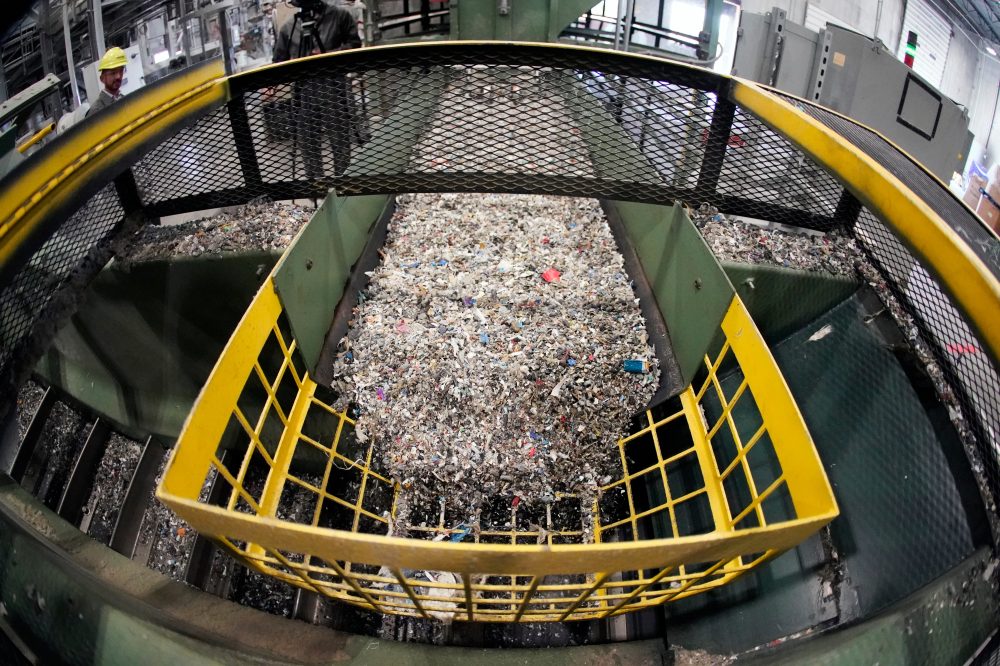
Chemical recycling employs heat or chemical processes to decompose plastic materials. The primary technique, called pyrolysis, has historically fallen under Clean Air Act incineration regulations. Current EPA standards limit emissions of nine air contaminants from incinerators, including harmful particulates, heavy metals and dioxins.
Federal officials indicate a proposed regulation might reclassify pyrolysis as a manufacturing process instead.
The American Chemistry Council, representing industry interests, has consistently advocated for this regulatory change.
“The definition of incineration is to destroy it, right? You’re literally trying to make it go away,” stated Ross Eisenberg, president of America’s Plastic Makers, who directs ACC’s plastics advocacy efforts. “That’s not what they’re doing here. They are trying to preserve it and recover the materials, which is recycling, which is manufacturing.”
Judith Enck, former EPA regional administrator now leading Beyond Plastics, opposes what she describes as a “much weaker level of environmental protection.”
“Chemical recycling companies know that if they want to operate, they need to get this essential Clean Air Act permit and they don’t like it,” she explained. “They have spent decades trying to convince EPA to change the rules of the game. Republication and Democratic administrations have declined to do this. But they have hit the jackpot with the Trump administration.”
EPA currently oversees pyrolysis through section 129 of the Clean Air Act, which controls air pollution from four solid waste incineration categories. Agency officials told The Associated Press that a 2005 final rule including “pyrolysis/combustion units” under that section created ambiguity and industry confusion.
EPA officials confirmed they’re accepting public feedback on potential regulations that could classify pyrolysis as manufacturing under section 111 of the Clean Air Act.
John Walke, directing the Natural Resources Defense Council’s national clean air advocacy, noted Section 111 covers fewer pollutants than section 129. He also contends EPA’s approach bypasses essential steps in the mandatory rulemaking process.
Walke warned the EPA action would effectively deregulate these facilities immediately under the act. He explained the legal process for regulating the industry under different provisions would require several years, creating a regulatory void without federal emission standards.
“You could have a facility that was controlled on a Monday, preventing those hazardous air pollutants from being emitted into the atmosphere, and on Tuesday, the facility would have legal permission to turn off installed pollution controls to allow the unlimited release of hazardous air pollution into the same community that was better protected on Monday,” he explained. “Why would they do that? Why would they turn off an installed pollution control device? Because it costs money to operate them.”
Eisenberg challenged that assessment. He maintained other Clean Air Act provisions would remain applicable, and facilities must obtain state permits, ensuring emission controls and community safety. These operations are “so heavily regulated,” Eisenberg emphasized.
American Chemistry Council data shows over 90% of plastics avoid recycling. The organization promotes chemical or advanced recycling as a solution. Combined with conventional mechanical recycling, chemical recycling could significantly decrease landfill waste while creating diverse products, according to ACC.
The technology converts plastics into liquid and gas forms, producing oil-like mixtures or basic chemicals for new plastic or fuel production. It resembles “unbaking a cake,” Eisenberg described.
Environmental organizations characterize advanced recycling as waste disposal rather than true recycling, calling it a diversion from genuine solutions like reducing plastic production and consumption.
Currently, six pyrolysis facilities operate across Ohio, Texas, North Carolina, Indiana and Georgia, with construction underway in Arizona and West Virginia, plus a small Maryland test project, per American Chemistry Council records. ACC has lobbied state and federal legislators to classify chemical recycling as manufacturing. Twenty-five states have adopted this classification, with congressional legislation pending.
Despite legislative achievements, Eisenberg noted declining proposals for new plant construction in recent years, partly due to permitting challenges.
“I often ask people to take a step back,” he said. “Do you want more recycling? If the answer is yes, then we should do what we can to make sure that you can bring more recycling online.”
Eisenberg confirmed they’ve communicated to the Trump administration that Clean Air Act revision represents a priority. EPA Administrator Lee Zeldin visited ExxonMobil’s Baytown, Texas, facility last year to observe chemical recycling operations firsthand.
In March, EPA published a notice seeking comments on proposed regulations consolidating rules for another incinerator type, including a brief section requesting feedback on removing pyrolysis references. EPA mentioned this at the conclusion of its press release regarding air curtain incinerators.
Enck characterized it as a significant policy change hidden within a rulemaking notice. EPA dismissed the criticism, pointing to their press release.
During last week’s public hearing, numerous speakers urged EPA to maintain pyrolysis regulation as incineration, including approximately twelve representatives from nonprofit Moms Clean Air Force. Kiya Stanford, the organization’s Georgia state organizer, testified that changing regulations “feels like a move to prioritize polluters over people,” providing the plastics industry an inexpensive method to eliminate visible waste by releasing toxic air pollution.
The agency proposed similar modifications in 2020 during President Donald Trump’s initial term. The Biden administration later withdrew the proposed change.
Walke indicated NRDC would pursue legal challenges if EPA finalizes the regulatory rollback.