
WASHINGTON — Taking a page from Hungarian opposition leaders who recently succeeded with an anti-corruption platform, House Democrats are launching their own ethics-focused initiative targeting the Trump administration as midterm elections approach.
Democratic representatives plan to unveil a specialized task force on Wednesday designed to reform government ethics standards and safeguard voting rights. The group intends to spotlight business dealings involving the Trump family and examine changes within federal agencies under the current administration.
This bipartisan task force, featuring both progressive and centrist lawmakers, may serve as a cornerstone of Democratic strategy as the party seeks to regain congressional control from Republicans.
Representative Joe Morelle, the leading Democrat on the House Administration Committee and close associate of House Minority Leader Hakeem Jeffries, will lead this initiative. According to Morelle, Jeffries “fears that we’re losing Americans’ faith and trust in government and institutions” because decisions are often “made based on the personal interests of the members or the president and with little regard for Americans.”
Among potential reforms, Morelle suggested prohibiting stock transactions for all executive branch officials, congressional members, and federal court personnel. He also mentioned establishing ethical guidelines and implementing term restrictions for Supreme Court justices as possible recommendations.
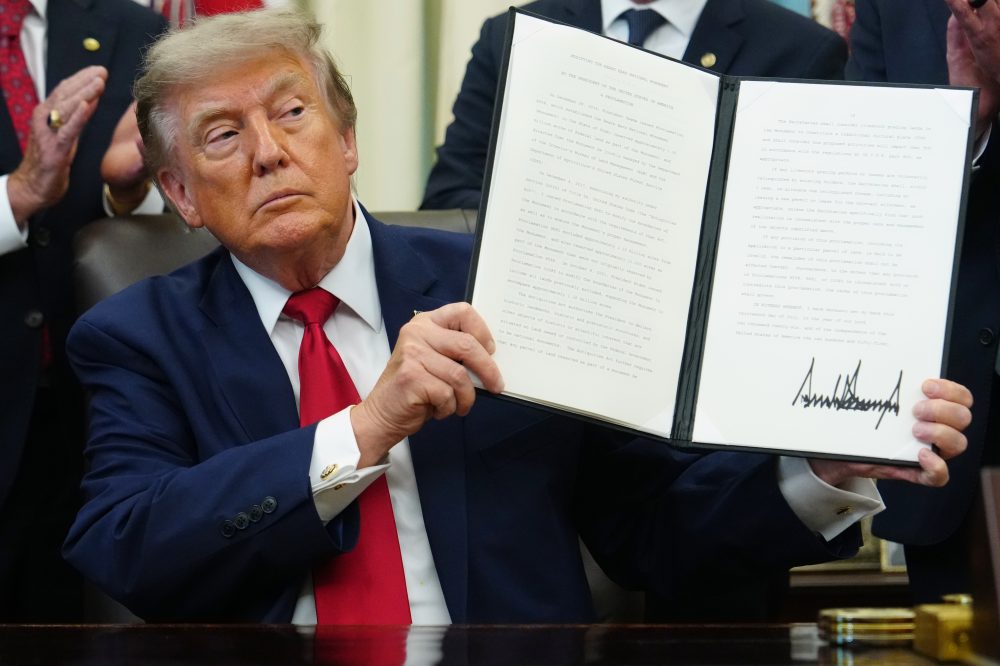
Democratic leaders have repeatedly characterized Trump’s current term as “the most corrupt administration in American history.” The White House has not yet provided a response to requests for comment.
Anti-corruption pledges represent familiar political territory. Trump’s 2016 and 2024 campaigns featured promises to “drain the swamp,” while Democrats successfully reclaimed House control in 2018 during Trump’s first presidency using similar anti-corruption themes.
“I don’t know that we start with people’s trust. I certainly think that’s probably not the case,” Morelle acknowledged. “The question is, will we earn it? Can we earn it? And we’re prepared to place significant emphasis on this.”
The task force includes Representatives Robert Garcia of California and Jamie Raskin of Maryland, who serve as ranking Democrats on House Oversight and Judiciary committees. Additionally, Representative Greg Casar of Texas, who heads the Congressional Progressive Caucus, and Representative Brad Schneider of Illinois, leader of the moderate New Democrats, will participate. Representative Alexandria Ocasio-Cortez of New York, a prominent caucus figure, also joins the group.
This diverse composition spanning different regions and ideologies could either strengthen support for the new effort or complicate attempts to establish unified messaging and objectives.
“The challenge is almost there’s too much to do, and they are going to need to focus on a couple of things,” explained Justin Florence, co-founder of Protect Democracy, an organization dedicated to fighting authoritarianism domestically and advising Democrats on their approach.
The organization views the Hungarian electoral success as a viable blueprint. “It just shows that this messaging has to be loud, it has to be colorful, it has to be engaging,” said Ben Raderstorf, a Protect Democracy strategist, regarding how Orbán’s opposition effectively communicated their anti-corruption stance. “It can’t just be staid hearings, it’s about breaking through attention cycles.”
Though Democrats questioned after 2024 whether their democracy-in-peril warnings connected with voters, many party members believe Trump’s recent actions have influenced public sentiment.
Representative Nikema Williams of Georgia, serving as task force co-chair, accused the president of “actively meddling in our elections and attempting to impose a Jim Crow 2.0 era through intimidation and suppression.” She committed that the task force will “hold Trump accountable for his corrupt schemes, expose them to the American people, and present the alternative they deserve.”
Watchdog organizations hope this messaging campaign will translate into substantive corruption-fighting legislation.
“The hope is that it’s broad, and that it’s serious policymaking and not just talking points,” stated Robert Weissman, president of Public Citizen, a monitoring group engaged in discussions with the task force.
The objective, according to Weissman, involves addressing “not just the Trump administration’s extreme abuses, but the systemic rigging of the political process in Washington.”