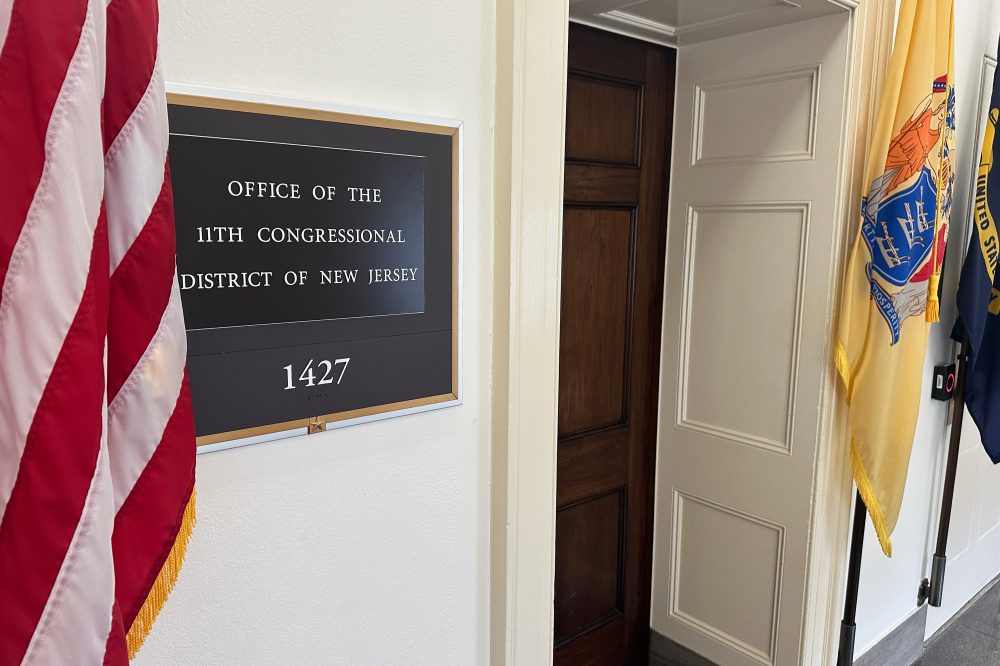

Voters in New Jersey’s 11th Congressional District will cast ballots Thursday in a special election to fill the House seat left vacant when Mikie Sherrill became the state’s Democratic governor.
The outcome could further reduce the narrow Republican control of the House if Democrats succeed in the district that typically favors their party.
Two main candidates are vying to succeed Sherrill: Democrat Analilia Mejia, a progressive activist and former federal Labor Department worker, faces off against Republican Joe Hathaway, who serves on the Randolph Township Council.
Mejia secured early endorsements from progressive leaders including U.S. Senators Bernie Sanders and Elizabeth Warren, plus Representative Alexandria Ocasio-Cortez. She edged out a competitive February 5th Democratic primary that featured former Representative Tom Malinowski and former Lieutenant Governor Tahesha Way. Malinowski had sought a political comeback following his 2022 loss in an adjacent House district.
Hathaway faced no opposition in securing the Republican nomination.
The Israel-Hamas conflict has dominated campaign discussions. A super PAC connected to the American Israel Public Affairs Committee invested over $2.3 million opposing Malinowski, who had questioned unlimited aid to Israel’s government. Mejia stood alone among primary candidates in stating her belief that Israel committed genocide in Gaza, and she has labeled Israeli Prime Minister Benjamin Netanyahu a war criminal. Hathaway advocates unwavering U.S. support for Israel, stating America should stand “in lockstep” with the ally without aid conditions.
Campaign finance records show Mejia raised approximately $1.1 million for both the primary and general election, maintaining about $374,000 as of March 27th. Hathaway collected roughly $525,000 for his campaign with about $109,000 remaining in his account.
Historical voting patterns favor Democrats in the district. Sherrill secured reelection in 2024 with roughly 57% support, while Democratic presidential candidate Kamala Harris captured 53% of district votes.
The district spans 588 precincts across three counties: Morris County contains more than half the precincts, Essex County holds about 39%, and Passaic County represents 9%. Essex County’s portion heavily supports Democrats, with Harris winning 64% in 2024. President Donald Trump narrowly captured Morris County’s district area by approximately one percentage point and won the small Passaic County section with about 57%.
Election procedures require polls to close at 8 p.m. Eastern Time. The Associated Press will monitor results and announce a winner only when trailing candidates cannot mathematically overcome the gap. New Jersey lacks automatic recount provisions, though candidates and voters may request paid recounts that receive refunds if results change.
Voter registration data from April 1st shows approximately 603,000 eligible voters in the district: about 230,000 Democrats, 165,000 Republicans, and 204,000 unaffiliated voters, with remaining registrations spread among minor parties.
The February 5th Democratic primary drew over 68,000 votes compared to roughly 16,000 in the Republican contest. The 2024 general election recorded about 394,000 votes, with nearly half cast before Election Day.
Early voting through Monday totaled about 54,000 ballots: approximately 34,000 from Democrats, 13,000 from Republicans, and over 7,000 from unaffiliated voters.
During February’s special primary, initial results appeared at 8:04 p.m. Eastern Time, four minutes after poll closure. Final updates concluded at 10:30 p.m. with about 91% of votes counted, and the race was called on February 12th at 5:34 p.m.
New Jersey counties typically release early and absentee voting results in their first update before reporting Election Day totals.
The winner will serve 201 days before the seat appears again on the 2026 midterm ballot.