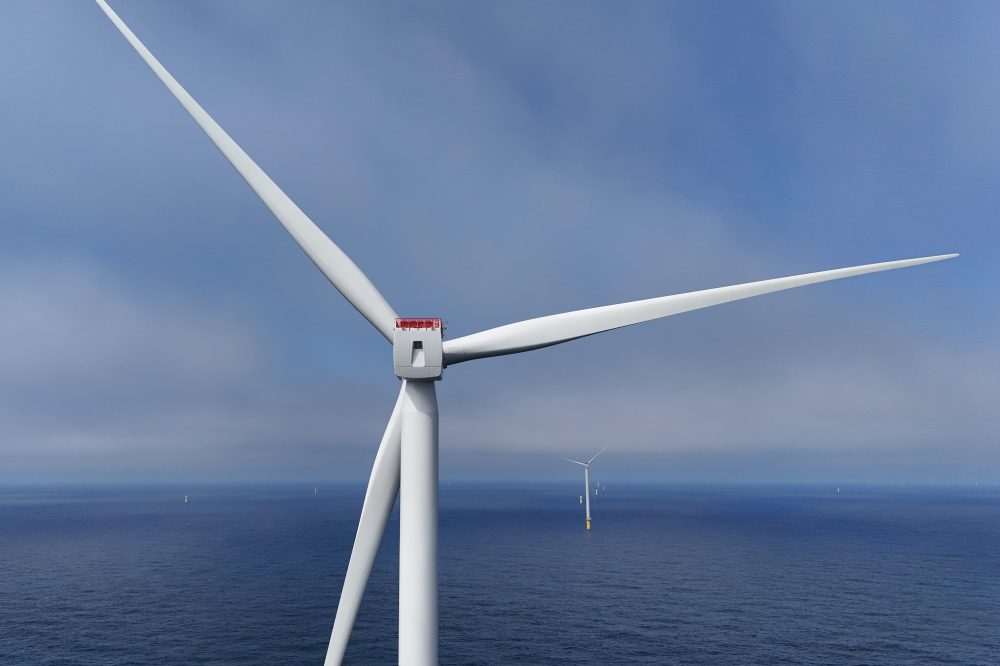

The Trump administration is halting offshore wind developments across America at a time when the sector was positioned for major expansion.
Wind turbines positioned off the nation’s shores have the capability to generate substantial amounts of renewable energy along coastal areas. Currently, six offshore wind installations are operational or beginning to supply electricity as they complete final construction phases in the United States.
More than 40 federal leases for offshore wind development have been issued. The current administration is purchasing back certain leases, providing compensation to energy companies to abandon their wind projects. Additional barriers have been implemented for the sector as the administration prioritizes fossil fuel development.
This approach contrasts with numerous nations that are adopting ocean-based wind turbines to satisfy increasing electricity demands through clean methods. The global frontrunner in offshore wind development is where the president is attending a summit this week. Wind turbines generate electricity without contributing to global warming, unlike fossil fuel combustion.
The following data illustrates the offshore wind sector’s scope both domestically and internationally:
Nineteen nations and regions utilize offshore wind power: The top three in terms of installation numbers and capacity are China, the United Kingdom, and Germany. Additional locations developing offshore wind include the Netherlands, Taiwan, Denmark, Belgium, France, Vietnam, South Korea, Japan, Sweden, United States, Norway, Finland, Italy, Portugal, Ireland and Spain, based on Global Wind Energy Council data.
In 2025, China installed 6.6 gigawatts of additional offshore wind capacity, according to GWEC. By year’s end 2025, China’s cumulative offshore wind capacity reached 48.4 gigawatts, the organization reported.
Worldwide installations in 2025 alone generated sufficient offshore wind power for 10.2 million households. The total reached nearly 9.3 gigawatts, representing a 16% yearly increase, GWEC reported. Current global offshore wind installations can generate power equivalent to serving 102 million homes, based on GWEC calculations.
From 2026 to 2030, China is projected to represent approximately 56% of new offshore wind capacity additions globally, GWEC stated. The European Union is expected to contribute about 29% during this timeframe, while the United States accounts for 5%, according to the organization.
America’s three operational offshore wind installations include: Block Island Wind Farm off Rhode Island, the nation’s inaugural project in state waters; Dominion Energy’s Coastal Virginia Offshore Wind pilot in federal waters; and South Fork Wind, the first major U.S. offshore wind installation providing power to New York.
Three additional projects are: Vineyard Wind in Massachusetts; Revolution Wind in Rhode Island; and the complete Coastal Virginia Offshore Wind development near the pilot turbines off Virginia Beach. Vineyard Wind, the most advanced of these three, is anticipated to achieve full operation within months.
Construction was ordered to cease on five East Coast offshore wind developments in December due to national security considerations cited by the Trump administration. The directive affected Vineyard Wind, Revolution Wind and Coastal Virginia Offshore Wind, plus Empire Wind and Sunrise Wind, two significant New York offshore wind projects.
Legal challenges were filed by developers and states. Federal courts permitted all five projects to restart construction, essentially determining that the government failed to demonstrate imminent national security threats requiring immediate work stoppage.
The world’s largest operational offshore wind installation, Hornsea 2, features 165 turbines. Positioned in the North Sea 55 miles from England’s Yorkshire coast alongside its companion project Hornsea 1, it produces sufficient energy for over 1.4 million U.K. households across 178 square miles. A larger U.K. project currently under development will exceed this capacity.
According to the American Clean Power Association, 18,000 U.S. jobs are sustained by the offshore wind sector.
Coastal Virginia Offshore Wind generates electricity for up to 660,000 households. Power delivery to the electrical grid commenced in March.
This 2.6-gigawatt development represents America’s largest wind installation to date. It operates off the coast of a state housing the world’s data center hub and vital U.S. military facilities, according to offshore wind advocacy organization Turn Forward.
Massachusetts customers will save an estimated $1.4 billion on electricity costs over two decades through Vineyard Wind, according to the governor’s office. During the previous winter, Vineyard Wind reduced electricity rates by participating in wholesale markets and consistently providing lower-cost power than alternative sources.
Vineyard Wind became the first offshore wind development completed during the current administration. Its 62 turbines will produce 800 megawatts total, sufficient clean electricity for approximately 400,000 households.
Offshore wind development has generated $25.5 billion in U.S. investments across ports, steel manufacturing, transmission improvements, shipbuilding, workforce development and research, according to the Oceantic Network, a nonprofit promoting offshore energy advancement. The domestic supply network encompasses over 1,000 U.S. companies in at least 40 states, the organization stated. Oceantic calculates that canceling a 1-gigawatt Northeast project would cost nearly $10 billion economically, primarily from lost employment and investments, while regional customers forfeit energy cost savings.