
NEW YORK (AP) — Years after officials declared the COVID-19 pandemic over, its lasting effects continue to shape our daily lives — remote work arrangements, people choosing to wear masks regularly, and hand sanitizer stations that have become permanent fixtures.
However, some consequences run deeper and are less visible. These include the emotional wounds we carry — mourning for family and friends we lost, ongoing health problems, and the feeling that our lives were derailed. Recently, another effect has emerged following a uncommon hantavirus outbreak on a cruise vessel: anxiety that we might face another pandemic, despite official statements saying otherwise.
When fear spreads widely, whether among individuals or throughout society, it can signal that something fundamental is broken. Perhaps no aspect of our post-pandemic world is more firmly established than the erosion of trust in institutions that many previously considered reliable — scientific establishments, governmental bodies, and information sources themselves.
“COVID undermined our trust in what most of us used to trust,” said Elisa Jayne Bienenstock, a research professor and sociologist at Arizona State University. “When general trust goes down, when there’s a lot of cynicism, who are people looking to, to explain what to do and how the world works?”
Prior to 2020, disease outbreaks in distant locations typically didn’t generate widespread alarm beyond the directly affected regions, even when some epidemics resulted in substantial death tolls.
Part of this was due to complacency in an era when international travel wasn’t as readily available to ordinary people as it has become, which played a crucial role in COVID-19’s global transmission.
Actually, outbreaks of the present hantavirus strain have occurred in various South American nations over the years, including a 1997 incident in Chile. Other nations have experienced epidemics of different diseases ranging from cholera to dengue to SARS, while the U.S. has encountered West Nile, Legionnaire’s disease and others.
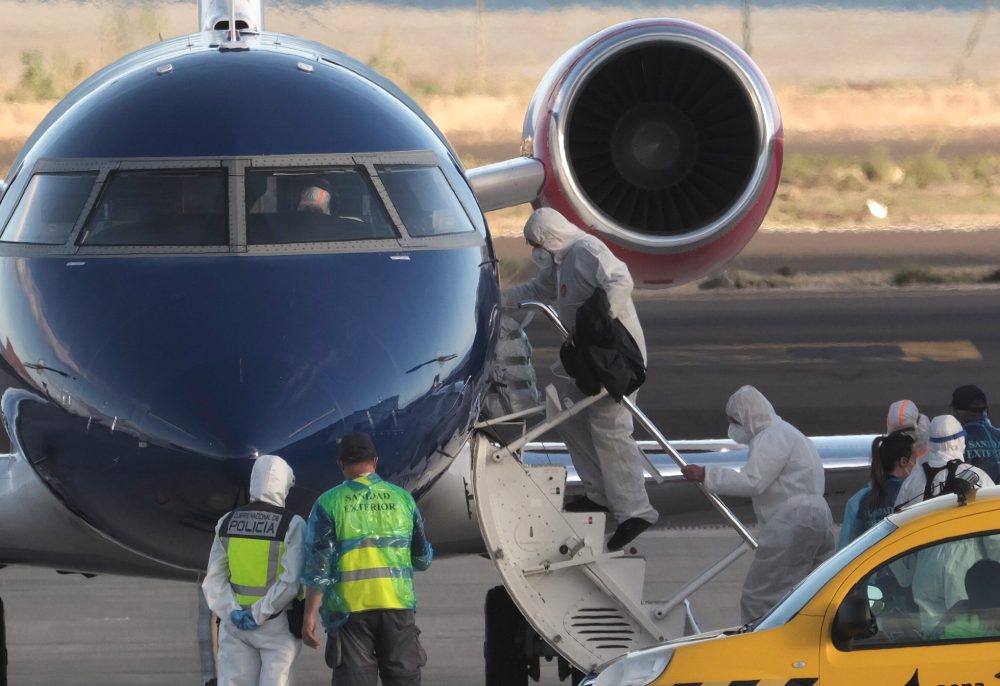
However, in our post-COVID-19 era, it didn’t take much time for worries and questions to emerge about disease transmission in the days right after initial reports that three individuals had died from hantavirus on the vessel. Officials have identified nine confirmed and two suspected cases total, including the deaths.
Medical authorities have consistently stressed that while the virus can cause severe illness in infected individuals, the likelihood of transmission among the general population remains minimal. Nevertheless, when ship passengers were transported to the Spanish island of Tenerife for disembarkation, local residents like Samantha Aguero expressed worry.
“We feel a bit unsafe. We don’t feel as there are 100% security measures in place to welcome it,” she said. “This is a virus, after all, and we have lived this during the pandemic.”
Bienenstock identifies three institutions that have experienced declining public confidence: government, media and scientific establishments. However, government officials and reporters were already dealing with public distrust issues before the pandemic began.
Scientific skepticism gained momentum not because researchers were making errors in their methodology but because non-scientists lacked the same comprehension, she explained.
“Most people don’t think of science as a process. In their mind, science is an answer, it’s a fact. And so when those facts showed that they weren’t 100% reliable and assured, it started undermining trust in the science,” she said.
“One of the problems with COVID is it undermined that confidence in science for people who don’t understand how science works. It showed the process. And it showed that scientists don’t always have the answer,” Bienenstock said. “A lot of people in crisis, when they fear things, don’t care what the answer is, as long as there’s a definitive answer. And science doesn’t provide that when it doesn’t know.”
The impact extends beyond whatever issue currently dominates public attention. Secondary effects also occur.
“COVID … didn’t just heighten people’s sensitivity to health threats. It did so unevenly, in ways often disconnected from actual risk,” said Michele Gelfand, professor of organizational behavior at the Stanford Graduate School of Business. “As trust in institutions has weakened, people have lost a key way to navigate uncertainty together. Without trust, people rely more on rumor, fear, and emotion, which can lead them to overreact to small risks and underreact to serious ones.”
Karlynn Morgan, a 76-year-old retired nurse-anesthetist in Winston-Salem, North Carolina, has observed this increased focus, with more individuals lacking medical or scientific training discussing health matters than before the pandemic.
She has also been troubled by what appears to be growing distrust in scientific knowledge, evidenced by declining vaccination rates and increasing cases of diseases like measles.
“I think people are far less trusting because people used to take their children and just get the vaccine,” she said. “When I was a kid, there was no question you were going to go get your shot.”
For trust to be restored, Gelfand explained in an email, leadership involvement is essential.
“They set the threat signal. They determine whether people get accurate information about the level of danger or distorted information that serves a political agenda. When leaders send clear, honest signals, people can calibrate in the face of threat. When leaders manipulate threat for their own purposes, norms erode and and trust collapses,” Gelfand said.
“Strong, reliable institutions have historically been our superpower as a society. They’re what allow millions of people to coordinate under uncertainty without knowing each other personally,” she said. “Without that institutional backbone, we lose the very capacity for collective action that has helped human groups survive for millennia.”