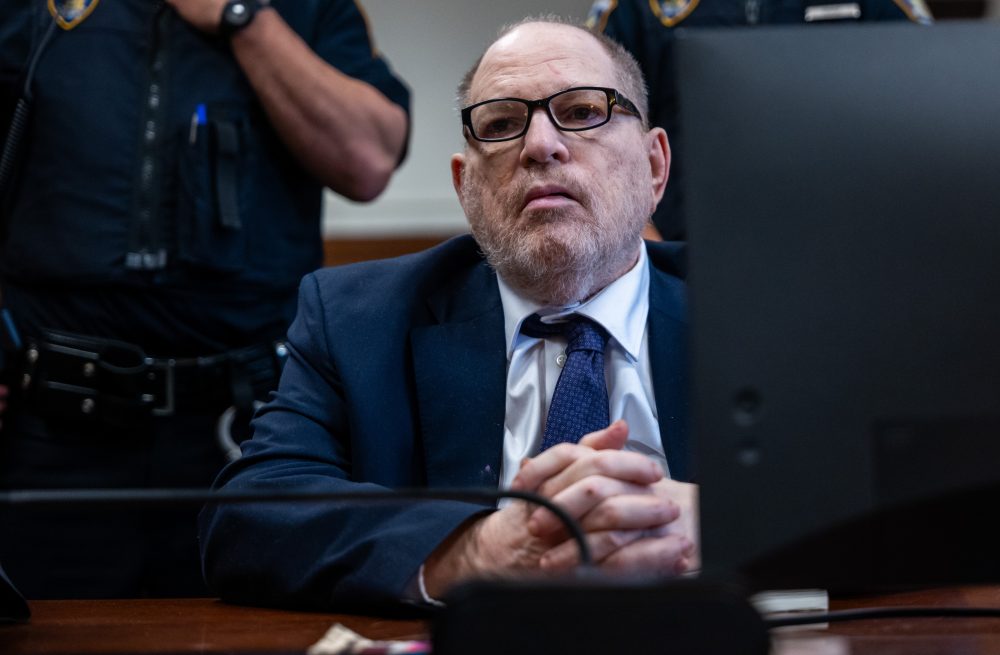

NEW YORK — Former movie mogul Harvey Weinstein appeared in a New York courtroom Thursday as jury deliberations continued in his rape retrial, one day after the disgraced producer complained of chest pain while at the courthouse.
The 74-year-old, who has dealt with cardiac issues and other medical problems, appeared wan but conscious as he entered the courtroom in his customary wheelchair. When asked about his condition, Weinstein responded that he felt “good, fine.”
The former film executive had been in a courthouse detention area Wednesday when jurors, following several hours of deliberations, requested to hear portions of accuser Jessica Mann’s testimony again and wanted to examine a detailed prosecution timeline containing emails and additional evidence.
While defense attorneys, prosecutors and Judge Curtis Farber met in court to determine their response, Weinstein’s lawyer Marc Agnifilo reported that court personnel had informed him his client was suffering from chest discomfort.
Weinstein remained absent from the courtroom at that time, and Farber decided to dismiss jurors early Wednesday, citing “unforeseen reasons” for the premature adjournment.
On Thursday, jurors received the materials they had requested before returning to their private deliberations, while Weinstein was escorted back to the detention area.
The testimony in question covered a moment that Agnifilo had emphasized during his closing statements: an instance when Mann described “spacing out” while a defense attorney questioned why she preferred that friends remain unaware of any sexual activity between herself and Weinstein. The defense team sought to imply she was concerned about her public image rather than addressing an alleged rape that Weinstein denies occurred.
Mann, age 40, testified that while she voluntarily engaged in some intimate encounters with the then-married film producer, he forced unwanted sexual contact on her in a Manhattan hotel room during March 2013 despite her repeated refusals.
Weinstein’s legal team argues the incident was consensual, pointing out that Mann continued meeting with Weinstein afterward and showed affection toward him. Mann explained she experienced conflicted emotions about him, herself, and the events that transpired.
Her perspective shifted in 2017 when multiple sexual misconduct claims against the Academy Award-winning Weinstein sparked the #MeToo movement demanding accountability for sexual impropriety, particularly from influential men. While Weinstein acknowledged he “acted wrongly,” he maintains he never attacked anyone.
Several of these allegations resulted in criminal convictions against Weinstein in both New York and California.
An appellate court reversed his 2020 New York conviction involving charges related to Mann and another complainant. During a retrial last year, jurors could not reach a decision regarding Mann’s case, necessitating this current retrial. Weinstein faces one charge of third-degree rape.
The present jury listened to almost three weeks of testimony, with Mann testifying for five days. Weinstein chose not to take the stand.
The Associated Press typically does not reveal the identities of individuals claiming sexual assault. However, Mann has consented to being identified publicly.