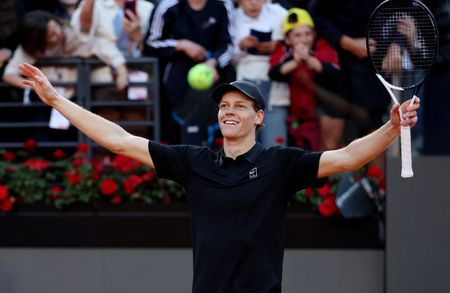

The top-ranked tennis player in the world, Jannik Sinner, enters the French Open with an opportunity to capture the one major championship that has eluded him and round out his Grand Slam collection. The tournament dynamics have shifted considerably following the withdrawal of defending champion Carlos Alcaraz.
Alcaraz, who was seeking his third consecutive French championship, had established dominance on clay courts through his versatile playing style, quick acceleration, and defensive range that could challenge Sinner’s baseline control.
The competition between these two players has become central to men’s professional tennis, though on slower clay surfaces, the Spanish player’s skill at disrupting rhythm and creating unexpected shots provided him with a competitive edge.
Sinner enters Roland Garros as the most well-rounded and reliable competitor in professional tennis, carrying a 29-match victory streak during which he has lost only three sets — two decided by tiebreakers.
His clay court performance has improved markedly over the last two years, not through dramatic strategic changes but through steady improvements in court movement, patience during points, and strategic shot selection.
The Italian maintains his characteristic aggressive baseline play and continues to pressure opponents with quick shot timing, but he now handles challenging match situations with improved control and mental toughness.
This equilibrium proves especially valuable in Paris, where five-set matches seldom progress smoothly and where managing physical and psychological demands often equals technical skill in importance.
Sinner demonstrates much greater comfort during extended rallies and difficult stretches while maintaining his tactical approach, and his enhanced serving has become a significant weapon for managing tournament pressures.
Despite the devastating outcome of last year’s championship match, where the 24-year-old lost to Alcaraz after leading by two sets, the performance confirmed his status as a legitimate Roland Garros threat rather than simply a hard-court specialist adjusting to clay.
Even in that loss, Sinner proved he could maintain his performance level through the tournament’s final week and manage the pressure, physical demands, and strategic challenges of a championship match on Court Philippe-Chatrier.
His victories at the Australian Open (twice), U.S. Open, and Wimbledon have established his dominance at major tournaments and elevated him from a player seeking recognition to one establishing the standard in men’s tennis.
Roland Garros now represents not so much an uncertainty as the remaining major obstacle in an already impressively well-rounded career.
The absence of Australian Open winner Alcaraz due to a wrist injury significantly alters the Paris competition by removing the one competitor who has consistently appeared capable of forcing Sinner into difficult situations on clay courts.
This development does not guarantee victory for the Italian, as clay remains the most unpredictable playing surface in men’s tennis and two weeks in Paris consistently create physical and strategic challenges.
Nevertheless, it enhances the possibility that this tournament may provide Sinner with his best opportunity yet to complete his Grand Slam collection.