
WASHINGTON — An emerging group of Republican lawmakers is demonstrating increased independence from President Donald Trump’s legislative priorities.
Despite Trump’s continued strong support among Republican voters, this expanding faction of GOP members willing to oppose the White House could create obstacles for his policy goals ranging from Iran military operations to immigration spending, particularly given the party’s narrow congressional majorities.
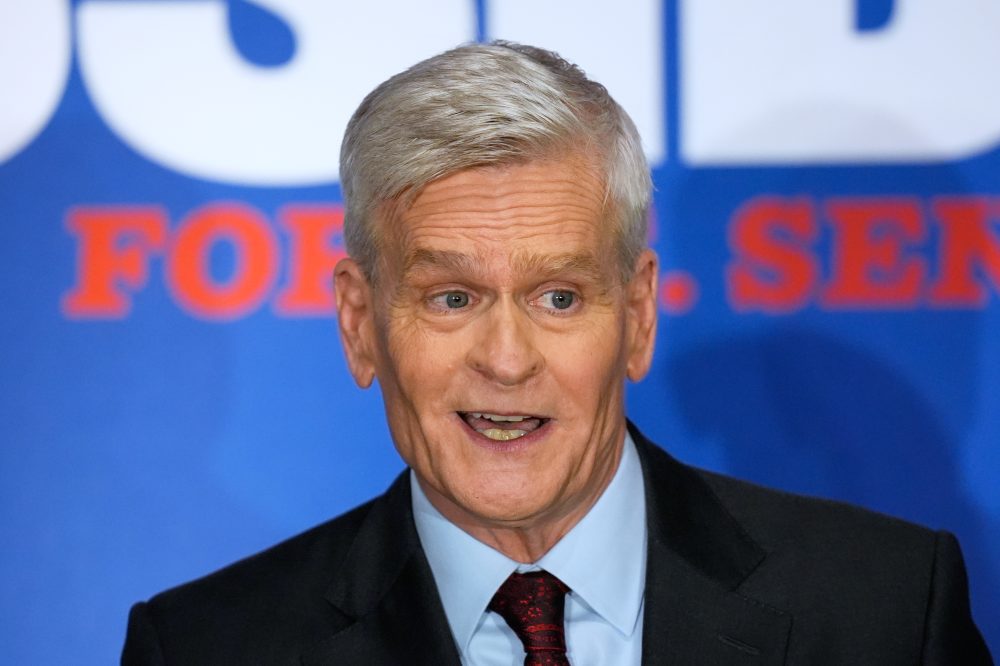
Louisiana’s Sen. Bill Cassidy represents the latest addition to this group. Following his recent primary defeat to a candidate backed by Trump, Cassidy switched his position Tuesday on Iran war legislation, joining Democrats in supporting measures to limit U.S. military involvement.
“The way our Constitution is set up, Congress should hold the executive branch accountable,” he told reporters the day before.
Texas Sen. John Cornyn might follow a similar path after Trump endorsed Ken Paxton, Cornyn’s opponent in next week’s Republican runoff election.
Kentucky Rep. Thomas Massie could be considered an original member of this independent-minded group, having clashed with Trump throughout the president’s first administration. His recent primary loss to a Trump-endorsed candidate has reinforced his willingness to oppose the president.
Massie has angered Trump by opposing his major tax and spending legislation and advocating for the Jeffrey Epstein files’ release.
He suggested more opposition is coming during his remaining time in office.
“I got seven months left in Congress,” Massie said with a grin during his concession speech as the crowd erupted.
Additional Republicans in similar positions include Sen. Thom Tillis, who strongly criticized former Homeland Security Secretary Kristi Noem and has recently focused criticism on Defense Secretary Pete Hegseth. Alaska’s Sen. Lisa Murkowski joined Democrats last week in attempting to limit Trump’s Iran war powers. Maine’s Sen. Susan Collins and Kentucky’s Sen. Mitch McConnell have opposed some of Trump’s Cabinet selections. Nebraska Rep. Don Bacon has worked to restore congressional authority over tariffs.
“If the legislative branch always votes with the president, we do have a king,” Massie said in his Tuesday concession speech.
This development doesn’t represent a resurrection of the Never Trump movement that some Republicans unsuccessfully hoped would limit the president’s actions during his first term or prevent his return to office. Many party members, including occasional Trump critics, have either supported or failed to stop the president as he initiated the Iran war and oversaw aggressive immigration enforcement and federal workforce reductions.
These unrestrained Republicans don’t share a common ideology. However, they share a boldness that can only emerge in specific circumstances within Trump’s Washington.
Many, including Tillis, McConnell and Bacon, have announced retirement plans and can vote without concern for future Republican primary challenges. Others like Collins and Murkowski enjoy greater freedom because their states tend to value political independence. Some like Massie believed voters could support both Trump and someone who occasionally opposed him.
This creates a challenge for Trump. As he demands complete loyalty and removes Republican dissidents, he’s creating a growing group who, for various reasons, have no obligations to Trump.
This situation could prove problematic for Senate Majority Leader John Thune and House Speaker Mike Johnson, who already work with extremely narrow majorities. Even small shifts in Republican loyalty could significantly complicate either chamber’s ability to pass major legislation before November’s midterm elections.
Upcoming challenges may emerge this week as Thune advances funding legislation for Immigration and Customs Enforcement and Customs and Border Patrol designed to pass along party lines.
Democrats are prepared to capitalize on these divisions.
At a Tuesday Washington event hosted by the Center for American Progress, House Democratic leader Hakeem Jeffries announced plans to create divisions among Republicans using discharge petitions to bring issues directly to floor votes.
This strategy has succeeded in securing House approval on various issues from the Epstein files to temporary Haitian immigrant protections.
“When we’re disciplined and when we’re focused and when we put pressure in particular on the so-called swing seat Republicans, they have been breaking with us,” Jeffries said.
California Gov. Gavin Newsom told reporters Tuesday that Trump’s endorsement of Cornyn’s opponent demonstrates his political influence remains limited to the Republican base rather than the broader American public.
“He’s showed the only influence he has, and that’s an outsize influence within the base of the party,” the potential 2028 Democratic presidential contender told reporters in Washington. “Otherwise he’s shown little to no influence with the American people.”
This situation leaves Republicans calculating how to gather necessary votes for legislation passage.
North Dakota Sen. John Hoeven called Cassidy a “good friend” and described the loss as “tough for him.” He said Cassidy “will always vote in line with what he thinks is best” but expressed doubt he would become a less dependable Republican vote.
His Louisiana colleague, Sen. John Kennedy, said Cassidy uses power “rationally and maturely” and “will continue to do the same thing.”
Cassidy has consistently rejected suggestions that he will spend his final Washington months as a Trump troublemaker, stating he plans to do “what’s good for my country and my state.”
However, the independent approach that concluded his political career has quickly reemerged. Following Trump’s China visit, Cassidy discussed a western alliance that’s “totally falling apart” and will be unable to “push back on the threat China represents.” He appeared surprised by the administration’s creation of a nearly $1.8 trillion fund to compensate Trump allies they believe have been unfairly investigated and prosecuted.
“I just came off the campaign trail,” he said. “People are concerned about making their own ends meet, not about putting a slush fund together without a legal precedent.”