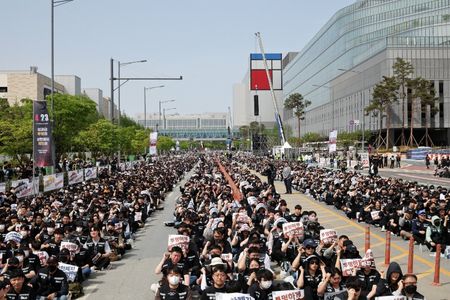

Samsung Electronics and its labor union returned to the bargaining table Tuesday for fresh negotiations aimed at resolving a deadlock over bonus payments, following unsuccessful discussions the previous day that failed to reach any resolution.
Both parties face increasing urgency to prevent a looming work stoppage that could damage South Korea’s economy and semiconductor manufacturing, though they continue to have significant disagreements despite government-facilitated wage discussions on Monday.
South Korea’s Prime Minister issued a warning over the weekend about potentially using emergency arbitration powers to halt the planned strike, which is set to begin Thursday and continue for 18 days.
Tuesday news reports, referencing the chairman of the National Labor Relations Commission, indicated that Samsung and the labor union are making progress in reducing some of their disagreements.
A court ruling Monday gave Samsung partial success on its injunction request, determining that crucial staffing requirements at certain manufacturing sites must be preserved during any work stoppage.
This labor dispute represents the most significant confrontation between Samsung and its workforce since Samsung Electronics Chairman Jay Y. Lee made commitments in 2020 to abandon the company’s history of anti-union practices, just months following the establishment of its initial labor union.
While Samsung ranks among Korea’s most desirable employers, workers have grown increasingly dissatisfied with expanding salary disparities compared to smaller competitor SK Hynix, which gained an early advantage in providing high-bandwidth memory for artificial intelligence processors to Nvidia.
SK Hynix implemented compensation restructuring last year, creating bonuses exceeding three times those given to Samsung employees, leading to increased departures to SK Hynix and a significant rise in Samsung union participation, according to union representatives.
Adding to employee frustration are Samsung’s unprecedented earnings as artificial intelligence growth increases semiconductor demand.
Samsung has offered memory chip employees bonuses that would surpass those received by SK Hynix workers.
The union demands include eliminating Samsung’s 50% annual salary bonus ceiling, dedicating 15% of yearly operating profits to a worker bonus fund, and incorporating these terms into formal agreements.
Samsung suggested allocating 9%-10% of annual operating profits to bonuses if profits exceed 200 trillion won this year, while maintaining the 50% bonus limit, the union reported.
Jay Y. Lee issued an apology to customers and the public regarding the labor conflict in his initial public statements about the situation. Samsung’s client base includes Alphabet, Apple, Amazon and Nvidia.