
JOHANNESBURG (AP) — Medical authorities trace the current Ebola outbreak in Congo back several weeks before it was officially identified.
The World Health Organization has designated the outbreak as a public health emergency of international concern, with fatalities now surpassing 100. Uganda has reported two cases, one resulting in death.
Below is a chronological breakdown of events as they unfolded, after health officials initially faced challenges identifying the outbreak due to an uncommon virus strain not typically linked to Congo’s previous Ebola cases:
A medical worker, representing the initial suspected case known to officials, becomes ill and passes away in Bunia, Ituri Province’s capital in northeastern Congo. According to Congo’s health minister, the individual’s remains were subsequently moved to Mongbwalu, a nearby mining community.
The health minister reports the person’s death occurred on April 24. However, the Africa Centers for Disease Control and Prevention states the death happened on April 27 following severe hemorrhaging symptoms.
A person who had close contact with the initial suspected victim also dies after developing similar symptoms, the Africa CDC reports.
Laboratory tests conducted on specimens in Bunia show negative results for the standard Ebola virus strain, also called the Zaire virus, which has been the predominant type in Congo’s past Ebola outbreaks.
Multiple viruses cause Ebola disease. According to WHO, three are responsible for major outbreaks: Ebola virus, Sudan virus and Bundibugyo virus. Health officials require an additional two weeks to determine that the less common Bundibugyo virus is responsible for this outbreak.
The World Health Organization receives notification of what it describes as a “high-mortality” outbreak involving an unidentified disease in Mongbwalu. Medical personnel are among those who have died. Community reports indicate approximately 50 fatalities at this point.
The Congolese health minister subsequently states that officials suspect the first victim’s body, which was transported to Mongbwalu, may have initiated the outbreak in that location. Corpses of Ebola-infected individuals can remain extremely infectious.
A 59-year-old Congolese man with fever and body pain is hospitalized in Kampala, Uganda’s capital, located 700 kilometers (434 miles) from Ituri. Ugandan officials confirm he crossed the border from Congo.
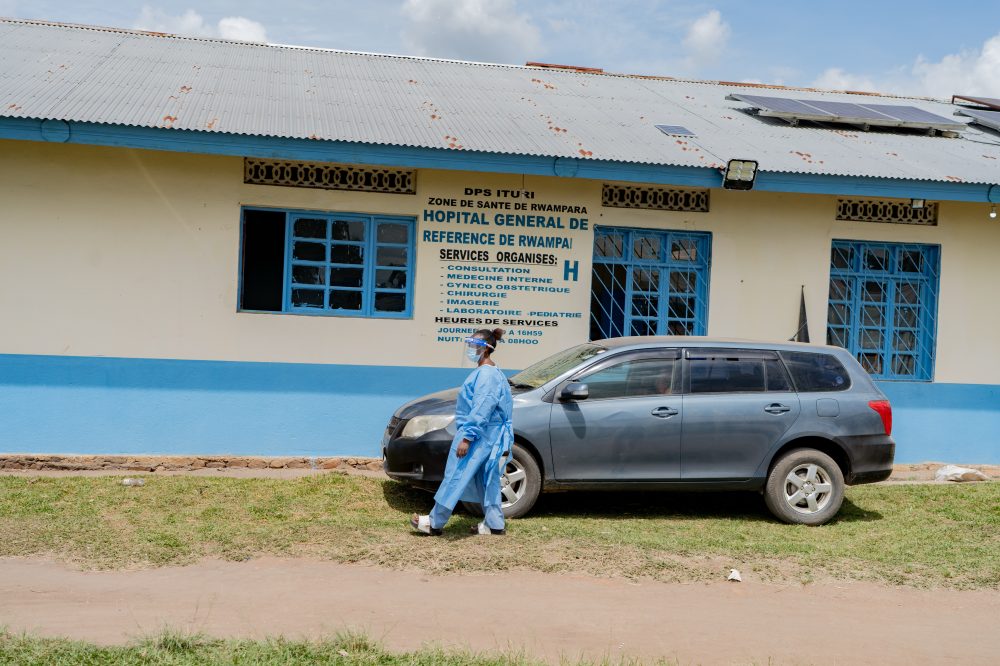
A WHO emergency response team travels to Mongbwalu and the adjacent Rwampara health districts in Ituri to conduct investigations as the outbreak continues expanding.
Medical personnel analyze thirteen blood specimens from suspected Ebola patients in Rwampara at a laboratory facility in Kinshasa, Congo’s capital.
The same day, the Congolese patient dies at the Ugandan hospital. His remains are returned to Congo.
Laboratory testing in Congo identifies Bundibugyo virus in eight of the thirteen Rwampara specimens. Ugandan health officials subsequently examine a sample collected after death from the man who died in their country, which also tests positive for Bundibugyo virus. No approved treatment or vaccine exists for this strain.
Congo’s Health Ministry officially announces an Ebola outbreak, with the Africa CDC reporting 246 suspected cases and 65 fatalities. This number quickly increases to over 300 cases and more than 100 deaths within days.
Uganda confirms its outbreak remains contained to two cases, both involving individuals who had traveled from Congo.
This marks Congo’s 17th major Ebola outbreak since the disease’s initial discovery in 1976.
The WHO formally designates the Ebola outbreak in Congo and Uganda as a public health emergency of international concern. The U.N. health organization clarifies the outbreak doesn’t qualify as a pandemic emergency like COVID-19 and recommends against border closures.
Nevertheless, it urges countries sharing land borders with Congo or Uganda to immediately strengthen surveillance systems and ensure medical workers receive training to investigate and treat Ebola cases.
Congolese authorities report that an American physician working in Congo is among the confirmed outbreak cases.
Dr. Jean-Jacques Muyembe, medical director of the country’s National Institute of Bio-Medical Research, confirms the doctor is among the Bunia cases. According to his employing organization, he had been providing patient care at a local hospital.