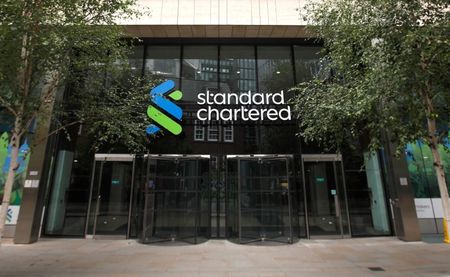

Standard Chartered announced on Tuesday ambitious new financial goals for 2028 while revealing plans to eliminate roughly 15% of its corporate function positions by 2030.
During a strategy presentation to investors, the financial institution outlined its goal to achieve more than 15% return on tangible equity (ROTE) — an important measure of bank profitability — representing an increase of over three percentage points from 2025 targets, with projections reaching approximately 18% by 2030.
The bank’s previous tangible return goal was set above 12% for 2026.
These ambitious plans emerge amid Middle East tensions that create uncertainty for the financial outlook. Industry experts warn that Asia-Pacific banking institutions may face increased loan-loss provisions if Iranian conflicts persist, as elevated energy expenses and reduced economic growth put pressure on borrowers.
The Middle East situation has created both challenges and opportunities for Standard Chartered. During the first quarter, the institution allocated $190 million in precautionary provisions related to Middle East conflicts.
According to the bank, its upcoming growth phase will benefit from a more unified operational structure, which it plans to accomplish by reducing corporate functions, including back-office positions.
As of December 31, the organization employed more than 81,800 full-time staff members, based on its annual report.
The bank, which concentrates on Asia and Africa markets, revealed this updated global strategy after surpassing previous performance goals ahead of their target dates, drawing focus to whether Chief Executive Bill Winters can maintain this positive trajectory following years of organizational restructuring.
The institution completed a ten-year transformation, evolving from a potential acquisition candidate into a successful emerging-markets focused bank.
“We achieved our 2026 medium-term financial targets a year earlier than planned,” Winters said in a statement.
“We now have a more focused, streamlined and efficient organisation.”
The bank supports its new objectives by maintaining emphasis on higher-margin operations, including wealthy retail customers and financial institutions within its corporate and investment banking segment.
During the first quarter, the institution recorded both its peak wealth revenue and highest new client investments.
On Monday, the bank appointed Manus Costello, head of investor relations and equity research veteran, as its permanent CFO, replacing Diego De Giorgi, who stepped down in February after serving nearly three years with the institution.