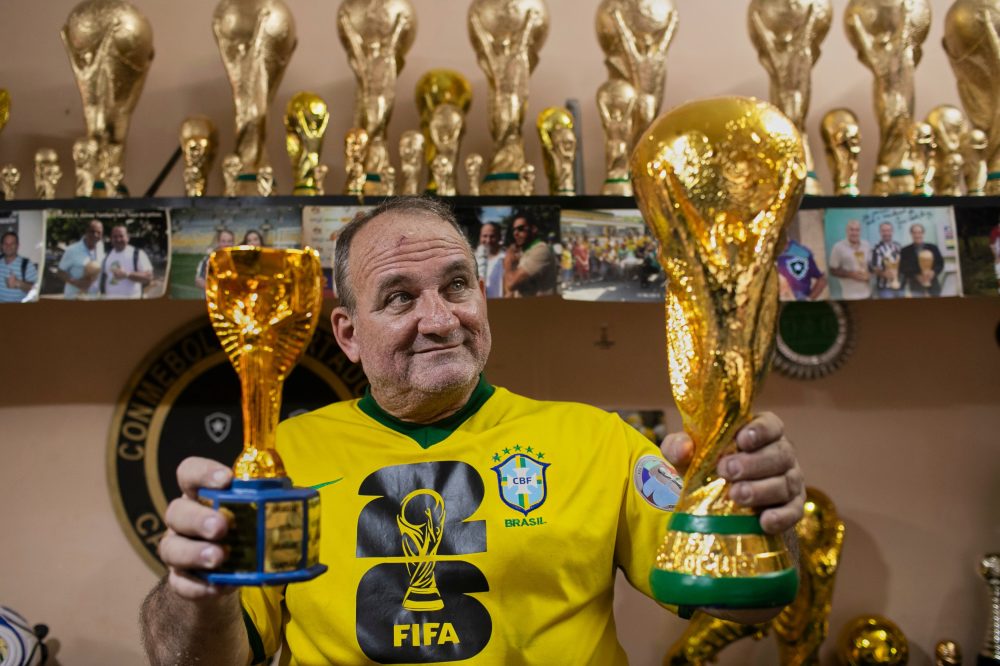

A passionate soccer enthusiast and former metallurgist in Rio de Janeiro has transformed his devotion to the sport into a successful enterprise, handcrafting FIFA World Cup trophy replicas at his workshop in the western part of the city.
Jarbas Meneghini Carlini was inspired to begin his craft after witnessing Brazil’s team captain Dunga hoist the trophy in celebration of the nation’s fourth World Cup victory in 1994. This moment sparked Carlini’s determination to make his own version.
“They weren’t for sale. So I decided to make the trophies myself. And today, I’m a trophy craftsman,” he explained from his Campo Grande workshop.
The 58-year-old craftsman creates each replica World Cup trophy by hand using molds and applies paint finishes. His creations vary in both size and cost, with prices spanning from approximately $1 to $100.
While Carlini markets his trophies to supporters and visitors at the famous Maracanã soccer stadium nearby, he has also presented his creations as gifts to renowned players such as Pelé, Jorginho and Ronaldinho, shipping them throughout Brazil and internationally.
When describing the visible excitement on customers’ faces as they photograph themselves with his creations, Carlini emphasizes the trophy’s significance.
“Everyone wants to be a world champion, everyone wants to be the best,” Carlini explained.
Similar to soccer’s most prestigious award, Carlini’s versions feature two stylized human forms stretching upward to hold a globe. However, his are constructed from plaster instead of 18-carat gold.
“Yet it brings the same sense of wonder, as if it were made of gold,” Carlini noted.
Throughout the years, the craftsman has expanded his offerings to include reproductions of the previous World Cup trophy that was used from 1930 to 1970, the Copa Libertadores trophy, and also golden balls, gloves and boots.
World Cup tournament years bring particularly strong sales, according to Carlini.
With the nation preparing to cheer for the Seleção — their national squad — in this year’s competition taking place in the United States, Canada and Mexico during June and July, Carlini has prepared 200 trophies. He anticipates sales could climb to 600 should Brazil claim victory.
The largest South American nation has captured five World Cup championships, surpassing all other countries, though their most recent triumph occurred in 2002.
Brazilians are recognized for their celebratory playing approach and executing amazing moves like bicycle kicks, noted Carlini, who is optimistic his team will break their championship drought this year.
“That’s what we should use in the next World Cup to become champions: use joy, use artistry,” he stated.