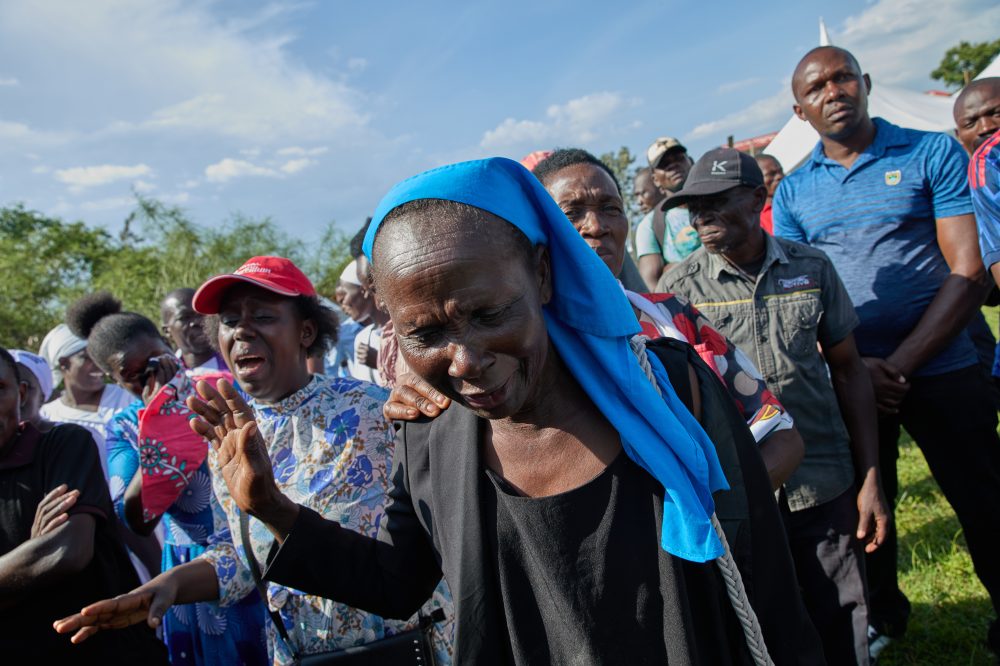

KISUMU, Kenya (AP) — At a roadside funeral service in western Kenya, the body of 64-year-old Tom Ochieng Mima lies in a decorated casket under white tents as mourners settle into plastic chairs, seeking shade from the blazing sun.
Loud cries fill the air, mixing melodic songs with raw emotional outbursts as a group of mourners wave green branches and strike them rhythmically against the earth. While such displays might appear typical at funeral services worldwide, this gathering has an unusual twist.
The group of men and women expressing such intense grief had never met Mima and have no connection to his grieving family members. These are hired professional mourners, paid to demonstrate public sorrow according to traditional Luo cultural practices.
This occupation provides an unexpected but steady income source in Kenya’s economically struggling western areas, where ancient customs merge with dominant Christian faith to form distinctive ceremonial practices.
“It is a job anyone can do,” explained Francis Oyoo, who has been working as a professional mourner for two years. “As long as you are in touch with your emotions and can show empathy.”
Oyoo usually gets hired for one or two mourning assignments monthly, earning approximately $80 per job — a modest sum that helps him make ends meet.
These hired mourners explain they tap into their personal experiences with loss to generate authentic emotion during strangers’ funeral services.
“You think of someone you loved,” Oyoo shared, noting he entered this line of work following his uncle’s accidental death, which motivated him to assist others dealing with bereavement.
James Ajowi, another paid mourner attending Mima’s service, has practiced this profession for over two decades. After losing his daughter to lung disease several years ago, he says his personal grief experience strengthened his dedication to this work. “It’s as if she was preparing me,” Ajowi reflected.
Bereaved families find significant solace in these professional mourners who increase funeral attendance, events that are already vibrant community gatherings throughout western Kenya.
“They support us. They show us love,” expressed Lawrence Ouma Angira, who was raised by his uncle Mima. “They help fill the emptiness and they comfort us,” he continued, despite the mourners never having known the deceased. “They understand loss.”
Within Luo communities near Lake Victoria, mourning serves purposes beyond expressing grief — it also provides spiritual protection, explained anthropologist Charles Owour Olunga. Death represents a passage, with mourners’ crying, singing, and movement believed to ward off malevolent spirits.
Extra mourners, usually women, participate in funeral ceremonies across traditional African and Asian societies, Olunga noted, though male participation is less common. Beyond expressing grief, they may help manage crowd control at large ceremonies.
The commercialization of mourning practices is a recent development, the anthropologist observed. “It is linked to urbanization and commercialization,” Olunga stated. “We are moving away from the authentic, but still holding on to tradition. They add color to an existing process.”
Religious scholars find the specific combination of Christian doctrine with older spiritual customs in western Kenya particularly fascinating.
According to University of Nairobi studies, this area contains numerous African-initiated churches, a movement connected to local resistance against strict Christian prohibitions of Indigenous ceremonies.
For mourners — both those who knew Mima and the hired participants — the complexities of merged Christian and traditional beliefs matter less than the emotional connection and comfort that shared grief creates within the community.
“Death is painful,” Oyoo observed. “But I also find strength in knowing that one day, I too will die — and people will gather for me.”