
OAKLAND, Calif. — The artificial intelligence company behind ChatGPT has successfully defended itself against a legal challenge from Elon Musk, keeping OpenAI — valued at $852 billion — positioned for what may become one of history’s largest public stock offerings.
Musk’s lawsuit aimed to remove his former business partner, CEO Sam Altman, along with implementing other company changes. However, while OpenAI won the case, witness testimony questioning Altman’s honesty has left the CEO’s reputation damaged.
During a period when artificial intelligence’s societal effects face increased scrutiny, this significant legal proceeding revealed problems and excessive ambitions among the limited group of wealthy individuals directing this transformative technology’s advancement.
According to Sarah Kreps, director of Cornell University’s Tech Policy Institute, the proceedings served as evidence “of how much the future of AI still depends on a remarkably small group of powerful tech figures and their personal rivalries.”
“The trial highlighted not just a dispute between Musk and Altman, but a broader disconnect between the people building these systems and many of the people increasingly expected to live and work alongside them,” Kreps said.
Musk’s allegations centered on claims that OpenAI, Altman and his senior associate Greg Brockman abandoned their original commitment to operate as a nonprofit organization focused on developing AI for humanity’s benefit. Altman countered by claiming Musk sought to damage the ChatGPT company to advantage his competing AI business.
A nine-member federal jury in Oakland, California ruled Monday that Musk filed his legal action too late, missing required deadlines. Following three weeks of proceedings featuring hundreds of evidence pieces and testimony from major technology industry figures, jurors needed less than two hours to reach their decision based essentially on procedural grounds.
Musk announced plans to challenge the ruling and criticized Judge Yvonne Gonzalez Rogers, who presided over the case, calling her a “terrible activist Oakland judge, who simply used the jury as a fig leaf” to establish harmful legal precedent. “She just handed out a free license to loot charities if you can keep the looting quiet for a few years!” Musk posted on his social media platform X.
This represents Musk’s second significant courtroom defeat in under two months.
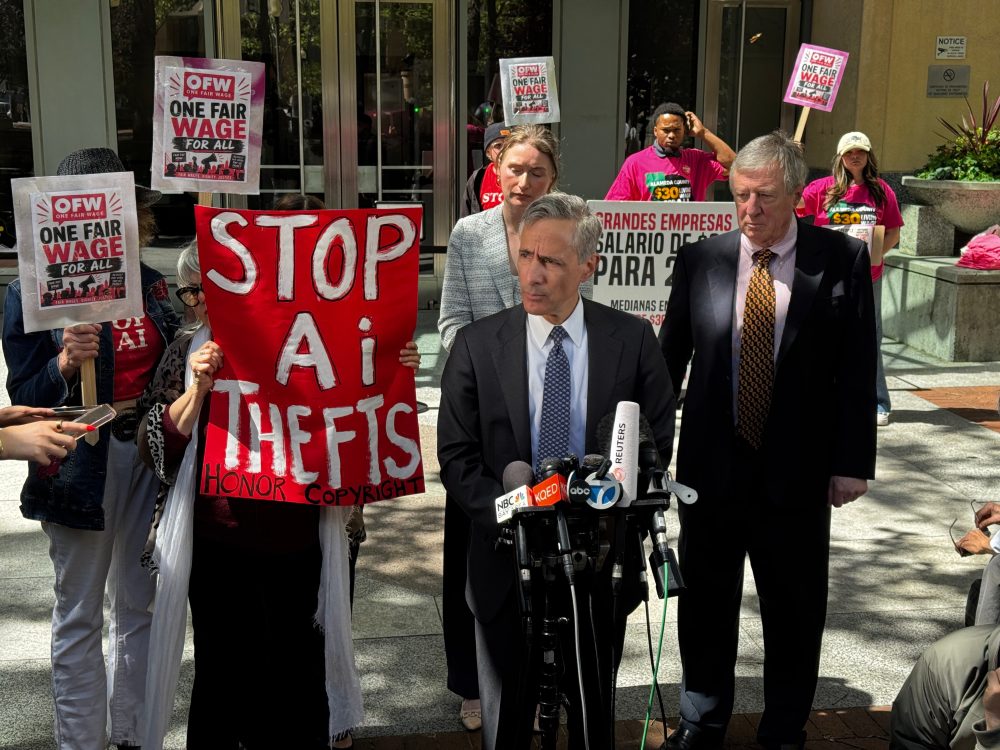
Judge Gonzalez Rogers indicated early in the trial that she wanted to prevent it from becoming an AI safety debate. Nevertheless, unresolved concerns about artificial intelligence’s potential to cause job displacement, mental health problems and even threaten human survival formed a constant background, with demonstrators regularly protesting both Musk and Altman outside the federal courthouse.
Protesters’ messages identified ordinary citizens as the true victims, whose lives face disruption from an industry dominated by disconnected billionaires engaged in personal conflicts.
“This is a funny microcosm of this moment where we have this hugely important technology that’s being developed by for-profit corporations run by people like Musk and Altman and not as the part of some government-led initiative,” said Columbia Law School professor Dorothy Lund.
The legal proceedings exposed Silicon Valley’s chaotic internal operations through emails, personal journal entries and sometimes humiliating text message conversations presented as evidence. Messages between Altman and a former OpenAI executive generated internet memes and inspired parody music.
The trial illuminated circumstances surrounding Altman’s 2023 removal from OpenAI’s board, followed by his return several days later. Multiple witnesses including former board members Helen Toner and Tasha McCauley testified about concerns regarding Altman’s honesty.
During the entire trial, OpenAI dismissed Musk’s betrayal accusations as baseless complaints motivated by resentment, designed to undermine the company’s rapid expansion while supporting Musk’s own artificial intelligence venture, xAI, now integrated with SpaceX.
Both Musk’s SpaceX and OpenAI are preparing major public stock offerings, as is Anthropic, established by seven former OpenAI executives.
“It’s a lot of dirty laundry that doesn’t look very appealing, I suppose, and so that may hurt their reputation and may have downstream effects on all kinds of things that you can’t even anticipate,” said University of Richmond Law School professor Carl Tobias. “But you know, AI is likely to come forward and continue even if it isn’t OpenAI.”