
Japan’s economy demonstrated remarkable strength during the first three months of the year, with government officials announcing Tuesday that the nation achieved a 2.1% annualized growth rate despite facing significant challenges from war-related energy cost increases in Iran.
The country’s real gross domestic product – which measures the total value of all goods and services produced – climbed 0.5% compared to the prior quarter after seasonal adjustments, marking the second consecutive period of economic expansion. When projected over a full year, this quarterly performance translates to the 2.1% annual figure.
The economic performance exceeded expectations, driven primarily by increased consumer and business expenditures along with higher government investment supporting the expansion.
According to preliminary Cabinet Office data, private consumption climbed 0.3% from the previous quarter, equivalent to a 1.1% annualized rate. Public sector demand also increased by 0.3% quarter-over-quarter.
Japan’s economic trajectory showed improvement after contracting during the July-September period last year, followed by modest 0.2% quarterly growth in the October-December timeframe.
The nation faces substantial obstacles due to its limited natural resources and dramatically rising oil costs. Brent crude prices have surged from approximately $70 per barrel before the conflict began to nearly $110 per barrel recently.
Military actions have effectively shut down the Strait of Hormuz, a crucial shipping lane for Persian Gulf oil heading to Asian markets, driving prices upward. Japanese officials have tapped strategic oil stockpiles and are exploring alternative transportation routes.
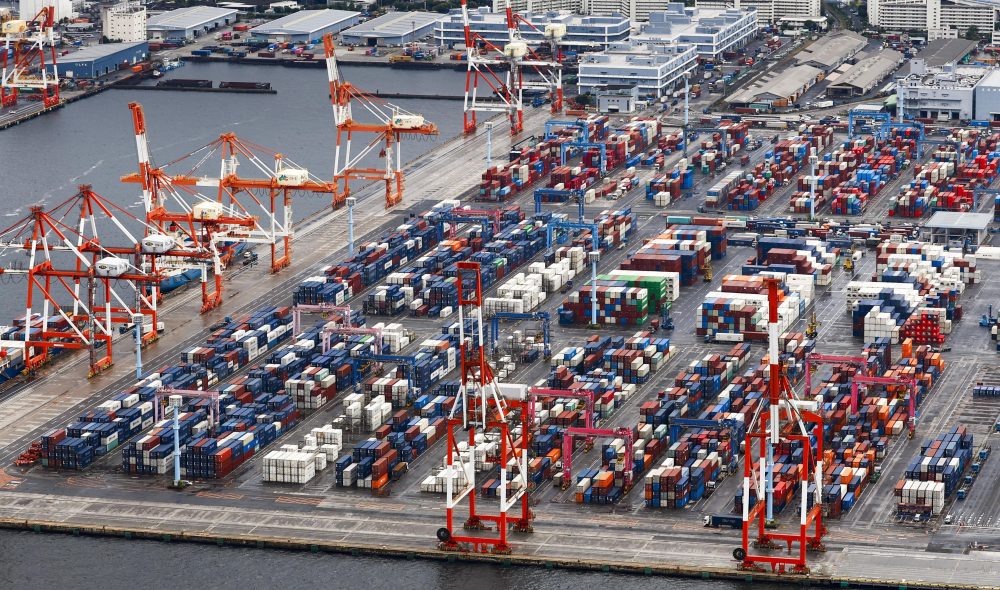
During the most recent quarter, the country’s total imports increased 0.5% while exports rose 1.7%.
Supply shortages of naphtha, an oil-derived material essential for manufacturing products ranging from bathtubs to plastic goods, have dominated Japanese news coverage.
Prime Minister Sanae Takaichi has pledged to secure adequate supplies to sustain economic momentum, which would likely necessitate substantial government expenditures.
Researchers at the Japan Center for Economic Research indicated in a recent analysis that the country should maintain modest growth levels, supported by increased investments in artificial intelligence technology and defense capabilities.
“The breadth of demand showed a high-quality growth picture, which may add evidence that inflation is broadening,” said Amova Asset Management Chief Global Strategist Naomi Fink.
Rising energy expenses are contributing to overall price increases, and the robust first-quarter performance may influence Japan’s central bank to consider interest rate hikes as it moves away from its longstanding policy of maintaining rates at or below zero.
While Japan’s inflation remains lower than U.S. levels, worker wages continue falling behind rising consumer costs.
The Nikkei 225, Tokyo’s primary stock index which has recently reached record peaks, dropped 0.6% during Tuesday morning trading sessions.