Medical device manufacturer Insulet Corporation announced Tuesday it is conducting a voluntary recall of specific insulin pump pods following the discovery of a manufacturing defect that may prevent patients from receiving adequate insulin doses.
The company’s stock price dropped 8% during after-hours trading following the announcement.
Key details of the recall include:
• The recall impacts particular batches of Omnipod 5, Omnipod DASH and the Omnipod Insulin Management System that were distributed throughout the United States and certain international markets.
• The defect, discovered during standard quality monitoring procedures, can create a small rupture in the cannula tubing above the patient’s skin, which may cause insulin to leak out rather than being properly administered.
• Patients might observe moisture or detect the odor of insulin, although the malfunction could potentially remain unnoticed.
• Insufficient insulin delivery can result in elevated blood glucose levels and, in extreme situations, diabetic ketoacidosis, a potentially fatal complication.
• This recall is distinct from a previous correction in March 2026 and stems from a separate manufacturing procedure, although both issues involved cannula processing at the company’s Massachusetts manufacturing plant, according to Insulet’s regulatory submission.
• Approximately 7 million pods are covered by this current recall, with roughly 60% already consumed or past their expiration date, accounting for about 8.5% of worldwide pod manufacturing in 2025, the company stated.
• Insulet documented 24 serious adverse reactions, including hospital admissions, but reported no fatalities.
• The company anticipates no interruptions to product supply and estimates related expenses could reach $50 million this year.
NEW YORK, May 26 – Major stock indices reached unprecedented closing levels on Tuesday, driven by enthusiasm surrounding artificial intelligence technology that helped overcome concerns about ongoing Middle East diplomatic efforts and recent military actions involving Iran.
Technology companies focused on semiconductors powered the market gains, with Micron experiencing a remarkable 19% surge that pushed the company’s market capitalization to $1 trillion for the first time. This milestone came after UBS analysts raised their price target for the stock from $535 to $1,625.
Strong corporate earnings reports and renewed investor confidence in artificial intelligence investments have propelled equity markets upward despite international tensions with Iran. Market participants are now focusing on potential public offerings from major private AI companies, including SpaceX.
“For those of us that have been working that long, the tech rallies we’ve been seeing this year are reminiscent of the boom at the end of the 1990s,” said Chris Zaccarelli, chief investment officer for Northlight Asset Management.
“It’s also possible that some of the lessons that were learned after the tech bubble burst over 25 years ago will prevent the same thing from happening again.”
Investors found reassurance in statements from U.S. Secretary of State Marco Rubio, who indicated that reaching an agreement with Tehran to end hostilities could “take a few days.” Meanwhile, Iran’s Tasnim news agency reported that Tehran is pursuing the release of $24 billion in frozen Iranian assets held overseas.
“Even though we don’t have an end of the war yet, there’s a very high likelihood the situation will resolve itself in a peaceful fashion sooner rather than later,” said Adam Sarhan, chief executive of 50 Park Investments.
“But the reality is that earnings are expected to grow even with high inflation. The economy is still growing, and the market is a mirror of the economy to a large extent.”
The Dow Jones Industrial Average dropped 118.02 points, or 0.23%, closing at 50,461.68. The S&P 500 climbed 45.65 points, or 0.61%, finishing at 7,519.12, while the Nasdaq Composite jumped 312.21 points, or 1.19%, to end at 26,656.18.
All three major indices – the S&P 500, Nasdaq, and Russell 2000 – achieved intraday record highs during Tuesday’s session, highlighting the momentum behind the current market advance.
Oil prices surged approximately 4% following U.S. military operations in Iran, creating additional uncertainty about prospects for a swift resolution to the conflict and potential impacts on shipping through the Strait of Hormuz.
Qualcomm shares climbed nearly 4.5% after reports emerged that the company secured a chip supply agreement with ByteDance, TikTok’s parent company. Marvell Technology finished 6% higher, while the Philadelphia SE Semiconductor Index achieved a new all-time high with a 5.5% gain.
As the current earnings season nears completion, first-quarter profit growth is projected at 29% compared to the same period last year, significantly higher than the 16.1% estimate from a month earlier, according to LSEG data released Friday.
On the New York Stock Exchange, advancing stocks outnumbered declining ones by a 2.47-to-1 margin. The exchange recorded 627 new highs against 90 new lows.
Nasdaq trading showed 3,078 stocks rising while 1,785 declined, with advancing issues leading by a 1.72-to-1 ratio.
The S&P 500 registered 42 new 52-week highs and one new low, while the Nasdaq Composite logged 185 new highs and 70 new lows.
Trading volume across U.S. exchanges totaled 18.85 billion shares, compared to the 18.71 billion average over the past 20 trading sessions.
Cybersecurity company Zscaler announced Tuesday that its projected fourth-quarter earnings would fall short of Wall Street expectations, as the firm grapples with mounting competition in the cloud security sector and more cautious business spending on security technologies.
The company’s stock price tumbled 15% during after-hours trading following the announcement, which highlighted the increasingly competitive landscape in cybersecurity services.
Zscaler operates primarily in the Secure Access Service Edge market, known as SASE, which merges network infrastructure and security functions into one unified platform designed to connect users, devices and applications regardless of location.
The SASE sector represents one of cybersecurity’s most rapidly expanding areas, fueled by ongoing cloud migration and the artificial intelligence revolution that continues reshaping network security frameworks.
However, Zscaler must contend with pressure from bigger competitors like Palo Alto Networks, which are aggressively pursuing greater market control through their own comprehensive platform solutions.
For the upcoming fourth quarter, the cloud security provider anticipates revenue ranging from $875 million to $878 million, falling below the $878.6 million average projection from analysts surveyed by LSEG.
The company does expect to exceed profit expectations, projecting adjusted earnings of $1.08 to $1.09 per share for the fourth quarter, surpassing analyst estimates of $1.03.
Zscaler’s third-quarter performance showed revenue of $850.5 million, which topped analyst predictions of $835.4 million.
During the third quarter, the company’s total operational costs climbed approximately 25% to $687.5 million, up from $547.5 million during the same period last year.
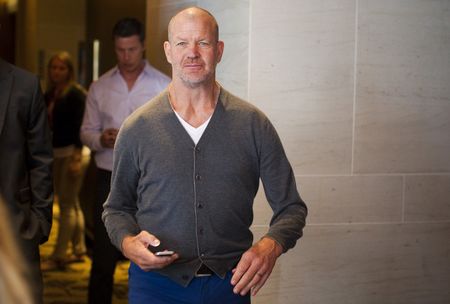
Athletic apparel company Lululemon Athletica is close to reaching a settlement agreement with company founder Chip Wilson that would resolve their ongoing proxy battle, according to sources with knowledge of the negotiations.
The proposed agreement under discussion would expand the company’s board of directors by adding two individuals chosen by Wilson, with plans to identify an additional mutually acceptable director at a later time, sources who are not authorized to speak publicly about the private negotiations revealed. The deal would also provide Wilson with regular access to incoming chief executive officer Heidi O’Neill, according to the sources.
Wilson, who established the company in 1998 and currently holds an 8.6% ownership stake, would agree to refrain from publicly or privately criticizing Lululemon for approximately two years under the proposed terms. His ownership percentage would also be limited to roughly 10%, the sources indicated.
However, sources emphasized that reaching a final agreement is not certain.
Neither company representatives nor Wilson were available for immediate comment.
These latest negotiations follow the recent collapse of earlier attempts to resolve what has become one of this year’s most notable proxy battles. After those talks failed, both sides exchanged sharp criticisms. The company stated in a regulatory filing last week that Wilson, who departed Lululemon’s board in 2015, holds “outdated perspectives” regarding the company’s strategic direction and has “troubling conflicts of interest.”
For several months, Wilson has voiced criticism of the company, claiming it has lost its “cool” factor and expressing concerns about current management practices.
Wilson initiated a proxy fight late last year and has spent recent months attempting to convince shareholders to support his three director candidates rather than the company’s three board members up for election at next month’s annual shareholder meeting.
The athletic wear company has experienced declining sales in North America, with its stock price dropping more than 60% over the past year as it faces increased competition from brands like Alo and Vuori.
With a market valuation approaching $15 billion, the company’s stock recently traded around $127, significantly down from its peak near $510 reached in late 2023.
Despite these challenges, the company has been preparing for a new phase by naming O’Neill, who developed Nike’s women’s business division, as its new CEO. The board has also welcomed former Levi Strauss CEO Chip Bergh and former Unilever chief growth and marketing officer Esi Eggleston Bracey as new directors.
Teri List, previously chief financial officer at Gap, joined the board in 2024. Directors David Mussafer and Shane Grant are scheduled to leave the board at the upcoming annual meeting.
O’Neill, who has a noncompete clause with Nike, is set to begin her role in September after being unanimously selected by the board, according to sources familiar with the selection process and investors who requested anonymity.
Motorists traveling southbound on Interstate 95 are encountering construction-related lane restrictions this morning. The right lane remains blocked between the Welcome Center and the DE 896 interchange.
According to traffic officials, the lane closure is expected to continue until 7:00 AM. Drivers are advised to plan for potential delays and use caution when traveling through the work zone.
Delaware State Police have released the name of the victim who died in Saturday evening’s deadly crash in Harrington. The victim has been identified as Leondre Boone, 34, of Lincoln, Delaware, according to authorities.
The deadly single-vehicle accident occurred on Sandbox Road and remains under active investigation by Delaware State Police Troop 3 Collision Reconstruction Unit. Authorities are seeking any witnesses or individuals with information about the crash to reach out to Master Corporal W. Booth at (302) 698-8451. Tips can also be submitted through private Facebook messages to Delaware State Police or by contacting Delaware Crime Stoppers at (800) 847-3333.
Those affected by crime, witnesses, or families who have experienced sudden loss can access support through the Delaware State Police Victim Services Unit and Delaware Victim Center. These services are available around the clock via a toll-free hotline at 1-800-VICTIM-1 (1-800-842-8461). Support can also be requested by emailing [email protected].
A supplement manufacturer based in Deer Park, New York has issued a voluntary recall for two of its green superfood products due to concerns about bacterial contamination.
Total Nutrition Inc. is pulling TNVitamins Ultra Potent Complete Green Superfood and Doctor’s Pride Complete Green Superfood Ultra Potent Moringa Capsules from the market. The recalled products come in 120-count bottles.
The company initiated the recall after discovering the supplements could potentially contain Salmonella bacteria, which poses serious health risks to consumers.
The Trump administration has put forward a proposal requiring federal workers throughout the government to sign nondisclosure agreements as part of an effort to prevent information leaks.
According to the plan, both newly hired federal employees and those currently working for the government would be required to sign these confidentiality agreements.
The initiative represents a government-wide approach to addressing concerns about unauthorized disclosure of information from federal agencies.
Motorists traveling on Otts Chapel Road should expect delays as construction work has forced the closure of the westbound shoulder between Welsh Tract Road and Entre Lane.
The shoulder closure is currently active and is expected to last until 3PM today, according to traffic officials.
Drivers are advised to use caution when traveling through the construction zone and to allow extra time for their commute.
The Tampa Bay Rays have acquired veteran right-handed pitcher Craig Kimbrel on a major league deal Tuesday as they look to improve their bullpen performance.
To create roster space for Kimbrel, the team moved right-hander Jesse Scholtens to the 15-day injured list due to a right wrist strain.
Kimbrel became available after the New York Mets released him Friday following a difficult stretch where the nine-time All-Star gave up 10 runs across 15 innings in 14 outings. The Mets had signed him as a free agent in January.
At 37 years old, Kimbrel brings extensive experience with 440 career saves across 10 different teams during his 17 seasons in professional baseball. His resume includes a World Series championship with Boston in 2018 and the 2011 National League rookie of the year award.
While the Rays currently hold the American League’s top record at 34-17, their bullpen has been a weak spot with a 4.40 earned run average that ranks 21st league-wide.
TAFTANAZ, Syria (AP) — Ancient agricultural traditions continue to thrive in northwestern Syria, where farmers maintain centuries-old techniques for cultivating freekeh, a smoky roasted wheat grain that serves as a cornerstone of Middle Eastern cooking.
The distinctive grain comes from wheat that’s harvested while still young and green, then roasted using open fire methods. This process burns off the outer shells while keeping the inner grain intact, creating freekeh’s characteristic smoky taste that sets it apart from other wheat products.
Around Taftanaz in Syria’s Idlib province, agricultural workers continue the seasonal ritual of gathering, moving and fire-roasting the wheat before cleaning it for sale at local markets. The practice has survived ongoing warfare and financial difficulties, representing a lasting element of Syria’s agricultural heritage. Throughout Syrian households and dining establishments, the grain typically accompanies meat dishes like lamb or chicken, often topped with nuts and fresh vegetables.
This is a photo gallery curated by AP photo editors.
Delaware’s mobile motor vehicle services will be temporarily unavailable during the first week of June 2026 as the traveling unit undergoes routine maintenance work.
The Delaware Division of Motor Vehicles has announced that its mobile DMV truck and trailer will be offline for scheduled repairs starting June 1, 2026. During this maintenance period, the mobile unit will not make its regular stops in Seaford, Milton, and Lewes.
Residents who normally rely on the traveling DMV services are being directed to visit permanent office locations in Georgetown, Dover, Delaware City, or Wilmington to conduct their motor vehicle business during this time.
Colorado’s star player Nathan MacKinnon is expected to take the ice for Tuesday’s critical Game 4 against the Vegas Golden Knights, despite nursing a right leg injury, head coach Jared Bednar announced. The Avalanche are fighting to stay alive in the Western Conference finals, currently facing elimination while down 3-0 in the series.
The 30-year-old forward skipped Tuesday morning’s optional practice session due to his injured right leg, but Bednar indicated MacKinnon was feeling significantly improved after taking a complete day of rest.
The injury occurred during Sunday’s game when MacKinnon blocked a one-timer from Shea Theodore, taking the shot directly to his right knee with less than eight minutes remaining in the second period.
MacKinnon dropped to the ice immediately and clutched his right leg after the puck struck the side of his knee. Despite being down on the ice, he managed to clear the puck beyond the blue line before being unable to stand, prompting officials to halt play for medical attention.
The injured star left the ice on his own but was clearly struggling. He attempted to continue playing, returning for two additional shifts before ultimately heading to the locker room late in the second period due to his discomfort.
During the third period, MacKinnon managed only one regular-strength shift, though he did contribute during a power play opportunity and when Colorado pulled their goaltender for a 6-on-5 advantage in the final minutes.
Throughout these playoffs, MacKinnon has recorded points in nine of Colorado’s 12 postseason games, including an assist in the first period of Sunday’s contest. His playoff total stands at 15 points, consisting of seven goals and eight assists. During the regular season, he topped the NHL with 53 goals.
Colorado winger Valeri Nichushkin, who sustained a lower-body injury during Game 3, also missed Tuesday’s practice and remains questionable for the upcoming game.
For the first time in the conference finals, the Avalanche will start goaltender Mackenzie Blackwood as they attempt to prevent being swept by the Knights.
The Pittsburgh Penguins have locked up veteran forward Evgeni Malkin for another year, announcing a one-year contract extension worth $5.5 million on Tuesday.
The deal ensures Malkin will suit up for his 21st campaign with Pittsburgh during the 2026-27 season. The forward was set to become a free agent before the new agreement was reached.
At 39 years old, with his 40th birthday approaching on July 31, Malkin continues to produce at an elite level. During the 2025-26 campaign, he tallied 61 points through 19 goals and 42 assists across 56 contests.
Since joining the NHL with Pittsburgh in 2006, Malkin has built an impressive resume of achievements. The veteran has captured three Stanley Cup championships and earned seven All-Star selections throughout his career.
His trophy case includes the Calder Trophy for top rookie honors in 2006-07, the Hart Trophy as league MVP in 2011-12, and two Art Ross trophies for leading the NHL in scoring during the 2008-09 and 2011-12 seasons. He also claimed the 2009 Conn Smythe Trophy as playoff MVP.
In franchise history, Malkin trails only teammate Sidney Crosby in games played with 1,269 appearances. He sits third on the team’s all-time lists for goals with 533, assists with 874, and total points with 1,407.
Oil markets experienced significant volatility Tuesday as Brent crude futures surged approximately 4% following U.S. military action in Iran, dealing a blow to weekend optimism that Washington and Tehran might reach a deal to conclude their three-month conflict and reopen the strategically important Strait of Hormuz to shipping.
While international oil prices climbed, U.S. crude futures declined as they adjusted to Monday’s Brent selloff that occurred while American markets were shuttered.
The global Brent benchmark increased $3.44, or 3.6%, closing at $99.58 per barrel, whereas U.S. West Texas Intermediate crude dropped $2.71, or 2.8%, finishing at $93.89.
Monday saw Brent reach its lowest point since April 20, falling 7% amid fresh optimism for a U.S.-Iran accord. American crude markets were closed Monday for the Memorial Day holiday.
WTI hit its lowest close since April 22 on Tuesday, with U.S. gasoline futures plummeting 7% and diesel declining 4% to five-week lows.
American officials have repeatedly indicated they were nearing an agreement with Iran to cease hostilities, though no deal has materialized beyond a temporary truce that has minimized attacks.
Tuesday brought Iranian accusations that the U.S. violated the ceasefire through what America termed defensive operations in southern Iran, while U.S. Secretary of State Marco Rubio suggested reaching a conflict-ending agreement might “take a few days.”
Iran’s foreign ministry characterized the U.S. operations in the southern Hormozgan province, where Iranian media documented explosion sounds early Tuesday, as a “gross violation” of the fragile seven-week ceasefire.
Previously, both nations had signaled advancement on a memorandum of understanding that could end hostilities and resume Strait of Hormuz shipping, providing negotiators 60 days to address more complicated matters, including Iran’s nuclear activities.
“We are still waiting for more details on a potential deal,” said Giovanni Staunovo at UBS. “Meanwhile we see renewed tensions in the Middle East, while flows through the Strait remain restricted.”
The American military action coincided with Iran’s chief negotiator and foreign minister conducting discussions in Doha with Qatar’s prime minister to pursue an agreement.
Iran has essentially blocked nearly all non-Iranian vessel traffic through the Strait of Hormuz since late February when the conflict commenced, restricting roughly one-fifth of worldwide oil and liquefied natural gas transportation.
Nevertheless, vessel tracking information revealed three LNG carriers recently transited the Strait heading to Pakistan, China and India, alongside a supertanker transporting Iraqi crude to China that had been stranded for almost three months.
The United Kingdom Maritime Trade Operations reported Tuesday that a tanker experienced an external blast on its port side near the waterline, approximately 60 nautical miles from Oman’s capital, Muscat.
Pakistan intends to expand domestic storage capacity for crude oil and refined products to enhance energy security, according to government documentation shared with oil producers and major global trading companies.
American consumer confidence decreased in May as concerns about war-related inflation escalated and households maintained negative labor market outlooks.
Rising inflation increases consumer costs for goods, prompting central banks like the U.S. Federal Reserve to consider tighter monetary policies that would likely raise borrowing expenses and slow economic expansion.
Seattle’s baseball team brought back relief pitcher Gabe Speier from the 15-day injury reserve list on Tuesday.
The 31-year-old left-handed pitcher had been sidelined since May 4 due to inflammation in his left shoulder.
Before getting hurt, Speier posted an 0-2 record with a 2.92 ERA and recorded one save across 15 relief outings this season.
Throughout his major league career spanning 230 games (including one start) with Kansas City from 2019-22 and Seattle, he holds a 6-11 record with a 3.60 ERA.
To create roster space, Seattle sent right-handed pitcher Nick Davila down to Triple-A Tacoma following Monday’s contest.
The 27-year-old Davila, who made his big league debut on May 3, has given up three hits while throwing 7 1/3 shutout innings over seven relief outings.
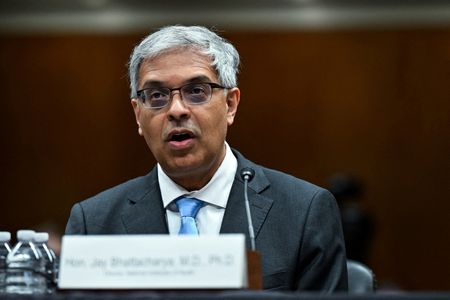
The Centers for Disease Control and Prevention is calling for volunteer personnel to help with emergency screening efforts for Ebola at entry points across the United States, according to an internal communication obtained by Reuters on Tuesday.
In an email sent to staff, CDC Acting Director Jay Bhattacharya explained that the agency initiated a Level 2 emergency response on May 18 following an outbreak of the Bundibugyo strain of the Ebola virus in the Democratic Republic of the Congo and Uganda. The agency is now looking beyond its typical emergency response team as screening operations for certain international travelers increase.
According to CDC guidelines, a Level 2 emergency response represents a moderate level of crisis requiring significant additional personnel to handle response needs.
Enhanced screening procedures have already begun at multiple port health stations and will need more staff members to operate effectively. The agency is requesting volunteers from various departments, including public health advisers, emergency specialists and licensed medical providers, pending approval from their supervisors.
Those who volunteer may be assigned duties such as observing incoming travelers for symptoms of illness, taking temperatures and directing potential cases for additional evaluation, the email indicated.
The current outbreak involves the Bundibugyo strain of the virus. Ebola is a dangerous and frequently deadly illness spread through direct contact with infected bodily fluids.
The World Health Organization has classified this outbreak of the uncommon Bundibugyo strain as the third-largest Ebola outbreak in history and declared it a public health emergency of international concern.
On Monday, WHO Director-General Tedros Adhanom Ghebreyesus stated that the rapidly spreading Ebola outbreak in the Democratic Republic of Congo and Uganda was moving faster than response capabilities, reporting the most recent count of suspected fatalities at 220.
Officials in Washington state are responding to a deadly industrial accident that occurred Tuesday when a tank filled with chemicals exploded at a packaging plant.
The blast happened at the Nippon Dynawave Packaging facility located in Longview, Washington, according to ABC News reports citing local authorities. The incident resulted in several deaths and left multiple workers with serious injuries.
Emergency responders are continuing to investigate the circumstances surrounding the tank explosion at the industrial facility.
Major U.S. stock indexes climbed to record territory Tuesday as enthusiasm for artificial intelligence technology overshadowed worries about Middle East diplomatic efforts, which have been complicated by recent American military actions against Iran.
Technology companies focused on semiconductors drove the market gains, with Micron Technology surging over 19% to reach a $1 trillion market capitalization for the first time. The rally came after UBS analysts boosted their price target for the stock from $535 to $1,625.
Strong corporate earnings and renewed investor confidence in AI-related investments have pushed American stock markets higher despite ongoing tensions with Iran. Market participants are now watching for initial public offerings from major private artificial intelligence companies, including SpaceX.
“For those of us that have been working that long, the tech rallies we’ve been seeing this year are reminiscent of the boom at the end of the 1990s,” said Chris Zaccarelli, chief investment officer for Northlight Asset Management.
“It’s also possible that some of the lessons that were learned after the tech bubble burst over 25 years ago will prevent the same thing from happening again.”
Investors found encouragement in statements from U.S. Secretary of State Marco Rubio, who indicated that an agreement with Tehran to stop the conflict could “take a few days.” Meanwhile, Iran’s Tasnim news agency reported that Tehran is pursuing the release of $24 billion in Iranian assets frozen internationally.
“Even though we don’t have an end of the war yet, there’s a very high likelihood the situation will resolve itself in a peaceful fashion sooner rather than later,” said Adam Sarhan, chief executive of 50 Park Investments.
“But the reality is that earnings are expected to grow even with high inflation. The economy is still growing, and the market is a mirror of the economy to a large extent.”
By 2:13 p.m. EDT, the Dow Jones Industrial Average dropped 175.28 points, or 0.35%, to 50,404.42. The S&P 500 climbed 40.23 points, or 0.54%, to 7,513.70, while the Nasdaq Composite advanced 265.39 points, or 1.01%, to 26,609.36.
The S&P 500, Nasdaq, and Russell 2000 all achieved new intraday peaks Tuesday, highlighting the momentum behind the current market upswing.
Oil prices also moved higher, with Brent crude futures jumping approximately 4% Tuesday following U.S. military strikes in Iran. The action has increased uncertainty about whether negotiators can quickly reach an agreement to end the conflict and restore normal shipping through the Strait of Hormuz.
Other technology stocks also posted gains, with Qualcomm climbing 3.6% after Bloomberg News reported the company secured a chip supply agreement with TikTok owner ByteDance. Marvell Technology increased 6%, while the Philadelphia SE Semiconductor Index rose 5% to reach an all-time high.
The S&P 500 information technology sector led all categories with a 1.5% increase.
As the quarterly earnings reporting period nears completion, first-quarter profit growth is projected to reach 29% compared to the same period last year, up from the 16.1% estimate from a month earlier, according to LSEG data from Friday.
On the New York Stock Exchange, stocks moving higher outnumbered those declining by a 2.27-to-1 margin. The exchange saw 504 new highs and 82 new lows.
Nasdaq trading showed 3,040 stocks rising and 1,761 falling, with advancing issues leading decliners by a 1.73-to-1 ratio.
The S&P 500 registered 40 new 52-week highs and one new low, while the Nasdaq Composite recorded 174 new highs and 65 new lows.
The Delaware Division of Motor Vehicles has announced that its mobile DMV on the Go service will be temporarily unavailable during the week beginning June 1, 2026, due to routine maintenance on the truck and trailer.
During this maintenance period, the mobile unit will not make its regularly scheduled stops in Seaford, Milton, and Lewes. Residents needing DMV services are advised to visit one of the permanent office locations in Georgetown, Dover, Delaware City, or Wilmington instead.
As an alternative, many DMV transactions can be completed through the state’s online portal using a myDMV account, which is accessible at myDMV.delaware.gov.
The mobile DMV service is expected to resume its regular operating schedule on June 8, 2026, beginning at 10:00 am.
The National Agricultural Statistics Service has issued its most recent assessment of crop development and agricultural conditions.
The federal agency’s latest report provides updated statistics on farming progress and the current state of crops in the field.
This periodic assessment helps track agricultural development throughout the growing season, offering insights into crop advancement and field conditions across farming regions.
Commercial shrimp fishing operations along the Gulf Coast are appealing to federal lawmakers for assistance as they face a perfect storm of rising fuel expenses and ongoing pressure from less expensive foreign competition.
The shrinking community of shrimp boat operators who remain active in the industry are experiencing severe financial strain as gasoline prices continue to climb while they battle against an influx of lower-cost imported seafood flooding the market.
These economic pressures have forced some fishers to seek alternative employment to supplement their income, highlighting the precarious state of an industry that has already seen significant consolidation in recent years.
MIAMI GARDENS, Fla. — The Miami Dolphins organization announced Tuesday that Manny Fernandez, a defensive lineman who played a crucial role in the team’s historic undefeated 1972 campaign, has passed away at the age of 79.
The team did not reveal the cause of death.
Throughout his complete eight-season NFL tenure with Miami, Fernandez served as a cornerstone of the Dolphins’ “No-Name Defense,” a unit that propelled the franchise to three straight Super Bowl appearances between 1971 and 1973, capturing championships in both 1972 and 1973.
“We are deeply saddened by the passing of Manny Fernandez,” the Dolphins said in a statement, “a member of the 1972 perfect team, a two-time Super Bowl champion, ring of honor member and an anchor of the Dolphins’ legendary ‘No-Name Defense.’ His consistent and selfless contributions on the field were instrumental to the Dolphins’ success throughout the early 1970s, particularly in the team’s three consecutive Super Bowl appearances, in which he produced some of the most memorable defensive performances in the history of the game.”
Fernandez delivered an outstanding performance in Miami’s Super Bowl victory against Washington that capped their flawless 1972 campaign. He played alongside legendary teammates including Bob Griese, Nick Buoniconti and Larry Csonka.
Despite entering the league as an undrafted free agent from Utah in 1968, Fernandez earned recognition in the Dolphins’ Ring of Honor in 2014.
“Our thoughts are with his family, loved ones and teammates as we remember one of the best players in Dolphins history,” the team said.
A Maine Democratic Senate candidate turned a pulled advertisement into a campaign opportunity over Memorial Day weekend, using the controversy to advance his message against private equity influence.
Graham Platner, seeking to challenge longtime Republican Sen. Susan Collins, launched a commercial during Red Sox game coverage that criticized the team’s ownership for damaging the beloved franchise. The network removed the advertisement partway through the broadcast, giving Platner additional ammunition for his populist campaign themes.
“We ran an ad during last night’s Red Sox game exposing how private equity is making everything in our lives worse, and it got pulled midway through the game by a station owned by Red Sox ownership,” Platner stated on Saturday. “And of course, the Red Sox blew a 4-0 lead to lose the game.”
New England Sports Network, which removed the advertisement, is primarily owned by Fenway Sports Group – the same conglomerate that controls the Red Sox and Liverpool soccer club.
“NESN removes advertisements when credible concerns arise regarding the use of intellectual property,” the network explained in a statement. “The advertisement in question was removed because the creative included unauthorized use of third-party intellectual property and did not comply with NESN’s advertising standards.”
Network officials declined to specify which elements of the commercial violated their policies. The Red Sox organization also remained silent when asked for comment.
Collins’ campaign dismissed Platner’s Red Sox criticism as a distraction from “questions about his judgment and character.” The candidate has faced scrutiny over a tattoo linked to Nazi symbolism that he later covered up, plus controversial social media posts about women, police, veterans and rural residents. Platner has apologized for these issues and claimed ignorance about the tattoo’s significance when he got it following a drinking session.
The 15-second commercial featured the oyster farmer pledging to “reverse the private equity curse” if elected, while lamenting the absence of Mookie Betts – referencing fan anger over FSG’s 2020 trade of the homegrown star to the Los Angeles Dodgers. The phrase echoes “reverse the curse,” a popular fan rallying cry from the 1990s and 2000s referencing the team’s championship drought before 2004.
The advertisement also targeted private equity for “buying up our homes, our sports and our lives” while citing a March 2021 Axios report about RedBird Capital Partners acquiring an 11% stake in FSG.
During that period, FSG also brought on Los Angeles Lakers star LeBron James as an investor, with James expressing interest in eventual NBA team ownership.
FSG subsequently acquired the NHL’s Pittsburgh Penguins in late 2021, winners of five Stanley Cup championships. The group agreed to sell the Penguins to Chicago-based Hoffmann Family of Cos. for approximately $1.7 billion in 2025, with the sale receiving approval this year.
John Henry, FSG’s founder and principal owner, donated hundreds of thousands of dollars primarily to Democratic candidates during the late 1990s and early 2000s. Campaign records show no political contributions from him after 2004.
The Red Sox currently occupy last place in their division with a 22-30 record, sliding into mediocrity since the RedBird Capital partnership began. Frustrated fans have chanted “sell the team” during some home games this season in Boston.
Before the RedBird Capital arrangement, the franchise enjoyed considerable success, capturing World Series titles in 2004, 2007, 2013 and 2018. Since then, the team has struggled, reaching the American League Championship Series just once.
The nation’s highest court on Tuesday turned down Meta’s request to block a legal challenge claiming the company’s Facebook and Instagram platforms damage teenage users’ wellbeing, marking another setback for social media giants facing mounting legal pressure.
Meta Platforms Inc. had sought Supreme Court intervention after Vermont’s top court permitted a 2023 lawsuit brought by the state’s attorney general to proceed. The tech giant confronts comparable legal actions from multiple states nationwide, all claiming the company deliberately created habit-forming platform elements.
The corporation maintained it should not face litigation in Vermont’s courts since neither the business nor its app development has direct connections to that state. Vermont responded that the platforms’ substantial teenage user base within state borders provides adequate legal grounds for court authority.
In a standard brief order without explanation, the Supreme Court refused to consider the appeal. This ruling follows previous courtroom defeats for Meta and YouTube in social media dependency cases in California and New Mexico.
These legal challenges emerged following a multi-state investigation led by attorneys general from both political parties, including Vermont. Media coverage highlighting Meta’s internal research revealed the corporation understood Instagram’s potential negative effects on adolescents, particularly teenage girls, regarding mental wellness and self-image concerns. Company research indicated that 13.5% of teen girls reported Instagram worsened suicidal thoughts, while 17% said the platform aggravated eating disorder symptoms.
Data from the Pew Research Center shows nearly every teenager between 13 and 17 years old in America uses social media platforms, with approximately one-third reporting “almost constant” usage.
Meta has responded by stating it has already rolled out numerous resources designed to help teenagers and their families, and indicated willingness to collaborate with states on establishing youth social media usage guidelines.
A catastrophic chemical tank collapse at a Washington state paper manufacturing facility Tuesday morning resulted in multiple fatalities and severe injuries, according to company representatives and local emergency officials.
The tank failure occurred at 7:15 a.m. at the Nippon Dynawave Packaging Co. facility in Longview, Washington. Company officials and law enforcement agencies released a combined statement confirming the incident produced “multiple critical injuries” along with an unspecified number of deaths. Emergency responders reported that victims sustained burn wounds and breathing-related injuries from the accident. Officials emphasized there was no danger to surrounding communities.
The official announcement came more than four hours following the tank failure, with authorities stating that rescue and recovery efforts were ongoing. Officials indicated they would not identify casualties until family members could be contacted.
Family members and friends gathered outside the company’s main entrance Tuesday, hoping to learn about employees they knew who worked inside the plant. These individuals refused to speak with an Associated Press journalist.
The manufacturing complex operates as both a pulp production facility and liquid packaging operation, creating materials for facial tissues, office paper, disposable cups and plates, beverage containers and similar products. The Washington State Department of Ecology reports the plant workforce totals approximately 1,000 employees.
The failed container held a chemical mixture called “white liquor,” a caustic solution composed primarily of sodium hydroxide and sodium sulfide that breaks down wood fibers during kraft paper manufacturing. Kraft paper serves as a strong packaging material used in shopping bags and various container applications.
Mike Gorsuch, battalion chief with the fire department in Longview, Washington, characterized the situation as a “mass casualty scene.” Emergency personnel decontaminated injured workers before transporting them to medical facilities in Longview and Vancouver, Washington, Gorsuch explained.
Approximately 40 fire and emergency medical personnel responded to the incident, supported by a specialized hazardous materials response team, according to Gorsuch.
Meanwhile, thousands of southern California residents remained displaced Tuesday following damage to a chemical storage tank at an aerospace manufacturing plant.
New York basketball fans remained in celebration mode Tuesday morning following their team’s historic advancement to the NBA Finals, marking the Knicks’ first championship series appearance since 1999.
Crowds wearing team colors of blue and orange packed the streets of New York City late into Monday evening after the Knicks finished off a complete four-game series victory over the Cleveland Cavaliers. The triumph sends New York to the Finals as underdogs, no matter which opponent awaits them in their quest to break a 53-year championship dry spell.
Celebrating supporters brought brooms to the festivities, playfully using them to sweep pavement and wave overhead during the street party. New York City Mayor Zohran Mamdani joined the fun on social media platform X, posting “@NYCSanitation I’d like to report a sweep.”
Following his team-leading 19-point performance in the series-clinching victory in Cleveland, Knicks center Karl-Anthony Towns reflected on the moment’s significance. “It’s a magical thing, it’s a historic thing,” Towns commented. “It’s something New York has been dying for, for a long, long time.”
“But for us as players, we understand that the job’s not done,” he added.
The transformation from struggling franchise to championship contender began with team President Leon Rose joining the organization in March 2020, just as the club was heading toward its seventh straight season without playoff basketball.
Under Rose’s leadership, the franchise evolved from league joke to serious title threat. The team has reached the postseason in five of the past six years and made it to the second-to-last playoff round in 2025, falling to the Indiana Pacers in a six-game series.
Point guard Jalen Brunson, who earned Eastern Conference Finals MVP honors this year, has been the cornerstone since joining the organization four years ago. Management has constructed the roster around Brunson, adding talent like six-time All-Star Towns.
“Growing up in the (New York) area, I feel like the word ‘hope’ has been gone from the New York Knicks name for a long time,” Towns explained. “To be part of this team that revives hope is something special.”
New York’s Finals appearance creates compelling drama for the seven-game championship series. The franchise hasn’t captured a title since 1973, and this marks only their third Finals berth since that championship, having fallen short in 1994 and 1999.
Despite an impressive 11-game postseason winning streak, the Knicks enter as underdogs against either NBA MVP Shai Gilgeous-Alexander and the defending champion Oklahoma City Thunder, or a San Antonio Spurs squad featuring French star Victor Wembanyama.
The Finals run will draw the typical collection of famous supporters to the games. Director and devoted fan Spike Lee, wearing his signature orange glasses, positioned himself courtside to record the team receiving the Eastern Conference championship trophy Monday night.
Four-time Academy Award nominee Timothée Chalamet joined players in their celebration, while actor Ben Stiller also attended the game. Comedian Tracy Morgan appeared emotional while enjoying the victory from his courtside seat.
Whether regular citizens or Hollywood celebrities, the Knicks will have an entire city supporting their attempt to end five decades without a championship.
Federal civil rights officials have taken legal action against the University of California Los Angeles, claiming the school allowed a dangerous atmosphere for Jewish and Israeli students to persist on campus.
The Civil Rights Division of the U.S. Department of Justice filed the federal lawsuit on Tuesday, charging that UCLA violated Title VI, the federal statute that bars discrimination based on race, color, or national origin in programs receiving federal funding. Officials accused the university of showing “deliberate indifference to this pervasive on-campus antisemitism.”
The legal complaint focuses on an unauthorized encampment established on UCLA’s campus during April 2024. Federal prosecutors characterized this encampment as unlawful and claim that Jewish students faced physical attacks during this period.
“Universities have an obligation to maintain safe and inclusive campuses for all students,” stated Bill Essayli, the first assistant U.S. attorney for the Central District of California.
“Universities that violate our nation’s civil rights laws by repeatedly failing to shield Jewish students from antisemitism will be held accountable.”
UCLA officials had not provided a response when contacted for comment about the lawsuit.
The Justice Department revealed this legal action on the same day that a federal appeals court partially supported an injunction requiring the restoration of University of California grants that the Trump administration had cancelled last year due to concerns about diversity, equity and inclusion programs.
This lawsuit represents another enforcement action by the Trump administration targeting what officials characterize as antisemitism at American universities following the October 7, 2023, attacks by Hamas against Israel.
The 2023 assault killed more than 1,200 people and sparked the ongoing Israel-Gaza conflict. The war has claimed over 75,000 lives to date.
Student activists across the United States and Europe organized protests following the outbreak of war, demanding an end to hostilities through a ceasefire. Some demonstrations involved students taking over university buildings.
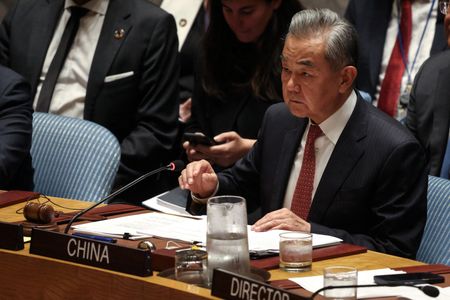
China’s top diplomat called on Tuesday for all sides involved in the Iran conflict to maintain their dedication to ceasefire negotiations and continue working toward compromise.
The statement from Foreign Minister Wang Yi came as tensions escalated, with Iran accusing the United States of breaking the ceasefire following what the U.S. described as defensive military actions in southern Iran. Meanwhile, U.S. Secretary of State Marco Rubio indicated that reaching an agreement to end the fighting could require “a few days” of additional negotiations.
Speaking to reporters at the United Nations headquarters in New York following his leadership of a 15-member Security Council session, Wang expressed his desire for progress toward peace.
“We hope that the parties concerned can stay committed to pursuing a ceasefire and continue to meet each other halfway, so that peace can return to the Middle East as early as possible,” Wang told the media.
The Chinese Foreign Minister acknowledged the complexity of resolving deep-rooted conflicts, using a metaphor to illustrate his point.
“As we have been saying, it takes more than one cold day to freeze three feet of ice, and long-standing issues cannot be resolved overnight,” Wang stated.
Despite the challenges, Wang emphasized the importance of maintaining momentum in diplomatic efforts.
“However, every step forward in the negotiation brings more hope to peace, and one day earlier the conflict is ended means less civilian casualties,” he added.
WASHINGTON – Federal aviation authorities announced Tuesday they are seeking a $165,000 penalty against Alaska Airlines for reportedly permitting passengers who appeared intoxicated to board aircraft.
According to the Federal Aviation Administration, the violations allegedly happened across 11 separate flights spanning from February 2024 through February 2025. Federal rules strictly forbid airlines from allowing anyone who seems to be under the influence to board planes, the agency noted.
Alaska Airlines had not provided a response to requests for comment as of Tuesday.
WASHINGTON – Federal safety investigators are urging aviation officials to overhaul their methods for evaluating runway safety during storm conditions, warning of increased dangers when aircraft attempt to land on water-soaked surfaces.
The National Transportation Safety Board issued the safety recommendations Tuesday following their analysis of 11 separate incidents where planes skidded beyond runway boundaries between 2008 and 2022, all involving landings on rain-soaked pavement.
Safety investigators specifically highlighted a 2019 incident involving a Boeing 737 that overran the runway in Jacksonville, Florida, which they attributed partly to “an extreme loss of braking friction due to heavy rain and the water depth on the ungrooved runway, which resulted in viscous hydroplaning.”
South Carolina’s Republican state senators have declined to move forward with a redistricting proposal that received endorsement from Trump, according to recent legislative developments.
The redistricting effort was designed to potentially impact the congressional district currently represented by prominent Democrat Jim Clyburn. Trump had encouraged the Republican senators to pursue the redistricting changes as a strategy to help flip the House seat.
However, the GOP senators, who are not up for reelection this year, chose to reject the redistricting plan despite the former president’s advocacy for the measure. The proposal faced resistance within the state legislature.
Maps displaying the proposed new congressional districts were presented in the South Carolina Senate antechamber on Friday, but the legislative body ultimately decided against implementing the changes.
Soccer fans across the nation are waiting to learn which athletes will represent the United States at the upcoming World Cup tournament, with the official announcement scheduled for 3 p.m. ET this afternoon.
Several experienced players who competed in the previous World Cup are anticipated to earn positions on the team roster. Forward Christian Pulisic along with midfielders Weston McKennie and Tyler Adams are among the veterans expected to secure their places when the complete lineup is revealed.
The roster announcement comes as excitement builds for the international tournament, with supporters eager to see which combination of players will take the field for the national team.
Three young suspects are now in custody following an early morning robbery investigation in New Castle County.
New Castle County Division of Police officers were called to Clayton Road’s 1500 block in the Cleland Heights neighborhood on Monday, May 25, 2026, around 6:28 a.m. after receiving reports of a robbery that had just taken place.
When police arrived at the scene, they spoke with the victims who told them that multiple suspects were involved in the incident.
Five athletes from the University of Delaware softball program have been recognized for their academic excellence by College Sports Communicators.
Katie Scheivert, Josie Crossman, Bridget Chapman, Kylie Wilkerson, and Claire Woods all received Academic All-District Team honors, according to an announcement made by the organization on May 26.
The recognition highlights the academic achievements of these student-athletes alongside their athletic participation in the university’s softball program.
A threat for strong to locally severe thunderstorms is expected to develop across portions of the Mid Atlantic on Wednesday as a potent upper level disturbance tracks across the northeastern United States.
According to the latest forecast discussion from the Storm Prediction Center, a strong shortwave trough moving southeast across Ontario and into the Northeast will help trigger scattered thunderstorms from the Ohio Valley eastward into Maryland, Delaware, and Virginia during the afternoon and evening hours Wednesday.
A warm, humid, and moderately unstable air mass is expected to be in place across much of the region ahead of an approaching surface boundary stretching from the Ohio Valley into the Delmarva Peninsula. As daytime heating develops, scattered thunderstorms are expected to form and organize along and south of the boundary.
The main severe weather threat will be damaging wind gusts, especially within more organized clusters of thunderstorms capable of producing strong downdrafts. Steep low level lapse rates combined with moderately strong winds just above the surface may allow some storms to transfer stronger winds down to ground level.
Across the Delmarva region, the greatest severe weather potential currently appears to be during the afternoon into the early evening hours Wednesday. While widespread severe weather is not expected at this time, isolated storms could become strong enough to produce locally damaging wind gusts and brief heavy downpours.
The threat level and storm coverage will depend heavily on how much instability can develop during the day, which will be influenced by cloud cover and any lingering showers from earlier in the day.
Residents across the Mid Atlantic and Delmarva Peninsula are encouraged to stay weather aware Wednesday afternoon and evening as conditions may become favorable for a few severe thunderstorms capable of producing isolated wind damage.
An employee terminated by an Indiana university following her Facebook comments about conservative activist Charlie Kirk has been awarded $225,000 in a legal settlement that claimed her former workplace violated her constitutional free speech protections, her legal representatives announced Tuesday.
The American Civil Liberties Union revealed the settlement in a federal case they brought last year representing Suzanne Swierc against Ball State University President Geoffrey Mearns.
Swierc held the position of director of health promotion and advocacy at Ball State’s Muncie, Indiana campus until her termination last September. Ball State pointed to Swierc’s personal Facebook comment regarding Kirk as the only basis for dismissing her, claiming it created “significant disruption” on campus.
The termination of Swierc breached her constitutional protections since she was “speaking as a private citizen on a matter of public concern,” stated Stevie Pactor, an ACLU lawyer in Indiana.
“The First Amendment does not allow government institutions to retaliate in those circumstances, and this settlement reflects that,” Pactor said in a statement.
Mearns stood by his decision to terminate Swierc in a Tuesday statement distributed to campus leadership, which a Ball State spokesperson provided to The Associated Press.
Mearns explained that negative reactions to Swierc’s comment posed risks to the institution’s student recruitment and donor contributions. He characterized the settlement’s “modest monetary payment” to Swierc as significantly lower than the expense of litigating her case.
Kirk, who established the conservative group Turning Point USA, died in a shooting incident on September 10 at a Utah university campus. Prior to his death, Kirk was recognized for mobilizing conservative young voters to support President Donald Trump’s successful bid for a second presidency.
Swierc joined numerous employees across public and private organizations who faced job losses after sharing social media content and images related to Kirk’s assassination. She represents one of several individuals who have secured legal settlements through court proceedings.
This month, a Florida state department agreed to a $485,000 settlement with a former state biologist dismissed after sharing a meme suggesting Kirk was indifferent to school shooting victims.
In January, Austin Peay State University in Tennessee brought back a professor and provided him a $500,000 settlement following his lawsuit over termination for sharing a 2023 news story titled: “Charlie Kirk Says Gun Deaths ‘Unfortunately’ Worth it to Keep 2nd Amendment.”
Legal cases from additional terminated employees remain active in the courts.
In her Facebook message, Swierc described Kirk’s death as a “tragedy.” However, she also characterized it as a “reflection of the violence, fear, and hatred he sowed.” She added: “If you think Charlie Kirk was a wonderful person, we can’t be friends.”
Swierc’s legal team noted that her Facebook account’s privacy controls restricted public access to her posts, though someone captured and widely distributed screenshots of her Kirk commentary online.
Ball State’s president reported that Swierc’s post generated numerous angry phone calls and emails directed at the university. Some threatened to stop financial contributions and at least one parent indicated plans to remove her children from the institution. Several callers made violent threats, Mearns reported.
“The reaction was extraordinarily damaging to our University’s reputation and image, and it was exceptionally disruptive to our mission and our people,” Mearns said in his statement.
WASHINGTON — The nation’s highest court delivered a victory Tuesday to President Donald Trump’s administration in a legal battle concerning speech limitations placed on immigration judges, a case that highlighted broader questions about federal worker rights.
The justices reversed a previous court decision that had permitted the lawsuit to move forward, while simultaneously raising concerns about whether the federal employee grievance process remains effective following the Republican president’s removal of several key officials from the system.
Despite holding the title of judges, these immigration officials are classified as federal employees who sought to challenge through the courts a policy that limited their ability to speak publicly. This restriction began during Trump’s initial presidency and was maintained under President Joe Biden’s Democratic administration. The immigration judges contended this represented a violation of free speech rights that warranted federal court intervention.
The Trump administration took the opposite position, maintaining that these officials should pursue their grievances through the established federal employee complaint process managed by the Merit Systems Protection Board.
While the court’s decision focused on procedural matters, Justice Clarence Thomas, with Justice Amy Coney Barrett’s agreement, issued criticism directed at the 4th U.S. Circuit Court of Appeals for engaging with “political controversies of the day.”
This Tuesday ruling arrives as the court considers a separate case regarding Trump’s authority to dismiss leaders of independent agencies. The resolution is anticipated to influence dismissal powers concerning Merit Systems Protection Board members as well.
The immigration judges initially filed their lawsuit in 2020, and the Supreme Court had previously provided them temporary support through an emergency ruling in December.
Ride-share drivers working for companies like Uber and Lyft in Massachusetts achieved a historic milestone Tuesday by establishing the nation’s first statewide union for app-based transportation workers, representing a significant breakthrough in efforts to organize gig economy employees.
This groundbreaking achievement could serve as a blueprint for similar organizing campaigns underway in states like California and Illinois, where labor advocates are increasingly focusing on app-based industries as workers also face concerns about the rapid advancement of autonomous driving technology.
Currently, Massachusetts does not allow fully autonomous commercial rides operating without human supervision.
The union certification was made possible following voter approval of a 2024 ballot initiative that established an unprecedented system enabling ride-share drivers to form unions and engage in collective bargaining while maintaining their status as independent contractors. Union organizers indicate the group could eventually include nearly 70,000 drivers across the state.
With drivers holding signs and chanting in front of the Massachusetts State House’s distinctive gold dome, labor representatives characterized this achievement as the most significant private-sector organizing success since autoworkers at Ford formed their union in 1941.
Jean Fredo, an Uber driver with more than seven years of experience, expressed hope that unionization would deliver improved wages, enhanced protection against unexpected account suspensions, and greater job security for drivers.
“With the union, it will not feel like we’re working for nothing,” he said in French through a translator. “Now the money will not only stay in the billionaire’s pockets. The money will actually come to the workers who work very hard.”
Fredo explained that while he initially valued the flexibility and schedule control that came with driving for Uber, allowing him to remain available for his family, conditions gradually deteriorated. He found himself putting in longer shifts while earning less as fuel and vehicle maintenance expenses increased.
Workers can also suddenly lose platform access with minimal notice or appeal options, he noted.
“I live with stress — always scared to lose my app,” Fredo said. “This is not a way to live.”
Upon learning about the organizing campaign, Fredo immediately participated and subsequently helped recruit hundreds of additional drivers at airports and meeting locations throughout the Boston region.
During the celebration, Fredo raised his fists triumphantly while displaying a photograph of his family to the assembled crowd.
“This is my family,” he said. “I’m fighting for a better life for them — just like everyone else is fighting for their families. My dream is to save and send my kids to college, and I believe we will get there.”
Advocates point to increasing vehicle expenses, unpredictable compensation, and unclear app algorithms as sources of driver dissatisfaction, particularly among those working extended hours while covering their own fuel, insurance, maintenance, and vehicle depreciation costs. Both Uber and Lyft maintain that drivers appreciate the flexibility of app-based employment and have resisted initiatives that might reclassify workers or modify the industry’s operating structure.
The union drive has developed alongside the accelerating growth of self-driving vehicle technology. While Massachusetts permits autonomous vehicle testing on public streets, existing rules mandate a licensed human operator remain in the vehicle. Completely driverless commercial services without human supervision are prohibited throughout the state.
Waymo has launched driverless taxi services in cities such as San Francisco, Los Angeles, and Phoenix. This expansion has faced criticism regarding traffic interference, safety reviews, and problems with stuck or malfunctioning vehicles, while also increasing concerns among ride-hailing drivers about their employment prospects.
Julie Blust of the App Drivers Union noted that drivers nationwide maintain regular communication about evolving industry conditions, including autonomous vehicle expansion in California.
“We now know what’s happening there,” she said. “Drivers are seeing pay go down, and there are real concerns about safety and job security as automatic vehicles expand.”
Union organizers increasingly view collective bargaining as a method for drivers to jointly address the growth of autonomous vehicle companies, she explained.
“Drivers now have an official organization and can speak with one voice about what’s happening in this industry,” Blust said. “We cannot let billions of dollars leave Massachusetts and go to Silicon Valley. That money feeds people’s families, that money pays the rent. That money goes into small businesses.”
The negotiation process is occurring as Massachusetts officials review comprehensive new ride-hailing regulations proposed this spring covering safety requirements, driver supervision, and electric vehicle fleet proposals. Shortly before the union certification, Uber cautioned in a blog post that certain proposals might increase costs and limit driver flexibility, while supporters argued the changes aim to improve safety and oversight.
In a Tuesday email statement, Uber indicated it would collaborate with the union and state officials as negotiations proceed.
“As we enter this next phase, we will work closely with the ADU, our broader driver community, and the Department of Labor Relations,” the company said. “Together, we will ensure that driver flexibility and hard-won benefits remain the foundation of our progress.”
Lyft also announced plans to participate in the new bargaining framework.
“As this new process moves forward, we’re committed to engaging in good faith,” the company said in a statement. “Lyft does well when drivers do well, and we’ll stay focused on helping drivers succeed while keeping rideshare affordable and dependable for everyone who counts on it.”
Four student-athletes from Salisbury University’s softball program have been named to the 2026 Academic All-District teams, as announced by College Sports Communicators.
The Academic All-District recognition highlights student-athletes across the country who demonstrate excellence both in competition and in their academic studies. College Sports Communicators oversees the Academic All-America program, which provides separate recognition for softball players across four different divisions: NCAA Division I, NCAA Division II, NCAA Division III, and NAIA.
The honor represents the combined achievements of these players in their athletic performance on the softball field as well as their commitment to academic success in the classroom.
MONTREAL — Following a regular season where he nearly averaged a point per game and surpassed 30 goals as one of Carolina’s top offensive contributors, Andrei Svechnikov had little to celebrate through his initial 10 playoff contests this spring.
That changed during Monday night’s overtime period.
The Russian winger’s game-winning strike in Game 3 of the Eastern Conference Final versus Montreal marked only his second postseason goal and fifth overall point, pushing Carolina ahead 2-1 in the series. For the 26-year-old forward, it represented a crucial breakthrough moment.
“It’s the most important time of my life right now — of our life as a team — and you’ve got to get on the scoresheet somehow,” Svechnikov said. “I think we’re just playing good as a line. We’re creating a lot, and (in Game 3) we create lots of chances.”
The Hurricanes’ primary offensive unit featuring Svechnikov, Sebastian Aho and Seth Jarvis had struggled to generate scoring throughout the playoffs. Instead, the combination of Taylor Hall, Jackson Blake and Logan Stankoven had primarily driven the attack that carried Carolina through two consecutive sweep victories in earlier rounds.
However, after outshooting Montreal by nearly three-to-one, they delivered when the stakes were highest.
“It’s awesome,” said defenseman Shayne Gostisbehere, who recorded the opening goal with his first playoff tally. “Those guys built the foundation of this team, and they carried us this whole season. It’s nice to see them, obviously, get the results that they’ve been working hard for.”
This is particularly true for Svechnikov, whom his teammates routinely encourage to take more shots.
“He’s the strongest guy on the ice, and when he’s playing a power forward role is when he’s his best,” Gostisbehere said. “We always say, ‘Just go be an animal out there — smartly.’”
Head coach Rod Brind’Amour, who has guided the team through eight straight playoff berths since assuming control and served as captain during Carolina’s 2006 Stanley Cup championship, wasn’t dissatisfied with Svechnikov’s overall performance. With nine victories in 10 contests, there was little reason for major complaints. Still, Monday’s breakthrough could prove pivotal.
“Hopefully it jumpstarts him getting on the scoresheet,” Brind’Amour said. “He’s been a factor — just not scoring. You’re not going to advance if you don’t get production out of your top guys, obviously, so it was great to see that.”
Contributing as a factor involves delivering hits and maintaining physical presence. Svechnikov ranks third on the roster with 46 hits, and part of their Eastern Conference Final strategy involves targeting Montreal’s smaller defenseman Lane Hutson and his teammates. Svechnikov embraces this approach.
“I don’t want to really talk about it, but that’s what we try to do,” he said. “Just finish the checks, obviously, and hopefully they’re going to turn the puck over or ice the puck and we get the offensive faceoff and all that stuff. We always try to finish our checks.”
Converting offensive opportunities remains equally important. Aho expressed satisfaction with their line’s performance, which finally resulted in a goal just past the 14-minute mark of overtime.
“We could have scored more than one goal, but it’s just the way it goes and we know more goals are coming for us,” Svechnikov said.
Republican lawmakers in South Carolina’s state Senate delivered an unexpected setback to President Donald Trump on Tuesday, voting down a proposed congressional redistricting plan that would have targeted Democratic U.S. Representative James Clyburn’s district.
The rejection of the new map represents an uncommon instance of members of Trump’s own party breaking ranks with the president’s agenda. The proposed redistricting effort had been designed to create a more competitive landscape in Clyburn’s congressional seat.
Three sources familiar with the situation revealed Tuesday that Canadian satellite company Telesat has conducted initial discussions with Italian officials regarding the provision of encrypted communication services for government personnel, diplomats, and military officials working in dangerous locations.
The pursuit of satellite communication solutions has emerged as a particularly delicate matter in Italy following the breakdown of negotiations with Elon Musk’s Starlink service last year, highlighting increasing strains between European and American interests.
According to company information, Telesat currently manages 11 geostationary satellites and has plans to deploy between 150 and 200 low-Earth-orbit satellites starting this year to serve both commercial and military clients.
The unnamed sources indicated that Telesat officials engaged in preliminary conversations with Italian government representatives, though no financial terms were discussed during these early meetings.
According to one source, the most recent discussions occurred within the past month. A separate source noted that Italian officials have not yet provided any response to Telesat’s proposal.
When contacted, a Telesat representative stated the company could not offer any comments regarding the matter at this time.
Reuters previously reported that Rome had explored a potential five-year agreement worth €1.5 billion ($1.6 billion) with SpaceX’s Starlink, which leads the industry with approximately 7,000 operational low-Earth-orbit satellites.
Low-Earth-orbit satellites function 36 times nearer to Earth compared to conventional satellites, resulting in reduced transmission delays and delivering superior, faster internet connectivity even in isolated regions.
THE HAGUE, Netherlands — A cruise vessel connected to a fatal hantavirus outbreak must complete extended sanitization procedures before heading back to its home port, according to the company that runs the ship.
Oceanwide Expeditions announced Tuesday in a written statement that the additional work is happening at the recommendation of the GGD local health authority in Rotterdam, the port city where the ship returned early last week. The vessel’s home port is located in nearby Vlissingen in the southern Netherlands.
“Based on their inspection findings, GGD has advised additional cleaning,” the cruise company stated. “Following completion of this work, GGD will conduct a final inspection before the vessel can depart from Rotterdam.”
The company did not provide details about why extended cleaning was necessary, and the health authority did not immediately respond with comments about the reasoning behind the additional requirements.
Yvonne van Duijnhoven, the director of public health in Rotterdam, had indicated when the Hondius docked at the city’s expansive port eight days ago that cleaning and disinfecting the ship would probably require three days.
In a post shared Sunday on X, World Health Organization Director-General Tedros Adhanom Ghebreyesus reported that 12 hantavirus cases and three deaths have been documented by the organization so far, with no fatalities recorded since May 2.
“All passengers and crew remain in quarantine and under close monitoring to ensure they receive care if needed. The situation is stable for now. We continue to remain vigilant and in close contact with all relevant governments,” he stated.
Hantaviruses typically transmit when individuals breathe in contaminated particles from rodent waste. However, the specific hantavirus responsible for this outbreak, known as the Andes virus, might occasionally spread from person to person. Public health authorities indicate that the risk to the broader public from this cruise ship outbreak remains minimal.
Oceanwide Expeditions had earlier stated it did not anticipate any modifications to the Hondius’ operations. The vessel had an Arctic voyage scheduled to depart from Keflavik, Iceland, on May 29. However, in Tuesday’s announcement, the company indicated that “all voyages from 13 June onwards will proceed as scheduled. No further disruption to the sailing schedule of m/v Hondius is expected.”
SAO PAULO (AP) — Twelve months ago, Brazilian Senator Flávio Bolsonaro promoted his family’s ties to U.S. President Donald Trump as a significant political advantage. This week, the senator has traveled to Washington to strengthen that alliance once more as he works to stabilize his faltering presidential campaign following revelations that he accepted millions from a corrupt banking executive.
The senator touched down on Tuesday with no announced public schedule. His political opponent in October’s election, Brazilian President Luiz Inácio Lula da Silva, held a three-hour session with Trump on May 7. The 80-year-old president is pursuing a fourth non-consecutive term in office.
The Trump administration has remained silent regarding the Bolsonaro controversy.
The former President Jair Bolsonaro’s son has faced intense criticism since May 13, when leaked communications published by The Intercept from a federal police probe revealed he obtained approximately $12 million from Daniel Vorcaro, the former head of the now-closed Banco Master.
Vorcaro faces charges of stealing hundreds of millions from bank clients after persuading them to participate in questionable investment schemes. Federal police in Brazil calculate the institution’s overall fraud at 12 billion reais ($2.3 billion).
Flávio Bolsonaro has rejected all allegations of misconduct and maintains that Vorcaro’s funds were utilized to finance a biographical film about his father. While Bolsonaro is not anticipated to face charges in the matter, the probe remains ongoing.
Opposition figures have launched attacks following the disclosure.
“Anyone getting close to a criminal banker gives a bad sign,” former Minas Gerais Gov. Romeu Zema, a Jair Bolsonaro supporter who is running for the presidency, said on Monday.
The senator’s campaign has experienced turbulence as he hunts for a vice presidential candidate and works to build coalition partnerships. These alliances are crucial for securing additional funding and complimentary television and radio coverage, which depends on each party’s representation in the lower legislative chamber.
Prior to the public emergence of Bolsonaro’s ties to Vorcaro, he already faced limited backing from much of the business sector.
Former Goias Gov. Ronaldo Caiado and Renan Santos, both seeking the presidency, have expressed skepticism about Bolsonaro, while some political figures suggest that former first lady Michelle Bolsonaro should take his place as the presidential nominee.
“Michelle would bring many voters back. She has a good name for herself,” former environment minister and lawmaker Ricardo Salles said in a recent podcast. “She is much softer and that could work.”
Michelle Bolsonaro resides with the former president in Brasilia, where he remains under house arrest following his conviction for attempting a coup. She has stayed quiet about the connection between the senator and the failed banking executive, as well as about potentially launching her own presidential campaign.
“That is none of my business. I have to take care of my husband,” she said last week.
Sen. Marcos Rogerio, among Flávio Bolsonaro’s primary congressional supporters, stated the presidential candidate has been providing appropriate explanations regarding his dealings with Vorcaro.
“Moments like this deserve our attention. He needs to make it all clear. But he has also argued in favor of a congressional inquiry on Banco Master. This thing will not bar his candidacy at all,” Rogério told journalists on Saturday. “We are not going to re-evaluate his bid or choose a different person. The senator’s candidacy is still standing.”
Political analyst Lula Guimaraes, who has advised candidates from various political backgrounds in Brazilian campaigns, indicated the revelations would have been devastating for Bolsonaro had they emerged closer to election day.
The ongoing police investigations may continue to damage his prospects, though voters could set the matter aside when casting ballots, Guimaraes noted.
“As of now, people in Brazil want to know who will win the next World Cup. They want to know whether Neymar will play or not. That alone will make this whole affair less visible for a month,” Guimaraes said. “I don’t think this alone will be deadly for Flávio Bolsonaro, but even the man himself said there’s more about him and Vorcaro to come out. He’d better buckle up.”
WASHINGTON — Federal workers across the country could soon be required to sign non-disclosure agreements under a new proposal from the Trump administration aimed at preventing unauthorized information from reaching the press.
The Office of Personnel Management published a request for public feedback Tuesday in the Federal Register regarding a draft agreement that would apply to both current federal workers and new hires.
According to the notice, the agreement would serve to “document Federal employees’ acknowledgment of, and agreement to comply with, current legal obligations to safeguard non-public, confidential, or proprietary information, created or obtained through their official duties, while expressly preserving the right to make disclosures authorized by law.”
Officials cited multiple recent cases where internal government communications about policy decisions and rule development were shared without permission. The agency specifically mentioned unauthorized disclosures by workers at the FBI and Department of Homeland Security regarding planned immigration operations.
The request highlighted one incident where the New York Times and Washington Post obtained advance knowledge of a U.S. operation in Venezuela last January and chose to postpone “publishing what they knew to avoid endangering U.S. troops.”
Neither newspaper responded immediately to requests for comment.
Stopping unauthorized disclosures that the administration considers damaging to its communications strategy has become a key focus across government agencies since President Donald Trump’s return to office. As part of these efforts, federal investigators in January confiscated electronic equipment belonging to a Washington Post journalist, drawing criticism from news organizations and press freedom advocates.
Another significant confrontation happened last year when numerous reporters surrendered their Pentagon press credentials rather than accept new restrictions from Defense Secretary Pete Hegseth that could result in their removal for attempting to report on any information — whether classified or not — that Hegseth had not personally authorized for publication.
The American Federation of Government Employees has not yet provided a response to the proposal.
COLUMBIA, S.C. — Tuesday marked the start of early in-person voting for South Carolina’s primary elections, while state senators deliberated on potentially canceling congressional elections to implement new district boundaries crafted to assist Republicans in defeating an established Democratic representative.
U.S. Rep. Jim Clyburn, the Democratic congressman Republicans aim to unseat through redistricting, was among the initial voters casting early ballots in Orangeburg. The veteran lawmaker declared his intention to seek reelection despite potential changes to his district boundaries.
“I’m OK if it’s Trump plus 20,” Clyburn stated when discussing the possible Republican edge in a redrawn district. “I would be running where I live.”
This South Carolina political maneuvering represents part of a broader Republican initiative — driven by President Donald Trump — to redraw electoral boundaries favoring the GOP as they attempt to maintain their narrow House majority during midterm elections. Republicans have moved swiftly to capitalize on a recent U.S. Supreme Court decision that reduced minority protections under federal Voting Rights Act provisions.
However, Republicans encountered a significant obstacle Tuesday in Alabama, where a three-judge federal panel issued a preliminary injunction preventing the state from implementing a Republican-designed congressional map that could secure the GOP an additional seat. The court determined the Republican proposal “intentionally discriminated based on race” by establishing only one Black-majority district and mandated continued use of a court-imposed map featuring two districts with substantial Black populations.
Alabama Attorney General Steve Marshall, a Republican, pledged a swift appeal to the U.S. Supreme Court and predicted ultimate success.
Democrats, who have experienced their own losses in the nationwide redistricting conflict, celebrated the Alabama development.
The “fight for justice is far from over in states across the country where politicians are enacting gerrymanders on top of gerrymanders to erase equal representation for communities of color,” said Marina Jenkins, executive director of the National Redistricting Foundation, a nonprofit affiliate of the National Democratic Redistricting Committee.
Electoral districts are customarily redrawn following a census at each decade’s beginning. However, Trump has encouraged Republican-controlled states to redistrict before November elections to counter political challenges, which typically cause the president’s party to lose congressional seats during midterms.
Following Trump’s initial push for Texas to redraw its electoral districts last summer, Republicans have also implemented new House districts in Missouri, North Carolina, Ohio, Florida and Tennessee. Simultaneously, California voters approved new Democratic-drawn districts, and a court imposed a favorable map for Democrats in Utah. Democrats faced disappointment in Virginia, where the state Supreme Court invalidated a voter-approved redistricting plan that might have helped Democrats secure additional seats.
Redistricting conversations continue in Louisiana after an April high court decision that overturned a majority-Black congressional district as an illegal partisan gerrymander. The Louisiana House may vote this week on a new map that could eliminate a seat held by Democratic U.S. Rep. Cleo Fields and enhance Republicans’ prospects of winning six of the state’s seven seats.
The Congressional Black Caucus on Tuesday urged major corporations throughout the U.S., including those that previously supported voting rights and racial justice, to oppose redistricting efforts by Republican-led states seeking to eliminate majority-Black U.S. House districts. This follows the caucus’s previous call for Black athletes to boycott public universities in states gerrymandering congressional maps to eliminate districts held by Black lawmakers.
Over 26,000 ballots were cast in South Carolina by midday Tuesday during the first day of early voting for the June 9 primary after Democrats urged opponents of the proposed new map to vote in large numbers. In 2022, approximately 125,000 early votes were cast during the entire two-week period.
The Republican-controlled House has already approved a proposal that would restructure Clyburn’s district, invalidate current congressional primary results and conduct new U.S. House primaries in August.
Trump has advocated for the proposal, placing at least two phone calls to Republican state Senate Majority Leader Shane Massey and also calling into a private Republican senators’ meeting earlier this month. He has also continued applying pressure through social media.
Discussion has stalled in the Senate, where Democrats strongly oppose the plan and some GOP legislators worry that aggressive redistricting might backfire by making certain Republican-held seats vulnerable to losses due to adding Democratic voters.
Clyburn observed that when state lawmakers previously redrew congressional districts following the 2020 census, they spent months conducting statewide meetings to collect public input. Although that map created a 6-1 seat advantage for Republicans over Democrats, the process was systematic and equitable, he explained.
“When the map was challenged, the U.S. Supreme Court said, yes, this is constitutional,” Clyburn said. But now, “this White House says, to hell with the process, to hell with the Constitution, just do what we want done.”
DOVER, Del. – Delaware’s Division of Historical and Cultural Affairs is marking America’s upcoming 250th Anniversary with special commemorative programming across multiple historic sites statewide.
The celebrations will feature events at various HCA locations designed to highlight significant historical moments that shaped our nation’s story. Participating venues include the New Castle Court House Museum, The Old State House located in Dover, and the Zwaanendael Museum in Lewes.
These programs are being coordinated as part of Delaware’s broader observance of the nation’s semiquincentennial milestone, offering residents opportunities to connect with pivotal chapters in American history at some of the state’s most significant historical landmarks.
PORTLAND, Maine — A ballot measure in Maine designed to restrict transgender students’ participation in athletics has been struck from the November ballot due to insufficient valid signatures, state officials announced Tuesday.
The initiative, backed by the parents’ organization Protect Girls Sports in Maine, sought to have voters decide whether public schools should limit bathroom and sports access based on the gender listed on a student’s birth certificate.
Maine Secretary of State Shenna Bellows, who is running for governor as a Democrat, announced Tuesday that her office discovered more than 12,000 signatures on the referendum petition were invalid. This finding left the campaign several hundred signatures below the necessary 67,682 needed to qualify for the ballot, Bellows explained.
The ruling represents a blow to the broader national effort to restrict or prohibit transgender student participation in athletics. Maine became a focal point for this debate last year amid a public dispute between Democratic Gov. Janet Mills, who is serving her final year due to term limits, and President Donald Trump.
“We take the integrity of the petitions just as seriously as we take the security of voting. It’s really important that anyone seeking to place a initiative on the ballot follow the law,” Bellows said.
The petition organizers have a 10-day window to challenge Bellows’ ruling. Representatives from Protect Girls Sports in Maine did not respond immediately to requests for comment Tuesday, though they indicated last week they would continue efforts to get the measure on the ballot. The organization retains the option to pursue placing the initiative on a future ballot, Bellows noted.
Last week, the secretary of state’s office issued a preliminary recommendation stating the petition “does not meet the constitution threshold” for valid signatures. Leyland Streiff, the principal officer of Protect Girls Sports in Maine, responded with a statement saying the group was “continuing our defense of the Protect Girls Sports ballot measure.”
Currently, at least 19 states have enacted legislation prohibiting transgender girls and women from accessing girls’ and women’s restrooms in public schools, with some extending to other government buildings, private schools, or public spaces. A court has temporarily suspended enforcement of one such law in Montana.
Additionally, at least 30 states have implemented laws or policies aimed at preventing transgender girls and women from participating in girls’ and women’s athletics. Legal challenges have blocked some of these measures from taking effect.
None of these bathroom or sports restrictions originated through voter initiatives. Two other Democratic-led states, Colorado and Washington, have sports-related measures appearing on their November ballots.
These limitations on both issues have been enacted within the last five years and have received support from Trump. Following his return to office last year, he ended agreements with school districts designed to protect transgender students and issued an executive order restricting transgender athlete participation in sports.
Those opposing the Maine ballot question expressed support for Bellows’ decision Tuesday. The petition organizers “failed to follow the rules,” stated David Farmer, campaign manager for the Campaign for Free and Fair Schools, which worked against the proposed question.
WASHINGTON — Federal officials announced Tuesday they will accept an additional 10,000 white South Africans as refugees this year, expanding the nation’s historically limited annual ceiling while continuing to deny entry to people from other nations seeking refuge.
The administration halted the refugee program on its first day and has since transformed it into a pathway specifically for Afrikaners — white South Africans primarily descended from Dutch colonists — to enter the United States. Advocacy organizations argue that directing a program with decades of history toward a single demographic has stranded individuals worldwide who are escaping violence and conflict with limited alternatives.
Officials claim Afrikaners face persecution in their homeland, an allegation that South Africa’s government rejects.
In Tuesday’s Federal Register announcement, President Donald Trump cited “an unforeseen emergency refugee situation” as justification for expanding the refugee ceiling. He criticized South Africa’s government for “recent increases in the incitement of racially motivated violence” without providing specific details.
“I hereby determine that the admission to the United States of Afrikaners from South Africa in response to this emergency is justified by the grave humanitarian concerns and is otherwise in the national interest,” Trump stated in the announcement.
Officials previously indicated they would accept up to 7,500 individuals, primarily Afrikaners, during the fiscal year running from October 2025 through September 2026. However, in a recent congressional notification about the increase, the administration cited “unforeseen developments in South Africa created an emergency refugee situation.” The revision increases the ceiling to 17,500.
The State Department has already processed more than 6,000 individuals through the refugee program since the fiscal year began in October, according to government statistics. All but three of those individuals came from South Africa, with the remaining three originating from Afghanistan.
Presidential authority determines annual refugee admission limits, and traditionally, these numbers have been distributed across different global regions while considering conflicts or wars that create humanitarian crises worldwide.
The refugee program, overseen by the State Department and Department of Homeland Security, operates separately from asylum procedures. Refugee applicants must reside outside the United States and complete screening and verification processes before admission, while asylum seekers are already present on American territory.
During his previous term, the administration dramatically reduced annual refugee admissions. The subsequent administration rebuilt the system, establishing a goal of accepting 125,000 refugees in its final year.
Organizations that have spent decades assisting refugee resettlement in America have filed lawsuits seeking admission for individuals who were undergoing the refugee application process but are now stranded.
“For nearly half a century, the U.S. Refugee Admissions Program embodied a simple but powerful, bipartisan idea: that the United States would offer safety to the world’s most vulnerable refugees,” said Beth Oppenheim, President & CEO of HIAS, in a statement. “This administration is now dismantling that legacy in plain sight.”
Texas voters head to the polls Tuesday to decide a Republican U.S. Senate primary runoff between longtime incumbent Senator John Cornyn and state Attorney General Ken Paxton, in a costly and prolonged campaign that has drawn President Donald Trump into the fray.
Trump’s backing of Paxton, whom he described as ‘a true MAGA Warrior,’ arrived in the final stretch of the contest and represents another attempt by the president to target Republican officials he considers inadequately supportive.
The Republican victor will face off against Democratic state Representative James Talarico in the November general election.
The March 3 primary results showed no distinct regional patterns. Close vote tallies in Houston, Dallas and neighboring communities highlight how the competition crosses through, rather than cleanly dividing, Texas’ metropolitan and suburban territories.
Cornyn — who Paxton criticized as overly connected to Washington Republicans and insufficiently devoted to Trump — captured victories in the state’s most populous counties, including metropolitan areas around Dallas-Fort Worth, San Antonio, Austin and Houston. However, Paxton stayed within striking distance, losing by approximately 1,900 votes in Harris County, which includes Houston, and 4,100 votes in Bexar County, which contains San Antonio. Tuesday’s runoff may hinge on which candidate establishes stronger regional support, especially around Houston, where Representative Wesley Hunt, who placed third, exceeded his statewide performance.
Dallas-area contractor Raymond Schramm stated Tuesday that healthcare concerns him, particularly Republican-led reductions in Affordable Care Act subsidies, and he questions how the conflict with Iran has been handled.
While he supported President Donald Trump, he believes the Senate requires someone who will “have a little bit of a difference.” He favors Talarico for his apparent kindness.
“I like him. He’s a nice guy. He speaks well,” he said. “I don’t believe in the party system.”
“My situation is a little different than Massie’s or Cassidy’s,” said Cornyn, referring to two other Republican incumbents who criticized Trump more openly and recently lost their primaries amid pressure from the president and his endorsed candidates.
Regarding his circumstances, Cornyn explained on Fox News Radio’s The Brian Kilmeade Show that Trump is “frustrated I think with the Senate as a whole.”
There are “grifters,” the senator added, who are “claiming I am opposed to the president’s agenda and I think that’s caused some confusion with the president himself, but I’ve been supportive.”
Legal assistant Calise Perry describes herself as “100%” Republican and cast her ballot Tuesday for challenger Ken Paxton over incumbent Cornyn in Texas’ GOP runoff.
The 65-year-old Garland resident said Paxton, the Texas attorney general, fights hard, “and that’s what we need right now.” The runoff occurred one week after President Donald Trump endorsed Paxton.
“Cornyn’s been in way too long, and it’s time for him to retire,” she said. “He’s been in office a long time and really hasn’t done much, as far as I can see.”
SALISBURY, Md. – The Salisbury University baseball program received significant recognition Tuesday when national coaching organizations announced their All-Region selections for the Mid-Atlantic area.
Pitcher Aidan Brinsfield, a right-hander, earned the prestigious Consensus Region V Pitcher of the Year award, while outfielder Nathan Tondreault was named D3baseball.com Region V Rookie of the Year.
The honors were part of the 2026 American Baseball Coaches Association (ABCA) and Rawlings and D3baseball.com All-Region team announcements released Tuesday morning.
Four additional Sea Gulls players earned spots on the All-Region V teams alongside Brinsfield and Tondreault. Third baseman Jackson Inman was selected, along with three relief pitchers: Cole Williams, Jack Rucker, and Bryce Sterling.
The six total selections represent the top baseball talent from across the Mid-Atlantic region as chosen by the national baseball coaching organizations.
Middle and high school students from across the First State brought home impressive achievements from the 2026 Business Professionals of America National Leadership Conference, which took place in Nashville this month.
With backing from Delaware Department of Education personnel, the BPA program provides students with valuable chances to put their technical skills to work, develop their leadership abilities, and participate in practical, career-focused educational experiences that connect directly with real-world applications.
Star guard Caitlin Clark of the Indiana Fever said Tuesday she recognizes she has been dealing with back problems but isn’t worried about the situation.
“I don’t think (the back issues) necessarily started at a certain point. I think it’s just been over the course of the last year when I’ve kind of been understanding my body more,” Clark said. “But before that, I was always like, I’m fine, I’m fine, I can go play, go play, go play.
“And maybe sometimes I’m too hyperaware about certain things.
“… But I don’t think it’s anything of concern, no.”
However, fans were alarmed when Clark was pulled from Indiana’s matchup with the Portland Fire last Wednesday due to back stiffness she experienced upon waking. The decision to sideline her came less than two hours before the game began.
Indiana’s head coach Stephanie White explained to media that the move was made as a safety measure, saying “it’s not the time to take a chance.”
The 24-year-old player was back on the court Friday, scoring 22 points and dishing out nine assists as the Fever defeated the Golden State Valkyries 90-82.
Through five games this season, she is posting averages of 23.8 points and 9.0 assists per contest.
Clark, who was selected first overall in the 2024 draft and has earned two All-Star selections, appeared in only 13 games during the previous season after dealing with injuries to her quadriceps, groin and ankle.
Hockey Canada revealed Tuesday that the organization has reached a mutual understanding with women’s national team general manager Gina Kingsbury and head coach Troy Ryan that both will step down following the 2026-27 season.
The leadership changes come after the women’s squad fell short against their American rivals in an overtime battle for Olympic gold this past February. Both Kingsbury and Ryan had existing agreements that would have kept them in their roles through the 2026 Milano Cortina Olympics.
Despite the recent Olympic disappointment, the departing duo guided the team to significant achievements during their tenure. The women’s program captured Olympic gold in 2022 and secured world championship victories in 2021, 2022, and 2024 under their direction.
Hockey Canada has formed a selection committee tasked with finding the team’s next general manager. Once chosen, that individual will be responsible for selecting the new head coach and assembling the complete coaching staff, management team, and support personnel.
PARIS, May 26 – Key moments from Tuesday’s third day of competition at the French Open tennis tournament (all times in GMT):
1610 DE MINAUR ADVANCES AS OPPONENT WITHDRAWS
Alex De Minaur secured his spot in the third round when second-round adversary Alexander Blockx pulled out of the competition due to an ankle injury.
1510 GAUFF AND OSAKA ADVANCE TO NEXT ROUND
Title holder Coco Gauff defeated compatriot Taylor Townsend in straight sets 6-4, 6-0 to easily advance to the second round.
Naomi Osaka overcame Germany’s Laura Siegemund with a 6-3, 7-6(3) win to move forward.
1346 NORRIE FORCED TO WITHDRAW DUE TO INJURY
Britain’s 20th-seeded Cameron Norrie was forced to quit during the second set after taking a medical break for what appeared to be a rib problem.
This represented the first occasion the 30-year-old had withdrawn from any competition above ITF level.
1334 AUSTRALIAN WILDCARD WALTON UPSETS MEDVEDEV
Sixth-seeded Daniil Medvedev was eliminated in the opening round following an unexpected loss to Australian wildcard Adam Walton, who defeated the 30-year-old 6-2, 1-6, 6-1, 1-6, 6-4 to progress.
Belarusian top seed Aryna Sabalenka started her campaign for a first clay court Grand Slam championship with a 6-4, 6-2 victory over Jessica Bouzas Maneiro.
0908 COMPETITION BEGINS
Matches commenced in warm weather at Roland Garros, with Paris temperatures around 28 degrees Celsius and expected to climb to approximately 33 degrees later in the day.
Top-ranked Aryna Sabalenka, the tournament’s number one seed, kicked off action on Court Philippe-Chatrier facing Spain’s Jessica Bouzas Maneiro.
The Oakland Athletics are set to call up their highly-rated pitching prospect Gage Jump from the minor leagues following an injury to starter Aaron Civale, multiple sources reported Tuesday.
Jump, a 23-year-old left-handed pitcher known for his strikeout ability, has recorded 56 strikeouts across 38 innings in nine Triple-A Las Vegas appearances this season. The southpaw has issued 20 walks while compiling a 4.50 ERA and an 0-2 win-loss record.
Selected in the second round of the 2024 draft from LSU, Jump currently ranks as the 41st best prospect in all of baseball according to MLB Pipeline. Among Athletics prospects, he sits third behind shortstop Leo De Vries and left-hander Jamie Arnold. Arnold, chosen 11th overall in the 2025 draft from Florida State, is presently playing at Double-A Midland.
Civale was removed from Monday’s game after just four innings due to concerning velocity decline that manager Mark Kotsay attributed to a potential right shoulder or lat muscle problem following the contest. The team announced Civale would receive medical evaluation Tuesday.
During Monday’s 9-2 defeat to the visiting Seattle Mariners, he surrendered seven runs on nine hits plus one walk while throwing just 73 pitches. In his previous outing against the Los Angeles Angels last week, when he gave up five runs over five innings, Civale acknowledged he had been “working through” the arm problem “for a little bit.”
Monday’s fastball velocity registered 88.3 mph on the stadium radar system, representing a drop of more than 3 mph from his 2026 season average.
The 30-year-old Civale carries a 5-2 record this season with a 4.20 ERA through 11 starts. Before his struggles against the Angels and Mariners in his last two outings, he maintained a 2.70 ERA. Those two difficult performances resulted in 14 hits allowed (including six home runs) and 12 earned runs.
The head of Israel’s biggest defense company says his firm is working on new technology to stop deadly explosive drones from Hezbollah that have been killing Israeli troops in southern Lebanon.
Bezhalel Machlis, who leads Elbit Systems, told Reuters in an interview Tuesday that his company is actively collaborating with Israel’s defense ministry to create a rapid response to the drone problem. The solution might include what he called an “energy weapon solution,” noting that his company is “very active in energy weapons such as lasers.”
“There are other means, which are also relevant to this threat. We are heavily involved in the development of a solution (to) this challenge” of explosive drones, Machlis explained after his company announced strong first-quarter earnings and profit increases.
The Iran-supported Hezbollah has deployed these inexpensive, simple-to-build kamikaze drones against Israeli forces who have stayed in southern Lebanon following an April 16 ceasefire. These drones pose a significant challenge for air defense systems to stop and are also causing devastating damage in the Russia-Ukraine war.
Facing mounting pressure to tackle this threat, Prime Minister Benjamin Netanyahu announced Monday his intention to intensify strikes against Hezbollah in Lebanon. However, he didn’t outline a specific strategy for dealing with the drones, which can bypass Israel’s advanced jamming technology.
Currently, Israel has resorted to basic methods like nets to prevent the First-Person-View drones, operated through fiber-optic cables, from striking troops.
The Israel-Hezbollah fighting represents the most lethal extension of the wider U.S.-Israel conflict with Iran, where prospects for a quick resolution dimmed Tuesday after U.S. forces launched strikes in the country’s southern region.
Iran maintains that any agreement to conclude the war must include stopping Israeli attacks in Lebanon. Netanyahu has insisted on maintaining the authority to strike throughout the region to counter perceived dangers.
On Tuesday, Hezbollah announced that its forces deployed explosive drones and rockets against Israeli troops moving toward the southern Lebanese community of Zawtar al-Sharqiya, calling it retaliation for Israeli attacks on Lebanese villages.
This drone threat and the Israeli defense sector’s efforts to develop countermeasures come during a surge in Israeli military exports, with international demand for Israeli defense technology including ammunition, laser systems, electronic warfare equipment, and night-vision devices rising dramatically since the Gaza conflict began in 2023.
Machlis reported that Elbit is experiencing increased demand across Europe, the United States, and the Asia-Pacific region, as well as from the United Arab Emirates.
“We are active in this region,” Machlis commented regarding Elbit’s Middle East operations. “It is fast growing.”
App-based transportation drivers in Massachusetts have achieved a historic milestone by establishing the nation’s first officially recognized ride-share union, according to state officials and labor organizers.
The Massachusetts Department of Labor Relations granted certification to the newly created App Drivers Union on Friday, authorizing it to represent approximately 70,000 ride-share drivers who work as independent contractors throughout the state for companies including Uber and Lyft.
At a Tuesday rally in Boston featuring drivers and labor advocates, Massachusetts Governor Maura Healey, a Democrat, declared: “It changes the game for ride-share workers across this country.”
This certification became possible after Massachusetts voters endorsed a ballot initiative in November 2024 that established an innovative legal structure enabling drivers working for app-based companies to organize and engage in collective bargaining regarding compensation and benefits.
The ballot victory concluded a prolonged national dispute over the employment classification of ride-share drivers and whether they should receive the benefits and wage safeguards typically afforded to employees rather than independent contractors.
Federal labor law under the National Labor Relations Act does not grant organizing rights to Uber and Lyft drivers since it only applies to traditional employees.
However, the Massachusetts legislation permitted drivers to establish a union after gathering signatures from a minimum of 25% of active drivers statewide—a threshold that union organizers successfully achieved. The union receives support from 32BJ SEIU, a Service Employees International Union affiliate, along with the International Association of Machinists and Aerospace Workers.
IAM President Brian Bryant addressed Tuesday’s rally, stating: “The workers who built these billion-dollar corporations deserve a union contract and a seat at the table.”
Bryant and fellow union officials highlighted Massachusetts as a significant labor achievement while organizing campaigns advance in additional states.
California ride-share drivers obtained unionization rights through legislation that Democratic Governor Gavin Newsom signed in October. Illinois is currently considering comparable legislation.
Neither Lyft nor Uber opposed the Massachusetts ballot initiative. Lyft announced Tuesday its commitment to participating constructively as the Massachusetts process continues.
“Lyft does well when drivers do well, and we’ll stay focused on helping drivers succeed while keeping rideshare affordable and dependable for everyone who counts on it,” the company stated.
Uber declined to provide comment when contacted.
Prior to the 2024 vote, Massachusetts Attorney General Andrea Joy Campbell negotiated an agreement with Uber and Lyft mandating they implement a $32.50 per hour minimum wage standard for Massachusetts drivers and pay $175 million to settle allegations they incorrectly classified drivers as independent contractors instead of employees under state regulations.
WASHINGTON, May 26 – Federal banking regulators under Republican President Trump are implementing the most extensive changes to financial institution oversight since the 2008 financial crisis. The agencies argue that bank examiners have become overly focused on procedural matters and minor violations, and should instead concentrate on significant financial threats. However, critics contend these modifications will collectively undermine the financial system’s stability.
SHIFTING FOCUS TO ‘MATERIAL’ THREATS
The Federal Reserve, Office of the Comptroller of the Currency (OCC), and Federal Deposit Insurance Corporation (FDIC) have collectively elevated the bar for supervisory findings by directing examiners toward “material financial risks” rather than documentation and procedural matters that don’t present immediate dangers to a bank’s safety and stability.
Within this transformation, the agencies have ceased monitoring reputational risk, a measure that financial institutions had long criticized for providing examiners excessive discretion to penalize them based on subjective criteria. Trump has also personally criticized banks for using reputational risk management as justification to refuse services to conservatives, allegations the banks reject.
Critics argue the modifications have diminished examiners’ authority to address issues that may not constitute material financial risks initially, but could eventually create problems – including control failures, governance concerns, or other procedural matters.
LIMITING ‘MRA’ DIRECTIVE USAGE
To guarantee examiners concentrate on material threats, the agencies have limited the application of “matters requiring attention (MRAs),” confidential orders requiring banks to address issues or potentially face enforcement action.
For more than ten years, MRAs have served as examiners’ main instrument for overseeing banks, but financial institutions claim they are often applied to trivial matters. Examiners may now only issue MRAs for material financial risks. For other concerns, they can provide non-binding “observations,” according to the agencies.
When a bank voluntarily identifies an issue that would typically have resulted in an MRA and starts addressing it, bank examiners have been instructed to provide an observation instead.
The OCC and FDIC have also suggested regulations that would limit the definition of “unsafe and unsound” practices that examiners should monitor.
ELIMINATING REDUNDANCY, DEPENDING ON BANKS’ INTERNAL AUDITING
Banking regulators have instructed examiners to coordinate more effectively with one another to reduce redundant efforts. The Fed has instructed staff to depend to the “fullest extent possible” on examination work conducted by other agencies when they serve as the bank’s primary supervisor, and to perform their own examinations only when it isn’t “reasonably possible” to rely on another agency’s work.
Likewise, the Fed has informed examiners that as long as a bank’s internal audit function is adequate, they should depend on those auditors’ conclusions to determine whether an issue has been resolved, rather than performing their own evaluation.
PRIVATE RATING SYSTEMS
All three agencies are also restructuring the private rating system examiners use to evaluate banks, where institutions with poor scores may face penalties or operational restrictions. The “CAMELS” rating assesses banks across multiple factors, but the industry has criticized the framework as overly subjective. Regulators have suggested updating these measures to re-emphasize financial risk factors while de-emphasizing what banks describe as more vague elements such as management quality.
MODIFYING THE APPEALS SYSTEM
The FDIC and OCC are restructuring their process for reviewing bank appeals regarding issues like MRAs, regulatory ratings, and other matters to make them more organized, independent, and transparent, the agencies state. Banks claim the current appeals process lacks transparency, with excessive involvement from examiners who made the initial decision. Both agencies have established new, independent bodies to resolve disputes.
At the Fed, banks have been informed that if they believe their examiners aren’t following the new standards, they should report this to senior Fed personnel.
Another supervisory method being phased out is the “horizontal review,” where bank examiners investigate a group of similar banks regarding the same issue. Banks had long criticized such reviews as potentially becoming fishing expeditions, with examiners searching for problems without specific cause. The new Fed guidelines direct staff to stop horizontal reviews of large banks unless Fed leadership deems them critically necessary.
Brazil’s health regulatory agency Anvisa announced Tuesday that it has cleared EMS’s Ozivy, marking the first semaglutide injection pen approved in the country as the pharmaceutical company seeks to enter a more premium market segment.
The medication contains the same active compound found in Novo Nordisk’s diabetes and weight-loss treatment Ozempic, which lost patent protection in Brazil this past March.
Production of the drug will take place at an EMS facility located in Sao Paulo state, with manufacturing capability reaching as many as 40 million injection pens annually.
The CEO of Grupo NC, EMS’s parent company, had previously informed Reuters in March that the company anticipated bringing semaglutide pens to market during this year.
While regulatory approval has been secured, the medication cannot be sold until Brazil’s medicine pricing authority establishes a maximum price point.
To become part of Brazil’s government-run healthcare program SUS, Ozivy requires additional clearance from the Health Ministry.
Anvisa is currently evaluating five additional synthetic semaglutide submissions along with one biological variant.
Competing pharmaceutical company Hypera had also announced intentions to introduce its own generic semaglutide product this year.
DOVER, Del. — Local municipalities across Delaware will soon have access to free professional guidance on preparing for and recovering from disaster-related housing challenges.
The Delaware State Housing Authority has joined forces with the University of Delaware’s Sea Grant program to deliver specialized training sessions focused on post-disaster housing recovery and community resilience strategies.
These educational sessions, scheduled to take place in communities statewide, will guide municipal officials through hands-on mapping activities designed to pinpoint vulnerable neighborhoods, identify flood-prone areas with histories of repeated storm damage, and explore options for temporary housing solutions.
The collaborative effort aims to help Delaware’s local governments better prepare for future weather-related emergencies and develop more effective response plans for protecting residents’ housing needs during recovery periods.
The nation’s highest court declined Tuesday to step into a racial discrimination case brought by former Miami Dolphins head coach Brian Flores against the NFL, clearing the way for the lawsuit to move toward trial.
The justices turned down the league’s request to force the case into its private arbitration system instead of allowing it to continue in New York courts. Justice Brett Kavanaugh disagreed with the court’s decision to stay out of the matter.
Flores, who is Black, filed the lawsuit in February 2022 against the league and three franchises, claiming the NFL was “rife with racism” in how it handles hiring decisions for Black coaches. Two other Black coaches, Steve Wilks and Ray Horton, later became part of the legal action.
The former coach, who lost his job with the Dolphins just before launching the lawsuit, currently serves as defensive coordinator for the Minnesota Vikings.
League officials had pushed for the dispute to go through arbitration instead of the court system, but federal judges at lower levels have supported the coaches’ position. The NFL stated it respected the Supreme Court’s ruling, which keeps the lower court decisions intact, but said it remains “fully prepared to defend ourselves as this matter proceeds.”
Lawyers David Gottlieb and Douglas Wigdor, who represent the coaches, expressed satisfaction with the outcome. “The NFL must now accept that its commissioner cannot be the arbitrator over discrimination claims against the league and its teams. We look forward to litigating these claims in court,” they said in a written statement.
Flores was let go after compiling a 24-25 coaching record across three seasons with no postseason appearances. However, the Dolphins had achieved consecutive winning seasons before his dismissal.
The lawsuit names the NFL along with the Denver Broncos, the New York Giants and the Houston Texans. Flores had interviewed with Denver in 2019 and with the Giants and Texans in 2022.
Wilks, who lost his position as the New York Jets’ defensive coordinator in December, joined the case by alleging the Arizona Cardinals treated him as a “bridge coach” in 2018 — elevating him to interim status after dismissing another coach but then overlooking him for the permanent position. He claimed the Cardinals failed to give him a fair opportunity to prove himself.
Horton, whose last NFL coaching role ended in 2019, accused the Tennessee Titans of failing to conduct a legitimate interview process when he sought their head coaching job in 2016.
Known as the “Sommermärchen” or “Summer Fairy Tale,” Germany’s 2006 World Cup earned widespread acclaim as a celebration of a modern, unified country that welcomed international visitors. A key element of that achievement was the “KombiTicket,” which provided fans with complimentary local public transit access during game days.
Following that example, subsequent World Cup hosting nations have made substantial investments in fan transportation, particularly Russia in 2018, where even intercity rail travel between venues was provided at no charge, and Qatar in 2022, where complimentary subway access transformed venue-hopping into an integral tournament feature.
Now comes America’s turn.
Soccer supporters, already struggling with sky-high ticket costs, pricey airfare and steep hotel rates, have expressed anger upon learning that rail transportation to certain venues will carry another substantial expense: $98 for round-trip train travel in New Jersey and $80 in Massachusetts — journeys that typically cost NFL attendees $12.90 and $20, respectively.
Authorities maintain they’re not attempting to exploit supporters, but rather seeking to offset security expenses and enhanced rail operations without burdening taxpayers. However, fans view this as yet another financial burden placed on supporters who are already spending enormous amounts to visit America, a vast, automobile-dependent nation where mass transit has historically been neglected in numerous areas. Unlike previous host nations, certain state and local leaders have shown less willingness to absorb these expenses, contending that FIFA, the global soccer organization expected to generate billions from the tournament, should cover them.
“Planning for this World Cup has been a nightmare from start to finish,” said Scotland-born Rory Phillips-Hunter, a 37-year-old hospitality worker who lives in northern England. “I think it’s the most inaccessible one there’s ever been.”
Confused by the absence of reasonably priced travel options for the 25-mile (40-kilometer) journey from Providence, Rhode Island, to Foxborough, Massachusetts, where Scotland’s opening two games will occur, Phillips-Hunter and fellow Tartan Army supporters chose to arrange their own solution.
For approximately $50 per person, the Scottish fans have reserved roughly 20 school buses to transport nearly 1,000 members of their plaid-wearing supporter group to each game. They’re even receiving police escort services, all for slightly more than half the price of the $95 bus service that local authorities are providing — creating combined savings exceeding $85,000.
Phillips-Hunter acknowledges the $95 bus cost wouldn’t financially ruin him, but he and countless other Scottish supporters are already spending massive amounts to watch their men’s national team participate in the World Cup for the first time in 28 years. Phillips-Hunter calculates it will require two years to pay off the credit card debt he’s accumulating for his six-day American visit, including the $1,350 he paid for his Scotland-Morocco game ticket.
Above all else, Phillips-Hunter feels frustrated that a group of Scots from across the Atlantic managed to arrange transportation for significantly less than what local authorities proposed.
“When I look at that difference in cost, that’s just profits you’re taking from us,” he said.
Host cities aren’t all handling transportation identically. Atlanta, Houston and Seattle feature stadiums connected directly to rail networks, where standard ticket prices will be charged. Miami-Dade County leaders recently revealed they will provide complimentary shuttle services between Hard Rock Stadium in Miami Gardens and locations about 15 miles (24 kilometers) from downtown Miami. Philadelphia, meanwhile, offers free return trips from the venue, funded by FIFA sponsor Airbnb. Kansas City, Missouri, operates $15 shuttle services.
The comparatively expensive transit fees for games at MetLife Stadium in New Jersey and Gillette Stadium in Massachusetts stem partly from their suburban locations, where most fans typically drive to NFL contests they usually host. However, parking will be severely restricted during the World Cup due to expanded security zones, broadcasting requirements and lots designated for VIP use, compelling many more supporters to rely on public transportation.
David Gogishvili serves as a senior researcher at Switzerland’s University of Lausanne and examines how sports organizers coordinate major events like the World Cup.
He explained it’s typical procedure for organizers like FIFA to transfer much of the expense to host nations. The distinction this time involves the U.S. having “stronger and more independent” state and local leaders who have shown less willingness to accept the cost and “bow to the wills of FIFA.”
“These costs should be borne by the organization that is earning money out of these events, which is FIFA. It should not always be the host cities that take on all the expenses,” Gogishvili said, referencing the soccer organization’s anticipated $13 billion revenue from 2023-26.
New Jersey Gov. Mikie Sherrill, a Democrat, has called on FIFA to cover the transportation costs to matches.
However, FIFA responded by arguing that no other international event has been required to absorb such expenses and that its original agreements with host cities required free fan transportation to all games. The contracts were subsequently modified to permit cities to offer transit “at cost.”
Transportation has been so accessible at recent World Cups because host countries like Russia and Qatar treated the tournament as a “public relations exercise,” subsidizing transit costs accordingly, Gogishvili explained.
Leaders’ concerns about transit expenses also emerge amid increasing worry that the anticipated World Cup economic benefits won’t occur, with hotel reservations falling short of projections in most of the 11 American cities hosting tournament games. A 2022 study co-authored by Gogishvili discovered that nearly every World Cup from 1966 through 2018 operated at a financial loss.
Yonah Freemark, a researcher at the Washington-based Urban Institute think tank who specializes in transit issues, said World Cup fans from Europe and Asia will encounter less-developed but more expensive transit networks than they experience at home.
Referencing the transit costs associated with games in New Jersey and Massachusetts, Freemark said officials “are trying to get away with murder.” Delays and transit availability, he noted, will probably disappoint many international visitors.
Ynara Correa da Costa, a Brazilian systems analyst who lives outside Sao Paulo, will be attending her seventh World Cup.
Like many others, she was shocked when authorities initially suggested charging up to $150 for train travel from New York City to MetLife Stadium, where Brazil opens against Morocco. The widespread outrage prompted New Jersey officials to reduce the fare to $98 after obtaining additional funding.
But even the reduced cost for a brief train journey “is just not acceptable,” Costa said.
Costa felt encouraged when the local host committee announced it had obtained more buses for stadium transportation and cut the price from $80 to $20. However, only enough bus capacity exists for 18,000 supporters to reach the stadium, which accommodates approximately 82,500.
That appears much more reasonable to Costa. Previously, she questioned whether she and other budget-minded fans might need to walk to MetLife Stadium, but that option isn’t feasible.
“We’ll go to the match, that I know,” Costa said. “But how? Let’s see.”
BUDAPEST, Hungary — Hungary’s newly elected Prime Minister Péter Magyar announced Tuesday that his party will use its parliamentary majority to establish investigative panels examining alleged corruption and power abuses during Viktor Orbán’s previous administration.
Magyar’s center-right Tisza party secured a decisive victory over the autocratic former leader in last month’s elections. The overwhelming win provided Tisza with a two-thirds majority, enabling them to reverse numerous policies that earned Orbán criticism as a far-right authoritarian leader.
A central campaign pledge for Tisza involved holding Orbán, his nationalist-populist Fidesz party, and their business allies responsible for suspected wrongdoing.
Speaking Tuesday, Magyar announced that six parliamentary investigative panels will examine various aspects of Orbán’s time in office, including suspected misuse of public money handled by Hungary’s National Bank — a matter currently under police review involving potentially hundreds of millions of dollars.
“We will put all corruption and abuses of power on full display,” Magyar said. “The Hungarian people have the right to know who benefited from their money, who stole their money, who got rich from the vulnerability of the people.”
Throughout his 16-year tenure as Hungary’s prime minister, Orbán faced accusations from numerous critics of overseeing widespread public fund misuse, including directing profitable government contracts to relatives and business figures connected to his party.
Critics also accused him of wielding government power to weaken democratic institutions, prompting the European Parliament to declare in 2022 that Hungary was no longer a democracy.
Since assuming office earlier this month, Magyar’s party lawmakers have introduced a constitutional amendment restricting prime ministers to eight-year terms — a limitation that would apply to Magyar himself. Orbán, who completed four consecutive terms, would be barred from serving as prime minister again under this proposal.
Magyar stated Tuesday that his administration would also consider applying the eight-year restriction to other elected positions, noting: “No one should imagine that electoral authority is inherited forever. Power exercised without limits leads to loss of control over time in any democratic system.”
Another investigative committee will examine details surrounding a pardon granted to an accomplice in a child sexual abuse case by Hungary’s former president, Katalin Novák, which resulted in her 2024 resignation, Magyar explained.
The new premier has also committed to passing a constitutional amendment dissolving Hungary’s Sovereignty Protection Office, an agency established by Orbán’s administration in 2023 to investigate non-governmental organizations, media companies and political parties under the guise of preventing foreign interference.
Magyar additionally promised his government would eliminate “political privileges” previously granted to officeholders, including salary reductions for the prime minister and cabinet members, state company executives, and legislators.
Officials in Hong Kong announced Tuesday they will offer 10,000 new vehicle permits for drivers working with ride-sharing platforms such as Uber, representing roughly half of what transportation industry groups had requested.
Currently, Hong Kong operates approximately 18,000 licensed taxis and limits private car-hire permits to 1,500 vehicles, with these drivers able to accept rides through mobile apps. However, additional drivers working through these platforms operate illegally and have previously faced criminal charges, despite being widespread throughout the city.
Hong Kong officials revealed specifics of their regulatory plan last summer to formalize oversight of the industry, responding to years of lobbying from taxi operators.
The Smart Transportation Alliance, representing ride-hailing companies and other transport businesses, had requested in May that authorities approve 20,500 new vehicle permits during the initial rollout phase.
However, in documentation presented Tuesday to lawmakers, Hong Kong’s Transport and Logistics Bureau stated that limiting permits to 10,000 would be reasonable and suitable, considering both passenger needs and public road capacity. Officials indicated they would reassess the limit later to determine if modifications are necessary.
City legislators approved legislation last year mandating licenses and permits for ride-hailing platforms and their vehicles and drivers. When issuing licenses, Hong Kong’s transport commissioner may evaluate companies based on their track record, financial stability and planned regional investments. Licensed operators must provide “proper and efficient” service.
Driver requirements include being at least 21 years old, holding a driver’s license for a minimum of one year, maintaining a clean record without serious traffic violations over five years, and successfully completing an examination.
According to Tuesday’s announcement, most new ride-hailing rules will take effect in August, with remaining provisions implemented by August 2027. At that point, all platforms must obtain licenses and verify that their associated vehicles and drivers hold proper permits.
The proposals require companies to implement technology such as facial recognition systems to confirm drivers match the registered vehicle owners.
Law enforcement has previously arrested several Uber drivers suspected of operating without permits, and in 2018, more than two dozen drivers received fines.
Many taxi operators have historically opposed platforms like Uber, viewing them as competitors that harm their livelihoods. However, Uber, which launched Hong Kong operations in 2014, maintains popularity in the financial center, where numerous residents express dissatisfaction with taxi service quality. Uber has recently incorporated licensed taxi drivers into its platform.
In earlier legislative submissions, Uber’s Hong Kong division stated it maintains over 30,000 active drivers citywide over the past year. The company warned that even with 15,000 permits issued and enforced, booking wait times during peak periods could double from current levels, with fares potentially increasing up to 70%.
Uber said in a Tuesday statement that the legislative proposal represents an important step toward establishing clear regulations, but noted the initial quota falls “significantly lower” than necessary to satisfy rider demand. The company added that more than 20,000 people would lose earning opportunities under the proposals.
“This legislation is just a start. We hope to continue working closely with the government on an efficient allocation framework and a practical review mechanism that allows the system to evolve over time,” the company stated.
A supplement manufacturer in Missouri has initiated a voluntary recall of certain batches of its moringa capsules following concerns about potential salmonella contamination.
Mogo Moringa LLC, headquartered in Saint Louis, Missouri, announced on May 25, 2026, that it is pulling specific lots of its Mogo Moringa Capsules from the market as a precautionary measure.
The company’s recall notice was posted on the FDA’s official website for recalls, market withdrawals, and safety alerts.
Salmonella contamination can pose serious health risks to consumers, particularly those with compromised immune systems, young children, and elderly individuals.
Consumers who have purchased the affected product lots are advised to discontinue use and contact the company for further instructions.
WASHINGTON — The nation’s highest court turned away Florida’s ambitious legal challenge on Tuesday, declining to hear the state’s lawsuit against California and Washington over their policies of granting commercial driving permits to truckers who cannot speak English and lack legal authorization to remain in the country.
The legal dispute originated from a deadly collision in Florida last year that claimed three lives. The motorist responsible, Harjinder Singh, stands accused of executing an unlawful U-turn that triggered the fatal accident. Singh, an Indian national, possessed a current commercial driving permit issued by California and had previously obtained similar authorization from Washington state.
Florida’s Republican leadership has charged the Democrat-controlled Western states with deliberately flouting federal immigration statutes and petitioned the justices to declare that states cannot lawfully grant CDLs to individuals who lack citizenship or permanent legal residency status.
While the nation’s top court generally reviews decisions from lower tribunals, it occasionally considers what legal experts call original cases where states directly challenge one another before the highest judicial authority.
Two justices, Clarence Thomas and Samuel Alito, registered their disagreement with Tuesday’s decision, following their customary practice of objecting when the court declines to hear original state-versus-state disputes, maintaining that the court must accept jurisdiction over such matters.
In related developments, a federal appellate court has halted a Trump administration initiative that sought to establish new limitations significantly restricting immigrant eligibility for commercial driving credentials needed to operate large trucks or buses.
United Nations Secretary-General Antonio Guterres expressed being “deeply concerned” on Tuesday regarding Russia’s declared intentions to target Ukrainian defense facilities and command centers located in Kyiv.
The U.N. leader delivered these comments to the Security Council following Moscow’s Monday declaration of its plans to carry out such attacks, coming just one day after launching one of its most intense bombardments of the Ukrainian capital since the conflict between Russia and Ukraine started.
The Secretary-General noted that Russia’s announcement came in response to reports about a Ukrainian drone strike that hit an educational facility and student housing in Starobilsk, a Ukrainian city currently under Russian control.
“We condemned the attack on the school – as we condemn all attacks on civilians and civilian infrastructure, wherever they occur,” Guterres stated.
“Now more than ever, it is imperative to avoid any escalation of a conflict that has already exacted a devastating toll on civilians, and that risks making the search for peace even more distant, prolonging the suffering of people,” the U.N. chief continued.
BRUSSELS, May 26 (Reuters) – Several European nations and the European Union called in Russian diplomatic officials Tuesday following Moscow’s warnings for foreign nationals and diplomatic personnel to evacuate Ukraine’s capital amid threats of renewed attacks.
Russian officials announced Monday their plans to target Ukrainian military installations and government decision-making facilities in Kyiv, coming just one day after launching one of the most intense bombing campaigns against the city since the conflict started.
The European Union’s foreign affairs department called in Russia’s chargé d’affaires, according to the bloc’s foreign policy spokesperson on Tuesday.
Russia’s “threat to foreign citizens & diplomats to leave Kyiv is an unacceptable escalation”, spokesperson Anitta Hipper said in a post on X, calling for Moscow to “stop hitting civilians”.
The EU’s delegation is remaining in Kyiv, the spokesperson added.
Norwegian Foreign Minister Espen Barth Eide said he had summoned Russia’s ambassador Nikolai Korchunov to address “the explicit threats against foreign personnel in Ukraine”.
Sweden on Monday evening summoned the Russian ambassador to “condemn Russia’s false claims of airspace violations in the Nordic-Baltic region and Russia’s threats against Latvia and other countries in the region”.
After several days of unsettled weather and scattered showers across the Delmarva Peninsula, a much quieter weather pattern is expected to settle into the region heading into the end of the week and the upcoming weekend.
A cold front moving through Wednesday night will usher in slightly cooler and less humid air for Thursday, with comfortable conditions expected to persist through the weekend. High temperatures across Delmarva are forecast to remain mainly in the 70s during this period, while overnight lows fall back into the 50s, offering a refreshing change compared to the recent stretch of warmer and wetter weather.
High pressure is forecast to gradually build into the Mid Atlantic on Thursday and remain the dominant weather feature through the weekend. This area of high pressure should provide mainly dry conditions, lower humidity levels, and intervals of sunshine across Delaware, Maryland’s Eastern Shore, and coastal Virginia.
While another low pressure system is expected to track into the Northeast Friday into Saturday, the strengthening high pressure system over the Delmarva region is expected to keep most of the storm activity well to the north. Forecast guidance continues to support a mainly dry forecast locally with minimal impacts expected from the passing system.
Overall, the weather pattern heading into the weekend looks much more favorable for outdoor activities across Delmarva, with seasonable temperatures, lower humidity, and reduced rain chances expected through at least Sunday.
The Maryland Department of Natural Resources has published its comprehensive 2026 update to the state’s catalog of rare, threatened, and endangered plant species, showcasing major conservation work by the department’s Wildlife and Heritage Service.
The resource, offered in both condensed and detailed formats, serves as an essential tool for plant researchers, scientists, nature enthusiasts, and botanists. It compiles conservation rankings from global and regional levels, historical documentation, species life cycles, and regional expertise about every plant species documented within the state. The 2026 revision includes comprehensive research and numerous modifications to species data, representing the latest knowledge of Maryland’s plant communities.
“The level of detail in this update is testament to our ongoing commitment to preserving Maryland’s natural heritage,” said Christopher Frye, state botanist for the Wildlife and Heritage Service and staff lead on this project.
Major elements of the 2026 revision encompass:
Classification and Status Updates: The catalog contains 28 classification modifications and 44 changes to species conservation rankings or designations.
Geographic and Seasonal Information: Department botanists made 89 corrections to county and regional distribution records and incorporated 12 revised blooming and fruiting timeframes.
Additional Species: Eight previously unlisted species were incorporated into the catalog.
Research Documentation: Fifteen additional references were incorporated using verified historical Maryland specimens and records.
The catalog spotlights several remarkable discoveries, including the wood lily (Lilium philadelphicum) found again in Allegany County after being absent for 118 years. The update also incorporates two species facing global extinction threats (G1) that have been recently identified through scientific study: Atlantic ladies tresses (Spiranthes bightensis) and Mid-Atlantic beaksedge (Rhynchospora mesoatlantica).
The Mid-Atlantic beaksedge discovery represents a fascinating tale spanning multiple decades and several states. During the mid-1980s while exploring Eastern Shore wetlands, botanists William McAvoy and Frank Hirst encountered an unknown sedge plant – a grass-like species typically recognized by triangular stems. They initially identified it as Harper’s beaksedge (Rhynchospora harperi) and documented their finding.
Fast-forward to 2023, when genetic science had dramatically progressed. Amanda Eberly, working as a botanist for NatureServe and pursuing graduate studies at the New York Botanical Garden, collaborated with respected botanist Robert Naczi to publish research identifying a new species: the Mid-Atlantic beaksedge. Scientists then realized the Eastern Shore plant from the 1980s was actually this newly described species. This revelation establishes the sedge as an extremely rare global species found in only three locations worldwide – New Jersey, Delaware, and Maryland.
Indigenous plant species serve essential functions in Maryland’s ecological systems, supplying everything from breathable air to host environments for pollinating insects that support agricultural crops. These plants connect deeply with Maryland’s historical and cultural identity while contributing to future possibilities. The extinction of even a single plant species could eliminate potential medical breakthroughs or therapeutic discoveries, emphasizing the critical importance of conservation efforts.
The revised rare, threatened, and endangered plant catalog can now be accessed through the Maryland DNR website.
A water main repair has forced authorities to completely shut down a portion of Tree Line Court, blocking all vehicle access through the area.
The full road closure affects Tree Line Court from Millcreek Road to Crossgates Drive. Officials expect the roadway to remain blocked until 4 PM today while crews complete the necessary repairs.
Drivers are advised to find alternate routes and allow extra time for travel in the area while the water main work continues.
NEWARK, Del. – The University of Delaware Department of Athletics and Campus Recreation has announced plans to host an equipment sale this Wednesday, June 3, at the Bob Carpenter Center’s East Gym.
The sale will offer athletic gear and equipment to the public at the Newark campus location.
American consumer confidence took a hit this month as fuel costs remained steep and rising prices continued to strain household budgets, creating a stark disconnect with Wall Street’s strong performance that has pushed markets close to all-time highs.
The Conference Board reported that its monthly consumer confidence measure dropped by 0.7 points to reach 93.1 in May, marking the first monthly decrease following three consecutive months of improvement.
This decline mirrors findings from the University of Michigan’s separate consumer sentiment survey, which hit an all-time low this month. Rising fuel costs combined with increased food expenses have intensified inflationary pressures, which have grown faster than typical wage increases in recent months, effectively reducing the buying power of most Americans. Public opinion polling indicates Americans have grown increasingly critical of President Trump’s economic policies, a trend that could spell trouble for Republicans as they approach the midterm elections.
Fuel costs have jumped dramatically to a national average of $4.49 per gallon, up from $2.98 just before the conflict started in late February, and prices have remained at or above $4.50 per gallon throughout nearly all of May.
The digital payment giant that pioneered online transactions is now fighting to maintain its position against an army of competitors threatening its dominance.
PayPal, which helped create the online checkout process almost 30 years ago, is confronting unprecedented challenges as its primary revenue source — customers using its platform for online purchases — shows minimal expansion. Company leadership has issued stark warnings to shareholders that major overhauls will be necessary to address mounting difficulties.
The payment processor that became synonymous with early internet commerce success has watched competitors steadily erode its market position. Apple, Shopify, installment payment providers such as Affirm and Klarna, along with person-to-person transfer applications like Cash App and Zelle, have significantly impacted PayPal’s dominance, especially over the last five years.
These competitive pressures have devastated PayPal’s market value, with shares dropping almost 40% over the past year. The stock, which surged during the pandemic when Americans shifted to online shopping for essentials, has crashed approximately 80% over five years as Wall Street grew concerned that PayPal squandered opportunities to capitalize on its brand recognition and market leadership, allowing rivals to claim territory that may prove difficult to reclaim.
Wall Street’s worries center not on current profitability, though PayPal has cautioned that 2026 earnings will decline from the prior year. Instead, concerns focus on the company’s ability to expand and protect its market position amid intensifying competition.
The company’s first-quarter financial results revealed that branded checkout — PayPal’s most lucrative segment by profit margin — expanded merely 2%. Despite company explanations citing European market slowdowns and reduced discretionary spending, such minimal growth in a rapidly expanding sector spooked investors, sending shares down nearly 8%.
These business pressures triggered significant executive changes. The board removed CEO Alex Chriss in February, installing Enrique Lores, HP Inc.’s former president and CEO who also served on PayPal’s board. Lores unveiled a cost-reduction strategy involving company reorganization into three units and increased artificial intelligence integration. During May’s shareholder gathering, he promised to present investors with the turnaround strategy “in a few months.”
Apple and its Apple Pay platform represent PayPal’s most formidable challenge. Apple launched Apple Pay in 2014, enabling customers to save virtual payment cards on their devices for online transactions. The technology company also built contactless payment capabilities into iPhones and Apple Watches, allowing users to complete in-store purchases.
While PayPal established itself through checkout buttons across merchant websites, this functionality has lost relevance as consumers can save payment details on their phones and complete transactions using fingerprints or facial recognition, industry experts noted.
This shift has caused users to move away from PayPal as their preferred payment option. In 2019, PayPal commanded approximately 9% of U.S. and global e-commerce, while Apple Pay held 3% market share, according to UBS analysts. Six years later, Apple has surpassed PayPal as the leading checkout choice, with market share projected to grow further as Apple extends Apple Pay access to non-iOS users.
The rising popularity of installment payment companies like Klarna and Affirm also poses challenges. Although PayPal now provides similar services through its pay-in-four option and extended monthly payment plans, it trails major competitors including Affirm, which was established by PayPal founder Max Levchin.
“PayPal has had a lot of trouble evolving from being just a way to pay on your desktop computer,” said Sanjay Sakhrani, an analyst who covers credit cards and payment methods at investment bank Keefe Bruyette & Woods.
Looking ahead, investors fear that continued underperformance in the branded checkout division could create additional problems for PayPal. Wall Street analysts have speculated whether Venmo or Braintree might be separated from the parent company, pointing out that Lores previously oversaw HP’s division into two distinct companies.
PayPal’s stock experienced a brief surge earlier this year following unverified reports that payment company Stripe was considering acquiring all or portions of PayPal.
The popular cookie brand is joining forces with the world-famous K-pop group BTS for a marketing collaboration that taps into consumers’ increasing appetite for international flavors.
The parent company of the cookie brand, Mondelez, announced Tuesday that BTS-inspired cookies will launch online June 1 and arrive in retail locations June 8. The special edition treats feature purple wafers as a tribute to the musical group’s iconic color and will be available in over 80 global markets, representing the brand’s largest collaboration ever.
The musical group created 13 unique designs for the wafer surfaces, featuring the seven band members’ names and a drawing of the light stick that supporters wave during BTS performances.
The cream filling inside the sandwich cookies was developed to replicate the flavor of hotteok, a sweet Korean street snack consisting of warm pancakes filled with brown sugar.
“For Oreo to be the first snacking brand we’ve collaborated with globally is a huge honor. We ate them as kids, we eat them in the studio and now Oreo is helping us share a taste of home with the world,” BTS said in a statement.
The BTS-themed cookies will have a limited production run. The Chicago-headquartered company Mondelez declined to reveal the quantity being manufactured.
The company’s chief marketing and sales officer, Martin Renaud, explained that the BTS cookies achieve a careful balance between honoring Korean traditions and cuisine while maintaining the brand’s established taste profile.
“You want to be authentic, you want to be differentiated and live an experience. But when you are Oreo, you need to be pleasing a large group of people,” Renaud told The Associated Press. “You cannot come up with something that will be liked only by 20% of the population because it would alienate some of our customers.”
According to Renaud, the company invested approximately two years in creating the BTS cookie, ultimately testing three potential flavors before choosing hotteok.
“I think Korean food is an incredible cuisine. I’m French, maybe I should not say that, but I believe it,” Renaud joked.
The BTS cookies debut during a period when shoppers are showing greater enthusiasm for trying new and genuine international cuisines and tastes. Food and beverage consulting firm Datassential reports that U.S. dining establishments offering global flavors — particularly Asian and South American varieties — have been expanding their market presence since 2019. Meanwhile in Europe, West African restaurants are experiencing growing popularity.
Social media platforms are driving this international flavor movement. More than 11,700 TikTok videos currently use the hashtag “hotteok.” Exploring global foods or attempting to prepare them offers a low-risk and affordable method to experience different cultures, according to Russell Zwanka, who leads the food marketing program at Western Michigan University.
“You can experience the world without spending $2,000 on a ticket,” Zwanka said.
Food delivery apps and specialty markets like the Asian supermarket chain H Mart have simplified access to international cuisine for consumers, he noted.
“People have a much more proactive stance on trying to find flavors they can attribute to certain regions of the world,” Zwanka said. “I think that’s beautiful. It’s way the world should be.”
The cookie brand has previously collaborated with Coca-Cola, singer and actress Selena Gomez, and the K-pop girl band Blackpink, among other partnerships. The company also releases region-specific limited flavors, such as cherry sakura in Japan and red bean paste in China.
BTS has extensive experience with food industry partnerships. The group collaborated with McDonalds in 2021 for a worldwide meal campaign across 50 countries. BTS also joined with Korean food manufacturers Paldo and Hy to create Arih, a product line of noodles and beverages available at Walmart.
Renaud noted that collaborations and creative, unique flavors help the cookie brand attract consumers beyond traditional family demographics.
“We want to be making sure we also keep our older children and Gen Zs and keep the brand up to date,” he said.
The company is currently developing future partnerships, though Renaud indicated they may not match the scale of the BTS collaboration.
“We’re not obsessed to be more, more, more, more, markets. I think if we can, yes, let’s go for it,” he said. “But the key point is we need to be really resonating with the local culture.”
CAPE TOWN, South Africa — The head of Africa’s most economically advanced nation is confronting impeachment proceedings stemming from a years-old controversy involving approximately $580,000 in cash hidden in furniture at his wildlife ranch before being stolen.
South African President Cyril Ramaphosa stands accused of improper conduct regarding where the money came from and allegedly trying to conceal the 2020 theft through his private security personnel to keep the cash’s presence secret. He has rejected any wrongdoing.
Here’s background on the “Farmgate” controversy and the reasons impeachment proceedings against Ramaphosa have been renewed years after the initial incident.
The controversy initially emerged in 2022 when a former director of South Africa’s state security agency entered a police station, disclosed the theft and charged Ramaphosa with money laundering and additional crimes. The robbery at Ramaphosa’s Phala Phala ranch occurred in February 2020, one year following Ramaphosa’s electoral victory, but remained hidden from public view.
Following these disclosures, Ramaphosa confirmed the theft occurred, but rejected any misconduct, stating he reported it immediately to the commander of his police protection detail.
Ramaphosa explained that the $580,000 in U.S. currency taken from the furniture came from legitimate buffalo sales at his ranch. He stated the cash was placed beneath sofa cushions in a guest bedroom at his farm residence by an employee worried that other staff had access to a safe.
Ramaphosa operated as a successful businessman prior to his presidency and is recognized for his passion for livestock and game breeding.
A neutral panel designated by Parliament conducted an investigation and released findings indicating preliminary evidence of serious improper conduct by Ramaphosa, including inadequate reporting of the theft, questionable money sources and the possibility that the actual amount exceeded Ramaphosa’s claims.
Ramaphosa also reportedly used his connections with the then president of neighboring Namibia to help quietly locate a theft suspect who had escaped there, the report stated. It advised a complete investigation.
Ramaphosa weathered an initial Parliamentary vote regarding the controversy in late 2022 when his African National Congress party — which held a majority then — voted to dismiss the panel findings, halting any impeachment proceedings.
Nevertheless, two opposition parties brought a case to South Africa’s highest Constitutional Court, contending that the panel report evidence should have prompted formation of an impeachment committee to thoroughly examine whether Ramaphosa committed misconduct and deserved an impeachment vote.
The court decided this month in the opposition parties’ favor, declaring the 2022 Parliamentary vote failed to follow proper procedure and should be overturned, renewing the controversy and impeachment possibility.
Parliament has announced it will establish an impeachment committee for a thorough investigation.
Ramaphosa has stated he will not step down and submitted his own court documents this week challenging the panel report conclusions, national broadcaster SABC reported on Tuesday. He has called it having “grave flaws.”
Removing Ramaphosa through impeachment would need at least two-thirds of South Africa’s 400-member Parliament to support it, under the nation’s constitution. Although Ramaphosa’s ANC lost its clear majority in 2024, it retains sufficient numbers to prevent an impeachment.
The 73-year-old Ramaphosa is in his final presidential term, scheduled to conclude in 2029.
DAKAR, Senegal (AP) — In a direct challenge to presidential authority, Senegal’s National Assembly chose dismissed Prime Minister Ousmane Sonko as parliament speaker on Tuesday, just days after President Bassirou Diomaye Faye removed him from office. The move raises concerns about potential political gridlock in the West African nation as it struggles with unprecedented debt levels.
Last week, the president dismissed Sonko along with the entire cabinet after months of growing friction between the two leaders whose once-strong alliance had propelled them to power. The dismissal prompted the previous parliament speaker to step down. On Monday, the president appointed a replacement prime minister and plans to unveil a new cabinet soon.
Both leaders assumed their positions after winning the March 2024 presidential race, pledging sweeping changes including anti-corruption efforts, job creation for the nation’s expanding youth demographic, and better utilization of natural resources for national benefit.
However, the former partners have publicly clashed over major policy decisions in recent months, particularly regarding discussions with the International Monetary Fund about potential lending arrangements.
In his new position as speaker, Sonko will wield significant influence over legislative priorities, government oversight, and bill introduction — authority that could create direct confrontation with his former boss, according to Babacar Ndiaye, a political analyst at the Senegal-based Wathi think tank.
While Sonko pledged not to exploit his parliamentary role for personal vendettas against the president, he vowed to maintain strict government oversight and utilize all available constitutional mechanisms to fulfill that responsibility.
The two politicians previously worked together within the Pastef party, which maintains commanding control of parliament with 130 seats out of 165 total. As party leader, Sonko maintains the potential to undermine the president’s governing agenda.
The political drama unfolds as Senegal confronts escalating financial difficulties and increasing living costs. The nation ranks among Africa’s most debt-burdened countries by GDP ratio, following a government review last year that uncovered $13 billion in previously undisclosed obligations from the former government.
An unsettled stretch of weather will continue across the Delmarva region through midweek, although conditions are expected to improve somewhat compared to the soggy Memorial Day weekend.
A stationary front remains draped across the region Tuesday morning and will slowly drift southward through the day. While a few showers remain possible, especially across southern portions of Delmarva, much of the region is expected to stay dry for much of today. Especially across the northern tier. Some breaks of sunshine may also develop during the afternoon, helping temperatures climb into the upper 70s to near 80 degrees.
The front is forecast to stall directly across Delmarva tonight into Wednesday as an area of low pressure rides along it. This setup will bring additional rounds of scattered showers to the region Tuesday night through Wednesday. The greatest coverage of rain is expected across southern Delmarva, where rainfall totals could reach around one half inch or locally higher by the time the system exits.
Northern portions of Delmarva may see lighter rainfall amounts, generally ranging from a few hundredths to around a quarter inch. Despite the continued wet pattern, no significant flooding or severe weather impacts are currently anticipated.
Temperatures on Wednesday will remain seasonable, with highs once again hovering around 80 degrees under mostly cloudy skies and periods of showers.
A cold front arriving Wednesday night will finally sweep the lingering moisture offshore, allowing a transition toward drier, quieter, and more comfortable weather for the latter half of the week across the Delmarva Peninsula.
A federal court issued a temporary order on Tuesday halting Alabama’s attempt to implement new congressional district boundaries that would potentially benefit Republican candidates in November’s midterm elections.
The three-judge panel overseeing the state’s ongoing redistricting litigation granted a preliminary injunction stopping Alabama from adopting the revised map. The decision mandates that the state maintain the existing court-mandated districts used in the 2024 congressional elections.
Legal representatives for Black voters in the redistricting lawsuit had requested the preliminary injunction, contending that the same judicial panel determined in 2023 that Alabama’s proposed map deliberately discriminated against Black voters. The attorneys also maintained that Alabama was generating confusion by attempting to alter district boundaries during an active election cycle.
The decision represents a setback for state Republicans seeking to implement a map for November’s midterm contests that would provide the GOP an opportunity to regain the seat currently occupied by Democratic U.S. Rep. Shomari Figures. The state retains the option to challenge the decision before the U.S. Supreme Court.
This court decision marks the most recent chapter in the complex legal and political developments following a U.S. Supreme Court decision that eliminated a Black-majority district in Louisiana and diminished the federal Voting Rights Act. The Supreme Court’s ruling has prompted Republicans across multiple Southern states, including Alabama, to pursue efforts to reconfigure voting districts containing substantial minority populations that have historically elected Democrats.
The redistricting activities represent part of a wider effort by President Donald Trump to maintain Republicans’ narrow House majority in November’s elections.
Additional states have also contemplated modifications to their primary election schedules to accommodate congressional redistricting following the U.S. Supreme Court’s Voting Rights Act decision. Louisiana rescheduled its congressional primaries from May 16 to later in the summer, with Republican Gov. Jeff Landry making the change to allow state legislators time to evaluate a new U.S. House map eliminating a majority-Black district.
In South Carolina, the Republican-controlled legislature examined a proposal to invalidate votes from its June 9 congressional primary and conduct a new August primary using modified districts that could enhance Republicans’ prospects of securing an additional seat.
Tennessee also acted swiftly to establish new U.S. House districts following the Supreme Court’s decision by dividing a Black-majority district centered in Memphis that had elected the state’s sole Democratic representative. The revised map provides Republicans the possibility of capturing all nine state seats. Tennessee temporarily reopened its candidate qualification period for August congressional primaries as part of the plan, permitting new candidates to join races while allowing existing candidates to change districts or withdraw.
Following Trump’s initial call for Texas to redraw its U.S. House districts last summer, approximately six Republican-controlled states have adopted new voting districts, although some continue to face legal challenges. Democrats responded with new districts in California and anticipate gaining a seat through new court-imposed districts in Utah.
On the 88th day of conflict with Iran, President Donald Trump maintains that a peaceful resolution is within reach, though Iran criticized recent U.S. military actions as demonstrating “bad faith and unreliability” while diplomatic talks persist. State media from Lebanon reported that an Israeli attack resulted in 12 additional fatalities. Iran continues to insist that any agreement must encompass cessation of fighting in both Lebanon and Gaza.
The president has a medical examination scheduled in Washington, while political battles over redistricting persist. The Congressional Black Caucus is pushing for corporate involvement to protect voting rights, marking an end to their collective withdrawal during Trump’s second term. In Texas, Ken Paxton, who has Trump’s endorsement despite scandal allegations, is expected to defeat Sen. John Cornyn in Tuesday’s Republican primary runoff.
Following the Memorial Day break, U.S. crude oil prices dropped 3.8% to $92.99 per barrel on Tuesday, while American stock markets gained ground, catching up with international markets that had already climbed after Trump described Iran negotiations as “proceeding nicely.”
The S&P 500, Dow Jones Industrial Average and Nasdaq composite all advanced Tuesday, approaching record highs despite continued Middle East fighting and U.S. military acknowledgment of strikes against Iranian missile facilities and mine-laying vessels on Monday. Financial markets have previously surged on expectations of war’s end, only to watch the conflict continue while driving up global inflation.
The Congressional Black Caucus is requesting that major American corporations stand against Republican redistricting initiatives aimed at eliminating House districts with Black majorities.
A Tuesday letter to over 250 companies calls for condemnation of “coordinated efforts to silence Black voices at the ballot box.” Some companies had previously joined a 2021 message to Congress supporting the John Lewis Voting Rights Act, Democratic legislation to renew and modernize the Voting Rights Act.
The Business for Voting Rights coalition from 2021 featured Apple, Amazon, Google, Meta, Microsoft, Tesla, Salesforce, Target, PayPal, Intel and Starbucks.
“Corporations that have profited from Black consumers, relied on Black workers, and amassed wealth in part from Black communities cannot look away while Black political power is dismantled in plain sight,” caucus chair Rep. Yvette Clarke stated during an interview.
The White House announced Trump would greet service members and hospital personnel before undergoing extensive medical evaluation by a physician team.
This marks the Republican president’s fourth public medical examination since returning to office in January 2025, as the nearly 80-year-old leader seeks to demonstrate vitality ahead of November elections that will measure his influence with voters.
Officials describe the visit as routine annual preventive medical and dental care. Trump’s previous Walter Reed visits occurred in October and April 2025.
Last July, the White House revealed Trump had been diagnosed with an age-related condition causing blood accumulation in veins, explaining ankle swelling visible in photographs.
Officials have also attributed hand bruising seen in images to frequent handshaking.
No legal mandate exists for such disclosures, and transparency levels differ among administrations.
For decades, presidents have published medical findings to demonstrate their fitness for the demanding position.
However, presidential approval is required for all releases, creating uncertainty about withheld information.
Medical experts have previously questioned Trump’s health reports for lacking detail and containing questionable data.
The White House will need several hours before sharing Tuesday’s examination results.
WASHINGTON – The Trump administration has unveiled a plan that would require federal employees to sign non-disclosure agreements designed to prevent unauthorized information sharing with news outlets, according to an official government announcement released Tuesday.
The Office of Personnel Management, which serves as the federal government’s human resources department, revealed its intention to develop standardized non-disclosure forms that individual agencies could implement for both current staff members and new hires. The agency is currently soliciting public comments on the proposal and noted that each federal department would decide independently whether to adopt the agreements.
Should the plan move forward, these agreements would provide clearer guidelines to government workers about potential employment termination if they release information to reporters without proper authorization from their supervisors.
Reuters attempted to contact the Office of Personnel Management for additional details but did not receive an immediate response.
The nation’s highest court delivered a victory to President Donald Trump’s administration on Tuesday in a legal battle over restrictions limiting public statements by federal immigration judges.
In an unsigned decision, the justices overturned a lower court ruling and sent the matter back for additional proceedings. The court’s decision did not examine whether the speech limitations, which were put in place during Trump’s previous presidency, violate constitutional protections.
The Trump administration had asked the Supreme Court to intervene after a lower court required findings about whether Trump’s dismissals of agency leaders handling federal employee grievances had compromised the independence from executive branch influence that Congress intended. The lower court indicated such a determination could allow the immigration judges to pursue their case in court.
An organization representing the immigration judges had also challenged the lower court’s ruling that their speech restriction case should go before the agencies – provided they remain operational – rather than through the court system. The Supreme Court rejected that challenge on Tuesday.
Under the disputed rule, immigration judges must obtain advance permission for any “official” public speaking. These events include situations where a judge “is invited to participate in an event because of their official position, is expected to discuss agency policies, programs or a subject matter that directly relates to their official duties or otherwise appear on behalf of the agency,” court documents show.
The Executive Office for Immigration Review, which employs approximately 750 immigration judges and manages the country’s immigration court system, implemented this rule during Trump’s first presidency. Democratic President Joe Biden’s administration reviewed but kept the policy in place, and Trump’s current administration has continued it.
The National Association of Immigration Judges filed suit in 2020 seeking to halt the policy, claiming it breached First Amendment free speech protections guaranteed by the Constitution.
A federal judge in Virginia dismissed the court challenge in 2023, determining that a 1978 law known as the Civil Service Reform Act required the complaint to go through independent federal agencies that handle federal worker grievances instead of the courts. This law directs certain federal employee complaints to the Office of Special Counsel, which determines whether to present the case to the Merit Systems Protection Board for resolution.
However, the 4th U.S. Circuit Court of Appeals based in Richmond ruled in June 2025 that Trump’s removal of these agency heads created significant concerns about whether immigration judges could receive fair treatment from the agencies. The appeals court directed the lower court to investigate this issue, leading to the Trump administration’s Supreme Court appeal.
On Tuesday, the justices criticized the 4th Circuit for making its decision based on reasoning that neither side in the case had presented.
Trump has dismissed many independent agency leaders despite laws designed to protect these officials from arbitrary removal.
In a related case, the Supreme Court is anticipated to decide by late June whether the Trump administration’s position that such removal protections unconstitutionally limit presidential authority is correct.
The immigration judges’ association contended in its appeal that challenges to speech restrictions should be permitted in court regardless of whether federal agencies face operational difficulties.
Since Trump returned to office, the Supreme Court has supported his administration in multiple immigration-related emergency rulings, including permitting deportations to countries other than migrants’ home nations and allowing the cancellation of temporary legal status for hundreds of thousands of Venezuelan immigrants.
The court is also expected to rule by the end of June on Trump’s order to limit birthright citizenship in the United States and the administration’s effort to end temporary legal protections for more than 350,000 Haitians and approximately 6,100 Syrians residing in the United States.
Current MotoGP champion Marc Marquez is preparing to make his return to racing at this weekend’s Italian Grand Prix, according to an announcement from his team Ducati on Tuesday. The comeback follows dual surgical procedures after a crash at Le Mans earlier this month.
The champion was sidelined from both the French Grand Prix race and the entire Catalan Grand Prix weekend due to a foot fracture sustained during a severe highside crash in Le Mans’ sprint race.
The 33-year-old underwent surgery to repair a metatarsal fracture and also had a shoulder procedure that had been planned for after his home Catalan Grand Prix.
“Following a positive medical check, Marc will travel to Mugello tomorrow,” Ducati announced in their statement.
“He is scheduled for a final trackside assessment on Thursday to secure the ‘fit to race’ clearance for the Italian Grand Prix.”
In a separate development, Ducati’s Italian test rider Michele Pirro will take over for Marquez’s brother Alex on the Gresini Racing motorcycle following the Spaniard’s severe crash at the Catalan Grand Prix.
Alex faces time away from both the Italian and Hungarian Grands Prix due to a minor vertebra fracture near his neck area, combined with a fractured right collarbone.
Motorists traveling on Route 52 should expect delays due to ongoing construction work that has closed one lane of traffic.
The right lane on Pennsylvania Avenue/Kennett Pike (Route 52) is currently blocked between Barton Circle and Alders Lane as crews continue their work in the area.
Officials indicate the lane restriction will stay in place through 5 PM today, and drivers are advised to plan for potential delays or consider alternate routes during this time.
Construction work has forced the temporary shutdown of a section of South Park Drive, creating traffic disruptions for drivers in the area.
The roadway closure affects the stretch between Lovering Avenue and North Van Buren Street, with the blockage expected to remain in place until 3 PM today.
Motorists are advised to seek alternate routes while the construction work continues.
A deadly crash Monday evening in Dover has claimed the life of a 22-year-old motorcyclist from Smyrna, according to Dover Police.
The collision happened around 8:02 P.M. at the intersection where North DuPont Highway meets Lepore Drive. Police responded to reports of a crash between a motorcycle and a Jeep Wrangler in the southbound lanes.
When officers arrived, they discovered the motorcycle rider, Emmanuel Farmer, suffering from critical injuries sustained in the impact. Emergency responders immediately provided medical assistance before rushing Farmer to Bayhealth Kent Campus, where medical staff later declared him dead from his injuries.
According to initial findings from the police investigation, the Jeep Wrangler had been waiting in the northbound left turn lane to make a turn onto Lepore Drive while facing a flashing red arrow signal. The vehicle then moved across the roadway directly in front of Farmer’s Yamaha R1 motorcycle, resulting in the motorcycle crashing into the Jeep’s passenger side.
Traffic on the southbound side of North DuPont Highway remained blocked until around 11:30 P.M. while investigators worked the scene. Authorities suspect Farmer may have been riding at excessive speeds before the crash occurred, though investigators have not determined whether alcohol or drugs played a role in the incident.
Police have not filed any criminal charges at this point, and the investigation continues. Dover Police are asking anyone who witnessed the crash or has relevant information to call (302) 736-7111 or visit www.doverpolice.org/contact-us to submit tips.
The case is being handled under incident number 50-26-17509, with Lieutenant Mark Hoffman serving as the department’s public information officer for inquiries.
Iran sharply criticized U.S. military operations conducted Monday, characterizing them as evidence of “bad faith and unreliability” while diplomatic efforts continue toward reaching an agreement to conclude the ongoing conflict.
American military officials described Monday’s operations in southern Iran as protective measures, stating that targets encompassed missile launching facilities and vessels deploying mines, emphasizing that the U.S. demonstrated “restraint” given the multi-week truce period.
Iran’s foreign ministry characterized the operations as a breach of the ceasefire and cautioned that Washington would be held accountable for “all consequences,” though specific details were not provided.
“The Islamic Republic of Iran will leave no act of aggression unanswered,” it added in a statement.
Iran’s Revolutionary Guard on Tuesday said it had shot down and deterred drones and a fighter jet that entered its airspace, according to Iran’s official Mizan news agency, which did not specify when the incident occurred.
The impact these events will have on ongoing diplomatic discussions remains uncertain. The military actions occurred following Iranian parliament speaker Mohammad Bagher Qalibaf’s travel to Qatar for the negotiations, which U.S. President Donald Trump described Monday as “proceeding nicely.”
These operations represent the most recent escalation in the delicate truce that commenced April 7 and has remained mostly intact.
Diplomatic discussions focus partly on the Strait of Hormuz, the vital shipping channel near southern Iran that facilitated passage for one-fifth of global crude oil and natural gas before hostilities began with U.S.-Israeli operations in February. Tehran responded by essentially blocking the waterway, leaving hundreds of vessels stranded and disrupting the worldwide economy.
The waterway has emerged as a significant bargaining tool for Tehran during negotiations, alongside the ongoing matter of Iran’s nuclear program and highly enriched uranium. Iran seeks removal of the U.S. military blockade of Iranian ports that started on April 17.
The strait also generates increasing worry as fertilizer supplies face severe disruption for at-risk global agricultural producers.
“What we are witnessing today is not only a geopolitical crisis, it is a systemic shock to the global agrifood system,” the director-general of the U.N.’s Food and Agriculture Organization, Qu Dongyu, said Tuesday.
Trump has brought a fresh perspective to negotiations for resolving the conflict, stating that any agreement to conclude the war should mandate several additional nations, including Saudi Arabia and Pakistan, to become part of the Abraham Accords, a collection of U.S.-facilitated diplomatic, economic and security agreements designed to normalize relationships with Israel.
Bahrain and the United Arab Emirates became the first countries to join in 2020; Sudan, Morocco and Kazakhstan have followed. Egypt and Jordan already formally recognize Israel and have long-standing peace treaties. Turkey first recognized Israel in 1949.
Israel’s conduct against Palestinians, including in the war against Hamas in the Gaza Strip, has alienated Gulf Arab states and the wider Muslim world, but Trump has been keen to build on the Abraham Accords, forged during his first term. He even has suggested that Iran eventually could sign on.
Federal officials managing the Colorado River face a challenging choice between protecting endangered wildlife and maintaining affordable electricity as the waterway continues shrinking due to overuse and changing climate conditions.
Glen Canyon Dam in northern Arizona may need to implement what’s called a “cool mix flow” – releasing cold water from the deepest parts of its reservoir to lower river temperatures downstream and protect the humpback chub, a threatened native fish species. However, this process would bypass the dam’s power-generating turbines, resulting in substantial electricity production losses.
This decision follows the Colorado River Basin’s worst snowpack in recorded history. The river system supports agricultural operations, industries, wildlife, and supplies water to more than 40 million residents across seven states, tribal territories, and Mexico. Meanwhile, these states have yet to reach agreement on long-term water sharing arrangements beyond this year’s expiring guidelines.
“There is a limited water supply. It’s getting even lower. And with that, a lot of hard decisions need to be made,” said John Berggren, regional policy manager for the environmental nonprofit Western Resource Advocates.
Electric utilities purchasing this hydroelectric power warn that cool water releases would create expensive problems, forcing them to spend millions on alternative energy sources and increasing financial burdens for their customers. Environmental advocates counter that without these releases, warmer downstream waters this summer would enable invasive predatory fish to reproduce, further endangering the humpback chub and devastating a renowned trout fishing area.
The Bureau of Reclamation plans to announce its decision within the coming weeks, stating it’s considering multiple factors including river ecosystem health and dam power production. The Interior Department, which supervises the bureau, refused to provide comment. Should cool water releases receive approval, they would likely occur from June through October using jet tubes that bypass the surface-level turbines.
Lake Powell, one of the Colorado River’s two enormous reservoirs, currently holds just 23% of its capacity following decades of excessive use and evaporation caused by rising average temperatures from climate change. Record low water inflow is projected for this summer. With such depleted reservoir levels, warm surface water gets drawn through the generators and flows downstream.
Smallmouth bass, introduced to Lake Powell during the 1980s for recreational fishing, inhabit these warm surface areas and also get pulled through the hydroelectric generators into the river below. This creates problems for the humpback chub and other federally protected fish species in the Grand Canyon, a 278-mile stretch further south known worldwide for its geological formations. Recent research indicates approximately half the bass survive passage through the generators. When downstream river temperatures are sufficiently warm, they reproduce.
Smallmouth bass already prey on humpback chub in the river’s upper reaches, where agencies annually spend millions controlling these invaders. Native fish populations have remained safer below Glen Canyon Dam because it blocks access to the Grand Canyon – but this protection may not continue much longer.
Water temperatures immediately downstream from the dam are projected to break records established in 2022, when smallmouth bass were initially discovered there. Officials predict temperatures will consistently surpass 60 degrees Fahrenheit by mid-June due to warm water being drawn from Lake Powell. Above that threshold, non-native predatory fish passing through the dam could successfully reproduce.
Officials report that cool water releases from Lake Powell during 2024 and 2025 successfully prevented spawning.
It’s essential to weigh the consequences of not implementing the cool mix, Heather Whitlaw, field supervisor with the U.S. Fish and Wildlife Service, said during a recent meeting addressing this issue. “We are certainly just giving up on the future for any kind of recovery for humpback chub and all of the other pieces of the system that rely on those cooler water temperatures.”
Without a long-term strategy to prevent predators from passing through the dam, refusing cool water releases would force officials to depend entirely on manually removing them downstream.
Utilities dependent on hydropower from federal generators express concern.
Should cool water releases gain approval, it could mean bypassing roughly half the generation at Glen Canyon Dam, requiring utilities to purchase power from other sources that would likely cost more, according to the Utah utility group Heber Light & Power.
“We keep hearing comments that we must continue Cool Mix because the cost of not doing it will be even greater,” the Colorado River Energy Distributors Association, representing about 155 customers who purchase federal hydropower generated from the river and opposes the releases, wrote this month in a letter to Interior Secretary Doug Burgum. “We would like to understand what remediation would consistently cost more than $20 to $30 (million) per year.”
The association argued the releases don’t provide a sustainable solution for preventing smallmouth bass reproduction and jeopardize a critical fund used for operating, maintaining and investing in hydropower and transmission infrastructure.
During 2024’s cool water releases, nearly 900,000 acre-feet of water bypassed the generators, resulting in $19 million in replacement energy expenses, according to the Bureau of Reclamation. The amount of water that would bypass generators this year remains unclear, though replacement costs are expected to reach around $25 million – approximately matching the total expense to hydropower users from the previous two years.
The continuing hydropower losses due to Lake Powell’s decline have created difficulties for Heber Light & Power as population increases, said Emily Brandt, the utility’s energy resource manager. The overall decline has resulted in rate increases over the past five years.
Ann Moulton, who lives in Heber City, has watched her residential electricity bill from Heber Light & Power consistently climb. Her April bill reached $125.98, up from $103.24 and $86.14 for the same month in the two previous years. This is affecting her budget, she said.
Other customers face payment difficulties. This year, the utility has experienced an increase in late payments compared to the past two years, rising from 10% to 12%.
Brandt said the utility supports fish protection, “but this particular experiment seems unnecessary.”
“We’re already seeing reduced generation from drought, and now we’re seeing even further reduced generation because of this environmental experiment,” Brandt said.
Dave Foster still recalls the 2022 trout die-off in Marble Canyon, an isolated river section between the dam and Grand Canyon entrance. Warm water killed nearly half the rainbow trout supporting the world-famous fishery, said Foster, who has worked on or near that river stretch since age 13.
He and other guides continue recovering from the die-off, he said, as “the population has simply not rebounded.” However, cool water releases in recent years have prevented additional negative impacts, and more releases this year would help them survive through fall and winter.
Foster has warned customers booking trips after mid-June that he might cancel if water becomes too warm, which can stress fish. Without cool water releases this year, “that’s it for the trout fishery,” he said. “There’s no ambiguity about it. It will destroy it.”
At dance rehearsal in Tucson, Arizona, Carol Ross beams with joy as she calls out choreography steps to her tap and jazz dance company designed for women over 50.
“I’ve been dancing my whole life, it’s the best,” Ross explained. She established the Rodeo City Wreckettes dance group two decades ago when she was 64, an age when most people begin planning for retirement.
Today at 87, Ross and her 89-year-old husband John, who has been her dance companion throughout their marriage, have understood for years what many seniors are just learning: rhythmic movement provides exceptional health advantages. Healthcare experts emphasize that the style doesn’t matter – whether it’s country line dancing, ballroom, salsa, tap, fitness center Zumba, or specialized groups like the Wreckettes.
“Dancing is one of the most powerful activities for older people,” explained Julio Loya, who works as a nurse and coordinates geriatric programs at Tucson Medical Center.
Like other physical activities, dancing helps individuals shed pounds, build strength, decrease chances of falling, enhance movement and flexibility, and boost cognitive function.
“It engages their brain, it changes their mood, and it connects them socially while getting them moving,” Loya noted. “And it’s fun. Everybody has a good time.”
Dr. Tom Johnson, who specializes in aging at the UC Health Seniors Clinic in Aurora, Colorado, recalled a particular patient whose love for dancing was so intense that he pushed himself to participate in one final lesson before passing away in his late 80s.
“His No. 1 priority was that he danced until the day that he died,” Johnson shared about his patient.
Johnson explained that dancing can enhance stability for his clinic patients, which provides care to approximately 2,500 individuals aged 75 and above annually.
He recommends older patients incorporate two to three dance sessions into their weekly 150 minutes of cardiovascular activity, since dancing frequently includes movements that support balance, like stepping backwards or balancing on a single foot.
The Wreckettes rehearse their performances during two-hour sessions at minimum twice weekly in a leased dance space.
Following ballet training in childhood and later exploring various styles from ballroom to tap as an adult, Ross felt it was natural to continue dancing when she and her spouse relocated from Philadelphia to enjoy retirement in Tucson.
John Ross plays an essential role in the Wreckettes’ performances, usually participating with his wife in at least one dance number. During a recent rehearsal, they performed a playful routine to Merle Haggard’s “Let’s Chase Each Other Around the Room.”
“I learned early on that dancing was a great way to attract the chicks,” John Ross quipped, gliding across the studio floor with remarkable agility for his age.
Wreckettes participant Cindy Soffrin shared that witnessing her mother’s decline during aging motivated her to maintain an active lifestyle.
“My mom was sedentary the last 20 years of her life. It was pretty rough,” Soffrin, age 74, revealed.
For 67-year-old Gail Kowalski, becoming a Wreckettes member three years ago provided new friendships following her husband’s death and her relocation from Utah to Tucson.
“Plus, it’s so dang fun,” Kowalski added.
The Wreckettes showcase their talents year-round, from seasonal celebrations to rodeo entertainment, wearing coordinated glittery outfits.
However, they all agree their favorite performances are at retirement facilities for memory care residents. The group members alternate selecting preferred charities to receive their performance fees.
“When we first arrive, people will be distracted or sleeping,” Soffrin observed. “But once the music comes on, they perk up right away.”
A comparable senior women’s dance troupe in Las Vegas, the Vegas Golden Gals, also entertains at retirement communities, according to group president Cheryl Cortez. Their routines feature pompoms.
“I must now know close to 40 routines,” said 69-year-old Cortez. “And that alone has to be great for the memory.”
For those interested in beginning a dance routine, healthcare providers and dance teachers offer these suggestions:
BEFORE STARTING: Consult your healthcare provider before beginning dance or any fitness program. Select something basic initially, such as line dancing instead of complex tango movements.
FIND A CLASS: Contact your local YMCA, parks and recreation department, or senior or community center. Community colleges frequently offer dance instruction, sometimes designed specifically for older adults. Private dance studios and YouTube tutorials provide additional options. If you have Medicare Advantage coverage with Silver Sneakers benefits, inquire whether your local fitness center offers Zumba or other dance classes at no cost.
BEFORE THE SESSION: Wear comfortable clothing that allows easy movement, and complete warm-up exercises and stretching before class.
MOST IMPORTANTLY: Have fun! You are doing great things for your mind and body.
ATMEH, Syria (AP) — When rebel forces successfully removed President Bashar Assad from power in late 2024, ending more than thirteen years of devastating warfare, Sobhieh al-Saleh believed she would immediately abandon her temporary shelter and go back to her original residence.
However, she remains housed at the al-Karama camp, a temporary settlement located in Atmeh within Idlib province close to the Turkish border, alongside her spouse and eleven children.
“I went and saw my house and it was completely razed to the ground,” she told The Associated Press regarding her residence in al-Lataminah across Idlib province, which she abandoned during the peak of the fighting. While over half of the camp’s population has departed, she lacks the financial means to reconstruct her dwelling and relocate, similar to many other impoverished Syrians.
Therefore, she remains in difficult living conditions. Annually, rainwater seeps into her shelter, and during summer months, she and approximately 40,000 other camp residents must endure extreme temperatures and insect problems.
The Syrian conflict that began as protests in 2011 and continued until late 2024 devastated the nation, forcing over 90% of its roughly 26 million citizens into economic hardship. According to United Nations estimates, reconstruction efforts will require hundreds of billions of dollars.
The warfare resulted in 500,000 deaths, over 1 million injuries, and forced more than half of Syria’s prewar population of 23 million to flee their homes.
Under interim President Ahmad al-Sharaa, the administration has made progress in rebuilding Syria’s international relationships, seeking relief from devastating sanctions while pledging comprehensive reforms.
Over a year following the conflict’s conclusion, more than 7 million internally displaced Syrians cannot return to their original communities. According to United Nations data, one million continue residing in temporary shelters like al-Saleh.
Al-Sharaa has promised that displaced Syrians will no longer remain in temporary housing and will receive proper accommodations before 2027 ends. Saudi Arabia has committed $1.5 billion to support this effort.
However, even with significant investment pledges and partnerships designed to create employment and economic opportunities, the enormous scope of destruction means reducing poverty and facilitating returns will require considerable time.
The World Bank calculates that postwar rebuilding would require approximately $216 billion. Nearly 18 months after ending five decades of Assad family control, substantial portions of Syria’s major urban centers including Aleppo and Raqqa in the north, Homs in the center, and sections of Damascus remain destroyed.
Meanwhile, the government faces time constraints. Humanitarian organizations, which have endured years of significant funding reductions, continue scaling back programs that millions of Syrians depend upon.
“Where are we going to get money to rebuild? We’re barely able to provide ourselves with bread and water,” al-Saleh said. “No aid has come to the camp since the liberation.”
Most recently, the World Food Program announced on May 13 that it reduced by half its food assistance program to the most vulnerable that once supported 1.3 million people. It also cut a bread subsidy program that millions relied on.
Simultaneously, Syrian inflation has increased dramatically, preventing people from accumulating sufficient savings for reconstruction.
“The cost of building materials has surged beyond comprehension. I can barely afford to take my medications,” said Abdulhamid Abu Alaa, who lives with his family in the same camp as al-Saleh.
He explained that he and numerous others continue repaying loans they obtained to cover essential living expenses.
Abu Alaa stated that despite Syria’s significant diplomatic and economic progress, he encourages the government to address quickly the needs of the nation’s most impoverished citizens who remain in terrible conditions.
“The government’s priorities need to change, and put the needs of the poorest people above all things,” he said.
The United Nations continues pledging to maximize its available resources to help reduce Syrian financial hardships and support al-Sharaa’s 2027 initiative.
During a visit to a camp in Idlib’s Maarat Misrin area, the U.N. resident and humanitarian coordinator in Syria, Nathalie Fustier, said that the private sector and international financial institutions might need to help al-Sharaa reach the late 2027 deadline.
“I don’t know exactly how long it will take,” Fustier said. “Maybe there will still be camps, but we will be working again and again to end these camps.”
A Colorado-based mining company announced plans Tuesday to go public with a potential valuation reaching $2.32 billion as it seeks funding to reopen mineral extraction operations in Idaho.
Sunshine Silver Mining & Refining Company, headquartered in Denver, plans to sell 20 million shares at prices ranging from $13.50 to $16.50 per share, which could generate up to $330 million in proceeds. The funds would support efforts to restart an Idaho facility that previously extracted silver, antimony and additional minerals.
The company plans to begin trading on the New York Stock Exchange using the ticker symbol “SSMR.”
Three major financial institutions – Morgan Stanley, Scotiabank and BMO Capital Markets – will serve as the primary underwriters managing the stock offering.
A Florida-based insurance company announced Tuesday its plans to go public with a potential company valuation reaching $1.16 billion, as it looks to benefit from improved market conditions following recent state reforms.
Safepoint, headquartered in Tampa, along with some of its financial backers, plans to generate as much as $283.3 million through the sale of 16.7 million shares, with each share expected to cost between $15 and $17.
The Sunshine State has historically presented challenges for property insurance companies due to frequent lawsuits and vulnerability to natural catastrophes, but conditions have improved after legislative changes implemented in 2022.
These regulatory changes have led to a substantial reduction in the number of litigation-related claims, which has attracted new companies to enter the insurance marketplace.
Established in 2013, Safepoint operates as a property and casualty insurance provider that specializes in serving coastal regions including Florida and Louisiana.
BEIJING – Chinese authorities are conducting a comprehensive investigation into a devastating coal mine explosion that claimed at least 82 lives on Friday, uncovering an elaborate scheme of deception designed to hide illegal mining operations from government inspectors.
The fatal gas blast occurred at the Liushenyu mine located in Shanxi province, a coal-producing region in northern China. Two people remain missing while 128 others were taken to hospitals for treatment, according to government media reports.
This incident marks China’s most catastrophic mining disaster since 2009, when 108 workers perished in a gas explosion at the Xinxing Mine in Heilongjiang province.
Initial findings from the investigation reveal that the mine operator maintained secret tunnels, doctored blueprints, and employed unregistered workers who lacked mandatory safety tracking devices, state news agency Xinhua reported Tuesday.
The mining facility, operated by Shanxi Tongzhou Coal Coking Group, maintained dual sets of operational plans and monitoring systems. Officials used one set for actual mining activities while presenting the other to government inspectors, effectively concealing portions of their operation from regulatory supervision.
Company representatives could not be reached for comment, as state media reports indicate they have been taken into custody.
Coal extracted from these unauthorized tunnels was excluded from official production records and escaped taxation.
These duplicate planning systems are commonly referred to as “yin-yang drawings” – one version displayed openly for inspector review and another kept secret. The national mine safety administration acknowledges that such profit-motivated deceptions persist throughout China’s coal industry despite enforcement efforts.
According to Xinhua, the Liushenyu operation “constructed false doors using wire mesh and woven plastic bags coated with mortar, creating barriers that closely resembled the natural rock walls of mining tunnels.”
Mine personnel received advance warning when inspectors approached, allowing them to close these deceptive barriers and apply coal dust to camouflage them within the underground passages.
To avoid detection, mine management employed subcontracted workers in the concealed areas without providing mandatory identification and location tracking equipment or recording their presence in official entry logs.
These tracking devices would have enabled authorities to monitor worker locations throughout the underground facility, particularly during emergency situations.
Official records indicated only 124 workers had entered the mine when Friday’s explosion occurred, based on footage broadcast by state television CCTV on Monday. However, 247 workers were actually present in the facility, indicating that 123 individuals were operating in unmonitored tunnels beyond official oversight.
The absence of precise maps and worker location data has significantly complicated rescue efforts, state media reported.
The Liushenyu facility – designated as a “high-gas mine” due to elevated explosion risks – also intentionally failed to install gas-detection equipment to further avoid regulatory scrutiny, according to a separate report from state radio.
These violations were previously known to authorities before Friday’s tragedy. In 2025, regulators fined the mine operator after discovering hidden work areas, but “the penalty failed to serve as an effective deterrent, and the company continued illegal production,” Xinhua stated.
Following this incident, several mines throughout China have suspended or reduced operations for safety evaluations.
Ukraine’s diplomatic representative to Turkey anticipates that NATO will address financial assistance for his country during the alliance’s July summit, even though the funding proposal has struggled to win over member nations.
Ambassador Nariman Dzhelialov stated during a Tuesday interview that he hopes Ukrainian President Volodymyr Zelenskiy will participate in the July 7-8 gathering in Ankara. He emphasized that Ukraine also seeks renewed commitments from members regarding the country’s aspirations to join the military alliance.
Ukraine relies heavily on foreign assistance to meet its budget requirements and finance its ongoing conflict with Russia.
Last June, Zelenskiy requested that Western allies dedicate 0.25% of their gross domestic product toward helping Ukraine enhance weapons manufacturing. Officials indicated that NATO leader Mark Rutte had proposed the concept of alliance members, excluding the United States, spending that percentage for Ukraine’s benefit.
The proposal has encountered opposition, and Rutte acknowledged last week his doubts about its acceptance. Diplomatic sources indicated that conversations continue regarding ways to show NATO’s commitment to Ukraine during the summit.
Even with limited support for the concept, the ambassador indicated Ukraine continues advocating for the plan.
“A mechanism here (could be) one in which every NATO member contributes a part of their finances to support strengthening Ukraine’s security capabilities,” he explained, recognizing that some allies hesitate to allocate resources while working to enhance their own military capabilities according to NATO standards.
“But we are not saying ‘give us 100%’, just a very small piece,” he added without providing additional specifics.
The summit occurs during a period of strain between Washington and European partners on multiple fronts. U.S. President Donald Trump has consistently called for NATO allies to substantially increase defense spending, as his administration argues that European nations should eventually take primary responsibility for the continent’s conventional security.
Dzhelialov praised Turkey’s mediation efforts between Ukraine and Russia, noting that Ukraine remains prepared for leadership-level discussions with Russia.
He identified Turkey as the most suitable location for such talks, given its history of hosting previous negotiations and its relationships with both nations.
The ambassador highlighted defense industry collaboration as a crucial area of partnership between Turkey and Ukraine, mentioning that Zelenskiy discussed this topic with President Tayyip Erdogan during an Istanbul visit in April.
He revealed that Ukraine has presented Turkey with a proposal concerning potential sales, joint manufacturing, or technology sharing for Ukrainian drone systems, with Ukraine prepared to provide operator training if necessary.
“We have ideas, dreams, technology and they are working, but (Turkey) has the production capacity. This is a bit slow for us because the Russians are always attacking … This is why it is difficult to produce some weapons for us, but (Turkey) has that capacity,” he explained.
Investment manager I Squared Capital announced Tuesday its acquisition of 10 data center facilities from Cogent Fiber in a $225 million cash transaction, representing the firm’s continued investment in artificial intelligence infrastructure.
The investment company revealed plans to utilize these properties as the foundation for a new U.S. data center operating platform, with an additional $1 billion commitment planned for improvements, expansion projects, and future acquisitions.
This transaction, covering nine different locations, highlights the industry’s movement away from large, centralized data centers designed for model training toward facilities positioned closer to end-users for AI inference operations.
The difference between model training and inference represents the contrast between “learning” and “doing.”
“Location, power, and connectivity are the three variables that determine a data center’s long-term value, and these facilities have all three in markets where new supply is severely constrained,” stated Gautam Bhandari, co-founder and managing partner at I Squared Capital.
The transaction encompasses approximately 53 megawatts of power capacity and roughly 259,000 square feet of colocation space spread across nine U.S. markets, including Chicago, Atlanta and Houston.
Cogent Fiber operates as an indirect wholly owned subsidiary of internet service provider Cogent Communications Holdings. The parent company’s stock has declined nearly 16% in 2026.
I Squared Capital focuses on investing in and managing digital infrastructure, with data centers among its key areas of interest.
In the previous month, the investment manager reached an agreement to acquire a majority ownership position in Elea, recognized as one of Brazil’s largest carrier-neutral data center platforms.
A Chinese self-driving car company says a government safety investigation has not disrupted its business operations, even as the review was triggered by problems with a competitor’s autonomous vehicles.
Pony.ai’s leadership announced Tuesday that the company has successfully navigated a national safety evaluation that began after rival firm Baidu’s Apollo Go robotaxis unexpectedly shut down while operating on streets in Wuhan during late March, according to Bloomberg’s reporting.
The government examination centers on how companies and municipal governments guarantee safe autonomous driving operations, explained James Peng, who co-founded Pony.ai and serves as its chief executive officer. Speaking with Reuters, Peng confirmed that his Guangzhou-headquartered firm has finished all required assessments and its operations “has not been impacted.”
Peng emphasized that the safety evaluation did not involve revoking existing permits, allowing the company to remain “in the process of launching into more cities” while planning fleet growth.
The autonomous vehicle firm announced plans to increase its robotaxi fleet to 3,500 vehicles before year-end, up from its current count of more than 1,700 cars. This represents a 16.7% increase from its previous goal of 3,000 vehicles, the company stated.
Financial projections also improved, with the company now anticipating full-year robotaxi revenue to surpass 3.5 times 2025 levels, higher than its earlier prediction of 3 times growth.
First quarter results showed the company’s best performance yet for its primary robotaxi business, with revenue climbing nearly five times to $8.6 million during the three-month period. Overall company revenue jumped 145% compared to the previous year, reaching $34.3 million.
“The whole industry still faces a lot of uncertainties, but at least we see strong momentum in fleet deployment both domestically and internationally,” Peng stated.
However, the company’s financial losses expanded to $53.5 million in the first quarter, compared to $37.4 million during the same period last year. The firm did achieve its first profitable quarter in Q4, mainly due to investment returns.
Pony.ai joins domestic competitors Baidu and WeRide in operating some of the world’s largest robotaxi services while working to establish international operations.
According to Counterpoint senior analyst Murtuza Ali, major cities throughout Europe, Asia, and the Middle East will likely see American, Chinese and regional companies competing for testing opportunities, service launches and market dominance.
The United Kingdom may become a significant competitive arena, with Baidu examining possibilities through partnerships with Uber and Lyft, while Alphabet’s Waymo and British startup Wayve also pursue that market.
When asked about UK opportunities, Peng called it “a very interesting market” but said his company is evaluating the possibility while “not confirming anything yet.”
Television broadcasting company Tegna announced Tuesday the selection of Patrick Paolini, a longtime Fox television executive, as its new chief executive officer while the company navigates legal obstacles preventing a massive merger deal.
The new CEO brings over 30 years of local television broadcasting leadership to his role at Tegna, most recently working at Fox Television Stations where he has overseen advertising sales operations as executive vice president starting in 2023.
Key details about the leadership change:
• Paolini assumes the CEO position beginning June 1, where he will oversee day-to-day business operations and local news programming while answering to Tegna’s board of directors.
• His previous role included overseeing Fox’s Washington, D.C. television properties — WTTG FOX 5 and WDCA FOX 5 Plus.
• “He brings deep expertise in the broadcast television industry, major-market station management, and high-quality local news, along with a proven track record of driving revenue growth across linear and digital platforms,” Tegna’s board of directors said.
• The new executive replaces Mike Steib, whose background includes leadership roles at online art marketplace Artsy and digital media firm XO Group.
• The previous week, Nexstar petitioned a federal appeals court to expedite review of a lower court’s decision halting the merger, claiming the postponement has resulted in tens of millions in unrecoverable financial losses.
• Tegna controls 64 local television stations across 51 markets nationwide, and combining with Nexstar would establish the nation’s largest broadcast station network, serving 80% of American homes.
PARIS, May 26 – Top-ranked tennis player Aryna Sabalenka secured a commanding victory in her first-round match at the French Open, defeating Spain’s Jessica Bouzas Maneiro 6-4, 6-2 on Tuesday.
The Belarusian player quickly established control on the sunny Court Philippe Chatrier, jumping out to a 4-0 advantage before mistakes began affecting her performance. This allowed Bouzas Maneiro to recover two service breaks and position herself to serve for a 5-5 tie.
However, a critical double fault gave the top-seeded player the opening set, and she dominated early in the second set by building a 5-0 lead.
Bouzas Maneiro managed to extend the match by holding serve and then breaking back to make it 5-2, but another double fault sealed Sabalenka’s straightforward advancement.
“That’s the most enjoyable part of the game that I can come to the net to play points there, it’s so much fun,” last year’s runner-up Sabalenka said.
“I’m so happy I was able to improve on that part of the game and bring it on court.”