
Ride-share drivers working for companies like Uber and Lyft in Massachusetts achieved a historic milestone Tuesday by establishing the nation’s first statewide union for app-based transportation workers, representing a significant breakthrough in efforts to organize gig economy employees.
This groundbreaking achievement could serve as a blueprint for similar organizing campaigns underway in states like California and Illinois, where labor advocates are increasingly focusing on app-based industries as workers also face concerns about the rapid advancement of autonomous driving technology.
Currently, Massachusetts does not allow fully autonomous commercial rides operating without human supervision.
The union certification was made possible following voter approval of a 2024 ballot initiative that established an unprecedented system enabling ride-share drivers to form unions and engage in collective bargaining while maintaining their status as independent contractors. Union organizers indicate the group could eventually include nearly 70,000 drivers across the state.
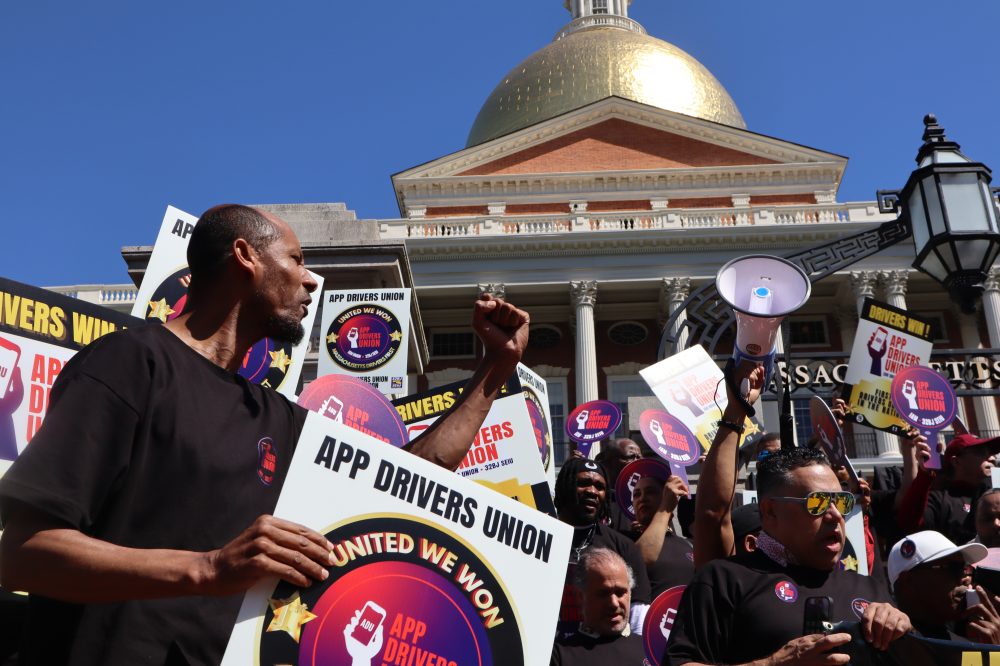
With drivers holding signs and chanting in front of the Massachusetts State House’s distinctive gold dome, labor representatives characterized this achievement as the most significant private-sector organizing success since autoworkers at Ford formed their union in 1941.
Jean Fredo, an Uber driver with more than seven years of experience, expressed hope that unionization would deliver improved wages, enhanced protection against unexpected account suspensions, and greater job security for drivers.
“With the union, it will not feel like we’re working for nothing,” he said in French through a translator. “Now the money will not only stay in the billionaire’s pockets. The money will actually come to the workers who work very hard.”
Fredo explained that while he initially valued the flexibility and schedule control that came with driving for Uber, allowing him to remain available for his family, conditions gradually deteriorated. He found himself putting in longer shifts while earning less as fuel and vehicle maintenance expenses increased.
Workers can also suddenly lose platform access with minimal notice or appeal options, he noted.
“I live with stress — always scared to lose my app,” Fredo said. “This is not a way to live.”
Upon learning about the organizing campaign, Fredo immediately participated and subsequently helped recruit hundreds of additional drivers at airports and meeting locations throughout the Boston region.
During the celebration, Fredo raised his fists triumphantly while displaying a photograph of his family to the assembled crowd.
“This is my family,” he said. “I’m fighting for a better life for them — just like everyone else is fighting for their families. My dream is to save and send my kids to college, and I believe we will get there.”
Advocates point to increasing vehicle expenses, unpredictable compensation, and unclear app algorithms as sources of driver dissatisfaction, particularly among those working extended hours while covering their own fuel, insurance, maintenance, and vehicle depreciation costs. Both Uber and Lyft maintain that drivers appreciate the flexibility of app-based employment and have resisted initiatives that might reclassify workers or modify the industry’s operating structure.
The union drive has developed alongside the accelerating growth of self-driving vehicle technology. While Massachusetts permits autonomous vehicle testing on public streets, existing rules mandate a licensed human operator remain in the vehicle. Completely driverless commercial services without human supervision are prohibited throughout the state.
Waymo has launched driverless taxi services in cities such as San Francisco, Los Angeles, and Phoenix. This expansion has faced criticism regarding traffic interference, safety reviews, and problems with stuck or malfunctioning vehicles, while also increasing concerns among ride-hailing drivers about their employment prospects.
Julie Blust of the App Drivers Union noted that drivers nationwide maintain regular communication about evolving industry conditions, including autonomous vehicle expansion in California.
“We now know what’s happening there,” she said. “Drivers are seeing pay go down, and there are real concerns about safety and job security as automatic vehicles expand.”
Union organizers increasingly view collective bargaining as a method for drivers to jointly address the growth of autonomous vehicle companies, she explained.
“Drivers now have an official organization and can speak with one voice about what’s happening in this industry,” Blust said. “We cannot let billions of dollars leave Massachusetts and go to Silicon Valley. That money feeds people’s families, that money pays the rent. That money goes into small businesses.”
The negotiation process is occurring as Massachusetts officials review comprehensive new ride-hailing regulations proposed this spring covering safety requirements, driver supervision, and electric vehicle fleet proposals. Shortly before the union certification, Uber cautioned in a blog post that certain proposals might increase costs and limit driver flexibility, while supporters argued the changes aim to improve safety and oversight.
In a Tuesday email statement, Uber indicated it would collaborate with the union and state officials as negotiations proceed.
“As we enter this next phase, we will work closely with the ADU, our broader driver community, and the Department of Labor Relations,” the company said. “Together, we will ensure that driver flexibility and hard-won benefits remain the foundation of our progress.”
Lyft also announced plans to participate in the new bargaining framework.
“As this new process moves forward, we’re committed to engaging in good faith,” the company said in a statement. “Lyft does well when drivers do well, and we’ll stay focused on helping drivers succeed while keeping rideshare affordable and dependable for everyone who counts on it.”