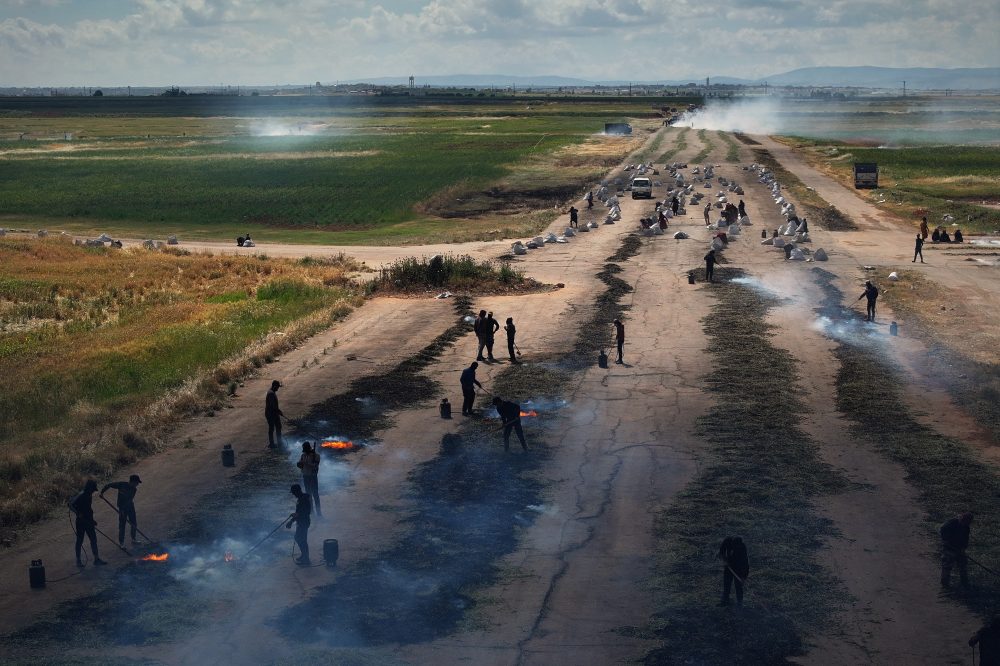

TAFTANAZ, Syria (AP) — Ancient agricultural traditions continue to thrive in northwestern Syria, where farmers maintain centuries-old techniques for cultivating freekeh, a smoky roasted wheat grain that serves as a cornerstone of Middle Eastern cooking.
The distinctive grain comes from wheat that’s harvested while still young and green, then roasted using open fire methods. This process burns off the outer shells while keeping the inner grain intact, creating freekeh’s characteristic smoky taste that sets it apart from other wheat products.
Around Taftanaz in Syria’s Idlib province, agricultural workers continue the seasonal ritual of gathering, moving and fire-roasting the wheat before cleaning it for sale at local markets. The practice has survived ongoing warfare and financial difficulties, representing a lasting element of Syria’s agricultural heritage. Throughout Syrian households and dining establishments, the grain typically accompanies meat dishes like lamb or chicken, often topped with nuts and fresh vegetables.
This is a photo gallery curated by AP photo editors.