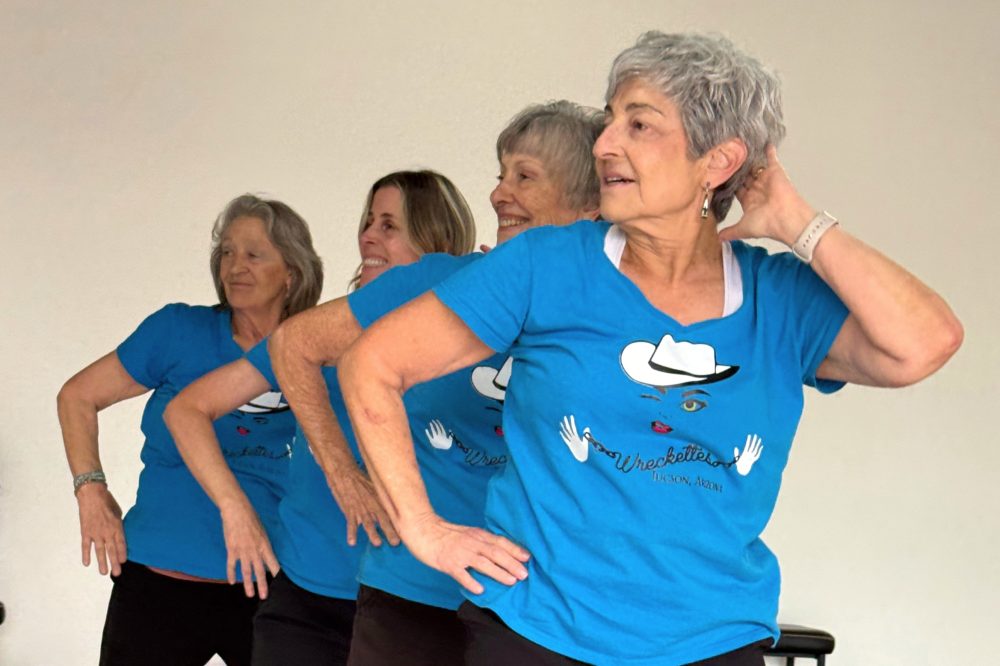

At dance rehearsal in Tucson, Arizona, Carol Ross beams with joy as she calls out choreography steps to her tap and jazz dance company designed for women over 50.
“I’ve been dancing my whole life, it’s the best,” Ross explained. She established the Rodeo City Wreckettes dance group two decades ago when she was 64, an age when most people begin planning for retirement.
Today at 87, Ross and her 89-year-old husband John, who has been her dance companion throughout their marriage, have understood for years what many seniors are just learning: rhythmic movement provides exceptional health advantages. Healthcare experts emphasize that the style doesn’t matter – whether it’s country line dancing, ballroom, salsa, tap, fitness center Zumba, or specialized groups like the Wreckettes.
“Dancing is one of the most powerful activities for older people,” explained Julio Loya, who works as a nurse and coordinates geriatric programs at Tucson Medical Center.
Like other physical activities, dancing helps individuals shed pounds, build strength, decrease chances of falling, enhance movement and flexibility, and boost cognitive function.
“It engages their brain, it changes their mood, and it connects them socially while getting them moving,” Loya noted. “And it’s fun. Everybody has a good time.”
Dr. Tom Johnson, who specializes in aging at the UC Health Seniors Clinic in Aurora, Colorado, recalled a particular patient whose love for dancing was so intense that he pushed himself to participate in one final lesson before passing away in his late 80s.
“His No. 1 priority was that he danced until the day that he died,” Johnson shared about his patient.
Johnson explained that dancing can enhance stability for his clinic patients, which provides care to approximately 2,500 individuals aged 75 and above annually.
He recommends older patients incorporate two to three dance sessions into their weekly 150 minutes of cardiovascular activity, since dancing frequently includes movements that support balance, like stepping backwards or balancing on a single foot.
The Wreckettes rehearse their performances during two-hour sessions at minimum twice weekly in a leased dance space.
Following ballet training in childhood and later exploring various styles from ballroom to tap as an adult, Ross felt it was natural to continue dancing when she and her spouse relocated from Philadelphia to enjoy retirement in Tucson.
John Ross plays an essential role in the Wreckettes’ performances, usually participating with his wife in at least one dance number. During a recent rehearsal, they performed a playful routine to Merle Haggard’s “Let’s Chase Each Other Around the Room.”
“I learned early on that dancing was a great way to attract the chicks,” John Ross quipped, gliding across the studio floor with remarkable agility for his age.
Wreckettes participant Cindy Soffrin shared that witnessing her mother’s decline during aging motivated her to maintain an active lifestyle.
“My mom was sedentary the last 20 years of her life. It was pretty rough,” Soffrin, age 74, revealed.
For 67-year-old Gail Kowalski, becoming a Wreckettes member three years ago provided new friendships following her husband’s death and her relocation from Utah to Tucson.
“Plus, it’s so dang fun,” Kowalski added.
The Wreckettes showcase their talents year-round, from seasonal celebrations to rodeo entertainment, wearing coordinated glittery outfits.
However, they all agree their favorite performances are at retirement facilities for memory care residents. The group members alternate selecting preferred charities to receive their performance fees.
“When we first arrive, people will be distracted or sleeping,” Soffrin observed. “But once the music comes on, they perk up right away.”
A comparable senior women’s dance troupe in Las Vegas, the Vegas Golden Gals, also entertains at retirement communities, according to group president Cheryl Cortez. Their routines feature pompoms.
“I must now know close to 40 routines,” said 69-year-old Cortez. “And that alone has to be great for the memory.”
For those interested in beginning a dance routine, healthcare providers and dance teachers offer these suggestions:
BEFORE STARTING: Consult your healthcare provider before beginning dance or any fitness program. Select something basic initially, such as line dancing instead of complex tango movements.
FIND A CLASS: Contact your local YMCA, parks and recreation department, or senior or community center. Community colleges frequently offer dance instruction, sometimes designed specifically for older adults. Private dance studios and YouTube tutorials provide additional options. If you have Medicare Advantage coverage with Silver Sneakers benefits, inquire whether your local fitness center offers Zumba or other dance classes at no cost.
BEFORE THE SESSION: Wear comfortable clothing that allows easy movement, and complete warm-up exercises and stretching before class.
MOST IMPORTANTLY: Have fun! You are doing great things for your mind and body.