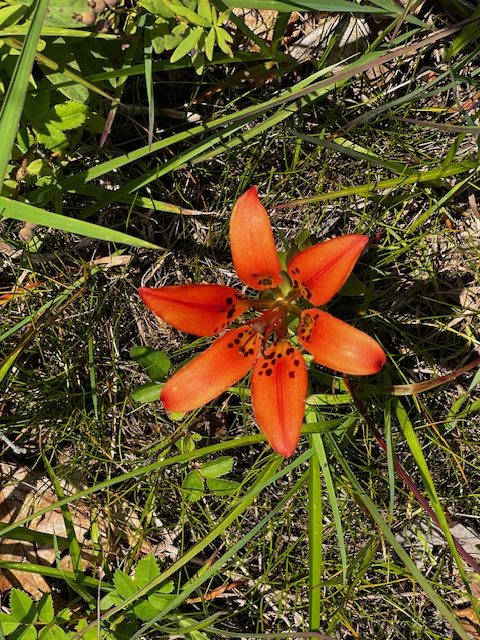

The Maryland Department of Natural Resources has published its comprehensive 2026 update to the state’s catalog of rare, threatened, and endangered plant species, showcasing major conservation work by the department’s Wildlife and Heritage Service.
The resource, offered in both condensed and detailed formats, serves as an essential tool for plant researchers, scientists, nature enthusiasts, and botanists. It compiles conservation rankings from global and regional levels, historical documentation, species life cycles, and regional expertise about every plant species documented within the state. The 2026 revision includes comprehensive research and numerous modifications to species data, representing the latest knowledge of Maryland’s plant communities.
“The level of detail in this update is testament to our ongoing commitment to preserving Maryland’s natural heritage,” said Christopher Frye, state botanist for the Wildlife and Heritage Service and staff lead on this project.
Major elements of the 2026 revision encompass:
Classification and Status Updates: The catalog contains 28 classification modifications and 44 changes to species conservation rankings or designations.
Geographic and Seasonal Information: Department botanists made 89 corrections to county and regional distribution records and incorporated 12 revised blooming and fruiting timeframes.
Additional Species: Eight previously unlisted species were incorporated into the catalog.
Research Documentation: Fifteen additional references were incorporated using verified historical Maryland specimens and records.
The catalog spotlights several remarkable discoveries, including the wood lily (Lilium philadelphicum) found again in Allegany County after being absent for 118 years. The update also incorporates two species facing global extinction threats (G1) that have been recently identified through scientific study: Atlantic ladies tresses (Spiranthes bightensis) and Mid-Atlantic beaksedge (Rhynchospora mesoatlantica).
The Mid-Atlantic beaksedge discovery represents a fascinating tale spanning multiple decades and several states. During the mid-1980s while exploring Eastern Shore wetlands, botanists William McAvoy and Frank Hirst encountered an unknown sedge plant – a grass-like species typically recognized by triangular stems. They initially identified it as Harper’s beaksedge (Rhynchospora harperi) and documented their finding.
Fast-forward to 2023, when genetic science had dramatically progressed. Amanda Eberly, working as a botanist for NatureServe and pursuing graduate studies at the New York Botanical Garden, collaborated with respected botanist Robert Naczi to publish research identifying a new species: the Mid-Atlantic beaksedge. Scientists then realized the Eastern Shore plant from the 1980s was actually this newly described species. This revelation establishes the sedge as an extremely rare global species found in only three locations worldwide – New Jersey, Delaware, and Maryland.
Indigenous plant species serve essential functions in Maryland’s ecological systems, supplying everything from breathable air to host environments for pollinating insects that support agricultural crops. These plants connect deeply with Maryland’s historical and cultural identity while contributing to future possibilities. The extinction of even a single plant species could eliminate potential medical breakthroughs or therapeutic discoveries, emphasizing the critical importance of conservation efforts.
The revised rare, threatened, and endangered plant catalog can now be accessed through the Maryland DNR website.