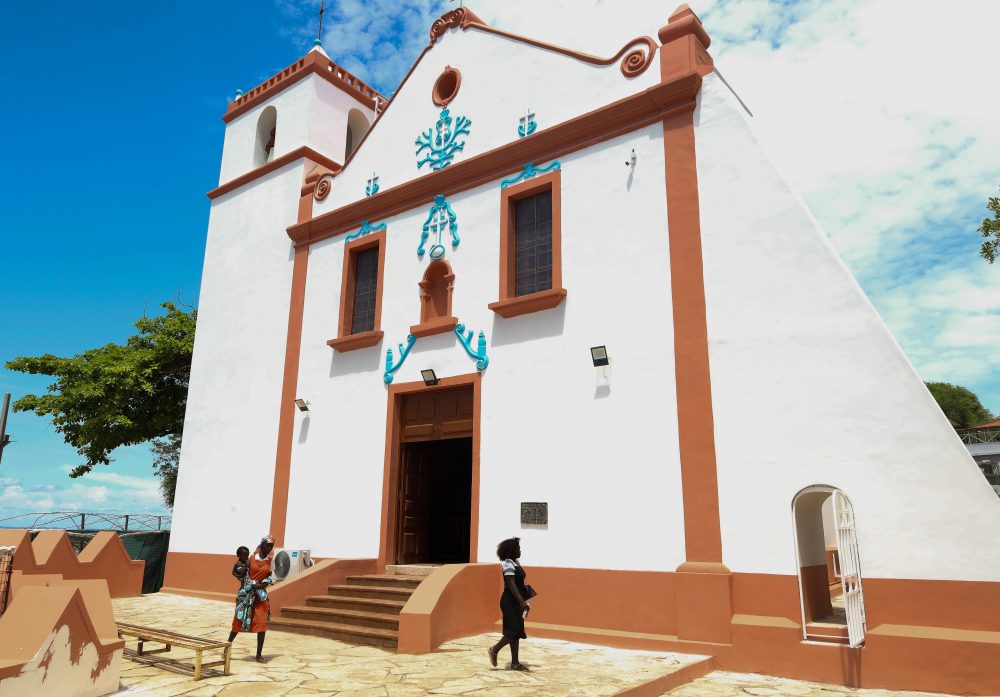

CAPE TOWN, South Africa — A historic church in Angola that once served as a central location in the Atlantic slave trade will welcome Pope Leo XIV this Sunday, creating a moment rich with symbolic meaning given recent revelations about the pontiff’s own ancestry.
The Church of Our Lady of Muxima, constructed by Portuguese colonists in the late 1500s as part of a military fortress, stands as a stark reminder of the deep connections between the Catholic faith and the exploitation of Africa centuries ago.
Pope Leo XIV’s scheduled appearance at the Muxima church recognizes its transformation into a beloved Catholic pilgrimage destination following reported sightings of the Virgin Mary around 1833.
However, the whitewashed structure beside the Kwanza River previously functioned as a gathering point where enslaved Africans received baptism from Portuguese clergy before enduring a brutal 90-mile march to Luanda’s main harbor, where ships waited to transport them to the Americas.
Portuguese colonizers drew justification from 15th-century Vatican decrees that gave them permission to enslave non-Christian populations.
Angola became the departure point for more than 5 million enslaved people during the trans-Atlantic trade, representing nearly half of the approximately 12.5 million Africans forced across the ocean and exceeding any other nation’s totals.
Whether Leo will directly address slavery during his African journey remains uncertain, unlike previous papal visits when St. John Paul II confronted the topic in Cameroon during 1985 and Senegal in 1992. Former President Joe Biden addressed slavery as America’s “original sin” during his 2024 visit to Angola in his presidency’s final months.
Many African Catholics view the moment as deeply meaningful when the Church’s leader — himself an American — conducts prayers at the riverside plaza adjacent to the fortress and ancient chapel in Muxima, according to Leo’s planned itinerary.
“For me, the pope going there to pray the Rosary … he will give that place a new significance,” said Rev. Celestino Epalanga, a priest with the Catholic Bishops’ Conference of Angola. “We have to give it a new sense. To make this place sacred instead of being a place of evil.”
The visit carries additional weight following discoveries about Leo’s personal background.
Research conducted by a U.S. genealogist last year revealed that the first American pope — born Robert Prevost — possesses Creole ancestry, with maternal great-grandparents identified as people of color in Louisiana census documents. The investigation showed Leo’s lineage includes both Black and white ancestors, encompassing enslaved individuals and those who owned them.
Historical records indicate some of Louisiana’s earliest enslaved people came from Angola.
Leo has remained silent regarding his heritage publicly. However, Mariana Candido, an Emory University history professor in Atlanta, finds compelling complexity in how a location connected to such moral wrongs transformed into an Angolan pilgrimage destination, and how Leo might understand this when reaching out to younger African Catholics.
“I can see how this is a way of connecting to Catholics in Angola, and making the Church more in sync with how people are practicing Catholicism in Angola and in African countries,” she said.
Candido noted Leo’s background serving Chicago’s substantial African American community positions him well for this outreach.
Rev. Stan Chu Ilo, a Nigerian priest and DePaul University professor in Chicago, has observed the pontiff building African connections by promoting African church leaders, including the recent advancement of Nigeria’s Monsignor Anthony Ekpo to a senior Vatican role.
“This pope is actively cultivating African presence within the church and trying to, I think, heal this policy or program of seeing Africa as just making up the numbers,” said Chu Ilo.
Leo announced at his trip’s beginning that he decided in May following his election that Africa would be his first papal journey. While other travels intervened, he called this African visit “very special for several reasons.”
Angola carries particularly deep wounds from slavery and colonial rule. Portuguese control lasted until 1975, followed immediately by a devastating civil war that turned newly freed Angolans against each other. The intermittent conflict continued for 27 years, claiming over half a million lives.
Both African priests Epalanga and Chu Ilo acknowledge colonialism’s damage while emphasizing Leo’s opportunity to energize Angola’s Catholic Church — originally imposed by colonial oppressors — to become a positive force addressing contemporary challenges.
Vatican officials indicate Leo will discuss themes including natural and human resource exploitation, corruption, and authoritarian governance during his African tour.
These messages resonate with Olivio Nkilumbo, an opposition member of Angola’s Parliament who argues the country still lacks true democracy serving its 37 million citizens more than 50 years after independence. Nkilumbo pointed to decades of authoritarian leadership and economic disparity leaving millions impoverished despite Angola’s oil, diamond, and mineral wealth.
“We still don’t have democracy, don’t have freedom,” said Nkilumbo, who expressed hope for the pope to serve as a peace and reconciliation pilgrim while delivering strong social justice messages. “In my view, the pope knows the real situation of Angola.”
Though not Catholic himself, Nkilumbo commended Angola’s Catholic Church, the nation’s largest religious group, for leading equality efforts.
Epalanga exemplifies this role. Beyond his priestly duties, he serves as executive secretary for Angola’s Catholic Commission for Justice and Peace, actively promoting democracy and addressing poverty and inequality while frequently challenging government authorities.
Epalanga said he was among numerous church members invited to meet with Pope Leo in Angola. If given the opportunity to speak with the pope, Epalanga said he would “thank him for coming and ask him to tell the bishops they should be more committed to the poor and to social justice.”