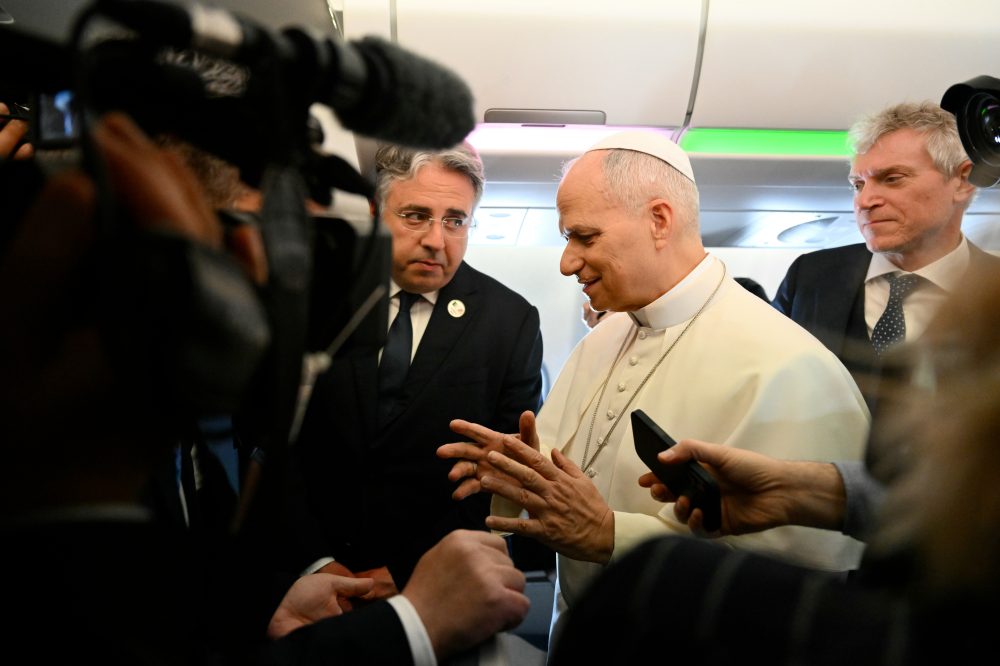

TRAVELING WITH THE POPE (AP) — Covering Pope Leo XIV from within the Vatican’s official press corps creates a strange feeling of detachment from reality. Moving between locations with police escorts that cut through even the worst traffic, journalists enjoy exclusive access and numerous perks.
However, during Leo’s historic journey across four African nations, traveling within the Vatican’s protective “bubble” has felt almost dreamlike, as an extraordinary public confrontation unfolds between President Donald Trump and the first American pontiff in history.
Each day this week, reporters have awakened to fresh developments from Washington the night before, wondering: Would Leo respond? How might he address the latest attacks while staying focused on his planned African agenda?
These questions were particularly relevant Wednesday when Leo, Vatican officials and approximately 70 credentialed journalists climbed aboard their ITA Airways charter for the trip’s second segment — traveling from Algiers, Algeria to Yaounde, Cameroon during his 11-day journey.
Reporters were thrilled when Leo directly confronted Trump’s criticisms at the trip’s beginning, speaking candidly with traveling journalists on April 13 during their departure from Rome to Algiers. He addressed questions about Trump’s Truth Social message from the previous day, where the president called him weak on crime, too close to liberals and claimed credit for Leo’s papal election.
Trump’s comments came after Leo urged peace regarding the Iran conflict and called Trump’s threats to destroy Iranian civilization “truly unacceptable.”
Leo told journalists on the papal aircraft that he was simply sharing Gospel teachings when advocating for peace and condemning warfare, adding that he felt no fear of the Trump administration.
Wednesday brought a different approach from Leo, who avoided reporter questions and concentrated his comments on his recently completed Algeria visit, where he celebrated the legacy of St. Augustine of Hippo, his spiritual mentor.
Speaking briefly to reporters gathered at the front of the economy section, Leo avoided mentioning warfare or Trump directly. However, his words seemed to acknowledge that the latest overnight attacks from Washington had certainly registered. Notably, he delivered his entire statement in English.
Trump had continued his social media criticism, while Catholic convert Vice President JD Vance warned that Leo should “be careful” when discussing theological matters.
Leo highlighted the “goodness,” “generosity,” and “respect” demonstrated by Algeria’s government in welcoming him for the nation’s first papal visit. He mentioned that Algerian officials provided a complete military air escort for the papal plane while crossing their airspace.
He also reflected on his Great Mosque visit in Algiers, calling it an important demonstration that “although we have different beliefs, we have different ways of worshipping, we have different ways of living, we can live together in peace.”
He emphasized that St. Augustine’s teachings about seeking God, pursuing truth, constructing bridges and promoting unity and fellowship “is something which the world needs to hear today and that together we can continue to offer in our witness as we continue on this apostolic voyage.”
Similar to other world leaders, the pope travels internationally accompanied by Vatican media staff and external news organizations that pay substantial fees to place their reporters on the papal aircraft and secure special coverage access.
Working within the Vatican bubble offers both journalistic benefits and drawbacks. Reporters receive optimal access while traveling under Vatican security protection, eliminating complications with local security arrangements. The Vatican handles visa processing and local phone service in advance, plus organizes accommodations and transportation, letting journalists concentrate on news gathering rather than logistics.
Bubble journalists receive papal speeches beforehand and sometimes access delegation members, along with real-time updates from Vatican spokespersons.
However, news organizations invest thousands of dollars per journalist per trip for papal plane access primarily for the pope’s press conferences. Popes only conduct such journalist briefings while flying at 35,000 feet altitude.
Many remember Pope Francis’ memorable comment during his first papal trip in 2013 to Rio de Janeiro, when he said “Who am I to judge” regarding questions about an allegedly gay priest.
The Vatican bubble’s disadvantages mirror its benefits: Journalists become disconnected from local conditions, whether in Algeria or elsewhere, and rarely have opportunities for ground-level reporting that creates balanced news coverage.
Well-resourced news organizations deploy ground teams for such content, or bubble journalists venture out independently, creating a beneficial mix of official Vatican information and local perspectives.
Yet when the major papal news develops thousands of miles and multiple time zones away, the Vatican bubble experience becomes somewhat disorienting. The stories everyone wants aren’t necessarily what appears on the pope’s schedule.
Still, for this journey — the first African visit by an American pope — being inside the Vatican bubble definitely offered unique advantages.