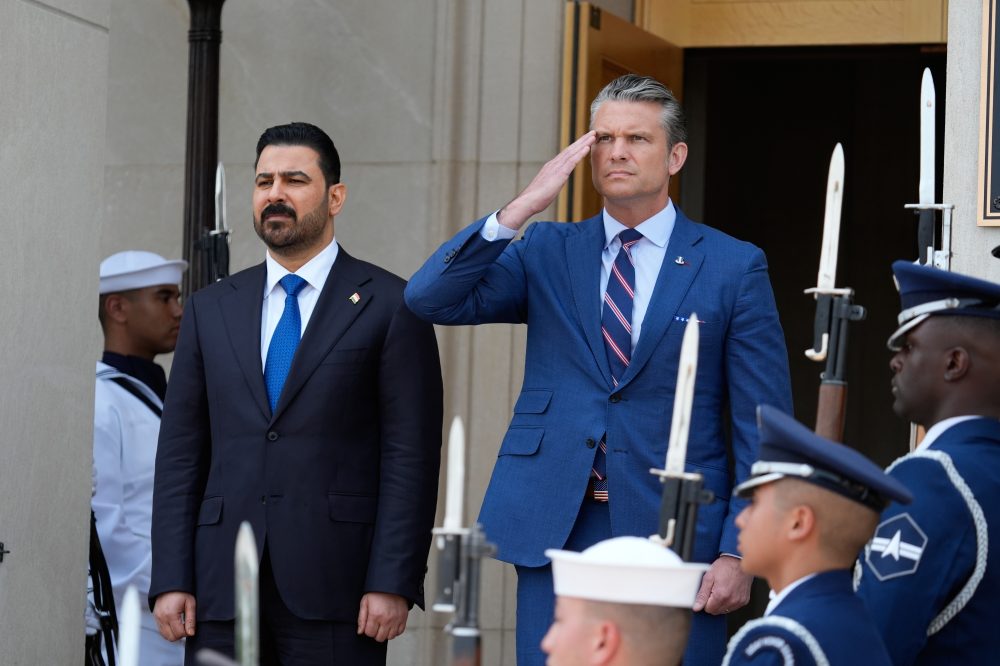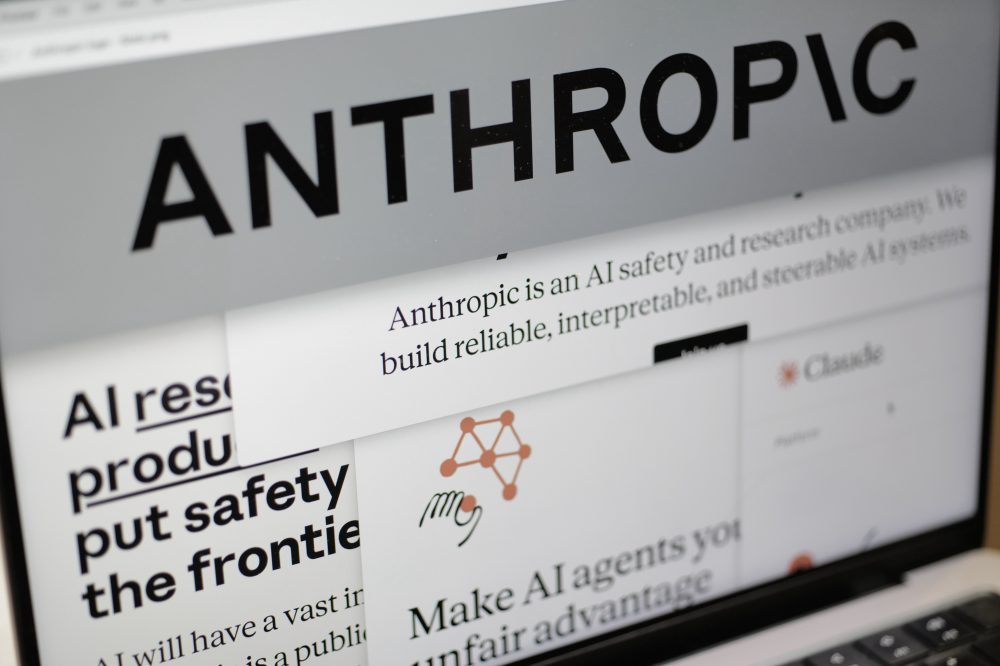

WASHINGTON — Federal appeals court judges displayed clear disagreement Tuesday during oral arguments in a high-stakes legal battle between the Pentagon and artificial intelligence firm Anthropic, which alleges Defense Secretary Pete Hegseth improperly designated the company as a national security threat after it questioned ethical AI use in military operations.
The three-judge panel from the U.S. Court of Appeals for the District of Columbia Circuit gave no timeline for their decision, though their questioning and comments suggested possible leanings in the complex case.
Judge Karen LeCraft Henderson expressed skepticism about the Pentagon’s rationale for classifying Anthropic as a supply-chain security threat.
“To me, this is just a spectacular overreach by the (Defense) Department,” Henderson stated. The judge was appointed by Republican President George H. W. Bush.
Meanwhile, Judge Neomi Rao, appointed by Republican President Donald Trump, challenged what authority the court should have to override Hegseth’s decision-making. The conflict between the Pentagon and Anthropic revolves around artificial intelligence applications in autonomous weapons systems and potential domestic surveillance.
“I take the secretary to be making more general points than the ones that you’ve identified,” Rao addressed Anthropic lawyer Kelly Dunbar. “It’s about risk, and they say, ‘Well, based on what we know, we can’t trust that the (AI) model may not have something embedded within it that is going to create a problem for military capabilities.”
The San Francisco-headquartered Anthropic initiated legal proceedings in both Washington, D.C., and San Francisco following the Pentagon’s supply-chain risk classification and Trump’s directive ordering federal agencies to cease using the company’s technology. Anthropic contends the Pentagon is conducting illegal retaliation by applying a designation typically reserved for foreign adversaries who might compromise national security infrastructure.
While Anthropic maintains neither lawsuit aims to compel government contracts with the firm, the company argues Hegseth’s supply-chain designation has caused permanent damage to its reputation.
The D.C. circuit previously denied Anthropic’s motion for preliminary relief that would have suspended the Pentagon’s actions during the appeals process.
In a related proceeding, a federal judge in San Francisco sided with Anthropic last month, prohibiting the Pentagon from maintaining its supply-chain risk label on the company.
In pre-hearing documents filed for Tuesday’s Washington session, Anthropic argued it lacks capability to alter its Claude AI system after deployment within classified Pentagon military networks.
However, Justice Department lawyer Sharon Swingle countered to the D.C. Circuit panel that Anthropic maintains clear capacity to disrupt the Pentagon’s use of the company’s AI technology “for critical military operations.”
“It’s undisputed that the failure of the model in active military operations could have catastrophic national-security consequences and put service members’ lives at risk,” she argued.
Dunbar characterized Hegseth’s supply-chain risk designation as having “defied congressionally mandated procedures, exceeded statutory limits and violated the Constitution.”
“For the first time ever, the secretary turned a powerful national security authority against an American company, and he did so to gain leverage in a contract dispute,” Dunbar contended.
Judge Gregory Katsas, also a Trump appointee, participated in Tuesday’s oral arguments.