
A family from Iran who has called the United States home for ten years is fighting for their freedom after being placed in immigration detention due to their connection to a key player in the 1979 U.S. Embassy hostage situation in Tehran.
The detained man, Eissa Hashemi, is the son of Masoumeh Ebtekar, who gained notoriety as “Sister Mary” during the embassy crisis. Wearing traditional Islamic dress, she served as a spokesperson who criticized America and labeled the hostages as “spies” deserving prosecution. In April, U.S. Secretary of State Marco Rubio announced the cancellation of the family’s green cards due to their connection to Ebtekar, leading the Department of Homeland Security to initiate deportation proceedings against Hashemi, his spouse Maryam Tahmasebi, and their child.
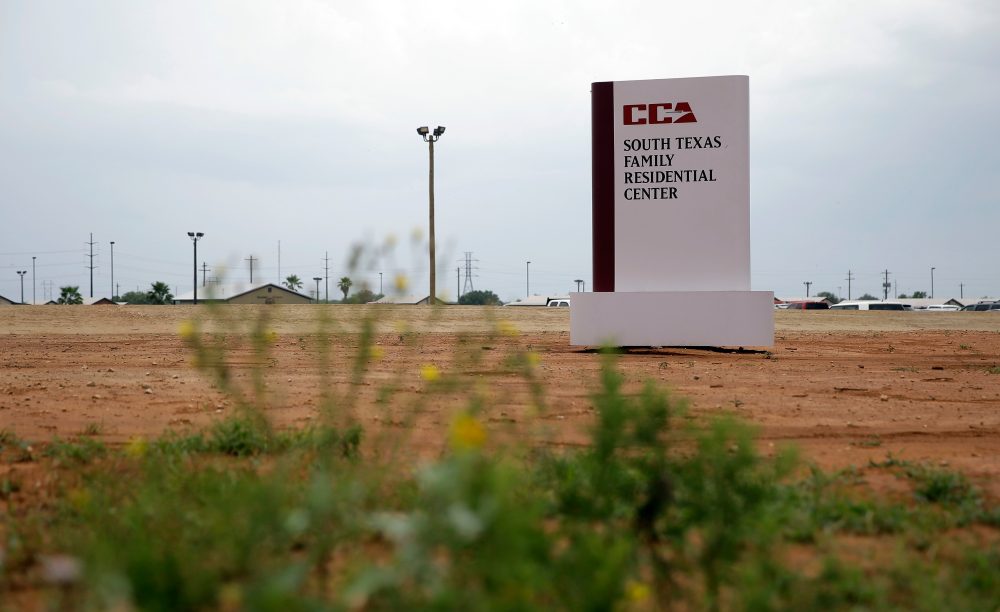
The family has been confined in Texas immigration detention centers since their April arrest in Los Angeles. However, a federal court has issued a temporary order preventing their removal from the country while they contest the lawfulness of their imprisonment.
“There’s no specific allegations related to these three individuals other than their familial relationship,” said Curtis Morrison, the family’s lawyer.
The current administration is utilizing a seldom-used section of immigration legislation that permits the Secretary of State to pursue immigrant removal for foreign policy considerations. State Department spokesperson Tommy Pigott explained that individuals with strong connections to high-ranking Iranian officials involved in anti-American activities should not be permitted to reside in the country.
“Allowing such individuals to remain in the United States could be exploited by the Iranian government for propaganda or political messaging and would undercut U.S. efforts to deter malign activities by signaling that regime-affiliated networks can continue to access U.S. privileges without consequence,” Pigott said in a statement. He didn’t provide any examples or evidence related to the family.
Members of the Iranian community living abroad have consistently advocated for removing children of Iranian government figures from America, arguing their presence insults those who escaped the country and creates national security concerns. Multiple individuals reported attempting for years to persuade the government to address these situations before the current administration acted.
During the embassy occupation, Ebtekar enumerated American “crimes” against Iran. Dressed in black robes and head covering resembling religious attire — which led American media to dub her “Sister Mary” — she insisted the U.S. surrender the overthrown shah, Mohammad Reza Pahlavi. In subsequent years, she aligned with politicians working to reform Iran’s religious government from within and eventually became the Islamic Republic’s first woman to serve in a Cabinet position.
Speaking to The Associated Press from detention, Tahmasebi expressed that her family never anticipated arrest despite facing a harassment campaign from hostile critics unfamiliar with their actual circumstances. She described the family as middle-class with “absolutely no ties to money or power.”
“Our assumption was as long as we abided by all rules and laws we would be safe,” she said. “The only thing we have wanted is for our son to have a normal life.”
Multiple legal scholars have indicated they suspect constitutional issues with the statute. A comparable situation involving a Columbia University activist who criticized the Gaza conflict is proceeding through federal courts.
More than two months ago, U.S. and Israeli forces attacked Iran, killing the country’s supreme leader. There has been a ceasefire between the countries, but the U.S. last week rejected Tehran’s latest proposal to end the war.
The married couple departed Iran over ten years ago to pursue advanced education in America, later receiving green cards through a government lottery system. They resided in a secured apartment community northwest of central Los Angeles and collaborated on psychology research publications. Tahmasebi instructed psychology and statistics at a community college, while Hashemi taught at a private university.
Tahmasebi refused to discuss Iran. She pursued education to achieve independence, and now both she and her husband hope to resume teaching while their son returns to high school.
“There is not an ounce of violence or any type of menace in either of us,” she said.
Stephanie Knox recalled meeting Tahmasebi during graduate school. When Tahmasebi failed to appear for a coffee meeting after enduring months of harassment, their tight-knit friend group became concerned, Knox explained.
Tahmasebi and her son had been taken into custody. Knox reported they are housed at a facility with barely edible food and glaring lights around the clock.
“It feels like a witch hunt,” Knox said. “Since when are we holding people accountable for their parents’ politics?”
Jake Hart developed a friendship with the family after Tahmasebi took part in a theatrical production he worked on three years prior. Hart described Hashemi as kind and cheerful, even during calls from detention, and called Tahmasebi one of the most intelligent people he knows. He stated neither participates in political movements, but activists had appeared at Hashemi’s workplace demanding his termination and at their residence.
“I think it’s pretty hard to deny this is Japanese internment camps and World War II-level thinking,” he said.
Court documents indicate the government must respond to the family’s legal challenges by this week.
The Department of Homeland Security stated the family was apprehended because officials believe they represent a danger to national security and U.S. foreign policy. The agency declined to answer questions about the specific nature of the threat.
Immigration law specialists noted the administration is employing a legal provision to challenge constitutional rights of legal immigrants that courts have not thoroughly examined. This law, also used in the arrest of student activist Mahmoud Khalil, permits immigrant deportation if the Secretary of State reasonably believes their presence “would have potentially serious adverse foreign policy consequences for the United States.”
Heidi Altman, vice president of policy at the National Immigration Law Center, stated the administration is weaponizing immigration statutes to suppress free expression and penalize perceived political adversaries.
“They look at immigration laws and war powers as part of their toolbox to inflict fear and punishment,” Altman said.
Hashemi represents one of multiple relatives of Iranian officials the U.S. has recently attempted to deport. The State Department also announced this year it was canceling green cards for the niece and grand-niece of deceased Revolutionary Guard Gen. Qassem Soleimani, who died in a U.S. airstrike in Baghdad in early 2020.
Kiyanoush Razaghi, a Maryland immigration attorney from Iran, supports such deportations. He operates an Instagram account highlighting people residing in the U.S. who he claims have family connections to Iran’s government. He expressed frustration that individuals could live in America while their relatives operated a government that punished Iranians who opposed the country’s strict moral regulations.
“I said, ‘I’m done with this hypocrisy. I’m going to expose these people,’” said Razaghi.
Razaghi reported that three years of providing information to Congress produced no results until January, when a Department of Homeland Security representative called seeking additional details. He refused to name that individual.
Masih Alinejad, a prominent activist and journalist in New York, said she started working nine years ago to draw attention to Hashemi through social media and news coverage.
“I am thankful for this administration for finally taking a decisive action,” Alinejad said.