
NEW YORK — The Open Society Foundations announced Wednesday it will dedicate $300 million over the next five years to programs aimed at protecting democratic principles and promoting economic stability across the United States.
This commitment arrives during a period when the current administration has targeted the organization and its founder’s family, claiming they promote unrest and division. These criticisms represent part of a wider 2025 campaign by President Donald Trump and supporters to pressure nonprofit organizations and charitable donors through executive actions, funding restrictions, and investigation threats.
“We are continuing our work unabated. We will not be intimidated into silence,” said Laleh Ispahani, managing director for the U.S. at Open Society Foundations, when asked about the administration’s attacks on the Soros family.
Congressional supporters of the president have requested that the Internal Revenue Service and the Department of Justice examine nonprofit groups they claim back domestic terrorism, unauthorized immigration, or environmental initiatives they oppose. Last December, then-Attorney General Pam Bondi directed law enforcement agencies to investigate organizations supporting antifa, which Trump has classified as a domestic terrorist movement.
A Justice Department representative declined to comment when asked whether the agency was examining Open Society, stating the department does not discuss ongoing investigations.
Over the past year, Ispahani explained that OSF has awarded grants to groups defending legal principles and challenging policies designed to discourage certain Americans from engaging in civic life. The organization’s updated approach seeks to enhance economic opportunities while strengthening civil rights protections, areas she believes are typically addressed separately instead of being recognized as interconnected issues.
The foundation plans to identify state-level policies protecting at-risk communities that could serve as models for other states, Ispahani noted, while also supporting measures that create economic fairness for working families.
“You can’t address the racial wealth gap without tackling core, working class economic issues like living wages, affordable child care and housing,” she said.
Of the total $300 million pledge, OSF has already allocated $20 million for this year to support organizations defending rights and legal standards through strategic court cases, nonprofit protection efforts, and government corruption monitoring initiatives.
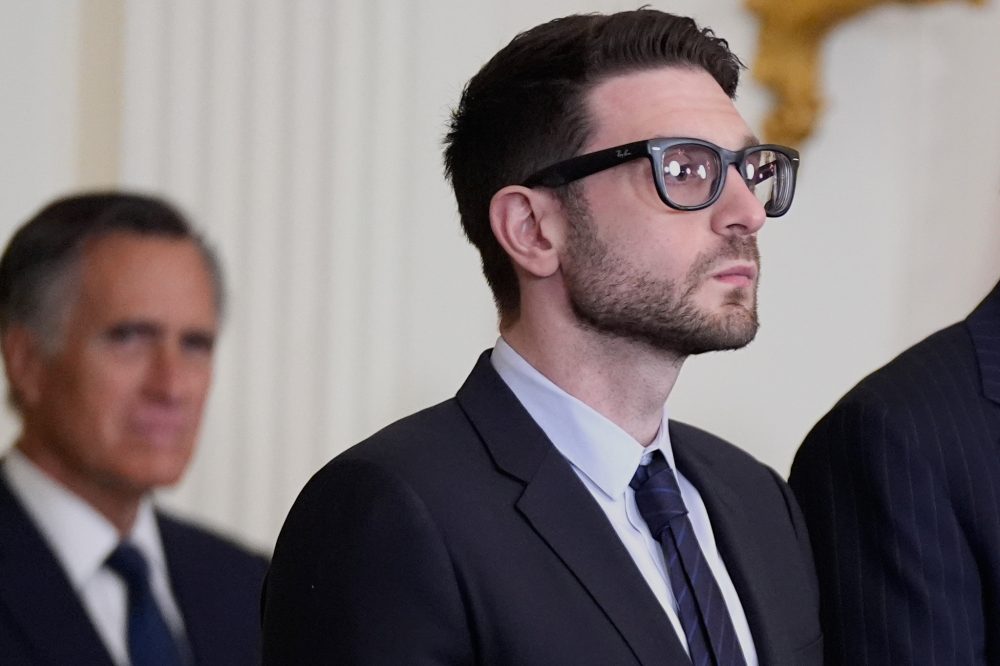
This democracy-focused strategy marks the first new domestic program approved under Alex Soros, one of the founder’s sons, who has led a comprehensive reorganization of the foundations that included significant staff reductions.
“Guaranteed rights and freedoms are just as critical as broad economic prosperity and are the strongest defense we have against a closed society,” Alex Soros, chair of the Open Society Foundations, said in a statement. “Our new investments will tackle these twin challenges.”
The organization’s earlier U.S. democracy initiative invested at least $220 million in creating a diverse, interfaith coalition supporting democratic values, including five-year funding commitments to community organizations led by people of color and women.
Historically, major charitable foundations rarely considered supporting democracy work within the United States as part of their mission.
While charitable organizations cannot directly back political candidates or parties, they may fund various nonpartisan activities including voter registration drives, civic education programs, journalism, policy research, and government oversight work.
During the final years of President Barack Obama’s administration and throughout Trump’s initial presidency, large foundations began directing more resources toward democracy-related activities, according to research by Kristin Anne Goss, a professor at the Sanford School of Public Policy at Duke University.
Using grant data from the nation’s largest 1,000 foundations, Goss discovered that among the biggest foundations, democracy-related giving as a share of total contributions rose substantially from 2013 to 2020. She noted these patterns indicate that some funders traditionally focused on areas like health and education began prioritizing democracy work.
David Wolcheck, lead data analyst for research at the nonprofit Candid, which monitors charitable giving, used different data sources but found foundation support for democracy activities increased threefold between 2016 and 2020, then declined by one-third the following year. He emphasized that additional research is necessary to understand these changes.
Many foundations explicitly state in their giving strategies that they aim to combat authoritarianism and advance social equity. These funds also include support for policies and organizations with varying values and different visions for America’s future, Goss observed.
However, she noted, “If you’re looking at these numbers and these trends, the vast, vast, vast majority of it is going toward a vision of society that is inclusive,” and supports the rule of law and civil liberties.
Several other major foundations have announced significant democracy-related commitments recently, though complete data on this type of giving will not be publicly available for several years.
According to Wolcheck’s research, the Ford Foundation ranks as the largest private and community foundation supporter of democracy work in the United States. Under new president Heather Gerken’s leadership, Ford Foundation stated it is “providing substantial funding to organizations across the political spectrum doing nonpartisan work to safeguard our democracy and protect the rule of law.”
The John D. and Catherine T. MacArthur Foundation committed $100 million over the past two years to protect voting and civil rights while improving democracy’s ability to serve people effectively. The Minnesota-based McKnight Foundation approved an additional $20 million from its endowment for 2026, with portions supporting efforts to increase civic engagement among people with diverse perspectives.
A separate initiative by the nonprofit Democracy Fund encourages philanthropic donors to support fair elections by funding relevant nonprofits before the end of April. This second “All by April” campaign responds to requests from nonpartisan voter registration and turnout organizations for early funding well ahead of Election Day. The campaign also recommends grants to shield nonprofits and their leadership from government intimidation and other exceptional threats.
The variety of these commitments demonstrates the dual challenge facing philanthropic donors: responding quickly to anti-democratic policies while providing sustained support for organizations working to expand political participation and improve governance.
The range of strategies may also reflect uncertainty about which approaches will effectively protect and strengthen democracy through nonpartisan funding.
“A lot of the things that they’re working on, especially around democracy, it’s really hard to measure impact,” Goss said of foundations. “Because they’re trying to intervene in things that are deep and long standing and often in the political sphere or having roots in the global economy and other huge, huge structures.”