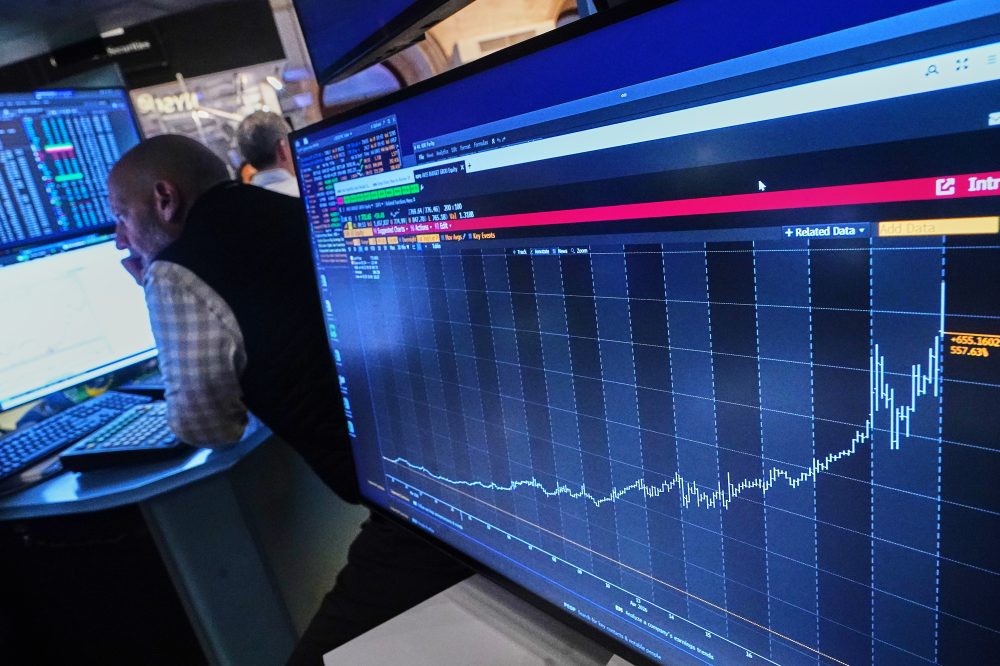

NEW YORK — The numbers don’t seem to add up. While Americans grapple with costly fuel and uncertainty about the ongoing Iran conflict, Wall Street keeps climbing to unprecedented heights.
For financial markets, the answer lies in one fundamental principle: corporate profits drive stock values. Companies are currently generating such impressive earnings that investors continue paying premium prices for shares in American businesses.
The journey has been turbulent for many investors who may have considered selling their holdings when the S&P 500 dropped almost 10% from its previous peak last month. However, as it has throughout its entire history, the benchmark index that anchors countless retirement accounts has once again rewarded those who stayed the course. The index reached a new record of 7,137.90 on Wednesday.
Below is an examination of the factors driving this unexpected market resilience:
While stock values fluctuate constantly for countless reasons, the fundamental drivers over time remain consistent: corporate earnings and investor willingness to pay for those profits.
The second element typically varies with interest rate changes and the balance between investor optimism and anxiety.
During the conflict’s early stages, fear dominated and share prices plummeted. Markets worried that sustained oil price increases from the war might trigger devastating inflation across the global economy.
Rising interest rates also pressured stock values as investors feared inflation concerns would prevent the Federal Reserve and other central banks from reducing short-term rates. Lower rates can stimulate economic growth but may also fuel inflation.
Beginning in late March, expectations grew that the United States and Iran might prevent the worst economic outcomes. Both nations have economic incentives for resolution, and for Iranian leadership, ending the conflict could mean political survival.
The ceasefire both countries reached this month remains in effect, though fragile.
This shift from extreme fear is also evident in oil markets. Brent crude, the global benchmark, surged from approximately $70 before hostilities to $119 at peak anxiety levels. Prices have since retreated and hovered around $100 Wednesday.
Attention has centered on the Strait of Hormuz, the critical passage for oil tankers leaving the Persian Gulf. Continued Iranian closure of the strait, combined with ongoing U.S. naval blockades of Iranian vessels, would harm all parties. Global customers would lose oil access while Iran would forfeit crude sales revenue.
“By denying Iran its oil-related revenue, traders may be thinking that the economic war may be more effective in getting concessions from Iran’s regime than was the kinetic war only, and that this will end the war sooner, rather than later,” said Thierry Wizman, a strategist at Macquarie Group.
Wall Street traders are also wagering on potential Federal Reserve rate cuts later this year. While they see much lower odds than before the conflict began, according to CME Group data, they’re no longer concerned about possible rate increases.
With diminished fear, investors have refocused on the primary stock price component: earnings. Those results have been impressive.
More than 15% of S&P 500 companies have already disclosed first-quarter 2026 profits, with the overwhelming majority surpassing analyst projections. This includes diverse firms from Citigroup to J.B. Hunt Transport Services to UnitedHealth Group.
If remaining companies simply meet analyst forecasts, S&P 500 earnings will finish approximately 14% above year-earlier levels, according to FactSet.
These figures encompass a full month of wartime conditions, and while companies express continued caution about potential conflict-related risks, their earnings show minimal impact.
Bank of America CEO Brian Moynihan noted last week that “we saw healthy client activity, including solid consumer spending and stable asset quality, indicating a resilient American economy.”
This occurs despite many American families expressing concern about higher gasoline costs and broader price increases from tariffs, as recent surveys indicate.
Analysts have actually increased their profit expectations for S&P 500 firms since the war started. They’re predicting 20% growth acceleration in second-quarter profits, and companies aren’t providing reasons for revision.
Delta Air Lines reported this month that it’s experiencing robust demand from both business and leisure travelers. PepsiCo maintained its 2026 profit outlook last week, which it originally provided before the Iran conflict began, with CEO Ramon Laguarta expressing encouragement about international business resilience. GE Vernova announced Wednesday that AI data center power demand is surging, prompting an increased annual revenue forecast.
Naturally, American stock markets could easily reverse course. Wall Street sentiment might quickly return to fear if U.S.-Iran negotiations collapse and oil markets face potential shortages.
Extended high oil prices would eventually erode corporate profits by increasing business costs and reducing consumer spending power for households and other customers.