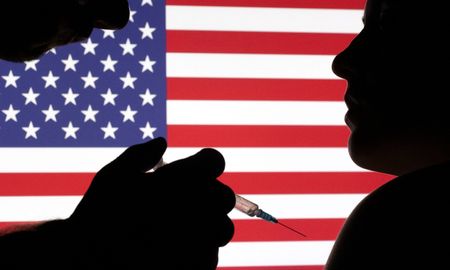

Shares of Australian pharmaceutical company CSL continued their downward spiral Thursday, reaching their lowest point since 2017 after the Pentagon announced it would no longer require military personnel to receive annual flu vaccinations.
The U.S. Defense Department’s Tuesday announcement represents a complete reversal of a decades-old policy and has sparked concerns about reduced demand from one of CSL’s major institutional customers.
“The Pentagon’s move was a meaningful catalyst for the sell-off and could be the straw that finally breaks the camel’s back,” explained Marc Jocum, senior product and investment strategist at GlobalXETFs.
“CSL was already carrying a heavy load around falling U.S. flu vaccination rates, weaker Seqirus earnings, and delayed strategic plans, and this decision simply adds incremental pressure at the worst possible time,” Jocum added.
The company’s shares dropped by as much as 0.8 percent, marking a yearly decline exceeding 25 percent and hitting levels not seen since late August 2017.
CSL relies heavily on the United States as its primary revenue generator, according to company financial reports. The firm’s vaccine operations, which include influenza immunizations distributed through its CSL Seqirus division, represent one of its most lucrative business segments.
CSL Seqirus brought in approximately $2.17 billion during fiscal 2025, accounting for roughly 14 percent of the company’s overall revenue.
The stock had already faced significant pressure due to declining demand for plasma-based treatments, increased collection and production expenses, and several earnings reductions throughout the past year.
CSL, which began as a government research facility before becoming a market favorite, has faced investor criticism over its stock performance. The company, once Australia’s most valuable publicly traded stock, plummeted approximately 39 percent last year in its steepest annual decline since 2002.
Market participants have also expressed skepticism about the recovery timeline for CSL’s primary plasma operations, which suffered major disruptions during the coronavirus pandemic.
“The real issue runs deeper: slowing earnings momentum, a more volatile vaccine segment, and a lack of clarity around the company’s forward strategy,” noted Hebe Chen, market analyst at Vantage Markets.
“A 5% drop (on Wednesday) of this magnitude signals the market is still repricing that broader confidence gap, with CSL yet to convincingly find a floor,” Chen concluded.