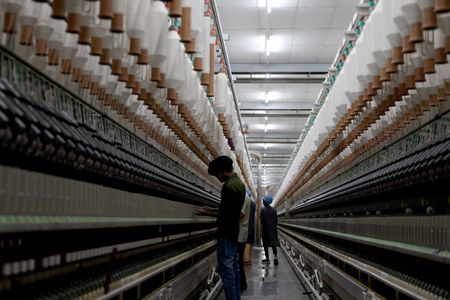

While Middle Eastern conflicts have created supply chain headaches for manufacturers worldwide, India’s cotton yarn producers are experiencing an unexpected boom as Chinese buyers turn to them for unprecedented orders.
Manufacturing facilities like Fiotex Cotspin are ramping up operations to meet soaring demand from China, which relies heavily on imports despite being the world’s largest cotton producer. India ranks second globally in cotton production.
Trade route disruptions caused by Middle Eastern warfare have limited China’s access to cotton supplies from traditional sources, positioning India as an attractive alternative due to its proximity, according to Indian trade representatives.
The situation has been compounded by China’s tight domestic cotton availability and shipping delays from major suppliers in the United States and Brazil, creating a sharp uptick in Chinese yarn imports.
Currency fluctuations have also played a role, with the Indian rupee declining approximately 7% against China’s yuan this year, making Indian cotton yarn more affordable for Chinese purchasers.
Ripple Patel, who leads the Fiotex spinning facility in Gujarat state, reports his export commitments have expanded by 40% recently, with his plant now operating at full capacity compared to 90% previously.
“As exports are more viable in profit realisation, we have increased its share… Orders have already been booked until June,” Patel explained to Reuters.
China’s National Textile and Apparel Council chose not to provide commentary regarding increased imports from India.
While numerous Indian manufacturing centers have struggled with commercial gas shortages and rising costs for materials like plastics and industrial components, spinning operations have avoided fuel-related problems since they primarily operate on electrical grid power or solar energy, industry leaders noted.
Monthly shipments from India to China have increased dramatically, with approximately 1,500 containers carrying 30,000 tonnes of cotton yarn departing monthly since November, compared to roughly 300 containers previously, according to Rahul Shah, who serves as co-chair of the Textiles Committee within Gujarat’s Chamber of Commerce and Industry.
The conflict’s effect on polyester availability has enhanced cotton’s appeal, with shipments receiving additional support from the weakening rupee. Shah indicated that multiple Gujarat spinning facilities plan to maintain similar export volumes through April and May to capitalize on strong Chinese demand.
Gujarat mills hold a particular advantage due to their proximity to both cotton-producing regions and shipping ports.
Tamil Nadu state, home to thousands of spinning operations, faces higher transportation expenses because raw cotton must be transported from western and central India.
“There is a cost involved for us. We have to take it to the port…that is the reason why export is not very favourable,” explained Vishnu Prabhu, joint managing director at Tamil Nadu garment manufacturer K.M. Knitwear, which includes spinning operations in its integrated business model.