
The world’s largest packaged food manufacturer says Middle East conflicts have had minimal effects on its global operations thus far, according to Thursday’s quarterly earnings report.
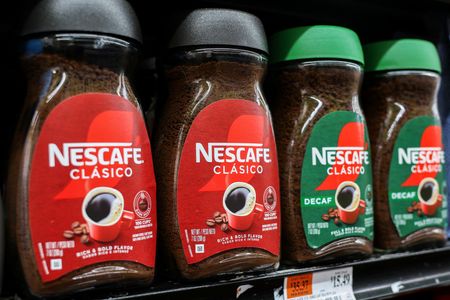
Nestle, which produces popular brands including KitKat chocolate bars, Nescafe coffee, and Maggi seasonings, reported seeing “very little impact” on its international business from warfare that started in late February with American-Israeli military strikes against Iran.
The Swiss-based corporation kept its annual projections unchanged, expecting organic revenue growth of 3% to 4% along with improved underlying operating profit margins compared to the previous year.
However, Chief Executive Philipp Navratil noted that customer habits are shifting due to escalating fuel costs. Consumers are choosing to walk instead of drive to shopping locations and preparing meals at home rather than dining at restaurants, particularly in developing nations.
“We are very well set up because we’re very well distributed in those countries,” Navratil explained. “Our portfolio is very well set up for people being more at home — we’ve done very well in emerging markets.”
The company announced first-quarter emerging market organic revenue jumped 4.6% during Thursday’s financial disclosure.
Nestle exceeded Wall Street expectations for overall first-quarter revenue growth as consumers purchased more coffee and pet food products.
Organic revenue, which eliminates currency fluctuations and acquisition impacts, climbed 3.5% during the three-month period ending in March. Financial analysts had predicted organic growth averaging 2.4%.
Company officials said organic growth took approximately a 90 basis-point decline due to infant formula product recalls during the quarter, though they added that product supply has returned to standard levels.
Overall reported revenue fell 5.8% to 21.3 billion Swiss francs ($27.12 billion), matching analyst projections.
An insider familiar with Nestle operations told Reuters in February that Navratil plans to concentrate more intensively on four product segments — coffee, pet care, nutrition and health, plus food and snacking — to boost sales volumes this year.
This approach represents increased emphasis on those four areas rather than a complete business restructuring, the source explained.
Nestle’s 2.3% first-quarter price hikes matched the average analyst prediction of 2.3%. Actual internal growth — representing sales volumes — increased 1.2% compared to expectations of 0.1% growth, powered by coffee, food and snack categories.
“Nestlé is showing early signs of reigniting volume growth,” said Vontobel analyst Jean-Philippe Bertschy. “This is the kind of reassurance investors were waiting for and it corroborates management’s relatively upbeat tone following the full-year 2025 results.”