
VANCOUVER, British Columbia — Canadian Prime Minister Mark Carney declared Wednesday that the United States cannot unilaterally establish conditions for the continental trade pact known as USMCA, highlighting challenges that lie ahead of the agreement’s scheduled July review.
The trade arrangement, which originated in the early 1990s, has deeply connected the economies of three North American nations but has encountered difficulties due to President Donald Trump’s frequently shifting tariff strategies.
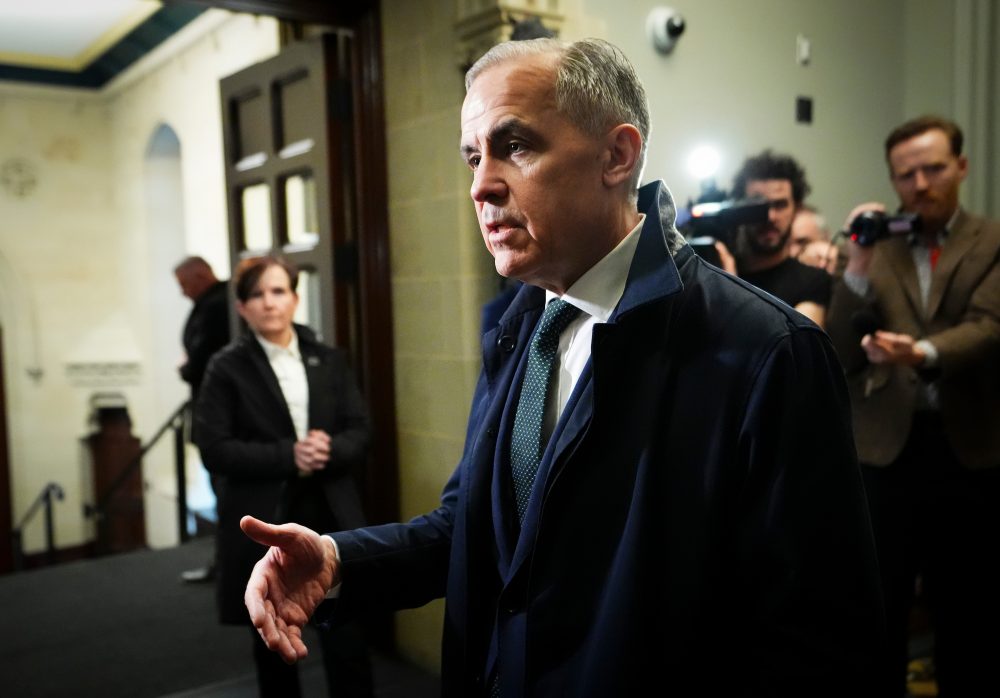
During a press conference in Ottawa, Carney told journalists that adjusting the current version of the trade deal “will take some time.”
“We understand what some of the Americans would call trade irritants or trade issues are,” Carney stated. Trade irritants refer to policies that generate tension and conflicts in international commerce.
“We have some on our side as well,” he continued. “We will sit down and work through those issues with the broader approach in the negotiations.”
“It’s not a case of the United States dictates the terms. We have the negotiations. We can come to a mutually successful outcome,” Carney emphasized. “It will take some time.”
The Prime Minister’s statements followed a Radio-Canada report claiming that U.S. officials are requiring an “entry fee” for trade discussions with Canada and seeking concessions before talks commence.
When questioned about the radio report, Carney noted that in negotiations “people ask for concessions.” “We have strengths, we have options. We’re diversifying our options.”
Last week, U.S. Commerce Secretary Howard Lutnick criticized Canada’s negotiating stance, alleging that Canada depends too heavily on the American economy and calling it “outrageous” for Canadian provinces to exclude American alcohol from their stores.
Lutnick also condemned Carney for negotiating an agreement with China that reduces tariffs on Chinese electric vehicles from 100% to 6.1%, capped at 49,000 vehicles annually. China is expected to reciprocate by lowering retaliatory tariffs on Canadian farm exports.
A recent Office of the United States Trade Representative report identified several trade friction points, including some Canadian provinces’ refusal to carry American alcoholic beverages and steep tariffs on certain U.S. dairy imports.
Carney has vowed to safeguard Canada’s dairy, poultry and egg sectors during free trade negotiations with the United States.
The U.S. is also challenging Canada’s “Buy Canadian” policy, which prioritizes Canadian goods and workers for projects exceeding 25 million Canadian dollars, approximately $18 million USD.
When asked whether it was problematic that the U.S. hasn’t offered any concessions for negotiations, Carney did not directly respond.
In a 10-minute video released Sunday, Carney argued that Canada’s close economic relationship with the U.S., once considered an asset, has become a liability requiring correction. He noted that Trump’s tariffs have impacted automotive and steel industry workers.
He also discussed his administration’s efforts to bolster Canada’s economy through attracting new investment and establishing trade partnerships with additional nations.